Tag: infections

  • Can passive smoking give you coronavirus?

    With lockdowns being lifted and offices besides all public spaces except wedding halls and educational institutions being re-opened, the threat of a sudden spike in coronavirus infections, despite the continuous drop, has once again risen its ugly head.

    While many people are taking necessary precautions, some are not, owing to which all of us have found ourselves assessing our surroundings and avoiding the virus as much as possible.

    Many amid the prevailing situation, among other things are wondering if one can get COVID-19 from secondhand smoke?

    Here’s what we know…

    Secondhand smoke isn’t believed to directly spread the virus, experts say, but infected smokers may blow droplets carrying the virus when they exhale.

    Being able to smell the smoke might be a red flag that you’re standing too close to the smoker. The respiratory droplets people spray when they talk, cough or sneeze are believed to be the main way the virus spreads. And people also exhale those droplets when smoking, as well as when they’re vaping.

    “Not only are they potentially spreading the virus by not wearing a mask, they are blowing those droplets to the people around them to potentially get infected,” says Dr Albert Rizzo, chief medical officer for the American Lung Association.

    You should steer clear of secondhand smoke regardless. Breathing in secondhand smoke from cigarettes can cause various health problems, according to the US Centers for Disease Control and Prevention.

    By the time this report was filed, the number of coronavirus infections in Pakistan stood at 294,668 with 279,630 recoveries and 6,275 deaths. Sindh continued to have the lead with 128,877 cases with Punjab trailing at 96,540 infections, followed by Khyber Pakhtunkhwa (KP) and Islamabad with 35,923 and 15,562 cases, respectively.

    The number of infections in Balochistan stood at 12,721 while Gilgit-Baltistan had 2,773 cases and Azad Jammu & Kashmir (AJ&K) had 2,272.

  • Record 3,938 COVID-19 cases with 78 deaths in 24 hours in Pakistan

    Pakistan from Monday to Tuesday reported a record number of 3,938 new coronavirus cases with 78 deaths within 24 hours.

    The latest surge in cases took the nationwide tally of reported cases to 78,128 while the death toll crossed the 1,600 mark. According to statistics provided by National Command and Operation Centre (NCOC), Pakistan has broken its previous record number of 3,039 new COVID-19 cases reported over 24 hours on May 31.

    Earlier on Sunday, Pakistan reported its most number of deaths during 24 hours with 88 new fatalities, however, given the swelling number of coronavirus cases, doctors and health experts have warned that the number of cases will continue to rise unless a strict lockdown is not imposed.

    Sindh and Islamabad also recorded the highest number of cases reported over 24 hours with 1,402 and 304, respectively, on June 1. However, Punjab reported the most number of deaths and new cases reported over 24 hours with 1,610 cases and 43 new fatalities due to the COVID-19.

    On Monday, Prime Minister (PM) Imran Khan, in a live televised address, had apprised the nation on the decisions made regarding the lockdown in Pakistan to contain the novel coronavirus during the National Coordination Committee (NCC) meeting.

    “Since day one when we got to know that the coronavirus had started spreading in Pakistan, we imposed a lockdown following a national security committee meeting,” he had said.

    “We observed the conditions in the Chinese city of Wuhan and in Europe when the virus started spreading and we were seeing how the world was responding. But at that time, when we had discussions and meetings, I was very clear on the path Pakistan had to take.

    “Pakistan’s situation is different than that in China or Europe,” he had said, noting that he had earlier informed the nation that 25% of the country’s population was below the poverty line, which “means that nearly 50 million people in our country do not eat two full meals a day”.

    PM Imran had said doctors, elite, and the poor all had diverse opinions but it was the downtrodden ones of the society who did not have a voice.

    “But in hindsight, I should not have stopped businesses and construction because we had to balance it. Coronavirus is not going away until a vaccine is not formulated. We have to live with it,” he had noted.

  • Coronavirus: Lahore jail’s ‘mysterious’ patient zero who infected 58 prisoners in 20 days

    Coronavirus: Lahore jail’s ‘mysterious’ patient zero who infected 58 prisoners in 20 days

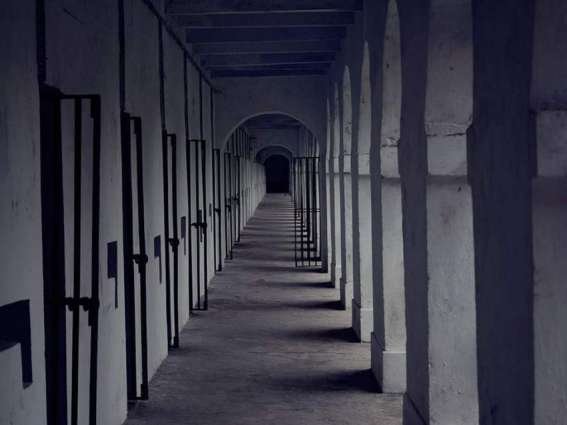
    Lahore’s Camp Jail has been vacated and turned into a 100-bed quarantine centre after at least 58 prisoners tested positive for the new coronavirus — COVID-19. But who is the mysterious patient zero and how did he contract the virus before passing it on to such a large number of inmates in just 20 days?

    According to The News, a total of 490 prisoners were exposed to patient zero who developed COVID-19 symptoms back on March 18. He complained of fever to the jail authorities and upon testing, his test result for the virus came positive. Following this, three other prisoners who were close to him also tested positive. The jail authorities then asked for tests of other inmates locked up in the same barracks as the patients, and initially, 19 other’s coronavirus tests also came positive.

    As the matter was looked into, the prison authorities realised that 490 inmates imprisoned in nearby barracks were also exposed to the mysterious patient zero. With it taking them 20 days to decide on vacating the jail, 58 of the said inmates tested positive for COVID-19.

    But who is patient zero?

    According to authorities, patient zero is a Pakistani-Italian who came to Pakistan in December 2019. On March 8, 2018, he was going back to Italy when the Anti-Narcotics Force (ANF) found on him six kilograms of heroin. With the drugs being seized, he was arrested and sent to Camp Jail.

    Authorities claim that his family is a frequent traveler and that was how he contracted the virus. “His family had also recently traveled from Italy and patient zero developed COVID-19 symptoms 10 days after his imprisonment,” they said.

    Meanwhile, Punjab government spokesperson Musarrat Cheema confirmed that Camp Jail had been vacated and converted into a 100-bed quarantine center.

    “There are more than 2,700 prisoners in Camp Jail. The Punjab government has converted the jail into a 100-bed quarantine centre for prisoners. A medical team of Services Hospital has also been assigned to look after this quarantine centre,” she informed, adding that a total of 490 prisoners were exposed to the patient at the jail.

    “Initially, the tests of 19 prisoners came positive and they were quarantined there. But as of April 9, the number of COVID-19 positive prisoners has reached 58. The remaining prisoners are being shifted to other cities, including Lodhran and Hafizabad. So far, 1,100 prisoners have been shifted to Hafizabad, 258 have been sent to Lodhran whereas the rest of the prisoners are being shifted to other jails across the province. There will be no prisoner in Camp Jail from today [Friday] onwards.”

  • Coronavirus in Pakistan: Prices of face masks increase by 900%

    Coronavirus in Pakistan: Prices of face masks increase by 900%

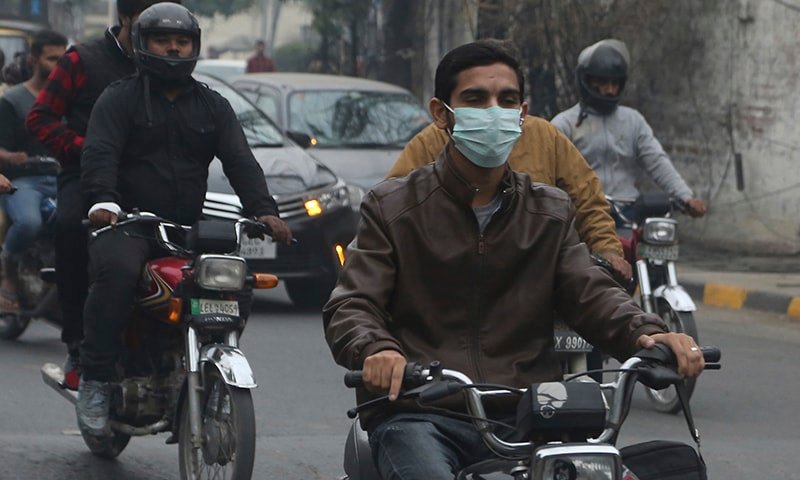
    With a couple of confirmed cases of the new coronavirus — COVID-19 — surfacing in the country, the prices of face or medical masks have increased by staggering 900% as local pharmacies also run out of what is said to provide some protection from the virus.

    While some experts say it provides modest protection against the virus that is new to science, others doubt the effectiveness of such masks for stopping COVID-19 transmission. United States (US) health officials say the virus spreads mostly between people who are in close contact with each other, and from respiratory droplets when an infected person sneezes or coughs.

    China is the world’s largest producer of the said masks, with a reported daily capacity of 20 million pieces, but by the estimate of its manufacturers, domestic demand alone is around 50 to 60 million per day. Amid the surge in demand, medical store owners are citing a shortage of the masks as the reason behind the increase in its price from Rs100 for a box to Rs1,000 for the same in markets across Pakistan.

    CORONAVIRUS IN PAKISTAN:

    First two cases of coronavirus in Pakistan were reported on Wednesday night, one of which was in the provincial capital of the country’s southeastern province of Sindh, and the other in the federal capital.

    While details of the case in Islamabad have not yet been made public, the first reported case is that of a 22-year-old man who, according to government sources, reached Pakistan from Iran by air and has a history of travel to Tehran “from where he acquired the virus”.

    It was also confirmed by Special Assistant to Prime Minister (SAPM) on Health Dr Zafar Mirza.

    “I can confirm first two cases of coronavirus in Pakistan. Both cases are being taken care of according to clinical standard protocols and both of them are stable. No need to panic, things are under control,” he tweeted.

  • Iran blames Pakistan for spread of coronavirus

    Iran blames Pakistan for spread of coronavirus

    With the coronavirus death toll in Iran rising to 15 among 64 reported cases, Tehran has allegedly blamed Islamabad for the epidemic, saying it was brought to the country by Pakistani nationals illegally crossing into Iranian territory.

    The outbreak of the 2019 novel coronavirus — a severe acute respiratory syndrome named ‘COVID-19’ by the World Health Organization (WHO) — is an ongoing pandemic that originated in the central Chinese province of Hubei’s capital city, Wuhan.

    The virus, as of February 25, has claimed 2,663 lives with over 25,000 recoveries. COVID-19 spreading to other parts of Asia, the Middle East, Africa, North America and Europe, has infected more than 80,000 people globally.

    In Hubei, the number of cases appears to be stabilising, according to government figures. But the number of people infected elsewhere in the world is rising quickly, with clusters in South Korea, Italy, Iran and a cruise ship docked in Japan.

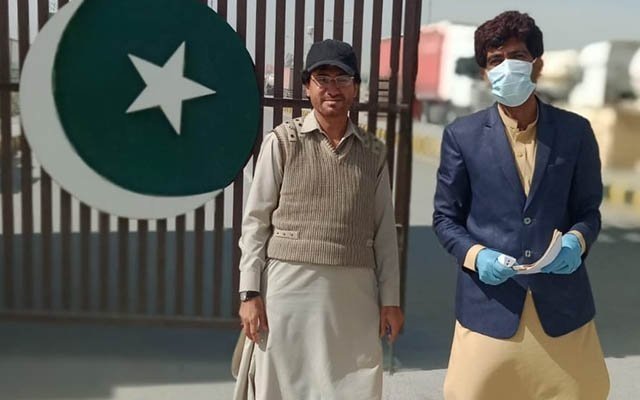
    While Pakistan International Airlines (PIA) has suspended flight operations to China and Japan till March 15 due to the outbreak, Pakistan has closed its border with Iran after casualties from the deadly coronavirus were reported on Monday.

    The outbreak in Iran began in the city of Qom, an often-visited religious destination.

    According to authorities, Islamabad has suspended trade activities across the western border and barred citizens from travelling to Iran through the five existing border gates. The border town of Taftan in Balochistan has been quarantined for screening, while a 100-bed tent hospital has been set up in the area for pilgrims coming back from Iran, officials told The Current.

    “The government is in close contact with Iranian authorities to save Pakistani pilgrims from coronavirus,” Federal Minister for Religious Affairs and Interfaith Harmony Noorul Haq Qadri said in a statement. He added that his ministry had deployed a special team in Taftan to protect Pakistani pilgrims returning from Iran.

    Amid Pakistani actions aimed at what the government calls “continuing to successfully avoid” an outbreak of the novel coronavirus, Iranian officials have claimed it reached the country with Pakistani, Afghan and Chinese nationals illegally crossing the border to enter Iran.

    “It is not possible for the virus to reach Iran otherwise,” an Iranian official said on the condition of anonymity. They added that Afghanistan had also confirmed its first infection, so the possibility of the virus reaching the country via its northern neighbour, could not be ruled out either.

    The claims were, however, contradicted by government sources.

    They said these “unverified” claims were untrue and being made by some local Iranian media agency, but it was not the time for blame game. “Coronavirus is a real threat. Every country in the region and the world is at risk. We all need to pool together our resources and fight it instead of shifting blame on one country or the other.”

    Government sources also said that both Pakistani and Iranian health advisers and their ministers knew each other for a long time. “Cooperation is quite good between the two health ministries and the governments are in close touch with each other. They are satisfied with the mutual assistance.”

    NO CORONAVIRUS IN PAKISTAN’:

    Speaking to The Current, National Institute of Health (NIH) Focal Person Dr Muhammad Salman rejected the claims and clarified that for Pakistan to be responsible for the pandemic in Iran, there should’ve been any cases on this side of the border first.

    “Pakistan has in a scientific way, and while using evidence-based public health measures, dealt with the threats of a coronavirus outbreak in the country, and not even a single case has surfaced until now,” he said and reiterated that all such claims were false.

    He maintained that Dr Zafar Mirza had been on the frontline in curbing the potential risk, and owing to the efforts of the government, Pakistan was safe until now despite the virus affecting neighbouring Afghanistan, Iran and reportedly even India.

    CORONAVIRUS:

    In late December, a cluster of pneumonia cases of unknown aetiology was reported by health authorities in Wuhan. The initial cases mostly had epidemiological links to the Huanan Seafood Wholesale Market and consequently, the virus is thought to have a zoonotic origin.

    The virus that caused the outbreak is known as SARS-CoV-2, a new virus which is closely related to bat coronaviruses, pangolin coronaviruses and SARS-CoV-1.

    The earliest reported symptoms occurred on December 1, 2019, in a person who had not had any exposure to the Huanan Seafood Wholesale Market or to the remaining 40 of the first cluster detected with the new virus.

    Of this first cluster, two-thirds were found to have a link with the market, which also sold live animals.

    A large response, both in China and globally, followed an increase in cases in mid-January 2020, bringing travel restrictions, quarantines and even curfews.

    Examples include the quarantine of the British cruise ship, Diamond Princess, in Japanese waters; the curfew of over 780 million people in China, a voluntary curfew in South Korea, and the curfew of a dozen towns with over 50,000 people in Italy.

    The outbreak has been declared a Public Health Emergency of International Concern (PHEIC) by the WHO, and airports, as well as train stations, have implemented body temperature checks, health declarations and information signage in an attempt to identify carriers of the virus.

    Among the wider consequences of the outbreak are concerns about potential economic instability and incidents of racism against people of Chinese and East Asian descent, which have been reported in several countries.
  • Newborn diagnosed with coronavirus within 30 hours of birth

    A Chinese newborn has been diagnosed with the novel coronavirus just 30 hours after birth, in what was reported as the youngest case recorded so far, state media outlet Xinhua said.

    According to reports, the baby was born on February 2 in Wuhan — the epicentre of the virus — and the mother had earlier been tested positive. It is unclear how the disease was transmitted — in the womb, or after birth.

    Only a handful of children have come down with the virus, which has killed 563 people and infected 28,018.

    The report further said that the baby, who weighed 3.25kg at birth (7lbs 2oz), was now in a stable condition and under observation.

    Medical experts say it could be a case where the infection was contracted in the womb.

    “This reminds us to pay attention to mother-to-child being a possible route of coronavirus transmission,” chief physician of Wuhan Children Hospital’s neonatal medicine department, Zeng Lingkong, told Reuters.

    But it is also possible that the baby was infected after birth from having close contact with the mother.

    “It’s quite possible that the baby picked it up very conventionally — by inhaling virus droplets that came from the mother coughing,” Stephen Morse, an epidemiologist at the Mailman School of Public Health at Columbia University, told Business Insider.