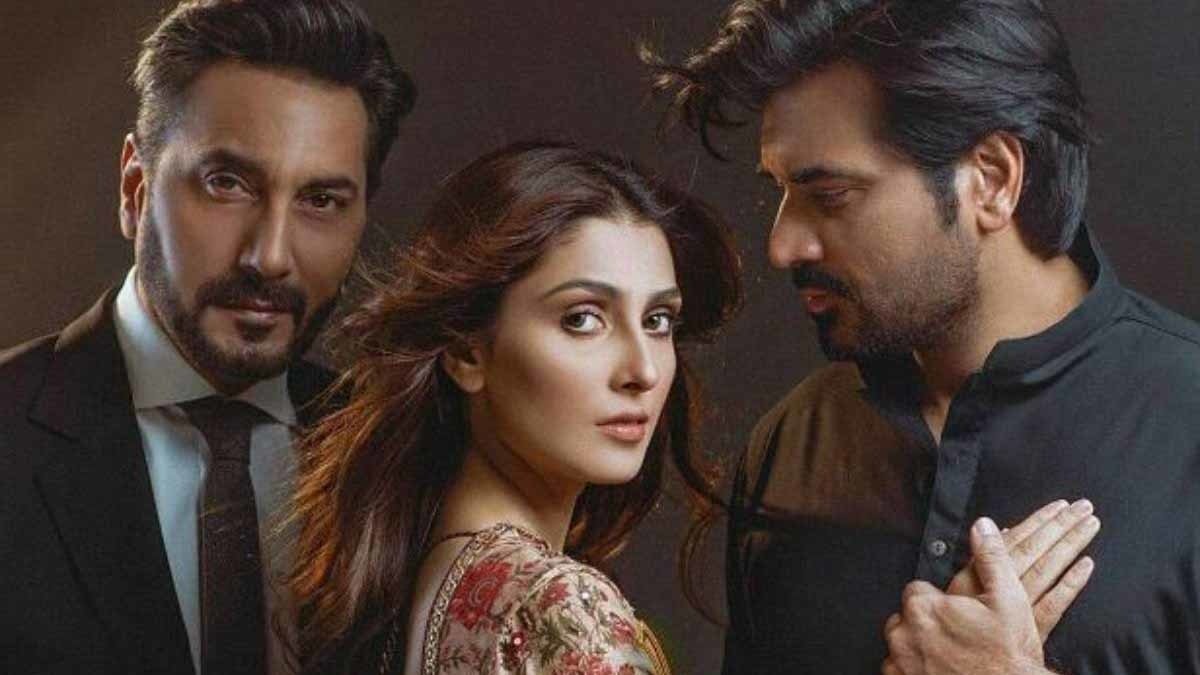
In a story as old as time itself, a male author has, through Mere Paas Tum Ho, tapped into archaic notions of what constitutes a moral vs an immoral woman, in a topic as complex as infidelity.
Today marks an almost historic day in Pakistani television history as “Mere Pass Tum Ho” (MPTH), which has become one of the most successful dramas in our history, is all set to end with its mega finale.
This has become such an anticipated ending that in an unprecedented move, cinema houses have decided to showcase the entire episode, and it is expected that we will witness packed houses. However beneficial this may be for our television industry’s commercial growth, MPTH has uncovered the deeply sexist faultiness within our onscreen depiction of women, as well its widespread acceptance within society.
More so than the actors, the drama’s writer, Khalilur Rehman Qamar, who has written hits like “Pyare Afzal’ and “Sadqay Tumhare”, has been in the limelight for the past few months due to his shockingly misogynistic views. And he has rejected, shunned and castigated his haters in a way that only someone possessing extreme male privilege would be able to do.
There have been a few key issues in the debate surrounding MPTH — the first, and perhaps most significant, has been whether and to what degree do the on-screen portrayal of women and men, as well as the dynamics between the genders, impact the mindsets of viewers. Is the media merely a depiction of what actually happens in society, or can it be an engine that drives social change?
This debate has been around for decades. An argument can clearly be made that media is not monolithic, and can have both a representative, as well as a progressive role. The problem, however, seems to be that the Pakistani television industry has almost one-sidedly been playing a regressive role in its portrayal of problematic cultural and social norms, where formulaic and one-dimensional characterisations of social issues are carefully depicted as a means of appeasing the audience and driving commercial success.
Very few channels have been bold enough to tackle topics that may receive criticism or force the viewers to think outside their preconceived notions. In a country that ranks third lowest in the world on gender parity, a more responsible role by the media industry should be expected.
In a similar vein, and in a story as old as time itself, a male author has, through MPTH, tapped into archaic notions of what constitutes a moral vs an immoral woman, in a topic as complex as infidelity. Qamar’s personal views come through very clearly via his writing, where a one-dimensionally “evil” Mahwish, is pitted against an equally one dimensional “pure” Danish. The fundamental problem lies not as much in the motivations behind infidelity, but in the consequences, which seem to be drastically different for men and for women.
There have been countless dramas in which the male protagonist has been unfaithful to his wife, but he has received forgiveness from her, and this has satiated our audience’s desire for maintaining a warped gender dynamic especially on the issue of infidelity. In the case of MPTH, which is also perhaps one of the first-ever portrayals of a female protagonist cheating on her husband, this issue has been handled through an exclusively male lens. Mahwish’s character has been reduced to being a “2 takay ki aurat“, whereas Adnan Siddiqui has been accepted, albeit reluctantly, by his first wife.
This issue has been made worse by the drama writer’s own personal views on gender and infidelity, where he has unabashedly stated that a woman who cheats loses her very essence and he considers her to be a “non-woman”. Unfortunately, Qamar’s opinions are not rare, and we live in a society where gender disparity is so entrenched that men have even earned the right to cheat without glaring consequences.
The pain of infidelity has been experienced by countless individuals, but it’s the woman who is constantly expected to think of her home, her children’s future, and society’s expectations. Surely, one of the biggest indicators of gender equality should be equal punishment for the same crime. What has made this experience even more unbearable has been Qamar’s constant presence on television, where he has been outdoing himself with his own misogyny. His lack of knowledge and facts on society’s deep-rooted prejudices becomes more apparent with each interview.
The case of MPTH depicts how badly our television writers and their characters need a touch of complexity and diversity. The tired, black and white portrayals of morality need a dash of empathy and realism. The constant parade of similar narratives written by privileged men with regressive views needs a major refreshment and a modern touch. But more so than anything, our television industry needs daring writers — those whose vision goes beyond commercial success, or what the audience will blindly accept, to actually exploring unique topics, deeper human emotions and contemporary realities. In 2020, we need a braver lot.