Tag: inflation

  • Pakistan’s inflation drops to 6.9%, lowest since January 2021

    Pakistan’s inflation drops to 6.9%, lowest since January 2021

    Pakistan’s inflation has dropped to lowest level since August 2021, according to latest data released by the Pakistan Bureau of Statistics (PBS).

    Shockingly, the headline inflation in Pakistan was recorded at 6.9 per cent on a year on year (YoY) basis in the previous month.

    This CPI reading marks the lowest level recorded in over three years.

    Experts believe that this level is an outcome of aggressive monetary tightening. The State Bank of Pakistan (SBP) has achieved bringing inflation below the one-year target of 7 per cent ahead of time.

    CPI inflation dropped 0.5 per cent in September 2024 as opposed to a rise of 0.4 per cent in the previous month and an increase of 2.0 per cent in September 2023.

    Analysts are of the view that  inflation is declining due to multiple factors, which include high base effect, sliding global commodity and energy rates, and our very stable home unit.

    Interestingly, the latest inflation reading is also lower than government expectations.

    The finance division had projected inflation to decelerate further in the next two months (September-October), and hover around 8 to 9 per cent, in the monthly economic outlook released last week.
  • Pakistan’s inflation expected to drop to as low as 9% by September 2024: Finance Ministry

    Pakistan’s inflation expected to drop to as low as 9% by September 2024: Finance Ministry

    Pakistan’s headline inflation is expected to ease further in August 2024, settling between 9.5 per cent and 10.5 per cent, with a continued downward trend anticipated in the coming months, according to the Finance Division’s statement on Friday.

    The Ministry of Finance, in its ‘Monthly Economic Update and Outlook’, highlighted that the inflation rate could drop even further to between 9 per cent and 10 per cent by September 2024, attributed to the stabilisation of key economic indicators.

    July 2024 saw headline inflation at 11.1 per cent year-on-year, a decrease from 12.6 per cent in June 2024. This marks the lowest Consumer Price Index (CPI) figure since November 2021, when inflation was recorded at 11.5 per cent, as per data from the Pakistan Bureau of Statistics (PBS).

    The Finance Ministry’s report also pointed to positive trends in external indicators such as exports, imports, and workers’ remittances, which are on an upward trajectory.

    A brokerage house noted that August’s inflation figure is expected to dip into single digits for the first time in nearly three years.

    Read more: Exchange rates: PKR up by over 10 paisa against dollar

    Looking ahead, the report projects that exports will range between $2.5 billion and $3.2 billion, imports between $4.5 billion and $5 billion, and remittances between $2.6 billion and $3.3 billion in August 2024.

    The stable outlook for the external sector is contingent upon factors including a stable exchange rate, revived domestic economic activities, improved agricultural output, lower domestic and global commodity prices, and increased foreign demand.

    In the industrial sector, the Ministry of Finance anticipates that the Large Scale Manufacturing (LSM) sector will maintain its positive growth trajectory in FY2025, driven by improved external demand, a stable exchange rate, declining inflation, and a more accommodating monetary policy.

  • Rubina Ashraf is better at saving money than we are

    Rubina Ashraf is better at saving money than we are

    Rubina Ashraf is not just one of the most talented actresses to have ever graced Pakistani silver screens but also one of the smartest.
    The veteran star has revealed her financial acumen in a recent interview and all we can say is, she is so much better at saving than we are.

    ‘Hasna Mana Hai’ host Tabish Hashmi asked Ashraf on a recent episode, “So those who earn money through acting, we often see that our actors are very wealthy during their prime, with big cars and large mansions, but then suddenly there’s a decline and they’re struggling to find money for medical treatment. So, do you manage your finances wisely? Do you invest the money you earn or spend it?”

    Rubina replied, “When I earn 100 rupees, I make sure to spend only 25 rupees, but due to inflation however, I save 50 percent of what I earn. I’ve been diligent about financial planning and believe in saving for the future. This has been my approach since the beginning of my career.”

    We wish we had that type of discipline.

    Currently Rubina Ashraf is starring in ‘Kia hai drama’ where she reviews Pakistani serials.

    Here is the link of the video:

  • Inflation has eroded purchasing power of Pakistanis: Bloomberg

    Inflation has eroded purchasing power of Pakistanis: Bloomberg

    A recent Bloomberg report reveals that Pakistan is facing the highest inflation rate in its region.

    The report explains that the Pakistani government has had to raise energy prices significantly to secure a new programme from the International Monetary Fund (IMF).

    Although inflation has decreased somewhat, electricity bills have risen sharply, now often surpassing household rent. This increase in power tariffs, aimed at meeting IMF conditions and implementing required reforms, has led to widespread protests across the country.

    Bloomberg’s report shows that since 2021, electricity prices in Pakistan have soared by 155 per cent. This surge followed the government’s decision to raise both industrial and retail electricity rates to improve the chances of obtaining IMF loans.

    The rising energy costs have worsened the country’s economic crisis, with inflation around 12 per cent—the highest in Asia—reducing people’s purchasing power and leading to a drop in electricity usage as individuals and businesses turn to solar power.

    In July, following the approval of a $7 billion IMF loan, the average residential electricity price increased by 18 per cent. Many residents now find their electricity bills exceeding their monthly rent, which ranges from $100 to $700, according to Samiullah Tariq, head of research at Pakistan Kuwait Investment Co.

    In response to growing public frustration, Prime Minister Shehbaz Sharif has announced a Rs50 billion ($180 million) subsidy over the next three months to help low-income households cope with the higher energy costs.

    The IMF programme is focused on improving Pakistan’s energy sector through cost reductions and the privatisation of state-owned power companies. The power regulator estimates that Pakistan loses about 16 per cent of its electricity due to theft and inefficiencies in its transmission and distribution systems.

    The Bloomberg report underscores the severity of Pakistan’s economic challenges and the urgent need for effective solutions in its energy sector.

  • Inflation increases again after short respite

    Inflation increases again after short respite

    The weekly inflation rate in the country has risen again, according to the Bureau of Statistics.

    Data indicates that the inflation rate has increased by 0.30 per cent, raising the annual inflation rate to 17.96 per cent.

    The report shows that prices for 23 items rose, while prices for seven items fell during the week, and 21 items remained stable.

    Increase in prices:

    • Onions increased by 32.23 % in one week.
    • Eggs rose by 4.28%
    • Garlic by 3.23%
    • LPG by 1.73%.

    Other items with rising prices this week include dal mash, dal moong, and potatoes.

    In contrast, the price of tomatoes decreased by 19.12% over the week, while bananas became cheaper by 1.55% and wheat flour by 1.39%.

    It is worth noting that there was a slight decrease of 0.12% in the weekly inflation rate last week.

  • Vegetable, fruit prices soar by 150 per cent amid strikes, sit-ins

    Vegetable, fruit prices soar by 150 per cent amid strikes, sit-ins

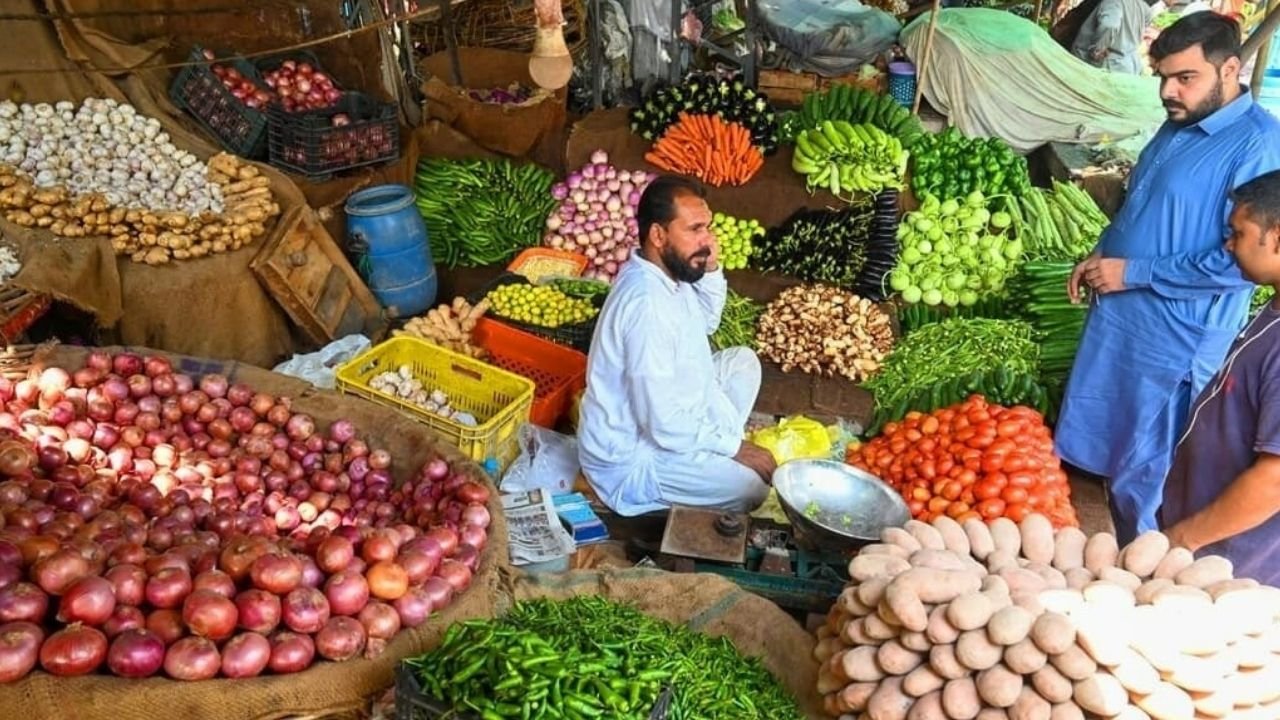
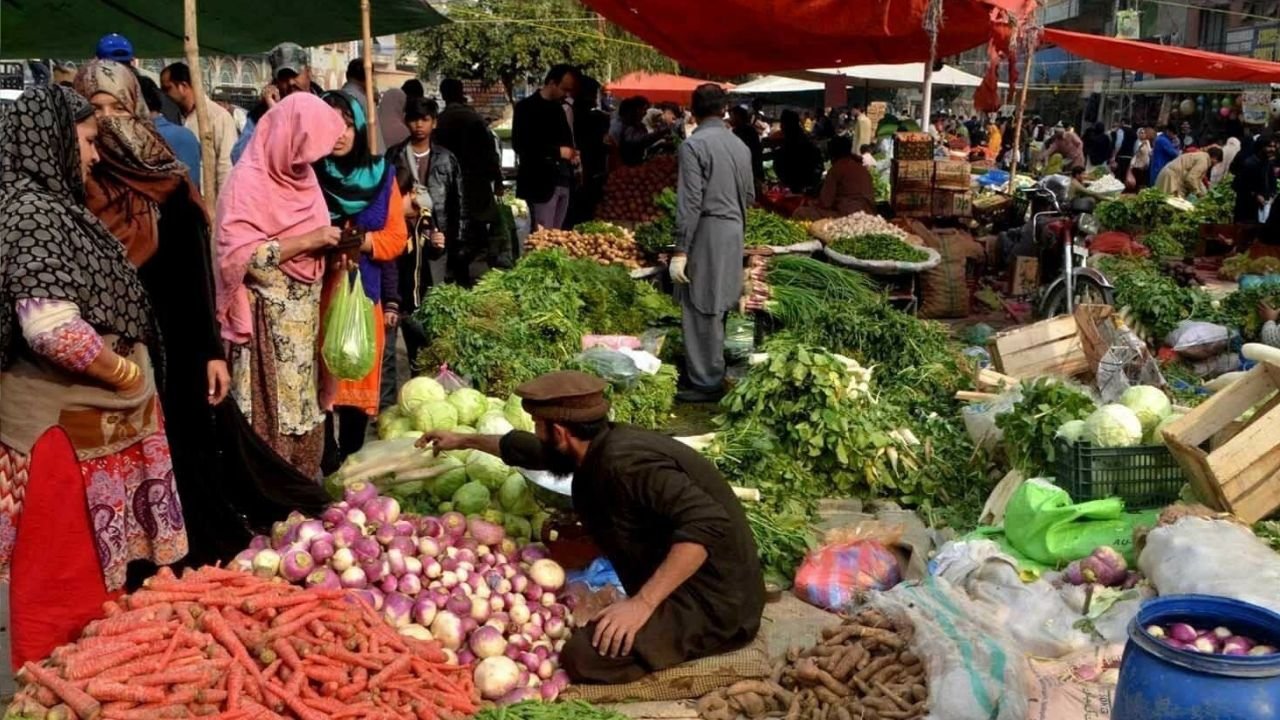
    The prices of vegetables and fruits have increased by 150 per cent as strikes by trade organisations and sit-ins by political parties in the country take hold.

    Roads in Balochistan have been closed since the past four days to impede the Baloch Yakjehti Council from holding a large gathering in Gwadar, hindering goods-carrying vehicles. Consequentially, the prices of vegetables and fruits in Quetta has risen by 100 to 150 rupees per kilogram.

    Okra, previously retailing for Rs 150 per kilogram, has risen to Rs 400, tomatoes have increased from Rs 80 per kilogram to Rs 140, pumpkin has risen from Rs 120 to Rs 200 per kilogram, while peaches have increased from Rs 100 to Rs 250 per kilogram, and apples have also seen a price increase of Rs 100 per kilogram.

    On the other hand, despite the end of the transporters’ strike across Punjab, traders have been exploiting the situation, driving up food prices even further. Shopkeepers, however, are now reportedly selling spices at more reasonable rates.

    According to citizens, rice and pulse prices have increased by 20 per cent in the market due to the strike. They are calling on the government to reduce food prices.

  • Petroleum minister confirms gas prices will remain unchanged, highlights falling inflation

    Petroleum minister confirms gas prices will remain unchanged, highlights falling inflation

    In a recent press conference, Minister for Petroleum Musadik Malik announced that the federal government has decided to keep gas tariffs unchanged. He confirmed that consumers will not experience any increase in gas prices.

    Malik highlighted that the government’s economic policies are beginning to yield positive results. He reported a substantial reduction in food inflation, which has decreased from 48 per cent to just 2 per cent.

    Overall inflation has also dropped significantly, falling from 38 per cent to 12 per cent, with a continued downward trend anticipated. Malik stated that all economic indicators suggest the country is moving towards greater stability.

    The minister emphasised that the government’s primary objectives are to alleviate poverty, control inflation, and create job opportunities for the youth. He revealed that Prime Minister allocated Rs600 billion in the current federal budget to support the underprivileged.

    Development projects are being prioritised, particularly in underserved areas, to generate local employment. Additionally, Rs50 billion has been earmarked to protect 86 per cent of electricity consumers for the upcoming three months.

    Malik reiterated the government’s commitment to providing further relief to the public by enhancing healthcare facilities, digitising the Federal Board of Revenue (FBR), and pursuing the privatisation of state-owned enterprises.

    Criticising the previous Pakistan Tehreek-e-Insaf (PTI) administration, Malik accused them of distributing $4 billion to the wealthiest individuals during their tenure. He also addressed the issue of terrorism, asserting that while the government is working to combat it, opposition parties are criticising these efforts.

    The minister expressed disappointment with the opposition’s approach, which he described as destructive and confrontational. He specifically criticised the Sunni Ittehad Council (SIC) for its negative campaign against state institutions and its focus on sit-ins without offering viable solutions.

    Furthermore, Malik accused PTI leaders of inconsistency, recalling that they previously claimed their government was overthrown by the US, yet they are now seeking assistance from the same country.

  • IMF predicts modest 3.5% growth for Pakistan amid global economic uncertainty

    IMF predicts modest 3.5% growth for Pakistan amid global economic uncertainty

    The International Monetary Fund (IMF) has forecasted a 3.5 per cent growth rate for Pakistan’s economy in the fiscal year 2024-25 (FY25), slightly below the government’s target of 3.6 per cent.

    This comes after Pakistan’s economy grew by 2.4 per cent in the fiscal year 2023-24, missing the government’s target of 3.5 per cent.

    Pakistan’s economic challenges are compounded by chronic mismanagement, the aftermath of the COVID-19 pandemic, the war in Ukraine, inflationary pressures from supply chain disruptions, and severe flooding in 2022.

    The IMF’s World Economic Outlook (WEO) update warns of modest global growth over the next two years, influenced by cooling activity in the US, stabilization in Europe, and stronger consumption and exports from China, but significant risks remain.

    Globally, the IMF has maintained its 2024 growth forecast at 3.2 per cent and slightly increased its 2025 forecast to 3.3 per cent. IMF Managing Director Kristalina Georgieva has expressed concern over these tepid growth rates. The US growth forecast for 2024 has been revised down to 2.6 per cent, reflecting slower consumption, while the 2025 forecast remains at 1.9 per cent due to a cooling labor market and moderated spending.

    The IMF has raised China’s 2024 growth forecast to 5.0 per cent, reflecting a rebound in private consumption and strong exports, but recent data showing lower-than-expected GDP growth poses a downside risk.

    The IMF also highlighted persistent risks to inflation due to high services prices and wage growth in labor-intensive sectors, alongside potential trade and geopolitical tensions that could exacerbate price pressures. Additionally, the IMF warned of the impact of economic policy shifts from upcoming elections, which could lead to increased protectionism and fiscal irresponsibility.

    The IMF advised policymakers to restore price stability, gradually ease monetary policy, rebuild fiscal buffers, and implement policies to promote trade and productivity growth.

  • Consumers not receiving electricity units at basic rate: Court hears petition

    Consumers not receiving electricity units at basic rate: Court hears petition

    The Lahore High Court has issued a written order for the previous hearing of a petition filed against the imposition of protective and non-protective tariffs on electricity consumers.

    The Supreme Court ordered the public prosecutor to appear with instructions at the next hearing.

    The written order said that according to the petitioner, tariffs related to electricity units have been imposed on the consumers.

    In the written order of the Lahore High Court, it has been said that according to the petitioner, electricity units are not being given to consumers as per the basic rate.

    Yesterday, the Lahore High Court issued a notice to National Electric Power Regulatory Authority (NEPRA) on the petition against the exorbitant increase in the electricity bills of more than 200 units on the basis of protective and non-protective tariffs and sought its response at the next hearing.

    Justice Risal Hasan Syed further questioned on what basis the prices of electricity have been increased.

  • Milk prices in Karachi higher than cities in France, Netherlands, Australia

    Milk prices in Karachi higher than cities in France, Netherlands, Australia

    Milk has become more expensive in Pakistan as compared to many countries of the world, Bloomberg has reported.

    According to the report, the price of boxed milk in Pakistan is 370 rupees per liter, while the same milk is available in Paris, the capital of France, for 342 rupees per liter. The price of milk in the Netherlands has also been declared cheaper than Pakistan.

    The report states that milk is available at Rs 358 per litre in Amsterdam and in Australia for Rs 300 per litre, while the price of canned milk in Pakistan is Rs.370.

    “Ultra-high temperature, or UHT, milk now costs 370 rupees ($1.33) a litre in supermarkets in Karachi. That compares with $1.29 in Amsterdam, $1.23 in Paris, and $1.08 in Melbourne, according to data collected by Bloomberg.” the report highlights.

    Bloomberg says that more than 60 percent of children in Pakistan are suffering from anaemia and increasing the price of milk is akin to putting the lives of sick children at stake.