Tag: Inflation rate

  • PM Shehbaz hails Moody’s rating upgrade amid cooling inflation

    PM Shehbaz hails Moody’s rating upgrade amid cooling inflation

    Prime Minister Shehbaz Sharif on Sunday expressed his satisfaction with the recent ease in the inflation rate, noting that the government’s ongoing economic reforms are yielding positive results.

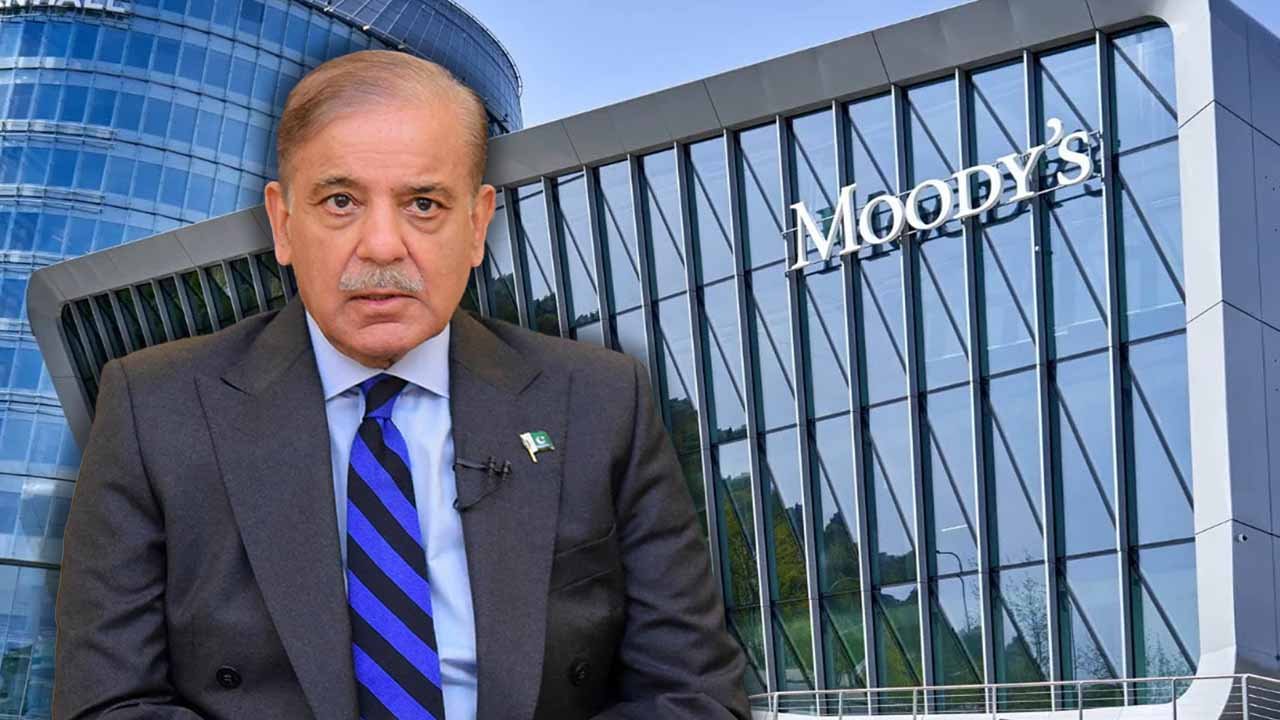
    In a recent statement, PM Shehbaz highlighted that the recent upgrade in Pakistan’s credit rating by Moody’s was a clear acknowledgment of the country’s improving economic indicators. He said that international institutions are recognising the progress Pakistan is making.

    Moody’s Ratings recently upgraded Pakistan’s local and foreign currency issuer and senior unsecured debt ratings from Caa3 to Caa2. This upgrade reflects slightly better macroeconomic conditions, alongside improved government liquidity and external positions, which, although still weak, have shown improvement. According to Moody’s, Pakistan’s default risk has now decreased.

    Read more: Govt notifies Rs1.86 per litre ‘reduction’ in petrol price for next fortnight

    This development follows another upgrade in July when Fitch Ratings pushed Pakistan’s Long-Term Foreign-Currency Issuer Default Rating (IDR) from ‘CCC’ to ‘CCC+’.

    The Prime Minister expressed satisfaction with the Consumer Price Index (CPI) easing to 11 per cent in July, and he anticipates that it will decline further in August. He reiterated the government’s commitment to pursuing economic reforms, including a right-sizing policy, which he is personally overseeing to ensure rapid implementation.

    PM Shehbaz expressed confidence that the reforms would soon have a noticeable positive impact on the country’s economy. He reassured the public that the government is fully aware of the challenges faced by the people and is working to address them.
  • Pakistan’s weekly inflation dips slightly amid lower fuel and onion prices

    Pakistan’s weekly inflation dips slightly amid lower fuel and onion prices

    Pakistan’s weekly inflation, as measured by the Sensitive Price Indicator (SPI), registered a slight decline of 0.16 per cent for the combined consumption groups during the week ending on August 15, according to the Pakistan Bureau of Statistics (PBS).

    The SPI for the period under review stood at 322.03 points, down from 322.54 points the previous week. However, compared to the corresponding week last year, the SPI for the combined consumption group saw a significant increase of 16.86 per cent.

    The SPI, with the base year set at 2015-16, covers 17 urban centres and tracks 51 essential items across all expenditure groups.

    For the lowest consumption group, with a monthly expenditure of up to Rs17,732, the SPI witnessed a marginal increase of 0.07 per cent, rising to 311.04 points from 310.83 points in the previous week.

    Similarly, the SPI for the Rs 17,732-22,888 consumption group saw a minimal rise of 0.01 per cent. In contrast, for consumption groups with expenditures ranging from Rs22,889-29,517, Rs29,518-44,175, and above Rs44,175, the SPI declined by 0.05 per cent, 0.10 per cent, and 0.25 per cent, respectively.

    Out of the 51 items monitored during the week, the prices of 19 items (37.25 per cent) increased, 13 items (25.50 per cent) decreased, while the remaining 19 items (37.25 per cent) remained stable.

    The key items that saw a decrease in average prices on a week-on-week basis included onions (4.91 per cent), petrol (3.15 per cent), diesel (2.44 per cent), wheat flour (1.83 per cent), pulse moong (1.81 per cent), chicken (1.57 per cent), bananas (1.36 per cent), LPG (0.90 per cent), sugar (0.59 per cent), potatoes (0.58 per cent), and pulse masoor (0.56 per cent).

    Conversely, items that recorded an increase in their average prices included tomatoes (34.77 per cent), eggs (4.78 per cent), garlic (1.99 per cent), beef (0.88 per cent), cooked beef (0.41 per cent), georgette (0.40 per cent), gur (0.39 per cent), curd (0.32 per cent), and mustard oil (0.28 per cent).

  • Weekly inflation falls by 1%, but year-on-year rates remain high

    Weekly inflation falls by 1%, but year-on-year rates remain high

    The weekly inflation measured by the Sensitive Price Indicator (SPI) recorded a decrease of 1 per cent for the combined consumption groups during the week ended on May 02, according to data released by the Pakistan Bureau of Statistics (PBS).

    This marks a significant shift as inflation pressures ease for the first time in weeks. The SPI for the current week stands at 316.95 points, down from the previous week’s 320.14 points.

    However, compared to the corresponding week of the previous year, the SPI is up by 24.37 per cent, reflecting the ongoing inflationary trend across various sectors.

    The SPI, calculated with a base year of 2015-16, encompasses 17 urban centers and 51 essential items across all expenditure groups. The index serves as a critical barometer of inflationary trends in Pakistan.

    For the lowest consumption group, earning up to Rs17,732, the SPI decreased by 1.09 per cent, settling at 306.26 points, down from last week’s 309.64 points.

    Similarly, the SPI for consumption groups in the ranges Rs17,732-22,888, Rs22,889-29,517, Rs29,518-44,175, and above Rs44,175 saw decreases of 1.12 per cent, 1.02 per cent, 1.04 per cent, and 0.95 per cent, respectively.

    This broad-based decline indicates a general easing of inflationary pressures across different income groups.

    Price variations across essential items

    Out of the 51 items evaluated by the SPI, the prices of 18 items decreased, 15 increased, and 18 remained stable during the week.

    Items showing decreased prices

    Key items that recorded a notable decrease in their average prices on a week-on-week basis include:

    – Tomatoes: 22.05 per cent decrease

    – Chicken: 8.03 per cent decrease

    – Onions: 7.71 per cent decrease

    – Wheat flour: 6.88 per cent decrease

    – Bananas: 5.25 per cent decrease

    – Diesel: 2.89 per cent decrease

    Items with increased prices

    In contrast, some items saw a rise in their prices. These include:

    – Potatoes: 6.06 per cent increase

    – Salt powder: 0.91 per cent increase

    – Garlic: 0.85 per cent increase

    – Powdered milk: 0.70 per cent increase

    Year-on-year trends

    While the week-on-week numbers showed a decline, the year-on-year comparison paints a more complex picture.

    Certain commodities experienced significant increases over the past year. Notable among them are:

    – Gas charges for Q1: 570 per cent increase

    – Onions: 145.15 per cent increase

    – Tomatoes: 79.43 per cent increase

    – Garlic: 72.46 per cent increase

    – Chilies powder: 71.96 per cent increase

    However, some items witnessed a decrease in average prices over the year, including:

    – Bananas: 37.76 per cent decrease

    – Wheat flour: 23.15 per cent decrease

    – Cooking oil (5 litre): 20.45 per cent decrease

    These figures suggest a dynamic landscape of price fluctuations, with some areas showing improvement while others continue to face inflationary pressures.

    The decrease in SPI for the current week offers a brief respite from the upward inflation trend, but with significant year-on-year increases in many commodities, vigilance remains crucial.

  • PKR records eighth consecutive gain, closes at Rs282.79 vs dollar

    PKR records eighth consecutive gain, closes at Rs282.79 vs dollar

    In a notable financial trend, the Pakistani rupee (PKR) sustained its positive trajectory against the US dollar (USD) for the eighth consecutive session, witnessing a 0.04 per cent appreciation in the interbank market on Thursday.

    According to the State Bank of Pakistan (SBP), the rupee concluded at Rs282.79 after experiencing a rise of Re0.11.

    The preceding day saw a slight uptick in the PKR’s value, settling at Rs282.9 against the US dollar. 

    A significant development unfolded as the government successfully secured a historic amount of Rs397 billion ($1.4 billion) in Wednesday’s local currency bond auction. 

    This achievement surpassed expectations, marking the highest borrowing in years within a single auction, showcasing sustained market interest even as December draws to a close.

    The substantial participation of investors underscores their confidence in long-term bonds, fueled by the anticipation of an early 2024 rate cut. 

    The government strategically opted for long-term borrowing in response, effectively mitigating rollover risks and minimisingreliance on short-term funding in the future.

    On the global front, the US dollar regained strength on Thursday, prompted by a sudden end to a robust rally for US stocks, compelling investors to seek safety. 

    In the final hour of equities trade on Wall Street, heavy selling induced a ripple of risk aversion through markets, lifting the previously under-pressure greenback from lows.

    As of early Asia trade on Thursday, the dollar index, which is down 1 per cent for the year so far, remained steady at 102.37. 

    In a comparison with major currencies, the Pakistani currency strengthened by 69.15 paisa against the Euro, concluding at Rs309.57 as opposed to the previous rate of Rs310.26. 

    The British Pound saw a reduction in value of 79.58 paisa, settling at Rs357.41 in comparison to the previous day’s Rs358.21.

    However, PKR experienced a slight decline of 0.38 paisa against the Japanese yen, closing at Rs1.974 as compared to the previous day’s rate of Rs1.97. 

    The Saudi Riyal concluded at Rs75.38, registering a decrease of 1.15 paisa from its value of Rs75.39 a day ago. 

    Similarly, the UAE Dirham witnessed a decrease in value of 2.81 paisa, shifting from Rs77.027 the previous day to Rs76.999.

    Meanwhile, oil prices, a crucial indicator of currency parity, experienced a decline on Thursday due to concerns over low demand following an unexpected US crude inventory build, outweighing apprehensions about global trade disruptions linked to tensions in the Middle East. 

    Brent crude futures dropped by 3 cents to $79.67 a barrel, while US West Texas Intermediate crude stood at $74.16 a barrel, reflecting a 6-cent decrease.

  • Pakistan’s stock market surges to all-time high of 53,123.04 points

    Pakistan’s stock market surges to all-time high of 53,123.04 points

    The Pakistan Stock Exchange (PSX) continued its impressive performance, with the benchmark KSE-100 index surging by over 700 points and approaching the historic milestone of 54,000 during Monday’s trading session.

    As the closing bell neared, the KSE-100 Index stood at 53,860.36, reflecting a remarkable gain of 737.33 points, or 1.39 per cent.

    In the preceding week, the KSE-100 index achieved a then-record high, driven by robust buying primarily from local investors, bolstered by institutional support.

    The benchmark index witnessed a substantial week-on-week increase of 2,179.20 points, breaching the 53,000 mark and concluding at an all-time high of 53,123.04 points, a historic first.

    Monday’s trading session witnessed broad-based buying, with key sectors such as cement, chemicals, commercial banks, and OMCs all trading in positive territory.

    Market analysts attributed this positive momentum to an overall improvement in economic indicators, notably the State Bank of Pakistan’s (SBP) decision to maintain interest rates at 22 per cent during the last Monetary Policy Committee (MPC) meeting.

    Additionally, a decrease in the inflation rate, with the October 2023 Consumer Price Index (CPI) at 26.9 per cent year-on-year and favourable feedback from the International Monetary Fund (IMF) mission currently visiting Pakistan, further enhanced market sentiment.

    Furthermore, the announcement of final election dates by the country’s election commission, signifying political stability, also played a significant role in creating favourable conditions within the market.

  • Inflation in Pakistan stays above 27% despite IMF reforms

    Inflation in Pakistan stays above 27% despite IMF reforms

    Pakistan continues to grapple with soaring inflation, with the rate holding steady at 27.4 per cent in August, according to data released on Friday. This persistent inflationary pressure is partially attributed to the reforms mandated as part of the IMF loan agreement, which have complicated efforts to stabilise prices and curb declines in the national currency, the rupee.

    The South Asian nation is treading cautiously on its path to economic recovery, with a caretaker government at the helm following the approval of a $3 billion loan programme by the International Monetary Fund (IMF) in July, averting a potential sovereign debt default.

    However, the conditions tied to this bailout, including the relaxation of import restrictions and the removal of subsidies, have contributed to a surge in annual inflation. In May, inflation reached a staggering 38.0 per cent, setting a new record. Concurrently, interest rates have risen, and the rupee has experienced historic lows, with a 6.2 per cent decline in the currency’s value last month.

    While the August data from Pakistan’s statistics bureau indicates a slight easing from July’s 28.3 per cent inflation rate, food inflation remains alarmingly high at 38.5 per cent. Authorities have further exacerbated the situation by raising gasoline and diesel prices to record highs on Friday.

    These worsening economic conditions, coupled with escalating political tensions ahead of a national election scheduled for November, have triggered sporadic protests. Jamaat-e-Islami has announced a nationwide strike in response to the increased power tariffs.

    Every day, Pakistanis are feeling the pinch and struggling to make ends meet. Waseem Ahmed, a bank employee in Islamabad, lamented the plight of the middle class, stating, “More than 60 to 70 per cent of my salary is spent on bills and petrol. Where will we get basic staples from? This is why people are contemplating suicide,” he told Reuters.

    According to ARY News, Mohammed Sohail, CEO of Topline Securities, a Karachi-based brokerage firm, acknowledged that August’s inflation reading aligns with expectations. However, he cautioned that the depreciating rupee and rising energy prices may prevent a significant year-on-year decline in inflation, contrary to earlier government projections that had anticipated a drop to 22 per cent by the end of the fiscal year running until June 31.

    Pakistan’s central bank, in its last monetary policy statement in July, held benchmark interest rates steady at 22 per cent and expressed optimism that inflation would follow a downward trajectory over the ensuing 12 months. However, the current economic challenges present formidable hurdles to achieving that goal.

  • President Alvi ko chahiye mazeed salary

    President Alvi ko chahiye mazeed salary

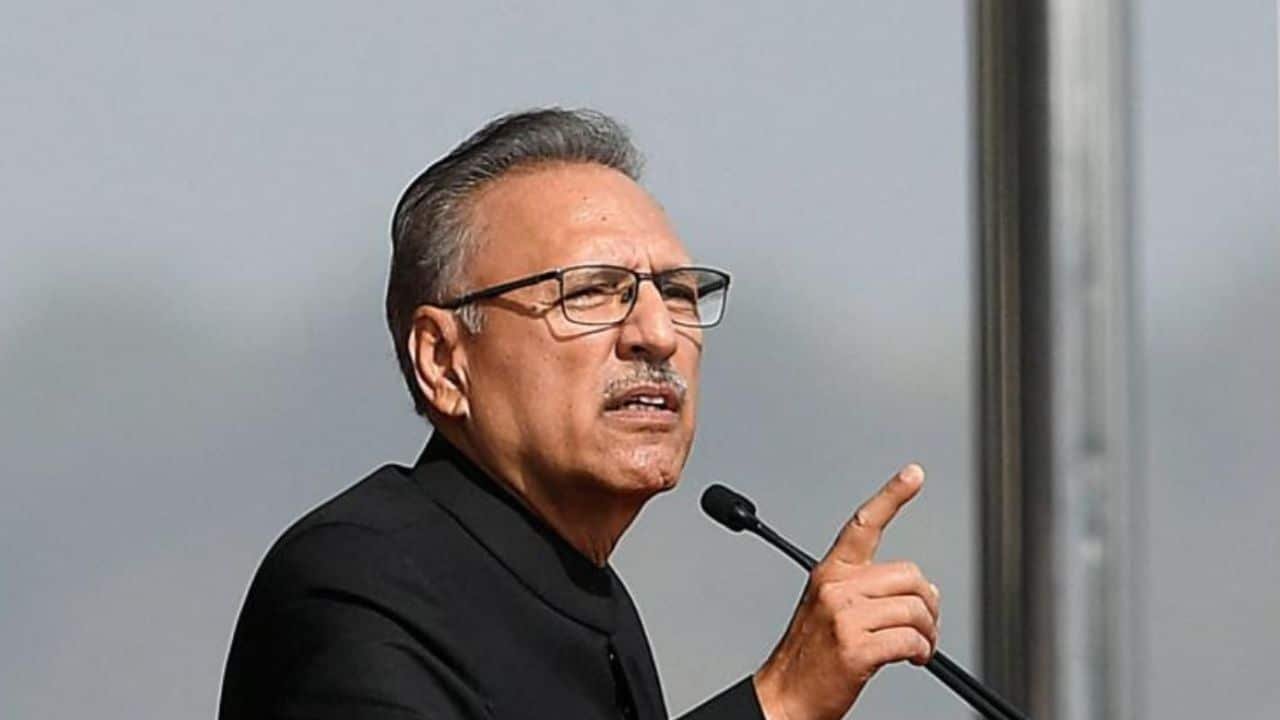
    President Dr Arif Alvi is seeking an increase in his salary. Official documents show that the president has asked for two raises, first with effect from July 1, 2021 and second with effect from July 1, 2023, as per Geo News.

    Currently, the president draws a monthly salary of Rs 846,550 and wants a two-step raise to Rs 1,024,325 and Rs 1,229,190 per month with effect from July 2021 and July 2023 respectively.

    In a letter written to the Secretary Cabinet through his Military Secretary earlier this month, the President’s Secretariat has desired amendment in the Fourth Schedule of President’s Salary Allowances and Privileges (Amendment) Act, 2018 to allow the president’s salary, a) Rs 1,024,325 per month with effect from July 1, 2021, and b) Rs 1,229,190 per month with effect from July 1, 2023.

    The letter stated, “In Pursuance of para 3(2) of President’s Salary, Allowances and Privileges (Amendment) Act 2018, published in the Gazette Notification (Part I), the remuneration of the President shall be a symbolic one rupee higher than the salary of any holder of Public Office in relation to affairs of the Federation. Accordingly, pay of the honorable President was fixed at Rs 846,550/- per month in 2018 as reflected in the Fourth Schedule of the Act ibid.”

    The letter further pointed out that the salary of the Chief Justice of Pakistan being a holder of Public Office was increased twice in the last 2 years through Presidential Orders. Pay of Chief Justice of Pakistan was fixed at Rs 1,024,324/ per month w.e.f 01 July 2021 and subsequently at Rs 1,229,189/ per month w.e.f. 01 July 2023. As per the rules, the salary of the President was not enhanced in relation to the laid down principle of one rupee higher than the salary of any holder of public office i.e. Chief Justice of Pakistan.

    On the basis of the above, the Presidency sought changes in the Fourth Schedule of President’s Salary Allowances and Privileges (Amendment) Act 2018 accordingly.

    The Cabinet Division referred the case to the Law Ministry, which on August 18 advised the former to process the case for a raise in Alvi’s salary.

    The Law Ministry stated, “The Federal Government by virtue of section 3(2) of the same Act has the power to amend that Schedule by way of a notification in the official gazette henceforth in relation to the issue at hand the Federal Government is competent to amend the Fourth Schedule by way of gazette notification and no amendment in the Fourth Schedule is required via an amending Act to effectuate a revision in the salary of the President.”

    The matter was also referred to the Finance Division, which on August 22 also supported the proposed increase in the salary of the president through amendment in the Fourth Schedule of the President (Salary, Allowances & Privileges) Act, 1975.

    The matter is expected to be presented before the cabinet for approval. The president, besides getting the desired increases, will also get a hefty amount as arrears as the two-step raises will be allowed with effect from July 2021 and July 2023 respectively.

  • Pakistan’s weekly inflation reaches lowest point at 28.6% since October 2022

    Pakistan’s weekly inflation reaches lowest point at 28.6% since October 2022

    The Sensitive Price Indicator (SPI) recorded a weekly inflation increase of 0.70 per cent, reaching 28.55 per cent on a year-on-year basis for the week ending June 6.

    This represents the lowest rate since October 20, 2022, when SPI inflation stood at 27.1 per cent. Furthermore, short-term inflation surged to an all-time high of 48.35 per cent for the period ending on May 4.

    During the week, a total of 51 items were monitored, and their price movements were analysed. Out of these items, 24 (47.06 per cent) experienced price increases, 10 (19.61 per cent) witnessed price decreases, and 17 (33.33 per cent) remained stable.

    This table showcases the items that recorded either an increase or decrease in their average prices during the specified week:

    Item Increase/Decrease
    Tomatoes Increase (42.25%)
    Onions Increase (8.70%)
    Potatoes Increase (4.79%)
    Wheat flour bag 20 kg Increase (4.05%)
    Gur Increase (4.01%)
    Sugar Increase (3.48%)
    Shirting Increase (3.02%)
    Hi-speed diesel Increase (2.95%)
    Garlic Increase (1.90%)
    Matchbox each Increase (1.66%)
    Curd Increase (1.43%)
    Pulse mash Increase (1.29%)
    Fresh milk Increase (1.20%)
    Rice irri-6/9 Increase (0.74%)
    Rice basmati broken Increase (0.67%)
    Mustard oil Increase (0.59%)
    Prepared tea Increase (0.56%)
    Long cloth 57″ Gul Ahmed/Al Karam Increase (0.51%)
    Mutton Increase (0.40%)
    Beef with bone Increase (0.39%)
    Toilet soap Increase (0.24%)
    Powdered milk Nido 390 gm polybag each Increase (0.13%)
    Georgette Increase (0.08%)
    Cooked daal Increase (0.04%)
    Bananas Decrease (7.51%)
    Chicken Decrease (2.80%)
    Eggs Decrease (1.17%)
    LPG Decrease (0.96%)
    Vegetable ghee Dalda/Habib 2.5 kg tin each Decrease (0.74%)
    Cooking oil Dalda or other similar brands, 5L Decrease (0.72%)
    Vegetable ghee Dalda/Habib or other superior quality, 1 kg pouch each Decrease (0.81%)
    Pulse masoor Decrease (0.47%)
    Pulse moong Decrease (0.31%)
    Pulse gram Decrease (0.24%)