Tag: inflation

  • Weekly inflation increases 0.94% as food prices rise

    Weekly inflation increases 0.94% as food prices rise

    Owing to an increase in the prices of food items, the Sensitive Price Indicator (SPI)-based weekly inflation for the week ending September 29 increased by 0.94 per cent.

    The items which saw an increase in prices include onions (47.77 per cent), tomatoes (30.29 per cent), tea Lipton (2.50 per cent), bread (1.74 per cent) and non-food item, washing soap (1.13 per cent), according to the Pakistan Bureau of Statistics (PBS).

    Moreover, the year-on-year trend recorded an increase of 30.62 per cent, mainly due to a surge in prices of tomatoes (224.20 per cent), onions (139.03 per cent), diesel (105.12 per cent), petrol (91.87 per cent), pulse gram (74.56 per cent, masoor (72.42 per cent), mustard oil (64.53 per cent), washing soap (63.33 per cent), cooking oil 5 litre (61.78 per cent), vegetable ghee 2.5 kg (58.37 per cent), maash (57.36 per cent), vegetable ghee 1kg (55.89 per cent), gents sponge chappal (52.21 per cent), and moong (47.96 per cent), while decrease observed in the prices of electricity for q1 (45.61 per cent), chillies powder (42.73 per cent), sugar (18.27 per cent), and gur (1.92 per cent).

    According to the most recent PBS data issued on Friday, the SPI for the week under review in the aforementioned category was recorded at 205.13 points as opposed to 203.21 points observed in the previous week.

  • Kya log waqai mehngai se tang aa kar apna sona baich rahay hain?

    Kya log waqai mehngai se tang aa kar apna sona baich rahay hain?

    From meeting hospitalisation expenses to paying hefty electricity bills, Pakistanis are increasingly selling their gold jewellery to tide over inflation in Pakistan.

    This trend has been fueled by mounting expenses, such as expensive food products, rising petroleum prices, education fees, medical expenses, and house rents, in the face of low income. According to multiple sources in the jewellers’ association, there has been an upsurge in the number of people selling off gold as compared to buyers, in recent months.

    Several social media posts indicated that people were compelled to sell their gold in order to pay for their electricity bills after the government imposed hefty Fuel Cost Adjustment (FCA) charges in monthly electricity bills.

    The FCA was added to the electricity bills for the month of August, drawing protests from citizens who demanded the government immediately withdraw the FCA as it was an injustice to the consumers and they did not have the capacity to pay outrageous electricity bills.

    The Current contacted several jewellers in Lahore to uncover whether people were actually selling gold to pay their electricity bills.

    According to the owner of a renowned gold shop in Liberty Lahore, when inflation is high, people’s only alternative is to sell any gold they may have. “There are undoubtedly more sellers because gold prices have reached an all-time high at this time. Comparatively, there are noticeably more sellers than purchasers. Another reason for selling gold is to combat inflation.”

    When asked if locals were really selling gold to pay their power bills, the goldsmith responded, “People sell gold for many different purposes outside merely paying their electricity bills. A lot of people sell their gold in order to invest in more lucrative assets, this may not necessarily be about bills. A number of individuals sell gold in order to invest in real estate or build their own houses.”

    Owing to overall inflation, gold prices had hit an all-time high, but since last week, they have been steadily declining. The latest drop in gold prices also prompted people to sell their gold as it was the ideal time to get the best price and acquire other assets, as they could later buy gold at a lower price after its price is stabilised.

    The majority of gold jewellers in the vicinity of Lahore’s posh area asserted that this unquestionably occurs at a time when the country’s economy is unstable and consumers are left with no choice but to sell the assets they have been saving for years to utilise in crises.

    Another jewellery store owner in Lahore’s less well-off area admitted that “This happens,” but added that “Not everyone is willing to discuss their personal and financial concerns or reveal causes why they are selling gold and what they need money for. People visit our shops for reasons other than just paying their electricity bills, such as emergencies or the urgent need for cash to cover healthcare expenses.”

    Investors frequently turn to gold as a safe haven when the economy is struggling or when there are conflicts on an international scale. For investors looking for a safe investment with a proven track record of profitability, gold appears to be an attractive alternative in light of rising inflation and the stock market trading far below its highs.

  • British pound hits 37-year low against US dollar as recession fears grow

    British pound hits 37-year low against US dollar as recession fears grow

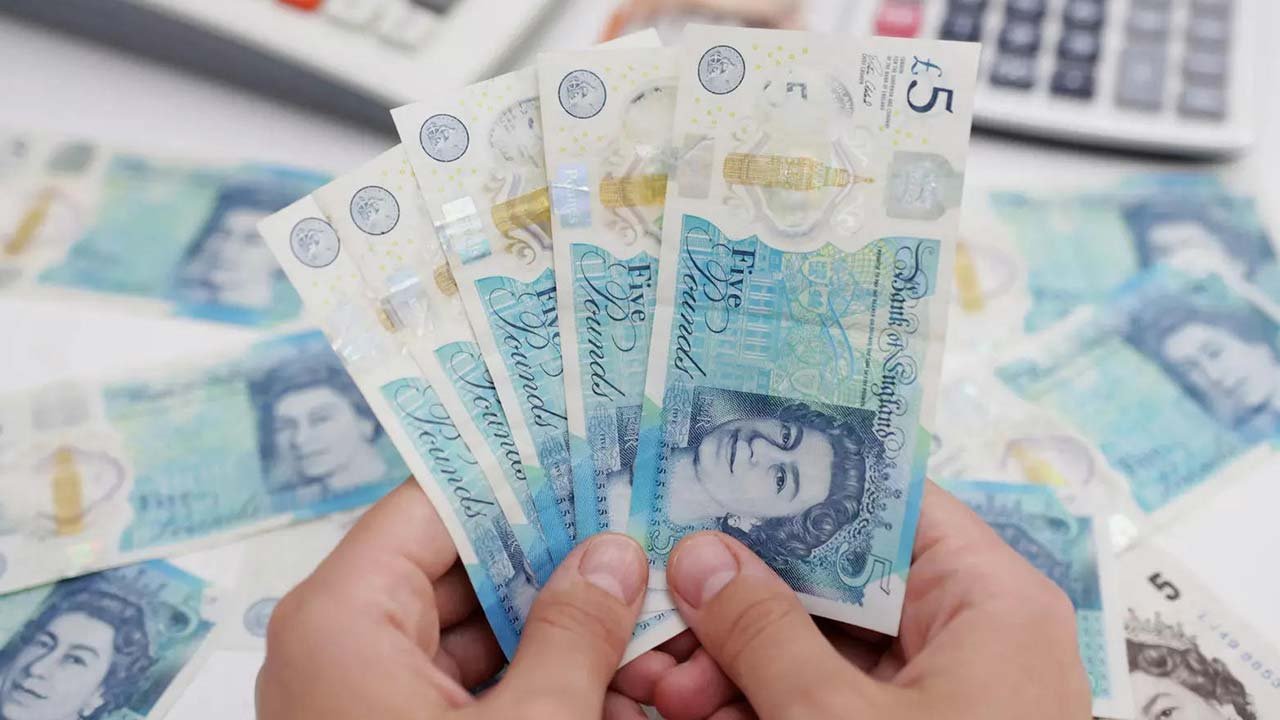
    As central banks raised interest rates to combat soaring inflation, the pound fell to a record 37-year low versus the US dollar on Friday, raising concerns among traders about the economy’s outlook.

    Following the Bank of England’s Thursday increase in borrowing prices by 50 basis points, the value of the pound dropped as low as $1.1151, its lowest level since early 1985.

    That came after the Federal Reserve raised interest rates by three-quarters of a point on Wednesday and hinted at further increases.

    Additionally, the dollar rose versus the euro, with the euro trading at $0.9753, a fresh 20-year low.

    The Fed has taken a notably hawkish stance, stating it would not relent until the inflation, which is near four-decade highs, is controlled, even at the expense of the economy, while central banks around the world are raising borrowing prices.

    The focus of traders is now on London, where the new finance minister Kwasi Kwarteng is scheduled to present a mini-budget to assist individuals and companies.

    On Thursday, Kwarteng announced he would repeal a recent salary tax introduced by his predecessor Rishi Sunak and would disclose the price tag for the new administration’s proposal to cap energy costs for both homes and companies.

    It occurs when the Bank of England issues a warning that Britain is on the verge of entering a recession as a result of skyrocketing gasoline and food prices.

  • Euro drops to two-decade low against the US dollar

    Euro drops to two-decade low against the US dollar

    As the Federal Reserve implemented yet another aggressive interest rate hike in reaction to out-of-control inflation on Wednesday, the US dollar soared to a level that is almost 20 years higher against the euro.

    Only a few months after the euro was become the sole legal money of the 12 member states of the European Union, the euro to dollar ratio reached 0.9814 for the first time since October 2002.

    Prior to the 1800 GMT Fed speech, Wall Street equities were in the green. However, after the statement, they plunged into the red.

    Interest rate projections for the end of 2023 and 2024 in the most recent Fed announcement were higher than anticipated, indicating that the US central bank now believes a longer monetary tightening cycle is necessary in light of inflation trends.

    According to a report from High-Frequency Economics, “Overall, the message from the (Fed) remains hawkish, with the Fed committing to further rates hikes to combat inflation and keep inflation expectations anchored.”

  • ‘Workers should await a final call in September’: Fawad Chaudhry

    Pakistan Tehreek-e-Insaf (PTI) leader Fawad Chaudhry has said that party organisations across the country have been ordered to come out and protest against rising inflation.

    Chaudhry said, “If the government doesn’t move towards elections, then wait for a final call in these two weeks as consultation continues. We think workers should await a final call in September.”

    “General elections will take place, whether the government wants them or not. The ultimate arbiter is the nation and until it doesn’t get the right to make political decisions, the PTI won’t step back from its struggle,” he warned.

    Chaudhry further said that any technocrat or interim government had no room in the Constitution and such a setup would in effect be considered a martial law.

    “Everything that has to happen will happen this month,” said Chaudhry.

    Two days prior to Chaudhry’s statement, PTI Chairman Imran Khan, in an address to the nation once again demanded early elections, warning that PTI’s patience was wearing thin.

    Read more:

    “If we want to save the country from discord and chaos, free and fair elections need to be announced immediately,” he said.

    “Our patience won’t last long if you continue like this, we will have to give a call to the nation,” said Khan, addressing the government.

    “If there is no political stability, the economy won’t stabilise. So I want to tell my people today that we need to have elections quickly to save Pakistan from this quagmire,” the former Prime Minister insisted, adding that it was his fear that there will be no economic progress without political stability.

  • IMF report exposes incorrect PTI policies that led to rupee’s devaluation

    IMF report exposes incorrect PTI policies that led to rupee’s devaluation

    The International Monetary Fund (IMF) has issued its country report for Pakistan, exposing erroneous policies implemented by the PTI administration that, according to the Fund, undermined the country’s currency reserves and led to the rupee’s devaluation.

    The study also discloses what the present administration, led by the PML-N, has promised the international lender, according to Samaa.

    The study does not identify any political party, but it does mention rising GDP, which the PTI has said is the outcome of its policies. Pakistan’s GDP increased by 6 per cent in fiscal year 2021-22 (FY22), which ended less than three months after Imran Khan was overthrown by parliament in early April.

    According to experts, the increase in GDP was driven by unsustainable expansion, which resulted in economic overheating. The IMF study comes to the same conclusion.

    According to the Fund, GDP growth in FY22 was “driven by permissive fiscal policy and a delayed monetary reaction to inflationary pressures.”

    These factors, together with worldwide food and fuel price shocks, resulted in a major worsening of the external situation, including an unsustainable current account deficit, a considerable decrease in reserves, and a significant devaluation of the rupee.

    The PTI administration failed to respond to the worldwide commodity price increase, and its policies caused the rupee to depreciate and currency reserves to dwindle, according to the international lender.

    Pakistan is at a crossroads in its economic development. Internal demand reached unsustainable levels as a result of a challenging external environment paired with procyclical domestic measures. According to the IMF, the resulting economic overheating resulted in high fiscal and external deficits in FY22, contributed to increasing inflation, and destroyed reserve buffers.

    The PTI administration broke its pledges quickly after collecting roughly $1 billion from the IMF. Following the completion of the sixth evaluation, programme implementation worsened. In the midst of a volatile political scene, planned fiscal adjustment was reversed, and some significant EFF agreements were honoured, as per the report.

    According to the report, the present administration has informed the Fund that it would reimpose the general sales tax (GST) on petroleum products and will not provide any fuel subsidies.

    The current administration will not declare a tax amnesty unless Parliament first approves it. It will also simplify the sales tax on services throughout the country. Currently, different provincial territories apply varying rates of sales tax on services.

    The Fund takes notice of the actions implemented by the PML-N administration to re-establish the IMF programme, including a budget based on a basic surplus, a rise in interest rates, and the elimination of fuel subsidies.

    The IMF has advised the government to maintain a market-based currency rate, enhance tax income, and strengthen foreign reserves. The IMF also said that the lending programmes entail exceptional risks even after policy adjustments.

  • Pakistan inflation hits highest level since 1973

    Pakistan inflation hits highest level since 1973

    According to the Pakistan Bureau of Statistics (PBS), Pakistan’s Consumer Price Index-based inflation (CPI) climbed by 27.3 per cent on a year-over-year basis in August 2022 as opposed to an increase of 24.9 per cent the previous month and 8.4 per cent in August 2021.

    Inflation has increased by an average of 26.1 per cent in the first two months of the current fiscal year 2023 compared to 8.36 per cent in 2022. August’s inflation rate was the highest since November 1973.

    According to brokerage house Arif Habib Limited (AHL) the Consumer Price Index (CPI) for the month of Aug’22 clocked in at 27.26 per cent YoY (+2.45 per cent MoM). This takes 2MFY23 average inflation to 26.1 per cent compared to 8.36 per cent in 2MFY22.

    CPI inflation

    Urban

    In August 2022, urban CPI inflation was 26.2 per cent on an annual basis, up from 8.3 per cent in August 2021 and 23.6 per cent the month before.

    It climbed by 2.6 per cent month over month in 2022, compared to 4.5 per cent the month before and 0.5 per cent in August 2021.

    Rural

    In addition, rural CPI inflation reached 28.8 per cent on an annual basis in August 2022, up from 8.4 per cent in August 2021 and 26.9 per cent in the preceding month.

    In August 2022, it climbed by 2.2 per cent month over month, compared to 4.2 per cent the month before and 0.7 per cent in August 2021.

    Further increase expected

    Rising inflation has become a major worry for Pakistan’s economy, which is already experiencing a loss of foreign exchange reserves.

    In the midst of severe flash floods that have resulted in at least 1,100 fatalities, extensive destruction, and millions of displaced people, experts have cautioned that the country will experience additional increases in food costs.

  • Govt raises petrol price by Rs2.07 to Rs235.98 per litre

    Govt raises petrol price by Rs2.07 to Rs235.98 per litre

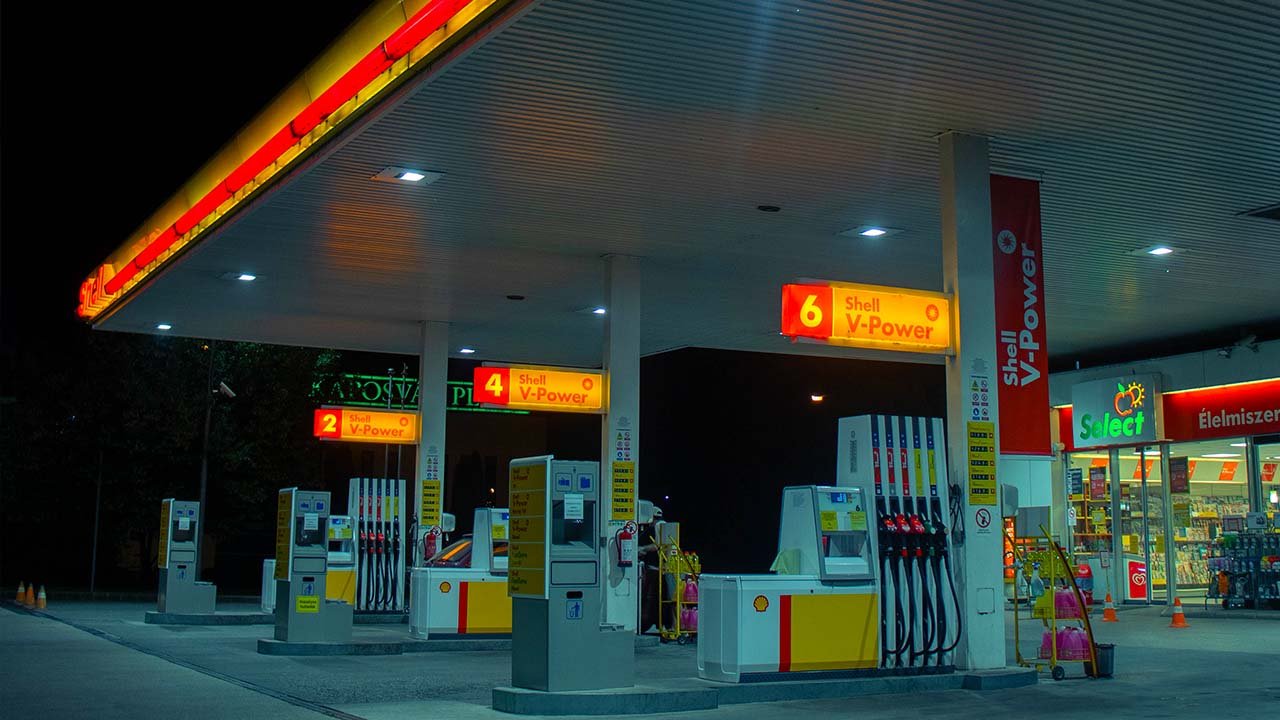
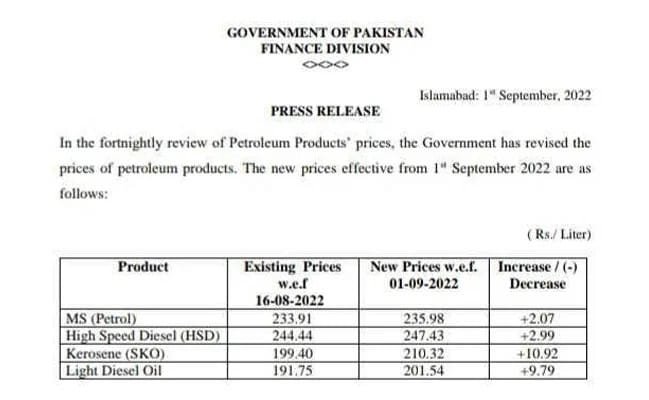
    The price of petrol was raised by the government on Wednesday by Rs2.07 per litre, making it Rs235.98 for the upcoming two weeks.

    Additionally, it announced a hike in the costs of kerosene oil by Rs9.79 per litre to Rs201.54, high-speed diesel by Rs2.99 per litre to Rs247.43, and light diesel oil by Rs10.92 per litre to Rs210.32.

    Contrary to what the market anticipated, the decision to raise gasoline prices, even more, was finally made. In the first half of September 2022, the market anticipated a price drop of up to Rs 20 per litre for the two main petroleum products—petrol and high-speed diesel.

    Expectations were sparked by a decline in the average exchange rate for the purchase of Pakistan State Oil (PSO), which fell from Rs227 in the first half of August to Rs217 in the next15 days.

    Similar to this, the premium paid on gasoline and HSD in the first half of August had decreased from $17 and $8.5 per barrel, respectively.

  • Vegetable prices soar amid low supply due to floods

    Vegetable prices soar amid low supply due to floods

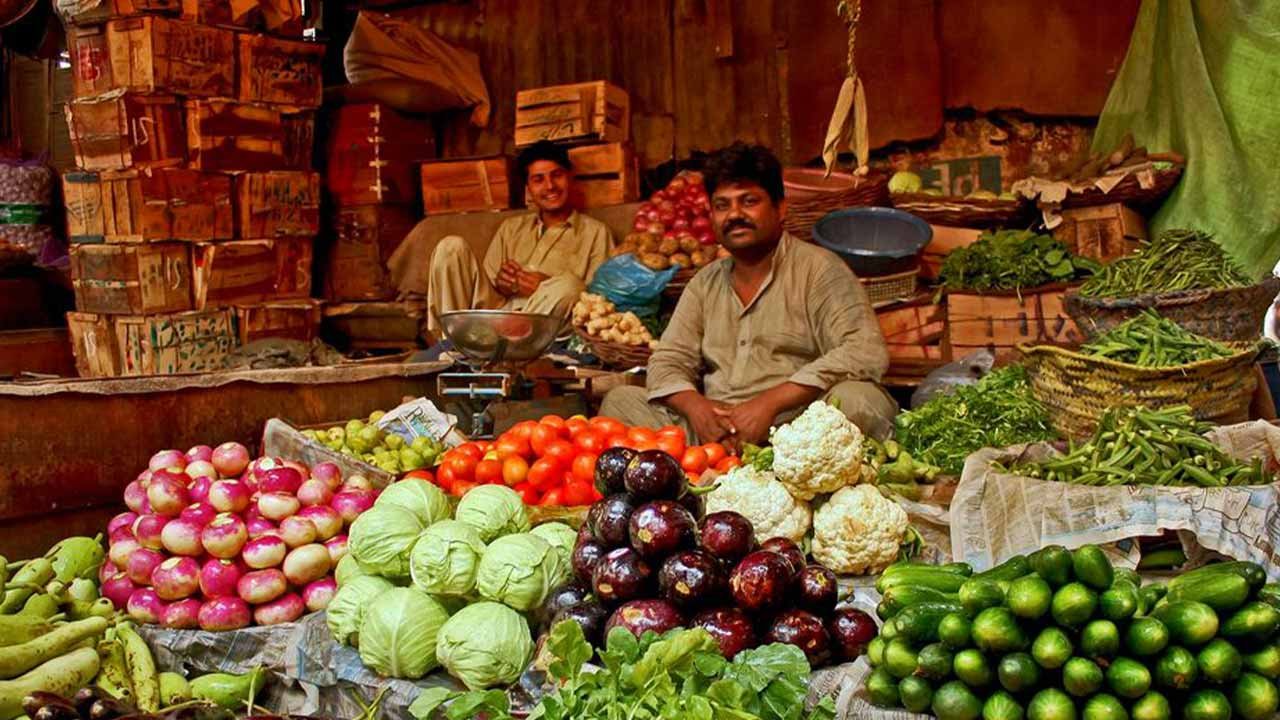
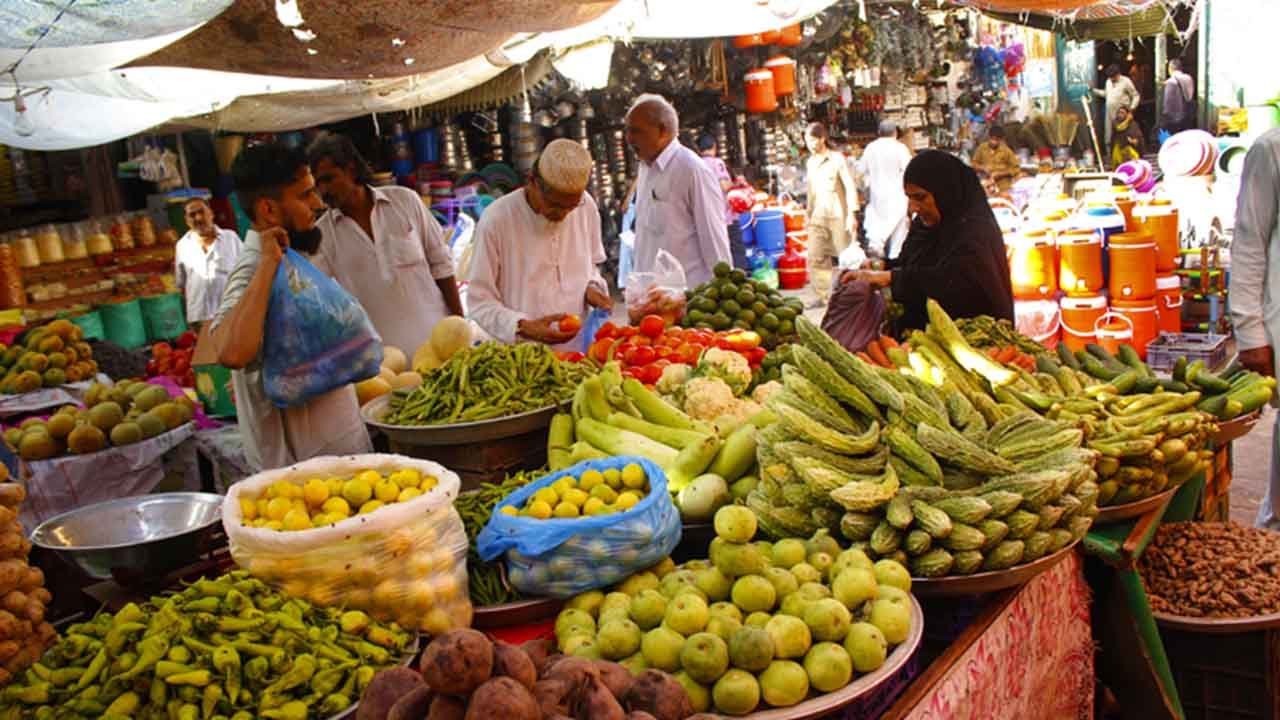
    Extreme flooding has hampered the supply of perishable items from agricultural areas, driving up the prices of onions and tomatoes in city markets.

    While tomatoes cost Rs400-450 per kilogramme (kg), onions cost Rs350-400 per kg. Onion prices rose by Rs75 per kg week over week in the official rate list, while tomato prices rose by Rs234 per kg.

    The supply chain is hampered by road blockages and transportation restrictions in flood-affected areas, according to The News.

    Onion A-grade cost Rs75 more per kg, was fixed at Rs180-190, and was sold for Rs350-400 per kg. Onion B-grade cost Rs160-167 per kg, was sold for Rs235-250 per kg, and onion C-grade was priced at Rs180-200 per kg.

    Tomato A-grade price increased by Rs234 per kg, maintained at Rs320-330 per kg, sold for Rs400-450 per kg, followed by B-grade price increase to Rs290-300 per kg, C-grade price increase to Rs240-250 per kg, and B&C price increase to Rs350 per kg.

    Chinese carrot prices increased by Rs11 per kg, from Rs80 to Rs85 per kg to Rs120 to Rs160 per kg for sale. Fenugreek (Methi) remained constant at Rs250-260 per kg and was sold for Rs400 per kg.

    This week, the price of chicken also climbed by Rs20 per kg, from Rs240 per kg to Rs280–300 per kg, and the price of chicken meat by Rs30 per kg, from Rs362/kg to Rs380–650/kg.

    Cucumber Farm increased its price by Rs50 per kg, fixed at Rs120-125 per kg, sold at Rs150 per kg, and locally sold cucumbers were sold for Rs200 per kg.

    Brinjal price increased by Rs5 per kg, from Rs86 to Rs90 per kg, and was sold for Rs120 to Rs140 per kg.

    Price of bitter gourd rose by Rs10 per kg, fixed at Rs160-165 per kg, and sold at Rs200 per kg.

    Local lemon prices increased by Rs20 per kg, from Rs235-245 per kg to Rs280-320 per kg when sold. Pumpkin remained at Rs60–63 per kg, sold for Rs80–100 per kg, and pumpkin long was sold for Rs140–150 per kg.

  • Retailers in Lahore continue to overcharge for food items

    Retailers in Lahore continue to overcharge for food items

    Lahore residents are forced to pay high prices for basic food items since a number of store owners refuse to sell basic items at the government-recommended price list.

    Those who complain about price violations are asked to shop elsewhere where the items are offered at legal prices.

    The price of chicken was recently cut by Rs5 per kg to Rs226 per kg, which is being sold at Rs250–Rs280 per kg. The price of chicken meat was decreased by Rs8 per kg, to Rs339 per kg, while it is being sold at Rs360–Rs600 per kg.

    Although cucumber farm prices were reduced by Rs35 and maintained at between Rs35 and Rs37 per kg, they are now being sold for over double that amount. Cucumber is currently available for Rs70-Rs80 in different areas of Lahore.

    Local lemon prices increased by Rs10 per kg and were set at Rs180–Rs185 per kg. The price per kg is between Rs220 and Rs240. The price of pumpkin was reduced by Rs85 per kg and set at Rs65–Rs68 per kg. Still, it is priced between Rs80 and Rs100 per kg.

    Originally priced at Rs75–Rs80 per kg, tomato A-grade is selling for Rs120–Rs140 per kg.