Tag: inflation

  • Pakistan to overcome $4 billion external financing gap soon: SBP

    Pakistan to overcome $4 billion external financing gap soon: SBP

    In the midst of intense pressure on foreign currency reserves, Pakistan will soon close its $4 billion shortfall in external finance with the assistance of friendly nations under IMF conditions, according to Acting Governor of the State Bank of Pakistan (SBP) Dr Murtaza Syed.

    He also acknowledged that inflation will continue to be higher for the ensuing 11 to 12 months, which is why the central bank was aiming for an average inflation target of 18 to 20 per cent for the current fiscal year 2022–2023

    According to The News, acting SBP Governor Dr. Murtaza Syed stated that Pakistan has already met its gross external financing requirements of $34 to $35 billion.

    However, Islamabad is also attempting to secure confirmation of $4 billion in inflows from friendly nations like Saudi Arabia, the UAE, and Qatar. According to him, these extra dollar inflows will be used to boost foreign currency reserves and build a safety net in case of a crisis-like circumstance.

    He resisted providing a specific timeline but assured that the $4 billion finance deficit will be closed quickly. He argued that urgent attempts were being made by the government and IMF high-ups to secure confirmation from their respective nations.

    Denying that the scenario was similar to Sri Lanka, he praised Bangladesh and claimed that nation performed properly, chose to return to the IMF, and also increased utility costs while maintaining enough levels of foreign exchange reserves.

    Speaking of increasing inflation, he believed that supply interruptions abroad had set the way for a global super cycle of commodities, leaving Pakistan with no choice but to concentrate on agriculture productivity in order to secure food security.

    According to Murtaza Syed, people would have to deal with this challenging moment because there is no immediate magic wand to manage increased inflation. He said that while it is a challenging time, there is no alternative way to prevent the country from entering a more challenging situation if nothing was done.

    According to the official, the SBP has loosened the cash margin requirements for opening L/Cs for imports and offers incentives to individuals who do so. According to him, the IMF opposed trade restrictions and took action to prevent the depletion of foreign exchange reserves.

    The current pressure on foreign reserves is now anticipated to end within the next two months. He also promoted energy saving as a way to ease the burden of high import costs.

    The senior official believed that as long as the economy’s structural issues persisted, Pakistan will continue to see boom and bust cycles. He gave a recent example in which the nation’s GDP increased by 6 per cent, indicating that the overheating of the economy led to imbalances known as the budget deficit and current account deficit. Although a recession is not imminent, he continued, the economy must be managed carefully.
  • Annual inflation in Pakistan jumps to 38.63% after weekly increase of 0.82%

    Annual inflation in Pakistan jumps to 38.63% after weekly increase of 0.82%

    The sensitive price indicator (SPI) hit an annualised high of 38.63 per cent due to a lack of perishable goods brought on by severe rains, and weekly inflation increased by 0.82 per cent for the seven days ending August 4, 2022.

    The base for most cooked meals in the country is an onion and tomato. Onions increased in price from Rs75.41/kg to Rs94.2/kg while tomatoes increased from Rs74.07/kg to Rs82.91/kg.

    Data from the Pakistan Bureau of Statistics (PBS) indicates that the increase is attributable to the increased price of diesel (109.15 per cent), onions (107.95 per cent), pulse masoor (106.71 per cent), petrol (88.94 per cent), cooking oil 5 litre (74.44 per cent), mustard oil (73.89 per cent), chicken (73.42 per cent), vegetable ghee 1 kg and 2 kg (72.26 and 70.48 per cent), washing soap (62.62 per cent), pulse gramme (59.07 per cent), electricity for Q1 (52.61 per cent), gents sponge slippers (52.21 per cent), pulse maash (46.01 per cent) and garlic (41.16 per cent).

    According to The News, consumers are struggling with soaring food and fuel prices. Hi-speed diesel was being sold last August 5 for Rs117.58 per litre, but it is now Rs245.92 per litre.

    Various items in the SPI basket are given varying weightages. The goods with the heaviest weights in the bottom quintile are milk (17.5449 per cent), electricity (8.3627 per cent), wheat flour (6.1372 per cent), sugar (5.1148 per cent), firewood (5.0183 per cent), long cloth (4.2221 per cent), and vegetable ghee (3.2833 per cent).

    While the cost of firewood and electricity remained consistent, the cost of milk, wheat flour, sugar, long fabric, and vegetable ghee 2.5kg increased. Vegetable ghee 1kg saw a decrease in price.

    SPI is made up of 51 necessities that were gathered from 50 markets spread over 17 cities across the nation.

    Out of 51 goods, 33 (64.71 per cent) of the prices rose during the week, 4 (7.84 per cent) of the prices fell, and only 14 (27.45 per cent) of the prices kept the same.

    The price of onions increased by 24.92 per cent, tomatoes by 11.93 per cent, pulse moong by 5.72 per cent, pulse mash by 5.28 per cent, potatoes by 5.03 per cent, pulse masoor by 4.43 per cent, diesel by 3.78 per cent, pulse gramme by 2.69 per cent, eggs by 2.44 per cent, powdered milk by 1.61 per cent, gur by 1.53 per cent, LPG by 1.49 per cent, salt by 1.46 per cent, and garlic by 1.30 per cent on a WoW basis.

  • Petroleum prices may increase by Rs28.44 on Monday

    Petroleum prices may increase by Rs28.44 on Monday

    The Oil and Gas Regulatory Authority (OGRA) has calculated a price increase for petroleum products of up to Rs28.44 per litre that could go into effect on August 1.

    According to regulatory agency sources, the estimated ex-depot price of gasoline may increase by Rs6.53, high-speed diesel (HSD) by Rs28.44, kerosene oil (SKO) by Rs11.02, and light diesel oil (LDO) by Rs5.64 per litre based on the current rate of petroleum levy (PL).

    On Saturday (today), the Finance Division will move a summary calling for an increase in gasoline prices of up to approximately 11 per cent beginning August 1. The prime minister will, as usual, make the final choice in this matter.

    The cost of gasoline and HSD will also increase if the government decides to include the Rs7 per litre petroleum dealer’s per centage in the pricing structure. The Economic Coordination Committee (ECC) had earlier that day approved the petroleum dealers’ increased margin.

    The Petroleum Division had given the dealers assurances that the government would implement the margin as of August 1, 2022.

    According to these projected prices, the price of gasoline would increase from Rs230.24 to Rs236.77 per litre, the price of HSD from Rs236.00 to Rs264.44 per litre, the price of SKO from Rs196.45 to Rs207.47 per litre, and the price of LDO from Rs191.68 to Rs197.32 per litre.

    Presently, the PL on gasoline is Rs10 per litre, the PL on HSD, SKO, and LDO are each Rs5, and there is no sales tax.

    In order to reach the budgetary goal of Rs750 billion set in the Finance Bill 2022–23, the National Assembly has approved a rise in the maximum limit of PL from Rs30 per litre to Rs50 per litre.

    Read more: Petrol, diesel prices may increase by Rs10-17 per litre

    However, sources in the Petroleum Division believed that, at the current rate, the government was unlikely to collect Rs750 billion from PL in the current fiscal year, as that would only amount to a maximum of Rs14 billion per month.

    In addition, if the 17.5 per cent general sales tax (GST) is not imposed on these goods, a revenue shortfall of Rs45 billion per month is likely.

  • ADB projects Pakistan’s economy to ‘recover slightly’ in FY23

    ADB projects Pakistan’s economy to ‘recover slightly’ in FY23

    In FY2023, Pakistan’s Gross Domestic Product (GDP) growth is expected to modestly improve due to structural changes, according to the Asian Development Bank (ADB).

    According to the bank’s most recent Asian Development Outlook Supplement, Pakistan’s GDP growth is predicted to decrease in FY22 (which ends on June 30, 2022), as a result of fiscal tightening measures taken to control rising demand pressures and contain external and fiscal imbalances.

    As the country’s inflation surged from 12.3 per cent in December 2021 to 21.3 per cent in June 2022, the bank slightly lowered Pakistan’s inflation for FY22 and dramatically for FY23.

    “In addition to the effects of elevated global energy and food prices, the government’s efforts to revive the stalled International Monetary Fund (IMF) programme has meant raising power tariffs and withdrawing subsidies in the oil and power sectors,” said ADB.

    In comparison to Sri Lanka, which boosted its policy rate by 950 basis points over the previous six months, the State Bank of Pakistan (SBP) has upped interest rates by 525 basis points since January 1. This also makes it one of the most active central banks in the region.

    The ADB also reduced its 2022 growth prediction for Asia and issued a warning that things could become worse as a result of the conflict in Ukraine and supply chain disruptions that are expected to drive up costs.

    Read more: Pakistani rupee plunges to Rs227 against US dollar at midday trading

    Although Covid-19’s effects had subsided, the region was now dealing with the consequences of Russia’s invasion of Ukraine, lockdowns in China, and aggressively raised interest rates, according to the Manila-based lender.

    The bank reduced its 2022 growth prediction to 4.6 per cent to reflect the decline in developing Asia, which runs from Kazakhstan in Central Asia to the Cook Islands in the Pacific.

    South Asia’s economy is anticipated to grow less than the projected rate of growth in the Asian Development Outlook 2022.

  • SBP raises policy rate to 14-year-high of 15 per cent

    SBP raises policy rate to 14-year-high of 15 per cent

    In an attempt to calm the economy, control inflation, and support the beleaguered rupee, the State Bank of Pakistan’s Monetary Policy Committee (MPC) decided to raise the policy rate by 125 basis points (bps) to 15 per cent on Thursday.

    The previous policy rate at the same level was in 2008, so the current policy rate is at a level that is 14 years higher. The committee also disclosed that, in order to improve the transmission of monetary policy, interest rates on EFS and LTFF loans are now tied to the policy rate.

    Following the MPC meeting on Thursday, SBP Acting Governor Dr Murtaza Syed gave a virtual press conference where he announced the monetary policy decision. He told the media that the rate of inflation has been rising at its highest rate since 1970.

    “Globally, inflation is at multi-decade highs in most countries, and central banks are acting aggressively, putting pressure on most emerging market currencies to depreciate,” he continued.

    He praised recent government decisions, such as ending petroleum subsidies, and claimed that these actions had made it possible to finish the IMF loan programme. Pakistan’s external financing requirements for FY23 will be met thanks to significant additional funding from external sources, which will be stimulated by the anticipated conclusion of the ongoing IMF review.

    Then, during the course of FY23, rupee pressures should ease and the SBP’s FX reserves should gradually resume their prior upward trajectory.

    According to him, monetary tightening and fiscal consolidation will cause GDP growth to moderate to 3–4 per cent in FY23, helping to close the positive output gap and lessen demand-side pressures on inflation.

    The acting governor SBP stated that, according to the MPC’s baseline outlook, headline inflation is likely to remain high in FY23, hovering around 19–20 per cent, before dropping sharply to the target range of 5–7 per cent by the end of FY24, driven by stringent policies, a normalisation of global commodity prices, and advantageous base effects.

  • CM Hamza announces free electricity for households consuming up to 100 units

    CM Hamza announces free electricity for households consuming up to 100 units

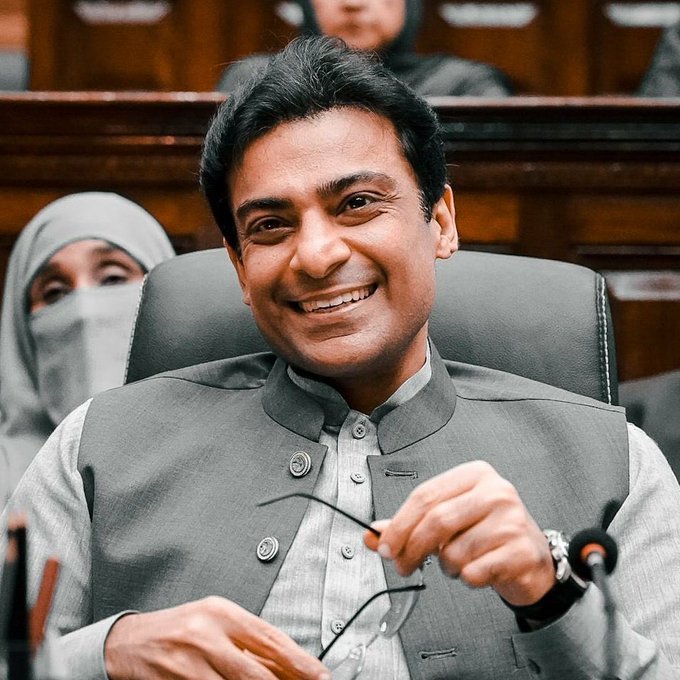
    Punjab Chief Minister (CM) Hamza Shehbaz announced on Monday the provincial government would bear the power cost of households consuming up to 100 units of electricity in a month.

    “I was told not to take big decisions without the cabinet’s consent to steer the backward class out of difficult economic conditions. I was told that it could become a NAB case, but I said that I am ready to face any difficulty to give relief to people,” said Hamza Shehbaz.

    The CM conveyed that the provincial government would pay the full bill of consumers using up to 100 units of electricity per month under the Punjab Chief Minister’s Roshan Gharana Programme. The consumers using up to 100 units of electricity in each of the past six months will be able to avail the facility, the CM said and emphasised that the programme would benefit almost half of the population of the province.

    “This will act as an incentive for those who use more than 100 units of electricity to save energy,” Hamza hoped.

    Hamza said that there are 4.4 million families using 100 units in Punjab, i.e. 55 million people in the province use less than 100 units per month.

    “The economic situation will be back on track,” he promised. He vowed that “the genie of inflation will be put back into the bottle and the dying economy will be revived with the grace of Allah Almighty and help of masses”.

  • Pakistan’s inflation hits 21.32 per cent in June 2022

    Pakistan’s inflation hits 21.32 per cent in June 2022

    In June 2022, Pakistan’s yearly inflation rate reached a 13-year high of 21.3 per cent, up from 9.7 per cent in June 2021 and 13.8 per cent in May 2022, according to the most recent data made public recently by the Pakistan Bureau of Statistics (PBS).

    According to PBS, monthly CPI-based inflation rose by 6.3 per cent in June 2022 as opposed to a 0.4 per cent increase the month before and a 0.3 per cent decrease in June 2021.

    Compared to increases of 14.1 per cent a month prior and 17.6 per cent a year prior, the Sensitive Price Index (SPI) inflation on a YoY basis increased by 21.7 per cent in June 2022. On a month-over-month basis, it increased by 6.2 per cent in June 2022 compared to a 0.6 per cent increase the previous month and a (-)0.4 per cent decrease in June 2021.

    The Consumer Price Index (CPI) reached 21.3 per cent on a year-over-year (YoY) basis as Pakistan’s economy battles a widening current account deficit brought on by a high import bill, rising inflation has become a major concern.

    In an effort to combat economic headwinds, the State Bank of Pakistan (SBP) increased the key interest rate by 150 basis points to 13.75 per cent earlier in May. At the time, the central bank predicted that as electricity and fuel subsidies are eliminated, inflation is likely to spike briefly, remain high through FY23, and then drop precipitously in FY24, according to Brecorder.

    The SBP is currently scheduled to decide the key interest rate at its upcoming Monetary Policy Committee meeting on July 7.

    On the other hand, the current administration increased the price of petroleum products in an effort to resurrect the International Monetary Fund (IMF) programme, which is anticipated to drive up inflation even further.

    The government announced a late-night price increase for petroleum products on Thursday, raising the ex-depot price of gasoline to Rs248.74 per liter (after an increase of Rs14.85) and diesel to Rs276.54 (after a hike of Rs13.23).

    CPI inflation in urban areas

    In contrast, year-over-year CPI inflation in urban areas increased by 19.8 per cent in June 2022 as opposed to increases of 12.4 per cent in May 2022 and 9.6 per cent in June 2021.

    In June 2022, it increased by 6.2 per cent month over month, compared to a 0.3 per cent increase the month before and a 0.4 per cent decline in June 2021.

    CPI inflation in rural areas

    In contrast to the previous month’s increase of 15.9 per cent and the increase of 9.7 per cent in June 2021, the CPI inflation rate in rural areas increased by 23.6 per cent on an annual basis in June 2022.

    Comparing June 2022 to June 2021, it increased by 6.6 per cent month over month, compared to increases of 0.6 per cent and 0.1 per cent, respectively.

  • Pakistan gets temporary relief of $3.68 billion from G-20 countries

    Pakistan gets temporary relief of $3.68 billion from G-20 countries

    The Ministry of Economic Affairs stated that the Government of Pakistan and the French Republic on Monday signed an agreement as part of the G20 Debt Service Suspension Initiative (DSSI).

    The government signed a DSSI, which amounted to the suspension of loans totaling $107 million under the G20 DSSI framework, according to a statement made in this regard by the ministry, according to Profit.

    This sum, which was initially due between July and December 2021, will now be paid back over a six-year period (plus a one-year grace period) in semi-annual installments, according to the statement.

    Federal Secretary for Economic Affairs Division Mian Asad Hayaud Din and French Ambassador to Pakistan Nicolas Galey signed the agreement today in Islamabad.

    Agreements for the revocation of $261 million between the government and the French Republic have already been signed.

    The ministry mentioned that the G20 DSSI has provided the fiscal space required to address the immediate health and financial demands of the Islamic Republic of Pakistan as a result of the support given by Pakistan’s development partners.

    According to the ministry, $3,688 million in debt has been suspended and rescheduled overall under the DSSI framework, which covers the period from May 2020 to December 2021.

    Pakistan has so far reached 93 agreements and signed them with 21 bilateral creditors for the restructuring of its liabilities under the G20 DSSI framework, totaling a delay of nearly $3,150 million.

    The above-mentioned agreements have been signed, bringing the total to $3,257 million. The G20 DSSI’s remaining agreements are currently the subject of negotiations.

  • ‘Free and fair’ elections, demands Khan

    ‘Free and fair’ elections, demands Khan

    Chairman Pakistan Tehreek-e-Insaf (PTI) Imran Khan on Sunday demanded free and fair election and revealed that he expects match-fixing in Punjab by-elections.

    PTI took out countrywide protests against rising inflation at Khan’s call on Sunday. Khan addressed his supporters via video-link.

    On Monday, Khan thanked his supporters for coming out across Pakistan yesterday, especially those “who braved difficulties & in some cities rain, to join our protest against massive inflation & clearly reject Imported Govt of crooks imposed by US regime change conspiracy”.

    No free lunch, warns Khan

    Imran Khan warned that Pakistan can become the next Sri Lanka. He said that Finance Minister Miftah Ismail has asked for the support of the United States (US) for the revival of the International Monetary Fund (IMF) programme. “I want to tell Miftah Ismail and Shehbaz Sharif that the Americans have a philosophy, which is that there is no free lunch. Everything has a price. The US will extract our sovereignty as a price.” Khan said that the new government seems ready to pay this price.

    Recognising Israel part of foreign conspiracy agenda: Khan

    Khan also mentioned Pakistan People’s Party (PPP) Senator Saleem Mandviwalla’s statement on the potential of Pakistan having diplomatic ties with Israel. “This is part of the same agenda due to which there was a regime change. The agenda is to follow what Israel, India and the US want,” said Khan.

    However, Mandviwalla clarified on Sunday that his words were being taken out of context. “I never wanted Pakistan to further ties with Israel or indulge in trade with it,” said Mandviwalla, adding that recognising Israel was not in Pakistan’s interests.

    Match-fixing in Punjab by-polls on the cards

    “We have to struggle together. Get ready. I will soon give another call for protest, which will continue until we are given a date for free and fair elections. Not just elections but free and fair elections,” said Khan.

    He reiterated that there is a plan of rigging by-elections in Punjab through ‘match-fixing’. By-polls in Punjab are set to take place next month in July.

    Imran Khan’s full address can be seen here:

  • Energy crisis: Sindh govt announces market closures by 9pm

    Energy crisis: Sindh govt announces market closures by 9pm

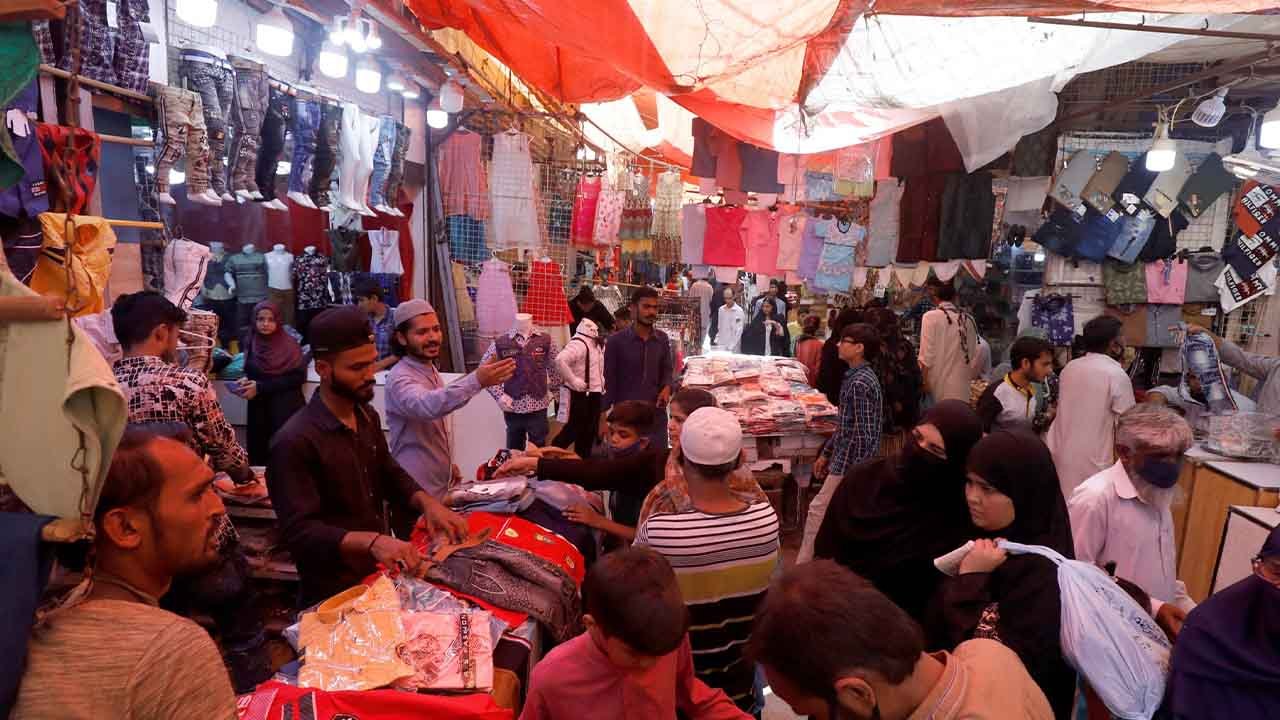
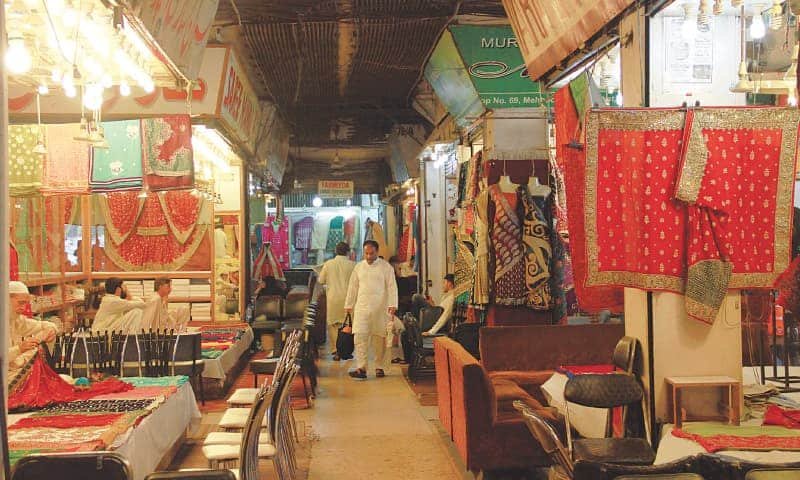
    The Sindh government announced that all markets, restaurants, marriage halls and hotels will be closed early in order to save electricity. The decision will remain in force from June 17 (today) to July 16.

    According to an official notification by the provincial Home Department, all markets, bazars, shops and malls will close by 9pm. Marriage and banquet halls will close by 10:30pm, while hotels, restaurants, coffee shops and cafes must shut by 11pm. However, the decision is not applicable to medical stores, pharmacies, hospitals, petrol pumps, CNG stations, bakeries and milk shops.

    The notification reads: “The urgent need to take the effective measures for the conservation of energy in Sindh through a two-pronged approach, i.e. to utilise the daylight hours for business activities and minimise the possible adverse impact of the business activities.”

    However, the All Pakistan Trade Union Association has rejected this decision of the provincial government, reports ARY News.

    Pakistan is facing a serious power crisis due to which the government has resorted to load-shedding all over the country.

    Last week, as part of the government’s ongoing measures to manage the energy crisis, the National Economic Council (NEC) agreed on the closure of markets by 8:30pm in all provinces.

    No power in commercial areas in the evening from 7-10pm

    The Power Division has decided to cut supply to commercial feeders from 7pm to 10pm daily across Pakistan, reports Geo News.

    In this regard, the Ministry of Energy has prepared a summary for the cabinet’s approval. According to the media outlet’s sources, the commercial feeders will not face load-shedding during the daytime, which would save approximately 5,000 MegaWatt (MW).

    Earlier, Defence Minister Khawaja Asif said that a huge amount of electricity can be saved if people start their businesses early in the morning and close by Maghrib prayers. He said that saving electricity means saving oil.