Tag: inflation

  • 264 shopkeepers arrested in Peshawar for overcharging

    264 shopkeepers arrested in Peshawar for overcharging

    During a three-day crackdown on racketeers in Peshawar, the district administration arrested 264 shopkeepers from various parts of the provincial capital on April 11.

    Officials of the district administration visited bazaars in, Hayatabad, Kohat Road, Interior City, Nauthia, Ring Road, Charsadda Road, Dilzak Road, University Road, GT Road, Pajagee Road, Bara Road, and other localities to examine Ramzan bazaars, along with the availability of vital food products, on the orders of the Deputy Commissioner (DC) Peshawar, Shafiullah Khan.

    They investigated the quality and status of the commodities sold at Mega Malls set up as Ramazan Facilitation Counters and detained 264 profiteers from various areas. Fruit and vegetable vendors, milk vendors, butchers, grocers, and others were among those arrested. The district government has signaled that legal action may be taken against them.

    Read more: SBP determined to curb inflation, improve foreign exchange reserves

    Previously, the Minister for Food, Science, and Information Technology in Khyber Pakhtunkhwa, Muhammad Atif Khan had also directed the responsible authorities on April 8 to constantly monitor the relief provided to people by the provincial government in terms of food costs.

  • Pakistani rupee records impressive gains against US Dollar, highest single-day gain

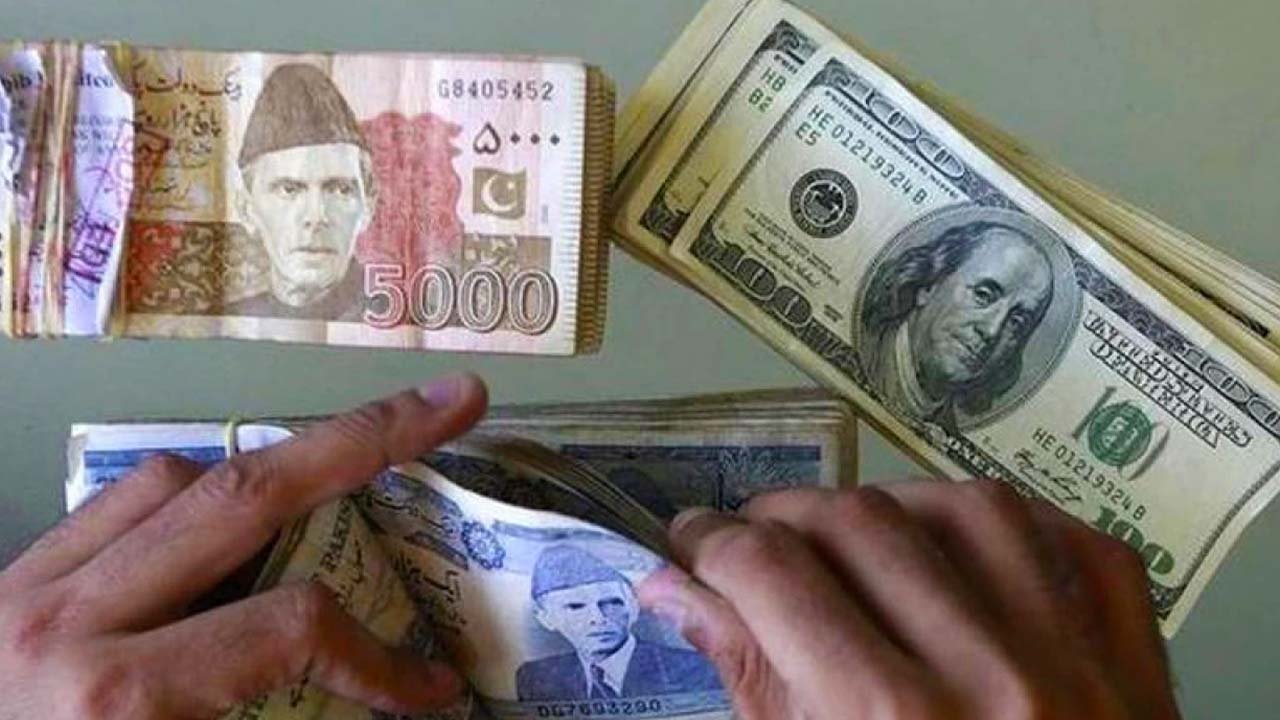
    Pakistani rupee records impressive gains against US Dollar, highest single-day gain

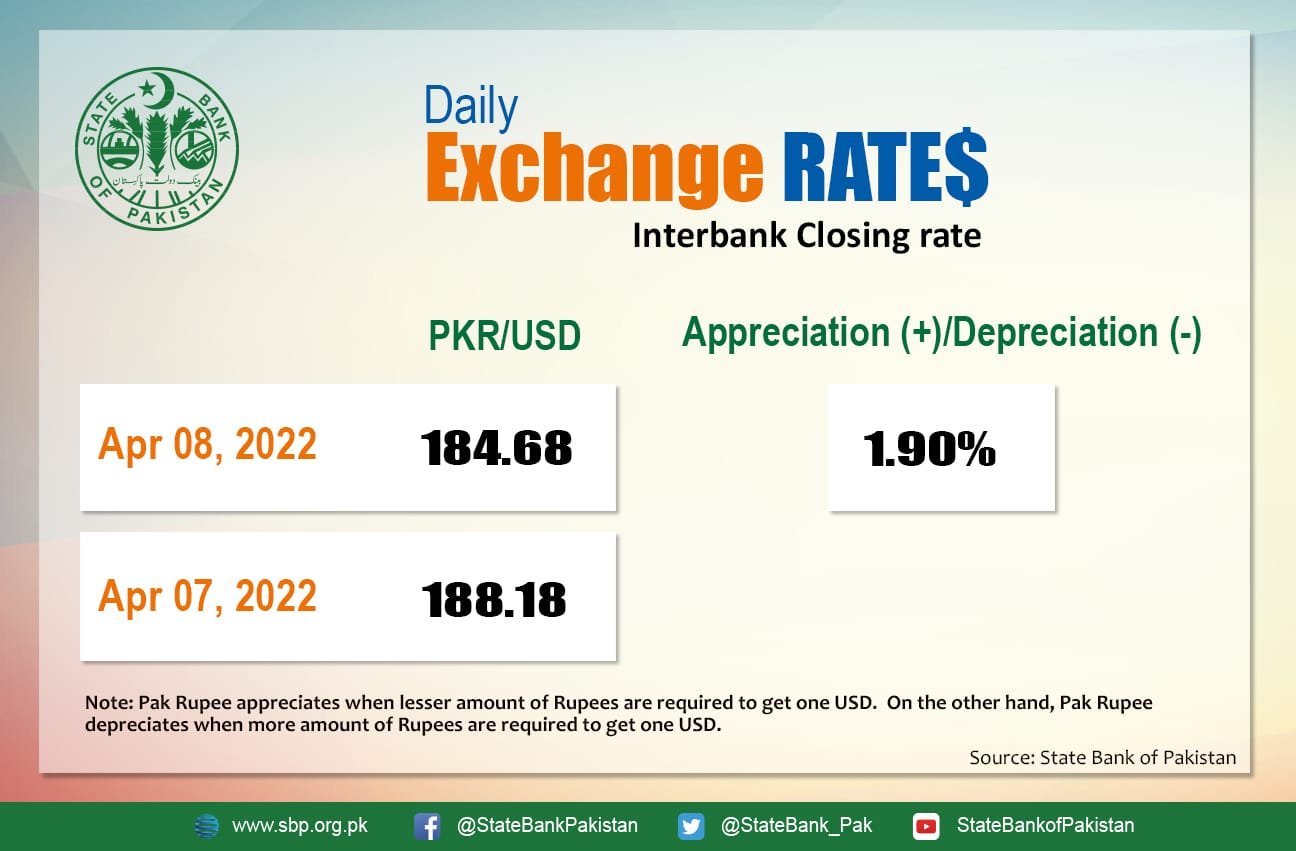
    In the intra-day trade on Friday, the Pakistani rupee (PKR) gained an impressive Rs3.5 against the US dollar, the highest single-day gain in two years after the Supreme Court (SC) pronounced the National Assembly (NA) deputy speaker order unconstitutional and restored the NA.

    The US dollar is currently trading at Rs185, as per foreign currency dealers, after weakening Rs3.5 versus the local currency in early trade. The USD is currently trading for above Rs186 on the open market.

    On Thursday, the rupee concluded at Rs188.18 against the USD in the interbank market.

    Consequently, the Pakistan Stock Exchange’s (PSX) benchmark KSE-100 index, reversed its downtrend shortly after starting on Friday and surpassed the 44,000 mark, a day after the Supreme Court of Pakistan annulled the deputy speaker’s decision against a no-confidence motion.

    Considering the trading which continued at 44, 198 on the Pakistan Stock Exchange, the KSE-100 benchmark index gained 411 points.

    The stock market has been under pressure since April 4, when it crumbled, losing over 900 points amid Pakistan’s ongoing political crisis, which arose after the National Assembly deputy speaker declared Prime Minister Imran Khan’s no-confidence resolution unconstitutional.

    SBP’s rate increase of 250 basis points and establishment of cash margins on 177 commodities is a marker that the economic system is in a slump and that prior initiatives were inadequate. This protective approach will aid in limiting the import of certain products, consequently bolstering the balance of payments.

  • State Bank of Pakistan hikes interest rate to 12.25% in an emergency meeting

    State Bank of Pakistan hikes interest rate to 12.25% in an emergency meeting

    Following an emergency meeting, the State Bank of Pakistan (SBP) raised interest rates by 250 basis points, as mounting political uncertainty and rising worldwide oil prices threaten to drive the country into a full-fledged economic catastrophe.

    The key rate is now 12.25 per cent, as per the latest statement released by the central bank on Thursday. According to the report, this makes the real rate “mildly positive” and will assist maintain external and price stability.

    The judgment came a few hours before the Supreme Court was due to rule on the constitutionality of Prime Minister Imran Khan’s disputed move to dissolve parliament and hold new elections. Pakistan may find it difficult to persuade the International Monetary Fund (IMF) to grant a much-needed loan tranche due to the political limbo.

    At the recent briefing, SBP governor, Reza Baqir, said, “We thought it’s important to take decisive action”.  He added that the body does not intend to do anything else.

    The central bank claimed that intensified domestic political turmoil contributed to the rupee’s 5 per cent loss and caused a jump in local bond rates, as well as Pakistan’s Eurobond yields and Credit Default Swap (CDS) spreads. Oil prices are likely to remain elevated, and the Federal Reserve of the United States is expected to compress sooner than expected, according to the report.

    The PKR broke all records on Thursday, selling at more than Rs189 per dollar in intraday trading in the interbank market, continuing a slump that has witnessed its decline of more than 10 per cent since March 4.

    Read more: Pakistan to import 32.7 million barrels of oil to cover petroleum needs

    Pakistan’s political instability, in addition to money from the IMF, is causing delays in a planned $1 billion green bond offering. A refinancing from China is also expected; the repayment in recent weeks caused Pakistan’s foreign-exchange reserves to plummet to their lowest level since records began in 2010.

    In a meeting last month, SBP cautioned that it might convene earlier than planned to avoid a crisis. It revised its average inflation prediction for the fiscal year ending in June from 9 per cent to little more than 11 per cent.

  • Nepra approves Rs1.29 hike in cost per unit for Karachi residents

    On account of monthly Fuel Cost Adjustments (FCA), the National Electric Power Regulatory Authority (NEPRA) raised the cost per unit of power for Karachi residents by Rs1.29.

    It held a public hearing at its headquarters on Karachi Electric’s (KE) request to hike the power tariff under the FCA by Rs3.45 per unit for February. Chairman Tauseef H. Farooqi chaired the public meeting, which was also attended by officials Rafiq Ahmed Sheikh and Engineer Maqsood Anwar Khan.

    According to the officials, KE’s monthly FCA is decided at Rs1.29 per unit based on data analysis.

    The Chairman inquired about Karachi’s load-shedding status and if KE has a gas procurement deal with the Sui Southern Gas Company (SSGC) to address the fuel crisis.

    Load management is only done on feeders with a low recovery rate, according to the latter’s officials, and consumers only have to experience one to one-and-a-half hours of load shedding every day.

    Chairman Farooqui stated that KE’s technology needs to be modernised, and that there should be no load-shedding for bill-paying customers and locations where billing is timely.

    He also mentioned that the NEPRA has posted phone numbers on its website for inhabitants of the city to report any forced load-shedding by any power utility.

    According to the briefing delivered at the meeting, KE’s customers were charged Rs3.28 per unit in January under the FCA. Similarly, the FCA for February was decided to be Rs1.99 lesser than the January billing.

    Muhamad Tanveer, who is a representative of the Karachi Chamber of Commerce (KCCI), denied the FCA, citing that customers are already paying for the January hike and that the FCA should not be transferred to them.

    After reviewing the facts, the NEPRA issued a thorough judgment declaring that the FCA is only levied and set for the month in concern and that it is variable with each hearing depending on the fuel costs for that month.

  • 64% Pakistanis believe there is no US conspiracy to overthrow PTI government

    64 per cent Pakistanis believe that there is no US conspiracy to overthrow the PTI government, Gallup survey has revealed. The survey was conducted between April 3 and 4, according to which 64 per cent Pakistanis cited inflation as the main reason behind the fall of the PTI government.

    Those who participated in the survey said that the main reason behind the Opposition’s efforts to remove the government is inflation and lack of relief for the people.

    Only 36 per cent of the participants said that the US was behind the fall of the government.

    Prime Minister (PM) Imran Khan has named Assistant Secretary of State for South and Central Asian Affairs Donald Lu as the United States (US) representative who had a meeting with Pakistan’s Ambassador in the US, which led to the ‘threatening’ diplomatic cable.

    It is pertinent to mention here that Pakistan is in a state of political chaos as the no-confidence motion against Khan was dismissed abruptly on Sunday. The move came after Suri termed it “unconstitutional”, saying that it was backed by “foreign powers”.

  • Petrol, Diesel prices to remain unchanged till April 15

    The government has decided to maintain the existing prices for petroleum products for the fortnight. Petroleum prices will remain unchanged from April 1 to April 15, as per a statement released by the finance division.

    Petrol is currently priced at Rs149.86 per liter, while diesel, kerosene oil, and light diesel are priced at Rs144.15, Rs125.56, and Rs118.31 per liter, respectively.

    Following an increase in global market prices at the time, the government approved a record-breaking Rs12.03 per liter hike for petrol on February 15. Surprisingly, on February 28, the government decreased POL prices by Rs10 per liter, to lessen the impact of existing inflation on the public.

    The Oil and Gas Regulatory Authority (OGRA), on the other hand, has raised the price of liquefied petroleum gas (LPG) by Rs13 per liter.

    Read More: Nisab amount of zakat deduction set at Rs88,927 for 2022

    After an increase of Rs157 per domestic cylinder and Rs606 per commercial cylinder, the prices of domestic and commercial LPG cylinders have been fixed at Rs2,916 and Rs11,220, respectively, for April 2022.

    Conversely, in the aftermath of the Russia-Ukraine conflict, the international market saw massive volatility as crude oil prices reached new highs.

  • Pak ‘least costly’ country claims Shaukat Tarin, website he refers to says cost of living is 171 thousand rupees per month

    Pak ‘least costly’ country claims Shaukat Tarin, website he refers to says cost of living is 171 thousand rupees per month

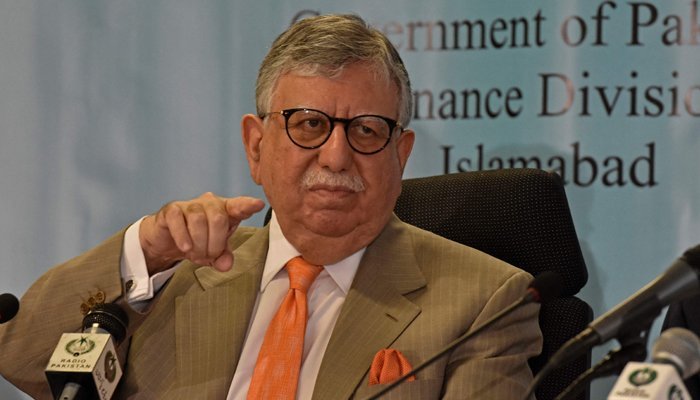
    Finance Minister Shaukat Tarin, while sharing a table with the title “The Cost of Living Index by Country 2021 Mid-Year”, has claimed that Pakistan is the “least costly” country across the globe.

    In the chart, Pakistan has been ranked on 139th number among 139 countries with only 21.88 cost of living. The table Tarin shared was taken from the website NUMBEO.

    https://twitter.com/shaukat_tarin/status/1495274739991867401?ref_src=twsrc%5Etfw%7Ctwcamp%5Etweetembed%7Ctwterm%5E1495274739991867401%7Ctwgr%5E%7Ctwcon%5Es1_&ref_url=https%3A%2F%2Ftribune.com.pk%2Fstory%2F2344435%2Fpakistan-cheapest-country-says-tarin

    However, according to the website, this is the summary of Pakistan. The ranking comes with comparison to other countries.

    • Family of four estimated monthly costs are 171,936.39Rs. without rent.
    • A single person estimated monthly costs are 51,837.84Rs. without rent.
    • The cost of living in Pakistan is, on average, 71.36% lower than in the United States.
    • Rent in Pakistan is, on average, 90.59% lower than in the United States.

    Last month, the Quarterly Performance Evaluation Survey (QPES), a Pulse Consultant’s indigenous tracking tool of public perceptions and opinions about the government’s performance and current political situation, stated that 84 per cent of Pakistanis consider inflation as the biggest problem of the country.

  • ‘Opposition scared because Imran Khan has no price’: Prime Minister

    ‘Opposition scared because Imran Khan has no price’: Prime Minister

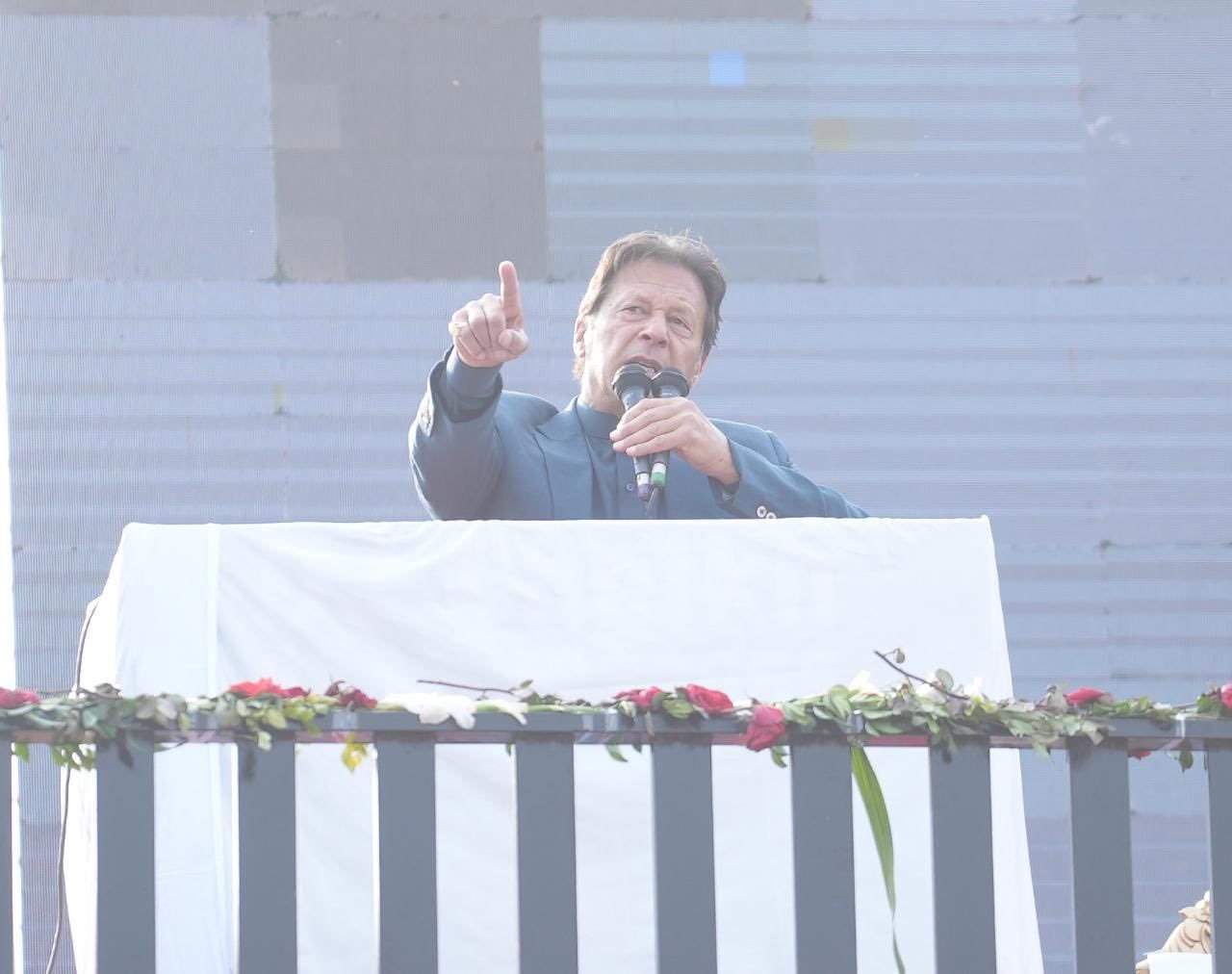
    Prime Minister (PM) Imran Khan on Friday said that the Opposition would not receive a National Reconciliation Ordinance (NRO).

    “They are scared because Imran Khan has no price, he will not give you an NRO like General Musharraf,” said Khan, referring to the country’s former military ruler.

    Addressing a rally in Mandi Bahauddin, PM Khan said, “Thieves will not get any NRO until they return the country’s [looted] money […] as long as I am alive, I will not let them rest until they return the people’s wealth.”

    If Shehbaz Sharif is innocent, then why is he running away from the courts?

    Criticising Pakistan Muslim League-Nawaz (PML-N) President Shehbaz Sharif, the premier said that he had a “weak heart and knew he would not be able to escape if his case (of being a guarantor in Nawaz Sharif’s case) is heard”.

    “If Shehbaz Sharif is innocent, then why is he running away from the courts?”

    PM Imran went on to say that when the Opposition had filed a case against him in the Supreme Court, he did not leave the country and had proved that he was sadiq and ameen (honest and righteous).

    “I provided the documents the court asked for. I did not run away [or] ask for more dates. I told them to listen to the case [day-to-day],” said PM Khan.

    Have you ever heard a politician blackmail others via tapes?

    Berating PML-N Vice President Maryam Nawaz, he said Nawaz’s daughter claims she has “tapes” on government officials.

    “Have you ever heard a politician blackmail (others) via tapes?”

    Whatever your plan is, Kaptaan is prepared

    “I have a message for the Sharif family: Kaptaan is ready for all your plans. You will not only face defeat, but all of you will go to jail,” the prime minister vowed.

    “This is not what politicians do, this is what mafias do,” he declared, calling on supporters to help the government combat them.

    “I have vowed to fight them as long as I am alive.”

    There is no doubt inflation has increased

    The prime minister said: “They [the Opposition] say that inflation has increased. There is no doubt it has increased.”

     He went on to say that the government was always working on how to lessen the burden of this inflation on the people of the country.

    “I promise to reduce the burden on the people.”

    “Supply lines were affected due to the pandemic. There was a shortage of commodities and they became more expensive,” said PM Khan.

    “Every month, the government suffers a loss of Rs70 billion due to this,” said PM Khan.

    The premeir said that petrol that was previously available for $40 per barrel was now being sold for $90. “What can we do about this? We have to import petrol.”
  • 84 per cent Pakistanis consider inflation biggest problem: survey

    84 per cent Pakistanis consider inflation biggest problem: survey

    Quarterly Performance Evaluation Survey (QPES), a Pulse Consultant’s indigenous tracking tool of public perceptions and opinions about the government’s performance and current political situation, states that 84 per cent of Pakistanis consider inflation as the biggest problem of the country.

    Almost every Pakistani has been hit by inflation and 99 per cent are reporting that ‘Inflation increased in past three months’, reveals the survey.

    According to the survey, 65 per cent of Pakistanis blame the current sitting government for the country’s poor economic conditions, while 29 per cent blame previous governments.

    18 per cent of the country is satisfied by Prime Minister (PM) Imran Khan’s performance — 56 per cent believe PM Khan’s claim that Pakistan is out of the economic crisis. Just 15 per cent think that inflation will be reduced in the next three months.

    About the problems in the country, 80 per cent of the people think that unemployment is the biggest problem of the country while 37 per cent of the people have of opinion that corruption is the main problem of Pakistan.

    Similarly, 70 per cent Pakistanis believe that the economic situation of the country is going downhill as well.

    Read More- 59% traders consider Pakistan is not ‘moving in right direction’: Gallup Survey

    Furthermore, 69 per cent of Pakistanis believe that the country is going in the wrong direction.

    Respondents of the survey did not buy the government’s narrative where all blame was hurled at the previous regime that the current economic crises are due to previous governments’ loans. The majority of the respondents — 65 per cent — believe that it’s all due to Pakistan Tehreek-e-Insaf’s (PTI) wrong economic policies.

    When it comes to the provincial province’s performance, 55 per cent of Pakistanis in Punjab are dissatisfied and just 9 per cent are satisfied – 34 per cent are in between. Talking about Sindh, 42 per cent are dissatisfied and just 18 per cent are happy; the remaining 39 per cent are in-between.

    In Khyber Pakhtunkhwa (KP), 55 per cent are dissatisfied and just 24 per cent are satisfied –20 per cent are in-between. Whereas in Balochistan, 55 per cent are dissatisfied and just 10 per cent are satisfied – 35 per cent are in-between.

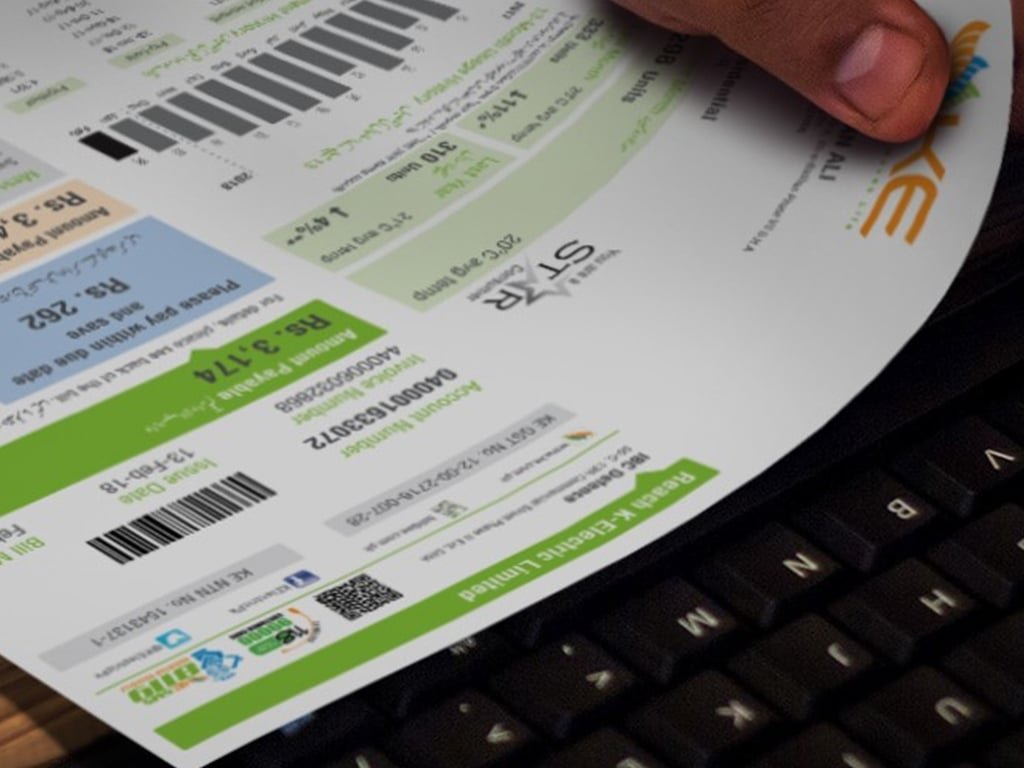
  • 50 per cent refund for army officers in electricity bills

    50 per cent refund for army officers in electricity bills

    General Headquarters (GHQ) has approached National Electric Power Regulatory Authority (NEPRA) for a 50 per cent rebate to commissioned officers on electricity bills, sources told Bussiness Recorder.

    Director Works and Chief Engineer (DG&CE) said, “Military Engineering Services (MES) is giving 50 per cent refund but on the basis of energy charges instead of variable unit charges. This has curtailed the electricity bills rebate to around 3.5 per cent instead of 50 per cent to Army officers.”

    Previously, a percentage of 50 per cent refund was set for the officers on electricity units consumed. Later, an amendment was made and the bills started to come in the name of the variable and other charges, i.e., variable charges, sale rates of electricity per Kwh, which covers the unit price.

    Last year, the Ministry of Defence (MoD) had drafted a summary for the Cabinet seeking a 50 per cent rebate to commissioned officers on electricity bills and sent it to the Finance Ministry for comments. The ministry of finance then asked MoD to approach NEPRA.

    Electricity prices have been increased about 60 per cent by the government. Another increase of Rs0.95 per unit for consumers is yet to be effective from February 1.