Tag: inflation

  • Govt expected to hike petrol price on Thursday

    Govt expected to hike petrol price on Thursday

    In the final fortnight of November 2023, the per litre price of petrol in Pakistan is projected to experience an increase of Rs3.18, while high-speed diesel (HSD) is anticipated to undergo a reduction of Rs8.30 per litre on Thursday, November 16.

    Sources have indicated that the pricing trajectory of petroleum products is poised for a mixed trend in the latter half of the current month of November 2023.

    The price of petrol is forecasted to rise from Rs283.38 per litre to Rs286.56 per litre, marking an uptick of Rs3.18 per litre.

    Correspondingly, the cost of HSD/diesel is expected to decrease by Rs8.30 per litre, moving from Rs303.18 per litre to Rs 294.88 per litre.

    Additionally, the price of kerosene oil is projected to witness a decline of Rs5.61 per litre, transitioning from Rs211.03 per litre to Rs205.42 per litre.

    Furthermore, the price of light diesel oil (LDO) is set to experience a reduction of Rs8.33 per litre, shifting from Rs189.46 per litre to Rs181.13 per litre.

    These price adjustments are calculated based on current government taxes and the prevailing US dollar exchange rate, as per informed sources.

    According to Profit, the government may uphold the price of petrol due to outstanding forex adjustments, while a reduction of Rs10 per litre is expected for diesel (HSD).

    Notably, starting from 1st November 2023, the government has imposed a petroleum levy (PL) of Rs60 per litre on petrol and diesel, alongside receiving an Inland Freight Equalization Margin (IFEM) of Rs7.71 per litre on petrol and Rs0.60 per litre on diesel.

    Additionally, the Dealers’ Margin (inclusive of extra margin) on petrol and diesel presently stands at Rs8.64 per litre.

    Similarly, the margin for Oil Marketing Companies is fixed at Rs7.87 per litre.

    Furthermore, the Distributors’ Margin (inclusive of extra margin) on diesel is currently set at Rs8.12 per litre, and on petrol, it is Rs7.87 per litre, effective from 1st November 2023.

    On 1st November, the government maintained the prices of petrol and diesel at Rs283.38 per litre and Rs303.18 per litre, respectively.

    Simultaneously, the price of kerosene oil witnessed a reduction of Rs3.82 per litre, establishing the new price at Rs211.03 per litre.

    The price of LDO was also decreased by Rs3.40 per litre, fixing the new price of LDO at Rs189.46 per litre for the first half of November 2023.
  • Pakistani rupee experiences 11th consecutive session of decline against US dollar

    Pakistani rupee experiences 11th consecutive session of decline against US dollar

    .

    The Pakistani rupee faced its eleventh consecutive session of losses against the US dollar, depreciating by 0.34 per cent in the inter-bank market on Monday.

    According to the State Bank of Pakistan (SBP), the rupee settled at 285.29, marking a decline of Re0.98.

    In the preceding week, the rupee had also suffered losses against the US dollar, closing 1.33 per cent lower at 284.31 in the inter-bank market, equivalent to a decrease of Rs3.74. This marked the third consecutive week of declines for the local currency.

    Prior to this recent trend, the Pakistani rupee had maintained a positive trajectory for 28 consecutive sessions, one of the longest appreciation runs, gaining a cumulative 10.93 per cent since reaching a record low of 307.1 in the inter-bank market on September 5.

    This surge was largely attributed to efforts to combat smuggling and increased controls on exchange companies.

    However, the situation has since shifted in favour of the US dollar, with global currencies remaining stable on Monday but appearing poised to continue their recent uptrend. This comes as the US dollar retreated following a moderation in the Federal Reserve’s hawkish stance.

    Internationally, major global currencies showed stability early on Monday, with the US dollar index flat at 105.11 and the euro at $1.0726.

    The dollar index experienced its most significant decline since mid-July, falling over 1 per cent last week and reaching a six-week low.

    Weakness in US job data, softer global manufacturing figures, and declining longer-term Treasury yields also contributed to the dollar’s weakened position.

  • Cost of living rises: SPI records increase in weekly inflation 

    Cost of living rises: SPI records increase in weekly inflation 

    The Sensitive Price Indicator (SPI) recorded a slight increase of 0.71 per cent for the week ending November 3, 2023, compared to the previous week.

    According to data from the Pakistan Bureau of Statistics (PBS), the combined index stood at 279.08 on November 3, 2023, up from 277.11 on October 26, 2023, and significantly higher than the index of 214.88 recorded a year ago on November 3, 2022.

    Out of 51 items, the prices of 12 items increased, 14 items decreased, and 25 items remained stable. 

    The most notable price increases were seen in tomatoes (25.58 per cent), onions (25.25 per cent), chicken (10.79 per cent), potatoes (1.61 per cent), Lipton tea (1.58 per cent), eggs (1.30 per cent), garlic (0.50 per cent), basmati broken rice (0.19 per cent), georgette (0.28 per cent), and firewood (0.05 per cent).

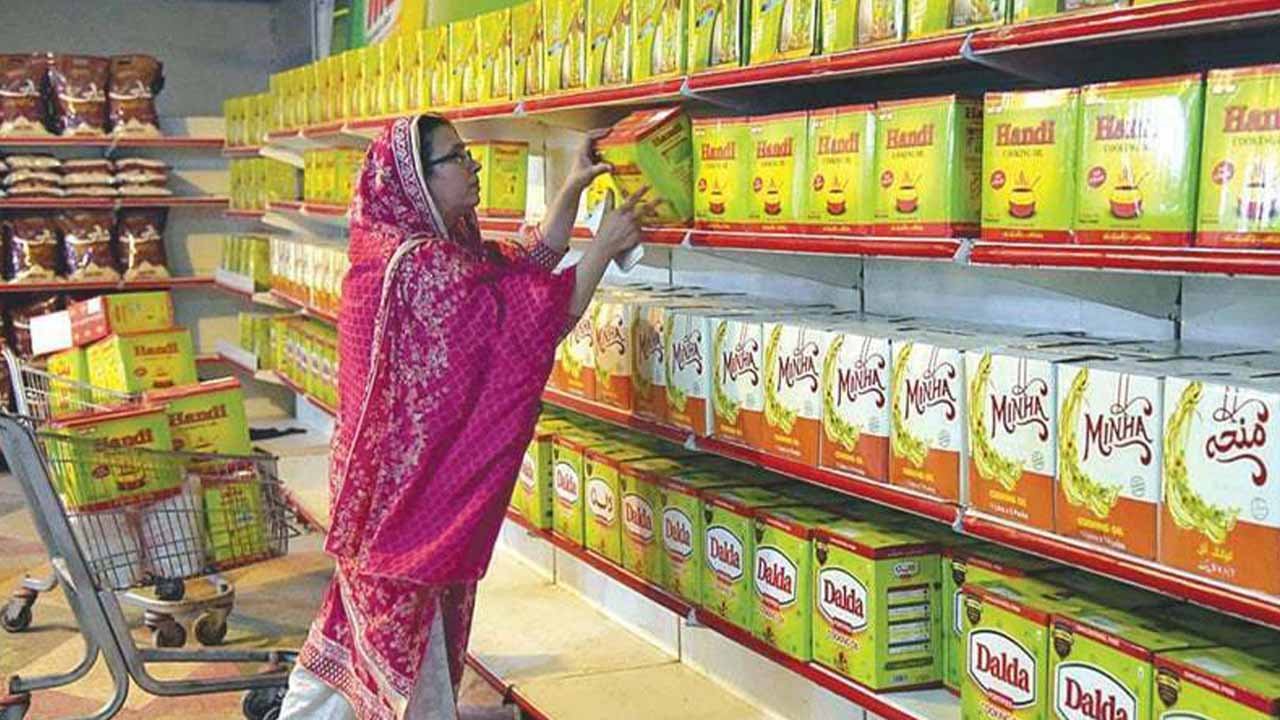
    Conversely, significant price decreases were observed in gur (2.66 per cent), bananas (1.78 per cent), 5-litre cooking oil (1.62 per cent), 1 kg vegetable ghee (1.23 per cent), LPG cylinders (1.05 per cent), masoor pulse (0.93 per cent), wheat flour (0.62 per cent), washing soap (0.41 per cent), and mustard oil (0.32 per cent).

    The weekly SPI percentage change across different income groups revealed an increase in SPI for all quantiles, ranging from 0.64 per cent to 0.86 per cent.

  • Pakistan’s October inflation eases to 26.9%

    Pakistan’s October inflation eases to 26.9%

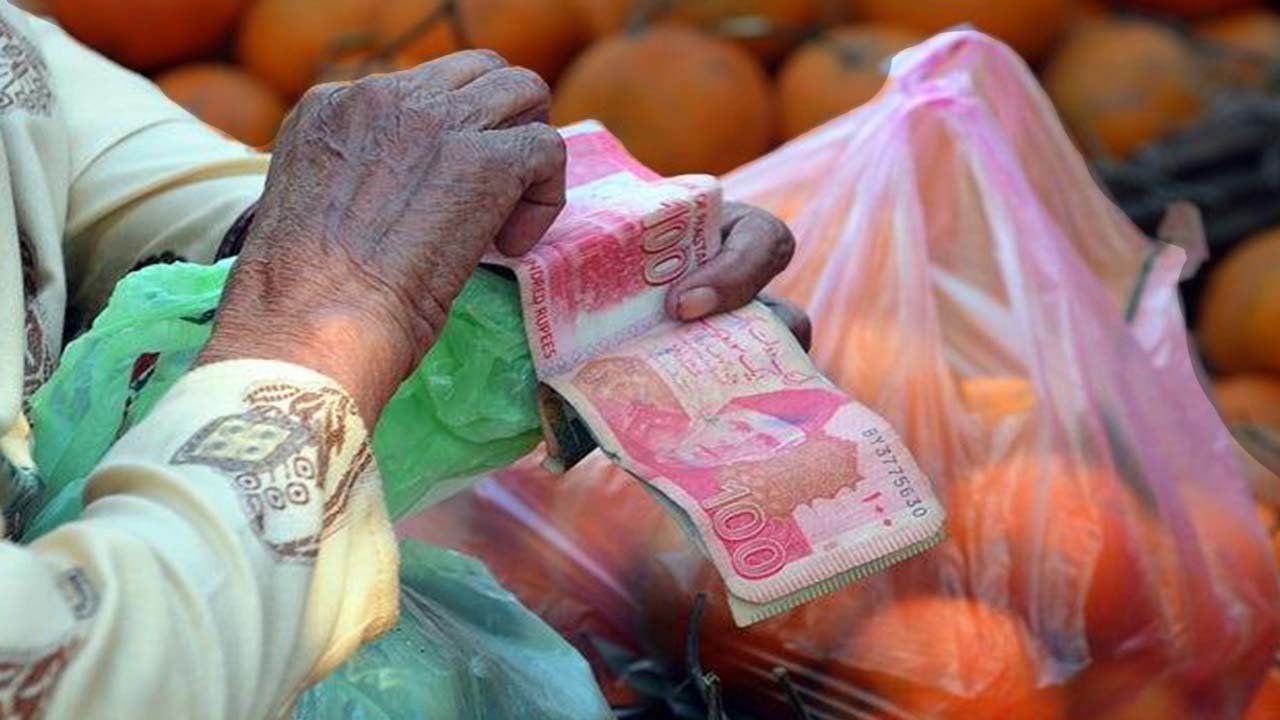
    In October, Pakistan witnessed a year-on-year headline inflation rate of 26.9 per cent, as reported by the Pakistan Bureau of Statistics (PBS) on Wednesday.  

    This figure represents a notable decrease from the previous month’s reading of 31.4 per cent in September. Additionally, the month-on-month inflation rate for October showed a 1.1 per cent increase. 

    When considering the average inflation from July to October, it amounted to 28.48 per cent, a contrast to the 25.48 per cent recorded during the same period the previous year. 

    In its most recent ‘Monthly Economic Update and Outlook’ report, the Ministry of Finance projected that consumer price index (CPI)-based inflation in Pakistan for October would fall within the range of 27 per cent to 29 per cent.  

    The ministry anticipated that inflation would exhibit a more contained trend compared to the elevated levels observed during the first quarter of fiscal year 2024. 

    The Pakistan Bureau of Statistics further distinguished between urban and rural inflation rates. In urban areas, the year-on-year CPI inflation increased to 25.5 per cent in October 2023, marking a decline from the 29.7 per cent observed in the previous month and the 24.6 per cent recorded in October 2022.  

    On a month-on-month basis, urban inflation experienced a 1.1 per cent increase in October 2023, compared to a 1.7 per cent increase in the previous month and a 4.5 per cent increase in October 2022. 

    Similarly, in rural areas, the year-on-year CPI inflation rose to 28.9 per cent in October 2023, which represented a decrease from the 33.9 per cent recorded in the previous month and the 29.5 per cent in October 2022.  

    On a month-on-month basis, rural inflation increased by 1.1 per cent in October 2023, in contrast to a 2.5 per cent increase in the previous month and a 5.0 per cent increase in October 2022. 

  • Pakistan on track to secure second IMF tranche successfully: PM Kakar

    Pakistan on track to secure second IMF tranche successfully: PM Kakar

    Caretaker Prime Minister Anwaar ul Haq Kakar expressed optimism about Pakistan’s upcoming review with the International Monetary Fund (IMF), set for this month.

    The IMF, led by Nathan Porter, will visit Pakistan from November 2–16 to discuss the first review of the country’s current $3 billion stand-by arrangement (SBA).

    Pakistan is navigating a challenging economic recovery path under a caretaker government following an IMF loan programme approval in July, which prevented a sovereign debt default. The country received the first $1.2 billion tranche from the IMF in July.

    Kakar stated that Pakistan has successfully achieved its targets, including revenue goals, and is confident about the negotiations for the second tranche.

    Regarding inflation, the interim prime minister acknowledged a decrease in inflation rates, attributing it to the Pakistani rupee’s appreciation against the dollar and a drop in petroleum prices. 

    The prime minister also encouraged journalists to analyse the impact of the Pakistani rupee’s strength on circular debt and highlighted that stringent measures against smuggling through Afghan transit trade have boosted local industry productivity.

  • World Bank projects only 1.7% growth for Pakistan in FY 2023-24 amid economic challenges

    World Bank projects only 1.7% growth for Pakistan in FY 2023-24 amid economic challenges

    The World Bank has issued a cautious outlook for Pakistan’s economy in the fiscal year 2023–24, projecting a modest growth rate of 1.7 per cent.

    The report, titled “South Asia Development Update Towards faster, cleaner growth,” highlights the fragile economic situation in Pakistan.

    Several factors have contributed to this fragility. The US dollar value of imports decreased by 26 per cent in August 2023 due to low demand and import controls, resulting in input shortages and a 15 per cent decline in industrial production by June 2023.

    Additionally, the economy shrank by 0.6 per cent in the fiscal year 2022–23 due to the impact of 2022 floods, high inflation, and balance of payments challenges.

    Import controls, initially aimed at reducing the trade deficit, hindered the supply of industrial materials and stifled growth.

    While these controls have been removed as part of an IMF lending programme, Pakistan still faces inflationary pressures, tight fiscal policies, and extensive flood damage. Foreign exchange reserves remain low, leaving the country vulnerable to external shocks.

    Pakistan is not alone in its economic struggles. Bangladesh, Pakistan, and Sri Lanka are all facing acute crises with ongoing balance-of-payments issues. These countries have begun implementing IMF-supported policies to address capital outflows and debt sustainability.

    Global factors, such as rising prices due to the end of the pandemic and Russia’s invasion of Ukraine, have exacerbated the challenges faced by these nations, leading to increased current account deficits and currency depreciations. To combat this, import controls have been imposed.

    In Pakistan, consumer price inflation stood at 27 per cent in August, down from a peak of 38 per cent in May, thanks to a stabilised exchange rate and a decline in food prices caused by the previous year’s floods. To address high inflation, the central bank raised its benchmark interest rate to 22 per cent in June.

    Pakistan and Sri Lanka are experiencing severe financial stresses, with low foreign reserve coverage and weak asset quality in both banking and non-banking sectors. The report also highlights the need for investment reforms in several South Asian countries to encourage growth.

    Restrictive import measures in Bangladesh, Pakistan, and Sri Lanka, although aimed at stabilising the external sector, have led to import shortages and economic downturns. Lowering these barriers to trade and capital flows could help boost long-term productivity.

    Lastly, despite adopting debt ceilings and deficit targets, many South Asian countries have high government debt-to-GDP ratios, with Pakistan experiencing fluctuations in government spending during election years.

    In summary, the World Bank’s report paints a cautious picture of Pakistan’s economic prospects, emphasising the need for sustained reforms and addressing various challenges to achieve stable and sustainable growth.

  • Govt implements major gas price hike to tackle circular debt crisis 

    Govt implements major gas price hike to tackle circular debt crisis 

    On Monday night, the interim government made a significant announcement that will have a profound impact on the nation’s economy.  

    The decision involved a substantial increase in gas prices, set to take effect on November 1st, 2023. 

    Under this new pricing structure, non-protected domestic consumers will experience a substantial surge in their gas tariffs.  

    Specifically, rates will surge by a staggering 173 per cent for this category of consumers. Commercial users will see their gas prices climb by 136.4 per cent, while those in the export and non-export industries will face increases of 91 per cent and 83 per cent, respectively. 

    Further elaborating on the specifics of these changes, the revised monthly charges for protected consumers have been elevated from a mere Rs10 to a more substantial Rs400. For non-protected consumers, the monthly charges have surged from Rs460 to Rs1000, and for higher consumption slabs, the charges have escalated to a maximum of Rs2000. 

    In terms of actual consumption, the price per mmbtu will vary depending on usage. Users consuming up to 0.25 cubic metres will be charged Rs121 per mmbtu.  

    Those using up to 0.5 cubic metres will pay Rs150 per mmbtu; users with a monthly consumption of 0.60 cubic metres will incur charges of Rs200 per mmbtu; and those utilising 0.9 cubic metres will see rates set at Rs250 per mmbtu.  

    The steepest increase is witnessed by individuals using 1 cubic metre of gas per month, as their charges have surged from Rs400 per mmbtu to Rs1,000 per mmbtu. Users with gas consumption up to 1.5 cubic metres, previously paying Rs600 per mmbtu, will now be required to pay Rs1,200 per mmbtu starting from November 1st. 

    The changes in gas pricing also extend to small commercial users, such as local tandoors, who will be paying Rs697 per mmbtu from the aforementioned date.  

    The power sector will experience a range of charges, with rates fluctuating between Rs1,050 and Rs3,890 per mmbtu, while the cement industry will be subject to a consistent rate of Rs4,400 per mmbtu. 

    As for the export industry, gas pricing has been set at Rs2,100 to Rs2,400 per mmbtu, while non-export industries will be required to pay between Rs2,200 and Rs2,500 per mmbtu. These significant adjustments have been made to alleviate the burden on the nation’s economy. 

    The Power Division, in an official statement, justified the increase in gas prices by referencing the recommendations of the Oil and Gas Regulatory Authority, which sought to prevent an additional burden of Rs400 billion on the already burgeoning circular debt.  

  • State Bank of Pakistan maintains 22% policy rate in line with market consensus

    State Bank of Pakistan maintains 22% policy rate in line with market consensus

    Following the consensus in the broader market, the Monetary Policy Committee (MPC) of the State Bank of Pakistan (SBP) announced on Monday that it would maintain the key policy rate at 22 per cent, as stated in their press release.

    The Committee recognised that headline inflation, as expected, increased in September 2023 but anticipates a decline in October, followed by a sustained decrease, particularly in the latter half of the fiscal year.

    While the MPC acknowledged potential risks to the FY24 inflation outlook and the current account due to recent global oil price volatility and forthcoming gas tariff increases in November 2023, they also identified mitigating factors.

    These factors include targeted fiscal consolidation in the first quarter, enhanced availability of crucial commodities in the market, and the alignment of interbank and open market exchange rates.

    The MPC emphasised that the real policy rate, looking forward over a 12-month horizon, remains significantly positive.

    This is deemed appropriate to achieve the medium-term inflation target of 5-7 per cent by the end of FY25, contingent upon the sustained fiscal consolidation and timely realisation of planned external inflows, as articulated in the MPC statement.

  • State Bank of Pakistan set to announce policy rate decision today

    State Bank of Pakistan set to announce policy rate decision today

    The State Bank of Pakistan (SBP) will soon unveil its latest monetary policy for the upcoming two months.

    In an official statement, the central bank declared that the Monetary Policy Committee (MPC) of SBP will convene on Monday, October 30, 2023, to determine the monetary policy. SBP will then issue the Monetary Policy Statement via a press release on the same day.

    Currently, the State Bank’s policy rate stands at 22 per cent. Since October 2021, the central bank has increased its policy rate by a cumulative 1,500 basis points in an effort to combat rising inflation and bolster the external balance. This rate has remained unchanged since July 2023.

    The forthcoming policy rate announcement is poised to exert a substantial influence on Pakistan’s industries and inflation rate.

    In the most recent meeting held in July, the State Bank of Pakistan (SBP) resolved to maintain the interest rate at 22 per cent.

    The Monetary Policy Committee of the central bank meticulously assessed economic data and the prevailing inflation situation before opting to retain the interest rate. It’s worth noting that substantial progress has been achieved in the current account, thanks to government initiatives.

    This decision comes against the backdrop of Pakistan contending with a high inflation rate, currently pegged at 29.65 per cent.