Tag: information technology

  • IT minister denies involvement in internet suspension resulting in billion-rupee losses

    IT minister denies involvement in internet suspension resulting in billion-rupee losses

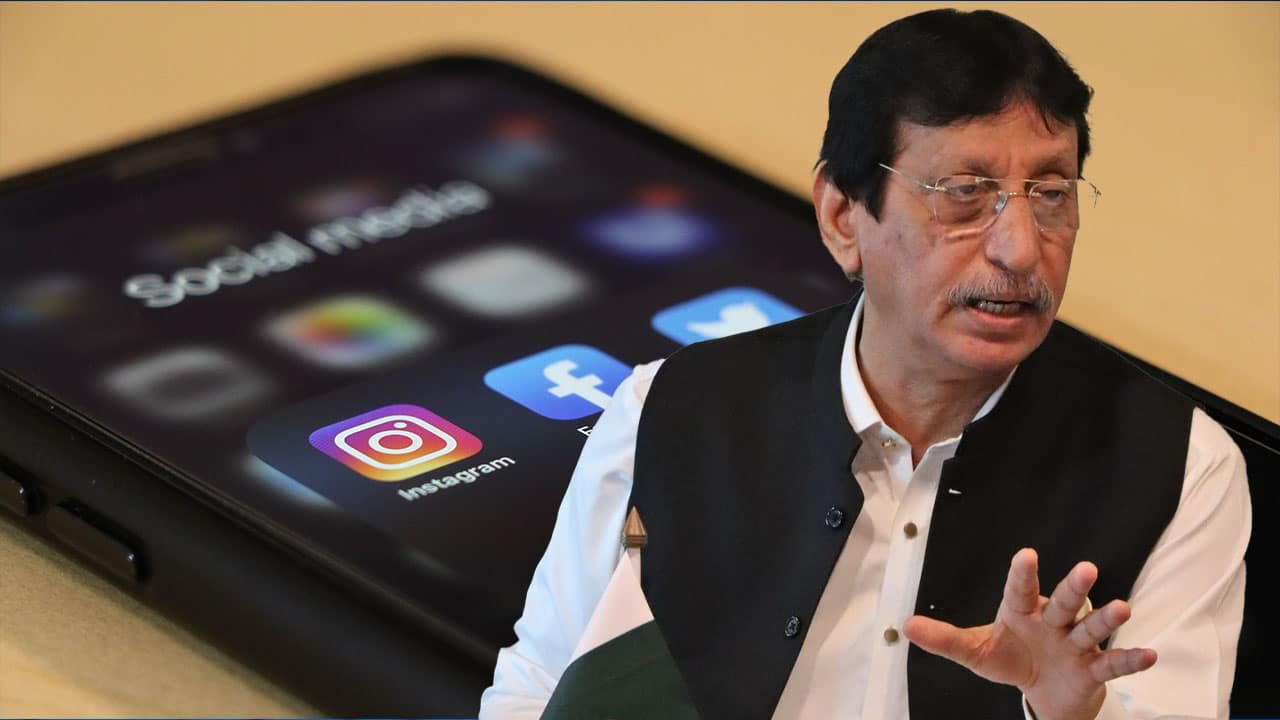
    Following the internet blackout in Pakistan, Federal Minister for Information Technology and Telecommunication Syed Amin-ul-Haque distanced his ministry from the blockage, stating that they were not taken into confidence.

    According to Geo, Haque revealed that mobile internet services were suspended without the Ministry of IT’s consultation. Since 2017, the Pakistan Telecommunication Authority (PTA) has not been under the Ministry of IT, and the PTA has been operating independently.

    The minister explained that blocking social media websites or the internet was not the solution to any issue, and he urged people to be open-minded rather than resorting to using a VPN to access blocked sites.

    Haque suggested that instead of completely blocking the internet, it could be blocked in specific areas. He emphasized that the IT sector suffered losses of billions of rupees due to internet blockages.

    The suspension of mobile broadband and restricted access to Twitter, Facebook, and YouTube occurred after violent protests arose in response to the Rangers personnel arresting Pakistan Tehreek-e-Insaf (PTI) Chairman Imran Khan from the Islamabad High Court. At least ten people died, and dozens sustained injuries during the days-long protests.

    After almost a seven-day suspension, the government restored access to social media platforms such as Twitter, YouTube, and Facebook. The suspension was recommended by the interior ministry and is the longest continuous shutdown in a country that often suspends communication as a tool to quell unrest. Telecom operators suffered an approximate revenue loss of Rs820 million, which was a significant blow to the sector as the economy remained in a fragile state.

    Additionally, the government blocked major social media platforms, including Twitter and Facebook, while YouTube services were slower to control the spread of disinformation.

  • Saudi prince aims to create over 1,000 jobs with $100 million tech house investment in Pakistan

    Saudi prince aims to create over 1,000 jobs with $100 million tech house investment in Pakistan

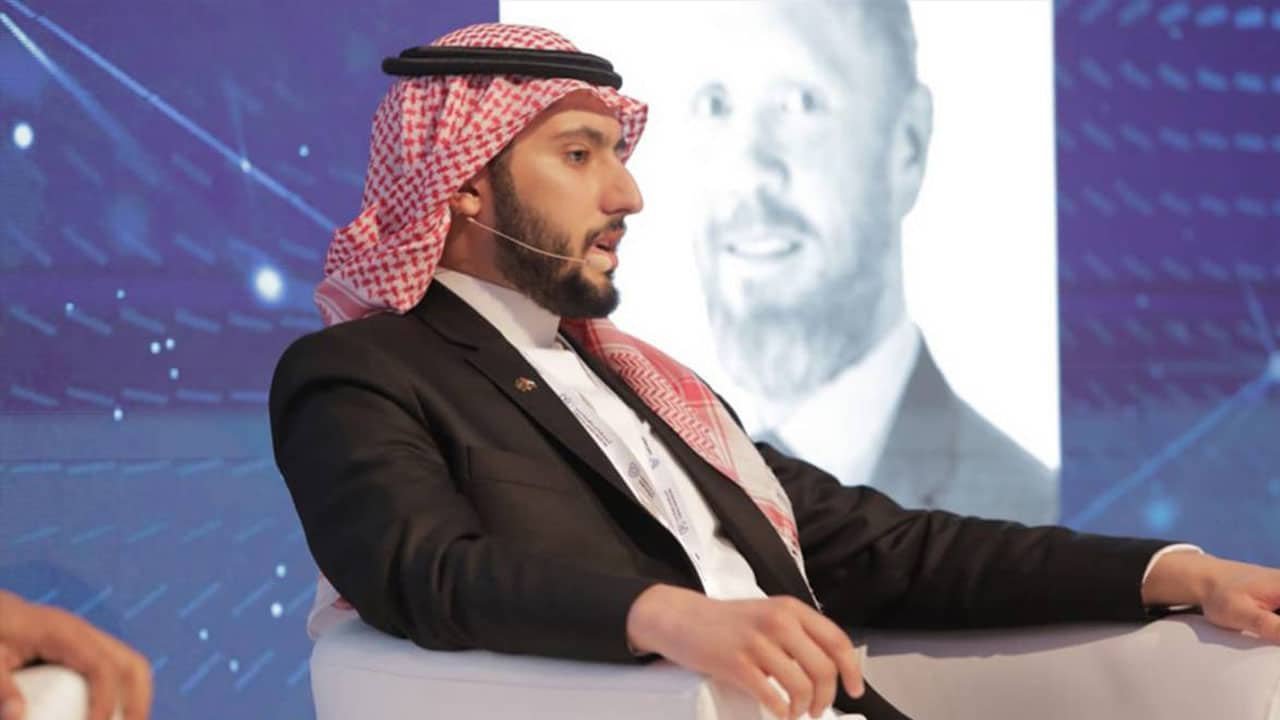
    A Saudi tech company owned by Prince Fahad bin Mansour Al-Saud has announced the launch of a Saudi-Pakistan Tech House in Islamabad on Monday.

    The initiative was first announced by the prince in January at Pakistan’s largest tech event, Future Fest 2023, and aims to forge partnerships with information technology (IT) companies and enterprises in Pakistan to promote greater ease of doing business between the two countries.

    Prince Fahad is the co-founder of ILSA Interactive, which was established in 2009 by Pakistani entrepreneur Salman Nasir with offices in Riyadh and Lahore, reflecting the determination of both Pakistani and Saudi leaders to deepen an existing strategic relationship in all fields.

    The company plans to forge partnerships with IT companies, universities, and large enterprises in Pakistan. The launch ceremony took place on Monday, March 6, and Prince Fahad intends to create more than 1,000 jobs and undertake 300 projects valued at $100 million in Pakistan, Saudi Arabia, and other countries.

    Future Fest 2023 saw leading entrepreneurs, startups, policymakers, and investors from around the world participate, and a delegation of Saudi business leaders attended the event, taking part in keynote addresses, roundtable conferences, and discussions on various topics related to the future of business and startups.

  • Coming budget 22-23 will improve Pakistan’s IT sector

    Coming budget 22-23 will improve Pakistan’s IT sector

    Prime Minister (PM) Shehbaz Sharif emphasised the importance of drafting an economic strategy during the day-long Pre-Budget Business Conference on Tuesday, stating that all stakeholders should work together to develop a framework for attaining economic growth.

    During his speech, the PM stressed the importance of financial management in order to boost exports and agricultural yields. The meeting was attended by senior economists, industrialists and was organised by the government to explore avenues of consensus-based economic initiatives, according to APP.

    “All of us will have to move collectively. The government will need guidance from stakeholders and experts. The government will form a taskforce on agriculture and exports for formulating comprehensive plans,” he said.

    PM Shehbaz stated that his government had about 15 months to implement short and medium-term economic initiatives.

    He was disappointed that Pakistan was lagging behind other countries, despite the fact that the rest of the world had excelled by following their development plans. He claimed that Pakistan was endowed with talented individuals capable of replicating India’s success in the IT sector.

    PM Shehbaz announced that he had assigned Minister of Information Technology Aminul Haque the objective of increasing IT exports to $15 billion in the next two years. “We cannot progress until we set ambitious targets,” he stressed.

    Syed Amin Ul Haque pledged on Tuesday to increase information technology exports to $5 billion by the end of 2023.

    For the coming fiscal year, several IT and telecommunications programmes have been proposed in this regard.

    According to sources, these projects include 31 existing and two new ones, for which the Pakistani government would give Rs4,438.696 million and foreign aid will provide Rs1,042 million.

    Budget allocation for IT sector

    Reportedly, an amount of Rs100 million is proposed for IT professional certification through the Pakistan Software Export Board, while Rs80 million is planned for Crime Analytics and Smart Policing. In Azad Jammu and Kashmir and Gilgit-Baltistan, Rs50 million has been suggested for demand-driven industry, while Rs179 million has been earmarked for the building of a data centre to provide cloud-based services.

    PM Shehbaz warned that development plans could not be implemented unless political stability was achieved. The premier also stressed the importance of concentrating on exports and developing the agricultural sector.

    He went on to claim that he was aiming to ‘fix’ friendly country relations that had deteriorated during the previous administration’s tenure. “I have invited China, Japan, Turkey, and other countries to invest in Pakistan,” he said. He invited the corporate community to join him in this endeavour.

    Meanwhile, Finance Minister Miftah Ismail stated that the government will require $41 billion in the next 12 months and that he is ‘confident’ that this can be achieved.

    The Shehbaz Sharif government, he added, has re-engaged with the International Monetary Fund (IMF). “We spoke with them and are extremely optimistic that we will reach an agreement with the IMF soon. That is something we are extremely certain about”.

    Moreover, he explained that the present coalition administration had made difficult measures to help the economy stabilise. “It is difficult for any prime minister to authorise a fuel price hike of twice the amount we have, but we were losing Rs84 per litre on diesel and Rs69 per litre on petrol”.

  • Shehbaz Sharif bans weddings after 10pm in Islamabad

    Shehbaz Sharif bans weddings after 10pm in Islamabad

    Prime Minister (PM) Shehbaz Sharif on Tuesday during a pre-budget business conference stressed the need of signing a ‘Charter of Economy’ for economic stability and progress in the country.

    “Charter of Economy will remain unchanged. It will become our sacred trust, which will not change,” the prime minister said, adding: “We need this.”

    If there will be no political stability, there will be no economic stability

    Shehbaz said, “If there will be no political stability, there will be no economic stability.”

    “It’s about time the elite class had to make sacrifices and non-productive assets like real estate would have to be taxed. Until now, the hard time has been faced by the poor but today it’s the turn of well-off people to take the burden,” said Shehbaz.

    Shehbaz stressed that the enhancement of exports, agricultural yield, and financial management should be the major components of the plan. “The government will form a task force on agriculture and exports for formulating comprehensive plans,” he said.

    The premier said that since Pakistan’s inception 75 years back, the economic development in the initial 25 years and the economic development after that have a “stark” difference.

    We must go for special export industrial zones

    Comparing the country’s Information Technology (IT) industry with that of India’s, the premier said that India generates around $200 billion while Pakistan’s industry is hovering around $2.5 billion. “We must go for special export industrial zones,” he added.

    The PM went on to say that the government will make well-structured industrial zones. “To increase the export, the developed zone should be handed over to the investors to work on it. We need to fix ambitious targets.”

    Government bans wedding ceremonies after 10pm in Islamabad

    The government has banned wedding ceremonies after 10pm in the federal capital.

    According to media reports, permission to serve only one dish to wedding guests will be given, and a notification will be issued over this new restriction.

    The Islamabad police and administration have been informed to strictly implement the ban. In case of any violation, strict action will be taken.

  • New study reveals ‘all messengers are leaking your personal information’

    New study reveals ‘all messengers are leaking your personal information’

    All messaging applications have support for link previews, this feature expands any website links you send or receive in a chat with images and any brief description. A recent study has shown that these previews can leak all your sensitive data, drain your battery and consume bandwidth.

    To preview, you have to visit the link through the app, open the file that’s in there and survey it. This can leave you vulnerable to malware or force an app to download files that are too big, causing it to crash and drain the battery.

    Surprisingly, the list of apps included messengers from Facebook, Instagram, LinkedIn, Line and few others. Some cases of these apps were found with issues such as leaking IP addresses, unnecessarily downloading gigabytes of data in background and exposing links sent in end to end encrypted chats.

    Facebook Messenger and Instagram showed the worst results as they would download a copy of a linked file in its entirety, even if it was gigabytes in size. Most other apps would cap the amount of data anywhere from 15MB to 50MB.

    These findings are quite alarming; your personal information isn’t safe on any online platform. Private messages are not so private.

  • Pakistan to introduce 5G by end of 2021

    Pakistan to introduce 5G by end of 2021

    In an attempt to catch on with the rest of the world in terms of the latest technology, Pakistan Information Technology Minister Aminul Haq has announced that the government will introduce 5G wireless technology by December 2021.

    In a statement, the IT minister said that the government was taking effective measures to introduce the latest service in Pakistan and it would ensure that this is done by the end of next year.

    The trial run of 5G would start from a hospital in Islamabad and Zong, a Chinese telecom company, would help the government in this regard, he said. However, before this step, the government will have to connect Islamabad, Karachi, and Gwadar via fibre optics network, he added.

    Furthermore, the IT ministry has established a policy committee on bidding for the 5G service. The committee has the representation of the members of all the stakeholders — telecom companies and the Frequency Allocation Board.

    The committee is currently looking for an international consultant to auction the 5G licences, which would be followed by the biddingprocess, its starting price, and other conditions.

    In August 2019, Pakistan successfully tested 5G network in the country. “Zong has become the first operator in Pakistan to successfully conduct a 5G trial and this is yet another milestone for the company,” Wang Hua, chairman and CEO of Zong, had said following the trials.

    Khaleej Times had reported that the 5G service in Pakistan will be 100 times faster than the current levels, while the network will be 10 times faster than existing broadband connections available in the country. “5G home routers speed has been recorded at 4 gigabytes per second, which means that it can download a 50gb file in just two minutes,” the report had added.

    But the road to 5G isn’t easy and Pakistan still has to go a long way to achieve this milestone. For example, the United States only has 5G coverage in 25 cities, whereas in China, only 50 cities have 5G coverage. “On top of it, the kind of 5G available for now is some kind of speed boost over 4G instead of the full-fledged 5G services,” said a report by Profit magazine.

  • Indians hack federal govt apps recently launched by PM Imran

    Government smartphone applications for Islamabad Traffic Police (ITP), Islamabad Capital Territory (ICT) Police, and Captial Development Authority (CDA) were hacked by Indian groups and they were siphoned for data extraction.

    Upon trying to pay an annual tax for a car, the users pointed out that the apps were not working and only had basic information such as rates of taxes of different cars and the location of offices.

    According to the media reports, The Deputy Commissioner Islamabad Hamza Shafqat revealed that the apps and services had been jammed to stop hackers from collecting data. He said that the relevant authorities are working on dealing with the issue and they will hopefully resolve the technical glitches.

    These apps were recently launched in the company of Prime Minister (PM) Imran Khan who personally attended the launch ceremony. He said that “the launch would be proven revolutionary for the people of Islamabad and these apps will soon be replicated for the rest of the country.”

  • Amazon enters Pakistan to provide web services

    Amazon enters Pakistan to provide web services

    Amazon is forming a team to establish Amazon Web Services (AWS) in Pakistan to drive the adoption of cloud computing. Amazon has also registered a local office under the name Amazon Data Services Pakistan (Pvt) Ltd. 

    According to the Security Exchange Commission of Pakistan (SECP) database, the Pakistan office is led by Paul Andrew Macpherson as the Chief Executive Officer (CEO), while Shoaib Munir is a director. 

    A spokesperson from Amazon shared that the technology leaders are currently seeking a public policy specialist with a focus on driving AWS cloud computing solution adoption in Pakistan. The role focuses on removing regulatory and political blockers to cloud adoption. 

    Whenever big companies enter small markets, it is common practice for them to appoint an advisor on public policy. When Bytedance, the parent company of Tiktok entered Pakistan, they hired Hassan Arshad to work with Pakistan Telecommunication Authority (PTA) on policy infrastructure.

    The State Bank of Pakistan (SBP) directed banks to utilise cloud computing technology under the condition that systems and service providers shall be located in Pakistan along with all physical servers and services. 

    Under this rule, AWS would need to set up its data center and cloud server in the country. 

    According to the e-commerce policy framework of Pakistan, the Ministry of Information Technology and Telecommunication is in the process of formulating Pakistan’s first cloud policy, while the Draft Data Protection Act is at an advanced stage of consultations.

    AWS hopes to work with relevant government departments in Pakistan as they develop and revise policies related to the digital economy, including cloud-first policies, data protection regulations, outsourcing guidelines, cybersecurity policies, tax policy, and over the top regulations. They will also proactively build relationships with key policymakers, politicians, and influencers.