Tag: infrastructure

  • Pakistan to receive $10 billion investment in refinery sector soon

    Pakistan to receive $10 billion investment in refinery sector soon

    Minister of State for Petroleum, Musadik Malik, announced that Pakistan will soon receive a $10 billion investment in its refinery sector. The investment, to be inaugurated by Prime Minister Shehbaz Sharif, holds significant details that cannot be disclosed at this time, according to Malik’s statement at a ceremony.

    This development follows the approval of a new refinery policy by the current government, which aims to incentivise greenfield investment.

    Malik emphasised the need for sustained GDP growth of 5 per cent in Pakistan’s growing population. To achieve this, he stated that an annual energy sector growth rate of 7.5-10 per cent is necessary. As part of this plan, the government aims to establish a comprehensive energy agreement with Central Asian countries and Russia, which will be made public by the end of the year.

    Additionally, Pakistan intends to leverage its historical ties with the Gulf Cooperation Council (GCC) countries for trade and commerce, including meeting energy needs such as LNG and petroleum products.

    The government also plans to open energy corridors with Central Asia and the GCC countries. Malik highlighted the significance of purchasing crude oil from Russia, stating that it will have a transformative impact on Pakistan, leading to industrial proliferation. The goal is to establish small industrial areas in rural regions to promote value addition.

    Malik underscored that Pakistan possesses the necessary infrastructure, labour force, and technology to present itself as an attractive investment destination. He emphasised the government’s efforts to enhance border enforcement to curb oil smuggling from Iran, expressing confidence that the flow of smuggled oil will reduce in the coming days.

    In an off-camera meeting with media persons, the minister revealed that vessels carrying 100,000 tonnes of discounted Russian oil will arrive at Pakistan’s ports in the first week of June as part of the government’s energy security plan. The oil will be transported from Oman port to Pakistan in smaller vessels within seven to ten days. Malik assured that although transportation costs may increase slightly, the impact will be minimal.

  • Pakistan received over $48 billion in bailout loans from China between 2008-2021

    Pakistan received over $48 billion in bailout loans from China between 2008-2021

    A study published on Tuesday revealed that China has spent $240 billion rescuing 22 developing countries between 2008 and 2021. This amount has increased in recent years as more countries struggled to repay loans taken for the building of “Belt & Road” infrastructure.

    The researchers, from the World Bank, Harvard Kennedy School, AidData, and the Kiel Institute for the World Economy, found that almost 80 per cent of the rescue lending was made between 2016 and 2021, primarily to middle-income countries such as Pakistan, Argentina, and Mongolia. However, lending has decreased since 2016 as many projects failed to generate expected financial dividends.

    The report also highlighted that Beijing’s ultimate objective was to rescue its banks, which is why it engaged in the risky business of international bailout lending. Chinese loans to countries in debt distress increased from less than 5 per cent of its overseas lending portfolio in 2010 to 60 per cent in 2022.

    Argentina received the highest amount of bailout money with $111.8 billion, followed by Pakistan with $48.5 billion and Egypt with $15.6 billion, while nine countries received less than $1 billion.

    According to Reuters, the People’s Bank of China (PBOC) swap lines accounted for $170 billion of the rescue financing, including in Suriname, Sri Lanka, and Egypt. Bridge loans or balance of payments, supported by Chinese state-owned banks, amounted to $70 billion. Rollovers of both types of loans totaled $140 billion. However, the study criticized some central banks for potentially using the PBOC swap lines to artificially pump up their foreign exchange reserve figures.

    China is currently negotiating debt restructurings with several countries, including Zambia, Ghana, and Sri Lanka. However, it has been criticized for holding up the processes. In response, it has called on the World Bank and International Monetary Fund to offer debt relief as well.

  • World Bank approves $1.69 billion financing for flood-hit Sindh

    World Bank approves $1.69 billion financing for flood-hit Sindh

    The Board of Executive Directors of the World Bank approved funding for five projects totaling $1.692 billion on Tuesday in order to support those residing in Sindh, Pakistan’s flood-affected areas.

    According to Geo, out of the five initiatives, three support rehabilitation, home reconstruction, and the restoration of crop production for vulnerable populations, according to a statement released by the World Bank. Two of the three projects have a combined value of $500 million, while the third is worth $292 million.

    “Sindh was the province worst affected by the 2022 floods. There were huge damages to the housing, health, and agriculture sectors and people lost their livelihoods. Beyond the rehabilitation and reconstruction of damaged houses and infrastructure, our engagement in the flood response effort is an opportunity to strengthen resilience, and reform institutions and governance structures”, said Najy Benhassine, World Bank Country Director for Pakistan.

    The “Sindh Flood Emergency Rehabilitation Project,” which will cost $500 million, will prioritize creating short-term livelihood opportunities and enhancing the province’s ability to respond to emergencies.

    “The project will help restore and improve critical irrigation and flood protection infrastructure, water supply schemes, roads, and related infrastructure. At least 2 million people—approximately 50 per cent of whom are women—in the most flood-affected districts will benefit from the restoration and the resilient reconstruction of critical infrastructure”.

    About 100,000 households will get short-term financial support through a community-level cash-for-work program.

    “The $500 million Sindh Floods Emergency Housing Reconstruction Project will support owner-driven and multi-hazard resilient reconstruction of core housing units. A housing subsidy will provide reconstruction and restoration grants for 350,000 housing units (almost 20 per cent of the total housing rehabilitation needs for Sindh). Cash grants will be provided for houses with structural damage to partially finance reconstruction or restoration. “

    To increase access to water and sanitation, twin pit latrines and simple rainwater collection systems will also be provided.

    Furthermore, the $292 million approved for the “Sindh Water and Agriculture Transformation Project” will enhance integrated water resource management, boost agricultural water productivity, and enable farmers who were impacted by the flood to resume crop production.

    “More than 385,000 households (approximately 1.9 million people) are expected to benefit from the project. As an immediate response to the floods, the project will provide cash transfers to approximately 300,000 flood-affected farming households to help restore crop production through the purchase of seeds, fertilizer, and other critical inputs. In the medium term around 70,000 households will benefit from improved irrigation services and agricultural support that will help boost farming income. An estimated 14,000 households will receive direct financial benefits from the pilot smart subsidy schemes targeting small- and medium-sized farmers,” the WB said.

    By improving access to and use of mother and child health services, the Sindh Strengthening Social Protection Delivery System Project ($200 million) will also boost the province’s social protection delivery system. As part of the project, the Federal National Database Registration Authority will be aligned and connected, and conditional cash transfers (CCTs) will be given to 1.3 million mothers and their kids to support better maternal and child health outcomes, particularly in the wake of service disruption caused by the floods.

    The CCTs will be made available to Sindh’s bottom 15 districts, selected depending on the Multidimensional Poverty Index (MPI), and will cover 65 per cent of the province’s total flood-affected areas. They are intended to help lessen the effects of the floods, particularly food insecurity, and to maintain access to maternal and child health services open.

    The Sindh Integrated Health and Population Project have been granted $200 million by the lender. The project will assist in raising the standard and uptake of fundamental nutrition, and maternal, neonatal, child, and adolescent health care. Additionally, it will aid in the repair and reconstruction of health infrastructure that was harmed during the floods and impeded the provision of these services.

    The initiative would enhance the population’s access to high-quality healthcare services in Sindh’s flood-affected settlements as well as in distant and peri-urban areas, particularly for women, girls, and children.

    “The World Bank will continue to support the Government and people of Pakistan to recover from the recent flood emergency and strengthen long-term resilience to such climate-related shocks,” the statement concluded.
  • Govt plans to promote electric vehicles, establish charging infrastructure: PM Shehbaz

    Govt plans to promote electric vehicles, establish charging infrastructure: PM Shehbaz

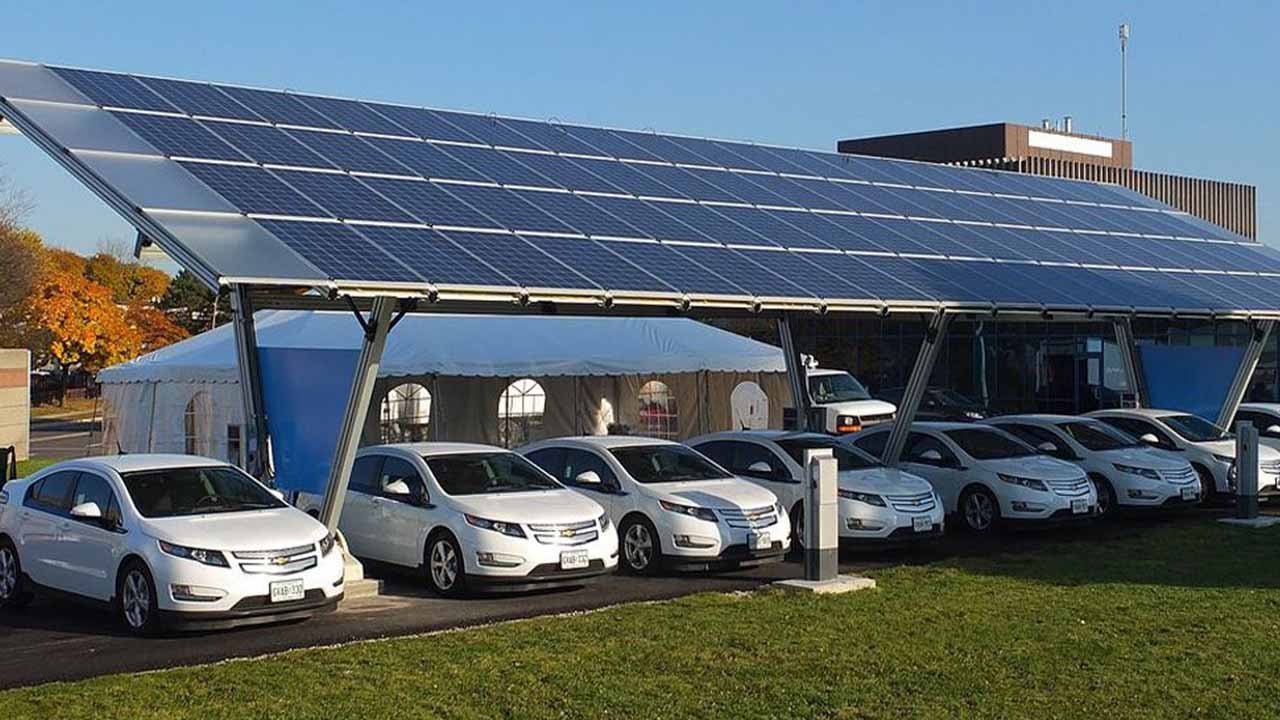
    Prime Minister (PM) Shehbaz Sharif announced on Friday that the government intended to encourage the use of electric vehicles in the nation and would set up a network of the necessary charging infrastructure.

    The PM gave the departments involved the go-ahead to provide him with a thorough plan as soon as possible in this regard.

    According to APP, Shehbaz Sharif also directed that the Board of Investment, the Ministry of Power and Energy, and the Ministry of Trade and Industries provide every opportunity to investors interested in the market for electric vehicles.

    A high-level meeting on the employment of electric buses in the fleet of public transportation, the promotion of the electric vehicle industry, and alternative energy sources was presided over by him.

    The prime minister underlined the urgent necessity to develop renewable energy sources in order to make the nation energy self-sufficient.

    He noted that the government has recently approved the start of a 10,000-megawatt solar project.

    He said that the solar project would not only lessen environmental pollution but also secure the production of inexpensive power by reducing reliance on pricey imported fuel, saving significant foreign currency.

    The forum heard updates on the growing use of electric vehicles around the world as well as plans for electric buses for public transportation.

    It was advised that the growth of the electric car sector and infrastructure will greatly reduce the nation’s import costs while also creating prospects for international investment and employment.

  • We have not invested enough in education, health and infrastructure: PM Shehbaz

    In an interview to The Economist on Pakistan’s Independence Day, Prime Minister (PM) Shehbaz Sharif highlighted the root problems of the economic crisis gripping the nation nowadays.

    Titled “Pakistan’s prime minister on his drive to modernise the country“, PM Shehbaz mainly talked about critical structural flaws that hindered the state’s economy. According to him, the first reason is that Pakistan’s political environment has become increasingly polarised.

    “Instead of debating how to run Pakistan better and rid the country of poverty, political parties have been at each other’s throats,” he pointed out.

    “We have not invested enough in the nuts and bolts of development: education, health and infrastructure. This is in part due to an abysmally low tax take, but it also reflects our priorities in public spending.”

    PM Shehbaz further highlighted the fact that Pakistan has not enjoyed the benefits of globalisation.

    “Today, we hardly make anything that the world wants and our companies remain very comfortable only operating within our borders, often protected by barriers to competition,” he stressed.

    He pointed out that Pakistan’s exports are just 10 per cent. Shehbaz said that where “two out of every three people are below the age of 30 and full of aspirations and where every third person lives on less than $3.20 a day and less than a quarter of our women work outside the home,” it is a moment that merits “serious introspection”.

    Pakistan was one of the biggest victims of state-sponsored terrorism’: PM Shehbaz

    In an interview with Newsweek’s senior foreign policy writer Tom O’Connor, PM Shehbaz said it was no secret that Pakistan was “one of the biggest victims of state-sponsored terrorism that is planned, supported and financed by hostile intelligence agencies”.

    He went on to say that terrorist attacks against Chinese nationals were “aided and abetted by forces inimical to the Pakistan-China strategic partnership”.

    Talking about friction between the US and China, the premier said: “While the Pakistan-China relationship is very special, Pakistan and the US have also maintained a long-standing historic bilateral relationship which covers all issues of mutual interest.”

    He was of the view that the world cannot afford to go back into another “era of Cold War or bloc politics”.

    The premier called for all parties to agree to the “minimum rules of the game in which the welfare of the people remains paramount”.

    “Systematic problems can be fixed through engagement and consultations among all political stakeholders. This course may take time, but is the only way forward for the system to become strong, resilient and efficient.”