Tag: Innovation

  • YouTuber makes world’s largest 8-foot fully functional iPhone

    YouTuber makes world’s largest 8-foot fully functional iPhone

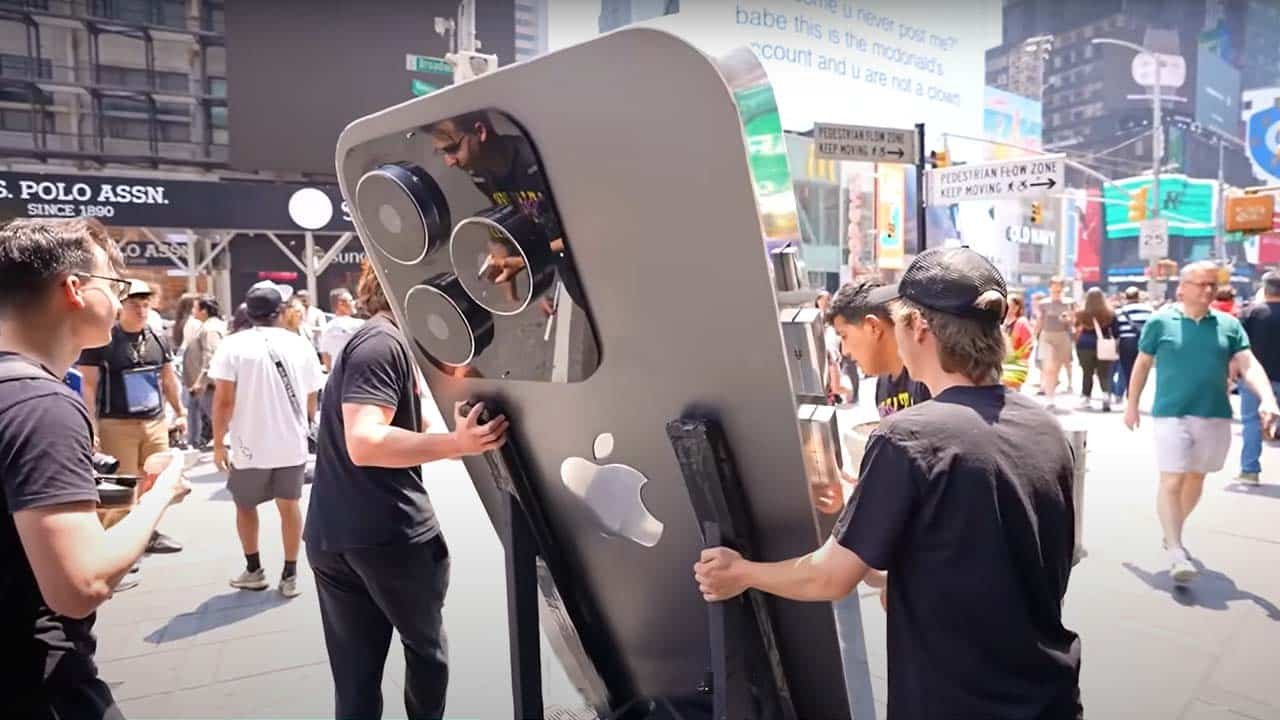
    In the world of technology, where devices seem to shrink in size while packing in more features, one YouTuber has taken a different approach. Matthew Beem, a popular content creator, recently made headlines by constructing the world’s largest functional iPhone. This colossal device measures a staggering 8 feet, surpassing Apple’s iPhone 14 Pro Max and the previous record holder, YouTuber ZHC’s 6-foot-long creation from 2020.

    Beem’s video documenting the construction of this technological marvel quickly went viral, captivating viewers with its impressive scale and functional capabilities. The video showcased the meticulous process of building the giant iPhone from scratch. From selecting the materials to connecting the components, Beem demonstrated his craftsmanship and passion for technology.

    What sets this mammoth iPhone apart is not only its size but also its functionality. Despite its massive dimensions, the device operates just like a standard iPhone. The touchscreen, a television display, is seamlessly integrated with a Mac mini, enabling smooth navigation and interaction. Additionally, Beem ensured that essential features, such as the lock button, volume controls, and a music button, were incorporated into the design.

    While the giant iPhone presents a remarkable feat of engineering, its sheer size poses a challenge in terms of portability. In the video, Beem humorously showcases how he carried the colossal device using a cart, highlighting the impracticality of its size for everyday use. Nevertheless, the creation stands as a testament to Beem’s ingenuity and dedication to pushing technological boundaries.

    To demonstrate the functionality of his creation, Beem took the enormous iPhone to the bustling streets of New York City. Surrounded by curious onlookers, he captured photos, recorded videos, engaged in gaming sessions, and even effortlessly made payments through Apple Pay. In an impressive display of its capabilities, Beem initiated a FaceTime call with one of his viewers from India, further captivating his audience and showcasing the true potential of this larger-than-life iPhone.

    In an interview, Matthew Beem shared his motivation for undertaking such a monumental project. “I love technology and have a history of making some of the largest builds on YouTube, so I decided to put my skills to the test and build the world’s largest working iPhone! I have never built anything like this before, so this was extremely difficult,” Beem expressed. To add an extra touch of excitement, he revealed, “To top things off, we drove this to New York City to get people’s reactions in Times Square and surprise the top tech reviewer on the planet, Marques Brownlee (MKBHD)!”

    Matthew Beem’s colossal iPhone not only breaks records but also exemplifies the relentless spirit of innovation that drives creators in the digital age. While its practicality may be questionable, its significance lies in pushing the boundaries of what is possible. As technology continues to evolve at a rapid pace, it is content creators like Beem who inspire others to think big and imagine the unimaginable.

    With the creation of the world’s largest working iPhone, Matthew Beem has firmly established himself as a visionary in the world of technology. As viewers eagerly await his next awe-inspiring project, one can’t help but wonder what other incredible feats he will achieve and what new possibilities lie ahead in the realm of technological innovation.


  • Indian inventor introduces futuristic one-wheel self-balancing electric scooter

    Indian inventor introduces futuristic one-wheel self-balancing electric scooter

    A visionary Indian man has ingeniously crafted a remarkable electric scooter that defies convention by featuring only a single wheel, embodying his innovative approach to transportation.

    The entire captivating journey of building this extraordinary self-balancing electric scooter has been meticulously chronicled in a captivating video shared on the Creative Science YouTube channel.

    The video commences with the creator sketching the initial blueprint of the scooter on cardboard, meticulously refining the design and making necessary adjustments before commencing work with durable metal sheets. Transferring the meticulously finalised cardboard design onto a substantial metal sheet, the skilled individual deftly cuts out the required components, which are then skillfully welded together, culminating in the creation of the wheel’s arch.

    To ensure optimal stability, the scooter boasts a wider wheel embedded with a cutting-edge hub motor. Additionally, the ingenious inventor fabricates a comfortable seat using sturdy metal sheets, ingeniously incorporating a cleverly concealed storage compartment beneath it to house the scooter’s vital battery pack.

    Drawing inspiration from the vintage designs of yesteryears, an exquisite metal fairing is meticulously fashioned. Complementing the ensemble, the handlebar and headlamp unit are borrowed from an existing scooter, while a robust bracket ensures the wheel’s secure placement, and a custom-fabricated metal pipe serves as the elegant rod for the handlebar.

    Once the meticulous structural work reaches its completion, a crucial self-balancer sensor is meticulously integrated into the scooter. This sophisticated sensor plays an indispensable role in maintaining optimal stability, enabling the audacious scooter to effortlessly remain upright, defying expectations with its singular wheel.

    Precise installation of the sensor is of utmost importance, ensuring accurate calibration and steadfast security. The wires from the wheel are diligently connected to the sensor, while an additional set of wires establish a vital link between the sensor and the throttle cable.

    With the technical aspects artfully completed, the protective panels are deftly removed, and the entire scooter embarks on a transformative painting process. Beginning with a meticulous primer, the scooter is then adorned with a radiant yellow hue, instantly captivating attention.

    To ensure safety and comfort, any sharp metal edges on the scooter are conscientiously concealed with carefully placed piping. Despite its unconventional appearance, this remarkable scooter functions with remarkable finesse, thanks to the flawlessly integrated sensor that effectively safeguards against any untoward tipping forward or backward.

    It is worth noting that the creator’s exceptional achievement was accomplished without relying on advanced modern technologies, proudly showcasing their remarkable ingenuity in crafting this awe-inspiring, home-built marvel.

  • Toyota is working on fake manual transmission to add excitement to electric cars

    Toyota is working on fake manual transmission to add excitement to electric cars

    Toyota engineers have taken a unique approach to attract consumers who find electric cars lacking excitement by working on a realistic-feeling fake manual transmission as a potential feature.

    Although a manual transmission in an electric vehicle would serve no functional purpose, it would cater to enthusiasts who enjoy the experience of shifting gears in their conventional gasoline-powered cars.

    Toyota, a brand historically skeptical of electric vehicles, has been planning a more aggressive foray into the sector. Acknowledging the need to appeal to a diverse range of consumers, the development of features such as a fake manual transmission aims to entice individuals who are not captivated by the typical smoothness and simplicity associated with electric vehicles.

    It is worth noting that the majority of gasoline-powered cars sold in the United States today are equipped with automatic transmissions that require no driver input for shifting gears.

    Manual transmissions, which require the driver to operate a clutch pedal and maneuver a gear stick, are often offered as options for performance cars or inexpensive models. However, manual transmissions are more prevalent in other parts of the world, including Europe.

    In the case of Toyota’s innovation, as revealed in a recent patent application filed in the United States in late May, the electric car would not possess an actual multi-speed transmission. Instead, a shifter would be connected to sensors and a central computer programmed to replicate the sensation of driving a car with a manual transmission.

    Since manual transmission cars vary in terms of engines, transmissions, and gear ratios, the central computer would be programmed to emulate a specific type of manual transmission car. In addition to the conventional brake and accelerator pedals, the driver would also have a clutch pedal to complete the simulated experience.

    Furthermore, drivers will have the ability to “downshift” or engage in engine braking. This process involves selecting a lower gear and releasing the clutch pedal without pressing the accelerator, allowing the friction of the unpowered engine to slow the car without the need for brakes.

    Toyota’s virtual manual transmission incorporates programming that enables drivers to experience the sensation of operating it poorly, to a certain extent.

    If the driver fails to provide sufficient acceleration or selects an incorrect gear, the car will simulate the shaking and bucking experienced in a gas-powered vehicle with a manual transmission. However, the car’s computer will limit the intensity of these effects to prevent undue strain on the battery.

    Importantly, if drivers prefer not to use the fake manual transmission, the car will offer two driving modes: a regular electric vehicle mode and the faux-manual mode.

    While some reports suggest the inclusion of fake engine sounds to accompany the shifting and accelerating actions, the patent application does not explicitly mention it. The availability, timing, and target markets for the electric vehicle equipped with the simulated manual transmission remain uncertain at this point.

    Toyota’s innovative endeavor showcases the company’s commitment to diversifying its electric vehicle offerings and catering to a wider range of consumer preferences.

    By blending the familiarity of manual transmissions with the benefits of electric vehicles, Toyota aims to capture the attention of enthusiasts while providing an engaging driving experience in an increasingly electrified automotive landscape.

  • Apple may launch a cheaper version of Vision Pro next year

    Apple may launch a cheaper version of Vision Pro next year

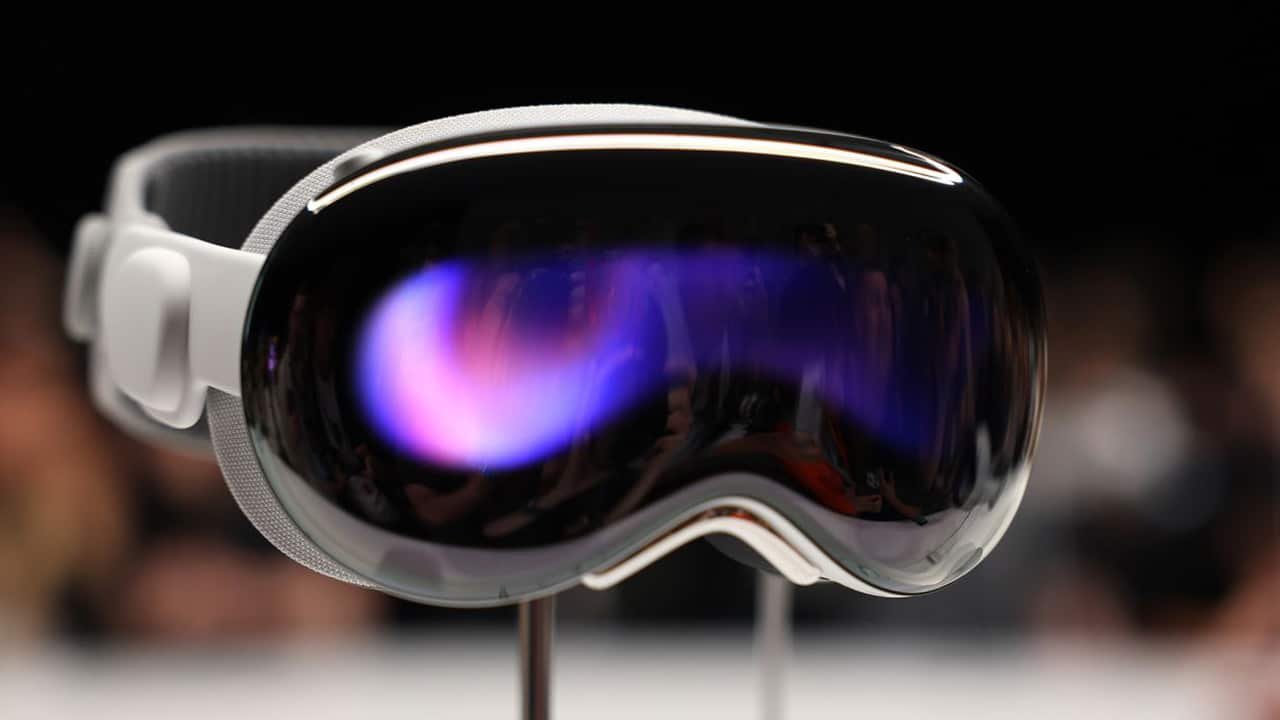
    Apple made a grand announcement at WWDC this week, unveiling their revolutionary Vision Pro spatial computer. With a hefty price tag of $3,500, this cutting-edge device won’t hit the shelves until early 2024. However, Apple isn’t stopping there; they’re actively developing a more affordable version of this futuristic product.

    According to Mark Gurman, Apple has set its sights on releasing an affordable AR/VR spatial computer by the end of 2024. As expected, Apple is simultaneously working on an upgraded version of the Vision Pro, promising an even faster processor for mind-boggling performance.

    Now that the Vision Pro name is out in the open, speculation runs wild about the potential name for its cheaper counterpart. Gurman suggests “Apple Vision” or perhaps “Apple Vision One.” But the burning question remains: how will Apple manage to slash the price? Gurman’s got a few intriguing ideas up his sleeve.

    In the initial Vision Pro model, the costliest components are the M2 and R1 chips, the remarkable 4K micro-LED displays, and the advanced camera and sensor hardware. To trim costs, Apple might opt for lower-quality screens, a slightly less powerful processor, and a reduced number of cameras and sensors. Additionally, the spatial audio speakers within the headset could be omitted, with users encouraged to rely on their trusty AirPods Pro for an immersive audio experience.

    But that’s not all. Apple could also simplify the headband design, insist on AirPods for spatial audio instead of including speakers within the Vision Pro strap, switch to a physical adjustment mechanism for IPD (the distance between eye pupils), and even eliminate features like the 3D camera. When combined with refined production methods, economies of scale, and a more cost-effective frame, one can imagine Apple knocking off a significant chunk from the price tag.

    Yet, Gurman astutely points out that there are certain aspects where Apple won’t compromise. The external EyeSight screen, responsible for showcasing the wearer’s eyes, along with the essential eye- and hand-tracking system, are intrinsic to the Apple Vision experience—akin to how a touchscreen is inseparable from an iPhone. So, it’s highly likely that these captivating features will be retained in the more affordable model, ensuring a mesmerizing and immersive journey for users.

  • Apple to launch its first 15-inch MacBook Air with M2 chip at WWDC next week

    Apple to launch its first 15-inch MacBook Air with M2 chip at WWDC next week

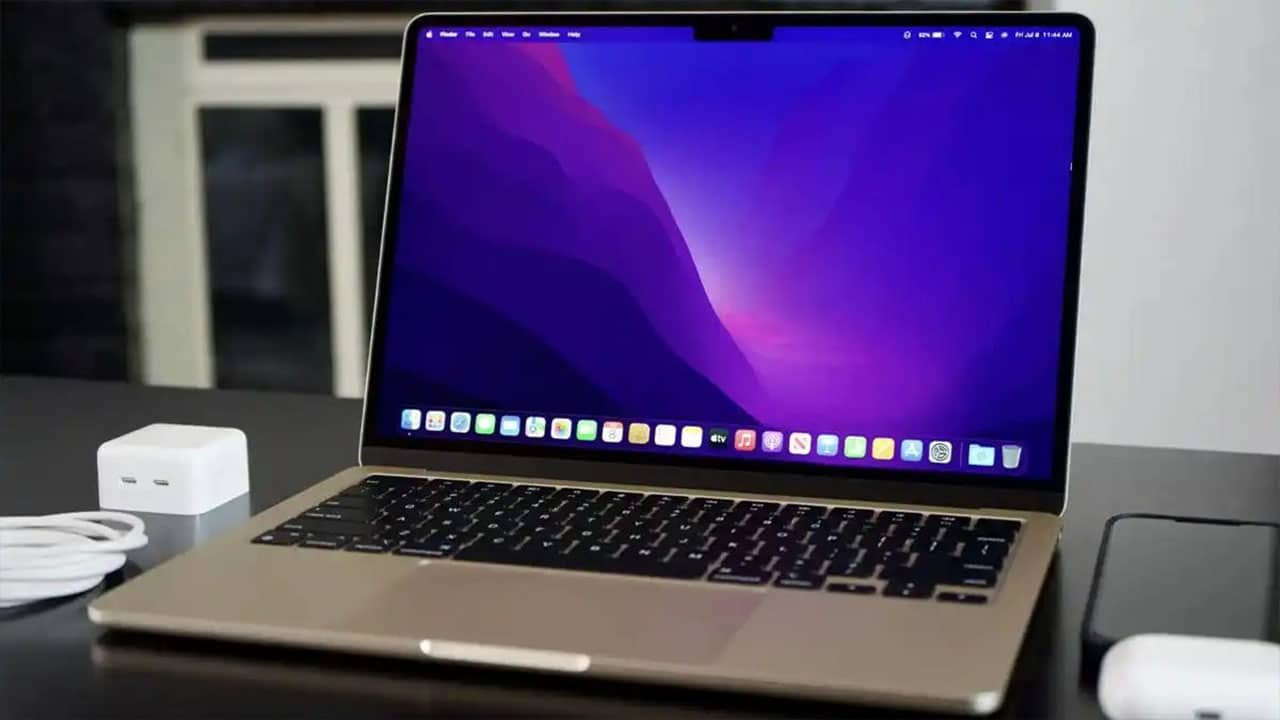
    Apple is set to make a major announcement at this year’s Worldwide Developers Conference (WWDC), as Bloomberg’s Mark Gurman reports that the tech giant plans to introduce a new MacBook Air model with a larger 15-inch display. The highly anticipated unveiling is scheduled to take place during Apple’s event on Monday, June 5 at 10 AM Pacific Time.

    The upcoming MacBook Air will mark a significant departure from its predecessors, as it is expected to feature a 15.5-inch display, as revealed by reliable display industry analyst Ross Young.

    This represents a notable increase in screen size compared to the current MacBook Air’s 13.6-inch display. While the laptop had previously been offered in an 11-inch variant, Apple appears to be shifting towards larger displays to cater to user preferences.

    What’s new?

    According to renowned Apple supply chain analyst Ming-Chi Kuo, the new MacBook Air will be equipped with the highly acclaimed M2 chip, which has been widely praised for its enhanced performance. The M2 chip boasts an 18 per cent faster CPU, a 35 per cent faster GPU, and a 40 per cent faster Neural Engine when compared to the previous M1 chip. These improvements make the new MacBook Air an enticing option for users considering an upgrade from the 2020 MacBook Air.

    In addition to the improved performance, the larger chassis of the 15-inch MacBook Air will accommodate a bigger battery, potentially offering users a longer battery life. Apple’s current 13-inch MacBook Air with the M2 chip can last up to an impressive 18 hours per charge. With the larger form factor, it is anticipated that the 15-inch model may even approach the 20-hour mark, reaffirming Apple’s commitment to providing industry-leading performance-per-watt.

    Another anticipated upgrade in the new MacBook Air is the inclusion of Wi-Fi 6E, as seen in other recent Apple releases. While the 13-inch MacBook Air is currently limited to Wi-Fi 6, the 15-inch model is likely to benefit from the faster speeds, lower latency, and reduced signal interference provided by Wi-Fi 6E. Users will need to connect their devices to a Wi-Fi 6E router from brands like TP-Link, Asus, or Netgear to fully harness these advantages.

    Moreover, the new MacBook Air could potentially support Bluetooth 5.3, following Apple’s recent integration of the technology into its latest devices. Bluetooth 5.3 brings improvements in reliability and power efficiency compared to its predecessor, Bluetooth 5.2, enhancing the overall wireless experience for users.

    With the upcoming announcement of the 15-inch MacBook Air, Apple aims to cater to the demands of its user base by offering a larger display, superior performance with the M2 chip, extended battery life, and cutting-edge wireless connectivity. The unveiling at WWDC is eagerly anticipated by Apple enthusiasts and tech enthusiasts alike, and it further solidifies Apple’s commitment to innovation and delivering exceptional products to its customers.

  • Top 7 AI tools every content creator should try

    Top 7 AI tools every content creator should try

    Artificial intelligence (AI) has rapidly evolved, revolutionising various aspects of our lives. Chatbots, in particular, have gained immense popularity, providing virtual assistants that can engage in meaningful conversations.

    Whilst ChatGPT is undoubtedly a remarkable AI chatbot, there are several other free alternatives that surpass its capabilities in specific domains. In this article, we will explore seven of the best AI chatbots that offer unique and impressive functionalities.

    Google Bard

    Google Bard is an advanced AI chatbot that combines natural language processing and internet access to provide comprehensive answers, summarise articles, and even generate images. Its ability to leverage vast online resources allows users to obtain accurate and up-to-date information swiftly. Whether you seek answers to complex questions or require an AI-powered image generator, Google Bard delivers exceptional results.

    Vidyo.ai

    Vidyo.ai specialises in converting YouTube videos into short clips with captions and editing options. This AI chatbot streamlines the process of extracting relevant portions from lengthy videos, enabling users to share concise and impactful content. By facilitating video editing and captioning, Vidyo.ai empowers content creators, educators, and marketers to enhance their video-based communication effectively.

    Beat Oven

    For music enthusiasts, Beat Oven is a game-changer. This AI chatbot possesses the ability to generate royalty-free music tailored to the user’s preferences. By analysing the input, Beat Oven can create unique and high-quality compositions, allowing artists, content creators, and even casual users to access a vast library of original soundtracks. The convenience and versatility offered by Beat Oven make it a must-have tool for those in need of background music.

    Scribble Diffusion

    Scribble Diffusion harnesses the power of AI to transform simple scribbles into realistic drawings. This chatbot uses advanced image generation algorithms to convert rough sketches into visually appealing illustrations. Furthermore, Scribble Diffusion can also generate captions for these drawings, making it an excellent tool for artists seeking inspiration or individuals interested in exploring their creative potential.

    Runway.ml

    Runway.ml is an AI chatbot that excels in video editing and object removal. Leveraging state-of-the-art inpainting techniques and other magical tools, this chatbot allows users to edit videos seamlessly. With Runway.ml, unwanted objects or blemishes can be effortlessly removed from footage, enabling content creators and video enthusiasts to enhance the visual quality of their projects.

    Tome

    Tome is a powerful AI chatbot that utilises ChatGPT and DALL-E to create stunning presentations from a single prompt. By combining text generation and image synthesis, Tome can generate slides, infographics, and visual aids that complement the user’s content. This chatbot simplifies the presentation creation process, allowing individuals to convey their ideas effectively and professionally.

    Flair

    Flair.ai is an AI-powered design tool that generates high-end product photography in minutes. It is a cloud-based platform that allows users to create high-quality product images without the need for professional photography equipment or skills.

    Whilst ChatGPT undeniably possesses exceptional conversational abilities, it is essential to recognise the wealth of alternative AI chatbots that excel in specialised domains. From Google Bard’s comprehensive information retrieval to Beat Oven’s music generation capabilities, each of these chatbots offers unique functionalities that can cater to specific user needs.

  • Man wins gold prize in Geneva for developing smart prayer mat

    Man wins gold prize in Geneva for developing smart prayer mat

    For developing a smart prayer mat, a Qatari innovator was awarded with the gold prize at the International Exhibition of Inventions in Geneva.
    Abdulrahman Saleh Khamis received recognition for his ground-breaking creation, intended to teach new Muslims and kids how to pray properly.

    The smart rug was developed after intensive research, with Khamis using cutting-edge technology to develop the mat.

    As per the product’s website, the smart prayer has the following features:

    Guided Prayer Training

    Sajdah guides you through daily and non-daily prayers in a step-by-step learning experience.

    Quran Reading

    Sajdah’s LED screen helps you read & memorize the Holy Quran while practicing your prayers.

    Smart & Connected

    Use the Sajdah app to control the pace of your prayer guides, including chapter transition speed, font size, and much more.

    Multi-Lingual

    Prayer guides and Quran verses displayed in Arabic, English, and Latin. Updates will include more languages.

  • Godfather of AI resigns from Google, issues warning on dangers of AI development

    Godfather of AI resigns from Google, issues warning on dangers of AI development

    Geoffrey Hinton, known as “the Godfather of AI,” has spent most of his career promoting the benefits of artificial intelligence, but now he is concerned about its potential dangers. He recently spoke to the New York Times about his decision to leave Google, where he co-founded Google Brain, a research team developing AI systems, citing concerns about the difficulty of preventing bad actors from using the technology for malicious purposes. Hinton is not alone in his apprehension about AI’s future, as other AI pioneers have expressed similar concerns.

    One of Hinton’s primary concerns is the spread of misinformation enabled by AI, such as deepfakes and AI-generated fake news, which can confuse people and blur the lines between reality and fiction. He worries that people will no longer be able to distinguish what is true from what is not.

    Hinton is also concerned about the rapid pace of AI technology advancement, which has been fueled by competition among major tech companies like Google and Microsoft. He is worried that the technology will become more advanced than the human brain, something he once believed was decades away from happening.

    Now 75, Hinton is dedicating the rest of his life to ensuring that the technology he helped create won’t lead to the destruction of civilization. He acknowledges the possibility that others would have developed AI had he not done so, but he still feels a sense of responsibility to help mitigate the potential negative consequences of its use.

  • After 35 years, Toshiba officially closes laptop business

    The Japanese giant Toshiba has sold its final shares of the company, which means that the firm is no longer connected with making PCs or laptops.

    Sharp corporation bought 80% of Toshiba’s personal computing shares in 2018 for $36 million and has now bought the remaining shares, Toshiba said in a statement.

    Toshiba made its first laptop, the T1100, which was launched in 1985. It weighed 4kg (8.8 lbs) and worked with 3.5 inches (8.8cm) floppy disks.

    The laptop was launched only in Europe at first with an annual sales target of 10,000 units.

    In 2011, Toshiba sold more than 17 million PCs but by 2017 this had fallen to 1.9m.

    In 2016, it had ceased making consumer laptops for the European market and focused only on hardware production for businesses.

    Recent years have been difficult for the company. In 2015, the firm posted a full-year loss of $318 million.

    That same year its president and vice-president resigned after an independent panel found the company had overstated its profits for the previous six years.

    In 2019, it wound up its nuclear business NuGen in the UK after failing to find a buyer for it.

    During the 1990s and early 2000s, Toshiba was among the top PC manufacturers, but as more players crowded into the market and with fewer unique features to offer, Toshiba’s laptops faded in popularity.

    By the time it sold its stake to Sharp, Toshiba’s share of the PC market had decreased from its 2011 peak of 17.7 million PCs sold to about 1.4 million in 2017, according to Reuters.

  • VISA, NayaPay Partner to revolutionise digital payment system in Pakistan

    VISA, NayaPay Partner to revolutionise digital payment system in Pakistan

    NayaPay, an Electronic Money Institution (EMI), has collaborated with Visa, a leading global payment solution. Now they have access to Visa’s growing partner and global payments network, technology, and resources to accelerate innovation in digital payments in Pakistan.

    NayaPay will enable users to open electronic (E)-Money accounts within a few minutes and make hassle-free digital payments to each other and to businesses.

    NayaPay consumers and merchants can use their NayaPay Visa debit card to perform online and in-store transactions with millions of retailers worldwide as well as withdraw cash conveniently at any ATM location.

    NayaPay customers can also scan Visa merchant QR codes to make payments directly through their app.

    NayaPay will also facilitate cross-border money transfers for freelancers and other Pakistan-based businesses working with international clients, and households receiving remittances from their families abroad.

    Users will be able to accept funds instantly and directly into their NayaPay wallets from over a billion Visa cards across the globe.

    Danish Lakhani, CEO NayaPay, said: “We are delighted to have found a partner in Visa that shares our goals of making financial services simpler, more convenient and accessible to Pakistani users – the needs of whom have been overlooked for far too long. Over the past few months, we have been integrating Visa’s offerings to reinforce our issuing and acquiring capabilities and to deliver on our promise of becoming a part of citizens’ daily lives.”

    “We are committed to helping fintech achieve their potential – enabling big ideas to flourish and supporting them through the reach, scale, and security of the Visa network,” said Kamil Khan, Country Manager, Pakistan, Visa.

    “By joining Visa’s Fintech Fast Track program, exciting fintech like NayaPay gain unprecedented access to Visa experts, technology, and resources,” said Otto Williams, Vice President, Strategic Partnerships, Fintech and Ventures, CEMEA at Visa.