Prime Minister of Pakistan Imran Khan at the conclusion of the Olympic Games on Sunday, shared a message for his followers on social media, featuring a Tiktok video that conveys the importance of not giving up.
“I want the youth of Pakistan to watch the race and learn the most important lesson that sports taught me: you only lose when you give up,” wrote the premier.
I want the youth of Pakistan to watch the race and learn the most important lesson that sports taught me: “you only lose when u give up.” pic.twitter.com/a7UnCvnwSR
The 62-second clip shared by PM Imran Khan shows an athlete falling down on his face during a sprint before getting back on his feet again and finishing ahead of everyone else.
It is the fourth time that the wildly popular video sharing app has been blocked in Pakistan and the third time this year. Free speech advocates are critical of growing censorship since PM Imran Khan took office in 2018.
The app has been caught up in a series of legal battles with religious activists and authorities. Prior to this shutdown, the app was barred for two days in early July on the order of a provincial court.
Despite being hugely popular and useful to many who market and sell goods online in Pakistan, TikTok has many critics in the country who claim the app promotes vulgarity.
In June, the company announced it had removed more than siz million videos in just the previous three months alone as a result of complaints from officials and citizens alike. Of those six million videos, 15% were pulled because of “adult nudity and sexual activities.”
The first time that Pakistan moved to block TikTok in 2020, the ban was lifted after diplomatic pressure from China and assurances from Byte Dance, the parent company, with regards to content moderation.
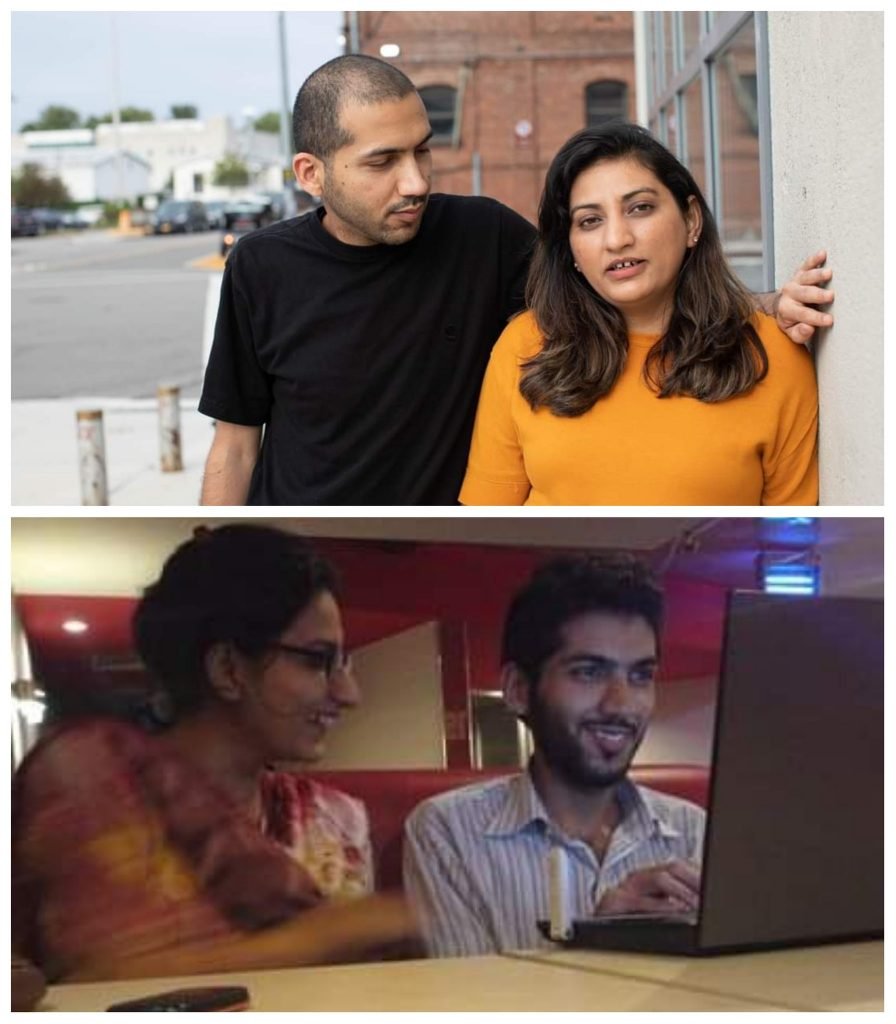
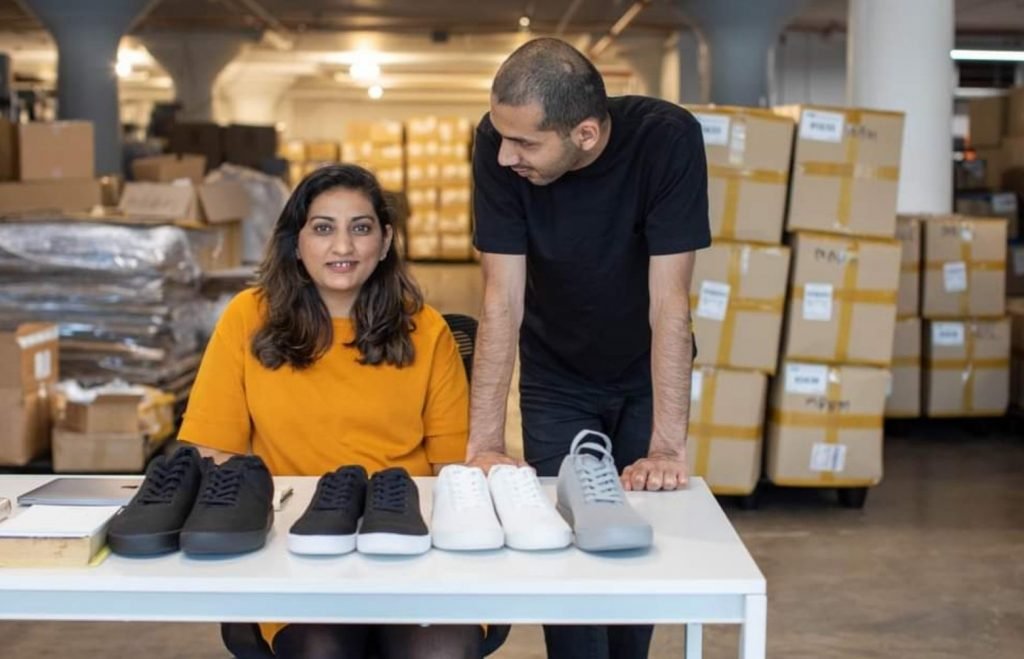
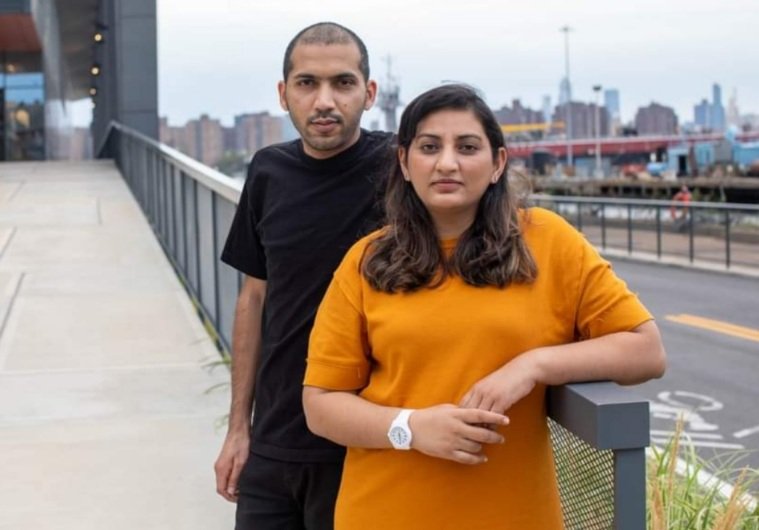
“Just two kids from a small town in Pakistan, who escaped their conservative families” is how Sidra Qasim describes herself and her husband, Waqas Ali, the power couple behind Atoms – a New York-based footwear brand known for its quarter sizes and comfortable sneakers.
However, their road to success was not an easy one. In an interview with Brandon Stanton of Humans of New York, Sidra opened up about their journey and how they set up their footwear brand.
“It’s the same story taught to every Pakistani girl. We are raised from a young age to believe that our purpose in life is to find and keep a husband,” said Sidra in the first of her 11-part interview. But even as a child, Sidra had bigger dreams, and she held on to them even as her family pressurized her to get married right out of school.
Sidra, who belongs to the small town of Okara, first met Waqas at her aunt’s house. He was one of her aunt’s students.
“We’d discuss life, and society, and human emotions. It became the only chance I had to exchange my ideas with anyone. And Waqas took my opinions seriously,” she shared.
After school, Sidra enrolled in a college and became one of the only 15 female students there. It was after she successfully produced a play to help with flood relief efforts that Waqas asked her to join him in Lahore – where he had moved to study further – and become his business partner.
“It finally felt as though my talents were being recognised, and the next day I asked for my parent’s permission. But they refused,” said Sidra.
The refusal came as a blow to Sidra, who describes lying listlessly on the couch for weeks – to the point where it scared her father. Eventually, they agreed to let her move to Lahore, where she began working with Waqas on a company called ‘Social Media Art’ which aimed to help brands establish a social media presence.
As their company struggled, Waqas and Sidra grew closer.
“We never discussed the status of our relationship, but both of us could feel a closeness. We were bonded by our journey. Both of us were defying our parents,” she said. “But after a year of rejection, we had begun to lose hope.”
A ray of hope came from unlikely quarters when Sidra and Waqas met with a group of craftsmen in the local village council of Okara.
“They were making leather shoes on the floor of a two-room workshop,” she added.
Sidra returned to the workshop again and again for a week and, in the end, the craftsmen agreed to collaborate with them.
While Waqas worked on the website, Sidra ensured that the shoes they produced met the “highest quality standards”.
“We called our collection ‘Hometown Shoes.’ And after we launched our website, the first order came in right away,” said Sidra, adding that though they made a loss on the order due to the high shipping cost to France, the couple did not give up hope.
“After a year we were selling about 50 shoes per month. We were happy to have any business at all, but it wasn’t nearly enough to survive,” said Sidra. They started a highly successful Kickstarter campaign and raised $1,07,000 in 2014 by selling over 600 pairs of shoes.
After that, Sidra and Waqas got married in a small ceremony – and immediately began to work on their application for the Y-combinator accelerator program in San Francisco. “The admissions process was more selective than Harvard, and they’d helped launch companies like Airbnb and Dropbox,” Sidra added.
Although she describes their interview as a “disaster”, they did get through and moved to the US.
Their time at Y-combinator was one of making mistakes and learning from them. “We were the only company in our group who didn’t raise money. And to make matters even worse, it had been a formal event,” said Sidra, describing Demo Day which is sort of a final exam for participants of the program. “Many of our classmates had dressed up. But none of them were wearing the shoes we had sold them.”
Doing more market research helped them understand that most people wanted shoes they could wear every day, and so Sidra and Waqas shifted their focus from formal footwear to casual.
“We researched the highest quality materials, and we put all of our findings into a document called ‘Ideal, Everyday Shoe.’ Then we gave all our notes to a talented designer. Together we built a prototype, and we called them ‘Atoms,’ because we’d gone to the atomic level in search of quality.”
It took them several months to manufacture their first collection after extensive customer feedback and market research. “By the time we were ready to launch, 45,000 people had signed up for our mailing list. On the first day of sales, our website crashed,” Sidra continued.
Their company expanded to 25 employees, but they also had to go through a round of layoffs. At the beginning of the pandemic, to stay afloat in the face of dwindling funds and investors unwilling to put in more money, Atoms expanded to making masks.
“One year later we’ve sold 500,000 of them and donated 500,000 more. Our shoe business has continued to grow, and once again investors are calling on the phone,” Sidra told Humans Of New York.
She concluded the interview by talking about the change that her business has helped brought about. She has been able to help her family back in Pakistan financially. “But more importantly I’ve provided an example,” says Sidra.
One of her younger sisters is now working as a fitness coach, the other is selling sanitary pads. But the biggest transformation, she said, has been in her mother – a school headmistress who now tells her students to be financially independent and learn technology.
“She’s telling them all the things that I needed to hear as a little girl. The road was so lonely for me, and maybe I still carry some unconscious resentment,” said Sidra.
“But my mother has apologised for not supporting me more. And consciously I have forgiven her.”
Sidra and Waqas started Atoms armed with ambition, curiosity, and a passion for making shoes. Despite coming from modest, traditionally conservative upbringings, that drive took them from Okara, Pakistan, to the closest big city—Lahore, to Silicon Valley, and then to Brooklyn, where Atoms is currently based.