Tag: interest rates

  • SBP likely to hike key policy rate by up to 300 basis points next month

    SBP likely to hike key policy rate by up to 300 basis points next month

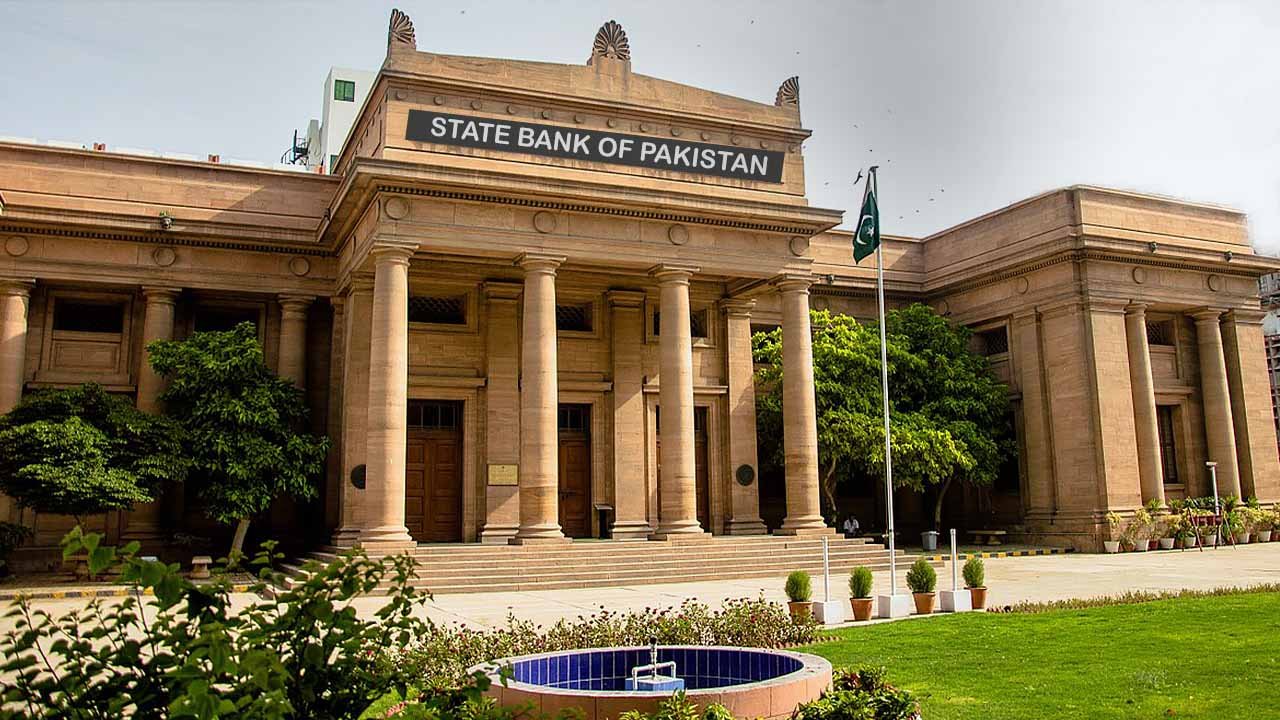
    The Monetary Policy Committee (MPC) of the State Bank of Pakistan (SBP) will likely meet at its upcoming meeting to decide on the key policy rate, and the market anticipates a possible rate increase of up to 300 basis points.

    According to the analysts contacted by the Brecorder, the SBP is likely to increase the rate from its current historic high of 22 per cent. As per the advance calendar issued in July, the SBP is currently slated to hold its MPC meeting on September 14.

    Notably, the central bank has previously taken the initiative to declare changes in its key policy rate through ’emergency’ meetings, similar to what occurred in June.

    Market speculation hints that the central bank might adopt a more patient approach this time, making an emergency meeting less probable.

     Tahir Abbas, the Head of Research at Arif Habib Limited (AHL), foresees a rate hike ranging between 100 and 150 basis points.

    He emphasised, the inflation rate is projected to remain elevated not only in August but also in the upcoming months. Furthermore, the persistent depreciation of the currency might compel the SBP to push interest rates upwards.

    Abbas added, “We expect a policy rate hike of around 100-150 bps.”

    In a previous report, AHL stated that headline inflation is expected to climb higher in August, surpassing the 28.3 per cent figure recorded in July 2023.

  • High interest rates and taxes lead to 20.90% drop in car financing in Pakistan

    High interest rates and taxes lead to 20.90% drop in car financing in Pakistan

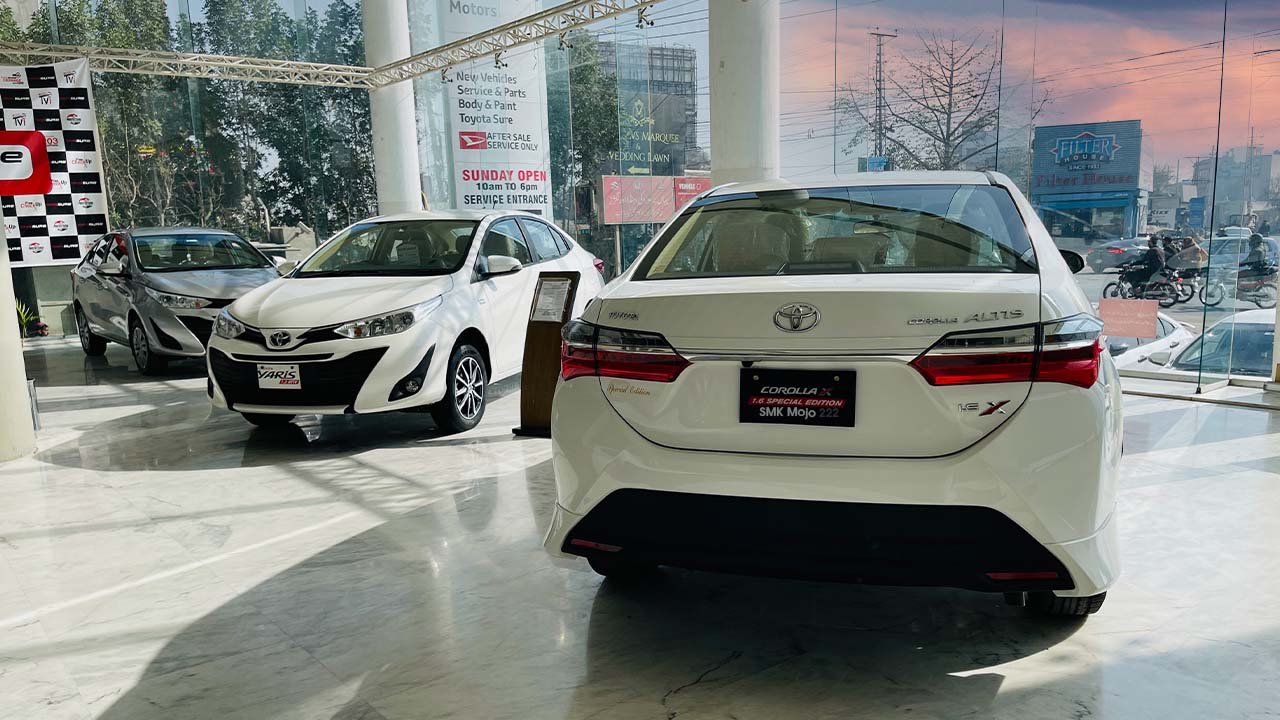
    In a notable shift, the landscape of automobile financing in Pakistan has undergone a substantial transformation, with figures from the State Bank of Pakistan (SBP) indicating a significant decline. The data, released by SBP, unveils a marked decrease in car financing, plummeting to Rs285.19 billion in July 2023. This represents a notable 20.90 per cent year-on-year (YoY) decrease and a 2.91 per cent month-on-month (MoM) decrease when compared to the figures from July 2022, which stood at Rs360.55 billion, and June 2023, which registered at Rs293.73 billion.

    The primary contributors to this downward trajectory are multi-faceted. Firstly, the imposition of higher interest rates has played a pivotal role in reshaping the car financing landscape. Additionally, the surge in car prices has also contributed significantly to this downturn. Moreover, regulatory restrictions governing the acquisition of loans have created a notable barrier, further impacting the market. Furthermore, the imposition of elevated taxes on the import of automobiles and their integral parts has compounded the challenges faced by the automobile financing sector.

    Contrastingly, in a separate but related sphere, consumer financing for house building displayed a contrasting narrative. SBP’s data reveals that by the conclusion of July 2023, consumer financing for house building registered at Rs211.11 billion, marking a commendable 4.82 per cent YoY increase. According to Mettis Global, this uptick can largely be attributed to SBP’s proactive measures to stimulate the housing and construction sector within the nation. However, in terms of monthly changes, the figures remained relatively static, with a minor decline of 0.57 per cent.

    Meanwhile, financing for personal use, amounting to Rs250.24 billion, experienced a marginal 0.09 per cent YoY decrease. Similarly, on a monthly basis, financing within this category saw a slight downturn of 0.95 per cent. Consequently, the cumulative credit extended to consumers in various segments reached Rs851.22 billion during the assessment month. This overall credit value reflected a notable 4.70 per cent YoY decline and a 0.99 per cent MoM reduction.

    Furthermore, the credit scenario within the private sector depicted a nuanced picture. Outstanding credit to the private sector encountered a minor 0.06 per cent YoY decrease and a slightly more pronounced 1.12 per cent MoM reduction, resting at Rs8.19 trillion in July 2023. In contrast, loans granted to the manufacturing sector exhibited an encouraging 1.12 per cent YoY increase, amounting to Rs4.48 trillion during the review period. However, on a monthly scale, the loans within the manufacturing sector dipped by 1.44 per cent MoM.

    In summation, the marked decline in car financing, as evidenced by SBP’s recent data, underscores the multifaceted challenges that the automobile financing sector in Pakistan is currently grappling with. While interest rates, car prices, and regulatory curbs have contributed to this downward trend, other sectors such as house building and manufacturing loans have demonstrated distinct trajectories. As the nation navigates through these financial dynamics, stakeholders remain vigilant in monitoring and adapting to these evolving circumstances.

  • Pak Suzuki’s fiscal year ends with Rs9.68 billion loss: Operational disruptions and low demand

    Pak Suzuki’s fiscal year ends with Rs9.68 billion loss: Operational disruptions and low demand

    Pak Suzuki Motor Company Limited (PSMCL) has reported a substantial net loss of Rs9.68 billion for the fiscal year that ended on June 30, 2023. The loss was attributed to import restrictions and weakened demand, causing a significant increase compared to last year’s Rs17.238 million loss.

    The drop in sales was due to operational disruptions caused by inventory shortages. The loss per share (LPS) reached Rs117.58 for this year, a stark contrast to the Rs0.21 LPS recorded from January to June 2022. Despite these challenges, the cost of sales remained stable at Rs39.037 billion, compared to Rs108.415 billion the previous year.

    Financial expenses surged to Rs10.141 billion from Rs1.842 billion last year, contributing to the increased losses. However, the company did manage to achieve a Rs3.238 billion profit for the quarter ending on June 30, a significant improvement from the Rs442.989 million recorded during the same quarter the previous year. Earnings per share for this quarter were Rs39.36, compared to Rs5.38 per share in the previous year.

    Experts noted that the second-quarter results exceeded expectations due to increased gross margins from car price hikes. The company also gained from finance income of Rs2.6 billion due to exchange rate gains.

    During this time, the company’s revenue dropped by 67 per cent year-on-year and 2 per cent quarter-on-quarter due to lower sales volume caused by disruptions in raw material supply and reduced demand. Despite challenges, the company achieved a 10 per cent gross profit margin in 2QCY23, a significant increase from 4 per cent the previous year.

    According to The News, the auto sector faces challenges like obtaining Letters of Credit (LCs) for imports and sluggish demand due to high prices and interest rates. Car sales declined 57 per cent year-on-year in the first month of fiscal year 2023–24, as reported by the Pakistan Automotive Manufacturers Association (PAMA). PAMA-registered car manufacturers sold only 5,092 units in July, a 16 per cent decrease from the previous month.

    Despite the challenges faced by Pakistan’s auto industry, including low sales and various disruptions, it’s worth noting that car prices in the country remain at their highest point.

  • Gold price drops by Rs2,800 per tola amidst Pakistani rupee appreciation

    Gold price drops by Rs2,800 per tola amidst Pakistani rupee appreciation

    Domestic bullion prices in Pakistan experienced a significant drop, with both gold and silver witnessing declines. The 24-karat gold closed at Rs220,200 per tola, falling by Rs2,800, while the price of 10-gramme 24-karat gold went down by Rs2,401, closing the day at Rs188,786 per tola. Additionally, 10-gramme 22-karat gold stood at Rs173,054 per tola, down by Rs2,200.

    The drop in gold and silver prices can be attributed to the recent appreciation of the Pakistani rupee (PKR). The PKR managed to snap a three-day losing streak by appreciating Rs2.18 against the US dollar in the interbank session on Thursday. Since gold is denominated in US dollars, when the PKR strengthens against the dollar, the value of gold in PKR terms diminishes.

    Similarly, the price of silver also witnessed a decline in the domestic market. The price of 24-karat silver fell by Rs50 to close at Rs2,750 per tola, and the price of 10-gramme 24-karat silver closed at Rs2,358 per tola, losing Rs42.86.

    The recent appreciation of the Pakistani rupee, coupled with global interest rate developments, has influenced the decline in gold and silver prices in the domestic market. Investors are now keeping a close eye on economic indicators and global central bank decisions to anticipate potential shifts in precious metal prices.

  • UK house prices drop at fastest rate in 12 years, more decline expected: Halifax

    UK house prices drop at fastest rate in 12 years, more decline expected: Halifax

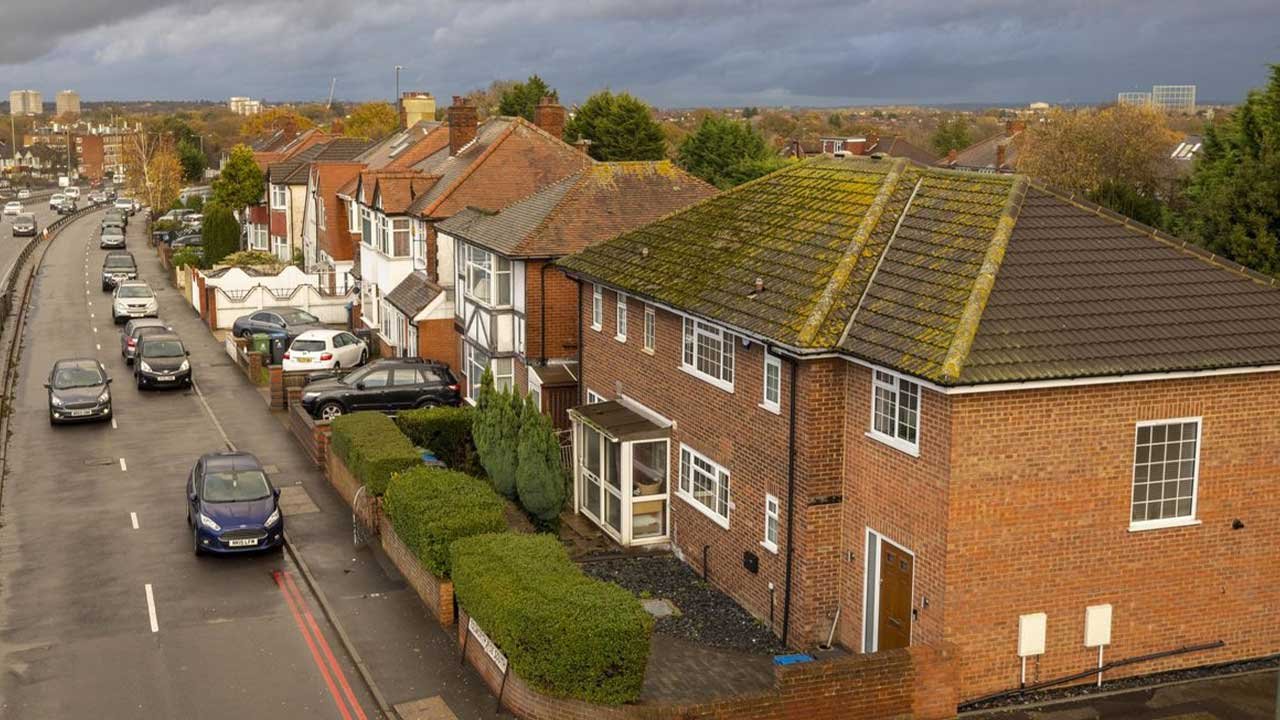
    According to mortgage lender Halifax, UK house prices witnessed a significant decline last month on an annual basis, marking the fastest rate of decrease in 12 years.

    The rising interest rates are expected to exacerbate the challenges faced by the housing market. Halifax reported a year-on-year drop of 2.6 per cent in house prices for June, following a 1.1 per cent decrease in May. This decline represents the largest fall since June 2011. On a monthly basis, prices dropped by 0.1 per cent in June, following a 0.2 per cent decrease in May.

    Kim Kinnaird, the director of Halifax Mortgages, explained that the substantial annual decline can be attributed to the comparison with the peak in house prices observed around a year ago, coupled with relatively minimal price movements in recent months.

    However, the surge in mortgage costs driven by mounting expectations for the Bank of England to combat inflation through increased interest rates suggests that the housing market will face further challenges in the coming months.

    Kinnaird stated that predicting the depth and duration of the downturn in house prices remains challenging, but the possibility of decreasing inflation may provide some support. Kinnaird also noted that the anticipation of a peak Bank Rate exceeding 6 per cent in the foreseeable future implies that mortgage rates will likely remain elevated for an extended period, contributing to ongoing financial strain for households.

    Investors have recently speculated that persistent inflation will prompt the Bank of England to raise interest rates to their highest level in 25 years, reaching 6.5 per cent by December. In response to soaring funding costs, various lenders, including Halifax, a subsidiary of Lloyds Bank, and other prominent institutions, have repeatedly adjusted their home loan offerings in a race to keep pace.

    Historical data indicates that significant increases in swap rates, which influence mortgage funding expenses, often foreshadow substantial declines in housing starts. This conclusion is supported by a Reuters analysis covering the past 35 years.

    Halifax highlighted that the largest decrease in house prices occurred in the southeast of England. London experienced a decline of 2.6 per cent in annual terms, marking the most substantial drop since October 2009.

  • State Bank announces aggressive policy rate hike to 22% in response to inflation risks

    State Bank announces aggressive policy rate hike to 22% in response to inflation risks

    During an emergency meeting convened on Monday, the State Bank of Pakistan (SBP) made the decision to raise the policy rate by 100 basis points (bps), resulting in a new rate of 22 per cent.

    The announcement was made subsequent to a gathering of the bank’s Monetary Policy Committee (MPC).

    The SBP clarified that the MPC acknowledged a heightened potential for upward risks to the inflation outlook compared to its previous meeting held on June 12.

    The committee highlighted that these risks primarily stem from the implementation of new measures in the fiscal and external sectors, which hold significant importance in the context of concluding the ongoing programme with the International Monetary Fund (IMF).

    “MPC noted that today’s action is necessary to keep the real interest rate firmly in positive territory on a forward-looking basis that would help in bringing down inflation towards the medium-term target of five to seven per cent by the end of fiscal year 25,” the SBP said.

  • IMF’s disapproval of budget raises odds of default and economic fallout for Pakistan

    IMF’s disapproval of budget raises odds of default and economic fallout for Pakistan

    In a recent report, the International Monetary Fund (IMF) expressed criticism of Pakistan’s latest budget, increasing the likelihood that the lender may withhold the much-needed aid before the bailout programme concludes at the end of June.

    According to Bloomberg, this development could lead to a severe dollar shortage in the first half of the upcoming fiscal year, potentially resulting in a higher chance of default, lower growth, and increased inflation and interest rates.

    The IMF’s critique of the budget stems from its belief that it does not adequately address the need to broaden the tax base and includes a tax amnesty. The current foreign currency reserves of Pakistan stand at $4 billion. However, with approximately $900 million in debt repayment due this month, the reserves will deplete by the end of June unless the expected IMF aid materialises.

    The country faces the challenge of repaying an additional $4 billion between July and December, which cannot be rolled over. Given the projected reserves falling below $4 billion at the start of fiscal year 2024, default seems highly probable, according to the report titled “Pakistan Insight.”

    The absence of an IMF programme would significantly limit the options for obtaining fresh external funding. The report suggests that negotiations for a new bailout agreement with the IMF are unlikely to commence until after the elections in October. Furthermore, even if an agreement is reached, actual aid disbursement under a new programme would not occur until December.

    In the meantime, Pakistan must focus on conserving dollars by restricting import purchases and maintaining a surplus in its current account balance to fulfill its obligations. To avert default in the first half of fiscal year 2024, the country will also need to seek assistance from friendly nations.

    The report warns of severe consequences for Pakistan’s economy if the anticipated IMF aid is not received by the end of June. Import restrictions will need to remain in place, and the State Bank of Pakistan is expected to raise interest rates above the current level of 21 per cent to further reduce demand for imports and preserve foreign exchange reserves.

    The report’s base case assumes that the State Bank of Pakistan will maintain its current policy stance until December, but that prediction relies on the assumption of IMF aid arriving by the end of June.

    Continued import restrictions and a weaker Pakistani rupee are likely to contribute to higher inflation in fiscal year 2024 compared to current forecasts. It is projected that inflation will average around 22 per cent, while increased borrowing costs and limitations on importing raw materials will further hamper production and dampen consumption.

    In addition, if the expected IMF aid does not materialise this month, the report predicts that Pakistan’s growth in fiscal year 2024 will be much weaker than the current forecast of 2.5 per cent.

    Furthermore, the higher interest rates resulting from the aid shortfall will lead to increased debt servicing costs for the government. The report reveals that approximately half of the fiscal year 2024 budget is allocated to debt servicing, exacerbating the country’s fiscal challenges.

    With the IMF aid hanging in the balance, Pakistan faces a critical period in its economic trajectory, where strategic financial decisions, reliance on friendly nations, and stringent economic measures will be essential to avoid further complications and ensure stability in the future.

  • Govt expected to present Rs13-15 trillion budget for FY23-24 amidst economic uncertainties

    Govt expected to present Rs13-15 trillion budget for FY23-24 amidst economic uncertainties

    The government is anticipated to present a budget ranging from Rs13-15 trillion for the fiscal year 2023-24, according to a budget preview report by Topline Securities. This substantial increase is attributed to the record-high markup cost caused by the soaring interest rates. The proposed budget target of Rs9-9.2 trillion marks a 21 per cent surge compared to the current fiscal year’s target of Rs7.5 trillion.

    Notably, if implemented, the tax target for the upcoming financial year would be 29 per cent higher than the projected tax collection for the outgoing FY23. However, the brokerage house highlights the challenging nature of formulating a budget amidst stagflation and uncertainties surrounding the upcoming elections and Pakistan’s ability to bridge its external account funding gap.

    The report emphasises the prevailing nervousness in currency, bond, and stock markets due to the uncertainty surrounding the financing of the US dollar funding gap. Furthermore, it states that revenue targets have historically deviated by an average of 8 per cent from the actual targets in the past five years, and a similar trend is expected in FY24 due to the economic slowdown.

    The non-tax revenue target for FY24 is estimated at Rs2.5 trillion (2.4 per cent of GDP), compared to Rs1.6 trillion (2 per cent of GDP) for FY23. The report predicts several taxation measures, including tax on undistributed reserves, continuation of the super tax, a shift from the final tax regime to the minimum tax regime, asset/wealth tax, higher tax on non-filers, tax on rental income, and taxes on banks, tobacco, and beverages.

    Regarding development spending, the Federal Public Sector Development Programme (PSDP) is projected to amount to Rs0.9 trillion for FY24. However, due to fiscal constraints, significant cuts are expected in this area. The consolidated PSDP (federal and provincial) is anticipated to reach Rs2.6 trillion (2.5 per cent of GDP) in FY24.

    With the Pakistan Tehreek-e-Insaf (PTI) party being sidelined, there is a possibility of a weak coalition government coming to power in the upcoming elections. The report highlights the importance of an aggressive and competent new setup to tackle the ongoing economic crisis.

    To create a favorable perception, the government may set unrealistic revenue targets in order to allocate more spending in the budget. The report suggests that it is unlikely for the government to complete the current International Monetary Fund (IMF) program on time and urges Pakistan to enter another, potentially larger, IMF program.

    In light of the economic slowdown and high inflation, the government may introduce expansionary policies in the budget to appease the public, such as direct cash subsidies for the underprivileged and an increase in minimum wages. However, the brokerage firm warns against excessive spending without substantial tax collection measures.

    In terms of its impact on the stock market, the upcoming budget is expected to be neutral to positive. Sectors such as oil and gas exploration, chemicals, pharmaceuticals, consumers, tobacco, technology and communication, textile, cement, fertilizers, and oil marketing companies may experience a neutral effect. Conversely, the budget might have a neutral to negative impact on banks and autos, while steel and independent power producers could experience a neutral to positive effect, according to the research.

    As the budget is unveiled, stakeholders and citizens alike will closely monitor the government’s strategies to address the economic challenges and promote stability and growth in Pakistan.
  • US could default by next month unless debt ceiling is raised

    US could default by next month unless debt ceiling is raised

    Janet Yellen, the United States Treasury Secretary, has written to Republican House Speaker Kevin McCarthy, warning that the federal government may exceed its spending limit by June 1 if Congress does not raise the debt ceiling. Yellen’s letter, which was published on Monday, noted that available data suggests that the government will no longer be able to cover its expenses in early June if Congress does not raise the limit before then.

    Yellen emphasised the importance of Congress taking action to increase or suspend the debt limit as soon as possible, to ensure that the government can continue to make its payments. While Yellen’s letter indicates the US could enter default as early as June 1, she also noted that it is impossible to predict the exact date when Treasury will be unable to pay the government’s bills.

    The potential for a default has raised concerns among experts about its possible impact on the US economy. It could lead to a fall in the US credit rating, resulting in higher interest rates and a possible recession. The process of raising the US spending limits is typically routine, but it has become increasingly contentious in recent years. Republicans in Congress are pushing for steep cuts to social programs in exchange for their support to raise the debt ceiling this year. In contrast, the Biden administration has called for an increase to the debt ceiling without conditions, stating that debates over various programs can be hashed out during negotiations on the yearly budget.

    Last week, the Republican-led House of Representatives passed a bill that agreed to raise the debt ceiling by $1.5 trillion in exchange for $4.5 trillion in spending cuts for programs like healthcare for low-income communities, renewable energy and transportation. The bill is considered dead on arrival in the Democrat-controlled US Senate, and Biden has stated that he would veto it. However, its passage in the House is considered a victory for McCarthy, who has since called for Democrats to approve the bill and avoid a default.

    Democrats have called for a “clean” debt limit increase without haggling or addendums. Virginia Senator Mark Warner tweeted on Monday that the US has about a month until it defaults on paying its debt and emphasised that this is not new spending, but about paying bills already incurred. On May 9, US President Joe Biden reportedly called for a meeting with Democratic and Republican leaders to discuss spending and the debt limit. The Congressional Budget Office has also stated that it sees an increased risk of the government running out of funds by early June due to tax receipts that were lower than expected.

  • IMF loan delay continues to impact Pakistani rupee

    IMF loan delay continues to impact Pakistani rupee

    During trading on Wednesday, the Pakistani rupee experienced a slight decrease against the US dollar, with a depreciation of almost 0.06 per cent in the inter-bank market. At around 12:45 pm, the currency was being traded at Rs284.06, which is a decline of Re0.16.

    This comes after the rupee had previously regained some ground against the US dollar on Tuesday, settling at Rs283.9 in the inter-bank market. The International Monetary Fund (IMF) Extended Fund Facility (EFF) has been stalled since last year, and market participants are waiting for its resumption.

    Experts have suggested that the reduced demand for US dollars can be attributed to the increase in inflows from workers’ remittances and a decline in import payments. Globally, the dollar saw some stability on Wednesday after being influenced by bond market volatility. Investors closely monitored US economic indicators, Federal Reserve commentary, and corporate earnings for indications about the path for interest rates.

    The dollar index, which measures the greenback against six major peers, rose by 0.11 per cent to 101.83 in Asian trading, following a 0.36 per cent decline on Tuesday that reversed the 0.54 per cent increase from the previous session.

    Oil prices, which serve as a significant indicator of currency parity, declined on Wednesday as the market considered potential interest rate hikes from the Federal Reserve. Such hikes could slow growth and dampen oil consumption, offsetting the impact of falling US inventories and strong Chinese economic data.