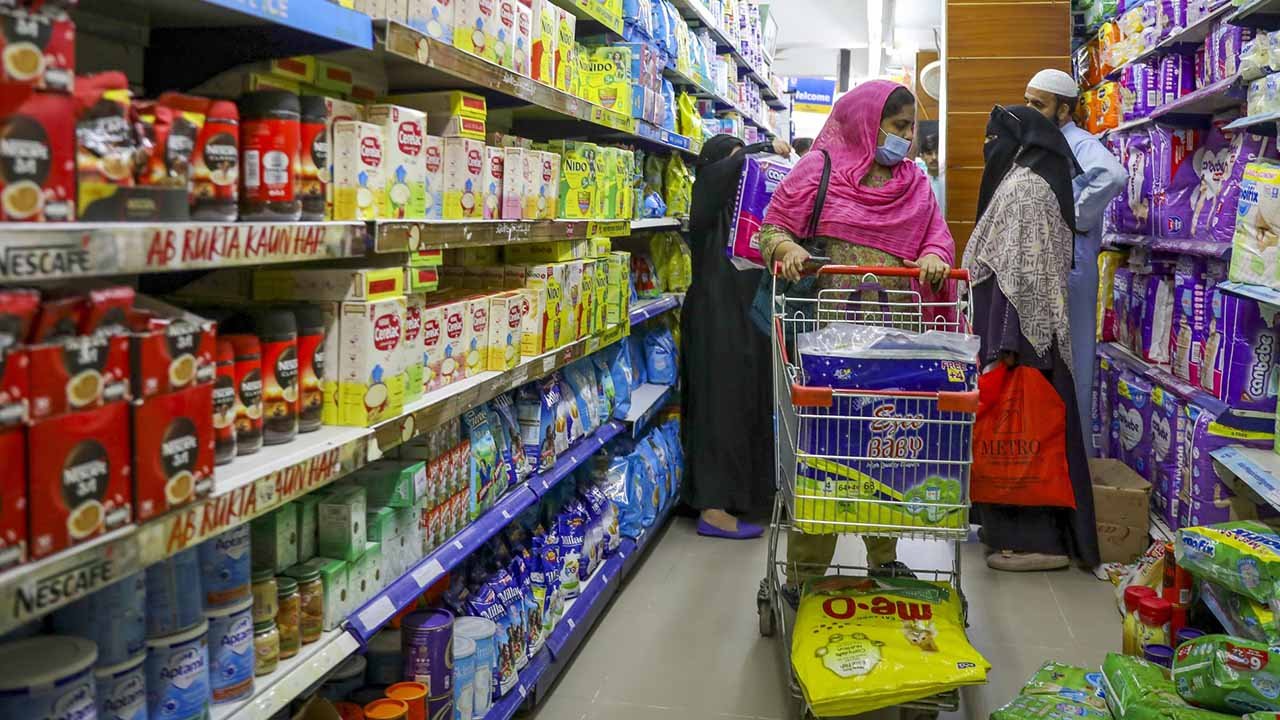
The Ministry of Finance anticipates a decline in inflation for the month of July compared to the previous month, with expectations of it remaining within the range of 25-27 per cent. The ministry’s ‘Monthly Economic Update & Outlook’ for July attributes this anticipated decrease to the recent reduction in administered prices of petrol and diesel, which is expected to lower domestic prices of essential goods by impacting transportation costs.
The headline inflation in Pakistan slowed to 29.4 per cent in June, marking the lowest reading since January. The report explains that the recent decline in international commodity prices is likely to counteract the inflationary pressures caused by domestic supply shocks. Notably, the benchmark index of international food commodity prices experienced a downturn in June 2023, primarily driven by price decreases in major cereals and various vegetable oils.
The government’s timely efforts to boost the agriculture sector through the Kisan Package are expected to result in a better crop outlook and smoother domestic supplies. Additionally, anticipated political stability and a stable exchange rate are deemed as factors that would contribute to achieving price stability.
Regarding the fiscal outlook, the Ministry of Finance expects both exports and imports to gradually increase in the upcoming months of FY2024. Despite other factors, the report projects that the current account deficit will remain sustainable during this period.
To enhance revenue collection in FY2024, the government has unveiled a comprehensive strategy for all sectors of the economy, aiming to revive economic growth and foster a higher inclusive and sustainable growth trajectory. Various administrative and policy measures have been introduced to increase tax collection, while the State Bank of Pakistan’s withdrawal of import restrictions is expected to stimulate demand and support revenue improvement.
The report acknowledges the success of the government in ensuring the sustainability of the external and fiscal sectors during FY2023, achieved through the implementation of tough decisions and stabilisation measures. Looking ahead to FY2024, the government aims to achieve higher economic growth of 3.5 per cent through measures such as the Kisan package, industrial support, export promotion, encouragement of the IT sector, and resource mobilisation.
In conclusion, the Ministry of Finance emphasises that prudent and effective economic decisions, political and economic certainty, and the continuation of friendly economic policies, along with sufficient foreign exchange financing, will be crucial to attaining higher and sustainable economic growth. The recent approval of the Stand-By Arrangement by the International Monetary Fund and other bilateral and multilateral inflows are expected to further improve the macroeconomic environment and enhance the confidence of economic agents.