Tag: international market

  • International petrol, diesel prices drop, but no relief for Pakistanis

    The government has decided not to reduce the prices of diesel and petrol for local consumers, despite a significant decrease in their international prices. This decision is intended to offset previous exchange losses and raise taxation.

    On February 28, 2023, the average fortnightly prices of petrol and diesel in the global market will be used for the next price revision. According to industry sources, the average price of diesel for the next fortnightly review has dropped by $7 per barrel, which equates to a reduction of Rs30 per litre for domestic diesel prices.

    The global average price of diesel has fallen to approximately $100 per barrel compared to $107 per barrel in the previous fortnight. Similarly, the average price of petrol has dropped to $90 per barrel for the next review of prices compared to $93 per barrel in the last fortnightly review, which translates into a reduction of Rs10 per litre for consumers in the local market.

    According to Geo, the appreciation of the Pakistani rupee against the dollar in the last two weeks has also contributed to the reduction in import prices of diesel and petrol. However, industry sources do not expect any significant reduction in the prices of diesel and petrol for domestic consumers.

    The government is expected to adjust the exchange losses, which were not passed on fully to the oil sector in the last several reviews. For example, an exchange loss adjustment of Rs88 per litre was due on diesel, but the government only transferred Rs12 per litre on this head, leaving the remaining amount to be adjusted. The same is true for petrol, with an exchange loss adjustment of Rs34 per litre due, but only Rs12 per litre being given to the oil industry.

    Under the conditions set by the International Monetary Fund (IMF), the government may increase the petroleum levy (PL) on diesel to Rs50 per litre, as it now has room to do so. Currently, the PL on diesel is Rs40 per litre.

    If the government does not impose GST, sources expect a cut of Rs10 per litre in diesel prices, which would otherwise deprive local consumers of the drop in diesel prices in the global market.

    However, official industry sources do not anticipate any reduction in the price of petrol for local consumers, which would otherwise have been down by Rs10, as per the trends of its price in the global market.
  • Oil companies warn govt of fuel shortage in Pakistan

    Oil companies warn govt of fuel shortage in Pakistan

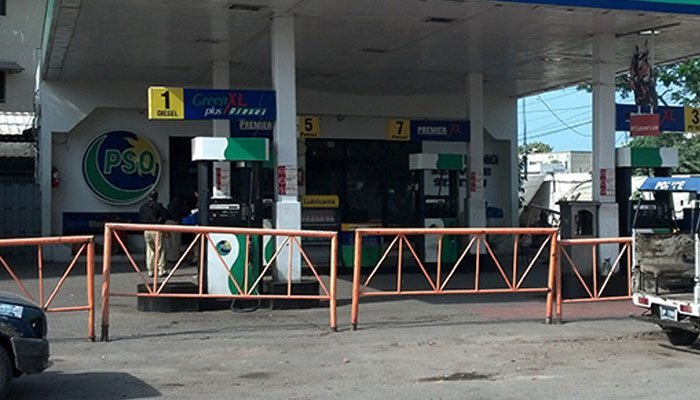
    Oil marketing companies and refineries have reportedly expressed serious concerns and warned of a fuel crisis in the country after the government’s announcement of a relief package, according to Geo News.

    In a meeting between Oil and Gas Regulatory Authority (OGRA) and the petroleum division, several questions have been raised regarding petroleum prices. They argued that how can they sell petroleum products at cheaper prices when they are buying them at an expensive rate from the international market. They asked, “who will pay the price difference?”

    According to the secretary of petroleum, the government is preparing a price adjustment mechanism and the government will pay later. Till then, oil marketing companies and refineries should bear the price difference.

    In response to this, oil marketing companies and refineries said that the situation doesn’t seem to be sustainable as the country can face an interruption in the supply of petroleum products.

    Prime Minister (PM) Imran Khan, in an announcement on Monday, said that the government has slashed petrol, diesel prices by Rs10 per litre and electricity prices by Rs5 per unit as part of a series of measures to bring some relief to the public. He also promised that the government will not increase the prices of these commodities till the next budget, which will be announced in June.

  • Bhang will bring in more dollars in Pakistan, says Shibli Faraz during the crop’s inauguration

    Federal Minister for Science and Technology Shibli Faraz said that the experiment to plant bhang (edible mixture made from the buds, leaves, and flowers of the female cannabis, or marijuana, plant) has remained successful as it helps in producing medicines to deal with cancer, body pain, and other illnesses, reports ARY News.

    He shared that other than the medicine industry, the bhang plant is also used extensively in the textile and paper industries. “Medicines produced from CBD [cannabis] oil could also be exported,” he said.

    “A seed of bhang is worth US$12 in the international market and encouraging its lawful export will help in curbing its illicit trade,” Shibli Faraz said and added that bhang plantation is 10 times more fruitful than profits from the sale of drugs.

    He shared that the CBD or cannabis oil is being sold at Rs10,000 per litre in the international market. The minister said that bhang could prove to be an alternate crop for cotton and would help the country in earning foreign exchange.

    Shibli also informed that plans to establish an authority to improve bhang plantation were in process, adding that foreign investors have also shown their interest in its plantation.

    The minister further announced to improve ginger plantation in order to shun its imports.