Tag: International Monetary Fund (IMF)

  • IMF board approves disbursement of $1.17 billion in bailout funds

    IMF board approves disbursement of $1.17 billion in bailout funds

    The seventh and eighth reviews of Pakistan’s bailout programme were approved by the International Monetary Fund (IMF) board on Monday, releasing $1.17 billion to the cash-strapped nation.

    Pakistan is now set to get a $1.17 billion loan tranche from the international lender within the next six days.

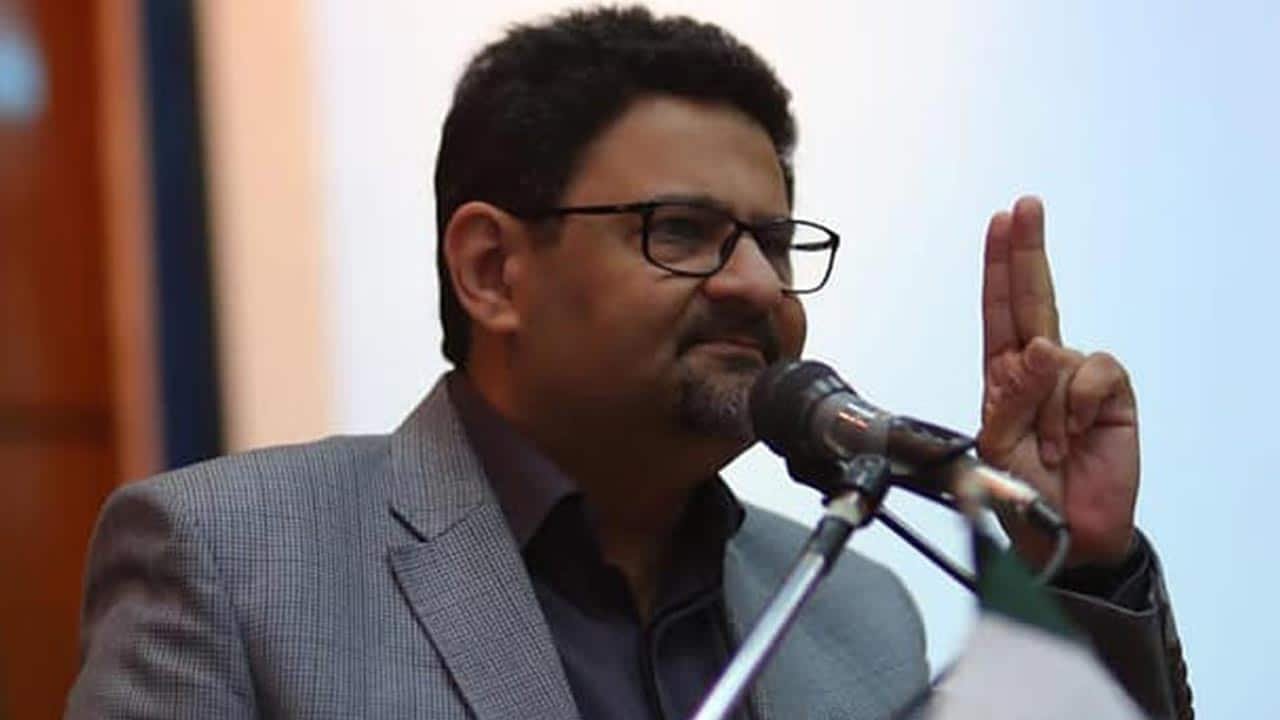
    “Alhamdolillah, the IMF board has approved the revival of our EFF programme. We should now be getting the seventh and eighth tranche of $1.17 billion,” said Finance Minister Miftah Ismail in a tweet announcing the news.

    Additionally, the Finance Minister praised the Prime Minister, Shehbaz Sharif, “for taking so many tough decisions and saving Pakistan from default.”

    The previous payment was made to Pakistan in February, and the subsequent tranche was scheduled to be released following a review in March.

    However, the PTI government drastically reduced petroleum prices by providing substantial subsidies to the country, which caused the program’s fiscal objectives to be missed.

  • IMF Executive Board meeting to discuss revival of loan plan today

    IMF Executive Board meeting to discuss revival of loan plan today

    The International Monetary Fund (IMF) executive board will meet on Monday (today) to discuss the bailout plan for Pakistan.

    The 8th and 9th tranches, totaling over $1.2 billion, are anticipated to be disbursed with board approval.

    According to Geo, Pakistan also requested that the Extended Fund Facility (EFF) be increased from $6 billion to $7 billion and that the term be extended from September 2022 to June 2023.

    If the contract is approved by the board, the IMF will give Pakistan an initial payment of roughly $1.2 billion and could give up to $4 billion during the remaining months of the current fiscal year, which started on July 1.

    The board gave its approval for the transfer of $1.386 billion to Pakistan under the RFI in April 2020 to help with the economic effects of the Covid-19 shock.

    Additionally, according to The Wall Street Journal, Pakistan has secured at least $37 billion in foreign loans and investments in recent weeks, saving it from a financial catastrophe similar to that of Sri Lanka.

    The restart of the programme will greatly benefit the government led by Prime Minister Shehbaz Sharif as it will assist prevent what would be the second default in Asia this year after Sri Lanka.

    Bloomberg estimates that Pakistan would have to pay at least $3 billion in debt payment during the first half of the fiscal year 2023.

    The State Bank of Pakistan anticipates that foreign exchange reserves would increase to around $16 billion this fiscal year from $7.8 billion, thanks to the IMF loan opening the door for additional funding.

  • Pressure on Pakistani rupee may decrease in August

    Pressure on Pakistani rupee may decrease in August

    Finance Minister Miftah Ismail expressed his continued faith in Pakistani rupee’s (PKR) ability to withstand pressure despite the PKR continuing to hit historic lows versus the US dollar and suffering its biggest weekly slide in more than 20 years.

    The finance minister stated in an interview with Radio Pakistan that the political climate and the fact that import payments are being made for shipments beginning in June are both contributing factors to the pressure on the PKR.

    “Import of $80 billion were made during the last fiscal year. We are still making payments for energy commodities purchased last month. Therefore, the rupee is under pressure. However, as we are importing less in July, its effect would be reflected from next month or, I should say, next week.”

    “The rupee’s fall is connected to the political situation as well. Before July 17, the situation wasn’t like this,” he added.

    Miftah also spoke about Pakistan’s economic issues, stating that the poor export base continues to be a matter of concern.

    The local currency has continued to depreciate against the US dollar, losing 7.6 per cent last week, more than what businesses typically account for in terms of annual currency depreciation, as the inter-bank market experienced a turbulent five sessions due to renewed political uncertainty and increased worries about Pakistan’s external financing needs.

    He also revealed that one friendly country is ready for an instant investment in Pakistan.

    It is worth noting that Pakistan anticipates receiving the next International Monetary Fund (IMF) tranche before the end of the following month following the board meeting.

  • IMF board to approve Pakistan’s $1.17 billion tranche in August

    IMF board to approve Pakistan’s $1.17 billion tranche in August

    The International Monetary Fund (IMF) Board’s approval for the release of $1,177 million to Pakistan is expected in the third or fourth week of August, according to Minister for Finance and Revenue Miftah Ismail.

    “Most probably August 26 is the date of board approval,” he said.

    A staff-level agreement (SLA) was achieved between the IMF team and the Pakistani government on Thursday to conclude the Extended Fund Facility’s (EFF) combined seventh and eighth evaluations, according to Brecorder.

    As per IMF’s statement, “Subject to Board approval, about $1,177 million (SDR 894 million) will become available, increasing the total disbursements under the Programme to approximately $4.2 billion.” The agreement also included a nine-month extension of the EFF programme and an additional $1 billion.

    The federal government stated that the administration has already performed all of the preliminary steps necessary for approval. “Therefore, after the staff-level agreement, the approval from the board could be considered a formality,” he said.

    The World Bank, the Asian Development Bank (ADB), and the Asian Infrastructure Investment Bank (AIIB), among others, may all provide finance as a result of the development, he claimed.

    “Pakistan can easily borrow money from multilateral institutions,” he said.

    While discussing commodity pricing, Miftah remarked that the people will also profit from the falling costs of goods like edible oil and wheat on the world market.

    The administration made difficult choices, the finance minister continued, to prevent the nation from going into debt and to help it from its current economic crisis.

    He said that the government is exerting every effort to address the circular debt and poor governance problems.

  • ‘Ultimate goal is self-reliance’: PM Shehbaz on Pakistan receiving $2bn from IMF

    ‘Ultimate goal is self-reliance’: PM Shehbaz on Pakistan receiving $2bn from IMF

    Prime Minister (PM) Shehbaz Sharif was informed by Finance Minister (FM) Miftah Ismail that Pakistan could receive Rs2 billion from the International Monetary Fund (IMF).

    “Miftah Ismail sent a message this morning saying that Pakistan will receive not $1 billion but $2 billion from the IMF. I told him in response, Alhamdulillah, but our ultimate goal is self-reliance,” said PM Shehbaz while addressing the “Turn Around Pakistan” conference.

    The premier’s address comes shortly after Ismail confirmed Pakistan has received the Memorandum of Economic and Financial Policies (MEFP) from the IMF for the seventh and eighth reviews.

    The draft MEFP is a prerequisite to paving the way toward striking a staff-level agreement.

    PM Shehbaz said that although the Opposition created much political drama in recent weeks, he will ask whether it is the “choosers” that are now going to receive $2 billion or “the other word”, referring to beggars from the phrase “beggars can’t be choosers”.

    “There is no shortage of anything in Pakistan and there are experts in every field,” said PM Shehbaz, before lamenting that “billions of dollars are buried in Reko Diq but we have not earned a single penny”.

    “It is a pity that the country’s development and prosperity have not been achieved,” he said.

    Addressing the conference before PM’s speech, Ismail said that when he messaged Prime Minister Shehbaz Sharif about the development, he replied: “Well done. But remember our ultimate goal is self-reliance. That will be our legacy,” Miftah said, quoting PM Shehbaz.

  • Pakistani rupee falls to a new all-time low of Rs205 against the US dollar

    Pakistani rupee falls to a new all-time low of Rs205 against the US dollar

    In the interbank market today, the Pakistani Rupee (PKR) plummeted below its previous record low versus the US Dollar (USD).

    The local currency lost Rs1.30 in the interbank market today, depreciating by 0.63 per cent against the US dollar and closing at Rs205.16. During today’s open market session, the local currency reached an intraday high of Rs203.75 versus the US dollar.

    The PKR was trading between Rs206 to Rs208 against the US dollar in the evening. The rupee’s devaluation was in line with market expectations, with traders expecting the local currency to fall even lower if Pakistan fails to persuade the International Monetary Fund (IMF) on its fiscal year 2022-23 budget.

    The Financial Action Task Force (FATF) meeting in Berlin, which starts today, is another reason that is likely to have influenced the FX market. On the 15th and 16th of June, issues concerning Pakistan will be discussed.

    In today’s interbank market, the PKR reversed gains versus the majority of major currencies. It fell 22 paisas against the Canadian dollar (CAD), 34 paisas against the Saudi riyal (SAR), 35 paisas against the UAE dirham (AED), 62 paisas against the British pound sterling (GBP), and Rs1.25 versus the Euro (EUR).

  • Govt announces Rs3 billion subsidy to provide ghee at discounted rate

    Govt announces Rs3 billion subsidy to provide ghee at discounted rate

    The Minister for Information and Broadcasting Marriyum Aurangzeb announced on Monday that the government would provide a Rs3 billion subsidy to lower the price of ghee to assist the masses.

    She told a press conference that the market price of ghee is currently Rs550 per kg, but it is being sold at Rs300 per kg in utility stores across the country, according to AAJ News

    “The government is bearing a cost of Rs250 per kg,” she added, adding that the price of ghee was Rs150 per kg when the Pakistan Muslim League-Nawaz (PML-N) handed over the office to the Pakistan Tehreek-e-Insaf (PTI) in 2018.

    On the other hand, the government has increased the price of ghee and cooking oil at other retailers.

    She further stated that a 10 kg wheat bag could be purchased for Rs400 at any utility store in Pakistan.

    The minister said that on June 6, about one hundred mobile vans were added to the Utility Stores Corporation (USC) network, citing residents of Khyber-Pakhtunkhwa (KP) having difficulty obtaining discounted items due to limited distribution of utility stores.

    9,500 new utility stores

    “In addition, on June 9, 500 new USC stationary stations were set up to deliver wheat, and 100 more items are being added today,” she stated. “Since June 6, the USC network has grown by 700 units”.

    Price control committees have also been established, according to her, to keep hoarding and reselling of USC materials under check. The availability of items at utility retailers, she said, was also being watched.

    The minister stated that Rs17 billion had been set aside to give the public with low-cost sugar, ghee, and wheat.

  • What to expect from the upcoming budget 2022-23

    What to expect from the upcoming budget 2022-23

    Pakistan is escalating efforts in order to revive the stalled loan from International Monetary Fund (IMF) programme, as the prerequisites are steadily being completed.

    The revival of the bailout will provide much-needed relief in order to keep Pakistan’s economy afloat and avoid default as Pakistani currency has plummeted 9 per cent in the last month, recording the poorest performance among Asian currencies.

    According to Geo, the key policy rate was recently raised by 150 basis points to 13.75 per cent, while the price of fuel has now risen by Rs60 a litre in less than a month and is being sold at from Rs209 to Rs212 (depending on the area).

    In an interview with a private channel, the finance minister discussed the government’s decision to raise petroleum product pricing, saying that despite the difficult decision, the government is still losing money on gasoline and diesel.

    These moves are highly affecting the masses, but they are essential as the IMF programme is crucial to fix the country’s economy. Also, petroleum prices are projected to continue to rise along with power tariff.

    Increase in income tax

    An increase in income tax is a major policy recommendation from the international lender in the approaching budget for the fiscal year 2022-23.

    All suggestions are expected to enhance Pakistan’s tax income.

    The IMF issued the following rules for Personal Income Tax (PIT) in its February conditions:

    1. Lower the number of tax bands.
    2. Cut tax credits and allowances (excluding disabled and old persons, as well as Zakat receipts).
    3. Implement special tax processes for very small taxpayers.
    4. Increase the number of people who pay taxes. As the change maintains the present PIT threshold, low-income households will be safeguarded (almost three times income per capita).

    If these policy recommendations for the forthcoming budget are enacted, the tax system will be simplified and the income tax regime will be more progressive.

    These recommendations are anticipated to increase the country’s tax revenue. It will also make the system more progressive, as people with higher incomes will be required to pay more.

    Salaried class

    The burden on the salaried class, which is already heavily under pressure, may be increased. It will make working less appealing because a large portion of the wage will be devoted to direct personal income tax.

    The IMF proposed taxing the upper-middle class and wealthy individuals with monthly incomes ranging from Rs104,000 to Rs1 million at a uniform rate of 30 per cent.

    The idea demonstrates inequality in taxation, and if approved, it might leave the majority of salaried workers worse off in the face of double-digit inflation.

    On the other hand, Federal Minister for Finance and Revenues Miftah Ismail categorically stated last month that the government would not add to the burden on the salaried class and pensioners in the coming budget. 

    According to sources, the maximum rate of 30 to 35 per cent for salaried and business class individuals earning Rs20 million per year could be increased.

    Special tax proposal for small taxpayers

    Imposing a tax on small taxpayers can overcome the long-term structural problems and correct internal and external imbalances. Our tax-to-GDP ratio has remained below 11 per cent, which is lower than regional standards.

    Two-thirds of our overall taxation is made up of indirect taxation. This level of indirect taxation is not only excessive, but it also makes the system less progressive.

    Currently, a labourer pays the same amount of GST as the country’s richest man.

    Agriculturalists and real estate barons are the most important import consumers. As a result, the lack of taxation in agricultural and real estate contributes to the underlying imbalances in the external sector.

    Low-income households

    Low-income households are expected to be protected from policy interventions after the government publishes the upcoming budget, as the Personal Income Tax (PIT) threshold of three times per capita income would stay in place.

    Genuine taxpayers can also decrease their tax payments by clever investments under the Income Tax Ordinance 2001, taking into account all of the foregoing.

    In the fiscal year 2022-23, policymakers must aim to increase the tax net and the tax-to-GDP ratio as there is no chance for the country to progress without it.

    Pakistan must pay $21 billion in foreign debt payments by next year, according to the Finance Minister, while the current account deficit is $10-12 billion.

    He said, “We will also try to tilt away from the wealthy elite towards to low incoming masses, I will impose more taxes on the wealthy, but no taxes will be levied on the salaried class”.

    The wealthy and capable must prepare to pay their fair share of taxes, or the country will soon be back on the IMF’s doorstep.
  • Miftah Ismail says no response by Russia for buying oil at discounted rates

    Miftah Ismail says no response by Russia for buying oil at discounted rates

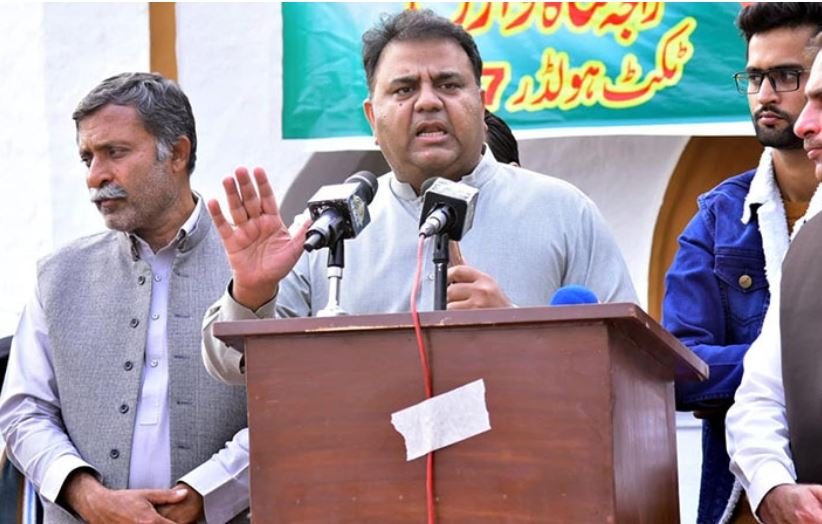
    Finance Minister Miftah Ismail on Tuesday in an interview with CNN’s Becky Anderson said that he does not know where former premier Imran Khan gets his numbers from, refuting Khan’s claims that Russia has not offered a 30 per cent discount on oil or wheat.

    “Let’s be clear. I don’t know where Khan gets these numbers from,” said Miftah.

    “Khan just makes it up as he goes along. He is the guy who was saying we (PDM) were brought in through an American conspiracy. And now he has come up with this new thing. If Russia was selling him cheap wheat and oil, then why didn’t he buy it? He did not,” said Miftah.

    Difficult for me to imagine buying Russian oil

    Miftah said that Western sanctions have made importing oil from Moscow impossible despite the Pakistani government’s request to buy wheat from Russia and Ukraine.

    “Russia has not offered us any oil either. It is difficult for me to imagine buying Russian oil,” said the finance minister.

     Raising oil prices was ‘a trap for us

    Talking about talks with the International Monetary Fund (IMF), Miftah said, “We have had talks with the IMF in Doha recently. We are talking to the IMF and particularly the IMF is looking at the budget that I am going to present in early June and after that, I am hoping that we will reach an agreement with the Fund.”

    He said the IMF was looking for Pakistan to reverse the subsidies on oil, petrol and diesel in particular “that the previous government had given”.

    Miftah added that the IMF also wanted Islamabad to reverse electric tariff subsidies that the previous government had done.

    “Then it is looking at the budget that I will present. So, I am pretty confident that we should be able to get an agreement with the Fund but there would be some austerity in the budget, some measures to increase taxation in the next budget.”

    The minister said that raising oil prices by the previous government was “a trap for us”.

    “Imran Khan in the last days of his government did a few things to violate all these agreements with the IMF, including giving these unsustainably high subsidies. And he knew we could not sustain this.”

    “And when we came to power, he is now going city to city, trying to rally the people with his theories about conspiracies and all that for putting a lot of political pressure on us.”

    The new government, he said, was finding it difficult to raise the prices right away, but it took a very important step last week.

    Moscow had not even responded to the previous government’s letter

    Ismail said that Moscow had not even responded to the previous government’s letter seeking to buy oil at a discounted price from Russia.

    “The two sides had talked about it, but since Russia is under sanctions, and they have not yet responded to the request sent by the Pakistan Tehreek-e-Insaf (PTI) government, there was no movement on this front.”

    However, he said Islamabad had approached both Ukraine and Russia, “whichever country is willing to sell us wheat we would be happy to buy it”.

    Hammad’s claims

    Former Energy Minister Hammad Azhar said, “Miftah sahib is claiming on national tv that no letter or proof exists of Russian oil talks. And who he should speak to. Russia was enthusiastic on selling discounted oil to us and he should have spoken to Energy Minister of Russia.”

    Miftah’s response:

    Miftah responded to Hammad Azhar’s tweet: “Bhai please listen to my interview again. I did say your govt wrote a letter. But I said no response ever came.”

    He added, “I didn’t say that you waited more than a month after IK’s visit to write the letter & then too when you knew you’d lose the VNC & that it was only done for politics.”

  • ‘Pakistan is likely to receive $1 billion from Saudi Arabia’: PM Shehbaz

    ‘Pakistan is likely to receive $1 billion from Saudi Arabia’: PM Shehbaz

    Prime Minister (PM) Shehbaz Sharif on Friday said that Pakistan is likely to receive an investment worth $1 billion from Saudi Arabia.

    During his speech, the PM asked businessmen to speak about their problems and said: “We need to analyse the economic situation with patience.”

    The premier then requested the business community to provide solutions as the local currency has lately been fluctuating significantly against the United States (US) dollar. “I am not here for political point-scoring,” PM Shehbaz clarified.

    “When I took the oath on April 11, the rate of United States (US) dollar against the Pakistani currently was 189,” said Shehbaz.

    “The Rs. 60-65 increase in the rupee value against the greenback wasn’t the coalition government’s fault,” Shehbaz said, adding that when the former government speculated that they would be ousted, they reduced the petroleum prices despite a price hike in the international market, thus going against the conditions of the International Monetary Fund (IMF).

    “During the Pakistan Tehreek-e-Insaf’s (PTI) tenure loans worth Rs22,000 billion were taken which shows an 80 per cent increase from 2018,” he said, adding that “powerful echelons” in the country supported their “favourite” person.

    Shedding light on his decision regarding the ban imposed on the import of luxury and non-essential items, PM Shehbaz said that while he banned the import of certain items for some time, he did not increase the duties because the “elite class would have still purchased imported items after paying duties.”

    The premier said: “Pakistan cannot afford to purchase gas worth $20 billion; we have to slowly and gradually move towards solar and wind energy.”

    “If green energy comes to Pakistan, we will save Pakistan’s funds,” said PM Shehbaz.

    The premier arrived in Karachi earlier today on a day-long visit.