Tag: International Monetary Fund

  • State Bank of Pakistan’s foreign exchange reserves rise to $4.3 billion after Chinese loan

    State Bank of Pakistan’s foreign exchange reserves rise to $4.3 billion after Chinese loan

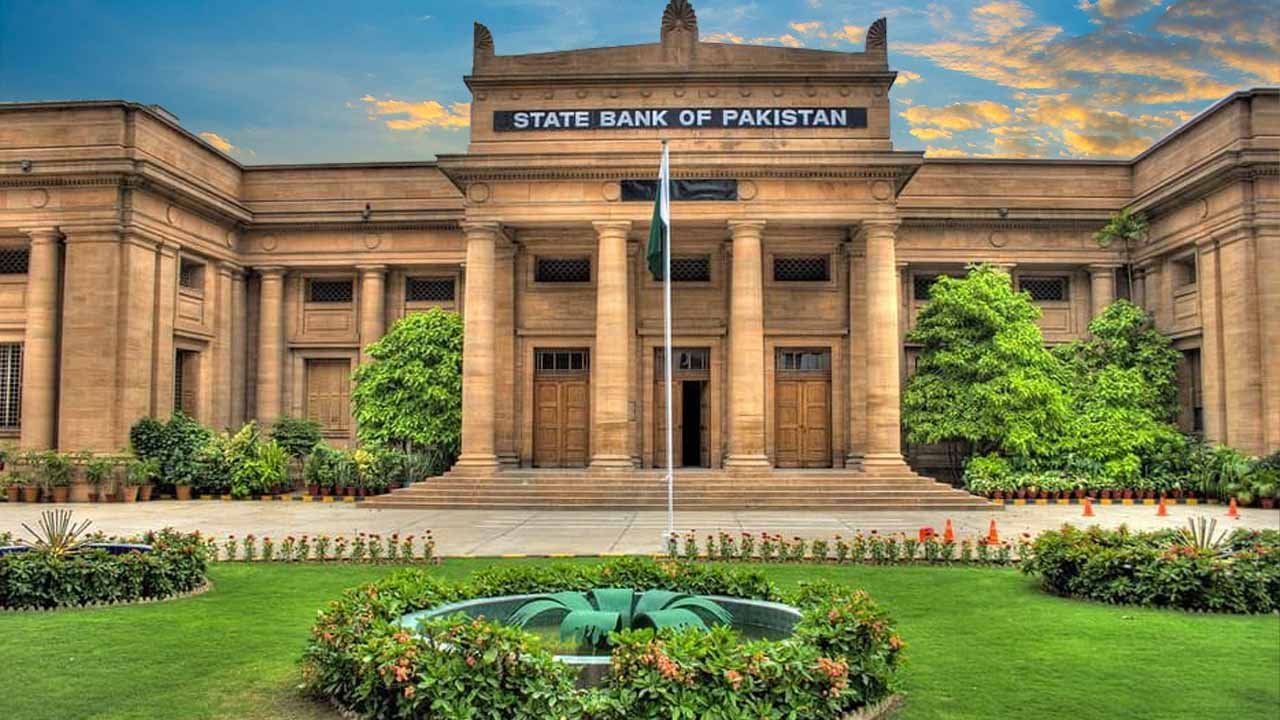
    Pakistan’s foreign exchange reserves held by the State Bank of Pakistan (SBP) have exceeded $4 billion after the country received a $500 million loan from the Industrial and Commercial Bank of China (ICBC).

    In a weekly bulletin, the SBP reported a rise in foreign exchange reserves by $487 million, boosting the total to $4,301 million as of 3 March, providing an import cover of around a month. This was part of the ICBC’s $1.3 billion facility, which followed another loan of $700 million from the China Development Bank.

    These loans were essential as Pakistan has not received funds from any other country, except China, while the $350 billion economy struggles to revive its stalled International Monetary Fund (IMF) program.

    There are $7 billion of repayments due in the coming months, including a Chinese loan of $2 billion due in March. According to Geo, experts believe that the Pakistan rupee, which has fallen to a historic low of Rs282.30 against the dollar in the interbank market, can only recover to Rs265 if the situation improves.

    Meanwhile, the government has imposed restrictions on imports due to a shortage of dollars, which has resulted in the partial closure of textile and automobile manufacturers, raising fears of unemployment.

  • Pakistani rupee’s three-day winning streak ends due to delayed IMF deal

    Pakistani rupee’s three-day winning streak ends due to delayed IMF deal

    The value of the Pakistani rupee (PKR) decreased 0.45 per cent against the US dollar following a three-day period of gains due to prolonged delays in critical funding from the International Monetary Fund (IMF).

    During the interbank session held today, the PKR depreciated by Rs1.3 to settle at Rs279.12 per USD, compared to yesterday’s closing of Rs277.87 against USD.

    Throughout the session, the local unit traded within a range of Rs1.75, reaching a high bid of Rs278.75 and a low offer of Rs277.5. In the open market, the PKR was traded at Rs277/Rs280.5 versus USD.

    On the other hand, the local unit gained Rs5.1 against the Pound Sterling, with the day’s closing quote at Rs329.98 versus GBP, while the previous session closed at Rs335.11 per GBP.

    Furthermore, the PKR’s value also strengthened by Rs2.9 against the EUR, which closed at Rs294.19 at the interbank today.

  • Pakistani rupee gains against US dollar amidst hopes for IMF deal

    Pakistani rupee gains against US dollar amidst hopes for IMF deal

    Pakistani rupee on Monday gained against the US dollar due to two key developments: the country secured $500 million from the Industrial and Commercial Bank of China and there was optimism around a potential deal with the International Monetary Fund (IMF).

    During intraday trading, the local currency witnessed an increase of Rs3.46 against the greenback in the interbank market, with the exchange rate at around 11:45 pm being Rs275.

    However, last week the rupee made even greater gains against the US dollar. The State Bank of Pakistan reported a 2.38 per cent appreciation, equivalent to Rs6.63, in the interbank market, with the local unit closing at Rs278.46 on Friday.

    According to the General Secretary of the Exchange Companies Association of Pakistan (ECAP), Zafar Paracha, the hype around the earlier dollar appreciation was caused by the country’s financial institutions and international players manipulating rates.

    Paracha noted that the destabilized currency damages Pakistan’s image and discourages foreign direct investment and local investors. He anticipated that with the IMF agreement and inflows from friendly countries, the dollar should remain in the range of Rs260 to Rs265.

    He also highlighted that Pakistan’s political condition has been impacting the dollar rates, which is a new phenomenon. He mentioned that increasing Pakistan’s tax base, not tax rates, is crucial, and the government should reduce expenditures and subsidies given to elites.

    According to Geo, there is hope for a deal with the IMF, with a government official expressing optimism about striking a deal, and another official expecting to reach a staff-level agreement with the IMF in the coming days, although the Fund has not provided a timeframe for finalizing the agreement.

  • Pakistani rupee bounces back after steep decline against dollar

    Pakistani rupee bounces back after steep decline against dollar

    During the early hours of trading on Friday, the Pakistani rupee (PKR) saw a significant recovery against the US dollar, with an increase of 4.51 per cent. The inter-bank market quoted the PKR at Rs272.78 by 11:50 am, representing an increase of Rs12.31 against the US dollar.

    This follows a steep decline of 6.66 per cent or nearly Rs19 to settle at an all-time low of Rs285.09 against the US dollar on Thursday.

    On Thursday, the State Bank of Pakistan’s Monetary Policy Committee (MPC) raised the key policy rate by 300 basis points (bps) to 20 per cent, aiming to curb inflation.

    The committee also emphasized the need for energy conservation measures to ease pressure on the external account and meet import requirements. The MPC expects this decision to stabilize inflation expectations and bring it to a medium-term target of 5 per cent-7 per cent by end-FY25.

    Globally, the US dollar eased back from a 2-1/2-month high against the yen on Friday, and weakened toward its first weekly loss since January against major peers. This comes as traders tried to gauge the path for Federal Reserve policy.

    According to Geo, the dollar index, which measures the currency against the yen, euro, and four other major peers, fell 0.11 per cent to 104.85, from its peak of 105.36 earlier this week. The index has decreased by 0.36 per cent since last Friday.

    Meanwhile, oil prices, a critical currency parity indicator, dropped on Friday, but remained poised for a weekly gain due to renewed optimism regarding China’s demand recovery, outweighing concerns over growing crude inventories in the US and tighter monetary policy in Europe.

    This is an intraday update.

  • All economic indicators moving in right direction: Dar dismisses rumors of Pakistan’s default

    All economic indicators moving in right direction: Dar dismisses rumors of Pakistan’s default

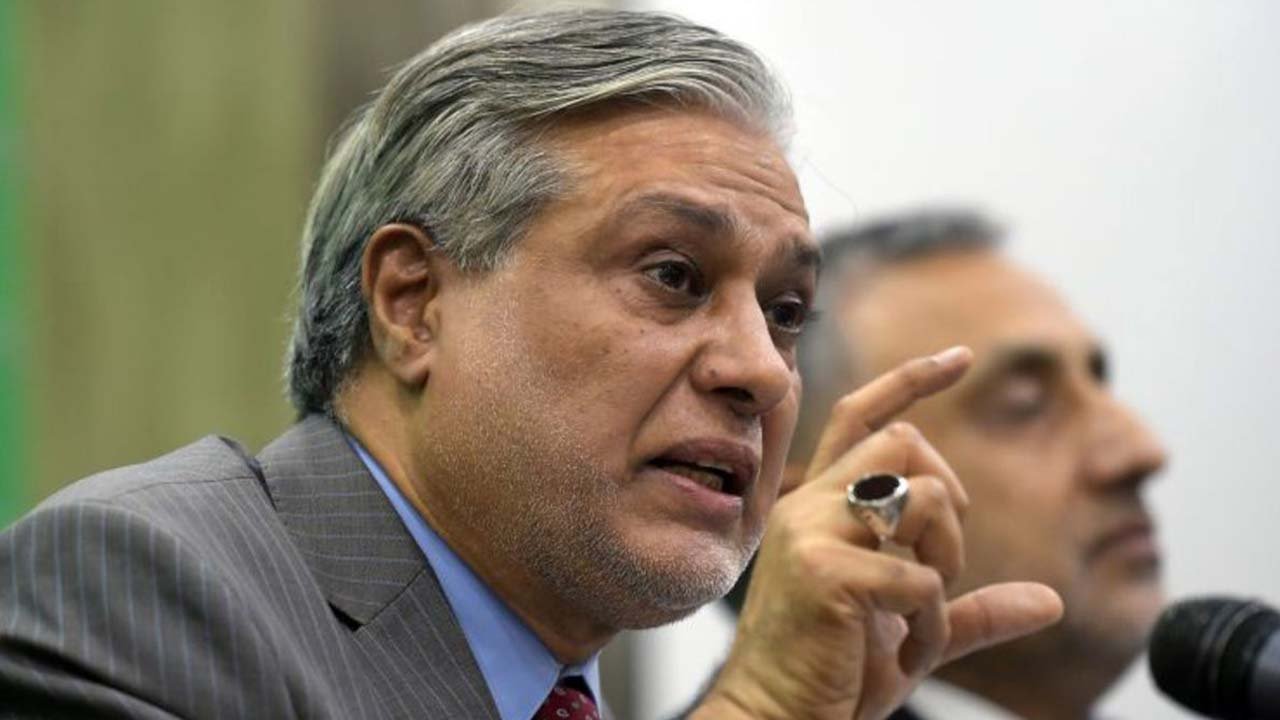
    According to the announcement by Pakistan’s Federal Finance Minister Ishaq Dar, negotiations between Pakistan and the International Monetary Fund (IMF) are about to conclude, and a staff-level agreement is expected to be signed soon.

    The minister also dismissed rumours of Pakistan defaulting as completely false and stated that all economic indicators are moving in the right direction. He highlighted that the State Bank of Pakistan’s foreign exchange reserves have increased and that foreign commercial banks have started extending facilities to Pakistan.

    However, the Pakistani rupee has plunged to a new all-time low of Rs290.18 against the US dollar in the interbank market, which is causing concern among importers who are panic buying dollars while exporters are reportedly withholding selling the greenback in anticipation of a higher exchange rate.

    It is reported that the IMF wants the value of the rupee in the interbank market to match its value in the black currency market.

  • SBP set to raise interest rates in response to IMF’s call for tighter monetary policy

    SBP set to raise interest rates in response to IMF’s call for tighter monetary policy

    The State Bank of Pakistan’s (SBP) Monetary Policy Committee (MPC) is expected to raise interest rates during an off-cycle review scheduled for today.

    The decision to hold this meeting earlier than the previously scheduled date of March 16th was made in an effort to expedite efforts to secure the anticipated International Monetary Fund (IMF) tranche.

    SBP’s MPC, established under the SBP Amendment Act, is authorized to make decisions based on macroeconomic fundamentals. Market expectations are for a benchmark interest rate increase, given the recent rise in treasury yields and growing investor concerns about rising inflation in Pakistan and globally.

    Reports suggest that the coalition government has agreed to raise interest rates from 17 per cent to 19 per cent in response to one of the IMF’s key conditions for reviving the loan program.

    Analysts recommend advancing the MPC meeting date to avoid the failure of the next T-bill auction. Discussions with the IMF have included the possibility of further monetary policy tightening and building up foreign exchange reserves by June 2023.

    The IMF has urged the SBP to raise the policy rate by 300 to 400 basis points to achieve a positive trajectory. Pakistan is taking measures to secure IMF funding, such as raising taxes, removing blanket subsidies, and relaxing exchange rate restrictions.

    While the government is optimistic about reaching a deal with the IMF, reports indicate that the lender expects interest rates to rise. Off-cycle rate reviews are not unusual in Pakistan.

  • Pakistani rupee drops by more than Rs18 against US dollar due to delay in IMF deal

    Pakistani rupee drops by more than Rs18 against US dollar due to delay in IMF deal

    Pakistani rupee (PKR) experienced a significant decline of over Rs18.8 against the US dollar in the interbank market during intra-day trade, ahead of the monetary policy review and delay in the International Monetary Fund (IMF) deal.

    At approximately 11:40 am, the greenback was being traded at Rs285 against the local currency, compared to its previous day’s closing of Rs266.11.

    Zafar Paracha, the General Secretary of ECAP, expressed concern over the delay in the agreement with IMF and the lender’s demand to peg the currency rate with that of the grey market, which has resulted in market uncertainty.

    In his opinion, the current rate is too high and should not have risen to this extent. He also noted that the greenback was being traded at Rs290 in the grey market a day earlier.

    Adnan Asghar, a currency market expert, stated that the delay in the deal between Pakistan and the IMF has contributed to the depreciation of the rupee.

    He added that the uncertain political situation has also been a factor in the decline of the rupee’s value. Asghar warned that the country is approaching a default situation due to this delay.

  • Pakistan accepts IMF pre-condition to increase interest rate by 2%

    Pakistan accepts IMF pre-condition to increase interest rate by 2%

    Pakistan has agreed to increase its policy (interest) rate by two percent or 200 basis points, as a pre-condition for the release of $1.1 billion in critical funding from the International Monetary Fund (IMF). The funding is part of a $6.5 billion bailout package.

    The increase is based on rates set by the government in an auction to raise domestic debt and will push the interest rate to 19 per cent. This is just below the previous record of 19.5 per cent set in October 1996.

    Sources from the Ministry of Finance stated that there had been technical-level discussions between Islamabad and the IMF review mission and that it was expected that Islamabad would increase the interest rate by two percent. Most of the pre-conditions set by the IMF had been fulfilled, according to these sources.

    Sources also indicated that discussions on some issues related to the power sector were in the final stages, after which a staff-level agreement with the IMF would be reached. Additionally, Pakistan provided a detailed briefing to IMF officials on the sources of foreign exchange until June.

  • SBP-held forex reserves increase by $66 million as Pakistan seeks critical IMF loan tranche

    SBP-held forex reserves increase by $66 million as Pakistan seeks critical IMF loan tranche

    The State Bank of Pakistan (SBP) has reported a minor increase in its foreign exchange reserves, as the nation desperately seeks to unlock a critical tranche of funding from the International Monetary Fund (IMF).

    The central bank stated that its reserves had risen by $66 million to $3,258.5 million as of the week ended February 17, providing an import cover of around three weeks. The net foreign reserves held by commercial banks were reported to stand at $5,468.0 million, $2,209.5 million more than the SBP, taking the total liquid foreign reserves to $8,726.5 million.

    China development bank approves $700 million facility for Pakistan

    Finance Minister Ishaq Dar has announced that the forex reserves are expected to receive a significant boost in the coming week, as the Board of China Development Bank has approved a $700 million facility for Pakistan. The funds could be deposited into the SBP’s account this week.

    Pakistan takes austerity measures in a bid to resume IMF programme

    In a bid to resume the delayed IMF programme and avoid default, the Pakistani government has taken a series of steps in the past two months. These measures include adding new taxes, increasing energy prices, and loosening its control on the rupee.

    Parliament approved a supplementary finance bill that increases sales tax from 17 per cent to 25 per cent on imports ranging from cars and household appliances to chocolates and cosmetics. People will also have to pay more for business-class air travel, wedding halls, mobile phones, and sunglasses. A general sales tax was raised from 17 per cent to 18 per cent.

    Prime Minister Shehbaz Sharif also unveiled cost-cutting measures to save $764 million annually, stating that austerity, simplicity, and sacrifice are the need of the hour.

    Concerns over Pakistan’s debt and dollar crunch

    Fitch Ratings, a global credit ratings agency, has downgraded Pakistan’s $350 billion economy twice in four months, citing dwindling foreign reserves. Bloomberg data shows that Pakistan has coupon repayments of $542.5 million this year.

    In all, the country has $8 billion in dollar bonds debt due by 2051, with the next payment of $1 billion due in April of next year. Most of the nation’s external debt of about $100 billion is sourced from concessional multilateral and bilateral sources.

    Pakistan also faces a dollar crunch that tests its external stability, and supply disruptions caused by flooding, food shortages, and IMF preconditions for rescue may push inflation above 30 per cent for the first time on record, according to Bloomberg Economics.
  • China’s $700 million loan to boost Pakistan’s foreign exchange reserves

    China’s $700 million loan to boost Pakistan’s foreign exchange reserves

    Pakistan’s Finance Minister Ishaq Dar has announced that the Board of China Development Bank has approved a credit facility of $700 million for Pakistan, and all formalities have been completed.

    This announcement was made through a tweet, and the loan is expected to be received by the State Bank of Pakistan this week, which will help to boost the country’s forex reserves.

    According to Reuters, the credit facility, provided by the state-owned China Development Bank, will increase Pakistan’s forex reserves by about 20 per cent. This comes at a time when the country is in talks with the International Monetary Fund (IMF) to unlock funds from a $6.5 billion bailout. The loan is in addition to other facilities that China has already extended to Pakistan, and a finance ministry official has stated that the money could arrive as early as Thursday.

    China Development Bank did not respond to a faxed request for comment. Currently, China is Pakistan’s largest creditor, and its commercial banks hold approximately 30 per cent of the country’s external debt.