Tag: International Monetary Fund

  • IMF should protect low-income people in Pakistan’s economic crisis: Human Rights Watch

    IMF should protect low-income people in Pakistan’s economic crisis: Human Rights Watch

    International Monetary Fund (IMF) should collaborate with the government of Pakistan to protect the economically disadvantaged by expanding social protection systems and minimizing reforms that may have adverse effects on the most vulnerable population, according to Human Rights Watch.

    The country is currently grappling with pressing issues such as inflation, poverty, inadequate governance, limited reserves, and high unemployment. Pakistan initiated discussions with the IMF on February 1st to formulate a plan to revive the economy, including securing the ninth tranche of $1.1 billion in loans from the $6.5 billion bailout.

    “Millions of Pakistanis have been pushed into poverty and denied their fundamental social and economic rights,” said Patricia Gossman, associate Asia director at Human Rights Watch.

    In addition, she emphasized that the IMF and the Pakistani government have a duty to manage this crisis in a manner that prioritizes and safeguards the well-being of low-income individuals.

    According to data from the State Bank of Pakistan (SBP), foreign exchange reserves have reached their lowest level at $3.09 billion, a decrease of 16%, sufficient to cover less than three weeks of imports.

    Pakistan is currently experiencing its highest inflation rates since 1975, with the cost of perishable food items rising by over 60% in January. In response to IMF demands, the government of Pakistan recently raised prices of petrol and diesel by Rs35 and removed the cap on the dollar, as it was a crucial condition of the IMF and the dollar should be market-driven.

    The ongoing negotiations with the International Monetary Fund (IMF) are aimed at concluding the ninth review of the IMF’s Extended Fund Facility, designed to support countries facing balance-of-payments challenges.

    The completion of this review would provide the necessary clearance for the IMF’s bailout installment, which would alleviate the severe shortage of foreign exchange and enable access to additional funding sources, including from multilateral and bilateral donors.
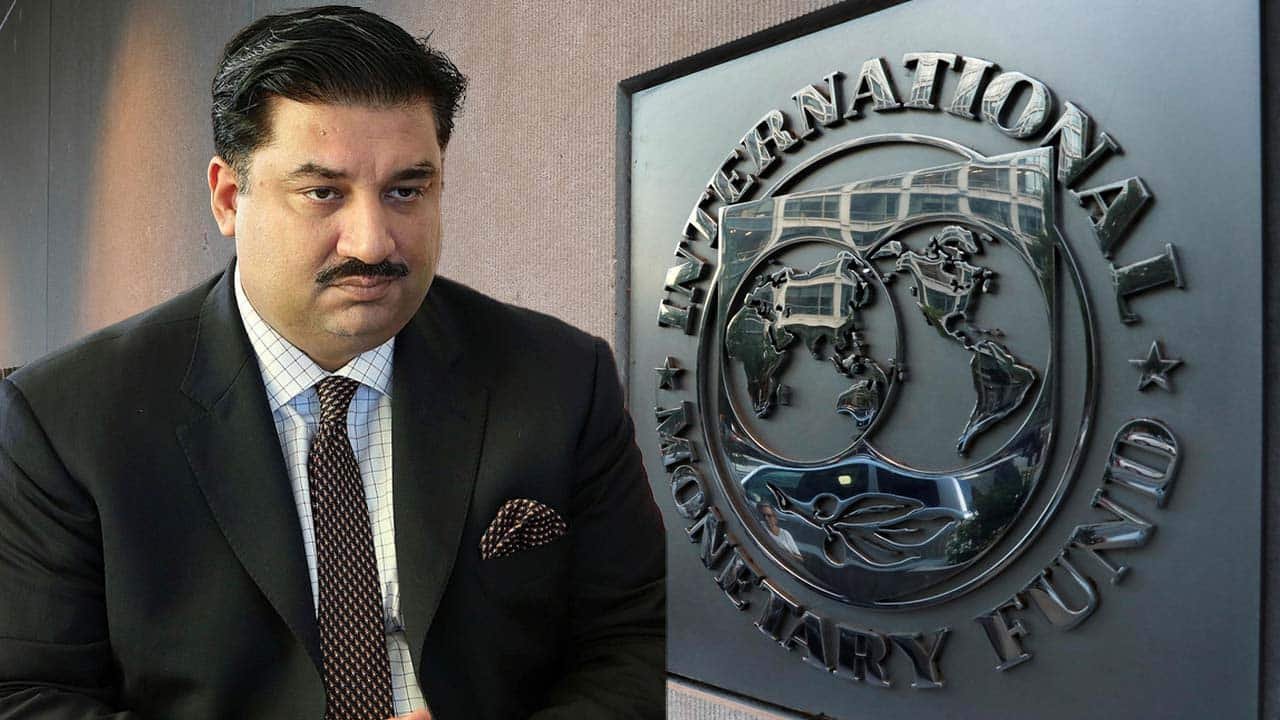
  • PM Shehbaz approves hike in gas and electricity tariffs to fulfill IMF demands

    PM Shehbaz approves hike in gas and electricity tariffs to fulfill IMF demands

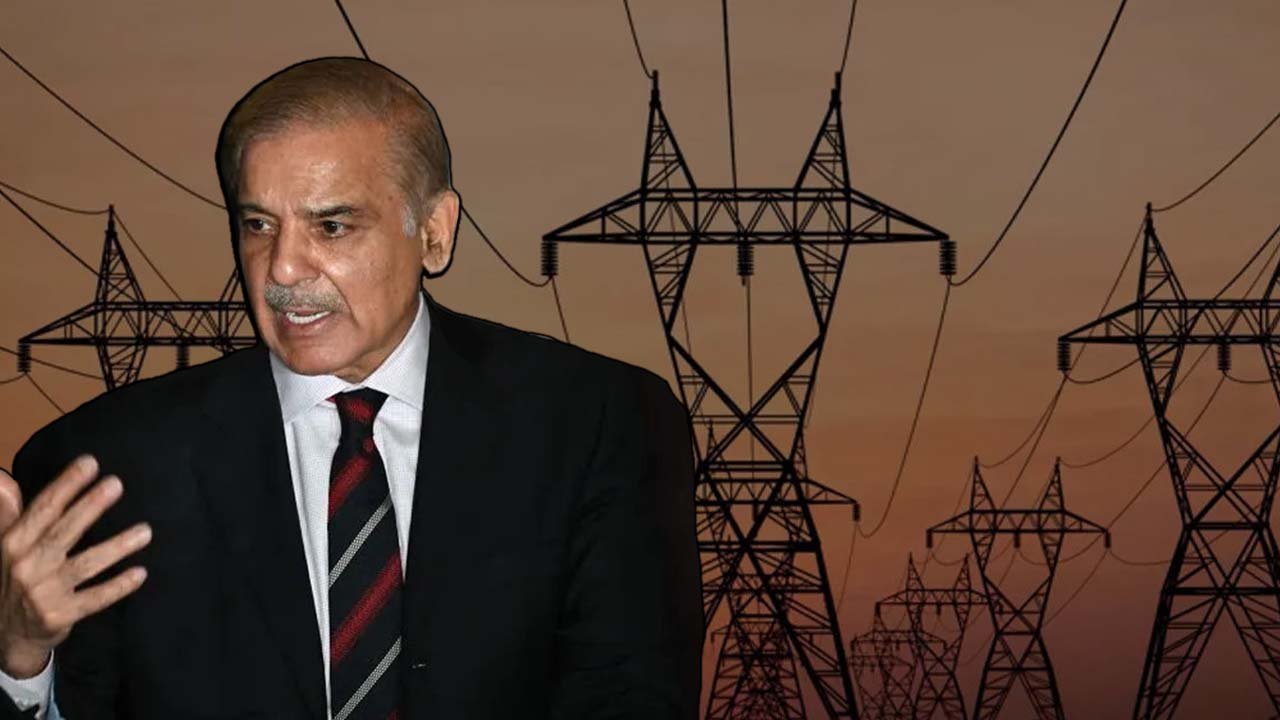
    With only three days remaining to resolve differences, Prime Minister Shehbaz Sharif approved an increase in electricity prices on Monday in an attempt to reach an agreement with the International Monetary Fund (IMF). The annual base tariff is expected to increase by approximately 33 per cent.

    The decision was made during a virtual meeting held at the Prime Minister House after the IMF maintained its stance that Pakistan must fulfill its prior commitments.

    Sources familiar with the discussions indicated that there may be an average increase of Rs7.74 per unit in the base tariffs, but the increase for higher consumption levels will be much higher. Despite this, the Prime Minister still hopes that the Power Division can negotiate with the IMF to reduce the demanded increase.

    With the Prime Minister’s approval, the revised circular debt reduction plan, which includes details of the increase in prices due to quarterly and annual base tariff adjustments, will be shared with the IMF today.

    Power Minister Khurram Dastgir declined to comment on whether the Prime Minister had agreed to increase electricity prices, including the maximum increase for high-end consumers.

    According to sources, the IMF is seeking a 50 per cent increase in prices, while the government is proposing a range of 20 per cent to 33 per cent increase. The discussions began on January 31st and the IMF delegation was in Islamabad until February 9th.

    The IMF has stated that it is in Pakistan at the request of Prime Minister Shehbaz Sharif, with the expectation that the government will implement all of its outstanding actions, including tax increases. If the IMF agrees to the measures proposed by the government, a meeting between Finance Minister Ishaq Dar and IMF Mission Chief Nathan Porter may take place the same day to finalise the measures.

    The sources stated that the Power Division presented several options for increasing tariffs to the Prime Minister, including a Rs4.26 per unit increase in quarterly tariffs and a Rs7.74 per unit average increase in the base tariff.

    The IMF has asked the government of Pakistan to increase electricity prices by over Rs12 per unit to fully cover the additional budget subsidy demand of Rs675 billion. The Power Division believes it can recover Rs43 billion with a lag from July to December 2023, reducing the need for a price hike by the same amount.

    During budget planning, the government allocated only Rs355 billion for power subsidies in the current fiscal year, but the Power Division has requested an additional Rs675 billion in subsidies, bringing the total requirement to over Rs1.03 trillion. In a recent meeting, it was noted that the delayed decision-making has increased the cost of reviving the IMF program.

    The government still hopes the IMF will consider absorbing some of the increase through subsidies, but these subsidies must be supported by additional revenue measures. The IMF also refused the government’s request to exempt up to 300 units for consumers from the price increase, remaining firm on its stance to raise prices for consumers who use 200 units or more per month.

    According to Express Tribune, the Prime Minister has given direction to implement a maximum increase in electricity prices to those with high consumption levels. However, these consumers may struggle to bear the additional cost, which is primarily due to political decisions such as subsidies for exporters and insufficient subsidies in the budget, as well as inefficiencies in the power sector.

  • Pakistan nears finalisation of IMF loan agreement: Power Minister announces positive progress

    Pakistan nears finalisation of IMF loan agreement: Power Minister announces positive progress

    Power Minister of Pakistan, Khurram Dastgir, announced that the country is close to sealing a deal with the International Monetary Fund (IMF) and that the agreement has been achieved on almost all the issues between the two sides.

    With a $350 billion economy, Pakistan is in need of a crucial installment of $1.1 billion from the IMF to avoid default. However, the IMF has identified a significant gap of approximately Rs900 billion, equivalent to 1 per cent of the country’s Gross Domestic Product (GDP), which has been a hindrance in reaching a staff-level agreement.

    Minister Dastgir reassured that the IMF has not demanded the government to cut its defense budget during his appearance on the Geo News program “Capital Talk” on Monday.

    The Minister stated that instead of cutting the defense budget, the IMF has asked the Energy Division to reduce its losses. The Fund has also emphasized the need for the government to reduce line losses in the northern, southern, and western regions of the country. The Minister emphasized that the IMF has made it clear to Pakistan that the country must establish its financial stability by increasing its tax revenues and reducing losses.

    He also mentioned that the international community is not displaying leniency towards Pakistan since the US withdrawal from Afghanistan. The Minister indicated that the country must take the necessary measures to align its financial position and meet the expectations of the IMF and the international community.

  • Pakistani traders threaten to launch nationwide protests if new taxes imposed

    Pakistani traders threaten to launch nationwide protests if new taxes imposed

    Traders in Pakistan have threatened to launch a nationwide protest in response to the government’s potential imposition of new taxes to meet the International Monetary Fund’s (IMF) conditions. The Central Organisation of Traders has called for the government to reduce the salaries of army generals, judges, and parliamentarians instead.

    On Saturday, representatives of the Central Organisation of Traders spoke to the media in Islamabad and announced their plan for a protest movement starting on February 13th if the new taxes are introduced. The leaders of the organization warned the government that the current economic situation in the country cannot withstand further taxation of the general public and the trading community.

    They expressed dismay that the state of the economy of a nuclear country was in dire straits and the situation was worsening with each passing day, and said that the public should not suffer because of the “flaws or crimes committed by the leaders of this country.”

    “Our reaction will be severe if more taxes worth billions of rupees were imposed, as being reported in the media,” Kashif Chaudhry, the organisation’s president, said, asking the stakeholders, including the ruling elites, to make “sane decisions” if they want to improve the economy.

    Mr Chaudhry has proposed that the government reduce the expenses of high-level officials such as the President, Prime Minister, legislators, judges, army officers, and bureaucrats. He believes the government should immediately decrease “non-productive expenditures” by half.

    The trader representatives have also made demands of the government. They have called for the creation of both short-term and long-term economic policies and for more consistent income tax collection across all sectors, instead of imposing billions of dollars in new taxes.

    “I assure the government that the business community was ready to contribute to steering the country out of the current economic crises and we traders are ready to pay fixed taxes,” he said.

    Khawaja Salman Siddiqui, the chairman of the organization, criticized Finance Minister Ishaq Dar. According to Siddiqui, Dar was appointed by the PML-N to stabilize the economy and prevent the depreciation of the rupee, but he failed to deliver on his responsibilities.

    Mr Siddiqui said putting an artificial cap on the dollar’s rate led to a wide gap between the interbank and open market rates, and despite the demand to remove the cap, Mr Dar “remained stubborn and did not listen to anybody.”

    Other speakers called for the implementation of the decision of the Federal Shariat Court to make Pakistan’s economy interest-free to “eradicate exploitation in the system.”

    According to Dawn, the speakers also suggested an amnesty program that would allow wealthy individuals to repatriate their foreign wealth. The government could then borrow money from these individuals and provide them with profits instead of taking loans from the International Monetary Fund (IMF) and World Bank with unfavorable conditions.

  • Pakistan will have to agree to ‘unimaginable’ IMF conditions for bailout: PM Shehbaz

    Pakistan will have to agree to ‘unimaginable’ IMF conditions for bailout: PM Shehbaz

    The government will have to accept “beyond imagination” International Monetary Fund (IMF) bailout requirements, according to Pakistan’s Prime Minister (PM) Shehbaz Sharif, who made the statement on Friday in a meeting of civil and military leaders in the northwestern city of Peshawar.

    In order to avoid backlash before the upcoming elections in October, the administration has refused to implement the tax increases and subsidy reductions that the IMF has required.

    “I will not go into the details but will only say that our economic challenge is unimaginable. The conditions we will have to agree to with the IMF are beyond imagination. But we will have to agree with the conditions,” PM Shehbaz said.

    In the midst of political unrest, a deteriorating security situation, and a balance of payments crisis caused by its high levels of foreign debt, Pakistan’s economy is in terrible circumstances.

    The nation’s central bank announced Thursday that its foreign exchange holdings had decreased once again to $3.1 billion, which analysts said was just enough to cover imports for fewer than three weeks.

    On Wednesday, year-over-year inflation reached a 48-year high, making it difficult for Pakistanis to afford food products.

    With the possibility of national bankruptcy looming and no friendly countries prepared to give less painful bailouts, Islamabad started to submit to pressure ahead of the IMF visit.

    To manage a rogue illicit market in US dollars, the government relaxed regulations on the rupee, which led to the currency falling to historic lows. Additionally, artificially low gasoline costs have increased.

    A backlog of thousands of cargo containers filled with material the countrycannot afford is accumulating at Karachi port as a result of the government no longer providing letters of credit, with the exception of necessary food and medication.

    IMF advises Pakistan to fetch additional revenue

    The IMF has suggested the Pakistani government implement significant, high-quality, and long-lasting tax and non-tax revenue initiatives in order to raise extra funds to close the anticipated Rs. 600 billion fiscal framework shortfall.

    Currently in Pakistan, an IMF delegation led by Mission Chief Nathan Porter is having discussions for the ninth review, which will go through February 9.

    After months of resistance, the government was finally obliged to agree to all the terms laid forth by the Washington-based lender due to the country’s declining foreign exchange reserves and deteriorating economic circumstances.

    Following the conclusion of the negotiations under the $6.5 billion Extended Fund Facility, a staff-level agreement is anticipated.

  • Gold bounces back by Rs2,200 to Rs207,200 per tola

    Gold bounces back by Rs2,200 to Rs207,200 per tola

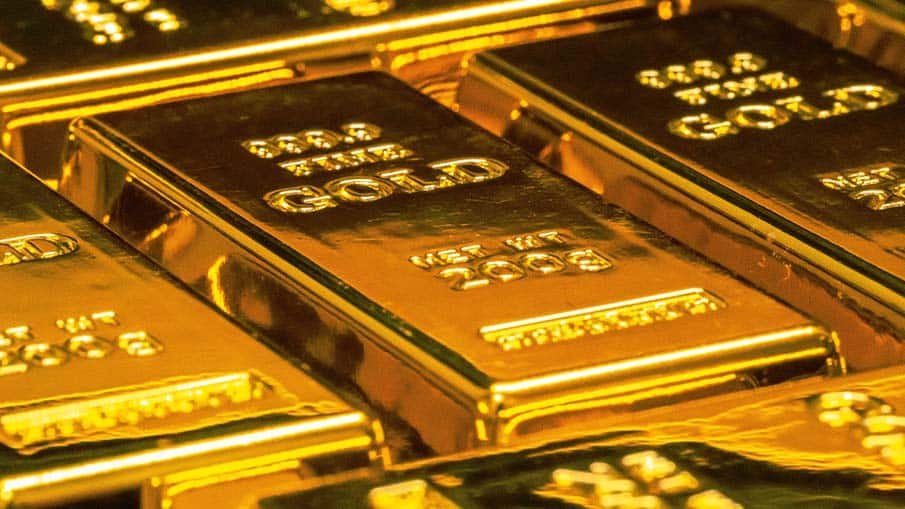
    As the international precious metal markets rose Thursday in response to a hawkish US Federal Reserve, investors were also drawn to gold as their available saving choices remained constrained. Pakistan’s gold price likewise maintained its impressive run.

    The price of gold (24 karats) climbed by Rs2,200 per tola and Rs1,887 per 10 grammes to settle at Rs207,200 and Rs177,641, respectively, according to data issued by the All-Pakistan Sarafa Gems and Jewellers Association (APSGJA).

    A stagnant International Monetary Fund (IMF), declining foreign exchange reserves, and a weak rupee have all contributed to the precious metal’s advances over the past two sessions. These factors will increase the price of importing gold.

    However, investors were only buying gold bars, not jewellery, which had lowered goldsmiths’ profit margins and put the labour force at risk of losing jobs as jewellery manufacturers turned to other careers in the absence of work.

    As investors continued to believe that the US Federal Reserve will end its rate-hiking cycle soon after announcing a 25-basis-point hike, gold reached a nine-month high on the international market due to a weak dollar.

    Having earlier in the day reached its highest level since April 2022, spot gold was up $31 at $1,955 per ounce.

    After a year of bigger rate hikes, the US central bank on Wednesday reduced the rate rise to a quarter percentage point. It said that the battle against high inflation had reached a turning point, but that “winning” would still require raising rates and keeping them there at least through 2023.

    Moreover, local silver prices rose by Rs50 per tola and Rs42.88 per 10 grammes to settle at Rs2,300 and Rs1,971.88, respectively.

  • IMF rejects Pakistan’s circular debt management plan, advises raising power tariff

    IMF rejects Pakistan’s circular debt management plan, advises raising power tariff

    In order to cap the extra subsidy at Rs335 billion for the current fiscal year, the International Monetary Fund (IMF) has rejected the circular debt management plan (CDMP) that the government had given and requested the authorities to hike the power tariff by Rs12.50 per unit.

    Talks on the ninth review are now being held in Pakistan by an IMF team; they will last until February 9 and are anticipated to result in a staff-level agreement between the two parties.

    During the second day of technical discussions, the Washington-based lender referred to the amended CDMP as “unrealistic,” which is based on several incorrect assumptions. Therefore, the government would need to make further adjustments to its recommended course of action to limit the losses in the cash-strapped electricity industry.

    A fiscal deficit will be worked up between the IMF and the Finance Ministry, and various extra taxing measures will then be finalised through the forthcoming mini-budget.

    The international lender has asked Pakistan to impose Rs600–800 billion in additional taxes in the second round of talks to revive the $7 billion Extended Fund Facility (EFF), which has been stalled for months.

    According to details, the Federal Board of Revenue held a second round of technical talks with the IMF mission, led by Mission Chief to Pakistan Nathan Porter, on the ninth review of a $7 billion loan programme.

    The lender also demanded the government increase tax collection to 1 per cent of the gross domestic product (GDP). Sources claimed that the fund demanded the government fix the next fiscal year’s tax collection target at Rs8.3 billion.

  • Highest single-day fall: Gold price drops by Rs9,000 to Rs201,500 per tola

    Highest single-day fall: Gold price drops by Rs9,000 to Rs201,500 per tola

    As the rupee marginally strengthened against the US dollar and investors closely followed the US Federal Reserve’s interest rate rise decision and policy outlook, the price of gold in Pakistan saw its worst one-day decline.

    The price of gold (24 carats) fell by Rs9,000 per tola and Rs7,716 per 10 grammes to settle at Rs201,500 and Rs172,754, respectively, according to data issued by the All-Pakistan Sarafa Gems and Jewellers Association (APSGJA).

    The jewellers’ association also claimed that local gold in Pakistan was “overcost” by Rs2,500 per tola when compared to the bullion market in Dubai.

    The price of gold has fallen as demand has decreased as investors appear to have abandoned the safe-haven commodity in favour of the dollar, which is now freely available on the open market following the lifting of the dollar cap.

    As a result of the events surrounding the negotiations with the International Monetary Fund (IMF), the Pakistani rupee began to show signs of recovery today, rising by about Rs2 to settle at Rs267.89.

    However, investors were only buying gold bars, not jewellery, which had lowered goldsmiths’ profit margins and put the labour force at risk of losing jobs as jewellery manufacturers turned to other careers in the lack of work.

  • OGRA jacks up LPG price by Rs60 per kg

    OGRA jacks up LPG price by Rs60 per kg

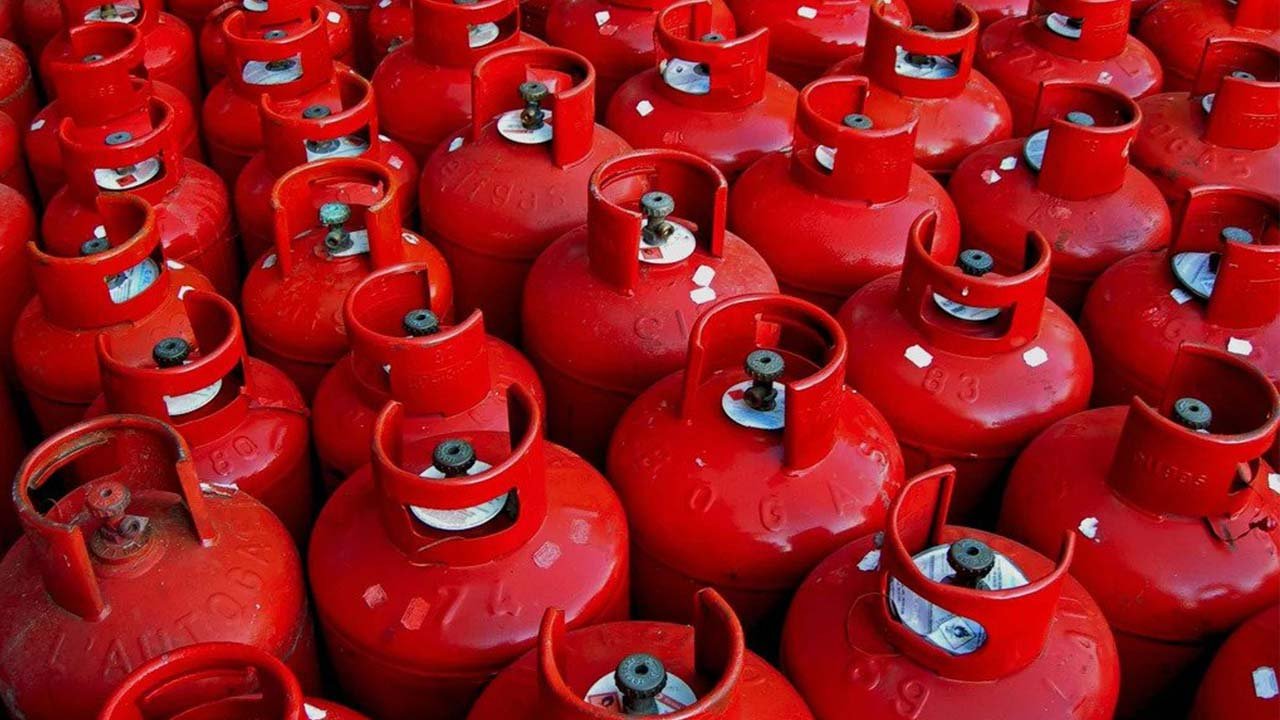
    The Oil and Gas Regulatory Authority (OGRA) raised the cost of liquefied petroleum gas (LPG) by Rs60 per kilogramme after a hike of Rs35 in petrol prices.

    The price of liquefied petroleum gas (LPG) has increased by Rs60 per kg to Rs264 per kg, according to a statement from the OGRA.

    The price of a domestic LPG cylinder has gone up by Rs703 and a commercial cylinder by Rs2,706 following the latest price revision. Domestic cylinders will now be sold at Rs3,115 and commercial cylinders at Rs11,984.

    In a statement, LPG Industries Association of Pakistan Chairman Irfan Khokhar lambasted the regulatory authority and called it “mafia.” “Liquefied petroleum gas was now out of reach of consumers after the historic increase in prices,” he said.

    It is pertinent to mention here that the federal government on January 29 announced raising the prices of gasoline and diesel by Rs35 per litre.

    In a televised address, Ishaq Dar said that an 11 per cent increase was witnessed in the prices of petroleum products in the international market. Dar further announced that the prices of kerosene oil and light diesel oil have been increased by Rs18 per litre.

    After the latest round of hikes, petrol is currently priced at Rs249.80, diesel at Rs262.80, kerosene oil at Rs189.83, and light diesel at Rs187.

  • IMF mission to visit Pakistan next week to discuss stalled bailout programme

    IMF mission to visit Pakistan next week to discuss stalled bailout programme

    At the end of this month, an IMF delegation will travel to Pakistan to discuss the stalled ninth review of the country’s ongoing funding programme.

    The IMF provided Pakistan with a $6 billion bailout in 2019, which was increased by an additional $1 billion in 2022. However, the lender halted disbursements in November because Pakistan had not made further progress on fiscal reduction and economic reforms.

    “At the request of the authorities, an in-person Fund mission is scheduled to visit Islamabad January 31st–February 9th to continue the discussions under the ninth EFF review,” according to IMF Resident Representative in Pakistan Esther Perez Ruiz.

    A successful visit is crucial for Pakistan, which is facing an increasingly acute balance of payments crisis and is desperate to secure external financing with less than three weeks’ worth of import cover in its foreign exchange reserves.

    Multilateral and bilateral financing pledges for the cash-strapped country’s effort to rebuild after devastating floods last year are also tied to the country getting the green light from the IMF.

    According to Ruiz, the mission’s main objectives would be power sector reforms and local and international sustainability restoration strategies, such as strengthening the budgetary situation while aiding flood victims.

    The reinstatement of a market-based process to decide the value of the Pakistani rupee would also be discussed, she added. The country must have such a structure in place before receiving IMF assistance, but up until this week, it had not done so.

    The relaxation of price ceilings that the government had established but that the IMF disagreed with has resulted in a loss of close to 10 per cent of the value of the Pakistani rupee in just two days.

    In just two days, the local currency has lost close to 10 per cent of its value after the removal of price caps imposed by the government, which the IMF opposed.

    Stronger policy initiatives and reforms, according to Ruiz, are essential for Pakistan to get financial help from official partners and the markets and to lessen the high level of uncertainty that is weighing on its future.

    Market observers claimed that the IMF programme was trying to be restarted when the price limitations were abruptly removed.