Tag: International Monetary Fund

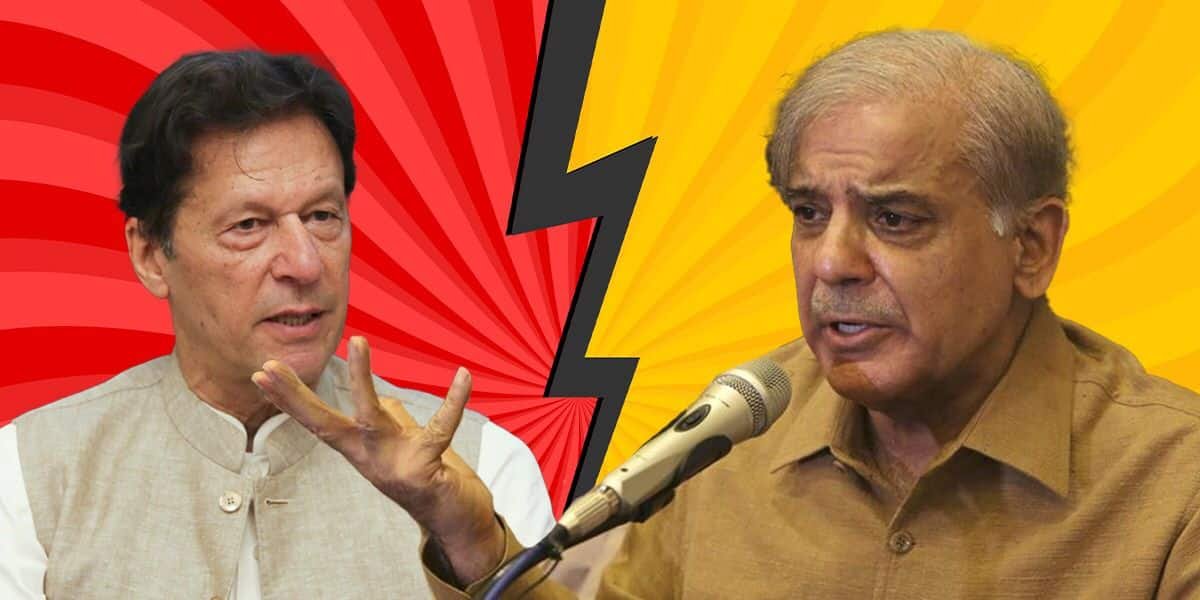
  • ‘A bigger enemy of Pakistan than Imran has not been born’: PM Shehbaz

    ‘A bigger enemy of Pakistan than Imran has not been born’: PM Shehbaz

    Prime Minister (PM) Shehbaz Sharif did not mince his words when talking about Pakistan Tehreek-e-insaf (PTI) Chairman Imran Khan.

    “Thank God Pakistan was saved from default. Imran Khan wanted Pakistan to become Sri Lanka. Look at his real face,” said the PM on Thursday. He stated that after the crucial International Monetary Fund (IMF) programme restarted for Pakistan, the country was able to stand back on its feet.

    “I was sitting in a meeting when the minister of finance gave me the news [of the IMF bailout package], so I told him in front of everyone that Pakistan was saved from default,” he said.

    “But at least we were saved from a default which is what Imran Khan wanted. A man who gets letters written just so that the IMF programme could fail […] tell me, is there a worse way to show hatred with the country?”

    Shehbaz Sharif was referring to Khyber Pakhtunkhwa Finance Minister Taimur Khan Jagra’s letter to the finance division, asserting that it had proven PTI chief’s intention to sabotage the country’s fate.

    Shehbaz went on to say that only thinks about himself and said, “Imran Khan kay sur par main sawar hon, aur uski apni main sawar hai tu Pakistan ka kya banay ga? [What will become of Pakistan if he only keeps thinking of himself?]”

    The premier further said that a bigger liar, cheater, deceiver and enemy of Pakistan than Imran Khan had never been born.

    The prime minister said that when he was in the opposition, Imran Khan conspired to send his members to jail, but they did not create a fuss. “Now everyone should look at Khan’s language.”

    PM Shehbaz said that the exemption for fuel adjustment charges (FAC) in August’s billing will apply to consumers who use under 300 units of electricity.

  • ‘Yeh ab tai hogaya hai Imran Khan Pakistan aur 22 crore logo se zyada eham hain’: Twitter reacts to leaked audio

    ‘Yeh ab tai hogaya hai Imran Khan Pakistan aur 22 crore logo se zyada eham hain’: Twitter reacts to leaked audio

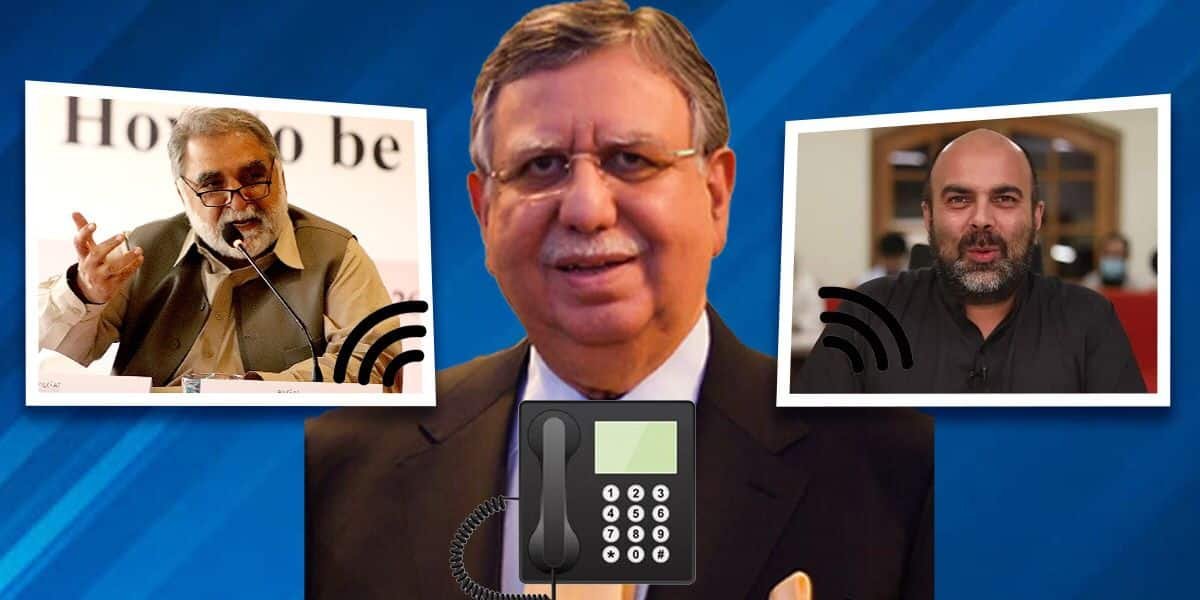
    In a leaked audio, former Finance Minister Shaukat Tarin allegedly asked Punjab Finance Minister Mohsin Leghari and Khyber Pakhtunkhwa Finance Minister Taimur Jhagra to write letters withdrawing from the International Monetary Fund’s (IMF) deal.

    Moments after the leaked audio surfaced on Twitter, both finance ministers and Tarin were under fire for their comments and how their conversations were an attempt by the Pakistan Tehreek-e-Insaf (PTI) to sabotage the IMF deal.

    Here are a few reactions.

    Meanwhile, PTI leader Asad Umar and Taimur Jhagra held a press conference following the audio leak between former federal minister Shaukat Tarin and the finance ministers of Punjab and KP.

    Umar said that Tarin, as a former finance minister, had every right to “give advice” to Jhagra and Leghari.

    “There is nothing wrong in Tarin speaking to Jhagra and Leghari on the phone and giving advice,” said Asad Umar.

  • Leaked audio: PTI’s Shaukat Tarin allegedly advising finance ministers in Punjab, KP to sabotage IMF deal

    Leaked audio: PTI’s Shaukat Tarin allegedly advising finance ministers in Punjab, KP to sabotage IMF deal

    In a leaked audio, former Finance Minister Shaukat Tarin allegedly asked Punjab Finance Minister Mohsin Leghari and Khyber Pakhtunkhwa Finance Minister Taimur Jhagra to write letters withdrawing from the International Monetary Fund’s (IMF) deal.

    You need to say now that we will not be able to honour our commitment’: Shaukat Tarin

    In one leaked audio, Tarin can be heard asking Leghari to tell the IMF that the commitment Punjab made was pre-floods and now the province “cannot honour it” due to massive losses caused by the floods.

    Tarin told Leghari to draft a letter and send it to him for review so it could be sent to the federal government and later on to the IMF representative in Pakistan.

    “You have signed a Rs750 billion [surplus] commitment with the IMF. You now need to tell them that the commitment you made was before the floods, and now [Punjab] has to spend a lot of funds for [the] floods [rehabilitation].”

    “You need to say now that ‘we will not be able to honour our commitment’,” Tarin said.

    The former FM further told Leghari that this is all he [Imran Khan] wants – for pressure to increase on the incumbent government.

    Leghari questioned if this move will affect the state and will Pakistan as a state suffer if the Punjab government does what is being asked to do so?

    “Well, frankly isn’t the state already suffering because of the way they are treating your chairman [Imran Khan] and everybody else? IMF will definitely ask them: where will you get the money from now?” Tarin responded.

    Tarin further said that the party could not bear being mistreated. “We cannot be blackmailed,” Tarin said.

    “This is what was decided yesterday, however, whether we will be releasing this to IMF or not we will ask the chairman,” revealed the former FM.

    ‘By the way, this is a blackmailing tactic’: Taimur Jhagra

    In another leaked audio conversation between Tarin and Jhagra, Tarin asked Jhagra if he had written the letter.

    “I am on the way. I have the previous letter. I will send the letter to you after drafting it,” replied Jhagra.

    Read more: Jhagra responds after Miftah accuses KP govt of jeopardising IMF deal

    “First point [of the letter] would be that we need huge financial aid for restoration of infrastructure and rehabilitation of flood affectees,” Tarin tells the KP finance minister.

    “By the way, this is a blackmailing tactic,” he admitted.

    PTI’s finance minister in KP, Jhagra further said that he knows the number two guy at IMF and he can send the letter to him. He also revealed that he had been in contact with the IMF person and that he had been getting information from him.

    Read more: IMF Executive Board meeting to discuss revival of loan plan today

    It is pertinent to mention here that the IMF executive board will meet today (August 29), to discuss the bailout plan for Pakistan.

    The 8th and 9th tranches, totaling over $1.2 billion, are anticipated to be disbursed with board approval.

  • Pakistan receives Letter of Intent from IMF, moving closer to $1.17 billion tranche

    Pakistan receives Letter of Intent from IMF, moving closer to $1.17 billion tranche

    The International Monetary Fund (IMF) has sent Pakistan the Letter of Intent (LoI), bringing the disbursement of the $1.17 tranche for the combined seventh and eighth review closer.

    Pakistan will approve the Lol and return it to the IMF. The Extended Fund Facility will now be revived right after IMF board’s approval.

    The IMF team and the Pakistani government came to a staff-level agreement (SLA) in July for the conclusion of the combined seventh and eighth tranche.

    The international lender estimates that after the Executive Board approves it, around $1,177 million will become accessible, bringing the program’s total payouts to almost $4.2 billion.

    But according to a report from last month, before the multilateral lender provides Pakistan with new funding, it was also looking to determine the level of commitment from other sources.

    The Washington-based lender wants to make sure that Pakistan won’t experience a funding shortfall following the IMF loan.

    For Pakistan, which is desperately seeking dollar inflows in the face of declining foreign exchange reserves, the IMF support is essential in addition to other forms of finance.

  • IMF to send Letter of Intent soon to release $1.17 billion tranche

    IMF to send Letter of Intent soon to release $1.17 billion tranche

    The International Monetary Fund’s (IMF) agreement with Pakistan to release two tranches totaling $1.17 billion as part of a loan facility that was stalled is nearing completion, as the Letter of Intent (LoI) from the fund may arrive in a few days.

    Pakistan is likely to receive the LoI, which the governor of the State Bank of Pakistan (SBP) and the Finance Minister, Miftah Ismail, will jointly sign, according to The News.

    The IMF mission leader had to rush to Australia for a personal engagement, according to senior officials at the Finance Ministry, thus the Fund was likely to submit the LoI “anytime soon.”

    The IMF board would also discuss adding $1 billion to a $6 billion programme agreed upon in 2019 at its meeting scheduled for August 24.

    The government may impose higher taxes on cigarettes, tobacco leaves, fertiliser, and other items in order to appease the IMF.

    Additional taxes are being considered for a variety of sectors. Through a Presidential Ordinance, tax rates on cigarettes and the processing of tobacco leaf might be increased.

  • Army chief asks US to help Pakistan secure early dispersal of loan from IMF: report

    Army chief asks US to help Pakistan secure early dispersal of loan from IMF: report

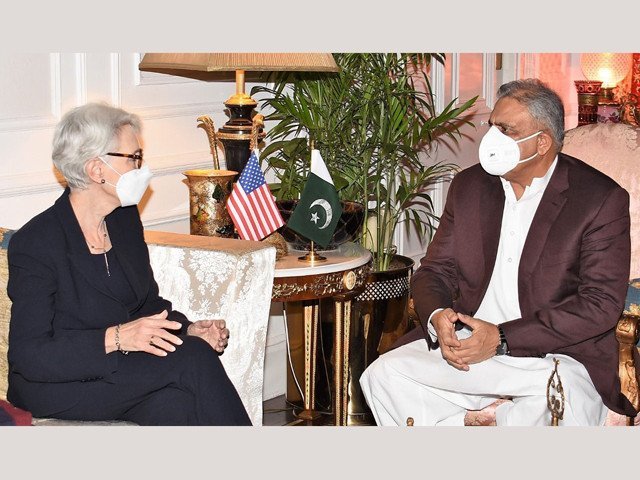
    Chief of Army Staff (COAS) General Qamar Javed Bajwa has appealed to the United States (US) to help Pakistan secure an early dispersal of $1.2 billion in funds under the International Monetary Fund (IMF) programme, reported Wajahat S Khan for Nikkei Asia.

    Gen Bajwa spoke by phone with US Deputy Secretary of State Wendy Sherman earlier this week.

    “The IMF has already granted Pakistan staff-level approval for the loan in question on July 13. But the transaction — part of the IMF’s $6 billion Extended Fund Facility for Pakistan — will only be processed after the multilateral lender’s executive board grants final approval,” said the report.

    According to an IMF official who also spoke on condition of anonymity, the IMF is going into recess for the next three weeks and its board will not convene until late August. Because of the recess, no date has been set for announcing the loan approval for Pakistan.

    “There is a major difference between staff-level approval and board approval. Our stakeholders, the countries that take the vote as to whether they are supporting this or not, make the final decision. This is a difference. So the legally binding step is a board approval, not the staff level agreement,” said the official.

    Pakistan’s former ambassador to Washington, Husain Haqqani, said, “This reflects the Pakistan army’s concerns about the state of the economy. It also reflects that the Pakistan army chief is the authority with whom the global players feel the final word rests.”

    Haqqani said that Pakistan has developed a habit of getting on an IMF plan, getting quick access to a couple of tranches, but then abandoning the deals without making the important structural and systemic changes required for further financing. This has left Pakistan little leverage with international financiers.

    “The reason why the IMF program has been delayed is that Pakistan has a track record of not keeping its word with the IMF,” Haqqani said.

    “Gen Bajwa calling the US administration, if he has done so, suggests that he is assuring the US — and through the US, the IMF — that any promises made will be kept.”

  • Pakistan, IMF reach staff-level agreement to resume loan

    Pakistan, IMF reach staff-level agreement to resume loan

    The International Monetary Fund (IMF) extended the total loan size to $7 billion on Thursday and announced a staff-level agreement on the completion of two unfinished programme assessments, but cautioned Pakistan to be prepared to take any extra measures.

    “The IMF team has reached a staff-level agreement (SLA) with the Pakistan authorities for the conclusion of the combined seventh and eighth reviews of the EFF-supported program. The agreement is subject to approval by the IMF’s Executive Board. Subject to Board approval, about $1,177 million (SDR 894 million) will become available, bringing total disbursements under the program to about $4.2 billion,” IMF said in a statement.

    The statement added, “Additionally, in order to support program implementation and meet the higher financing needs in FY23, as well as catalyze additional financing, the IMF Board will consider an extension of the EFF until end-June 2023 and an augmentation of access by SDR 720 million that will bring the total access under the EFF to about $7 billion.”

    IMF team leader Nathan Porter noted in a statement “Pakistan is at a challenging economic juncture. A difficult external environment combined with procyclical domestic policies fueled domestic demand to unsustainable levels.”

    According to him, the ensuing economic overheating reduced reserve buffers, increased inflation, and resulted in significant fiscal and external deficits in FY22.

    The statement continued, “Policy priorities include the consistent implementation of the FY23 budget, which aims to reduce the government’s significant borrowing needs by targeting an underlying primary surplus of 0.4 per cent of GDP, underpinned by current spending restraint and extensive revenue mobilisation efforts targeted particularly at higher-income taxpayees.”

    According to Express Tribune, the international lender claimed that due to poor implementation of the previously agreed upon plan, the circular debt (CD) flow in the power sector is predicted to increase significantly to about Rs850 billion in FY22, exceeding programme targets, endangering the viability of the sector, and resulting in frequent power outages.

    To improve the situation in the electricity sector and reduce load shedding, the authorities are committed to resuming reforms, which crucially include the timely adjustment of the power tariff, including the delayed yearly rebasing and quarterly adjustments.

    According to the IMF, Pakistan’s headline inflation rate hit 20 per cent in June, impacting the most vulnerable people the most. The recent monetary policy boost was reasonable and necessary in this regard, and future monetary policy must be designed to ensure that inflation is slowly brought down to the medium-term goal of 5-7 per cent.

    “Importantly, to enhance monetary policy transmission, the rates of the two major refinancing schemes EFS and LTFF (which have over recent months been raised by 700 bps and 500 bps respectively) will continue to be linked to the policy rate. Greater exchange rate flexibility will help cushion activity and rebuild reserves to more prudent levels,” it added.

    The unconditional cash transfer (UCT) Kafalat scheme reached nearly 8 million households during FY22, with a permanent increase in the stipend to Rs14,000 per family, while a one-time cash transfer of Rs2,000 (Sasta Fuel Sasta Diesel, SFSD) was made to approximately 8.6 million families to lessen the effects of the inflationary crisis.

    The government has increased the BISP budget for FY23 from Rs250 billion to Rs364 billion in order to expand the SFSD programme to more non-BISP, lower-middle class beneficiaries and to accommodate 9 million extra families into the BISP safety net.

    The statement further stated that in order to maintain the effectiveness of the anti-corruption agencies (including the National Accountability Bureau) in investigating and prosecuting corruption cases, the authorities are putting in place a strong electronic asset declaration system.

    According to the SLA for the combined seventh and eighth reviews, consistent execution of the defined policies will support the development of growth that is more equitable and sustainable.

    “The authorities should nonetheless stand ready to take any additional measures necessary to meet program objectives, given the elevated uncertainty in the global economy and financial markets,” the statement concluded.
  • ‘IMF programme will be revived soon’: Miftah Ismail

    ‘IMF programme will be revived soon’: Miftah Ismail

    Pakistan and the International Monetary Fund (IMF) evolved a broader agreement on the budget 2022-23 to revise upward the Federal Board of Revenue (FBR) target and slash down the expenditures to achieve a revenue surplus in the next fiscal year.

    Federal Minister for Revenue and Finance Miftah Ismail had already indicated the revival of the agreement with IMF within a day or two.

    “I am very hopeful that the IMF programme will be revived soon,” said the finance minister. “Pakistan and the IMF locked the budget details and achieved substantial progress on finalising budgetary targets for 2022-23.”

    “Now the Memorandum of Economic and Financial Policies (MEFP) will be shared by the IMF soon,” the minister said.

    “Discussions between the IMF staff and the authorities on policies to strengthen macroeconomic stability in the coming year continue, and important progress has been made over the FY23 budget,” Esther Perez Ruiz, the IMF’s resident representative in Islamabad, told Reuters.

    Miftah said that the government would target raising 96 billion rupees from privatisation in 2022/23. In the current fiscal year, the government did not raise any funds from privatisation.

  • US agrees to help Pakistan negotiate a deal with IMF

    US agrees to help Pakistan negotiate a deal with IMF

    The United States (US) has agreed to help Pakistan negotiate a deal with the International Monetary Fund (IMF).

    According to media reports, Pakistan’s Ambassador to the United States Masood Khan met Assistant US Trade Representative (USTR) for South and Central Asia Christopher Wilson to discuss expanding trade relations between the two countries and encouraging US investments in Pakistan.

    Pakistan has not yet received the first draft of a memorandum of financial and economic policies (MEFP) from the IMF as targeted earlier because certain matters remained unsettled. “We are working very closely with the IMF and will soon reach some conclusion,” a top finance ministry official told Dawn.

    Pak govt asks US to help with IMF deal

    Last week, Pakistan asked for the support of the US for the revival of the IMF programme, reports Shahbaz Rana for The Express Tribune.

    The Shehbaz-led government’s economic team met with US Ambassador Donald Blome and sought Washington’s support and acknowledgement of the actions taken.

    According to the news outlet, Finance Minister Miftah Ismail and Minister of State for Finance Dr Aisha Pasha met with the US envoy. 

    The government is making all-out efforts to revive the programme and has taken many unpopular steps, but still remains short of the IMF’s expectations.

    The IMF not only wants a reversal of the cut in the income tax rates for the salaried class but is seeking to pass on an additional burden of Rs125 billion on the salaried people. The government has now worked out a new proposal that entails reversing Rs47 billion tax relief and then passing on an additional burden of Rs18 billion to the salaried class, reports Shahbaz Rana.

    The Tehreek-e-Insaf (PTI) led- government had committed to increasing the taxes on the salaried class with effect from July and also agreed to share the draft of the personal income tax reforms with the IMF by end of February 2022. However, PTI did not fulfil its commitments.

    Minister of State for Finance Dr Aisha Pasha said that there was now more clarity to the IMF on the new budget, hoping to sign a deal very soon.

    On Wednesday, the federal government increased the price of all petroleum products, including Rs24 per litre for petrol and Rs59.16 per litre for high-speed diesel (HSD). In less than a month, this is the third hike.

    Miftah Ismail criticised the previous PTI government for reaching an erroneous agreement with the IMF, which tied the incumbent’s hands and forced it to raise oil prices to get the economy back on track.