Tag: International Monetary Fund

  • Govt expected to hike gas prices by 50%, electricity by Rs4 per unit for IMF deal

    Govt expected to hike gas prices by 50%, electricity by Rs4 per unit for IMF deal

    Pakistan is expected to increase gas sale prices by 45-50 per cent and electricity base tariffs by Rs3.50 to over Rs4 per unit for the fiscal year 2023-24.

    These adjustments must be notified before the upcoming meeting of the International Monetary Fund’s (IMF) Executive Board on July 12.

    According to reports, this increase in energy prices is necessary to pave the way for the $3 billion programme agreed upon under the Stand-By Arrangement (SBA) with the IMF at the staff level.

    Earlier, the Oil and Gas Regulatory Authority (Ogra) announced an increase of 50 per cent (Rs415.11 per MMBTU) for consumers of the Sui Northern Gas Pipeline Limited (SNGPL), bringing the subscribed gas price to Rs1,238.68 per MMBTU.

    Additionally, the regulator raised the gas price by 45 per cent (Rs417.23 per MMBTU) for consumers of the Sui Southern Gas Company Limited (SSGCL) for the fiscal year 2023-24. However, the government has yet to officially notify the increase in gas prices for the upcoming financial year.

    The SNGPL has an accumulated shortfall of Rs560.378 billion up to FY23, while Sui Southern has a shortfall of Rs97.388 billion. The federal government had previously notified the increase in gas sale prices based on different categories from January 1, 2023.

    As per the existing policy, high-end consumers subsidise the gas prices for low-end consumers. It is likely that the government will continue this policy, with high-end consumers paying the gas price for low-end consumers starting from July 1, 2023.

    According to The News, the entire energy sector is currently burdened by circular debt, which amounts to over Rs4,300 billion. This debt is divided between the oil and gas sector, with Rs1,700 billion, and the power sector, with Rs2,600 billion.

    The IMF emphasises the need for Pakistan to make the energy sector viable and sustainable, which requires increasing the base tariff for the fiscal year 2023-24.
  • Pakistan Stock Exchange gains over 2,300 points on revived investor confidence after signing IMF agreement

    Pakistan Stock Exchange gains over 2,300 points on revived investor confidence after signing IMF agreement

    The Pakistan Stock Exchange (PSX) experienced a substantial increase of over 2,300 points on Monday, fueled by renewed investor confidence after the signing of a staff-level agreement between Pakistan and the International Monetary Fund (IMF) on Friday.

    At 12:00 pm, the benchmark KSE-100 index of the Pakistan Stock Exchange surged by 2,381 points, currently trading at 43,833 points.

    Market experts attribute this bullish trend in the PSX to the revival of the loan programme with the international lender.

    Last week, Pakistan officially signed a staff-level agreement worth $3 billion with the International Monetary Fund (IMF). The signing ceremony took place in Lahore and was attended by Prime Minister Shehbaz Sharif, Finance Minister Ishaq Dar, and Information Minister Marriyum Aurangzeb.

    The International Monetary Fund (IMF) announced the successful completion of a “Stand-By Arrangement” between the global financial institution and Pakistan.

    The staff-level agreement, valued at $3 billion for a duration of 9 months, was reached through virtual negotiations conducted by IMF Mission Chief Nathan Porter and his team, who maintained continuous communication with Pakistani authorities.

    The final approval of this agreement will be granted by the IMF’s executive board, expected to occur in mid-July. Once approved, Pakistan will be eligible to receive the $3 billion loan.

  • Govt increases levy on petrol to Rs55 per litre, maintains Rs50 levy on diesel

    Govt increases levy on petrol to Rs55 per litre, maintains Rs50 levy on diesel

    In a recent development, the government has decided to raise the petroleum development levy (PDL) on petrol in accordance with a staff-level agreement worth $3 billion signed with the International Monetary Fund (IMF).

    Starting from today, the PDL on petrol will be increased from Rs50 to Rs55 per litre, while there will be no change in the development levy on high-speed diesel (HSD), which remains at Rs50 per litre.

    The announcement was made by Finance Minister Ishaq Dar, who clarified that petrol prices would not be affected by this decision. However, diesel prices will see an increase of Rs7.50 for the next two weeks, with the new price becoming effective from July 1.

    Minister Dar emphasised this during a late-night press conference, ensuring that there would be no change in the price of petrol.

    To enable this adjustment, the government sought the power to amend the Petroleum Products (Petroleum Levy) Ordinance, 1961 (XXV of 1961) through the Finance Act 2023-24. This amendment grants the government the authority to increase the petroleum levy, eliminating the requirement for parliamentary approval to determine the maximum limit of the levy.

    According to The News, the Ministry of Finance shared with the Senate Standing Committee on Finance that the PDL has been set at Rs60 per litre, aiming to generate revenue of Rs879 billion in the upcoming fiscal year. This target surpasses the revised target of Rs542 billion for the previous financial year, which concluded on June 30, 2023.

  • Amended Finance Bill 2023: How much tax will you pay on your income?

    Amended Finance Bill 2023: How much tax will you pay on your income?

    The National Assembly has passed an amended Finance Bill 2023, marking a significant milestone in the country’s ongoing financial saga. With the revised bill meeting the rigorous conditions set forth by the International Monetary Fund (IMF), hopes are high that this last-ditch effort will unlock a vital infusion of bailout funds.

    The IMF had previously voiced its disappointment with the country’s initial budget, deeming it a missed opportunity to implement a more progressive and comprehensive tax framework.

    However, determined to rectify this setback, Finance Minister Ishaq Dar introduced a series of new taxes and expenditure cuts, which were instrumental in garnering the Assembly’s approval.

    Undoubtedly, the standout feature of this momentous bill is the introduction of fresh taxation measures projected to generate an impressive Rs215 billion in revenue.

    In a bold move towards fairness and equity, the Finance Bill also sanctions an increase in tax rates for higher income brackets within both the salaried and non-salaried classes.

    Outlined below are the revised income tax slabs for the year 2023, reflecting a more balanced approach to income taxation:

    Taxable income range Tax rate
    Not exceeding Rs600,000 0% (Tax-free)
    Rs600,001 – Rs1,200,000 2.5% of the amount exceeding Rs600,000
    Rs1,200,001 – Rs2,400,000 Rs15,000 + 12.5% of the amount exceeding Rs1,200,000
    Rs2,400,001 – Rs3,600,000 Rs165,000 + 22.5% of the amount exceeding Rs2,400,000
    Rs3,600,001 – Rs6,000,000 Rs435,000 + 27.5% of the amount exceeding Rs3,600,000
    Exceeding Rs6,000,000 Rs1,095,000 + 35% of the amount exceeding Rs6,000,000

    1. Tax-free threshold:

    Individuals with a taxable income not exceeding Rs600,000 are exempt from income tax obligations.

    2. Progressive tax rates:

    For those with taxable incomes exceeding Rs600,000 but not surpassing Rs1,200,000, a tax rate of 2.5 per cent will be levied on the amount exceeding Rs600,000.

    3. Unchanged tax rate for salaried individuals:

    Salaried individuals with taxable incomes ranging from above Rs1,200,000 to Rs2,400,000 will continue to face a tax rate of Rs15,000 plus 12.5 per cent of the amount exceeding Rs1,200,000.

    4. Moderate income brackets:

    Taxpayers with taxable incomes exceeding Rs2,400,000 but not surpassing Rs3,600,000 will experience a tax rate of Rs165,000 plus 22.5 per cent of the amount exceeding Rs2,400,000.

    5. Higher income brackets:

    Individuals falling within the income range of Rs3,600,000 to Rs6,000,000 will face a tax rate of Rs435,000 plus 27.5 per cent of the amount exceeding Rs3,600,000.

    6. Top earners:

    Those with taxable incomes exceeding Rs6,000,000 will be subject to a tax rate of Rs1,095,000 plus 35 per cent of the amount exceeding Rs6,000,000.

    With this bold and progressive tax structure, the Finance Bill 2023 promises to forge a more equitable financial landscape.

    As the nation eagerly awaits the release of the much-needed bailout funds, this resolute step taken by the National Assembly stands as a testament to the government’s determination to safeguard the country’s economic well-being and chart a path towards sustainable growth.

  • PM Shehbaz urges IMF to release stalled funds, assures compliance with conditions

    PM Shehbaz urges IMF to release stalled funds, assures compliance with conditions

    On Thursday, Prime Minister (PM) Shehbaz Sharif had a meeting with Kristalina Georgieva, the Managing Director of the International Monetary Fund (IMF), where he urged the lender to release the stalled funds for Pakistan. He assured the IMF of Pakistan’s compliance with all the conditions set by the lender.

    The meeting took place during the Summit for a New Global Financial Pact held in Paris, emphasising Pakistan’s commitment to fulfilling its promises.

    During the meeting, the two leaders discussed the ongoing programmes and cooperation between Pakistan and the IMF. The prime minister briefed Georgieva on Pakistan’s economic outlook, highlighting the government’s efforts for economic growth and stability.

    He emphasised that all the necessary actions for the 9th review under the Extended Fund Facility (EFF) had been completed, and Pakistan was fully dedicated to meeting its obligations as agreed with the IMF.

    The prime minister expressed his hope for the timely release of the funds allocated under the EFF, as it would contribute to Pakistan’s ongoing efforts in economic stabilisation and provide relief to the people.

    Georgieva shared the IMF’s perspective on the ongoing review process and acknowledged the meeting as an opportunity to assess the progress made in that context.

    It is crucial to note that Pakistan’s currency reserves are currently sufficient to cover only one month’s worth of imports. The country had expected $1.1 billion of the funds to be released in November, but the IMF has imposed certain conditions before making further disbursements.

    With only one IMF board review remaining before the end of the $6.5 billion EFF programme, Pakistan is expected to present a budget aligned with the programme objectives, restore proper functioning of the foreign exchange market, and bridge the $6 billion gap before the board review.

  • Government mulling handing over Karachi Ports to UAE

    Government mulling handing over Karachi Ports to UAE

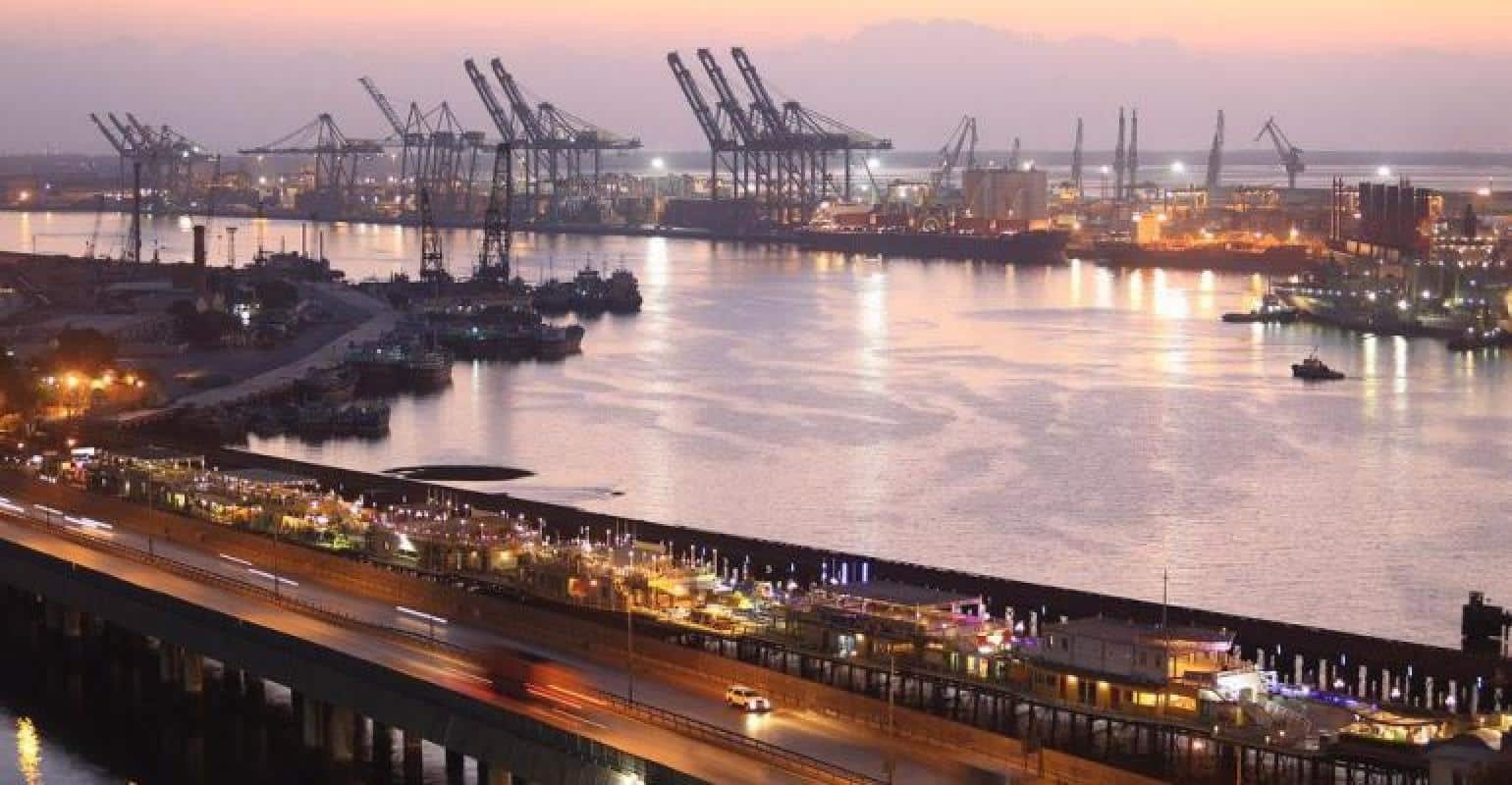
    In a last-ditch attempt to raise much needed foreign exchange, Pakistan’s government is planning to finalise a deal to hand over Karachi’s port terminals to the United Arab Emirates (UAE).

    This move may constitute the first intergovernmental transaction under the Intergovernmental Commercial Transactions Act, a law which was enacted last year in 2022. This law is aimed at selling state assets on a fast-track basis to raise funds.

    Last year, Pakistan’s coalition government created the effective-immediately bill to raise emergency funds.

    Finance Minister Ishaq Dar chaired the meeting of the Cabinet Committee on Inter-Governmental Commercial Transactions on Monday. A decision was made to set up a committee that would negotiate a commercial agreement between the Karachi Port Trust (KPT) and the UAE government, as reported by The Express Tribune.

    The negotiation committee constituted to finalise a framework agreement will be headed by the Minister for Maritime Affairs, Faisal Sabzwari. Committee members include the additional secretaries of Finance and Foreign Affairs, the special assistant to PM Jehanzeb Khan, the Chairman of the Karachi Port Terminal (KPT), and the general managers of the KPT.

    The UAE government had shown interest in acquiring the Karachi port terminals that were under the administrative control of Pakistan International Containers Terminals (PICT) last year. However, for now, PICT will maintain operational control over the ports.

    The Ministry of Maritime Affairs (MoMa) released the following statement, as reported by Dawn: “KPT was of the view that they couldn’t operate the terminal due to lack of time and resources and interface with the clients/shipping lines and the timeframe for bidding had lapsed and the events have created an unforeseeable situation where the time limits laid down for open or other methods of procurement cannot be met.”

    The MoMA said and went on to report that “the (KPT) has, therefore, recommended that in the given circumstance only PICT is in a position to provide management services to keep the terminal operational”.

    According to The Express Tribune, sources indicate that the government needs to be extra careful when finalising a deal with the UAE, considering it is the first transaction of its kind and the outgoing operator is posing some challenges.

    Pakistan’s IMF loan of $6.5 billion was signed in 2019 and is set to terminate on June 30. Its termination date drawing closer has sent panic through the Pakistani government. Already suffering one of the worst economic crises Pakistan has faced, the threat of the country defaulting looms ominously near.

    Prime Minister Shehbaz Sharif held a meeting with the ambassadors the United States, the United Kingdom, France, Germany, the European Union, Japan, China, Saudi Arabia, Qatar and the United Arab Emirates. Sharif wants to rouse support for the revival of Pakistan’s stalled deal with the IMF.

    The prime minister stressed that the government was keen to get at least the $ 1.2 billion IMF loan tranche out of the remaining $2.6 billion, which is attached with the completion of the pending 9th review of the program, according to sources at The Week.

  • ‘No need to panic’: PM Shehbaz hopes Pakistan and IMF will sign deal this month

    ‘No need to panic’: PM Shehbaz hopes Pakistan and IMF will sign deal this month

    Prime Minister Shehbaz Sharif reiterated on Sunday that Pakistan has successfully fulfilled all the prerequisites set by the International Monetary Fund (IMF) to revive the halted bailout program. He expressed confidence that no obstacles remain in finalising a staff-level agreement between the nation and the IMF, emphasising that Pakistan is committed to resolving its financial challenges.

    During the inauguration of the Sabzazar Sports Complex in Lahore, Prime Minister Shehbaz hinted at a contingency plan, stating, “If there are further delays in reaching an agreement with the IMF, I will address the situation.” He urged the public not to panic, assuring them that Pakistan will be safeguarded by the divine will of Allah. He expressed hope that the government and the IMF will achieve a staff-level agreement within the current month.

    Highlighting the significance of political stability, the Prime Minister emphasised its crucial role in ensuring economic stability. He pledged to bring about economic prosperity in the country under the leadership of PML-N supremo Nawaz Sharif.

    In strong criticism of the former ruling party, Prime Minister Shehbaz held deposed Prime Minister Imran Khan responsible for the events of May 9 and vowed to bring all those involved in the violent protests and attacks on civil and military installations to justice.

  • Pakistan’s foreign exchange reserves dip to $3.91 billion amid IMF agreement delay

    Pakistan’s foreign exchange reserves dip to $3.91 billion amid IMF agreement delay

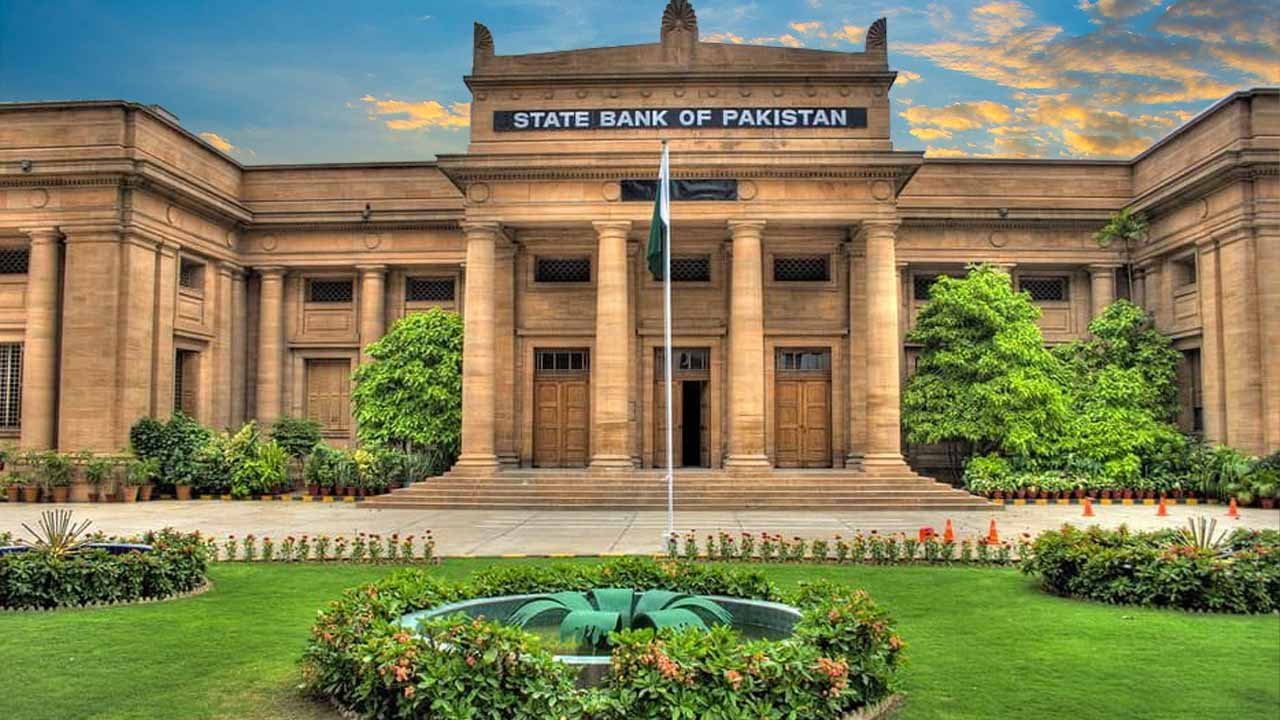
    In a challenging turn of events for Pakistan’s economy, the foreign exchange reserves held by the State Bank of Pakistan (SBP) have plummeted to $3.91 billion.

    The decline in reserves is primarily attributed to external debt payments, coinciding with the expiration of the country’s International Monetary Fund (IMF) program, which has been stalled for several months.

    The SBP announced on Thursday that the reserves decreased by $179 million during the week ending on June 2, leaving the country with barely enough coverage for controlled imports for just one month.

    Commercial banks, on the other hand, are holding net foreign reserves worth $5.42 billion, $1.51 billion more than the central bank. Consequently, Pakistan’s total foreign reserves stand at $9.3 billion as of June 2.

    This marks the sixth consecutive weekly drop in foreign exchange reserves for Pakistan, signaling a lack of progress in securing external financing. Political instability has played a significant role in the deteriorating economy, and the country has yet to secure much-needed funding to avert the risk of default.

    Pakistan’s $350 billion economy is currently in turmoil due to financial woes and the delay in reaching an agreement with the IMF. The pending agreement would release crucial funds that are essential for stabilizing the economy.

    The government has been engaged in discussions with the IMF since the end of January to resume a $1.1 billion loan tranche, which has been on hold since November 2022. This loan is part of a larger $6.5 billion Extended Fund Facility (EFF) agreed upon in 2019.

    Earlier today, Finance Minister Ishaq Dar revealed that the coalition government has shared its budget numbers with the IMF, aiming to unlock the ninth review.

    He expressed confidence that there are “no issues in the numbers.” Pakistan’s government faces significant pressure from the IMF to implement stringent fiscal measures and unlock the final tranche of a vital bailout package.

    To meet the IMF’s requirements, Pakistan must eliminate subsidies in sectors such as energy, allow the rupee to float against the US dollar, increase taxes and duties, and impose import restrictions. These measures are seen as crucial steps toward stabilising the economy and securing external funding.

    The future of Pakistan’s economy hinges on successful negotiations with the IMF and the implementation of effective economic reforms.

    The government must address political instability and work towards regaining the confidence of international lenders to alleviate the financial strains on the country.

  • Minister of State for Finance and Revenue criticises IMF for interfering in Pakistan’s internal affairs

    Minister of State for Finance and Revenue criticises IMF for interfering in Pakistan’s internal affairs

    In a strong rebuke to the International Monetary Fund (IMF), State Minister for Finance and Revenue Aisha Ghaus Pasha criticised the international lender for what she called “intervening” in Pakistan’s internal affairs.

    Speaking on Wednesday, the state minister asserted that Pakistan’s actions were within the boundaries of the law, dismissing the statement made by IMF Mission Chief for Pakistan, Nathan Porter, as “extraordinary.”

    While the IMF typically refrains from commenting on domestic politics, Porter had expressed the hope that Pakistan would find a peaceful way forward in line with the Constitution and the rule of law. The state minister expressed her dissatisfaction with the IMF’s involvement in Pakistan’s political situation, emphasising that the delay in reaching a staff-level agreement was detrimental to both Pakistan and the Fund.

    Dr Pasha confirmed reports that Prime Minister Shehbaz Sharif had reached out to IMF Managing Director Kristalina Georgieva. In their conversation, the prime minister assured the IMF chief that Pakistan would fulfill all its obligations.

    On May 27, Prime Minister Shehbaz had contacted Georgieva, requesting her assistance in revitalising the stalled $6.5 billion facility. It is believed that the prime minister urged her intervention to facilitate the completion of the pending ninth review, which would unlock $1.1 billion in financing for the cash-strapped nation.

    Negotiations between the coalition government and the IMF have been ongoing since November to revive Pakistan’s bailout program, with the financing gap being a major hurdle. Approximately $2.7 billion remains to be disbursed from the $6.5 billion program, which is set to expire next month.

    Responding to a question regarding Pakistan’s contingency plan if it fails to convince the IMF before the program’s expiry on June 30, the state minister stated that while there is always a “Plan B,” the Ministry of Finance’s priority is to revive the IMF program.

    With the federal budget announcement scheduled for June 9, both sides are hopeful of reaching a staff-level agreement before then. The successful conclusion of the agreement would provide a much-needed boost to Pakistan’s economy and help address its financial challenges.

    As the negotiations continue, the Pakistani government remains committed to meeting its obligations and finding a way forward to revive the IMF program, while asserting its sovereignty and independence in internal affairs.

  • Pakistan set to share budget details with IMF, aiming to unlock stalled programme

    Pakistan set to share budget details with IMF, aiming to unlock stalled programme

    Finance Minister Ishaq Dar announced on Sunday that Pakistan intends to provide the International Monetary Fund (IMF) with comprehensive details of its upcoming budget, with the aim of facilitating the release of delayed funds. During an interview, Dar confirmed that the IMF has requested further information regarding the budget, and Pakistan is prepared to comply with this requirement.

    Pakistan’s receipt of $1.1 billion in funding from the IMF, as part of a $6.5 billion rescue package established in 2019, has encountered delays since November. In February, both the IMF and Pakistan engaged in two weeks of discussions in Islamabad, aiming to conclude the 9th review. However, the funds have not yet been disbursed by the IMF, which is crucial for Pakistan to access additional bilateral and multilateral financing.

    Expressing his concerns, Dar emphasised his desire for the IMF to release the funds prior to the budget’s scheduled presentation in early June. He asserted that combining the 9th and 10th reviews would be unjust, and therefore advocated for a separate assessment of the current situation.

    In summary, Pakistan’s Finance Minister Ishaq Dar has underscored the country’s commitment to fulfilling the IMF’s request for detailed budget information. This step is intended to overcome the impasse in the release of funds, which are vital for Pakistan to access other forms of financial assistance. Minister Dar has further urged the IMF to release the funds prior to the budget presentation, highlighting the unfairness of merging two distinct reviews.