Tag: International Monetary Fund

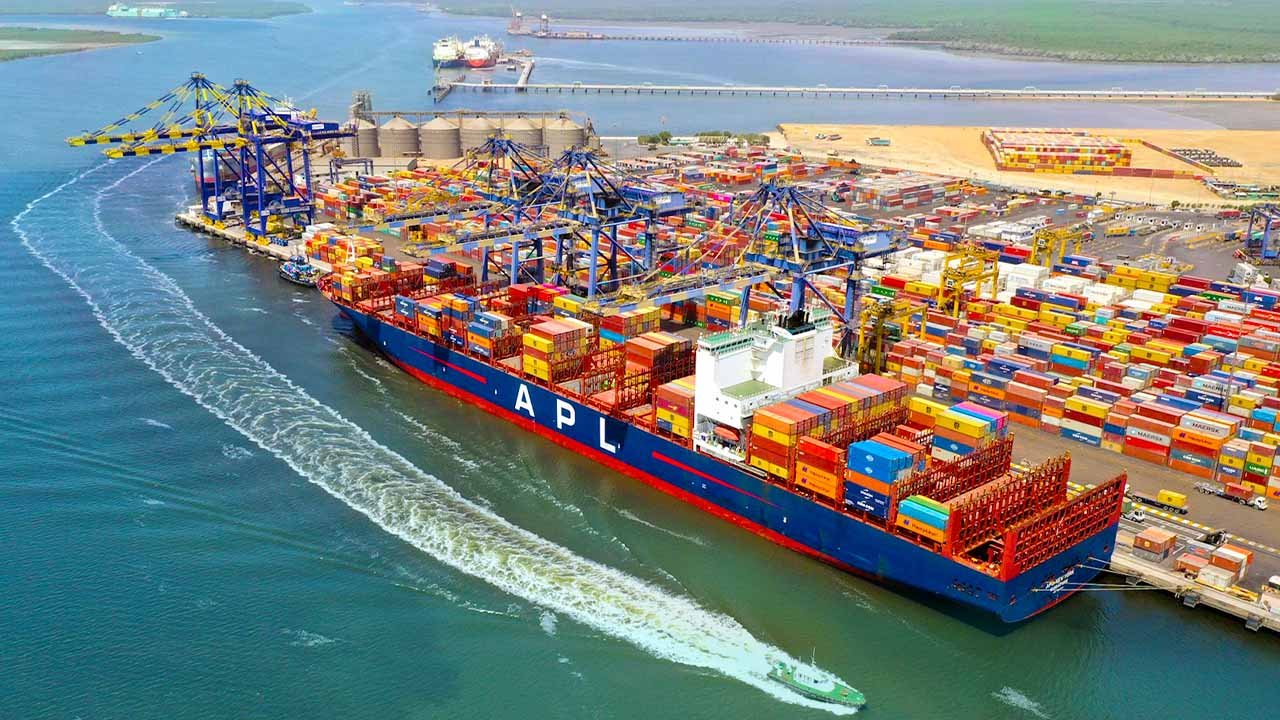
  • Major boost for Pakistan’s port infrastructure: Gulf countries to invest $500 million

    Major boost for Pakistan’s port infrastructure: Gulf countries to invest $500 million

    Maritime Affairs Minister Faisal Sabzwari revealed that a comprehensive agreement to secure a noteworthy investment of $500 million from Gulf countries is currently in the final stages of preparation. To facilitate this endeavor, an intergovernmental agreement policy will be presented to the law ministry on Monday.

    Its potential approval will lay the groundwork for direct foreign investment, in accordance with the conditions outlined by the International Monetary Fund (IMF).

    During an address to members of the Korangi Association of Trade and Industry (KATI), Minister Sabzwari informed them that Pakistan and the United Arab Emirates (UAE) are collaboratively operating under a government-to-government (G2G) agreement. This partnership is focused on three key projects, including the establishment of bulk terminals.

    As outlined in a press release by KATI, Mr Sabzwari revealed plans to develop industrial parks spanning 1,250 acres within Port Qasim. These parks will provide a range of facilities designed to attract foreign investors.

    Mr Sabzwari acknowledged that there have been no tariff increases at the port, although the implementation of digitalization is still pending. Additionally, limitations on leases have been imposed. He added that terminal charges have recently been adjusted from 60 cents to 80 cents, resulting in a modest 1.5 per cent increase in production costs for industrialists.

    Furthermore, the minister highlighted the successful consultations conducted with various stakeholders, including container operators, to mitigate demurrage charges and penalties at the port. As a result, Karachi Port has eradicated all penalties associated with these charges.

    According to Dawn, the minister also announced the acquisition of a maritime vessel for transporting edible oil, thus expanding the fleet at Karachi port. In addition to this development, approval has been granted for the construction of a beach wall at Karachi Fish Harbour, aimed at promoting tourism and recreational activities. Furthermore, plans have been set in motion to establish a laboratory dedicated to marine fisheries.

    Previously, KATI President Faraz-ur-Rehman stressed the importance of regulating shipping companies and proposed the implementation of a system for demurrage charges and penalties based on the value of containers. He suggested that this system should be made accessible online, similar to the shipping booking system WeBoC.

    Zubair Chayya, Deputy Patron-in-Chief of KATI, expressed that Pakistan, with its extensive 1,400-kilometre-long coastline and abundant marine resources, including highly sought-after fish species, should prioritize utilizing the coastal region for tourism, thereby reaping substantial economic benefits.
  • Pakistani rupee maintains upward trend for fourth consecutive day, closes at Rs285.15 against dollar

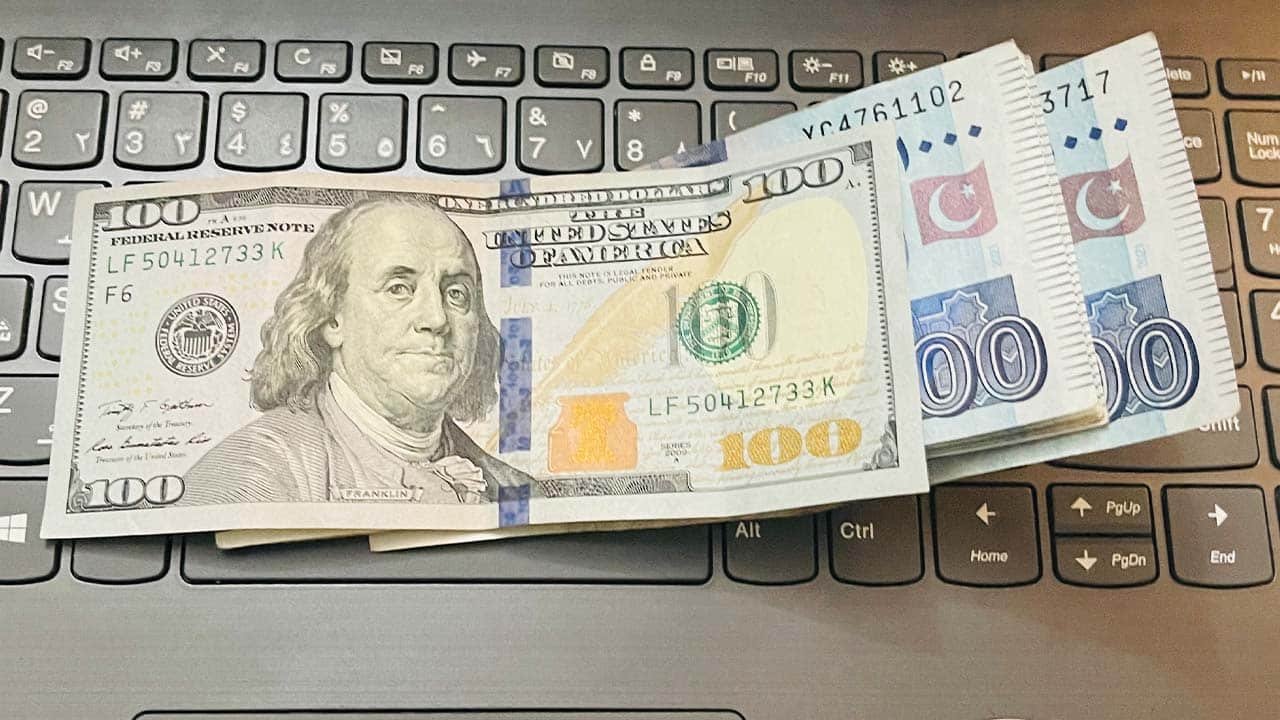
    Pakistani rupee maintains upward trend for fourth consecutive day, closes at Rs285.15 against dollar

    According to the State Bank of Pakistan (SBP), the Pakistani currency has maintained its upward trend against the US dollar for the fourth consecutive working day in the interbank market.

    The local unit (PKR) has recovered Rs0.59 against the USD, closing at Rs285.15, while the US dollar closed at Rs285.74 on the previous day.

    In contrast, the open market has seen the dollar being sold at over Rs300. Last week, the rupee reached a record low of Rs298.93 against the US dollar.

     Experts attribute the fluctuation in the dollar rate to the deadlock over the IMF deal and ongoing political unrest in the country.

    Due to the delay in the revival of the $6.5 billion International Monetary Fund (IMF) bailout programme, Pakistan is now seeking additional funding from friendly nations.

    The staff-level agreement between the International Monetary Fund and Pakistan, initially scheduled for February 9, has been postponed.

  • Pakistan’s forex reserves decline to $4.31 billion, covering less than a month’s worth of imports

    Pakistan’s forex reserves decline to $4.31 billion, covering less than a month’s worth of imports

    The State Bank of Pakistan (SBP) has experienced a continuous decline in foreign exchange reserves for the third consecutive week. This decline is attributed to the country’s ongoing struggle to secure a deal with the International Monetary Fund (IMF).

    The central bank’s statement indicates that the reserves decreased by $72 million to reach $4.31 billion as of May 12, primarily due to external debt payments. This amount is sufficient for less than a month’s worth of imports.

    In contrast, commercial banks in Pakistan hold net foreign reserves amounting to $5.62 billion, which is $1.01 billion higher than the central bank’s reserves. Therefore, the country’s total liquid foreign reserves amount to $9.93 billion.

    Pakistan’s economy is currently facing significant challenges, exacerbated by financial difficulties and the delay in reaching an agreement with the IMF. Such an agreement is crucial as it would provide much-needed funding to mitigate the risk of default.

    Earlier, on May 11, the State Bank of Pakistan (SBP) witnessed a decline of $74 million in foreign exchange reserves within a week, resulting in reserves amounting to $4.38 billion. Additionally, commercial banks held net foreign reserves of $5.6 billion.

    Reports indicate that the IMF remains skeptical and is urging Islamabad to take further actions to unlock the loan program, despite assurances from friendly countries regarding external funds for Pakistan.

    Pakistan has been asked to present a repayment plan for a $3.7 billion loan to the IMF in June and demonstrate stronger support from friendly nations to fulfill its commitments.

  • Pakistan commits to 4% annual profit on $2 billion deposit from Saudi Arabia

    Pakistan commits to 4% annual profit on $2 billion deposit from Saudi Arabia

    According to reliable sources, Pakistan has agreed to pay an annual profit of four per cent to Saudi Arabia on a deposit of $2 billion with the State Bank of Pakistan (SBP) for a duration of one year.

    This decision was made to fulfill one of the prerequisites set by the International Monetary Fund (IMF), which demanded that Pakistan secure external funding of approximately $6 billion, according to Brecorder.

    Additionally, the United Arab Emirates (UAE) has also confirmed to the IMF that it will deposit $1 billion with the State Bank of Pakistan.

    On May 10, 2023, the Finance Division presented an additional agenda item to the Federal Cabinet, informing them that the Kingdom of Saudi Arabia, through its Ministry of Finance, had agreed to deposit $2 billion with the State Bank of Pakistan for a one-year period. The proposed annual profit rate was set at 4 per cent.

    The draft Deposit Agreement, provided by the Saudi side, was sent to the Ministry of Law and Justice and the Office of the Attorney General for Pakistan for examination and clearance in accordance with the Cabinet’s decision on May 14, 2019.

    Upon approval by the Federal Cabinet, the Finance Division of the Government of Pakistan will authorize the State Bank of Pakistan to proceed with the Deposit Agreement. The Ministry of Law and Justice has given its clearance to the draft

    Agreement, subject to the completion of all necessary formalities, while the Federal Board of Revenue (FBR) has granted its approval for tax exemption.

  • Pakistani rupee bounces back strongly after hitting all-time low of Rs300 against dollar

    Pakistani rupee bounces back strongly after hitting all-time low of Rs300 against dollar

    On Friday, the Pakistani rupee saw a significant recovery after hitting an all-time low of Rs300 against the US dollar the previous day. The local currency gained Rs12.43 per US dollar in the interbank market to trade at Rs286.50.

    This recovery can be attributed to two major developments that occurred over the last few hours. Firstly, the currency gained strength as demand from importers decreased, following the release of oil payments a day earlier.

    Secondly, the Supreme Court declared the arrest of Imran Khan, the Chairman of the Pakistan Tehreek-e-Insaf (PTI), illegal and ordered his immediate release. These two developments, combined with an improved political situation, resulted in the sharp recovery of the rupee.

    The demand for US dollars was high the previous day when the rupee hit an all-time low because imports had to retire their payments. However, the demand was relatively less on Friday, coupled with the improved political situation, which led to the sharp recovery.

    Despite the uncertainties surrounding the International Monetary Fund (IMF) programme sparking default concerns, the currency market did not react negatively to Finance Minister Ishaq Dar’s press conference, where he claimed that Pakistan would not default even if there was no IMF programme.

  • Pakistan could default after June as country fails to meet some IMF conditions

    Pakistan could default after June as country fails to meet some IMF conditions

    Pakistan is in the midst of a balance of payment crisis, and the stakes are high. Without the financial aid of the International Monetary Fund (IMF), the country faces the prospect of defaulting on its external payment obligations.

    Unfortunately, reports say that the IMF is not convinced by the assurances given to them by Pakistan’s friendly countries.

    Officials of the finance ministry, speaking anonymously, have confirmed that Pakistan has fulfilled several conditions set by the lender for the revival of the loan facility, and the staff-level agreement on the ninth review was supposed to be signed by February 9.

    However, the delay in the IMF programme could have severe repercussions. The budget planning, which is expected to be tabled in the second week of June, is likely to be affected.

    Moody’s Investor Service has warned that Pakistan may default if it does not receive a bailout from the IMF as its financing options beyond June are uncertain.

    While Pakistan is expected to meet its external payments until the end of this fiscal year in June, its reserves are weak and without IMF support, it could default.

    Pakistan is struggling to restart a stalled $6.5 billion bailout programme from the IMF due to the government’s failure to meet some loan conditions, and political tensions ahead of elections are adding to the risk of a delay in the loan.

    An engagement with the IMF beyond June would support additional financing from other multilateral and bilateral partners, which could reduce default risk. Pakistan’s foreign-exchange reserves remain very low, standing at $4.5 billion, and sufficient to cover only about one month of imports.

    S&P Global Ratings estimates that Pakistan’s gross external financing needs as a proportion of current-account receipts plus usable reserves will rise to 139.5 per cent in fiscal year 2024 from 133 per cent in 2023.

    S&P analysts believe that an IMF programme would be a foundation for important fiscal policy reforms and that an agreement on the current review cycle could instill more confidence for other bilateral and multilateral lenders to Pakistan.

  • IMF asks for more effort from Pakistan, loan programme in jeopardy

    IMF asks for more effort from Pakistan, loan programme in jeopardy

    Despite assurances from friendly countries regarding external funds for Pakistan, the International Monetary Fund (IMF) remains unconvinced and is asking Islamabad to make additional efforts to unlock a loan programme.

    According to sources, Pakistan has been requested to present a repayment plan for a $3.7 billion loan to the IMF in June and to demonstrate stronger support from friendly nations to fulfill this obligation.

    However, the IMF has not yet accepted a proposal to exchange reserves worth between $11 to $12 billion, equivalent to two months’ revenues. The Ministry of Finance has stated that the government has imposed Rs170 billion in taxes through a mini-budget to secure a staff-level agreement with the IMF, which was initially scheduled for February 9th.

    It is noteworthy that the IMF has not included Pakistan in any agenda until May 17th. The budget-making process may also be affected if transactions with the IMF are not concluded, as funding will not be available from international financial institutions without a staff-level agreement.

    Last month, the staff-level agreement between Pakistan and the International Monetary Fund was postponed due to the lender’s new demand.

    Finance Secretary Hamid Yakoob’s meeting with the International Monetary Fund in the United States did not yield positive results as the lender requested the arrangement of $1 billion from commercial banks to unlock the loan program.

    The staff-level agreement, originally scheduled for February 9th, was delayed due to the IMF’s demands.

  • IMF demands approval for subsidies as Pakistan struggles to secure tranche

    IMF demands approval for subsidies as Pakistan struggles to secure tranche

    Pakistan has been negotiating an agreement with the International Monetary Fund (IMF) since January 2023. The IMF has specified that Pakistan must receive prior approval before providing any additional subsidies.

    Negotiations have hit a snag over a plan announced by Prime Minister Shehbaz Sharif in March to charge wealthy fuel consumers more to subsidise prices for the poor who have been severely impacted by inflation.

    Despite meeting almost all of the Fund’s conditions, the government is struggling to convince the lender to release the tranche. On a separate issue of securing confirmation on the external financing gap of $5 billion by June 2023, the Kingdom of Saudi Arabia and the United Arab Emirates have provided over $2 billion and $1 billion respectively.

    The formal agreements with these countries are expected to be signed soon. The Pakistani authorities are complaining that the IMF has placed prior actions before signing the staff-level agreement, which was not done in the past.

    According to The News, the IMF asks for confirmation from commercial banks before signing the agreement, while banks are asking for IMF’s board approval and the revival of the Fund program to refinance loans worth $2-3 billion.

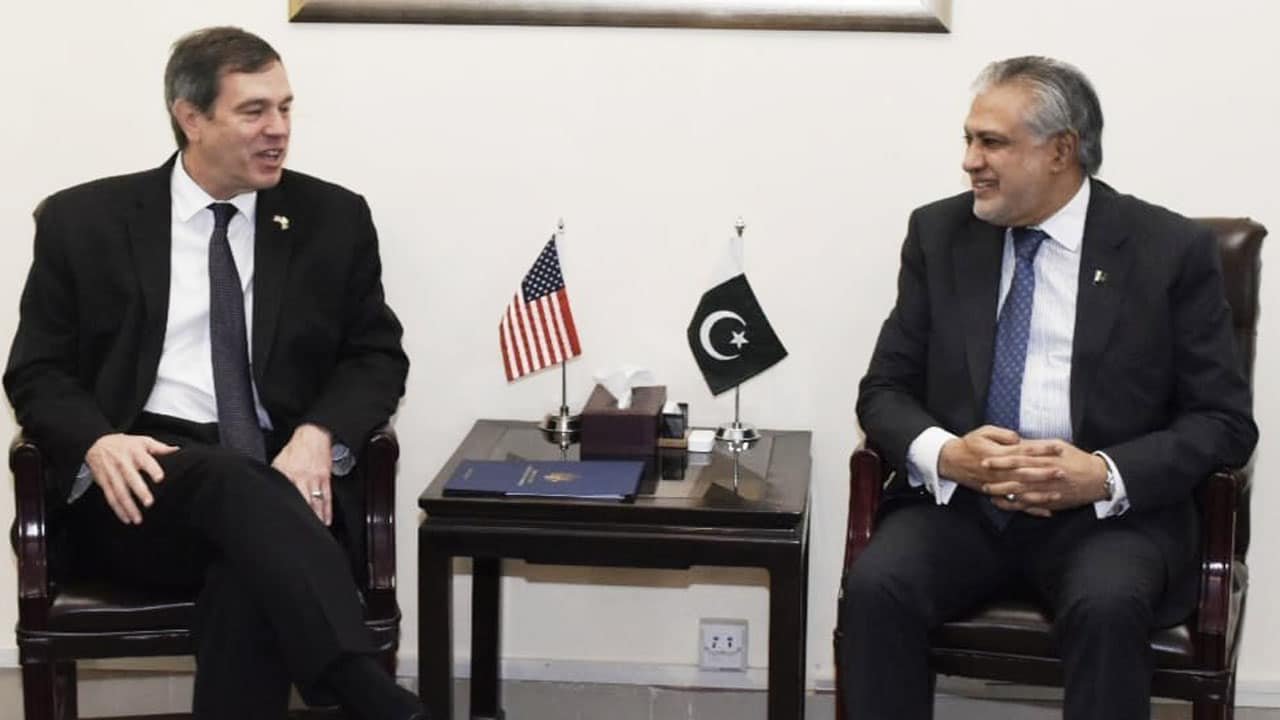
    Finance Minister Ishaq Dar has assured US diplomat Andrew Schofer that the government is committed to completing the ongoing IMF program.

  • US expresses confidence in Pakistan’s economic policies and offers support for bilateral relations

    US expresses confidence in Pakistan’s economic policies and offers support for bilateral relations

    On Wednesday, Finance Minister Senator Ishaq Dar reaffirmed the federal government’s commitment to the International Monetary Fund (IMF) programme during a meeting with US Embassy Charge’d Affaires Andrew Schofer at the Finance Division.

    Dar informed Schofer about the ongoing programme and assured him that the government was dedicated to completing it. Schofer expressed his confidence in Pakistan’s economic policies and programs and offered his support to strengthen economic and trade relations between the two nations.

    The finance minister also discussed the current economic challenges and policy decisions taken by the government to stabilize and promote sustainable and inclusive growth. Both parties exchanged their views on the notable bilateral relations between the US and Pakistan.

    Dar thanked the US Charge’d Affaires and reiterated the government’s desire to expand bilateral trade and investment ties. The meeting followed a report published by The News that stated the IMF and Pakistani authorities were holding each other responsible for the delay in reviving the stalled programme.

    It is still uncertain how Pakistan will proceed to accomplish the current IMF programme, which expires on June 30, 2023.

  • Proposed cross-fuel subsidy plan fails to impress IMF, causing delays in bailout program

    Proposed cross-fuel subsidy plan fails to impress IMF, causing delays in bailout program

    In a bid to fulfil promises made to the International Monetary Fund (IMF), the Ministry of Finance is prepared to strongly oppose a draft summary proposed by the Ministry of Petroleum on the provision of cross-fuel subsidy.

    The proposed subsidy would involve increasing petroleum product prices by Rs75 per litre for all vehicles with engines of 1,000cc or more, in order to subsidize petrol for vehicles of 800cc and motorbikes. The draft summary was circulated among different ministries for comments before the upcoming Economic Coordination Committee meeting.

    An official from the finance ministry stated that the petrol scheme was still at the draft stage, and the ministry was preparing its comments and consulting with the IMF. The official recalled that a similar scheme had been proposed during the Pakistan Tehreek-e-Insaf (PTI) government but could not be implemented.

    Former finance minister Miftah Ismail had also allocated Rs48 billion on account of the Sasta Petrol Scheme in the last budget, but these resources were diverted towards flood-affected areas. The official added that such a scheme could not be implemented transparently in Pakistan, and the ministry would send its official comments soon.

    In March, Prime Minister Shehbaz Sharif announced the government’s plans for fuel pricing. While economists warned the decision could hinder a crucial IMF payout needed to prevent economic collapse, the government said that it was a scheme, not a subsidy.

    The IMF officials were quick to share that the Pakistani government did not consult the global lender on its petrol subsidy for low-income groups before the announcement. The Fund has asked the Pakistani authorities to provide more details about the petrol relief package causing more delay in the signing of the staff-level agreement.

    Pakistan has been trying to convince the Washington-based lender to release the next tranche of the bailout programme since the IMF funding stalled in November, hit by snags over fiscal policy adjustments after officials of the lender visited Islamabad in February for talks. They formed part of a ninth review exercise on a bailout package of $6.5 billion agreed upon in 2019 whose resumption is critical for Pakistan to avoid risking default on external payment obligations.