Tag: Internet Connectivity

  • Pakistan ‘least prepared country’ for digital education

    Pakistan ‘least prepared country’ for digital education

    Among the developing member countries of the Asian Development Bank (ADB), Pakistan ranks as the least prepared nation for digital education, according to the ADB’s report titled “Towards Mature Digital Education Ecosystems, the Digital Education Readiness Framework.” 

    The report underscores several areas where Pakistan needs improvement, including low internet connectivity (only 34.1 per cent of households are connected), slow fixed broadband speeds, high fixed line broadband costs, and limited rural electricity access.

    In contrast, Uzbekistan stands out as the most prepared country for digital education, closely followed by Indonesia. On the flip side, Pakistan is the least ready, with Fiji following suit. 

    Across all five evaluation pillars, the “Providers” category shows the lowest performance, with six out of the ten DMCs categorised as “initial” in readiness, including Cambodia, Bangladesh, the Kyrgyz Republic, Mongolia, Pakistan, and Fiji (in descending order of scores). The remaining four countries are classified as “emerging” in readiness, comprising Indonesia, the Philippines, Viet Nam, and Uzbekistan.

    The gap between the model country’s normalised score and the highest-scoring country is a significant 45 points. While the 10 DMCs manage to keep mobile broadband costs relatively low as a per centage of GNI per capita, there is considerable variation in fixed broadband costs. 

    Cambodia, Indonesia, and Pakistan emerge as the least affordable in this aspect, while Bangladesh, Mongolia, and Uzbekistan offer more cost-effective solutions.

    In terms of urban electricity access, most countries excel, with nearly 100 per cent of urban households having access to electricity. Rural electricity access in the 10 DMCs ranges from 90 per cent to 100 per cent, with Pakistan lagging behind at just 41.3 per cent of rural households lacking access to electricity.

    Households with TV coverage are relatively high across the board, averaging 81.7 per cent. Cable TV subscriptions per 1,000 individuals vary from low to moderate among the countries studied, with Pakistan having the highest subscription rate.

    Pakistan’s National Education Policy for 2017–2025 focuses on enhancing ICT access in schools, using ICT to improve teaching quality and student learning, and developing complementary ICT approaches. However, it lacks clarity on access to devices.

    Teacher training in ICT skills, particularly for online education delivery, is lacking. Although teachers do create their own educational content, it tends to be basic, such as documents and presentations. Internet quality varies, with schools having some limitations in handling heavier content, while higher education and TVET teachers enjoy better quality.

    Institutional support for teachers in delivering online education requires improvement, particularly in schools, where paper-dependent systems are prevalent. Students in Pakistan exhibit reasonable proficiency in digital skills, but access to devices at home is limited, with smartphone access being the primary means.

    The utilisation of private EdTech platforms for conducting classes or interacting with students is quite low among teachers. Pakistan also has a relatively small share of ICT graduates among tertiary education graduates.

    Pakistan, as a partner state of the Global Partnership for Education (GPE), has utilised GPE grants for tech tools to deploy teachers where needed and introduced apps for teacher attendance in certain regions. These initiatives aim to support distance learning across the country.
  • Mobile data service suspension to cost Pakistan’s IT industry $3-4 million in daily losses

    Mobile data service suspension to cost Pakistan’s IT industry $3-4 million in daily losses

    The suspension of mobile data services in Pakistan is expected to result in a daily loss of $3-4 million to the country’s IT exports.

    The Pakistan Software Houses Association (P@SHA) has called on the government to restore mobile broadband services, which have been suspended since Tuesday due to the political turmoil that erupted after the arrest of the PTI party’s chairman, Imran Khan.

    The government has blocked 3G/4G mobile broadband services and major social media platforms like Twitter and Facebook, as well as slowing down YouTube services to control the spread of “unwanted information” that could cause disinformation and panic among the masses.

    According to The News, Muhammad Zohaib Khan, the Chairman of P@SHA, warned that the suspension of mobile broadband services could result in significant losses for the IT industry, which relies heavily on internet connectivity.

    The IT industry has come to a standstill since Tuesday evening, and professionals are working from home due to the precarious law and order situation in the entire country. Zohaib urged the government to resume internet services to the IT industry immediately, saying that the sudden blockade of broadband services has completely halted IT operations, and the IT industry is already facing pressure due to poor governmental policies.

    Zohaib requested Prime Minister Shehbaz Sharif to intervene directly and asked for the support of the Ministry of IT and Telecom, Pakistan Software Export Board (PSEB), and Tech Destination Pakistan administrations to request the premier to issue categorical instructions.

    The suspension of mobile broadband services has also affected individuals who rely on digital apps for commuting or ordering/delivering food and other products. However, an official stated that it is difficult to calculate the losses at this stage.

  • Bannu hostage situation: Forces kill the terrorists

    Security forces in Khyber Pakhtunkhwa (KP) have managed to free the hostages being held by Tehreek-e-Taliban Pakistan (TTP) inside the Counter-Terrorism Department’s (CTD) compound in Bannu.

    Defence Minister Khawaja Asif confirmed that “all the terrorists” have been killed.

    During the operation, an exchange of fire left several security men injured.

    The defence minister said that a unit of the army’s Special Service Group (SSG) carried out the operation, in which 10-15 of its commandos were injured while two were martyred.

    Earlier in the day, an operation had been launched to free the hostages held by the militants.

    Hospitals in the vicinity have been put on high alert and mobile services have also been blocked in the area.

    What happened in Bannu?

    On Sunday, militants detained at a facility run by KP police’s CTD in on Sunday took over the department, held interrogators hostage and demanded safe evacuation to Afghanistan.

    After taking over, the militants shot at security personnel inside the facility, injuring a policeman and a soldier. The outlawed TTP claimed responsibility for the incident.

    According to news reports, the militants managed to break out of lockup and held security personnel hostage. After the incident, police and security forces rushed to the spot but failed to free the hostages.

    Barrister Muhammad Ali Saif, Special Assistant to KP Chief Minister, said that talks between Pakistani officials and the leadership of Tehreek-e-Taliban Pakistan (TTP) are underway in Afghanistan, however, there is no breakthrough as yet.

    He also confirmed that a security official was killed in the Bannu compound by the militants and said that the government had engaged the militants to avoid casualties.

    The area where CTD is located has been sealed and residents have been asked to stay indoors. Internet services have been suspended in the city.

    Moreover, roads leading to and from Bannu Cantonment have been blocked.

  • LUMS distributes free internet devices amongst students on financial aid

    LUMS distributes free internet devices amongst students on financial aid

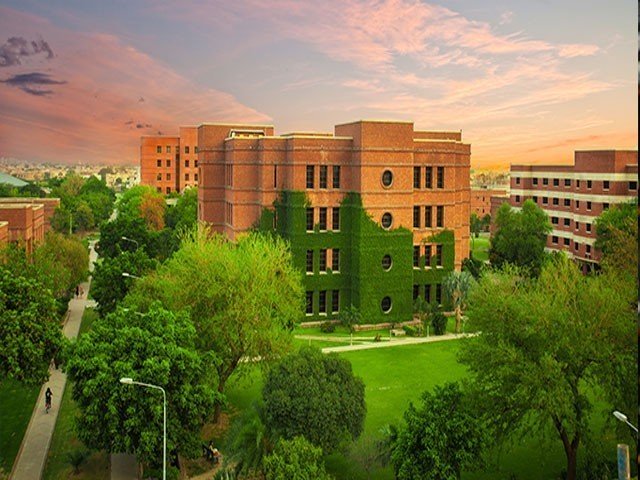
    The Lahore University of Management and Sciences (LUMS) has sent internet devices to those students who are studying at the university on need-based scholarship.

    Wardah Noor, a student of LUMS shared the news, which went viral on social media.

    Noor shared: “LUMS sent internet devices with free data of (75GB/ month) to the students on full financial aid.”

    She shared that she was concerned about the internet package given that she doesn’t have a job and her father’s pension is Rs 25,000.

    This initiative is being appreciated because the university — LUMS — has identified a major issue and took action without any requests from deserving students. People are also urging the administration of other universities to learn from this initiative and facilitate their students.

    This development has come when a large number of students across the country were protesting against online classes due to internet connectivity issues.

    Many students from far-flung and remote areas like Gilgit Baltistan (GB), Kashmir, Sindh and Balochistan have been protesting because they do not have an internet connection. In some cases, students have to travel more than 25 kilometres to take online classes.

    Furthermore, more than 60 students were arrested by police in Quetta for a peaceful demonstration against internet connectivity issue. Later on, they were released on the same day.