Tag: internet

  • Google announces launch of 8gbps internet service

    Google announces launch of 8gbps internet service

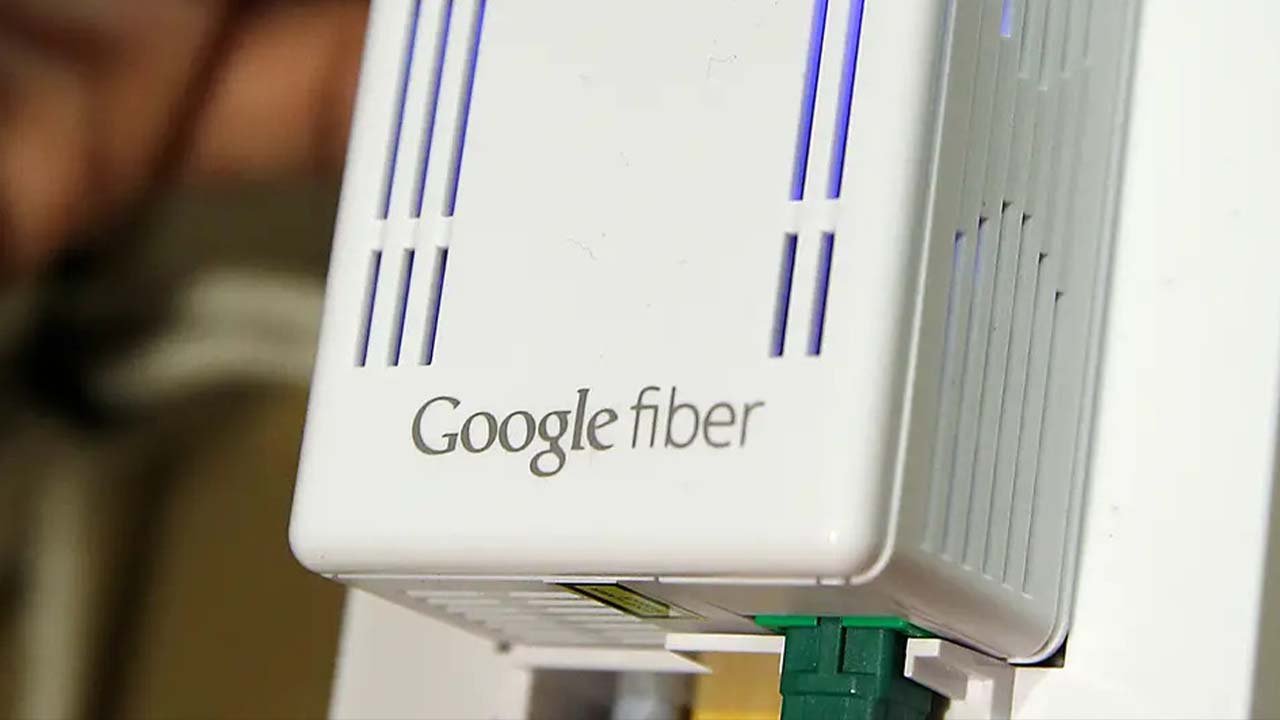
    Google Fiber’s unexpected return will result in a significant increase in internet speeds. Google has disclosed that it will offer 5 Gbps and 8 Gbps subscriptions in early 2023.

    Symmetric upload and download rates, a WiFi 6 router, and up to two mesh network extenders will be included in both levels. According to the corporation, the changes should aid in large file transfers while minimising lag and jittering.

    Customers in Kansas City and Utah can test the faster plans as early as November if they sign up to become ‘trusted’ testers. If they qualify, Google will ask how they intend to use the additional bandwidth, according to The Verge.

    This is a significant improvement over Google’s previous-best 2 Gbps service, which was introduced in 2020, and it might make a significant impact if you’re a gamer or rely on cloud computing. If a 150 GB Microsoft Flight Simulator download takes 11 minutes at 2 Gbps, the 8 Gbps plan might reduce that time to under three minutes under perfect conditions.

    It certainly makes ordinary cable internet plans appear costly. Comcast, for example, already provides 6 Gbps service in select regions, but it costs $300 per month on contract and does not yet provide symmetric uploads.

    In any case, the new plans are a statement of intent. Along with the first network additions in five years, the faster speeds indicate that Google is returning to Fiber’s beginnings. That is, it is raising expectations for truly fast internet access while also (to some extent) increasing competition among incumbent providers.

    Of course, this might help Google promote its other services, but you might not mind if it offers telcos an extra incentive to push out ’10G’ and other comparable upgrades sooner than they otherwise would.


  • Pakistan has now 118.57 million 3G, 4G users

    Pakistan has now 118.57 million 3G, 4G users

    According to the Pakistan Telecommunication Authority (PTA), the country’s 3G and 4G user base climbed by 3.07 million from 115.75 million at the end of June 2022 to 118.57 million at the end of July 2022.

    By the end of July 2022, Pakistan had 195.26 million cellular users, up from 194.58 million at the end of June 2022.

    Cellular mobile’s teledensity increased from 88.34 per cent at the end of June to 88.61 per cent at the end of July. By the end of July 2022, the overall teledensity had increased from 89.53 per cent to 89.8 per cent, according to Brecorder.

    By the end of June 2022, the Monthly Next Generation Mobile Service (NGMS) penetration was 52.55 per cent; by July 2022, it was 53.8 per cent.

    Jazz’s overall 3G user count decreased by 0.109 million from 5.947 million at the end of June to 5.838 million at the end of July. By the end of July 2022, there will be 39.296 million Jazz 4G users, up from 38.039 million at the end of June.

    While the number of Zong 4G customers climbed from 28.906 million at the end of June to 29.695 million at the end of July, the number of 3G subscribers fell from 3.197 million at the end of June to 3.108 million.

    While the number of Telenor 4G customers climbed from 21.831 million at the end of June to 22.401 million at the end of July, the company’s 3G subscribers declined from 3.542 million at the end of June to 3.480 million at the end of July.

    By the end of July, there were 3.468 million Ufone 3G users, down from 3.509 million at the end of June. Ufone’s 4G user base climbed by 0.49 million over the reviewed period, from 9.419 million at the end of June to 9.909 million at the end of July.

    As of July 2022, the PTA had received 14030 complaints from customers of various telecom providers, including cellular operators, PTCL, LDIs, WLL operators, and ISPs. According to the PTA, 13709 complaints, or 97 per cent of them, were successfully resolved.

    A sizable portion of the total telecom subscriber base is made up of cellular mobile subscribers.

    The most complaints are therefore related to this group. By July, there had been 13,342 complaints made against CMOs, of which 13,174 (98 per cent) had been resolved.

    Data from the PTA shows that Jazz received 5,752 complaints, Telenor received 2450, Zong received 3827, and Ufone received 1,287.

    Additionally, the PTA received 140 complaints about basic telephone, of which 86 were resolved in July 2022. In addition, 438 of the 533 complaints made against ISPs were resolved.

  • Pakistani internet users may face more disruption

    Pakistani internet users may face more disruption

    Internet users in Pakistan are expected to face internet disruption in the coming days, reports Kalbe Ali for Dawn. The internet services in the country were disrupted due to flood relief work in Sindh.

    Minister of Information and Telecommunications Syed Aminul Haque said that initial reports of previous internet outages that happened this month indicated that the situation was severe and that more such incidents could be expected in the near future.

    “Due to extensive flooding, most of the pathways of underground cables have been submerged, as relief workers or locals were trying to divert flood water by digging trenches on roads and footpaths.”

    “The ministry has directed PTCL to declare an emergency so that repair work could be initiated when any such incident is reported in the system, while the PTA is constantly monitoring the quality of service,” the minister added.

    According to a technical report submitted on Wednesday by Pakistan Telecommunication Company Limited (PTCL) to the Ministry of Information Technology and Telecom, the repeated internet outages were caused primarily by flood relief efforts in the Sukkur division, where fibre-optic cables were damaged by the use of heavy machinery used to drain out flood water in Sindh.

    Read more- Here’s why the internet was down in Pakistan last night

    The internet services in Pakistan suffered two major disruptions this month on August 19 and August 22.

  • Here’s why the internet was down in Pakistan last night

    Here’s why the internet was down in Pakistan last night

    The internet services in Pakistan suffered another disruption on Monday night. Services of almost all of the major Internet Service Providers (ISPs) were disrupted. Services were suspended in Rawalpindi, Islamabad and Lahore around 11:10pm and remained suspended until 1:20am.

    “A nation-scale internet disruption has been registered in Pakistan; the incident affects multiple providers including PTCL, Nayatel and StormFiber with real-time network data showing connectivity at 38% of an ordinary level,” NetBlocks said in a tweet.

    Why was the internet down?

    Sources in PTCL said the internet fibre cables suffered damage due to heavy rains in Sukkur areas. “They said rainwater had entered the PTCL exchange causing electricity to short-circuit. The company expects the repair work to be completed by Tuesday morning,” reports Dawn.

    This was the second major disruption of internet services in less than a week. Last week, internet services were affected on Friday (August 19).

  • Number of 3G, 4G users in Pakistan increases to 113.89 million

    Number of 3G, 4G users in Pakistan increases to 113.89 million

    The latest data from Pakistan Telecommunication Authority (PTA) reveals that the number of 3G and 4G users grew by 1.14 million from 112.75 million in April 2022 to 113.89 million in May 2022.

    Pakistan’s cellular subscriber base grew by 0.25 million to 193 million by the end of May 2022, up from 192.75 million at the end of April, according to Brecorder.

    By the end of May, cellular mobile teledensity had risen from 87.6 per cent to 87.67 per cent. By the end of May, the total teledensity had risen to 88.81 per cent, up from 88.74 per cent in April.

    The monthly penetration of Next Generation Mobile Services (NGMS) at the end of April had risen to 51.73 per cent, up from 51.24 per cent.

    Network providers

    The total number of 3G users on Jazz fell from 6.222 million at the end of April to 6.068 million at the end of May, a reduction of 0.154 million. By the end of May, the number of Jazz 4G users had risen from 36.567 million to 37.168 million.

    Zong 3G subscribers fell from 3.357 million at the end of April to 3.272 million at the end of May, while 4G users grew from 27.952 million at the end of April to 28.317 million at the end of May.

    Telenor 3G subscribers fell from 3.696 million at the end of April to 3.613 million at the end of May, whereas Telenor 4G users enhanced from 21.216 million at the end of April to 21.494 million at the end of May.

    By the end of May, there were 3.576 million Ufone 3G users, up from 3.673 million at the end of April. Ufone’s 4G users increased from 8.761 million at the end of April to 9.052 million at the end of May, a 0.291 million increase over the previous month.

  • Only 9% of Pakistanis reported misuse of data, 51% unaware: Survey

    Only 9% of Pakistanis reported misuse of data, 51% unaware: Survey

    A survey conducted by Gallup Pakistan and Worldwide Independent Network of Market Research has revealed that only 51 per cent of Pakistanis are aware of the fact that their data can be missed by the applications downloaded on their phones.

    Only 35 per cent Pakistani respondents said that they are aware of it. In addition, only 9 per cent of Pakistanis said they have reported misuse of their data. Fake e-mails, company spam e-mails, bank accounts, credit cards, and e-mail hacking were among the most common issues reported by Pakistanis.

    66 per cent of Pakistanis said that technology is an important part of their lives.

    The survey was conducted between October 15 and December 18, 2021. A total of 33,000 people from 39 countries participated in the survey, out of which 1,000 were from Pakistan.

  • Microsoft advises users to move on as Internet Explorer dies at 27

    Microsoft advises users to move on as Internet Explorer dies at 27

    Microsoft has formally advised users to abandon the 27-year-old Internet Explorer in favour of the company’s newer Edge browser.

    Support for Internet Explorer 11 is being terminated today, the legendary web browser is being phased out in favour of Microsoft Edge.

    After moving away from the Internet Explorer branding with the release of Windows 10 in 2015, it’s the end of an era on the internet.

    There aren’t many changes for users. Internet Explorer’s usage has dropped dramatically in recent years, as it accounts for less than a 5 per cent market share of all browsers.

    For years, Microsoft has worked to discourage users from using Internet Explorer, referring to it as a compatibility solution rather than a browser that businesses should actively use.

    While Microsoft’s Edge, which is powered by Chromium, is now the default browser in Windows 11, the MSHTML engine that powers Internet Explorer is still included. It exists solely to enable IE mode in Microsoft Edge, which Microsoft states will be supported until at least 2029.

    For web apps and sites that require Internet Explorer, businesses have mostly switched to Edge’s IE mode. This IE mode for Edge was established by Microsoft in 2019, and it supports older ActiveX controls that are still used by many legacy sites.

    Multiple businesses will be caught off guard by the Internet Explorer retirement, or will not be able to completely phase out its use in time.

    Some government departments and financial institutions in Japan have been reluctant to respond to the IE retirement, according to Nikkei this week. For example, the Japan Pension Service website must be viewed in Edge’s IE mode.

    Thousands of comparable enterprises and instances of Internet Explorer usage are expected to exist around the world.

    For years, Microsoft has been warning of today’s Internet Explorer retirement, and it’s still being cautious with alerts and redirection until the browser is completely eliminated in the coming months.

  • Pakistan is finalising policy guidelines to launch 5G

    Pakistan is finalising policy guidelines to launch 5G

    The government intends to introduce 5G across the country, despite the fact that widespread 4G coverage is viewed as a major requirement before its launch. Also, 5G services can be offered in locations where 4G services are already available.

    Although all telcos in Pakistan have switched to 4G or LTE networks, a few companies are still unable to provide stable connectivity in a number of locations. Also, network providers frequently fail to deliver an acceptable, 4G standard connection speed despite hefty mobile data charges.

    To meet license requirements for the 5G network, cellular operators are forced to extend 4G coverage.

    According to Brecorder, the government of Pakistan is intending to introduce 5G in the country, according to official documents, and the Ministry of Information Technology and Telecommunication (MOIT&T) is in the phase of finalising policies for 5G in consultation with the Pakistan Telecommunication Authority (PTA) and relevant authorities.

    The former administration intended to offer 5G services in the country in the first quarter of 2023. Unfortunately, no consulting assistance has been utilised for this purpose thus far. The reports also revealed that the PTA spent no expenses as no consultancy services had been obtained for its deployment.

    The MOIT&T has analysed seven bands for the implementation of 5G services. As per official documents, the government is currently reviewing the possibilities available for the prompt deployment of 5G services in the ccountry.

    The following bands are being considered for 5G service adoption as low, mid and high bands:

    700 MHz; 2.3 GHz; 2.6 GHz; 3.5 GHz; MiIIimeter wavebands; C-Band (3.6-4.2) GHz; and Unlicensed Backhaul Frequency bands (P2P & P2MP).

    In light of these bands, the ministry has requested that the Frequency Allocation Board (FAB) share the present status and availability of all 5G spectrum in the above-mentioned frequency bands.

    Network providers are actively extending their infrastructures. Pakistan presently has 90 per cent teledensity and 89 per cent mobile penetration. The total number of cellphone consumers is 193.4 million. These figures are steadily rising. According to license terms, all CMOs are working to expand 4G coverage nationally.

    Approximately 60 per cent of the populace has access to 4G coverage. New rollout criteria have been imposed on operator licenses in order to accelerate 4G implementation in Pakistan.

    Furthermore, population-based rollout obligations are being implemented in order to give 4G coverage to the greatest number of Pakistanis.

  • Pakistanis will get slow Internet on Thursday

    Pakistanis will get slow Internet on Thursday

    Internet users in Pakistan will have to deal with slow internet speed tomorrow (Thursday). As per Pakistan Telecommunication Authority (PTA), the internet speed in Pakistan will be slow on April 21 from 2 am to 7 am, meaning overnight on Thursday, due to a power reconfiguration activity on a section of the international submarine cable.

    “Alternate measures to provide uninterrupted internet services to users will be taken to meet capacity requirements and to return to full functionality as quickly as possible. The availability of internet services will be as usual throughout the country” The PTA said in a tweet.

    Last night the photo-sharing app Instagram was down globally for several users. Most users were unable to access profiles or refresh the feed, for hours.