Tag: internet

  • People who use social media for news more susceptible to rumours: study

    People who use social media for news more susceptible to rumours: study

    The United States citizens who rely on social media as their main source of news are more likely to believe false or unproven stories about important topics such as politics and COVID-19, according to a survey.

    The Pew Research Centre report found that people who used social media platforms for news were less informed about major public matters and more susceptible to believing rumors and hoaxes.

    The report comes with social media platforms becoming a growing source of news amid struggles by traditional media to survive in the digital age.

    The Pew report found some 18 per cent of the participants of the survey got most of their political and election news through social media. But those people were less likely to rightly answer the fact-based questions about politics and current affairs than those relying on print, broadcast or news apps.

    Social media news consumers were more aware of specific false or unproven stories about COVID-19 and said they had seen more misinformation about the pandemic such as claims that Vitamin C could prevent infection, the survey found.

    On political news, social media users were less informed about facts such as the function of the state-by-state, Electoral College votes, which ultimately decide who wins the White House, or the unemployment rate.

    The report comes from a series on interviews with some 9,000 US adults from November 2019 through December 2020.

    A majority in the survey said they distrusted social media with Facebook the least trusted among the platforms.

    Among those using traditional media, the researchers also found that roughly a quarter of the US citizen on the political left and right consistently turned to “partisan” news sites, reinforcing their views.

    Pew found that roughly three in 10 Republicans relied on former president Donald Trump as a major source of news about the election and the coronavirus.

    These Republicans were more likely to think the COVID-19 pandemic had been overblown and more likely to see voter fraud as a significant threat to election integrity.

  • A new meme trend is breaking the internet

    A new meme trend is breaking the internet

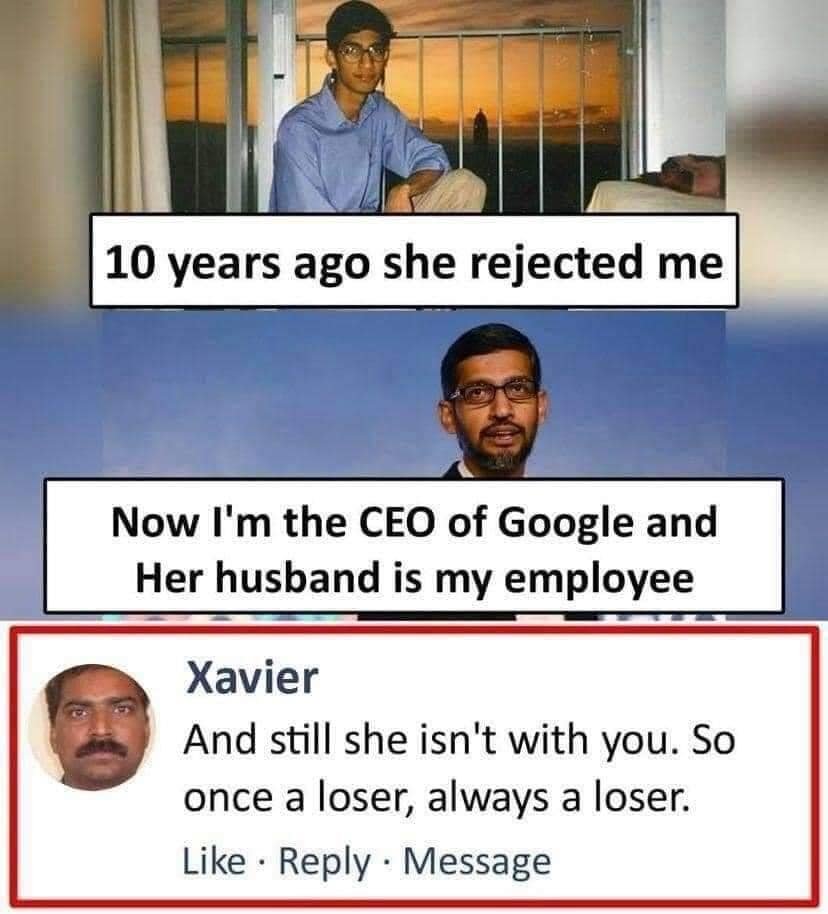
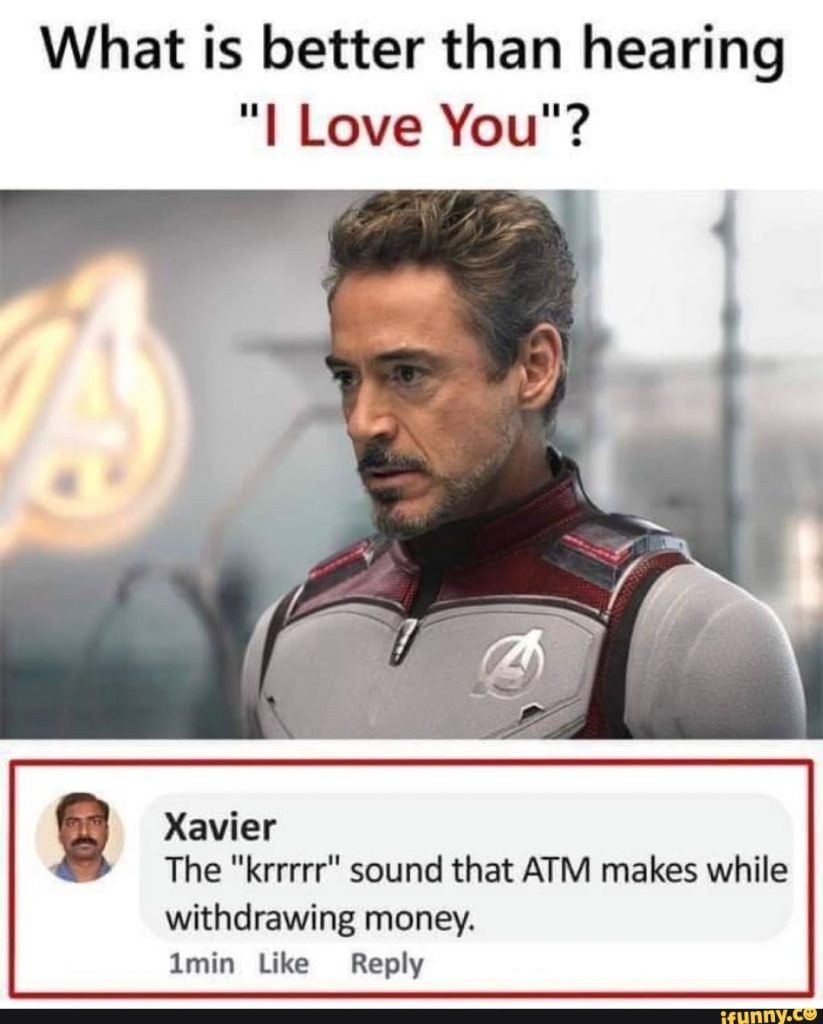
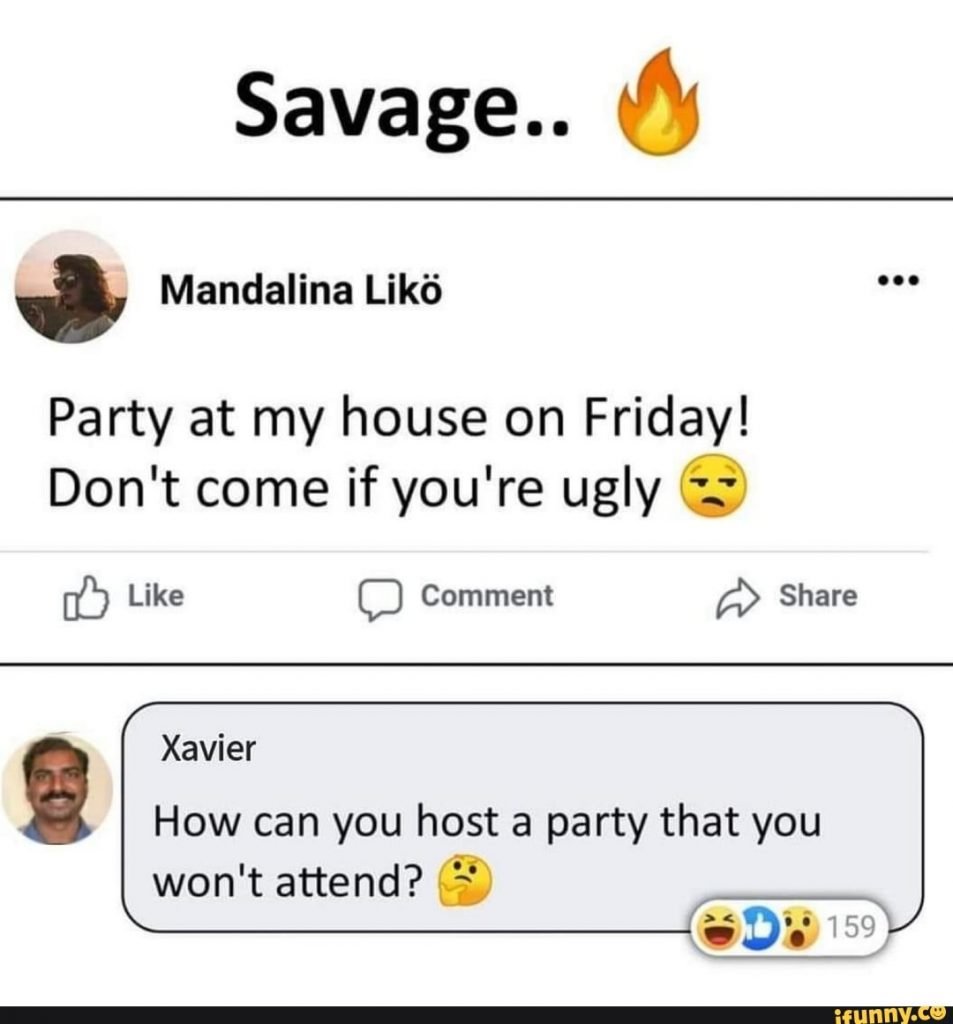
    Who does not like memes? Memes not only lighten up our mood but make social media exciting and interesting and we wish this meme culture never dies at least as long as the internet exists. Recently, ‘Xavier memes’ have started doing the rounds on social media and we must say that they are hilarious.

    Read more – ‘Rasode Me Kaun Tha’ memes break the internet

  • 24 hours: Over three billion images, 0.7 million hours of video… can you spot the fake ones?

    24 hours: Over three billion images, 0.7 million hours of video… can you spot the fake ones?

    Over the past few days, Twitter has tagged as “manipulated” a video showing United States (US) Democratic presidential candidate Joe Biden supposedly forgetting which state he’s in while addressing a crowd.

    Biden’s “hello, Minnesota” greeting contrasted with prominent signage reading “Tampa, Florida” and “Text FL to 30330”.

    A fact check by the Associated Press (AP) confirmed the signs were added digitally and the original footage was indeed from a Minnesota rally. But by the time the misleading video was removed it already had more than one million views, The Guardian reported.

    If you use social media, the chances are you see (and forward) some of the more than 3.2 billion images and 720,000 hours of video that are shared daily. When faced with such a glut of content, how can we know what’s real and what’s not?

    While one part of the solution is increased use of content verification tools, it’s equally important we all boost our digital media literacy. Ultimately, one of the best lines of defence — and the only one you can control — is you.

    Misinformation (when you accidentally share false content) and disinformation (when you intentionally share it) in any medium can erode trust in civil institutions such as news organisations, coalitions and social movements. However, fake photos and videos are often the most potent.

    For those with a vested political interest, creating, sharing and/or editing false images can distract, confuse and manipulate viewers to sow discord and uncertainty (especially in already polarised environments). Posters and platforms can also make money from the sharing of fake, sensationalist content.

    Only 11-25% of journalists globally use social media content verification tools, according to the International Centre for Journalists (ICJ).

    Consider this photo of rights champion Martin Luther King Jr:

    This altered image clones part of the background over King Jr’s finger, so it looks like he’s flipping off the camera. It has been shared as genuine on Twitter, Reddit and white supremacist websites.

    In the original 1964 photo, King flashed the “V for victory” sign after learning the US Senate had passed the civil rights bill.

    Beyond adding or removing elements, there’s a whole category of photo manipulation in which images are fused together.

    Earlier this year, a photo of an armed man was photoshopped by Fox News, which overlaid the man onto other scenes without disclosing the edits, the Seattle Times reported.

    https://twitter.com/ZanderYates/status/1271620044837941250

    Similarly, the image below was shared thousands of times on social media in January, during Australia’s Black Summer bushfires. The AFP’s fact check confirmed it is not authentic and is actually a combination of several separate photos.

    Cropping can greatly alter the context of a photo, too.

    We saw this in 2017, when a US government employee edited official pictures of Donald Trump’s inauguration to make the crowd appear bigger, according to The Guardian. The staffer cropped out the empty space “where the crowd ended” for a set of pictures for Trump.

    Opposition parties in Pakistan have also time and again been accused of using these tactics.

    A historical example of another technique — using colour adjustment tools — is when in 1994 Time magazine’s cover considerably “darkened” sportsman and murder accused OJ Simpson in his police mugshot.

    This added fuel to a case already plagued by racial tension, to which the magazine said that “no racial implication was intended by Time or by the artist”.

    Follow this link to fact check like a pro.

    Data Compiled By: The Conversation

  • Register your VPN with PTA by June 30 or face legal action besides disconnection of services

    Register your VPN with PTA by June 30 or face legal action besides disconnection of services

    In a bid to promote legal information and communications technology (ICT) services in Pakistan and for the safety of telecom users, the Pakistan Telecommunication Authority (PTA) is continuing with the long-pending process of registration of Virtual Private Networks (VPNs), the use of which has significantly increased across the country over the past few years.

    A VPN extends a private network across a public network and enables users to send and receive data across shared or public networks as if their computing devices were directly connected to the private network. It is programming that creates a safe, encrypted connection over a less secure network, using tunneling protocols to encrypt data at the sending end and decrypt it at the receiving end.

    Through a public notice, the PTA has declared the use of any mode of communication such as VPN, by means of which communication becomes hidden or encrypted, a violation of its regulations.

    “Users, which are required to use VPN for their legitimate purposes, must register their VPN with [the] PTA through their respective internet service providers [ISPs] till 30-06-2020,” read the notice.

    On top of interruption of services, legal action may also be initiated against those found in illegal use of unregistered VPNs, it added.

    “The step is being taken to eliminate all grey traffic [the use of illegal telephone exchanges for making international calls bypassing the legal routes and exchanges] from Pakistan. It is the case with many companies running call centre services in the country using VPN or unregistered Voice over Internet Protocol (VoIP) services to make international calls appearing as if they’re located somewhere, in most cases, the United States (US),” sources told The Current.

    The authority wants to eliminate grey traffic after registration of VPNs and has already started to blacklist internet protocol (IP) addresses of corporate clients of several ISPs, they said.

    ‘NOT THE FIRST TIME’:

    “It isn’t the first time that the PTA has directed registering VPNs as the process was long-pending,” an official told The Current on the condition of anonymity.

    “Through a similar public notice in 2014, the authority had announced that all unregistered VPNs will be blocked in its continuous efforts against grey traffic. All such users were required to apply to PTA for registration of their VPN connections through their respective service providers latest by May,” they said, adding that not much had, however, followed the announcement back then.

    Speaking to The Current, Digital Rights Foundation (DRF) founder Nighat Dad also said it wasn’t the first time such an announcement had been made by the PTA, but it was very important for the authority to clarify the notice.

    “They need to make it clear if the notice is only for financial institutions and software companies using VPNs or if it applies to individuals as well,” she said while seeking a better interpretation of the announcement.

    Dad also said the authority should be asked as to which provision was invoked for the process to continue. “There is one regulation on grey traffic from 2010 which included a provision on VPN registration, but the PTA should clarify the law and its provision under which the said notification was issued.”

    ‘VPNS ARE NOT PERMITTED’:

    When contacted, PTA Public Relations Director Khurram Mehran said that under applicable rules and regulations, appropriate registration from the authority was required for any mode of communication in which it becomes hidden or encrypted.

    “The process for registration of VPNs is not new and has been in vogue since 2010. Authorised users can register their VPNs with the authority through a swift process initiated through their service provider,” he said, adding that action would be taken only against unauthorised VPNs for terminating illegal traffic, which causes loss to the national exchequer.

    PTA remains committed to serve as per its vision in ensuring that high quality ICT services are available to telecom users in Pakistan, Mehran said.

    “VPNs are not permitted and so are blocked whenever reported or detected. Whoever wants to use one can do so after registration under regulation,” he said when asked if the announcement also applied to individuals.

  • Girl climbs rooftop to get better signals to attend online classes

    Girl climbs rooftop to get better signals to attend online classes

    A girl in Kerala, India broke the internet for her tireless dedication to studies against all odds. Namitha who is taking online classes during lockdown could only found find manageable signal strength for mobile data on the rooftop. She climbed the rooftop to get better signals to attend her online classes.

    As per reports, Namitha is a student of fifth semester BA English. Namitha Narayana was seeking better connectivity at her home near Kottakkal, Kerala, to attend online classes. Due to poor signal in her room, she climbed up and sat on the tiled rooftop of her house to study without a disturbance.

    Explaining why she chose the rooftop space for study, Namitha said, “We tried all places in my house, including verandas and roofs. And finally, I got fairly good signal strength on the top of our two-storey house.”

    After the pictures did rounds on social media the technical staff of the company came to her home and installed a better internet connection.

    “I am happy I can now learn from the comforts of my house,” said Namitha.

    Her elder sister Nayana too praised the positive response from the network operators and how quickly they worked it out.

    Syed Abid Husain Thangal, MLA of Kottakkal reached out to the family and said, “Namitha’s photo studying from the rooftop has become a symbol of the state’s connectivity. She is also a symbol of the perseverance displayed by the state’s student community. By setting herself an example, Namitha has become an inspiration for others.”

  • Waqar Younis to quit social media after ‘hacker likes porn video from his Twitter account’

    Waqar Younis to quit social media after ‘hacker likes porn video from his Twitter account’

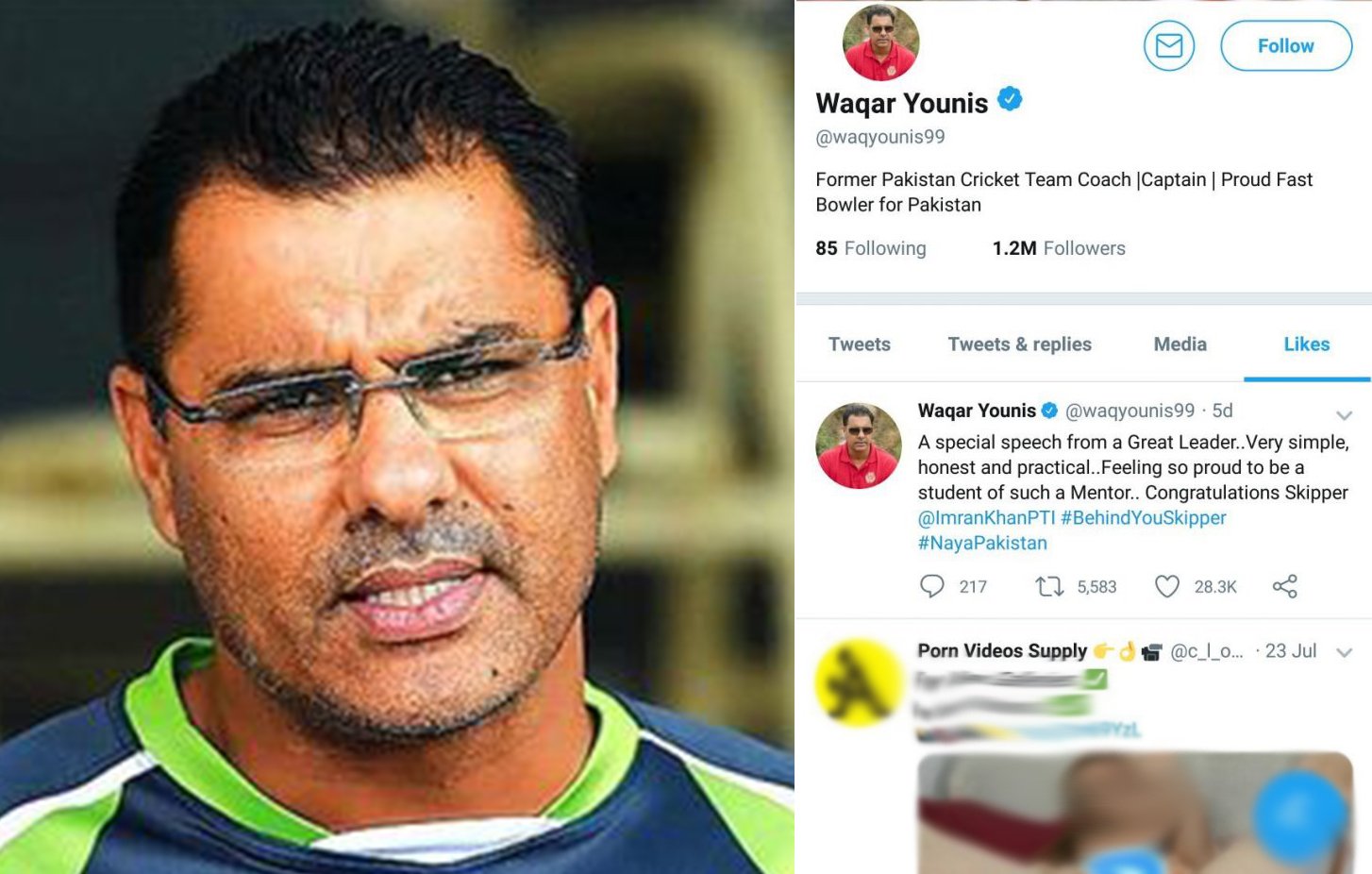
    Former Pakistani paceman Waqar Younis has announced his decision to delete his social media accounts after “a hacker liked a porn video from his official Twitter handle”.

    Mentioning the incident in a video message, Younis said that he would never be seen on social media again and it was not the first time that his social media account had been hacked.

    Critics were quick to lambaste Younis to which he responded with what may be his final post on any of his social media accounts.

    Younis clarified that he was not the man behind the inappropriate action.

    “Today I have to say with great regret that when I woke up this morning, someone hacked my Twitter account and liked grossly inferior videos from my account.”

    WATCH VIDEO:

    https://twitter.com/waqyounis99/status/1266180048492482560

    “So it is a matter of great shame, it is a matter of great regret and discomfort. For me and my family too. I used to think that social media or Twitter is a way of interacting with people. But unfortunately this man ruined everything. By the way, the hacker has not done this for the first time. I have had an account hack three or four times,” he said further.

    The former cricketer and Pakistan team coach also said he did not think the man was going to stop, so he had decided that he would not come on social media after today. “I love my family more. You will not see me on social media after today. I am sorry if this hurts anyone.”

  • COAS Gen Bajwa ‘takes notice’ of misbehaviour of army colonel’s wife towards police

    COAS Gen Bajwa ‘takes notice’ of misbehaviour of army colonel’s wife towards police

    Chief of Army Staff (COAS) Gen Qamar Javed Bajwa has reportedly taken notice of the mistreatment of police personnel by a woman claiming to be the wife of an army colonel, a video of which went viral on social media on Wednesday night.

    According to journalist Gharidah Farooqi, Gen Bajwa has ordered “prompt disciplinary action” against the military officer.

    “[The case of the] video of a serving military officer’s wife misbehaving with police at a check post on Hazara Motorway. COAS Gen Qamar Javed Bajwa takes prompt notice. Immediate disciplinary action initiated against the officer concerned,” she tweeted while welcoming the army chief’s decision.

    It was also tweeted by Senator Rehman Malik of the Pakistan People’s Party (PPP).

    “We must appreciate the prompt notice taken by Gen Qamar Javed Bajawa by ordering disciplinary action against the officer whose family misbehaved with the police,” he said, adding that the development spoke volumes of the army’s accountability system.

    READ: Inflation: Armed forces demand 20 per cent increase in salaries

    On Wednesday night, a viral video showed a woman misbehaving with police officials at a check post on Hazara Motorway in Khyber Pakhtunkhwa (KP) after she was stopped for what netizens say were security reasons.

    Claiming to be a colonel’s wife, the woman seemed insulted as she launched verbal attacks against the cops who continued to calm her down. The woman was also seen maneuvering her car at the police personnel until finally driving off after removing the barricade.

    WATCH VIDEO [STRONG LANGUAGE WARNING]:

    As ‘#ColonelKiBiwi’ trends on Twitter in Pakistan, a group of netizens has claimed that the woman’s husband, Lieutenant Colonel Muhammad Farooq Khan, has also had a similar reaction to police officers conducting their job and doing a routine security check.

    READ: From interior to info, health, telecom, power, civil aviation among others: Military men serving Pakistan

    While The Current has not yet been able to independently verify the claim, here’s a video of the woman’s alleged husband.

    Support is pouring in for the cops who were and are mistreated by those who think they are above the law, as people demand an end to the culture.

    Have anything to add to the story? Let The Current know in the comments.

  • Imran Khan approves spending Rs42 million to defend govt on internet

    Prime Minister (PM) Imran Khan has approved spending Rs42 million of taxpayers’ money for the constitution of a digital media wing at the Ministry of Information and Broadcasting, the only responsibility of which will be to defend the Pakistan Tehreek-e-Insaf (PTI) government over the internet.

    According to Geo, the 27-member digital media wing will defend over social media any decisions made by the government while also dealing with critics of the ruling PTI and explaining the policies of the Imran administration.

    No allocations were there in the budget for the ongoing fiscal year and the Economic Coordination Committee (ECC) had also rejected the government’s summary for the constitution of a digital media wing, the report said, adding that Special Assistant to Prime Minister (SAPM) Dr Firdous Ashiq Awan has clarified how supplementary grants do not fall within the jurisdiction of the Finance Ministry.

    “The ECC had left the matter of the digital media wing’s budget up to PM Imran,” she reportedly said.

    Meanwhile, Focal Person to the PM on Digital Media Dr Arslan Khalid said it was the first time any government was building the capacity of the Information Ministry on the digital media front. He tweeted:

    Separately, in an exclusive conversation with The Current, he maintained that digital media was a reality and capacity building of the Information Ministry on digital front was something to cherish. “From its approval to recruitment to its working, all will be public knowledge,” he said.

  • ‘.com’ domain prices to hike after 8 years

    ‘.com’ domain prices to hike after 8 years

    Domain prices for ‘.com’ are expected to rise by seven percent this year. The price has been static for the last eight years at $7.82 (Rs 1,212).

    According to reports, the proposal for an increase in domain prices was submitted in 2018. However, the matter only came to light now because the Internet Corporation for Assigned Names and Numbers (ICANN), a non-profit organisation responsible for coordinating the maintenance and procedures of several databases, is close to granting the final approval for the price hikes.

    As per the proposal, the prices will increase to $13.50 (Rs 2,092).

    Why is The Price Increasing?

    Verisign, an American company that operates a diverse array of network infrastructure, recently signed a deal with the US government, which will allow the company to gradually increase domain prices.

    It is important to understand that price hikes do not come from ICANN. They are actually a result of Verisign reaching an agreement with the Commerce Department, which supervises the ‘.com’ domains.

    In a recent blogpost, ICANN’s CEO Goran Marby said that “the organisation is not a price regulator and defers to the US Department of Commerce and the US Department of Justice for the regulation of pricing for ‘.com’ registry services.”

  • How 5G will affect you

    How 5G will affect you

    Qualcomm, an American multinational telecommunication company makes the 5G chips and modems that every 5G phone in the US will rely on. However, Qualcomm isn’t the only major 5G player, of course — Huawei, Nokia and Ericsson are all leaders too. Nevertheless, Qualcomm’s investments in 5G research and development mean that it has a strong hand in getting more business. 

    Here how 5G wil affect our lives.

    Every high-end phone could be 5G in 2020

    In a confident statement by Qualcomm, “all premium phones will support 5G in 2020 such as Galaxy Note 10 Plus 5G, LG V50, Oneplus 7 pro 5G. But there’s a little nuance here too. 4G only options are still valuable during the 5G transition because they come with a lower price tag. 

    5G laptops will appear in 2020

    Lenovo has already announced that it will introduce 5G connected PCs in early 2020. We may not see those laptops hit the market for a while, but you’d better believe that some laptop-makers will jump at the chance to be the first to bring 5G to computing — just as you see happening right now with phones, but Qualcomm bets that the hunger for 5G laptops will grow over time. 

    5G will replace wifi routers at home and office 

    5G hubs that work like Wi-Fi for your home are already here. One example of fixed 5G is the HTC 5G Hub, a device that plugs into your router to deliver home broadband. 

    Moreover, they’re designed to deliver the same dramatically high-speed internet, say between 500 (Mbps) to over one (GB) per second. 

    Self-driving cars that talk to each other 

    Qualcomm showed a self-driving car fitted with 5G sensors runs the same route as a car without 5G. The 5G powered sensors take in data from other connected vehicles, understanding when a car door is opening at the curb, if there’s an obstruction in the road and when pedestrians are finished crossing the streets. At the end of the demo, the 5G-connected car is better informed of obstructions and arrives at the destination much faster. 

    But the reality could be decades away. Before 5G autonomous cars become common, self-driving vehicles will be be the norm.