Tag: investment

  • Gold price in Pakistan surge with global trend, reach Rs216,500 per tola

    Gold price in Pakistan surge with global trend, reach Rs216,500 per tola

    On Friday, gold prices in Pakistan experienced a notable uptick, mirroring the global surge in rates. 

    The precious metal attained a value of Rs216,500 per tola, marking a substantial single-day increase of Rs2,200. 

    As reported by the All Pakistan Gems and Jewellers Sarafa Association (APGJSA), the 10-gramme gold reached Rs185,614, reflecting a rise of  Rs1,886. 

    This shift follows a decline of Rs500 in gold prices on Thursday, settling at Rs214,300 per tola. 

    According to APGJSA, the international gold rate exhibited a $20 increment on Friday, reaching $2,006 with a $20 premium. In comparison, the previous day witnessed a closing rate of $1,986. 

    In contrast, silver prices remained steady at Rs2,550 per tola on the same day, exhibiting resilience in the face of fluctuations observed in the gold market. 

  • Global market impact: Gold price in Pakistan drops by Rs2,400 per tola

    Global market impact: Gold price in Pakistan drops by Rs2,400 per tola

    On Thursday, gold prices in Pakistan experienced a decline, mirroring the global market trend.

    The value of the yellow metal reached Rs211,800 per tola, marking a decrease of Rs2,400. 

    The 10-gram gold was traded at Rs181,584, reflecting a Rs2,058 drop, as reported by the All Pakistan Gems and Jewellers Sarafa Association (APGJSA). 

    In the preceding session, gold prices had risen by Rs200, settling at Rs214,200 per tola.

    The international gold rate, accompanied by a $20 premium, was established at $1,968 on Thursday, indicating a $20 reduction in the global market, according to APGJSA. 

    In the midst of these changes, silver rates remained steady at Rs2,580 per tola in Pakistan.

  • Pakistan stock market continues bullish run, nearing 55,000-point mark

    Pakistan stock market continues bullish run, nearing 55,000-point mark

    The Pakistani stock market is expected to surge past 55,000 points, continuing its bullish run at the Pakistan Stock Exchange (PSX). The benchmark KSE-100 Index reached a new historic high of 54,261 points on Wednesday amidst record trading activity.

    Institutional buying drove the index past the 54,000 mark during intraday trading. Maintaining momentum throughout the day, the KSE-100 Index settled at 54,261.42 points, an increase of 525.69 points, or 0.98 per cent.

    Profit-taking erased some gains at the PSX on Tuesday, with the benchmark KSE-100 Index falling by 125 points to settle at 53,735.73 at the end of trading.

    However, buying resumed on Wednesday, particularly among index-heavy sectors such as automobile assemblers,cement, chemicals, commercial banks, oil and gas exploration companies, and OMCs.

    Analysts attribute the bullish trend to expectations of a decline in the policy interest rate in the coming weeks.

    Experts believe that interest rates may come down sooner than expected due to the fall in global oil prices.

    Improved macroeconomic indicators, including a decline in the country’s current account deficit to $8 million in September 2023 (down from $360 million in the same month in 2022) and a drop in CPI-based inflation, have also contributed to the positive sentiment at the bourse.

  • Army gets more land for ‘agriculture’

    Army gets more land for ‘agriculture’

    The Pakistan Army is set to start agriculture farming on 41,000 acres of land in South Waziristan’s Zarmalam area.

    Peshawar Corps Commander Lieutenant General Sardar Hasan Azhar Hayat has said that the army was determined to increase agricultural farming in Khyber Pakhtunkhwa, as per Geo News.

    Lt Gen Hayat said the army has prepared a farming plan on 41,000 acres of land that had been barren for years.

    The officer was of the view that there is a vast opportunity for investment in minerals, hydropower, agriculture, and tourism in KP that can help boost the province’s resources.

    The three-star officer said the army has worked together with the civil government to bring investment in minerals, agriculture, hydropower, and tourism to the province, which is yielding positive results.

    The Pakistan Army’s decision has sparked mixed reactions among locals and experts, with some expressing concerns over the potential implications for the region.

    The move, which involves the cultivation of 41,000 acres of land, has raised questions about the long-term impact on the area’s ecosystem and implications for local communities.

    Critics argue that the project’s scale could lead to significant land and water resource depletion, impacting the livelihoods of communities dependent on the land.

    Additionally, there have been concerns about the army’s increasing involvement in civilian sectors, with some experts cautioning against potential overreach and the need to ensure civilian oversight in such initiatives.


    On October 1st this year, The Pakistan Army launched the first agriculture project under the Special Investment Facilitation Council (SIFC) to make barren lands cultivable in South Waziristan.

    The pilot project launched in the Zarmalam district of South Waziristan oversaw 1,000 acres of barren land made suitable for cultivation.

    The Pakistan Army’s decision has sparked mixed reactions among locals and experts, with some expressing concerns over the potential implications for the region.

    The move, which involves the cultivation of 41,000 acres of land, has raised questions about the long-term impact on the area’s ecosystem and the implications for local communities.

    Critics argue that the project’s scale could lead to significant land and water resource depletion, impacting the livelihoods of communities dependent on the land.

    Additionally, there have been concerns about the army’s increasing involvement in civilian sectors, with some experts cautioning against potential overreach and the need to ensure civilian oversight in such initiatives.

  • Pakistan Stock Exchange surpasses 50,500 points after more than six years

    Pakistan Stock Exchange surpasses 50,500 points after more than six years

    On Friday, the KSE-100 benchmark index of the Pakistan Stock Exchange surpassed the 50,500-point mark, a level last witnessed in May 2017 when it reached 50,592 points. 

    The Karachi Stock Exchange (KSE-100) index has advanced by 207 points and is presently at 50,572 points.

    Yesterday marked a significant milestone for the Pakistan Stock Exchange as its benchmark KSE-100 index crossed the 50,000-point threshold, an achievement that experts have noted took six years to accomplish. 

    During intraday trading, the benchmark Karachi Stock Exchange (KSE) 100 Index surged by 600 points, settling at 50,025 points, a level not seen since June 7, 2017.

    Concurrently, the Pakistani rupee exhibited a recovery against the US dollar in the interbank market on Thursday. After experiencing a Rs1 gain against the PKR in interbank trading on Wednesday, the US dollar depreciated by Rs1.96 in early Thursday afternoon trading. 

    As of the latest data, the Pakistani rupee has gained Rs1.96 against the US dollar, now trading at Rs278.30 in the interbank market, according to forex dealers. 

    In the open market, banks are selling the greenback to importers at Rs278.80, while the US currency has also experienced a Rs1 loss against the local currency.

  • Saudi Aramco considers investing in Shell’s $200 million Pakistani assets

    Saudi Aramco considers investing in Shell’s $200 million Pakistani assets

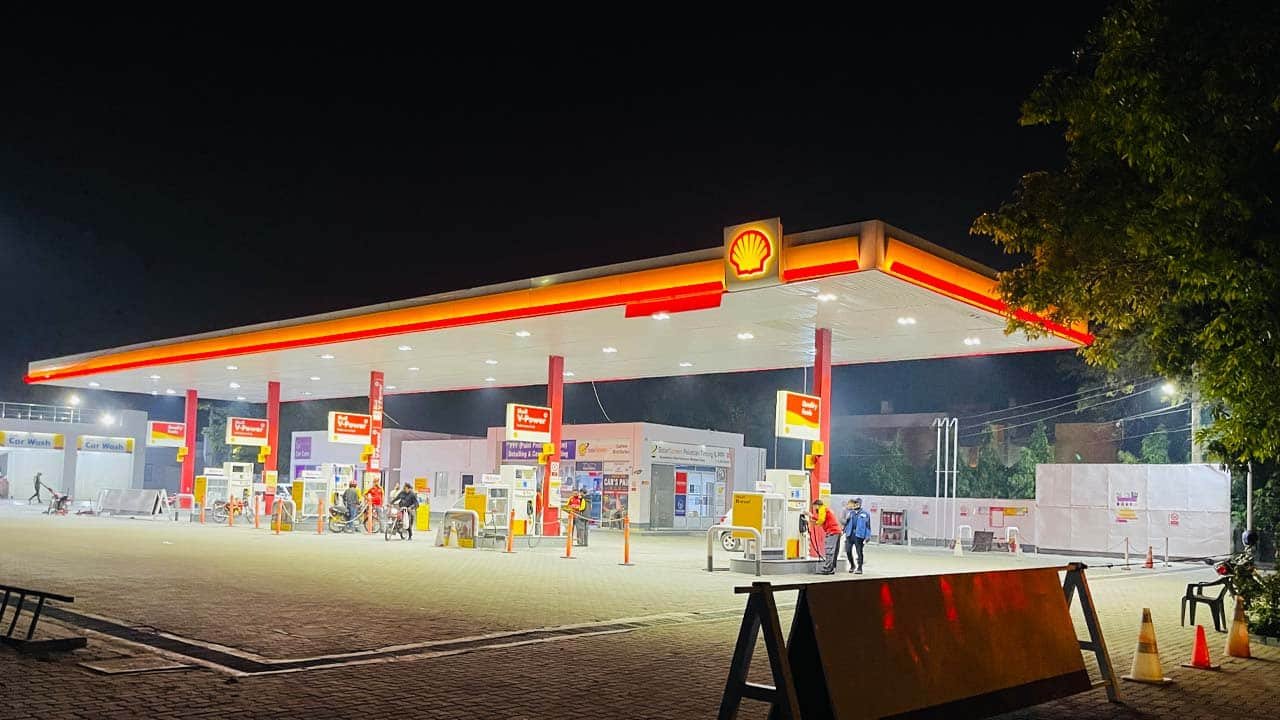
    Saudi Aramco is actively contemplating the possibility of acquiring Shell’s holdings in Pakistan, marking a potential historic foray into the South Asian nation, according to Bloomberg.

    The Saudi oil company is evaluating Shell’s assets in the region, notably Shell Pakistan Ltd., a Karachi-listed entity with a market value of $123 million. The collective value of Shell’s Pakistani assets is estimated to hover around $200 million, according to insiders.

    Shell boasts a rich legacy of over seven decades in Pakistan, with a network of more than 600 fuel stations. The company has not only been a prominent fuel supplier but has also been engaged in the lubricant business.

    It’s crucial to note that this expression of interest from Saudi Aramco doesn’t guarantee an outright acquisition. Other potential suitors might emerge on the horizon.

    Responding to inquiries, a Shell representative acknowledged strong interest from both local and international buyers but refrained from divulging specific details. The representative emphasised that any sale would follow a structured sales process, including the execution of binding agreements and the requisite regulatory approvals.

    In a significant announcement made in June, Shell disclosed its intention to exit the Pakistani market, with plans to divest its 77.4 per cent stake in Shell Pakistan and its 26 per cent ownership in Pak-Arab Pipeline Co., a state-supported cross-country pipeline network. This strategic move aligns with Shell’s broader divestment strategy, led by CEO Wael Sawan, aimed at enhancing shareholder returns by shedding underperforming assets.

    Shell’s withdrawal represents a challenge for Pakistan, which is grappling with economic instability, exemplified by a depreciating currency over the past year. Pakistan has witnessed the departure of several multinational corporations in recent years, including fuel retailer Puma Energy in 2021 and the shutdown of trucking startup Trella in April.

    Meanwhile, Saudi Arabia, under the guidance of Crown Prince Mohammed bin Salman, has expressed a commitment to bolster its involvement and investments in Pakistan. The Saudi Fund for Development is exploring the possibility of increasing its deposit with the State Bank of Pakistan from $3 billion to $5 billion, as well as a plan to elevate Saudi investments in Pakistan to $10 billion.

    Furthermore, Aramco has entered into discussions with the Pakistani government regarding a substantial $10 billion refinery project, as confirmed by the country’s energy minister, Muhammad Ali, earlier this month. These developments reflect the growing engagement and economic ties between Saudi Arabia and Pakistan.

  • Chinese company shows interest in buying K-Electric for $1.77 billion

    Chinese company shows interest in buying K-Electric for $1.77 billion

    In a recent development, China’s state-owned Shanghai Electric Power (SEP) has reiterated its interest in acquiring the shares of Karachi’s sole power company, K-Electric, with a renewed offer of $1.77 billion.

    According to Shan Abbas Ashari, the investment advisor of the Saudi group Al-Jomaih Power Limited, a major shareholder of K-Electric, the Saudi group has indicated the possibility of selling its shares at a price of $2 billion.

    Ashari stated that a deal with Shanghai Electric, involving the acquisition of K-Electric shares, is set to be rekindled. He mentioned that SEP had initially proposed the $1.77 billion offer to acquire K-Electric several years ago, and this offer would now be revisited.

    Ashari highlighted the growing electricity demand in Karachi, which should have already reached 5,000 MW. He emphasised that this demand could further increase if all industries were integrated into the company’s grid.

    Moreover, Ashari emphasised that Pakistan stands as an ideal investment destination for Saudi Arabia and other Gulf countries due to its rapidly expanding population, distinguishing it from Europe.

    However, he acknowledged that investors from Saudi Arabia and Kuwait faced challenges following the K-Electric deal. Stay tuned for further updates on this significant investment development.

  • Pakistan’s economy to recover, but challenges remain: World Bank

    Pakistan’s economy to recover, but challenges remain: World Bank

    Pakistan’s economic outlook, as per the World Bank’s ‘Pakistan Development Update,’ is challenging. The report projects a gradual recovery in real GDP growth, expecting it to reach 1.7 per cent in FY24 and 2.4 per cent in FY25. However, it warns that this recovery is contingent on implementing IMF measures, securing external financing, and maintaining fiscal discipline.

    The report highlights the dire poverty situation in Pakistan, with an estimated 39.4 per cent of the population living below the Lower-Middle Income Country poverty threshold in FY23, compared to 34.2 per cent in FY22. Factors contributing to this include economic slowdown, floods in 2022, import restrictions, political uncertainty, rising global commodity prices, and reduced investor confidence.

    The fiscal deficit remains a concern. While some easing of import restrictions may widen the current account deficit, a weaker currency and higher domestic energy prices could sustain inflation. The report emphasizes the importance of comprehensive fiscal reforms, including reducing tax exemptions, broadening the tax base, improving public expenditure quality, reforming the energy sector, and managing public debt more effectively.

    The World Bank stresses that addressing these challenges is crucial for long-term recovery and recommends strengthening institutions and systems to achieve fiscal and debt sustainability. The report echoes concerns about external shocks, political instability, and debt servicing challenges, underlining the need for prudent economic management and reforms.

    The Asian Development Bank (ADB) predicts a modest GDP growth recovery to 1.9 per cent in FY24, following a contraction of 0.3 per cent in FY23, with persistent price pressures. Overall, Pakistan faces a complex economic landscape that demands immediate attention to fiscal reform, poverty alleviation, and resilience to external shocks.

  • PIA to be privatised: assets, debt and staff to be transferred

    PIA to be privatised: assets, debt and staff to be transferred

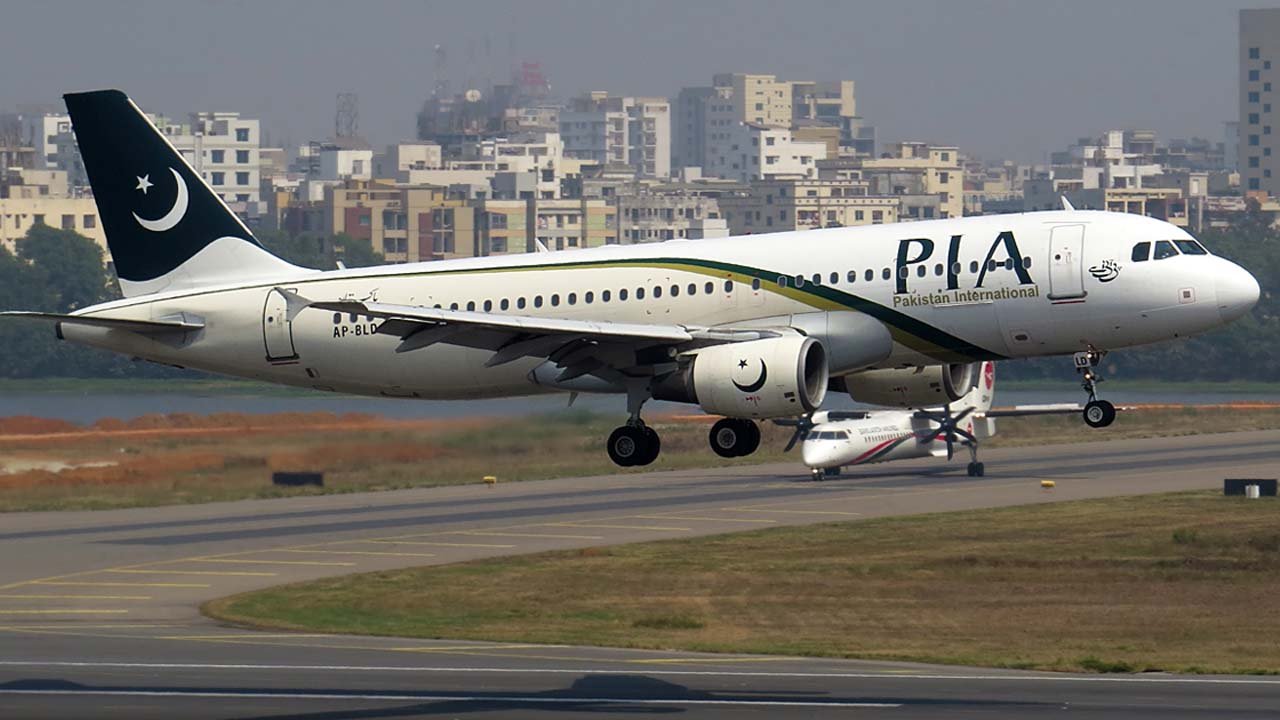
    Pakistan International Airlines (PIA), which has been running at a loss, has unveiled its privatisation plan. Sources indicate that this plan encompasses not only the privatisation of PIA but also the power distribution companies and the revival of Pakistan Steel Mills.

    Furthermore, it has been reported that the process of appointing a financial advisor for PIA’s privatisation is underway. While PIA’s affiliated institution will remain unaffected by privatisation, plans have been solidified to address issues related to PIA’s debt and government guarantees.

    According to ARY News, the Privatisation Commission sources have disclosed that, under the current circumstances, Pakistan Steel Mills cannot be privatised. However, efforts will be made to enhance the mill’s production and capabilities to attract potential investors.

    It’s worth noting that the restructuring plan for the privatisation of Pakistan International Airlines (PIA) is progressing rapidly. The PIA administration has invited applications from legal and corporate firms for assistance in this restructuring plan. The Department of Contract Management has been instructed to forward these applications by October 6.

    The assets of PIA, including properties, debts, aircraft, and employees, will be transferred to the new company, presenting PIA as a debt-free organisation to potential investors.