Tag: IOK

  • India vote resumes with Indian-occupied Kashmir poised to oppose Modi

    India vote resumes with Indian-occupied Kashmir poised to oppose Modi

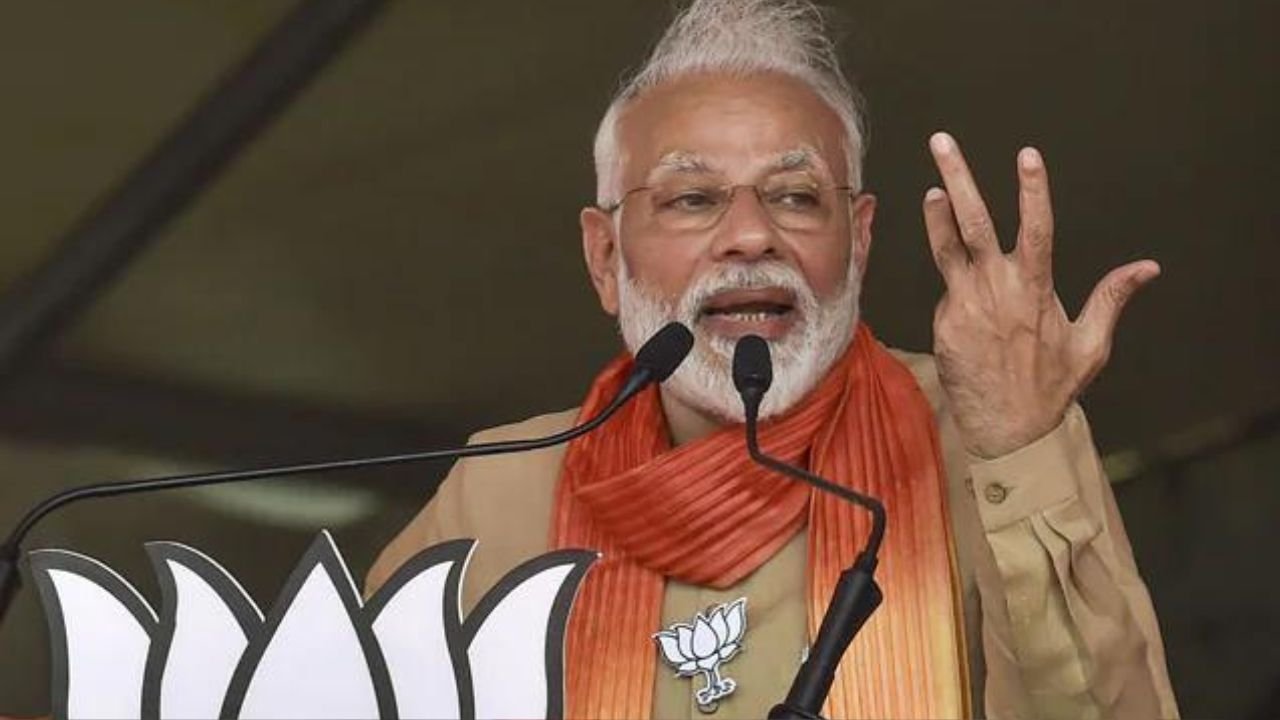
    India’s six-week election resumed Monday including in Indian-occupied Kashmir, where voters were expected to show their discontent with Prime Minister Narendra Modi’s cancellation of their disputed territory’s semi-autonomy and the security crackdown that followed.

    Modi remains popular across much of India and his Hindu-nationalist Bharatiya Janata Party (BJP) is widely expected to win the poll when it concludes early next month.

    But his government’s decision in 2019 to bring IOK under its direct rule — and the subsequent clampdown — have been deeply resented among the region’s residents, who will be voting for the first time since the move.

    “What we’re telling voters now is that you have to make your voice heard,” said former chief minister Omar Abdullah, whose National Conference party is campaigning for the restoration of IOK’s former semi-autonomy.

    “The point of view that we want people to send out is that what happened… is not acceptable to them,” he told AFP.

    IOK has been divided between India and Pakistan since their independence in 1947. Both claim it in full and have fought two wars over control of the Himalayan region.

    Rebel groups opposed to Indian rule have waged an insurgency since 1989 on the side of the frontier controlled by New Delhi, demanding either independence or a merger with Pakistan.

    India accuses Pakistan of backing the insurgents, a charge that Islamabad denies.

    The conflict has killed tens of thousands of soldiers, rebels and civilians in the decades since, including a spate of firefights between suspected rebels and security forces in the past month.

    ‘Referendum’

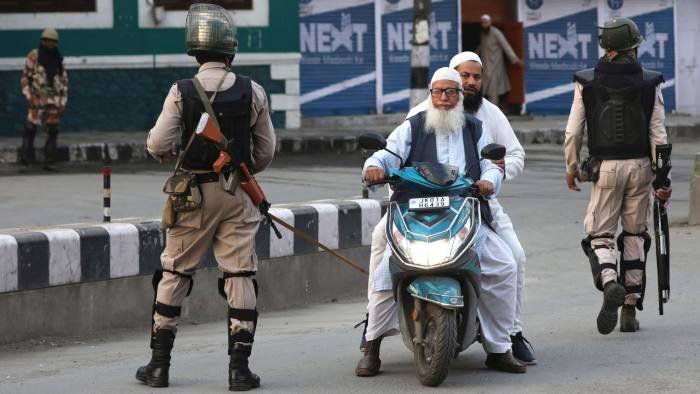
    Violence has dwindled since the Indian portion of the territory was brought under direct rule five years ago, a move that saw the mass arrest of local political leaders and a months-long telecommunications blackout to forestall expected protests.

    Modi’s government says its cancelling of IOK’s special status has brought “peace and development”, and it has consistently claimed the move was supported by Kashmiris.

    But his party has not fielded any candidates in the IOK valley for the first time since 1996, and experts say the BJP would have been roundly defeated if it had.

    “They would lose, simple as that,” political analyst and historian Sidiq Wahid told AFP last week, adding that Kashmiris saw the vote as a “referendum” on Modi’s policies.

    The BJP has appealed to voters to instead support smaller and newly created parties that have publicly aligned with Modi’s policies.

    But voters are expected to back one of two established IOK political parties calling for the Modi government’s changes to be reversed.

    “I voted for changing the current government. It must happen for our children to have a good future,” civil servant Habibullah Parray told AFP.

    “Everywhere you go in Kashmir today you find people from outside in charge. Everyone wants that to change.”

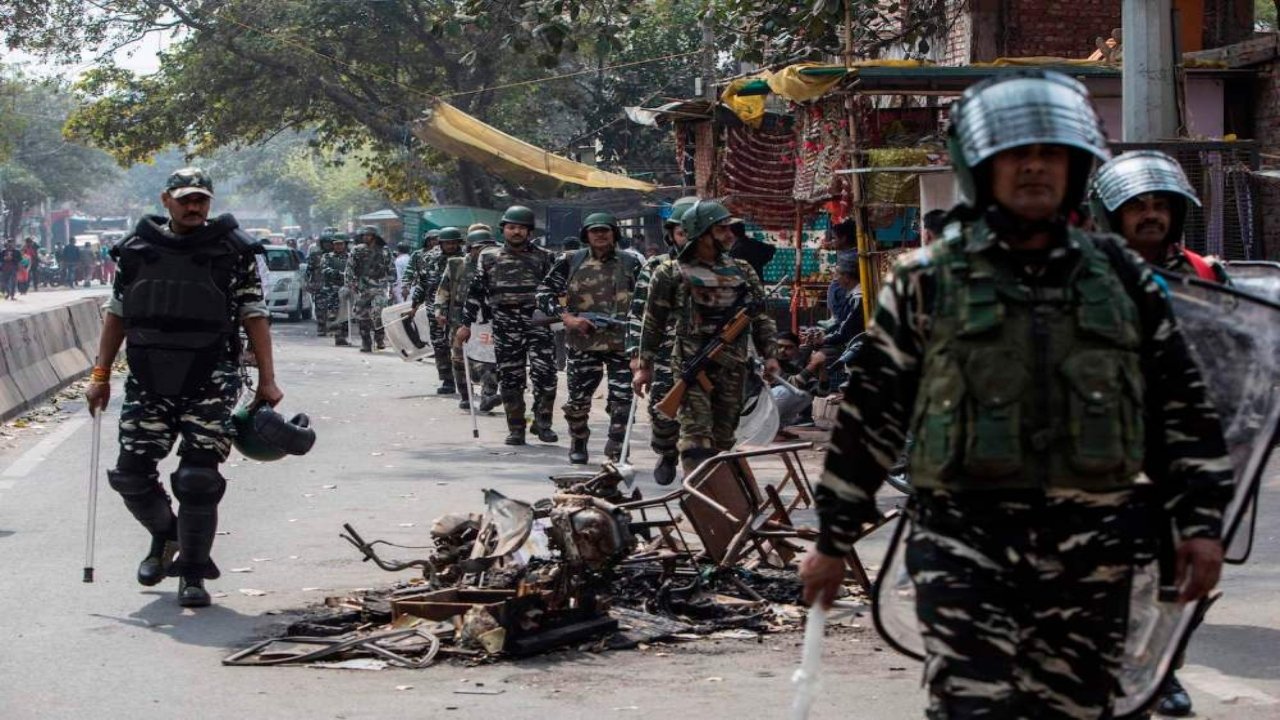
    In rural districts outside Srinagar, the region’s biggest city, army soldiers patrolled roads in convoys of bulletproof vehicles.

    Several polling booths around the constituency had more than two dozen paramilitary troops guarding voter queues.

    Boycotts called by rebel groups left few Kashmiris willing to participate in past elections, with just over 14 percent of eligible voters in Srinagar casting a ballot during the last national poll in 2019.

    By mid-afternoon on Monday nearly 30 percent of people in the constituency had voted, with booths still open for several more hours.

    Nearly one billion voters

    India’s election is conducted in seven phases over six weeks to ease the immense logistical burden of staging the democratic exercise in the world’s most populous country.

    More than 968 million people are eligible to vote in India’s election, with the final round of polling on June 1 and results expected three days later.

    Voter turnout elsewhere in India has so far declined significantly from 2019, according to election commission figures.

    Analysts have blamed widespread expectations that Modi will easily win a third term and hotter-than-average temperatures heading into the summer.

    India’s weather bureau has forecast more hot spells in May and the election commission formed a taskforce last month to review the impact of heat and humidity before each round of voting.
  • Is Abhinandan missing Pakistani chai? Twitter observes Surprise Day with memes

    Is Abhinandan missing Pakistani chai? Twitter observes Surprise Day with memes

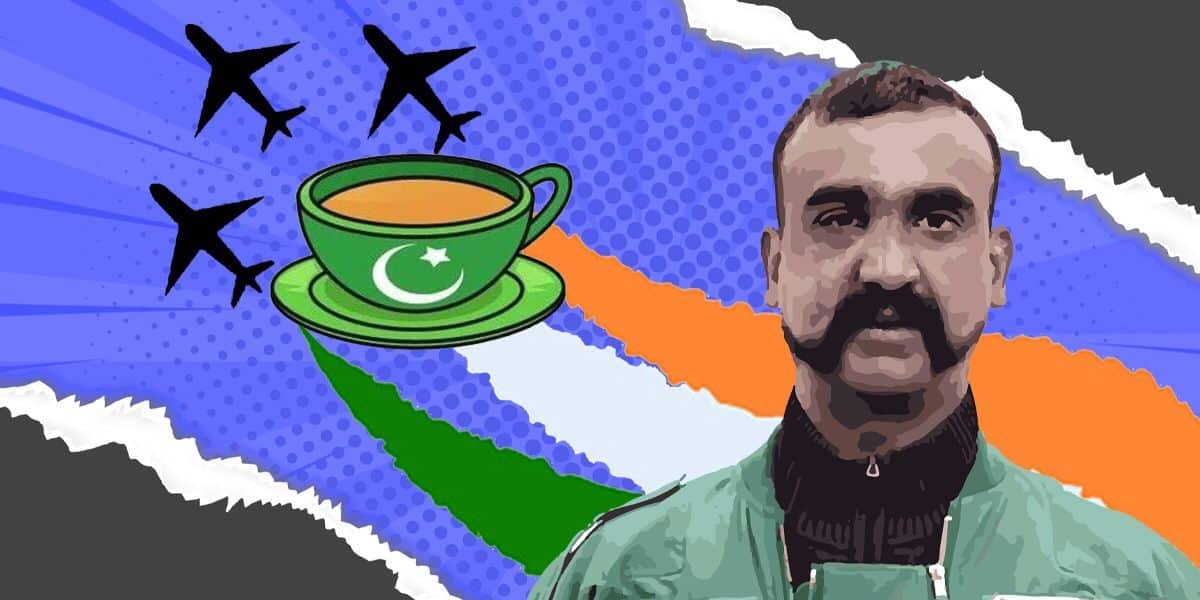
    Pakistan is observing the fourth anniversary of Operation Swift Retort—popularly known as Surprise Day— when the country’s armed forces gave a befitting response to Indian pilots.

    On February 27 in 2019, the Pakistan Air Force (PAF) shot down two Indian planes that had violated Pakistani airspace. One of the Indian pilots—Abhinandan Varthaman—was captured alive by Pakistan, but was later handed over to the rival country as a gesture of peace and goodwill.

    In a tweet, Prime Minister (PM) Shehbaz Sharif paid tribute to the Pakistan Air Force on Monday for its “befitting response” to the Indian violation of Pakistan’s airspace “on the pretext of false flag Pulwama attack”.

    “While we aim for peace with all, we are mindful of our duty to defend the country. Let no one make any mistake about it,” he warned.

    At the time, Abhinandan’s praise for the tea he was served grabbed the attention of the world, and Twitterati didn’t hold back on the jokes. This year too, social media users remembered the fateful day in a fun way.

    The incident happened after 40 Central Reserve Police Force (CRPF) personnel were killed by a young Kashmiri boy. Later, India blamed Pakistan for the attack and Indian Air Force (IAF) launched an aerial strike near Balakot on February 26, 2019.

    Pakistan Air Force (PAF) jets crossed the line of control in a tit-for-tat move into Indian territory.

    The PAF shot down two IAF aircraft and captured one of the pilots. The debris of the SU-30 fell in Indian Occupied Kashmir (IOK) and its pilot was killed, while the MiG-21 pilot Wing Commander Abhinandan, whose aircraft fell on the Pakistan side was captured alive.

  • ‘Impose economic sanctions on India’: Azad Kashmir President urges OIC

    ‘Impose economic sanctions on India’: Azad Kashmir President urges OIC

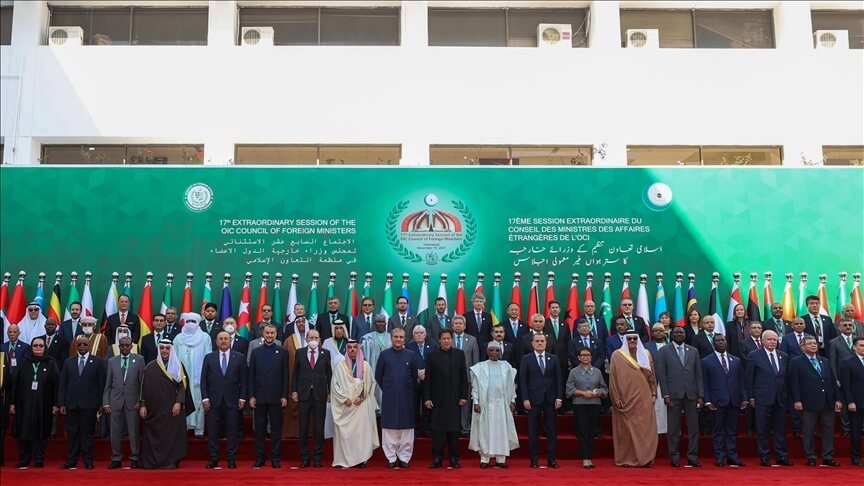
    Addressing a special meeting of the Kashmir Contact Group of the Organisation of Islamic Cooperation (OIC) in Islamabad, President Azad Jammu and Kashmir (AJK) Barrister Sultan Mehmood Chaudhry asked the forum to help stop oppression in Indian-Occupied Kashmir (IoK) by imposing economic sanctions on India and boycotting its products.

    He said that since August 5, 2019 (when India changed IoK special status) Indian authorities have issued fake domiciles to 4.2 million non-state Hindus to change the proportion of population there.

    He said the OIC should play its role for the release of political leaders and youth who have been arrested before and after August 5, 2019.

    On the occasion, the All Parties Hurriyat Conference (APHC) representative Syed Faiz Naqshbandi and Ghulam Mohammad Safi also briefed the OIC delegations about the current situation of violation of human rights in IoK. They also presented a memorandum to OIC Secretary General Hussain Ibrahim Taha.

    APHC is a united political front to raise the cause of Kashmiri separatism in the Kashmir conflict.

  • Minister for Religious Affairs requests PM Khan that Pakistan observe Hijab Day on March 8

    Minister for Religious Affairs requests PM Khan that Pakistan observe Hijab Day on March 8

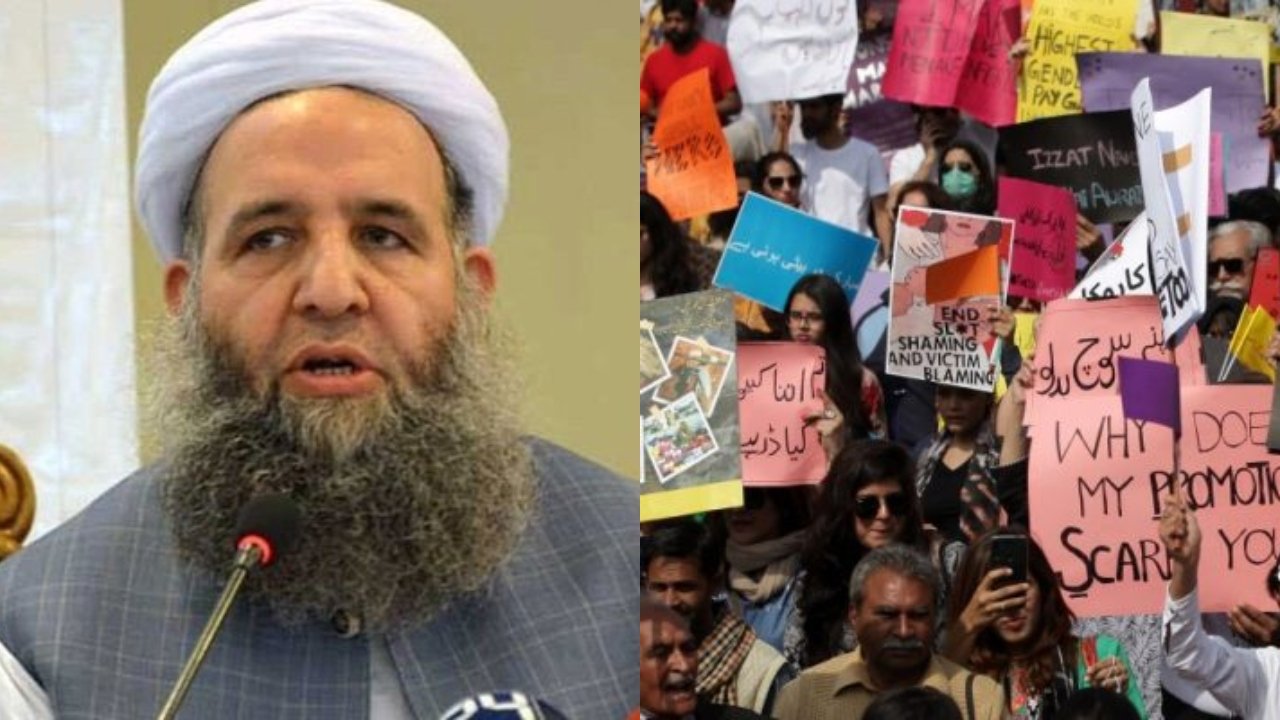
    Federal Minister for Religious Affairs Noor-ul-Haq Qadri has reportedly written a letter to Prime Minister (PM) Imran Khan and proposed to observe International Hijab Day on March 8 which is also celebrated as International Women’s Day, reports Jang.

    The minister also sent a copy of his letter to President Dr Arif Alvi.

    The letter states that Hijab Day would draw the world’s attention towards the discrimination happening against Muslim women in Indian-Occupied Kashmir (IoK) and India.

    On the occasion of March 8, several women’s rights organisations organise Aurat March in form of rallies across the country to talk about the issues faced by women in the communities of Pakistan.

  • ‘Islamophobia has taken a most lethal form in India’: Noam Chomsky

    ‘Islamophobia has taken a most lethal form in India’: Noam Chomsky

    Renowned Scholar and Professor Noam Chomsky, in a video message to a webinar organised by the Indian American Muslim Council, said that India has turned its community of Indian Muslims into a “persecuted minority”.

    He further said, “The pathology of Islamophobia is growing throughout the West, it is taking its most lethal form in India.”

    Referring to the violence in Indian-occupied Kashmir (IoK), the famed activist stated that the situation is painful in particular not because of what is happening but because of what is not happening.

    During the webinar on “Worsening Hate Speech and Violence in India,” Chomsky compared the brutal situation of IoK to Israeli forces occupying Palestine and blamed Indian Prime Minister (PM) Narendra Modi’s right-wing Hindu nationalist regime for it.

    Several other personalities who took part in webinar condemned the barbarous acts by Indian authorities.

    Angana Chatterji, an Indian anthropologist took a jibe Bharatiya Janata Party (BJP) and stated, “Hindu spiritual leaders are involved in [the] ethnic cleansing of Muslims.”

    According to an Indian author, Annapurna Menon, the situation in IoK is even more dire, where the journalists routinely face police questioning, ban on reporting, suspension of internet services and financial constraints in line with BJP’s recent ‘media policy’.

  • ‘India should stop harassing journalists’: Human Rights Watch

    ‘India should stop harassing journalists’: Human Rights Watch

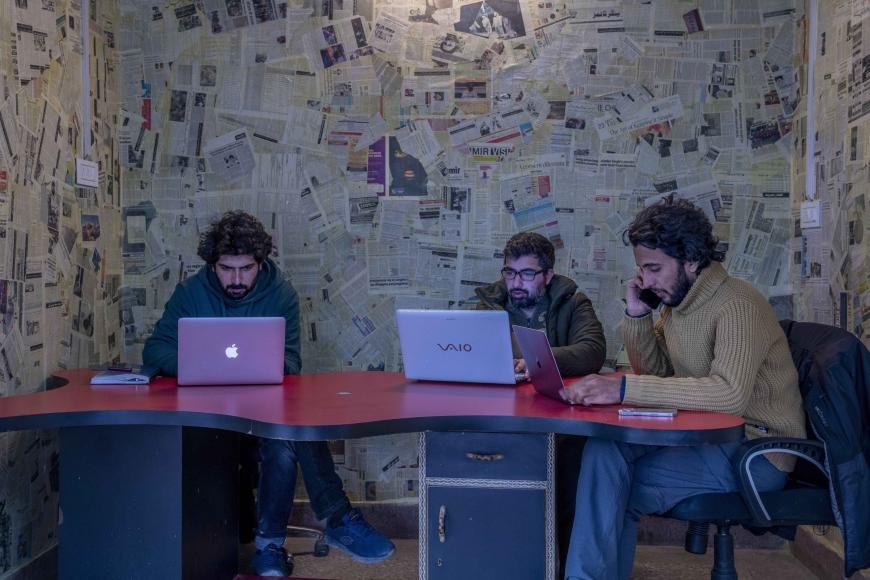
    Human Rights Watch (HRW) has released its report to address the unlawful arrest of journalists in Indian-Occupied Kashmir (IoK). According to the report, so far at least 35 journalists in IoK have faced police interrogation, raids, threats, physical assault, or fabricated criminal cases for their reporting.

    The recent arrest of Fahad Shah, an editor-in-chief of a leading Kashmir-based news site The Kashmir Walla, has led to condemnation from several journalism organisations including United States (US)-based Committee to Protect Journalists (CPJ).

    South Asia director at Human Rights Watch (HRW) said, “Instead of ensuring justice for security force violations in Kashmir, the [Indian] government is more interested in silencing those who bring these abuses to light.”

    Ganguly also demanded Indian authorities in Kashmir to release Shah and all journalists, activists, and critics jailed on “politically motivated charges” and stop harassing them with draconian laws.

    Furthermore, HRW has stated a number of journalist names who are behind bars on baseless grounds. Last month, the police arrested another journalist at the Kashmir Walla.

    In September, the police raided the homes of four Kashmiri journalists and confiscated their phones and laptops. Not only this, the Indian authorities give threats to journalists with jail if their work criticises them and pressured them to self-censor, says the HRW report.

    It states that India has placed over 40 people, including 22 journalists, on lists to stop them from travelling abroad.

  • PM Khan and others show support for Kashmir issue on Kashmir Solidarity Day

    PM Khan and others show support for Kashmir issue on Kashmir Solidarity Day

    On Kashmir Solidarity Day, Prime Minister (PM) Imran Khan reiterated that Pakistan stands united with Indian-Occupied Kashmiri (IoK) and urged the international community to take notice of India’s crimes. The premier is officially on a four-day tour to China.

    Taking to his Twitter handle, the premier wrote: “Modi’s fascist policies of oppression and violence have failed to crush the spirit of the Kashmiri resistance in IoK.”

    President Dr Arif Alvi said India was continuing to “brutalise” IoK and also trying to change its demography. “I remind the world to wake up and fulfil its promise of protecting Kashmiri human & political rights,” the president said in a tweet.

    Pakistan Muslim League-Nawaz (PML-N) President and Leader of the Opposition in the National Assembly Shehbaz Sharif said today was a day to come together to extend “unwavering support” to Kashmiris regardless of political differences.

    Similarly, Pakistan People’s Party (PPP) Chairman Bilawal Bhutto-Zardari showed his support and said his party would continue to support Kashmiris in their cause.

    Federal Human Rights Minister Shireen Mazari said Pakistan stood in solidarity with occupied Kashmir and the Kashmiris’ “legitimate” struggle for self-determination and a plebiscite.

  • After pigeons, India arrests Pakistani balloon

    Indian police in occupied Kashmir have taken into custody a Pakistan International Airlines (PIA) plane-shaped balloon. According to Indian news agency ANI, the balloon landed in Sotra Chak village of Hiranagar on March 9.

    While the detention of balloon with the logo of Pakistan’s national carrier seems silly, the incident was not the first of its kind. Indian security personnel have taken several pigeons and balloons into custody for their alleged links with Pakistan. A Pakistani villager had last year appealed to India to release his pigeon which was being held for spying after it crossed the border between the nuclear rivals.

    Meanwhile, on Twitter:

  • US firm helps Modi govt keep social media blocked in held Kashmir

    US firm helps Modi govt keep social media blocked in held Kashmir

    The Indian government imposed communication blackout in August last year and stripped India Occupied Kashmir (IOK) of its special autonomous status.

    The administration has reached out to a US-based software firm Cisco Systems in order to prevent fixed-line internet users from accessing social media websites, reported ThePrint.

    The step has been taken to remove the restriction on a fixed-line broadband connection, however, social media platforms will still not be accessible to local residents even when internet connectivity is restored.

    Back in January, users were allowed 2G mobile internet and broadband for 1,500 individuals, including those providing essential services such as hospitals with access to only 1600 website.

    The firewall is being analysed and tested, and if it will be capable enough to sustain the blockage, it will be purchased, a senior government official said.