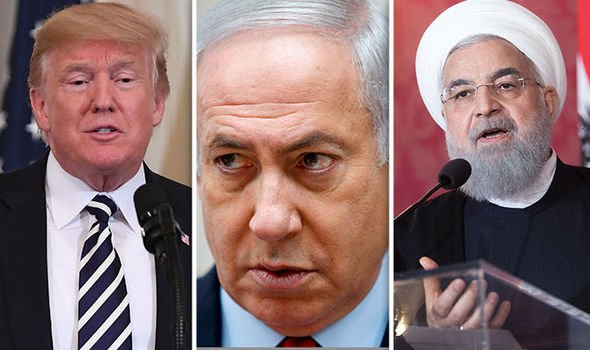
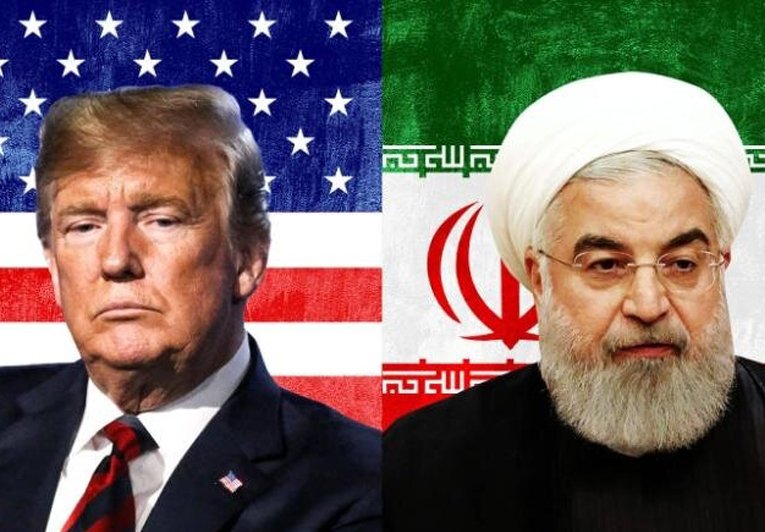
As tensions continue to soar between Iran and the United States (US) over the past week, and both Tehran and Washington issuing threats against each other, Prime Minister (PM) Benjamin Netanyahu has said that Israel should not be dragged into the conflict.
According to Anadolu Agency, Netanyahu, while chairing a security cabinet meeting Monday, said the killing of top Iranian General Qassem Soleimani was carried out by the US, stressing his country was “not involved”.
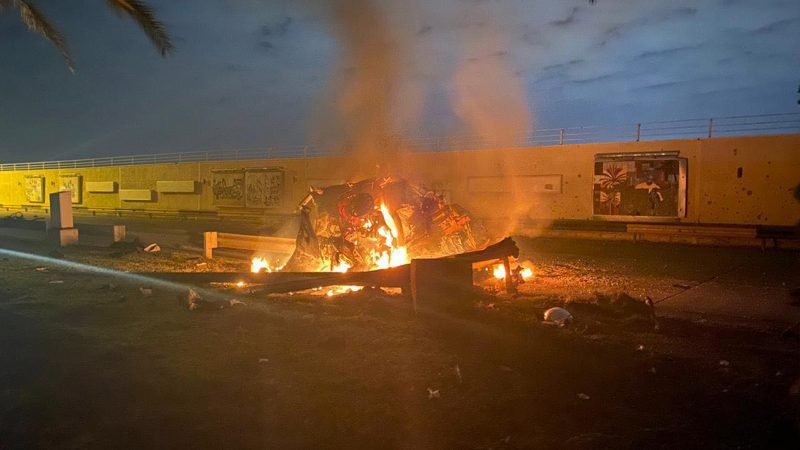
Soleimani, commander of Islamic Revolutionary Guards Corps’ Quds Forces, and Abu Mahdi al-Muhandis, vice president of the Hashd al-Shaabi group, were assassinated in a US drone strike on Friday outside Baghdad International Airport.
With the dramatic escalation making headlines and Iran issuing threats of severe consequence, Netanyahu has urged his ministers to reiterate Israel’s support for America’s right to defend itself when speaking to the media.
During the meeting, top Israeli intelligence officials reassured the ministers that the likelihood of a retaliatory attack by Iran against Israel was low, since “Israel stayed at a distance from the incident”, according to Channel 13.
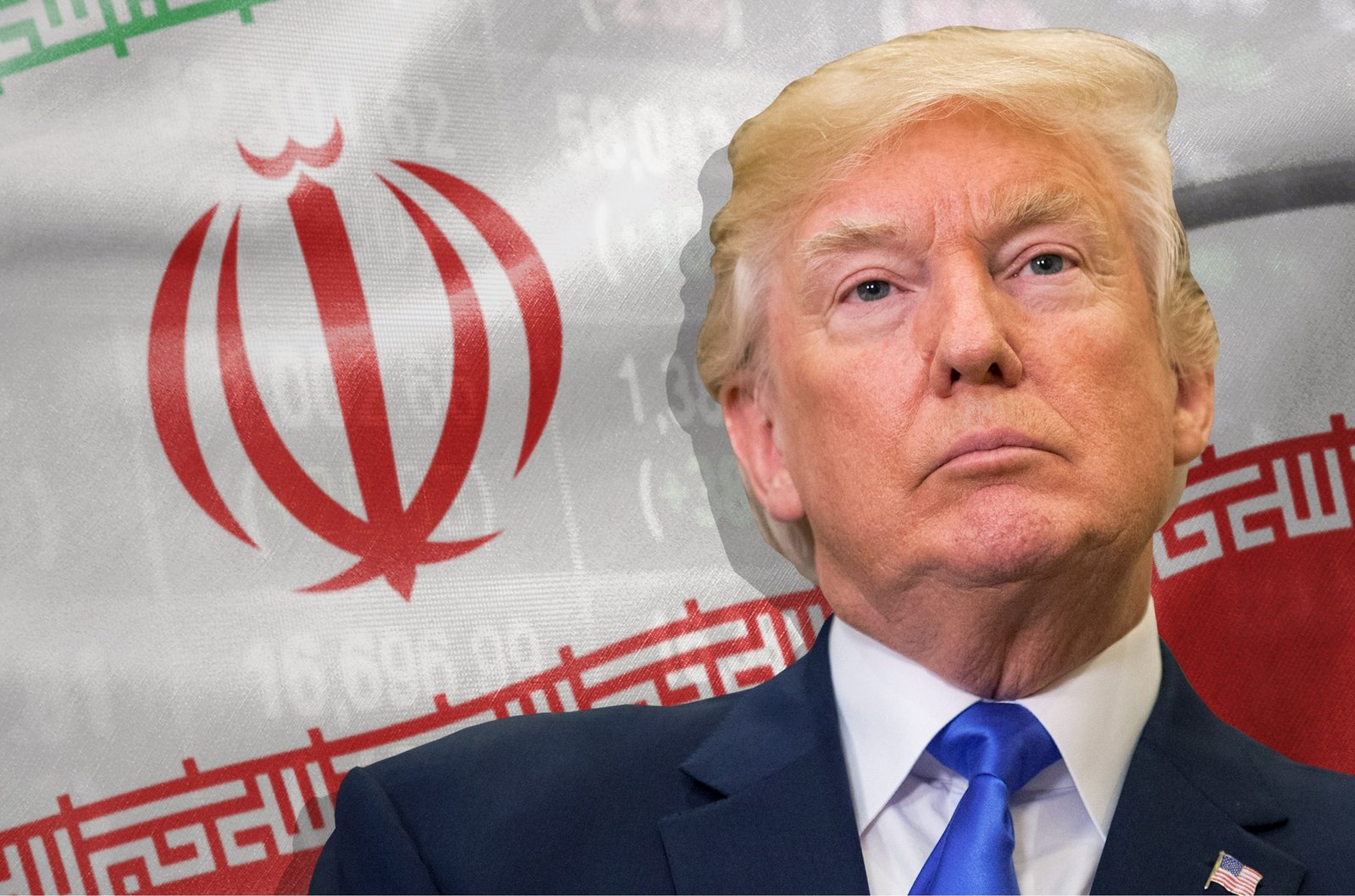
Soleimani’s slaying marked a new high in tensions between the US and Iran, which have often been at a fever pitch since President Donald Trump chose in 2018 to unilaterally withdraw Washington from a nuclear pact world powers struck with Tehran.
Iran has now promised to avenge Soleimani’s killing and announced that it would stop complying with the 2015 nuclear deal. Trump has since threatened to target cultural sites in Iran.
An $80 million bounty has been placed on United States (US) President Donald Trump’s head in the wake of General Qasem Soleimani’s assassination and the dramatic escalation that followed, a foreign media outlet has reported.
During the televised funeral of the top Iranian military leader, official state broadcasters said one US dollar would be tabled for every Iranian in the country, with the cash going to whoever killed the US president.
“Iran has 80 million inhabitants. Based on the Iranian population, we want to raise $80 million which is a reward for those who get close to the head of President Trump,” it was announced, according to en24.
Commander of Islamic Revolutionary Guard Corps’ Quds Force, Soleimani was killed in a US airstrike last week. The attack took long-running hostilities between Washington and Tehran into uncharted territory and raised the spectre of wider conflict in the Middle East.
While Trump has threatened “major retaliation” if Iran avenges the killing, Iran has announced it was further reducing compliance with a tattered international nuclear accord, ending limitations on numbers of centrifuges used to enrich uranium.
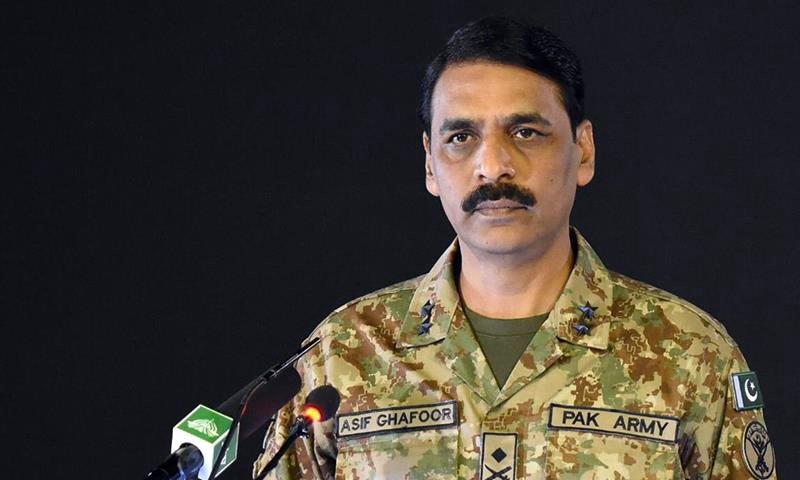
Inter-Services Public Relations (ISPR) Director General Major General Asif Ghafoor has quoted Chief of Army Staff (COAS) General Qamar Javed Bajwa as telling United States (US) Secretary of State Mike Pompeo that White House’s misadventure in Baghdad was detrimental to efforts aimed at regional peace.
“The region is making progress towards peace from a very bad situation and the Baghdad incident is detrimental to the peace efforts in the region,” the ISPR chief quoted the COAS as telling Pompeo as US-Iran tensions soar following the killing of top Iranian commander Qassem Soleimani and other officials in a US President Donald Trump-ordered drone strike on Friday in Baghdad.
Speaking to a private media outlet, Maj Gen Ghafoor also said that Pakistan will only play the role of a peacemaker and not take sides in the ongoing conflict between the two countries.
“Pakistan has defeated terrorism on its territory and will not allow its soil to be used against any other country.”
According to Geo News, to a question regarding claims made in Indian media that Pakistan’s policy towards Iran has changed in the light of US resumption of military training program for Pakistan Army, the ISPR chief deemed it “Indian propaganda” and “fake news”.
“Islamabad and Washington were in talks for the last four or five months over the issue and linking it as Pakistan aligning with US is Indian propaganda,” he said. “Pakistan Army is a responsible and professional force and has exercised restraint despite provocative statements from Indian leadership.”
The military spokesperson also said that Gen Bajwa had an important role to play in regional security and Afghan peace process, and Pakistan didn’t want to see another conflict in the region.
“Pakistan would oppose any thing that is affecting Afghan reconciliation process as it needs focus from all parties. We are of the view that dialogue is the way forward to achieve lasting peace,” he said.
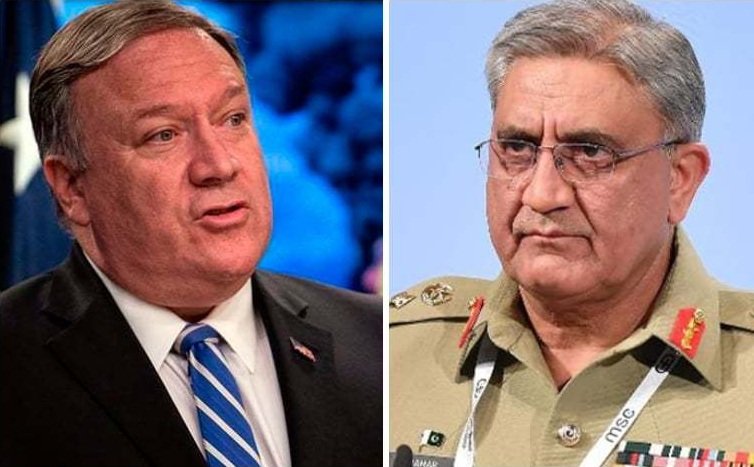
With United States (US) Secretary of State Mike Pompeo calling Chief of Army Staff (COAS) General Qamar Javed Bajwa to discuss heightening tensions with Tehran following the killing of top Iranian military leader Qassem Soleimani, Twitterati are wondering why did Pompeo choose the army chief over Prime Minister (PM) Imran Khan or Foreign Minister (FM) Shah Mahmood Qureshi.
The telephonic conversation came after Iran’s top security body vowed to retaliate in the “right place and time” following Revolutionary Guards commander Soleimani’s death in an airstrike ordered by US President Donald Trump on Friday.
“America should know that its criminal attack on General Soleimani has been the country’s biggest mistake in west Asia, and America will not avoid the consequences of this wrong calculation easily,” the Supreme National Security Council said in a statement.
The dramatic escalation and subsequent fears of “World War III” were followed by both Washington and Tehran alerting their allies.
“#Pakistan’s Chief of Staff General Bajwa and I spoke today about U.S. defensive action to kill Qassem Soleimani. The #Iran regime’s actions in the region are destabilizing and our resolve in protecting American interests, personnel, facilities, and partners will not waver,” Pompeo tweeted on Friday.
#Pakistan‘s Chief of Staff General Bajwa and I spoke today about U.S. defensive action to kill Qassem Soleimani. The #Iran regime’s actions in the region are destabilizing and our resolve in protecting American interests, personnel, facilities, and partners will not waver.
In another tweet, Pompeo disclosed he spoke to Afghan President Ashraf Ghani as well about Soleimani’s killing “to protect American lives at stake”.
Spoke with Afghan President @AshrafGhani on @realDonaldTrump‘s decision to kill Qassem Soleimani to protect American lives at stake. The Iranian regime’s actions are a source of instability throughout the region. The U.S. will protect its people and its interests.
Separately, Inter-Services Public Relations (ISPR) disclosed that the army chief and the US secretary of state discussed “regional situation including possible implications” after the escalation in the Middle East.
“COAS received telephone call from US Secretary of State Mike Pompeo. Regional situation, including possible implications of recent escalation in Middle East, was discussed,” the military’s media wing tweeted.
COAS received telephone call from US Secretary of State Mike Pompeo. Regional situation including possible implications of recent escalation in Middle East was discussed. (1of2).
“COAS emphasised need for maximum restraint and constructive engagement by all concerned to de-escalate the situation in broader interest of peace and stability. COAS also reiterated the need for maintaining focus on success of Afghan Peace Process,” read another tweet.
COAS emphasised need for maximum restraint and constructive engagement by all concerned to de-escalate the situation in broader interest of peace and stability. COAS also reiterated the need for maintaining focus on success of Afghan Peace Process.(2of2).
Meanwhile, Twitterati took to Twitter to ask as to why had Pompeo not called PM Imran or FM Qureshi at such a time.
All pretence removed, with the US secretary of state engaging directly with the Pakistani army chief, rather than his counterpart the foreign minister or Pakistan’s prime minister. https://t.co/V6TvvwRHvG
Pompeo calls Gen Bajwa. Not the PM not the FM. and here some incl me believed that extension can be stopped. Where is that SMQ who said now foreign policy will be made in FO.
While Pakistan’s Foreign Office (FO) has advised both the US and Iran to refrain from taking “unilateral action” against each other and abide by the United Nations (UN) Charter to respect each other’s territorial integrity, the premier has not yet made any statement.
Tensions between the United States (US) and Iran have escalated to an all-time high after top Iranian commander Qassem Soleimani was killed on Friday in a US strike on Baghdad’s international airport.
The development has been confirmed by both Tehran and Washington, and the Pentagon has said that President Donald Trump “ordered Soleimani’s killing”, after a pro-Iran mob this week laid siege to the US embassy.
Following Soleimani’s death, Trump tweeted an image of the US flag without any further explanation.
The pre-dawn developments mark the most major escalation yet in a feared proxy war between Iran and the US on Iraqi soil.
Here’s everything you need to know about the dramatic escalation:
WHO WAS QASSEM SOLEIMANI?
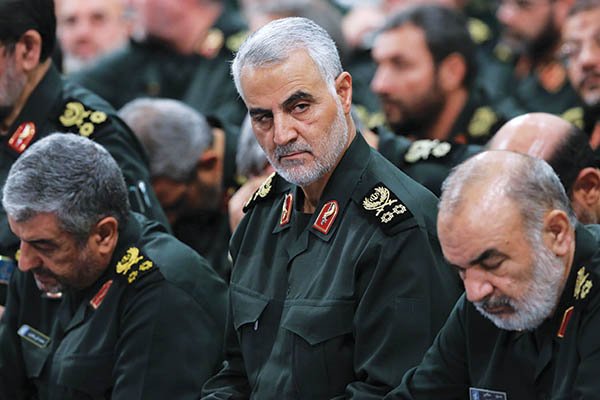
Head of Iran’s Islamic Revolutionary Guard Corps’ (IRGC) Quds Force Soleimani acquired celebrity status at home and abroad as leader of the foreign arm of the Revolutionary Guards and for his key role in fighting in Syria and Iraq.
He was instrumental in the spread of Iranian influence in the Middle East, which the US and Tehran’s regional foes Saudi Arabia and Israel have struggled to keep in check, Al Jazeera reported.
Soleimani survived several assassination attempts against him by Western, Israeli and Arab agencies over the past 20 years.
Under Soleimani’s leadership, the IRGC vastly expanded its capabilities, becoming a significant influence in intelligence, financial, and political spheres beyond Iran’s borders.
WHY WAS HE KILLED?
It all started on Sunday with US military airstrikes in Iraq and Syria that killed 25 fighters and left militias vowing revenge.
SUNDAY (DEC 29)
According to a report, the US military carried out airstrikes on five sites in Iraq and Syria against the Iranian-backed Kataeb Hezbollah militia, calling it retaliation for last week’s killing of an American contractor in a rocket attack on an Iraqi military base that it blamed on the group.
At least 25 fighters were killed and dozens wounded. The targeted group, which is a separate force from the Lebanese militant group Hezbollah, operates under the umbrella of the state-sanctioned militias known collectively as the Popular Mobilization Forces, or PMF. Abu Mahdi al-Muhandis, the deputy commander of the PMF and a founder of Kataeb Hezbollah, was also killed in the strikes Thursday that killed Soleimani in Baghdad.
The two were scheduled to meet and were leaving Soleimani’s plane at the airport when Friday’s attack occurred.
MONDAY (DEC 30)
The Iranian-backed Iraqi militia vowed to retaliate while a spokesperson for Kataeb Hezbollah denied the group was behind last week’s rocket attacks, including the one that killed the American contractor, saying Washington was using them as a pretext to attack his group.
“These forces must leave,” he said of American troops in Iraq, calling Sunday’s attack a “crime” and a “massacre”.
The Iraqi government said it would reconsider its relationship with the US-led coalition — the first time it has said it will do so since an agreement was struck to keep some US troops in the country. It called the attack a “flagrant violation’’ of its sovereignty.
TUESDAY (DEC 31)
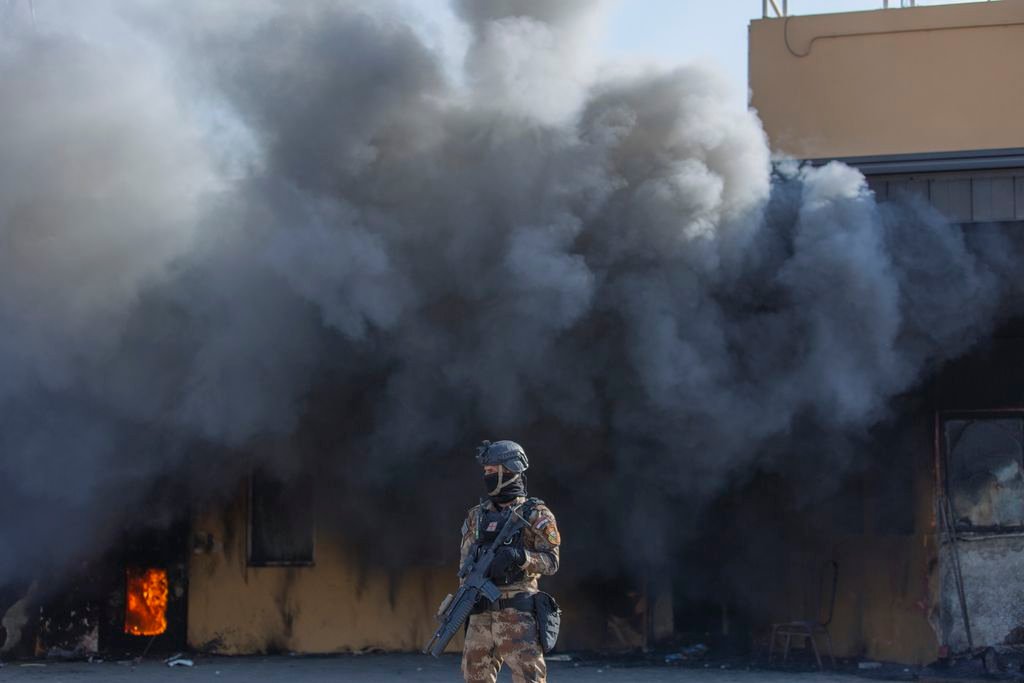
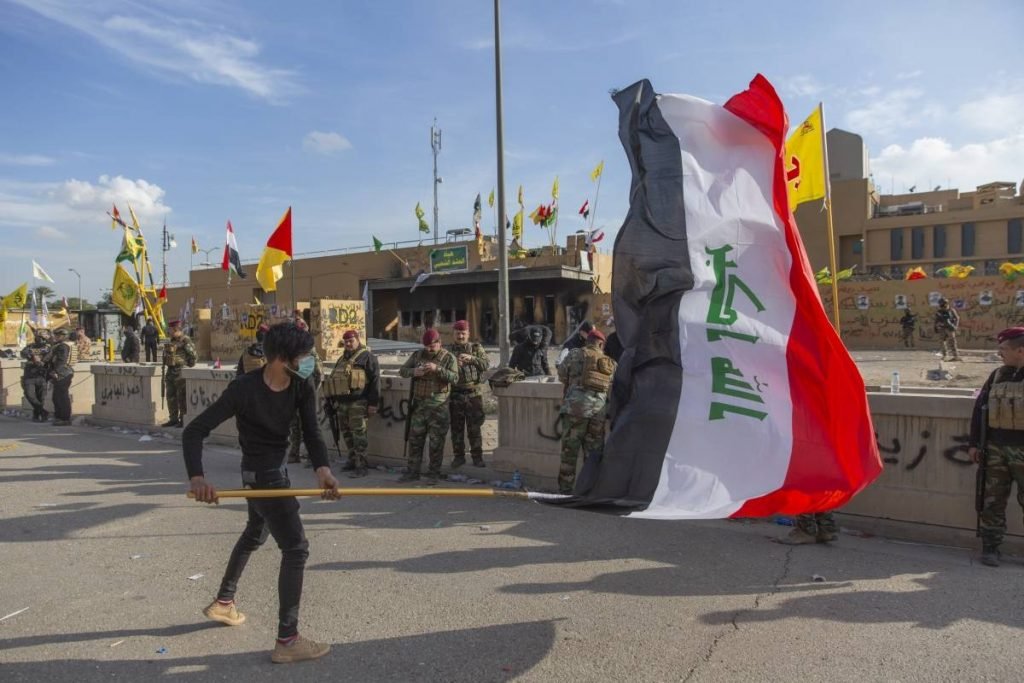
Hundreds of Iraqi militiamen and their supporters broke into the American Embassy compound in Baghdad, smashing a main door and setting fire to a reception area.
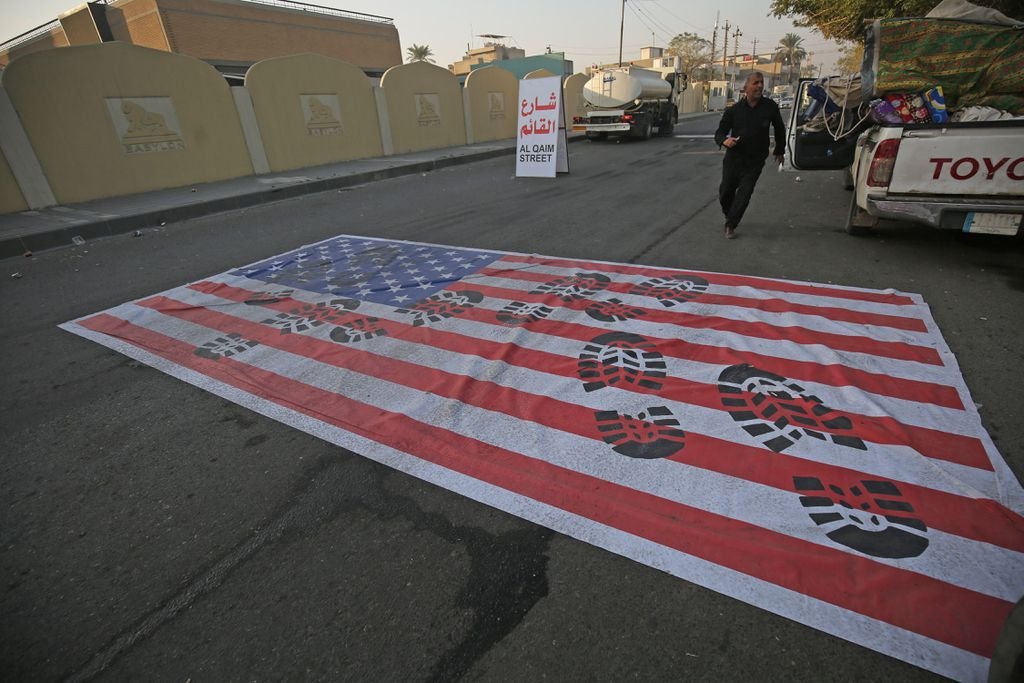
The marchers, many of them in militia uniforms, shouted “Death to America” and “Death to Israel” outside the compound, hurling water and stones over its walls. The group set up a tent camp overnight in front of the embassy and sprayed graffiti on its walls.
Some commanders of militia factions loyal to Iran joined the protesters outside the embassy in a strikingly bold move. Among them was Qais al-Khizali, the head of one of the most powerful Iranian-backed group in Iraq, who is on a US terror list, and Hadi al-Amiri, the head of the PMF, the umbrella group for the Iran-backed militias.
President Trump blamed Iran for the breach of the embassy compound in Baghdad and called on Iraq to protect the embassy.
Iran killed an American contractor, wounding many. We strongly responded, and always will. Now Iran is orchestrating an attack on the U.S. Embassy in Iraq. They will be held fully responsible. In addition, we expect Iraq to use its forces to protect the Embassy, and so notified!
There were no reports of casualties. The State Department said all American personnel were safe and that there were no plans to evacuate the embassy. Following the storming of the compound, Defence Secretary Mark Esper ordered roughly 750 additional American troops to deploy to the region, with another 3,000 placed on standby.
The political influence of the PMF has risen in recent years, and their allies dominate the parliament and the government. That has made them the target of the anti-government protesters, who set up a sprawling protest camp in central Baghdad, and who for weeks have been trying to enter the Green Zone. Iraqi security forces have beaten them back with tear gas and live ammunition, killing hundreds.
The militiamen and their supporters, however, were able to quickly enter the Green Zone on Tuesday and mass in front of the embassy, with little if any resistance from authorities. Iraqi security forces made no effort to stop the protesters as they marched to the heavily fortified Green Zone after a funeral for those killed in the airstrikes.
WEDNESDAY (JAN 1)
The Iran-backed militiamen withdrew from the American Embassy compound after two days of clashes with American security forces.
US Marines had fired tear gas in response to stones thrown by protesters but no one was reported killed and the tent camp dispersed after the PMF called on its supporters to depart, suggesting their message had “been received.”
“We rubbed America’s nose in the dirt,” said Fadhil al-Gezzi, a militia supporter.
Embassy workers and diplomats were ultimately holed up for more than 24 hours during the situation at the embassy. Ambassador Matt Tueller, the American ambassador to Iraq, was traveling at the time of the attack but State Department officials told The Hill that he would return to the embassy amid the tensions.
FRIDAY (JAN 3)
General Qassem Soleimani, Abu Mahdi al-Muhandis, and five others were killed in the early-morning airstrike at Baghdad International Airport, Iraqi officials said.
A senior Iraqi security official said the airstrike, conducted by an American drone, took place on an access road near the cargo area of the airport after Soleimani left his plane to be greeted by al-Muhandis and others. The official said the plane had arrived from either Lebanon or Syria.
Saudi Minister of State for Foreign Affairs Adel al-Jubeir has denied reports of separate mediation efforts with Iran, one particularly led by Prime Minister (PM) Imran Khan to reduce tension between the two states, Middle East Eye reported.
“We are not having any mediation. People come to us with ideas and we give them our response and our response is what we would like the Iranians to do and that is it, and we would like to see actions rather than words,” reports quoted Adel as saying.
He added that there was compelling evidence that the September attacks on Saudi oil installations were with Iranian-made missiles and “Tehran must stop its rampage across the world”.
“It [Iran] should behave like a normal country following international laws if it wants to be welcomed,” Adel said.
Earlier in September, two Saudi Aramco installations were attacked and the Kingdom blamed Iran for it.
The Saudi foreign minister’s statement comes amid efforts being made by PM Imran to bring both Riyadh and Tehran to the talks table, reportedly on United States (US) President Donald Trump’s suggestion.
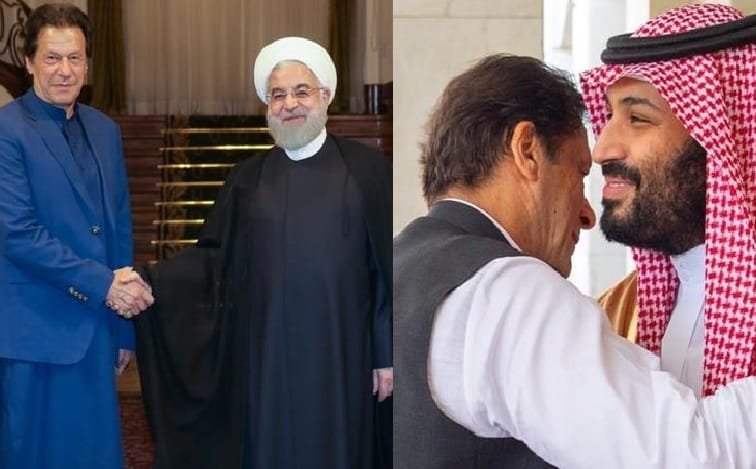
Imran, within the past few weeks, has also visited Saudi Arabia and Iran to push the two nations to bring an end to their long withstanding conflict.
The United States (US) carried out a secret cyber operation against Iran in the wake of the September 14 attacks on Saudi Arabia’s oil facilities, which Washington and Riyadh blame on Tehran, Dawn has reported.
According to the details, the operation took place in late September and took aim at Tehran’s ability to spread “propaganda”. The strike only affected physical hardware and did not provide further details.
The attack appears more limited than other such operations against Iran this year after the downing of an American drone in June and an alleged attack by Iran’s Revolutionary Guards on oil tankers in the Gulf in May.
US, Saudi Arabia, Britain, France and Germany have publicly blamed Iran for the Sept 14 attack, which denied involvement in the strike. The Iran-aligned Houthi militant group in Yemen later claimed responsibility for the attack.
Publicly, the Pentagon has responded by sending thousands of additional troops and equipment to bolster Saudi defences, which is the latest US deployment to the region this year.
Tensions in the Gulf have escalated sharply since May 2018, when Trump withdrew from the 2015 Joint Comprehensive Plan of Action with Tehran that put limits on its nuclear program in exchange for the easing of sanctions.
The United States (US) President Donald Trump has said that he did not speak to Prime Minister Imran Khan for mediation with Iran, it was Imran who thought it would be a good idea, Voice of America reported.
According to the details and from the tweet of Voice of America Deewa (VoA Deewa), contrary to what PM Imran claims that Trump had asked him to mediate between the US and Iran, Trump has said it was Imran Khan who approached him for mediation.
Contrary to Pakistani PM Imran Khan claim that Pres.Trump asked him to meditate between the US and Iran, Pres.Trump suggested it was Imran Khan who approached him.”But no I haven’t spoken–he actually asked me,he thought it would be a good idea to meet…”Trump said accor. to AFP pic.twitter.com/976ejRYFys
“Well, he’d like to do that, and we have a very good relationship. And there’s a chance that that could happen. But, no, I haven’t spoken. He actually asked me. He thought it would be a good idea to meet, VoA quoted President Trump as saying.
Imran Khan had earlier said that US President Trump had asked him to help defuse tensions with Iran. He also said that prior to arriving in New York he had visited Saudi Arabia and spoken to Saudi Crown Prince Mohammed bin Salman who also asked him to talk to Iranian President Hassan Rouhani.
PM added, “I immediately spoke to Rouhani after the meeting with Trump, but I can’t say anything right now more than this except that we’re trying and mediating”.
Tensions run high between Tehran and Washington since May last year when Trump abandoned a 2015 nuclear deal and began reimposing sanctions on Iran in a stated campaign of “maximum pressure”.