Tag: Iran

  • Iranian footballer Amir Nasr-Azadani sentenced to death for supporting women’s rights and ‘basic freedom’

    Iranian footballer Amir Nasr-Azadani sentenced to death for supporting women’s rights and ‘basic freedom’

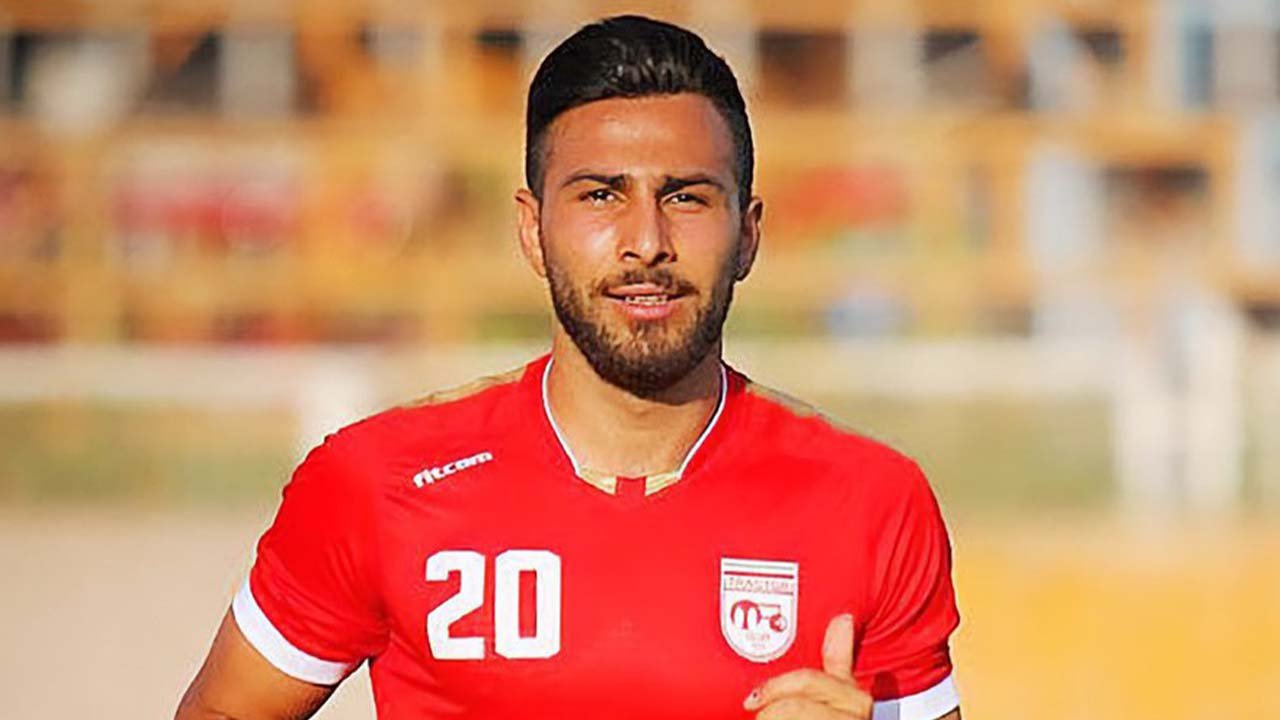
    Iranian footballer Amir Reza Nasr Azadani has been sentenced to death after he was arrested last month for participating in worldwide protests against the country’s clerical establishment.

    Azadani was arrested in connection to the deaths of three security personnel during protests in Isfahan and accused of waging war against God, according to Iran’s ISNA news agency.

    The 26-year-old Iranian league footballer is among at least 27 other Iranians facing death sentences in connection to the protests that have engulfed the country for almost three months.

    Two of those men — Majidreza Rahnavard and Mohsen Shekari, both 23 years old — were publicly hanged this month.

    The world union of professional footballers, FIFPRO, said it was “shocked and sickened” by Azadani’s sentencing “after campaigning for women’s rights and basic freedom in his country.”

    “We stand in solidarity with Amir and call for the immediate removal of his punishment,” the organisation wrote on Twitter.

    Prominent current and former footballers expressed solidarity and called for executions to end.

    Former Iranian international star Ali Karimi and Iran’s World Cup team goalkeeper Alireza Beiranvand used their social media platforms to call for the sentence to be revoked and an end to executions.

    Asadollah Jafari, the judiciary chief of Isfahan, was quoted by local media as saying that Mr Azadani was a member of an “armed group that operated in a networked and organised manner with the intent of fighting the basis of the Islamic Republic establishment.”
  • Iran abolishes ‘morality police’

    Iran abolishes ‘morality police’

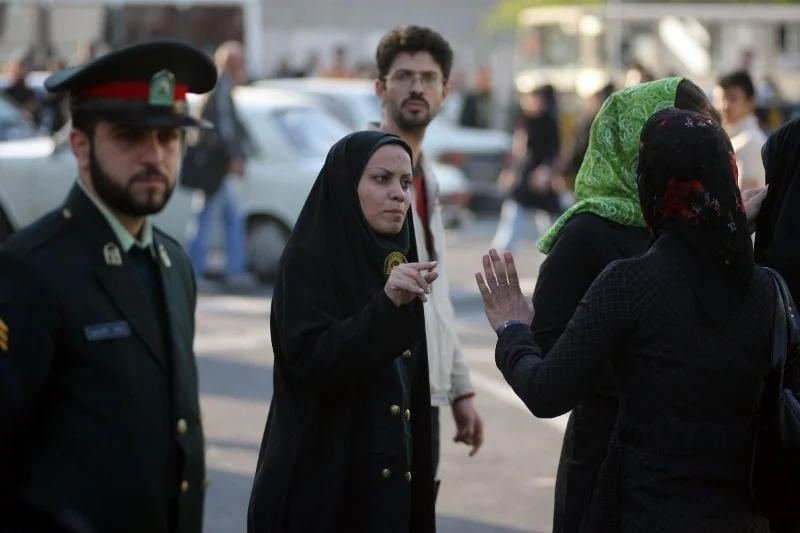
    After more than two months of protests triggered by the arrest of Mahsa Amini for allegedly violating the country’s strict female dress code, Iran’s local media said on Sunday that the country has suspended it’s morality police.

    “Gasht-e-Ershad,” which translates as “guidance patrols,” and is widely known as the “morality police,” was a unit of Iran’s police force established under former hardline president Mahmoud Ahmadinejad.

    “Morality police have nothing to do with the judiciary,” and have been abolished, Attorney General Mohammad Jafar Montazeri said while answering a question from a participant at a religious conference.

    The announcement to disband the “morality police” came just a day after Montazeri told local reporters that “Both parliament and the judiciary are working [on the issue],” on whether the law requiring women to cover their heads needs to be changed.

    Following the death of 22-year-old Mahsa Amini in the custody of the morality police in September, the country has witnessed daily rallies, primarily spearheaded by women, calling for an end to the rule of hard-line clerics.

  • Pakistan engaged in severe violations of religious freedom: US

    Pakistan engaged in severe violations of religious freedom: US

    The United States (US) has placed Pakistan on a list of countries that are “engaged in or tolerated particularly severe violations of religious freedom” during 2022.

    US Secretary of State Antony Blinken announced this on Friday and said, “Around the world, governments and non-state actors harass, threaten, jail, and even kill individuals on account of their beliefs.”

    He noted that the US will not stand by in the face of these abuses.

    Apart from Pakistan, the US has placed China, Iran, North Korea, Russia, Saudi Arabia, Tajikistan, Turkmenistan and others. However, Algeria, the Central African Republic, Comoros, and Vietnam are on the Special Watch List for engaging in, or tolerating, severe violations of religious freedom.

    This is not the first time that Pakistan is on the list of religious freedom violators.

    The Trump administration first placed Pakistan on this list in December 2018 and retained it in 2020 as well. The Biden administration, which came to office in January last year, retained the old list with some changes, but kept Pakistan on it.

  • At least 50 minors killed in Iran over participating in protests

    At least 50 minors killed in Iran over participating in protests

    The Iranian government’s crackdown on demonstrators asking for social freedom and political change that has rocked the country for the past two months has had a severe impact on the country’s youth, reports The New York Times.

    Human rights advocates and lawyers familiar with the situation have talked about the affect on the country, where the average age of protestors is said to be just 15-years-old. In an effort to quell dissent, authorities have raided schools and carried out arrests, beatings in custody, shootings and killing of protestors on the streets. The lives of countless others have been disrupted in other ways.

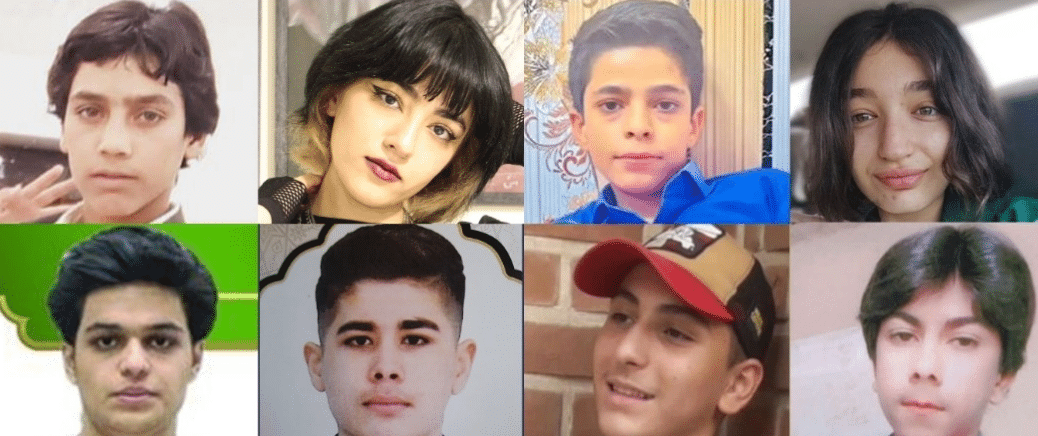
    The authorities are targeting thousands of minors under the age of 18, for taking part in the protests. Human rights groups in Iran have said that at least 50 minors have been killed by government authorities since the protests started.

    Following the death of Mahsa Amini, a 22-year-old woman, in the custody of the morality police in September, the country has witnessed daily rallies, primarily spearheaded by women, calling for an end to the rule of hard-line clerics.

  • ‘No state, entity, individual has the right to decide’: Malala comes out in support of Iranian women protesting against forced Hijab

    ‘No state, entity, individual has the right to decide’: Malala comes out in support of Iranian women protesting against forced Hijab

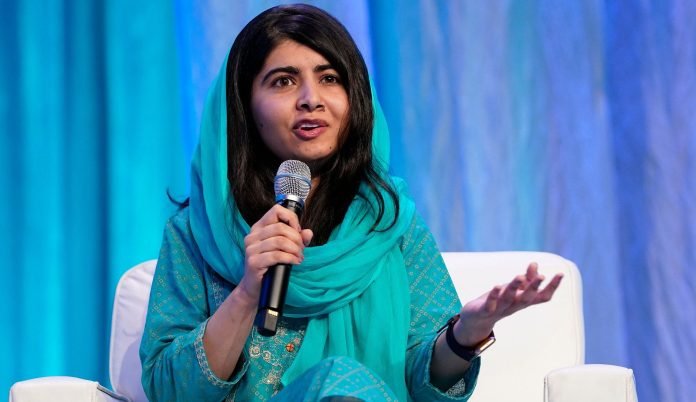
    Nobel laureate and social activist Malala Yousafzai has shared a video message to show solidarity with the women of Iran who are protesting for their rights.

    “No state, entity, individual has the right to decide what a woman should do with her body, what she should wear and how she should wear,” said Malala in the video message.
    “To the Iranian girls and young women who are in the streets to demand freedom and safety: You are already changing the world with your courage,” she wrote in the caption of the video.

    “Zan! Zendigi! Azadi! Women! Life! Freedom,” she added.

    Widespread protests have taken hold of Iran since the death of Mahsa Amini, a 22-year-old who breathed her last in September after being arrested by a police unit responsible for forcing Iran’s strict dress code for women. She was taken into custody for not complying with hijab rules.

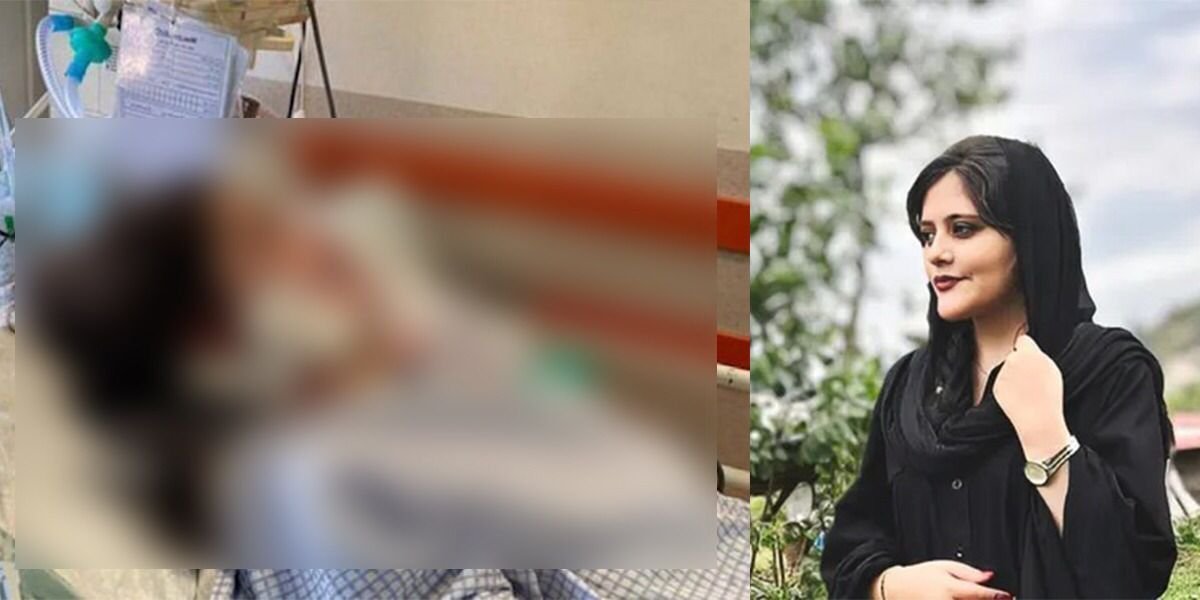
    Mahsa Amini was beaten while inside a police van when she was picked up in Tehran. Photographs of Mahsa lying in a hospital bed went viral, showing the young woman in a coma with her head wrapped in bandages and breathing through tubes.

    Since then, protests have spread across the country, including Tehran, Mashad,  Esfahan, Rasht, Keramn, Chabahar and Sanandaj. Human rights agencies have said that over 244 protestors, including 32 children, have been killed by security forces while 12,500 have been arrested.

  • Musician ‘Iranian sisters’ sing Bella Ciao in solidarity with Masha Amini

    Musician ‘Iranian sisters’ sing Bella Ciao in solidarity with Masha Amini

    Two Iranian sisters have sung a Persian version of revolutionary Italian folk song “Bella Ciao” in response to Mahsa Amini’s death in Iran.

    The two Iranian sisters, Samin and Behin Bolouri, recorded the Persian version of Bella Ciao and uploaded it on Instagram.

    The translated version of the caption read: “We are not awake until tomorrow.”

    The video has garnered over five million views.

    Amini, a 22-year-old Iranian woman breathed her last days after being arrested by a police unit responsible for forcing Iran’s strict dress code for women. She was taken into custody for not complying with hijab rules.

    Mahsa Amini was beaten while inside a police van when she was picked up in Tehran on Tuesday. Photographs of Mahsa lying in a hospital bed have gone viral, showing the young woman in a coma with her head wrapped in bandages and breathing through tubes.

    #MahsaAmini became one of the top hashtags on Persian-language Twitter as Iranians fumed over the death of Amini. Later, women in Iran protested against the death of Amini by setting their hijabs on fire. Her death has sparked widespread protests in Iran.

    At least 70 people have died in protests and over 1,200 have been arrested following Amini’s death.

  • Iran President declines interview by CNN anchor who refuses to wear hijab

    Iran President declines interview by CNN anchor who refuses to wear hijab

    Iranian President Ebrahim Raisi didn’t turn up for a CNN interview when the interviewer, Christiane Amanpour, refused to wear a hijab during the taping.

    Amanpour took to Twitter to explain the incident, stating that the interview was long planned and this would have been President Raisi’s first-ever interview on US soil. However, things didn’t go as planned.

    “An aide came over and said that the President is suggesting that I wear a headscarf because it’s the holy months of Muharram and Safar”, she said while adding that the aide made it clear that the “Interview would not happen if Amanpour did not wear a headscarf”.

    She said that she “politely declined”, stressing that she was in New York, where there is no law or tradition regarding headscarves. “I pointed out that no previous Iranian president has required this when I interviewed them outside Iran,” she pointed out.

    The journalist concluded by saying that because of the situation going on in Iran, it would have been an “important moment” to speak with President Raisi

    “And so we walked away. The interview didn’t happen. As protests continue in Iran and people are being killed, it would have been an important moment to speak with President Raisi.”

    Anti-government protests erupted across Iran last week over the death of 22-year-old Mahsa Amini while in custody, after having been arrested by Iran’s morality police on an accusation of violating the law on head scarves.

    However, Iranian officials have claimed that Amini died after suffering a “heart attack” and falling into a coma, but her family has said she had no pre-existing heart condition.

    Following the incident, thousands of people have taken to the streets. In the videos which are circulating on social media, women can be seen cutting their hair and burning their hijabs as a protest. According to media outlets, at least eight people have been killed in the demonstrations.

    It is pertinent to mention that since the 1979 Islamic Revolution, it has been compulsory for women to wear the hijab in Iran.

  • ‘Today’s India is changed’: Bilawal on getting no flood aid from India

    ‘Today’s India is changed’: Bilawal on getting no flood aid from India

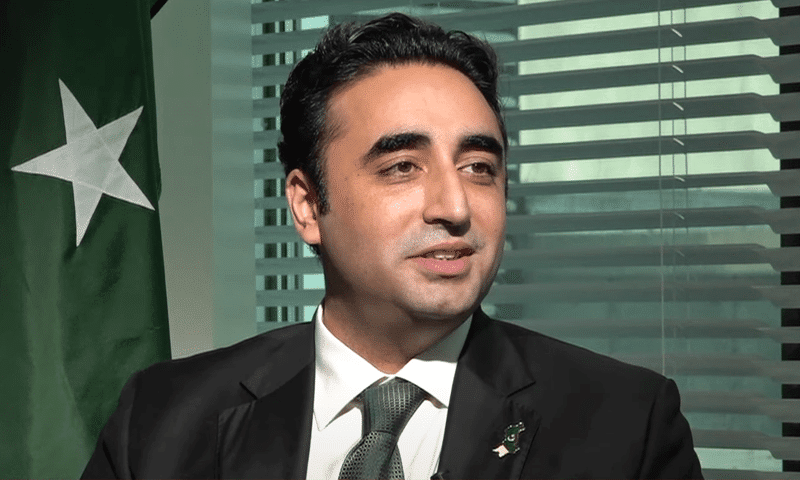
    Foreign Minister (FM) Bilawal Bhutto-Zardari, in an interview with France 24, said that Pakistan is grateful for the global assistance it has received however the country does not want aid, it wants justice.

    He said, “Our message is that we don’t want to beg, we don’t want aid, we want justice. This is a global catastrophe as a result of global action and it requires a global situation.”

    When asked if India had offered any help and whether Pakistan had asked for any, the minister termed Pakistan-India relations as “complicated”.

    “We have a long and complicated history. unfortunately, India today is a changed India and is no longer the secular country promised by its founding fathers for all its citizens,” he said.

    He, further added that the country “is increasingly becoming a Hindu-supremacist India at the expense of its Christian and Muslim minorities not only within India but unfortunately in the disputed region of Indian Illegally Occupied Jammu and Kashmir (IIOJK).”

    He said Pakistan is seeing multiple challenges in the future such as health catastrophe, disease epidemics, crop shortage, livestock loss, food security, and more. However, he expressed hope saying, “Every crisis creates an opportunity and in this crisis, the opportunity is that we must build back in a more resilient way and greener way.”

    On Afghanistan and its tough rules and regulations on women, Bilawal said Pakistan had still not officially recognised the Afghan government.

    He said it would be in the Afghan government’s favour to fulfil its promises to the international community and its nation to gain legitimacy and a path to international recognition.

    When asked about the recent protest happening in Iran over a young woman’s death allegedly because of the morality police, Bilawal said he had seen the Iranian foreign minister’s response on the issue and said he trusted the neighbour to “keep to their word” for an incident inquiry despite “living in extremely difficult circumstances”.

  • Woman in Iran beaten to death by police for allegedly not wearing headscarf properly

    Woman in Iran beaten to death by police for allegedly not wearing headscarf properly

    A 22-year-old Iranian woman breathed her last on Friday, days after being arrested by a police unit responsible for forcing Iran’s strict dress code for women. She was arrested for not complying with hijab rules.

    According to eyewitnesses, Mahsa Amini was beaten while inside a police van when she was picked up in Tehran on Tuesday.
    Photographs of the Mahsha lying in a hospital bed have gone viral, showing the young woman in a coma with her head wrapped in bandages and breathing through tubes.

    Police Claim:

    Police have denied the allegations of beating her to death saying Ms Amini had “suddenly suffered a heart problem”.
    However her father has denied the claims made by police. “Authorities have said my daughter suffered from chronic medical conditions. I personally deny such claims as my daughter was fit and had no health problems,” Amini’s father told pro-reform Emtedad news website on Sunday.

    Protests:

    MahsaAmini became one of the top hashtags on Persian-language Twitter on Sunday as Iranians fumed over the death of Amini. The hashtag had gained 1.63 million mentions on Twitter by Sunday afternoon.

    As enraged citizens took to the streets to protest, at least 30 persons were injured. People are protesting against strict Iranian hijab laws and against the existence of “guidance patrol.”

  • LGBT activists allegedly sentenced to death in Iran on accusation of promoting homosexuality

    LGBT activists allegedly sentenced to death in Iran on accusation of promoting homosexuality

    A court in Iran sentenced two LGBTQ rights activists to death on allegations of encouraging homosexuality.

    According to the Hengaw Kurdish rights organisation, the two women, Zahra Sedighi Hamedani, 31, and Elham Chubdar, 24, were sentenced to death by a court in the northwestern town of Urmia.

    They were convicted of “spreading corruption on earth.” This accusation is routinely levied on individuals who are found to have violated the country’s sharia regulations.

    They were also charged with preaching Christianity and communicating with international media.

    Iran’s judiciary has confirmed the sentences but said they were connected to human trafficking and not with LGBT activism.

    “Contrary to the news published in cyberspace and the rumours that have been spread, these two individuals have been accused of deceiving women and young girls and trafficking them to one of the countries of the region,” the judiciary’s news outlet Mizan reported.

    Homosexuality is illegal in Iran, and same-sex intimacy for both men and women is officially criminalised in the penal code.