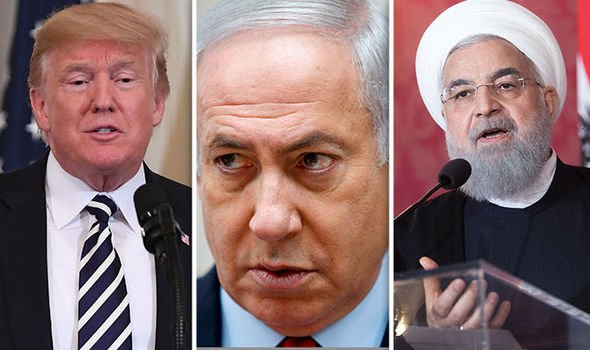
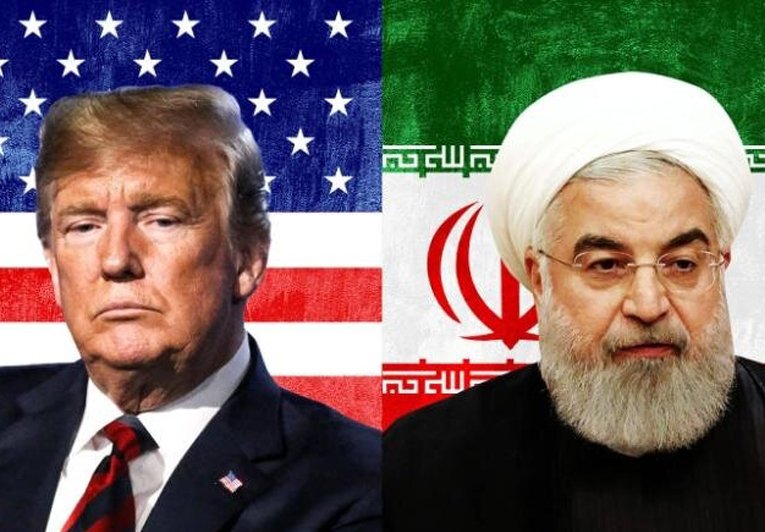
As tensions continue to soar between Iran and the United States (US) over the past week, and both Tehran and Washington issuing threats against each other, Prime Minister (PM) Benjamin Netanyahu has said that Israel should not be dragged into the conflict.
According to Anadolu Agency, Netanyahu, while chairing a security cabinet meeting Monday, said the killing of top Iranian General Qassem Soleimani was carried out by the US, stressing his country was “not involved”.
Soleimani, commander of Islamic Revolutionary Guards Corps’ Quds Forces, and Abu Mahdi al-Muhandis, vice president of the Hashd al-Shaabi group, were assassinated in a US drone strike on Friday outside Baghdad International Airport.
With the dramatic escalation making headlines and Iran issuing threats of severe consequence, Netanyahu has urged his ministers to reiterate Israel’s support for America’s right to defend itself when speaking to the media.
During the meeting, top Israeli intelligence officials reassured the ministers that the likelihood of a retaliatory attack by Iran against Israel was low, since “Israel stayed at a distance from the incident”, according to Channel 13.
Soleimani’s slaying marked a new high in tensions between the US and Iran, which have often been at a fever pitch since President Donald Trump chose in 2018 to unilaterally withdraw Washington from a nuclear pact world powers struck with Tehran.
Iran has now promised to avenge Soleimani’s killing and announced that it would stop complying with the 2015 nuclear deal. Trump has since threatened to target cultural sites in Iran.
Tensions between the United States (US) and Iran have escalated to an all-time high after top Iranian commander Qassem Soleimani was killed on Friday in a US strike on Baghdad’s international airport.
The development has been confirmed by both Tehran and Washington, and the Pentagon has said that President Donald Trump “ordered Soleimani’s killing”, after a pro-Iran mob this week laid siege to the US embassy.
Following Soleimani’s death, Trump tweeted an image of the US flag without any further explanation.
The pre-dawn developments mark the most major escalation yet in a feared proxy war between Iran and the US on Iraqi soil.
Here’s everything you need to know about the dramatic escalation:
WHO WAS QASSEM SOLEIMANI?
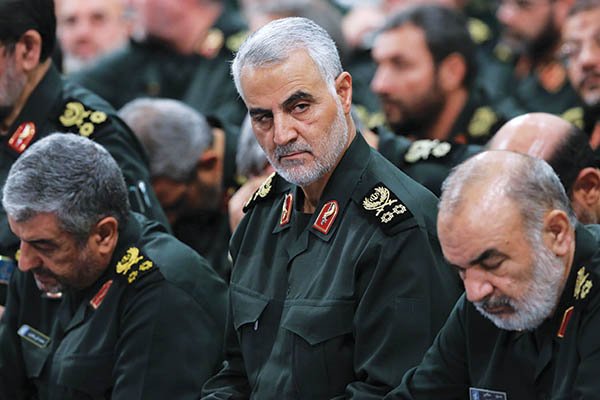
Head of Iran’s Islamic Revolutionary Guard Corps’ (IRGC) Quds Force Soleimani acquired celebrity status at home and abroad as leader of the foreign arm of the Revolutionary Guards and for his key role in fighting in Syria and Iraq.
He was instrumental in the spread of Iranian influence in the Middle East, which the US and Tehran’s regional foes Saudi Arabia and Israel have struggled to keep in check, Al Jazeera reported.
Soleimani survived several assassination attempts against him by Western, Israeli and Arab agencies over the past 20 years.
Under Soleimani’s leadership, the IRGC vastly expanded its capabilities, becoming a significant influence in intelligence, financial, and political spheres beyond Iran’s borders.
WHY WAS HE KILLED?
It all started on Sunday with US military airstrikes in Iraq and Syria that killed 25 fighters and left militias vowing revenge.
SUNDAY (DEC 29)
According to a report, the US military carried out airstrikes on five sites in Iraq and Syria against the Iranian-backed Kataeb Hezbollah militia, calling it retaliation for last week’s killing of an American contractor in a rocket attack on an Iraqi military base that it blamed on the group.
At least 25 fighters were killed and dozens wounded. The targeted group, which is a separate force from the Lebanese militant group Hezbollah, operates under the umbrella of the state-sanctioned militias known collectively as the Popular Mobilization Forces, or PMF. Abu Mahdi al-Muhandis, the deputy commander of the PMF and a founder of Kataeb Hezbollah, was also killed in the strikes Thursday that killed Soleimani in Baghdad.
The two were scheduled to meet and were leaving Soleimani’s plane at the airport when Friday’s attack occurred.
MONDAY (DEC 30)
The Iranian-backed Iraqi militia vowed to retaliate while a spokesperson for Kataeb Hezbollah denied the group was behind last week’s rocket attacks, including the one that killed the American contractor, saying Washington was using them as a pretext to attack his group.
“These forces must leave,” he said of American troops in Iraq, calling Sunday’s attack a “crime” and a “massacre”.
The Iraqi government said it would reconsider its relationship with the US-led coalition — the first time it has said it will do so since an agreement was struck to keep some US troops in the country. It called the attack a “flagrant violation’’ of its sovereignty.
TUESDAY (DEC 31)
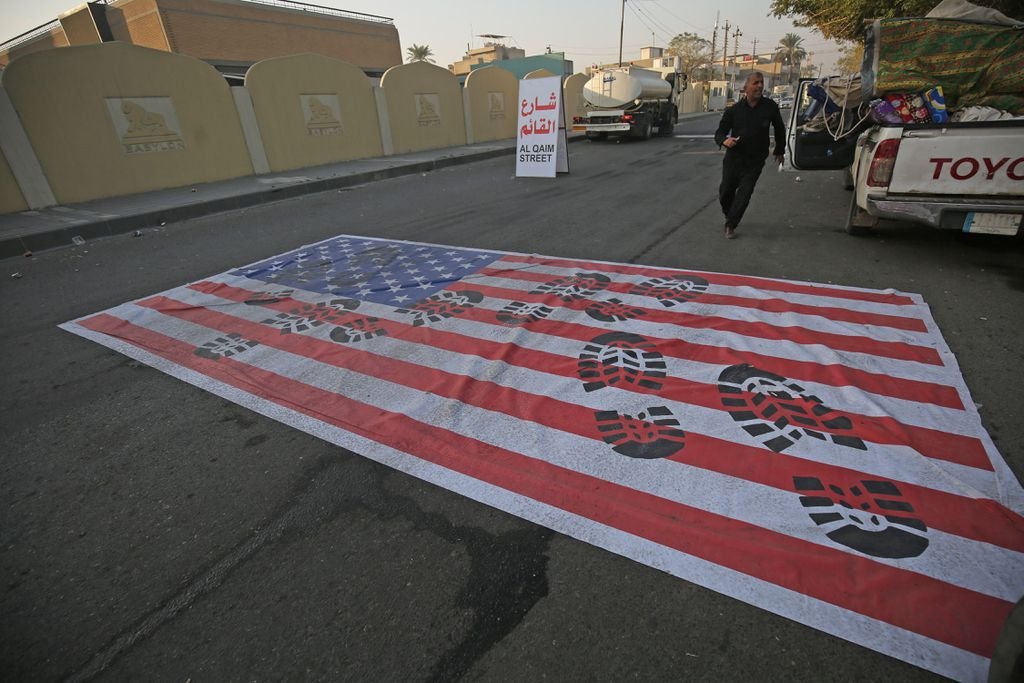
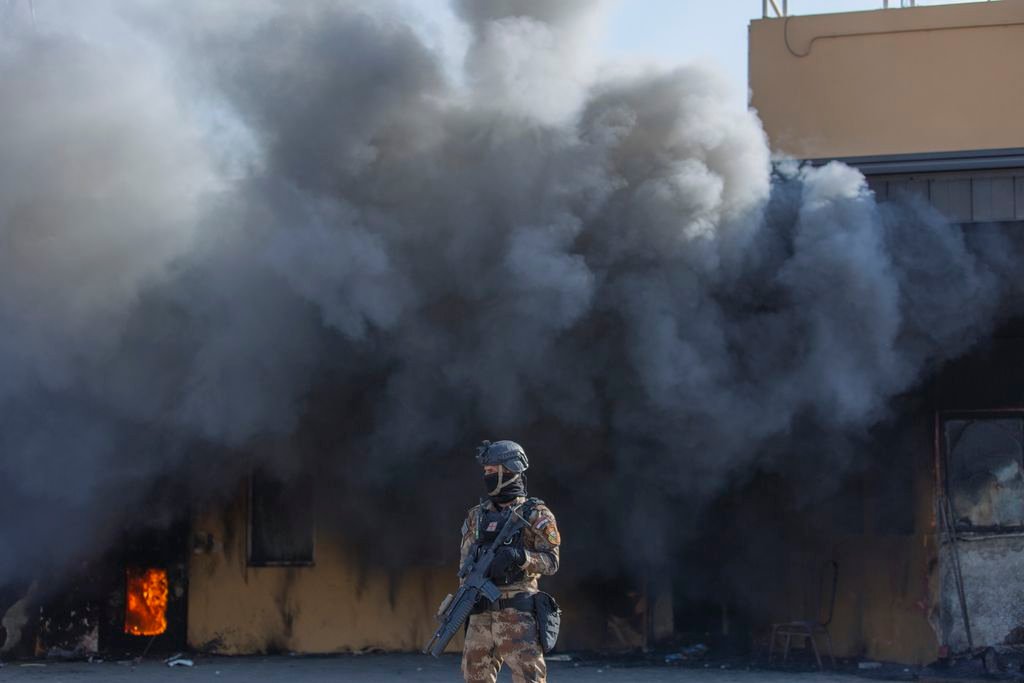
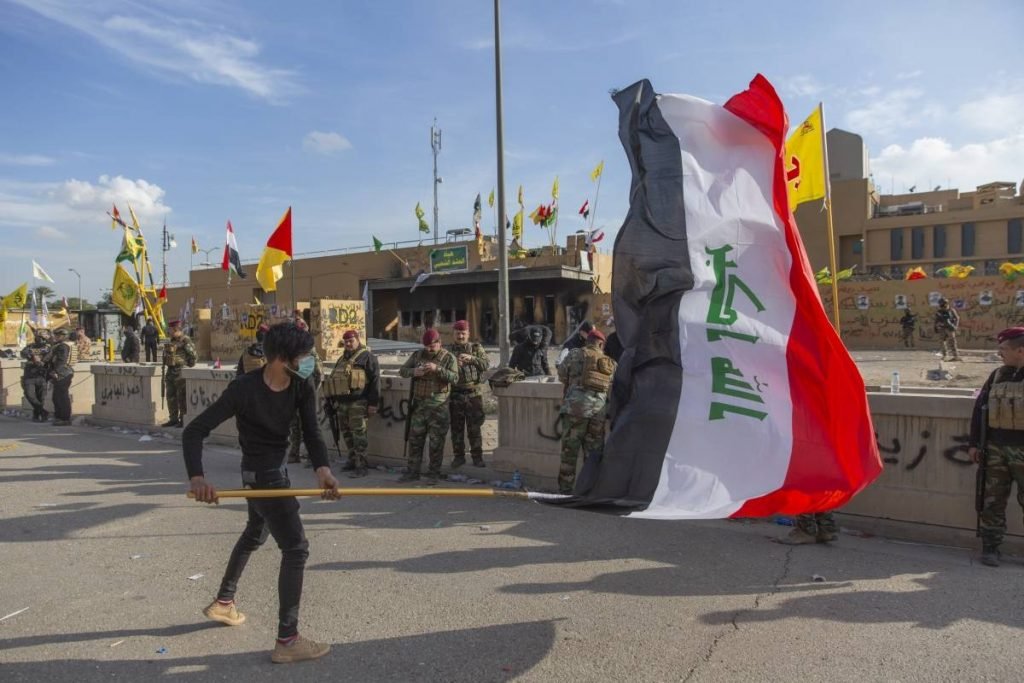
Hundreds of Iraqi militiamen and their supporters broke into the American Embassy compound in Baghdad, smashing a main door and setting fire to a reception area.
The marchers, many of them in militia uniforms, shouted “Death to America” and “Death to Israel” outside the compound, hurling water and stones over its walls. The group set up a tent camp overnight in front of the embassy and sprayed graffiti on its walls.
Some commanders of militia factions loyal to Iran joined the protesters outside the embassy in a strikingly bold move. Among them was Qais al-Khizali, the head of one of the most powerful Iranian-backed group in Iraq, who is on a US terror list, and Hadi al-Amiri, the head of the PMF, the umbrella group for the Iran-backed militias.
President Trump blamed Iran for the breach of the embassy compound in Baghdad and called on Iraq to protect the embassy.
Iran killed an American contractor, wounding many. We strongly responded, and always will. Now Iran is orchestrating an attack on the U.S. Embassy in Iraq. They will be held fully responsible. In addition, we expect Iraq to use its forces to protect the Embassy, and so notified!
There were no reports of casualties. The State Department said all American personnel were safe and that there were no plans to evacuate the embassy. Following the storming of the compound, Defence Secretary Mark Esper ordered roughly 750 additional American troops to deploy to the region, with another 3,000 placed on standby.
The political influence of the PMF has risen in recent years, and their allies dominate the parliament and the government. That has made them the target of the anti-government protesters, who set up a sprawling protest camp in central Baghdad, and who for weeks have been trying to enter the Green Zone. Iraqi security forces have beaten them back with tear gas and live ammunition, killing hundreds.
The militiamen and their supporters, however, were able to quickly enter the Green Zone on Tuesday and mass in front of the embassy, with little if any resistance from authorities. Iraqi security forces made no effort to stop the protesters as they marched to the heavily fortified Green Zone after a funeral for those killed in the airstrikes.
WEDNESDAY (JAN 1)
The Iran-backed militiamen withdrew from the American Embassy compound after two days of clashes with American security forces.
US Marines had fired tear gas in response to stones thrown by protesters but no one was reported killed and the tent camp dispersed after the PMF called on its supporters to depart, suggesting their message had “been received.”
“We rubbed America’s nose in the dirt,” said Fadhil al-Gezzi, a militia supporter.
Embassy workers and diplomats were ultimately holed up for more than 24 hours during the situation at the embassy. Ambassador Matt Tueller, the American ambassador to Iraq, was traveling at the time of the attack but State Department officials told The Hill that he would return to the embassy amid the tensions.
FRIDAY (JAN 3)
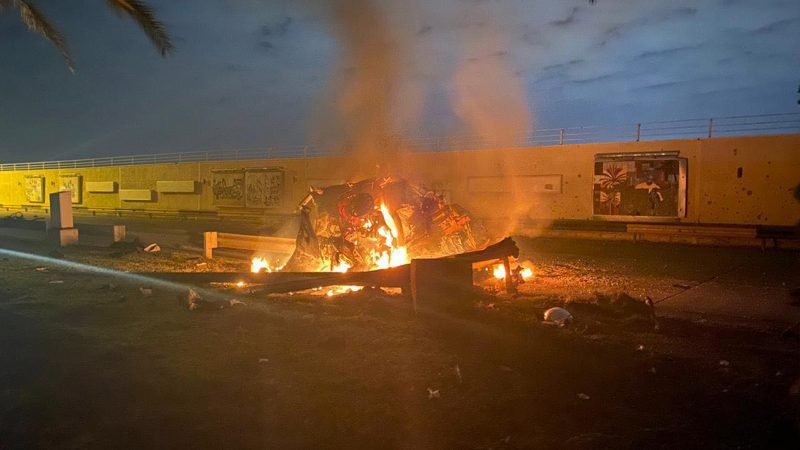
General Qassem Soleimani, Abu Mahdi al-Muhandis, and five others were killed in the early-morning airstrike at Baghdad International Airport, Iraqi officials said.
A senior Iraqi security official said the airstrike, conducted by an American drone, took place on an access road near the cargo area of the airport after Soleimani left his plane to be greeted by al-Muhandis and others. The official said the plane had arrived from either Lebanon or Syria.
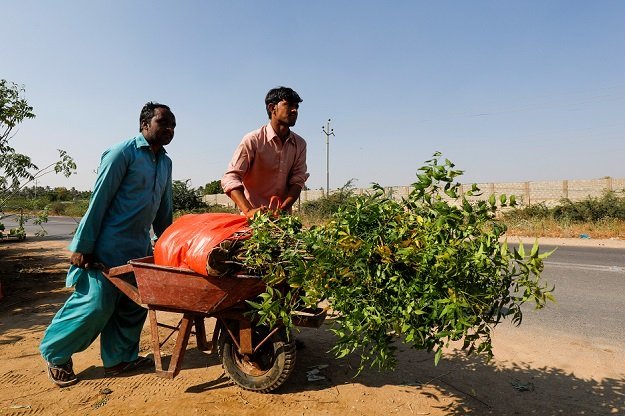
A retired industrialist from Karachi sent thousands of saplings to Iraq on Friday to bring shade to pilgrims.
Mohammedi Durbar, 85, wants to plant nearly 50,000 trees along the entire 80-km pilgrimage route between Iraq’s Najaf and Kerbala. In a conversation with Reuters, Durbar said the idea came to him when his relatives returned from a holy site with sunburn.
Millions of people make the pilgrimage every for the religious ritual of Arbaeen. They walk most of the way under a baking sun. Among the worshippers last year were Durbar’s grandson and daughter-in-law, who returned to the country tanned and with photographs showing a barren landscape.
This was when Durbar got the idea and then travelled to Iraq, spoke to officials and got permission for his project, and a promise the trees would be cared for.
He also planted some trees in Najaf to see if they could thrive there.
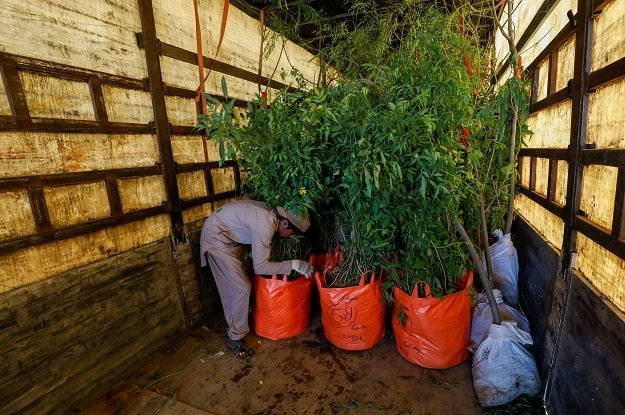
A first batch of 9,800 saplings of eight types of trees, up to eight months old, set off from Karachi by truck on Friday, for their journey across Iran to Iraq. The shipment was delayed about a month because of anti-government protests in Iraq and last-minute visa delays.
Durbar says the saplings will be well looked after on their journey with the truck stopping to ensure they get regular sunshine and water. He is confident they will arrive in good shape and plans to travel back to Iraq to work on the plan.
The trees will spend the winter in a nursery in Baghdad, with the planting due to begin in March. He said about a dozen people would plant the trees, with the help of small digger he is also sending from Pakistan.
Durbar estimates it will take three years to plant all of the trees at a cost of Rs25 million, which he is paying. He is not sure if he will live to see pilgrims walking under his trees, but he knows he has found his calling after a lifetime in the industry.
“I thank God, at this age, he has put me on the right path,” he said. “Partnership with nature is good.”