Tag: Ishaq Dar

  • Who would be Shahid Khaqan Abbasi’s pick for Finance Minister? Not Ishaq Dar

    Former Prime Minister (PM) Shahid Khaqan Abbasi has said that if he had been the premier of the country, his finance minister would have been Miftah Ismail and not Ishaq Dar.

    In an interview with a web channel, Abbasi said that Miftah Ismail had fulfilled the responsibility given to him by Prime Minister Shehbaz Sharif after the coalition government took charge.

    Abbasi was asked if the current Finance Minister, Ishaq Dar, was running the country’s economy satisfactorily. Abbasi responded by saying that history will decide the success of Ishaq Dar.

    “Whatever responsibility the Prime Minister gave to Miftah Ismail, he did it. Ministers work on the authority of the Prime Minister. He decided that Ishaq Dar should be the one to lead the finance ministry, so he brought him in. Now it is the responsibility of the Premier and the Finance Minister to play their part in fixing the country’s economy. Only history will tell how far they will succeed,” said Abbasi.

    It is pertinent to mention that Miftah resigned from the position of finance minister in September last year after Ishaq Dar returned from London and took over.

  • Ishaq Dar denies reports of financial emergency amidst economic turmoil

    Ishaq Dar denies reports of financial emergency amidst economic turmoil

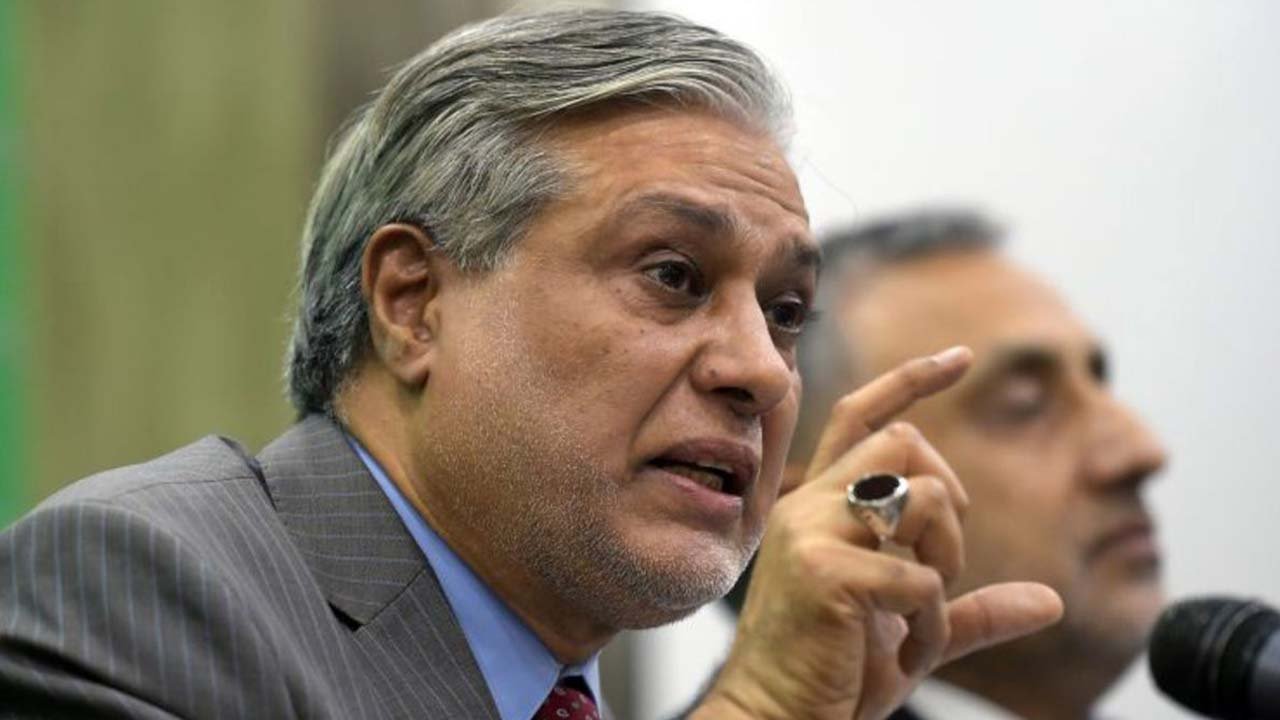
    On Friday, Federal Minister for Finance and Revenue Ishaq Dar denied reports suggesting Pakistan should impose a financial emergency, amidst constant criticism over the current economic turmoil. He berated Imran Khan-led Pakistan Tehreek-e-Insaf (PTI) for spreading “fake news” about Pakistan heading towards default. Dar blamed the previous PTI government for pushing the nation of 220 million people on the brink of default, claiming that it was the coalition government that saved the country by prioritising the state over politics.

    Dar recalled that when the Pakistan Democratic Movement (PDM) ousted Khan through a no-confidence motion, the leaders of the coalition government had decided to keep aside all political interests in the wider interest of the state. He stated that the PTI leaders have been calling him out since the rupee plunged to a historic low of Rs285.09 a day earlier while February’s inflation hit nearly a 50-year high of 31.5 per cent.

    Expressing his surprise and concerns over Khan’s continuous criticism of the coalition government, he said: “I am unable to understate whether he (Khan) has a problem in his leg or brain.” Instead of protecting the national interest, PTI’s leadership tried to sabotage the International Monetary Fund (IMF) deal, Dar said. “Khan’s attitude is selfish.”

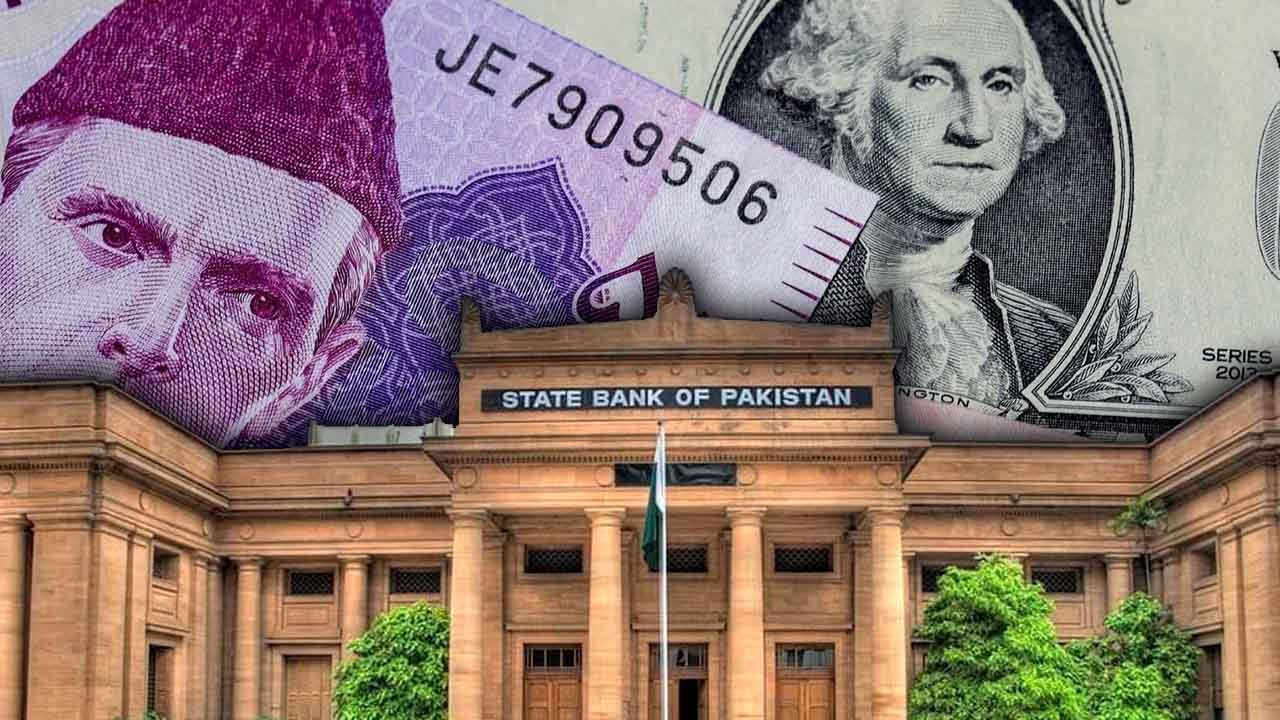
    According to Geo, Dar reiterated that Pakistan has neither defaulted in the past nor will it default in the future. Referring to Khan’s remarks about default, the finance minister said that the PTI chairman’s statements adversely affect the country’s financial markets. He, however, admitted that the State Bank of Pakistan’s (SBP) reserves fell below $3 billion. It should be noted that the liquid foreign reserves held by the country stand at around $9 billion as of February 24 while the net reserves held by commercial banks stand at around $5.5 billion.

    The finance minister revealed that China has renewed a facility under which Pakistan expected an additional inflow of $500 million in the “next few days”. He highlighted the PDM-led government’s economic achievements, stating that the foreign exchange reserves held by the SBP climbed to $3.8 billion from $2.8 billion recorded last month. He maintained that the government returned $6.5 billion of foreign debt during the current fiscal year.

    Dar drew a comparison between the economic performance of nearly four years of PTI and almost 11 months of PDM-led government. He shared numeric data to prove that Khan and Co. did everything to “destroy the country,” but the numbers show who is sincere with the country. Dar argued that the opposition — the PTI — has not really improved Pakistan’s standing. However, Pakistan will escape the economic quagmire, he said, adding that the country is making repayments to bilateral and multilateral lenders and has made payments beyond its capacity.

  • All economic indicators moving in right direction: Dar dismisses rumors of Pakistan’s default

    All economic indicators moving in right direction: Dar dismisses rumors of Pakistan’s default

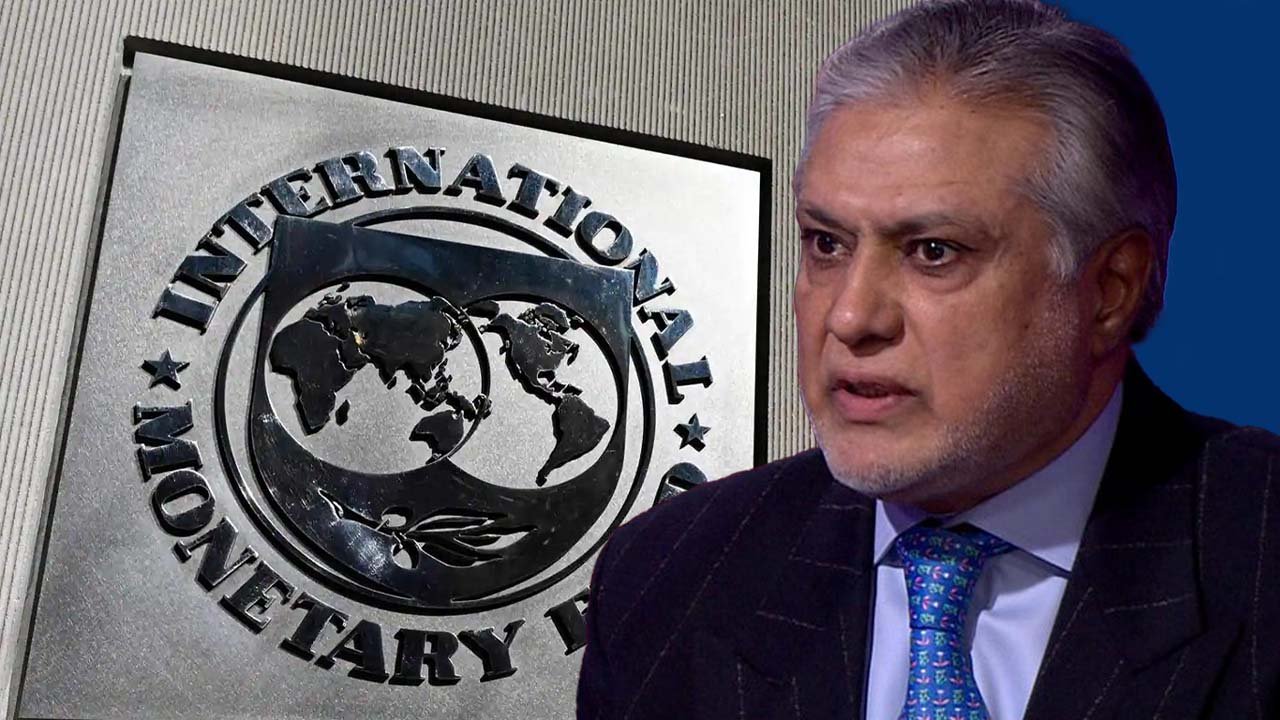
    According to the announcement by Pakistan’s Federal Finance Minister Ishaq Dar, negotiations between Pakistan and the International Monetary Fund (IMF) are about to conclude, and a staff-level agreement is expected to be signed soon.

    The minister also dismissed rumours of Pakistan defaulting as completely false and stated that all economic indicators are moving in the right direction. He highlighted that the State Bank of Pakistan’s foreign exchange reserves have increased and that foreign commercial banks have started extending facilities to Pakistan.

    However, the Pakistani rupee has plunged to a new all-time low of Rs290.18 against the US dollar in the interbank market, which is causing concern among importers who are panic buying dollars while exporters are reportedly withholding selling the greenback in anticipation of a higher exchange rate.

    It is reported that the IMF wants the value of the rupee in the interbank market to match its value in the black currency market.

  • Govt to present Finance Bill 2023 today to fulfil IMF conditions

    Govt to present Finance Bill 2023 today to fulfil IMF conditions

    The federal government has been forced to head to parliament after President Arif Alvi ‘adv­ised’ Finance Minister Ishaq Dar on Tuesday to take parliament into confidence over the Rs 170 billion in new taxes that are being levied.

    As per the agenda, the National Assembly will meet at 3:30pm and Finance Minister Senator Ishaq Dar will present the Finance Supplementary Bill, 2023 in the lower house.

    A session of the Senate has also been summoned at 4:30pm to move the bill there as well so the document can be sent to President Dr Arif Alvi immediately for assent.

    Prime Minister Shehbaz Sharif, who didn’t attend the last session, will be present during today’s meeting.

    The governm­ent had initially planned to introduce “tax and non-tax mea­­sures” to generate funds to the tune of Rs 170 billion. However, in a last-minute change, it decided to drop proposals pertaining to non-tax measures, particularly the flood levy to the tune of Rs 100 billion.

    In a late-night development, the Federal Board of Revenue (FBR) issued SRO178 to enhance a federal excise duty on locally manufactured cigarettes which would generate up to Rs 60 billion in taxes on tobacco products.

    The government will generate Rs 55 billion more through a 1 per cent increase in GST – from 17pc to 18pc. The remaining Rs 55 billion will be collected through an increase in excise duty on airlines tickets, sugary drinks and an increase in withholding tax rates.

    Dar had called on President Alvi to apprise him about the talks with the IMF for the revival of the programme.

    The government decided to approach the Parliament after President Dr Arif Alvi gave the government a cold shoulder on bringing the mini-budget via an ordinance in his meeting with Dar.

    “The president advised that it would be more appropriate to take parliament into confidence on this important subject, and that a session be called immediately so that the bill is enacted without delay,” a statement issued by the President House said after the meeting.

  • Big power consumers to face increased tariff due to IMF conditions

    Big power consumers to face increased tariff due to IMF conditions

    The Economic Coordination Committee (ECC) of the Cabinet approved the removal of subsidies in electricity tariffs for the export-oriented sector and the Kissan package in order to meet one of the International Monetary Fund’s (IMF) preconditions for reaching a staff-level agreement.

    Federal Minister for Finance and Revenue Senator Ishaq Dar presided over the meeting, where the revenue and fiscal measures were discussed to fulfill the IMF’s demands.

    The recently concluded 10-day IMF mission in Islamabad had energy sector reforms and reducing the circular debt as the main focus of the talks. However, the IMF team left without signing an agreement and requested that Pakistan take corrective measures. The ECC meeting was convened to evaluate the situation and implement necessary steps.

    The government approved a revised Circular Debt Management Plan (CDMP) that includes quarterly tariff adjustments, a deferred fuel price adjustment, and a surcharge of Re1 per unit for large power consumers. The approved tariff hike ranges from Rs7-8 per unit until August 2023, with the consumer base tariff expected to increase from Rs15.28 per unit in June 2022 to Rs23.39 per unit by June 2023.

    According to sources, the IMF had requested the government to raise the base tariff by Rs4.06 per unit, but this request was not approved under the revised CDMP. It is yet to be determined how the IMF’s demand was incorporated into the Memorandum of Economic and Financial Policies (MEFP) that was presented to Pakistan on February 10, 2023.

    If the IMF continues to insist on a higher base tariff, it is estimated that the Pakistani authorities will have to raise the tariff by a range of Rs9 to 11 per unit.

    The government has so far protected electricity users consuming 300 units or less from a planned tariff increase. However, the revised Circular Debt Management Plan (CDMP) does not address the IMF’s demand for a higher base tariff in order to reduce the need for an additional subsidy of Rs335 billion.

    In accordance with IMF directives, the additional subsidy requirement has been reduced from Rs675 billion to Rs335 billion, and the government has indicated that it will be included as part of the circular debt management plan.

  • Everything is going alright with IMF, says Ishaq Dar

    Everything is going alright with IMF, says Ishaq Dar

    Finance Minister Ishaq Dar said on Thursday that it is expected that the matters between the government and the International Monetary Fund (IMF) regarding the conclusion of the 9th review of the $7 billion loan program will be settled today.

    “Everything is going alright,” replied the finance minister when asked about the status of the discussions with the visiting IMF delegation. “The final round is currently underway. I have daily meetings with the IMF team and will do so again today,” he added.

    “It is expected matters will be settled today,” Dar said. “We will give you the news very soon.”

    A delegation from the IMF, led by Nathan Porter, has arrived in Islamabad for discussions surrounding the completion of the ninth review. The discussions are set to conclude on the same day.

    The successful completion of the review would result in the disbursement of $1.2 billion from the IMF and also unlock additional funding from friendly nations and other multilateral lenders, which is crucial for Pakistan to avoid default.

    Minister of State for Finance and Revenue Aisha Ghaus Pasha informed journalists on Wednesday that the government and the IMF are in close proximity to finalizing the Memorandum of Economic and Financial Policies (MEFP).

    Minister of State for Finance and Revenue Aisha Ghaus Pasha stated that the Memorandum of Economic and Financial Policies (MEFP) would be delivered to Pakistan by the IMF once all issues have been resolved. The Minister noted that significant progress had been made, but added that the IMF was seeking clarification on certain aspects, which the government team is working to address.

    In a written statement, the ministry said the talks with the IMF continued on Wednesday and “focused on fiscal table, financing, etc. There is a broad consensus on the reform actions and measures”.

    Additionally, the mission chief also held a meeting with the finance minister to provide an update on the discussions. “The mission is working on putting it all together and will finalise the MEFP,” stated the finance secretary, who declined to comment on the possibility of extending the scheduled talks in order to reach a staff-level agreement.

    According to Dawn, it is of utmost importance for Pakistan to reach a agreement with the IMF, as the foreign exchange reserves have depleted to a low of $3.09 billion as of January 27th, which is only sufficient to cover 18 days’ worth of imports.
  • Intraday update: Pakistani rupee drops to historic low of Rs278.67 against US dollar

    Intraday update: Pakistani rupee drops to historic low of Rs278.67 against US dollar

    After Finance Minister Ishaq Dar authorised a proposal for charity groups to help raise almost $2 billion from overseas Pakistanis, the Pakistani rupee (PKR) fell by over 2.5 per cent against the dollar during intraday trade on Friday, falling as low as Rs278 against the dollar.

    The rupee was trading at Rs278.67 versus the dollar in intraday trade on the interbank market around 12:50 pm, according to the Exchange Companies Association of Pakistan (ECAP).

    The local currency fell by Rs7.32 from its previous day’s closing rate of Rs271.35 to the US dollar.

    The PKR has lost Rs7 or more versus the US Dollar during intraday trade for the third time in a week.

    Bloomberg reports that Pakistani rupee and dollar bonds fell after Prime Minister Shehbaz Sharif said that the International Monetary Fund (IMF) is making life difficult for the country in the ongoing loan negotiations.

    According to information gathered by the US publication, USD/PKR increases 1.8 per cent to a record 275.0250. Bonds that are due in April 2024 were priced at 56.94 cents on the dollar, down 0.3 cents.

    Experts claim that the market is responding to news stories about the demands put forward by the IMF. In the coming days, rupee losses will intensify if Pakistan is unable to reach a staff-level agreement with the Fund.

  • ‘Toughest’ technical level talks between Pakistan and IMF on ninth review begin in Islamabad

    ‘Toughest’ technical level talks between Pakistan and IMF on ninth review begin in Islamabad

    Negotiations to reach a staff-level agreement on the ninth review of the $7 billion Extended Fund Facility (EFF) have started between Pakistan and the International Monetary Fund (IMF) on Tuesday.

    As the cash-strapped government launches new efforts to conclude the lingering ninth review, Finance Minister Ishaq Dar is leading the Pakistani side and Nathen Porter is in charge of the IMF review team. The review team from the IMF arrived in Islamabad on Monday.

    Pakistan is likely to discuss its strategy for implementing further revenue measures with the visiting review delegation.

    The Fund has refused to compromise on the terms it outlined for the restoration of the lending facility, causing analysts to label the technical level negotiations as “toughest.”

    According to The News, Pakistan is experiencing a severe economic crisis, with the currency falling, inflation skyrocketing, and a shortage of electricity. Because he was worried about backlash before the upcoming elections in October, Prime Minister Shehbaz Sharif resisted the IMF’s demands for tax increases and subsidy reductions for months.

    However, Islamabad has begun to yield to pressure in recent days as the threat of national insolvency grows and no friendly nations are ready to give less severe bailouts.

    To manage a growing illicit market in US dollars, the government relaxed limitations on the rupee, which led to the currency falling to historic lows. Additionally, artificially low petrol costs have increased.

    “We’re at the end of the road. The government has to make the political case to the public for meeting these (IMF) demands,” former World Bank economist Abid Hasan told AFP.

    “If they don’t, the country will certainly default and we’ll end up like Sri Lanka, which will be even worse.”

    Last year, Sri Lanka entered into debt default and experienced months of food and fuel shortages that led to unrest and finally forced the nation’s government to depart the country.

  • The petrol hike might make you cry but at least these hilarious memes won’t

    The petrol hike might make you cry but at least these hilarious memes won’t

    How do Pakistanis start a Sunday morning?
    Apparently, by learning about how their budgets will be stretched out even further.
    Pakistanis woke up on Sunday morning to learn that a new petrol hike had announced by the Finance Minister, Ishaq Dar. In a press conference, he revealed that a Rs 35 increase would be applied from 11 am on that very day.
    Well how do Pakistanis deal with the crashing economy, no electricity and crushing debt? With some killer memes.

    Well how do Pakistanis deal with the crashing economy, no electricity and crushing debt? With some killer memes.

    It sparked some ideas about some creative ways to travel.

    The superior gender FTW.

    *wink wink*

    Get her a diamond ring? Taking her on a date to an expensive restaurant? Ditch all of that because a better idea dropped.

    BRB learning how to speak in Korean

    PLEASE

    In other words: