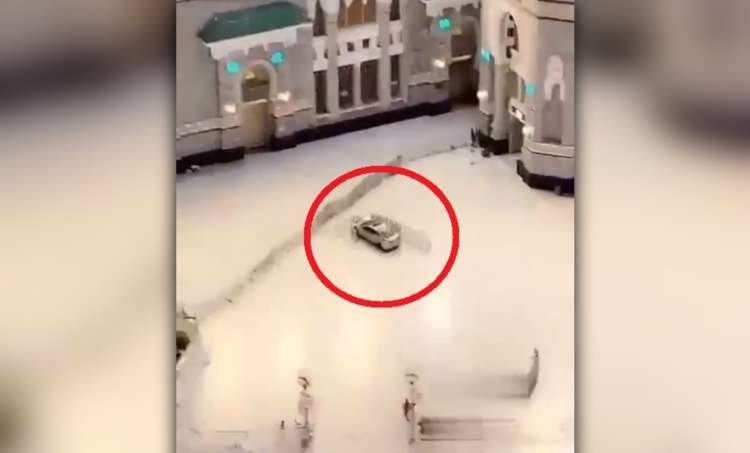
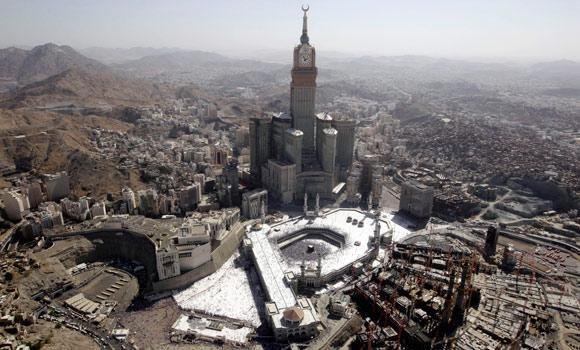
A driver rammed his car into the outer-perimeter gate of Masjid al-Haram — the Grand Mosque in Makkah — late on Friday in an incident that did not cause any casualties, local media reported.
Videos posted on social media showed the car plowing through plastic barricades in the outer courtyard of the mosque before driving straight into one of the large outer doors.
Saudi newspaper Okaz reported that no civilians were injured in the crash, while other videos posted on social media showed a number of people pushing the vehicle away from the mosque complex.
WATCH VIDEO:
A driver rammed his car into Door 89 of the Grand Mosque in Mecca (Masjid al-Haram) at 22:25pm Saudi time.
The driver was arrested and based on video footage posted on social media, local media reports, there were no casualties. https://t.co/CzNKWq5OO5
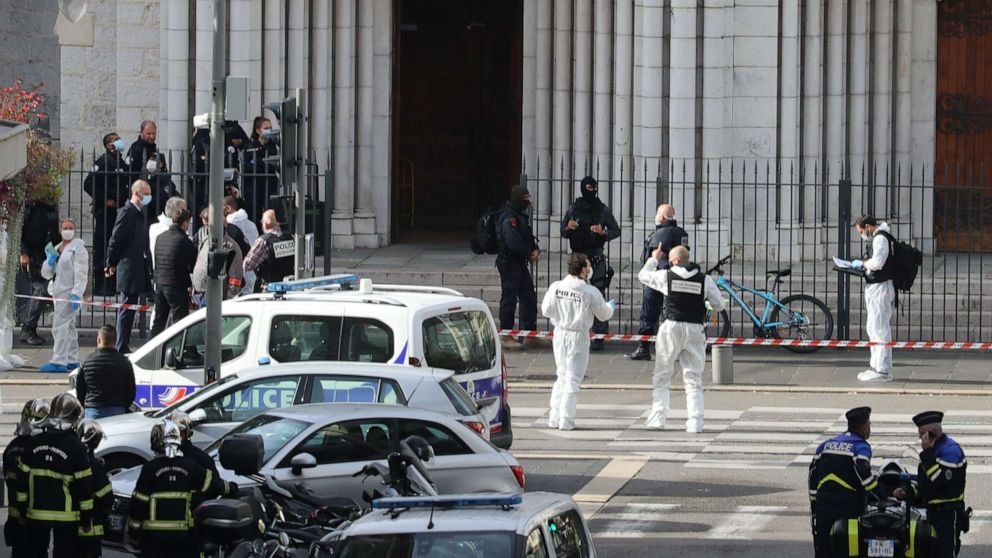
A knifeman on Thursday beheaded a woman besides killing two others and injuring dozens of worshippers in an attack inside a church in Nice on the Côte d’Azur — the Mediterranean coast of southeastern France.
According to reports, the killings happened at 9 am inside the Notre-Dame basilica in the city centre. There were unconfirmed reports in the French media that at least one of the victims had been beheaded.
Police described the scene as a “vision of horror”.
The attacker was shot and injured by police and was taken to hospital.
The mayor of Nice, Christian Estrosi, said the attacker had repeated “Allahu Akbar” several times while he was being arrested and handcuffed by police.
He said a woman victim had been decapitated but he had no details of how the two others were killed.
The attack comes less than two weeks after history teacher Samuel Paty, 47, was beheaded outside his high school after showing his class blasphemous caricatures, including one of Prophet Muhammad (PBUH) during a discussion on free speech.
French President Emmanuel Macron has come under criticism over his remarks on Islam after a teacher was beheaded on the streets of Paris allegedly for showing blasphemous cartoons to students.
Amid this, a video of Macron having an egg thrown at his face as he is in conversation with some people is circulating on social media.
WATCH VIDEO:
The claim along with the video says Macron was attacked for his remarks on Prophet Mohammad (PBUH) and Islam, which have led to calls for a boycott of French products across the Muslim world.
The Current has found the claim along with the video to be misleading. The video was shot in March 2017 in Paris days before the presidential elections in France, when Macron was a candidate for the top post.
Using related keywords, we found some media reports carrying a similar video of the event, shot from a different angle.
A report by Express says Macron was attacked by a protester with an egg when he was attending an agriculture show in Paris in March 2017.
This was not the first time when Macron was egged. In 2016 too, an angry mob pelted eggs on Macron in Paris.
So, it has been established that the video is more than three years old and has nothing to with Macron’s recent remarks on Islam.
‘WON’T GIVE INTO ISLAMIC RADICALS’:
On Sunday, Macron tweeted, “We will not give in, ever to Islamic radicals.”
“We do not accept hate speech and defend reasonable debate,” the French leader added.
We will not give in, ever. We respect all differences in a spirit of peace. We do not accept hate speech and defend reasonable debate. We will always be on the side of human dignity and universal values.
Calls to boycott French goods are already growing in the Arab world and beyond after Macron criticised Islamists and vowed not to “give up cartoons” depicting the Holy Prophet (PBUH).
Macron’s initial comments, on Wednesday, had come in response to the beheading of a teacher, Samuel Paty, outside his school in a suburb outside Paris earlier this month, after he had shown the blasphemous cartoons during a class he was leading on free speech.
With the French president pledging to fight “Islamist separatism”, which he said was threatening to take control in some Muslim communities around France, hashtags such as the #BoycottFrenchProducts in English and the Arabic #ExceptGodsMessenger trended across countries, including Pakistan, Kuwait, Qatar, Palestine, Egypt, Algeria, Jordan, Saudi Arabia and Turkey.
Proper upbringing is every parent’s biggest concern. But at the same time, it can be confusing and difficult with so many ideas and suggestions pouring in from all around. And in this age and time, where there are so many distractions, parents are also worried about raising pious children and bringing them close to religion. Blogger Zunaira, who runs a blog From Dresses to Diapersshared some tips on the subject with The Current.
Zunaira has shared a few tips using her knowledge of child development and religion. She has also listed some mobile apps, tools, and books to assist you in this journey. You can find their Instagram accounts at the end of the posts.
The Punjab Assembly has passed the Punjab Tahaffuze Bunyade Islam Bill 2020, which Law Minister Raja Basharat says will prevent blasphemy of Holy Prophets (AS), Companions (RA) of Prophet Muhammad (PBUH), Ahle Bait (RA) and Umhatul Momineen (RA).
According to the minister, it will also prevent blasphemy of holy figures of other religions and the holy personalities of all religions beside helping to eradicate sectarianism and religious hatred.
The printing and publication of objectionable material have been prohibited under the bill that also bars publishers, editors or translators from printing or publishing any books and material that consists of photographs or pictures of suicide bombers, terrorists, except as required by law enforcing agencies for purposes of investigation.
Moreover, the new law has also made it mandatory that “the blessed name of Prophet Muhammad (PBUH) be preceded by the title Khataman Nabiyyin or Khatamun Nabiyyin followed by ‘Sallallahu Alaihi Wasallam’ in Arabic text”.
The law has also empowered Directorate General Public Relations (DGPR) to visit and inspect the premises of printing presses, offices of publication houses and book stores.
After the passage of the bill in the Punjab Assembly, Speaker Chaudhry Pervaiz Elahi said it was a historic one. “I am highly thankful to Almighty Allah on its passage. This bill will prove a milestone in the protection of Islam and its supremacy. The federation and provinces should follow us in this regard. A similar one should also be passed by Centre and all provinces, and enforced all over Pakistan. The Section Number 3/F of this bill should be Article 295 of Pakistan Penal Code 1860,” the speaker said.
He also thanked National Assembly Speaker Asad Qaiser for taking personal interest in this matter while praising Hafiz Ammar Yasir as well as Opposition Leader Hamza Shehbaz among other provincial lawmakers who played their full role in the passage of the bill.
Saudi Arabia has announced that it will strictly limit the number of people who can take part in this year’s Hajj pilgrimage because of the coronavirus, putting to rest the fears that Hajj might be cancelled altogether. Saudi Hajj Minister Mohammed Banten had asked Muslims to delay finalising their plans “until the situation is clear” back in March.
In a statement, Saudi Arabia’s Ministry of Hajj and Umrah said that the annual Holy pilgrimage would be restricted to a very limited numbers of pilgrims of all nationalities who are already residing in Saudi Arabia. The statement said that as COVID-19 cases continue to grow globally, and because of the risks of coronavirus spreading in crowded spaces and from other countries, the Hajj will “take place this year with a limited number of pilgrims from all nationalities residing in Saudi Arabia only, who are willing to perform Hajj.”
“This decision is taken to ensure Hajj is performed in a safe manner from a public health perspective while observing all preventative measures and the necessary social distancing protocols to protect human beings from the risks associated with this pandemic and in accordance with the teachings of Islam in preserving the lives of human beings,” the statement added.
Pakistan’s Ministry of Religious Affairs Noor-ul-Haq Qadri shared the Urdu version of the press release and said that the KSA’s Minister of Hajj and Umrah contacted him via telephone to let him know about Saudi Arabia’s decision about this year’s Hajj.
سعودی وزارت حج و عمرہ نے حج کی ادئیگی سے متعلق پریس ریلیز جاری کر دی، سعودی وزیر حج و عمرہ کا وفاقی وزیر مذہبی امور پیر نور الحق قادری سے ٹیلی فون پر رابطہ، ڈاکٹر صالح بن بنتن نے حج سے متعلق فیصلے سے باضابطہ طور پر آگاہ کیا: عمران صدیقی ترجمان مذہبی امور #HAJJ2020pic.twitter.com/h4K9BzaQdy
— Ministry of Religious Affairs & Interfaith Harmony (@MORAisbOfficial) June 22, 2020
Hajj is one of Islam’s most important religious obligations. Recently, singer Atif Aslam expressed his desire to recitethe Azaan at the Holy Kaaba in Makkah.
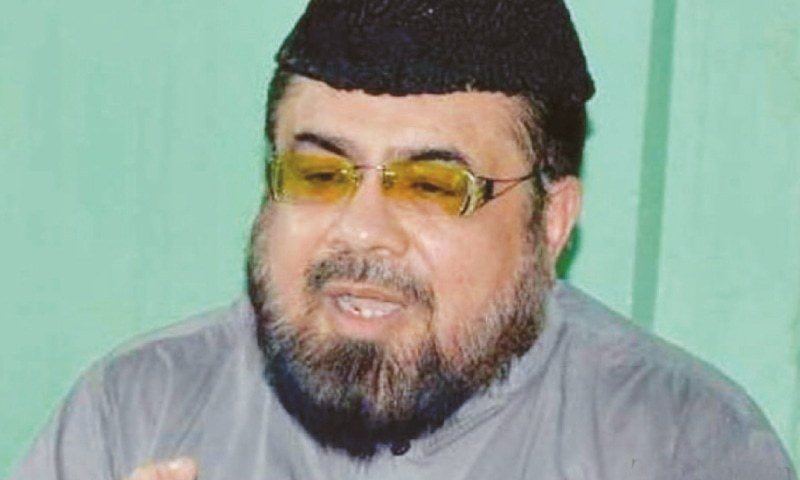
A cleric who is not new to controversy, Mufti Abdul Qavi, has now said that drinks with less than 40% alcohol by volume are halal.
“Whichever drink contains alcohol below 40 per cent… that drink is halal. It means we can drink it. In my opinion, even the drinks that contain 100 per cent alcohol but are extracted from minerals… are also halal,” he said during an interview.
It was alleged that he had incited Waseem Baloch, brother of Qandeel, to get rid of his sister in the name of honour after he received flack for his pictures with the girl.
Some of his endeavours include, brazenly flirting with transgender Almas Bobby during a television show in 2015, and being accused of sexual harassment by a female reporter in 2017.
He has also time and again been spotted in several videos on social media featuring various showbiz stars and internet celebrities.
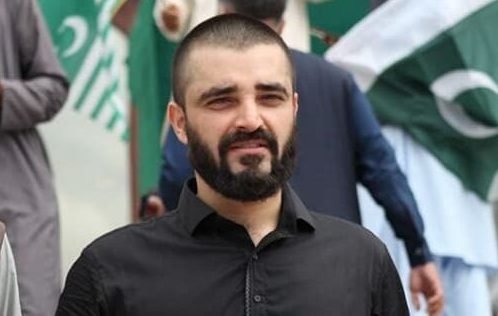
If there is one person who has gone through a complete transformation, it has to be Hamza Ali Abbasi. The actor has gone from being a flamboyant and outspoken person to someone who is calmer and more reserved.
In a recent social media update, Hamza shared that this is because he has grown closer to Allah. The actor further said that he now “trembles and thinks a million times” before saying something publicly.”
I use to be very outspoken, very loud. As i get close to Allah, all of that has vanished. Now I tremble & think a million times before i say something publicly for every word i write, i know ill be held accountable by the king of all kings, my creator, my God, my Allah.
Meanwhile, Hamza is currently pursuing his religious studies at the Ghamidi Center of Islamic Learning in Dallas.
Back at Ghamidi Center of Islamic Learning in Dallas, USA to resume learning, keeping the distance needed as a precaution for Corona pic.twitter.com/Rd2ebbevmT
When asked why he chose Ghamidi Sahab as his teacher, Hamza said that because he “understands Islam for what is it, free from all political, cultural influences.”
Teacher, not mentor. Because he understands Islam for what it is, free from all political, cultural influences
My brother. I have studied other scholars. The reason Farahi, Islahi and Ghamidi appeal to me is bcz of thr stance on sources of deen and how they differentiate Sunnah from Hadith. Disagree with it sure, but to think its twisting religion or justifying haraam is not appropriate.
“I had this divine revelation some time back, that all that I am doing in this world will end the moment I die,” Hamza said in a video message, adding that death is inevitable.
“All these trophies, all these accolades will not bring me any good on the day of judgment when I meet my Maker. I have decided that I want to leave everything that might be a hurdle when it comes to making my matters easier on the day of Judgment.”
Though Hamza will be quitting acting, he shared that he will still continue to make videos and use his voice and popularity to spread the message of Islam and inspire others to undertake this spiritual journey.
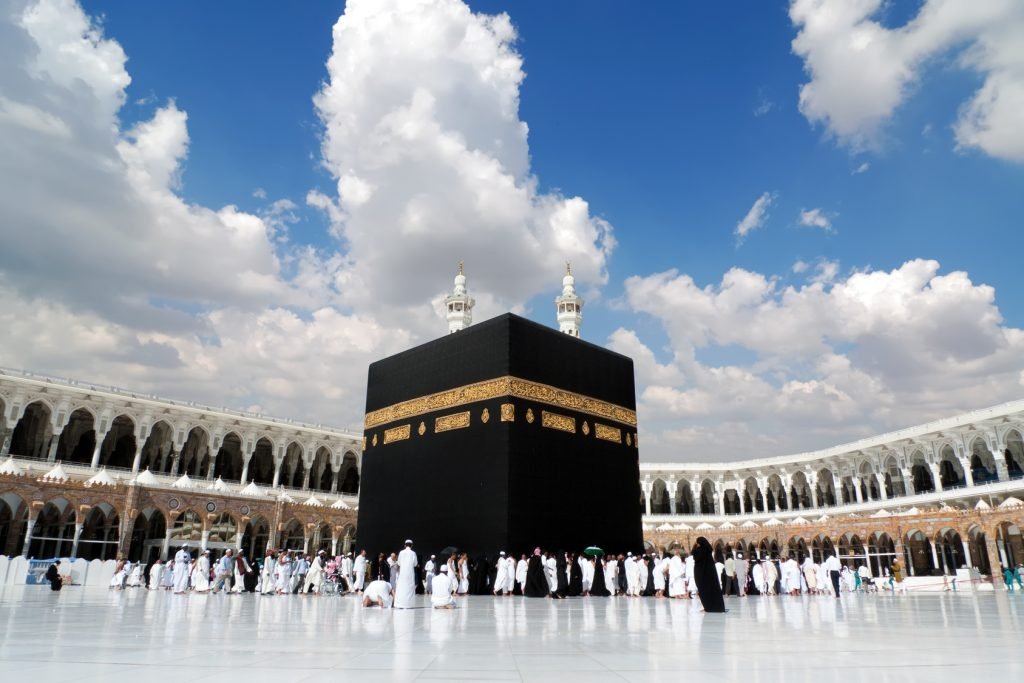
Custodian of the Two Holy Mosques King Salman bin Abdulaziz Al Saud of Saudi Arabia has approved performing a reduced version of Taraweeh prayers at the Two Holy Mosques in Mecca and Medina, with the continued suspension of entry of worshipers, the General Presidency of the Two Holy Mosques’ Affairs said in a statement on Wednesday.
President of the General Presidency for the Affairs of the Two Holy Mosques, Abdul Rahman As-Sudais, also said that special night prayers performed during the holy month of Ramzan will be held without public attendance at the Grand Mosque and the Prophet’s Mosque.
The statements came amid reports that the mosques had re-opened their doors to the general public and 20 or reduced-to-10 Taraweeh prayers will be held at the mosques.
While it has been confirmed that the prayers will be shortened to five Tasleemat (i.e. 10 Rak’ahs), claims regarding the mosques being opened for pilgrims have been rubbished as authorities say only limited employees and workers will be allowed group prayers at the two holiest sites of Islam during Ramzan.
The General Presidency for the Affairs of the Two Holy Mosques has also prepared a comprehensive plan for the implementation of coronavirus precautionary measures during Ramzan, which other than including the continued suspension of allowing worshipers to enter the Grand Mosque in Mecca and the Prophet’s Mosque in Medina, also includes increasing the sterilization processes and thermal testing of every person entering for funeral rites.
The Ramzan group iftars which were traditionally held in the Grand Mosque and the Prophet’s Mosque were assigned to Mecca and Medina’s provincial authorities to distribute iftar meals while maintaining the necessary health precautions.
According to the precautionary health measures, there will be no Itikaf [or keeping vigil] inside the Two Holy Mosques.
The attendance of employees at the Two Holy Mosques will continue to be restricted to the absolutely necessary workers, and operations of maintenance will be conducted depending on priority and in accordance with the precautionary measures.
Last week, the Saudi government had announced that Taraweeh prayers will be performed at homes during Ramzan as suspension of prayers at mosques will not be lifted due to the coronavirus outbreak.
Saudi Arabia had also announced to ease curfews imposed in several cities in order to facilitate people to head out for essential needs.
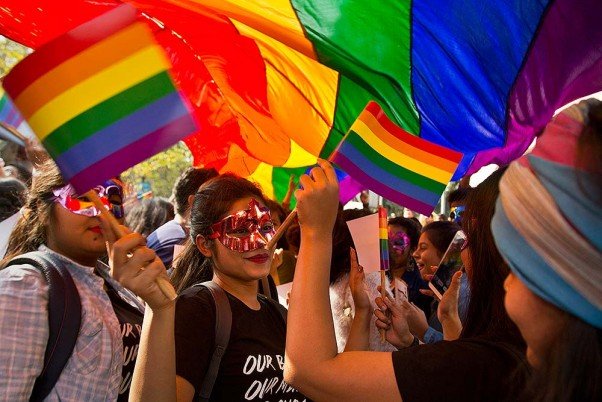
London will on April 11 be hosting the world’s first-ever Muslim pride event, ‘ImaanFest’, which comes after a successful crowdfunding campaign by its organisers, Imaan, a leading Muslim LGBTQI+ group in the United Kingdom (UK).
LGBTQI stands for lesbian, gay, bisexual, transgender, queer and intersex, while the ‘+’ represents other sexual identities.
According to reports, ImaanFest organisers successfully raised close to $20,000 in order to host the event, explaining that LGBTIQ+ Muslims often found themselves isolated, without community and frequently facing homophobic, biphobic, transphobic and Islamaphobic abuse.
“The event will build on the incredible events we organised in the past, and feature panels, discussions, speakers, arts, culture and history — a first for LGBTQI Muslims,” they were quoted as saying.
✨Calling all LGBTQI Muslims!✨ Tickets are now live for #ImaanFest Muslim Pride on 11 April in London. Don’t miss an amazing lineup of speakers, workshops, art, entertainment & food!https://t.co/xXxMq45ogY
With tickets for ImaanFest now available to members of the public, organisers are now using social media to reach queer Arab speakers and service providers who might like to get involved. Other speakers include queer British-Iraqi writer and filmmaker Amrou Al-Kadhi and trans activist Asifa Lahore.
An Islamic online news agency, 5 Pillars UK, notes that the event has been organised “despite Islam’s strict prohibition of homosexuality”. The news agency adds that the “practice and promotion of homosexuality is considered a major sin in Islam by all mainstream schools of thought”.
Imaan group has received a slew of negative tweets from online trolls after announcing the event over social media. But the group is responding to negative responses with “#Islamophobia”.
Most Muslim-majority countries and the Organisation of Islamic Cooperation (OIC) have opposed moves to advance LGBTQI+ rights at the United Nations (UN), in both the UN General Assembly (UNGA) and the UN Human Rights Council (UNHRC).
A number of Muslim countries, including Pakistan, Saudi Arabia, Yemen and Iran among others, have strict laws against homosexuality, with punishments for the same being as serious as a jail term or the death penalty.