Tag: islamabad police

  • Islamabad Police intensifies crackdown against wrong parking

    Islamabad Police intensifies crackdown against wrong parking

    The Islamabad Police has initiated a crackdown on individuals who improperly park their vehicles, causing inconvenience to pedestrians and disrupting the smooth flow of traffic by occupying footpaths.

    Inspector General of Police (IGP) Islamabad Syed Ali Nasir Rizvi has instructed the police force to launch a campaign specifically targeting vehicles parked incorrectly, particularly in busy markets. He has given special directives to SSP Traffic Muhammad Sarfraz Virk to oversee the operation, as confirmed by a public relations officer on Sunday.

    All Zonal DSPs have been tasked with ensuring the enforcement of traffic regulations and taking action against those who disrupt traffic discipline within the city.

    Enforcement actions have been carried out against administrators of showrooms and shopping malls in various areas including G-11 Markaz, F-10, F-11, G-8, G-9, I-8 Markaz, Blue Area, Jinnah Super Market, F-6 Super Market, Aabpara, and Bhara Kahu markets. Vehicles parked on footpaths have been removed, with warnings issued for compliance with regulations under the threat of strict enforcement measures.

    Throughout the year, the Islamabad Police have issued over 42,000 fines for improper parking, with several vehicles impounded for failing to clear footpath areas.

    SSP Traffic said that ensuring convenience for road users remains a top priority for the Islamabad Police, achieved through maintaining traffic discipline.

    Specialised teams have been formed to address illegal parking and clear footpaths, with stringent actions planned against violators.

  • Sher Afzal Marwat claims Islamabad police raided his house

    Sher Afzal Marwat claims Islamabad police raided his house

    Pakistan Tehreek-e-Insaf (PTI) leader Sher Afzal Marwat claimed on Monday that unidentified people with masks on their faces raided his house in Islamabad.

    The PTI leader told Islamabad High Court (IHC) about the incident while speaking during a hearing on the recovery of Baloch students.

    After hearing about the incident, IHC Justice Mohsin Akhtar Kayani expressed surprise, pointing out that the PTI leader was not talking about Lakki Marwat, but Islamabad.

    The court asked what will happen to common citizens of Pakistan if such an incident can happen to an elected member of the parliament of Balochistan. 

    Earlier in a tweet, Marwat claimed the CTD police raided his house and broke the doors causing damages. “…they stressed out my family and staff and confiscated my laptop. I managed to run away from my home and now I am at a safe place. This is an illegal raid and I will challenge the IG and SSP operation Islamabad in the court for this criminal act; the confiscation of my laptop is illegitimate. It contains my private and professional data, (that may be) subjected to misuse. These cowardly tactics will not scare me, or force me to step back from our mission, which is for the larger cause — the fight for true democracy in Pakistan,” he wrote on X.

    On the other hand, Islamabad police denied the claim. Fake news was being spread to gain public attention, the police maintained.

  • Climate activist Greta Thunberg commends Baloch protestors; Islamabad police gets trolled in replies

    Climate activist Greta Thunberg commends Baloch protestors; Islamabad police gets trolled in replies

    Climate activist Greta Thunberg has expressed solidarity with Baloch Protestors who had to face police brutality on Wednesday night after marching to Islamabad.

    Taking to X, Thunberg tagged the female leader of the march Mehrang Baloch, and condemned Islamabad Police for detaining, torturing, and disrupting peaceful protestors. “Climate justice activists all over the world stand in solidarity with Mehrang Baloch and other peaceful protesters who have been detained, tortured and disrupted by Islamabad police for protesting against human rights abuses in Balochistan.”

    Islamabad Police is being slammed for using baton charges, water cannons, and arrests to deter the protestors. However, the response by the police under Greta’s post enraged many.

    The official handle of the police stated, “There is no evidence of any injured persons at all.”

    To this people started sharing the pictures and videos of police assaulting the protestors as proof.

    A user responded sarcastically, “Dear Islamabad Police, Greta doesn’t watch Pakistani TV channels.”

    Baloch protesters are on roads demanding the release of all “missing persons” and an end to “extrajudicial killings” in Balochistan under the leadership of activist Dr Mahrang Baloch and Baloch Yakjehti Committee (BYC).

  • Fawad Chaudhry allowed to meet his wife

    Fawad Chaudhry allowed to meet his wife

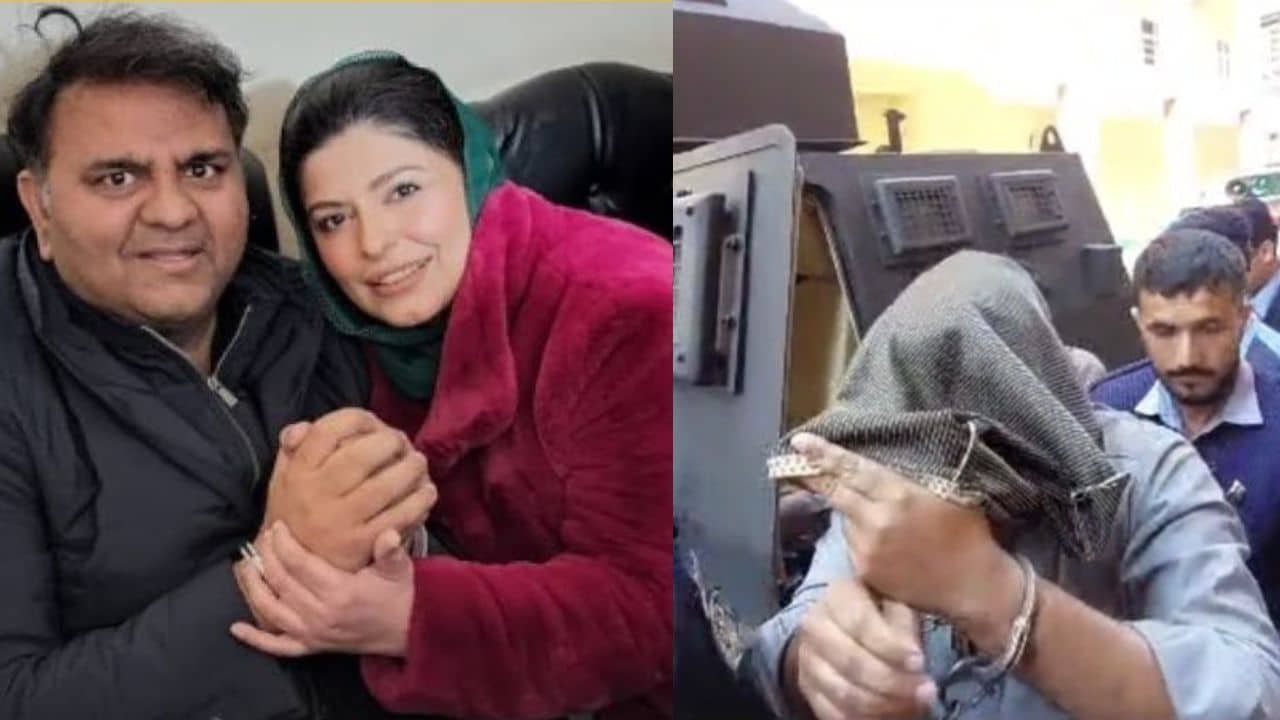
    Following an intervention by the court, Fawad Chaudhry’s wife has been granted permission to visit him during incarceration.

    Additionally, the court has issued an order directing the provision of medical facilities to Chaudhry in accordance with the jail manual.

    Presiding over the case, Justice Gul Hasan Aurangzeb emphasized the paramount importance of upholding the petitioner’s dignity.

    Expressing concern over incidents akin to Chaudhry’s case, the court referenced the restrictions placed on Asif Zardari and the late former Prime Minister Benazir Bhutto, underscoring the need to ensure access for individuals to meet their families and lawyers.

    Justice Aurangzeb remarked that such incidents bring shame to the officers involved, highlighting the significance of respecting the rights and dignity of those under legal scrutiny.

    Chief Commissioner Anwar-ul-Haq presented a report before the Islamabad High Court (IHC) regarding the implementation status of Fawad Chaudhary’s plea for permission to meet with lawyers and family members.

    The report revealed that former federal minister Fawad Chaudhry has been granted B-class facilities in jail, and as per the court’s directives, he has been permitted to meet with family and legal representatives.

    In addition, the court sought details regarding the number of cases Chaudhry is involved in, to which his lawyer replied that he only had knowledge of one case. Fawad Chaudhry, a former leader of the Pakistan Tehreek-e-Insaf, was arrested on November 4 from his residence on charges of allegedly accepting bribes after promising a job.

    What are the facilities provided to class A or B?

    Superior class prisoners are entitled to books and newspapers, a 21-inch television, a table and a chair, a mattress, personal bedding and clothing and food. The prisoners have to pay for all this themselves. The government is only obligated to provide them security in a high-security ward where they will be kept away from other prisoners.

    Rooms are supplied with a cot, one chair, one teapot, one lantern if there is no electric light, and necessary washing and sanitary appliances. ‘A class’ prisoners may supplement the furniture by other articles within reasonable limit at their own cost, at the discretion of the Superintendent.

    When several superior class prisoners are confined together, two ‘C class’ prisoners may be provided to cook food for them. If a superior class prisoner is confined individually he may be permitted a ‘C class’ prisoner for cooking. One attendant and one cook prisoner may be allowed to superior class prisoners up to 10 in number.

  • Sarah Inam’s lawyer wants death penalty for her husband Shahnawaz 

    Sarah Inam’s lawyer wants death penalty for her husband Shahnawaz 

    An Islamabad district and sessions court was informed on Thursday that all the evidence collected in the Sarah Inam murder case proves that her husband Shahnawaz Amir, the prime suspect and husband of the victim, is guilty of murdering his wife, reports Dawn.

    In the latest hearing, Rao Abdur Rahim, counsel for Sarah’s father, told Sessions Judge Nasir Javed Rana that a forensic analysis revealed two photos were found in Shahnawaz’s phone, one of which was of the victim. He said it showed Sarah’s body, covered with a white cloth, lying in the room. The photo, he added, was also sent through WhatsApp. He did not mention to whom it was sent.

    According to Shahnawaz’s testimony, there was no disagreement between him and the victim. “We have found a document from the accused’s mobile phone which is dated prior to Sarah’s arrival in Pakistan,” the lawyer said, adding that testimonies could lie but documents could not. He mentioned in the court, “The victim’s phone was destroyed when she reached the accused’s house. She was at his mercy.”

    Rao further said that the postmortem report showed there were bruises on Sarah’s body, her bones were broken, and all these injuries were inflicted while the victim was still alive. “How is it possible that Samina Shah didn’t hear a thing while Sarah was tortured to this extent,” he asked while reminding the court that there were only three people in the house at the time of the murder — Shahnawaz, his mother, and Sarah. 

    The lawyer also highlighted that the accused had said he didn’t divorce Sarah, but his phone record showed otherwise. Moreover, the DVR at Shahnawaz’s house was removed just two days before the crime, he added.

    “All this evidence proves Shahnawaz’s crime,” Rao asserted, comparing the murder with the Noor Mukadam case. He then pleaded to the court to hand the death penalty to the accused and concluded his arguments.

    Subsequently, Prosecutor Rana Hassan Abbas presented counter-arguments. He said the incident was neither reported by the police nor the suspect. “The victim was an educated and talented woman,” he told the court, recalling that Sarah married Shahnawaz last year.

    According to the evidence collected from the accused’s mobile phone, Sarah called Shahnawaz on Sept 18 — five days before her alleged murder — the prosecutor said and read out loud the transcript of the conversation. “The accused blocked Sarah multiple times and even threatened her,” he said, adding that the victim was just requesting that her parents be given a chance to see her off in an honourable way.

    “Three messages in this chat were deleted that were possibly related to divorce,” prosecutor Abbas suggested. The last message sent by Shahnawaz was on September 20 after which Sarah landed in Pakistan on September 22 and stayed with the accused and his mother.

    On the day of the murder, he continued, Samina told the police that her son committed the murder after which evidence — including the murder weapon — was collected from the crime scene. “Shahnawaz’s DNA was found from the injuries on Sarah’s body,” Abbas said, adding that the accused’s clothes were smeared with blood.

    He added that passports and mobile phones were also seized.

    Here, Judge Rana asked the prosecutor how much more time he would need, to which Abbas replied 20 minutes. The judge, however, said he had a meeting to attend and adjourned the hearing till Monday, November 20.

    Shahnawaz, the son of noted political analyst and commentator Ayyaz Amir, was arrested on September 2023 last year from his farmhouse in Islamabad. Sarah was reportedly murdered just a day after she arrived in the country from Dubai where she had been working. Her husband was initially remanded to police custody a day after his arrest and the period of his physical remand was extended several times.

    Shahnawaz’s father, Ayaz Amir was discharged from the case and his mother Sameena Shah, nominated as co-accused in the case, was granted post-arrest bail in November last year.

    The postmortem revealed that Sarah had suffered multiple head fractures leading to her death.

    Read more: Court summons Sarah Inam’s husband

  • More PTI arrests from Mansehra

    More PTI arrests from Mansehra

    A joint team of law enforcement agencies and Islamabad police apprehended former Members of the National Assembly (MNAs) Ali Nawaz Awan and Malik Aamir Dogar, along with their two hosts in the Battal area, Mansehra on Thursday.

    Both former MNAs are from Pakistan Tehreek-e-Insaf (PTI).

    The arrests took place during a raid on the residence of Hizbullah, chairman of the Battal neighborhood council and a prominent PTI leader.

    The whereabouts of the detainees, including Hizbullah and his cousin Zaheer Khan, remain unknown, with local police maintaining silence on the matter.

    Awan, who serves as the PTI’s central additional secretary-general, represented Islamabad as an MNA, while Dogar hails from Multan city.

    Both had gone into hiding as law enforcement agencies intensified their crackdown on PTI leaders and activists following the May 9 attacks on military and government installations across the country.

    Expressing strong reservations, PTI has declared the arrests illegal. Ajmal Khan Swati, former PTI information secretary in Hazara division, urged an immediate end to what he termed an “illegal” crackdown on their party.

    “These arrests should stop immediately,” he said.

    The PTI leader said his party wanted a level-playing field to participate in general elections just like the Pakistan Muslim League-Nawaz, Pakistan Peoples Party, JUI-F and others in the country.

    He complained that the police didn’t allow the PTI to hold a workers’ convention in the locality and ransacked the venue despite court orders telling the government to allow PTI to carry out political activities, including canvassing.

    “Police committed contempt of court by blocking our workers’ convention despite the Peshawar High Court’s permission,” he said.

    Crackdown in Lahore Raises Concerns

    Simultaneously, the Lahore police initiated a fresh crackdown on PTI workers and activists, resulting in multiple arrests over the last three days.

    Acting on a new list of 884 PTI workers, labeled as ‘new targets,’ the investigation police targeted individuals considered part of the ‘B team’ of PTI’s top leadership.

    The list, comprising names, addresses, CNIC numbers, and mobile phone records, identified workers who allegedly made calls from protest venues during the May 9 violence against law enforcement agencies.

    Lahore DIG Investigation Imran Kishwar confirmed that the list was prepared based on information obtained during the interrogation of those arrested in connection with the May 9 attacks.

    “It took the Lahore investigation police 45 days to identify 884 new party workers and activists who were physically present at the Jinnah House and the Zaman Park,” he says, adding that many of them also took part in violent attacks at multiple sites on May 9.

    “The locations of most of them were traced at the Jinnah House and the Zaman Park from where they made mobile phone calls to contact the senior party leaders,” the officer alleges.

    Similarly, the police accessed their social media accounts for verification and got credible evidence of their physical presence at the attacked sites/venues through the posts they shared and the ones they later deleted to avoid arrests, the DIG investigation says.

    He further adds that the mobile phone data analysis of the already arrested senior political leaders of the PTI also helped the police identify the party activists and their involvement in the May 9 violence.

    “The major arrest was of Altaf Mahmood, a PTI hardcore activist, whose name was missing from the first list of May 9 attacks. He was the first who set some goods on fire at the Jinnah House (Corps Commander House) when he brought petrol bombs and other such inflammable material in a bag,” Mr Kishwar alleges.

    The arrests followed an earlier action against 1,958 PTI members, with outcomes ranging from innocence to obtaining bail or being declared proclaimed offenders.

  • Is Fawad Chaudhry a charpai chor?

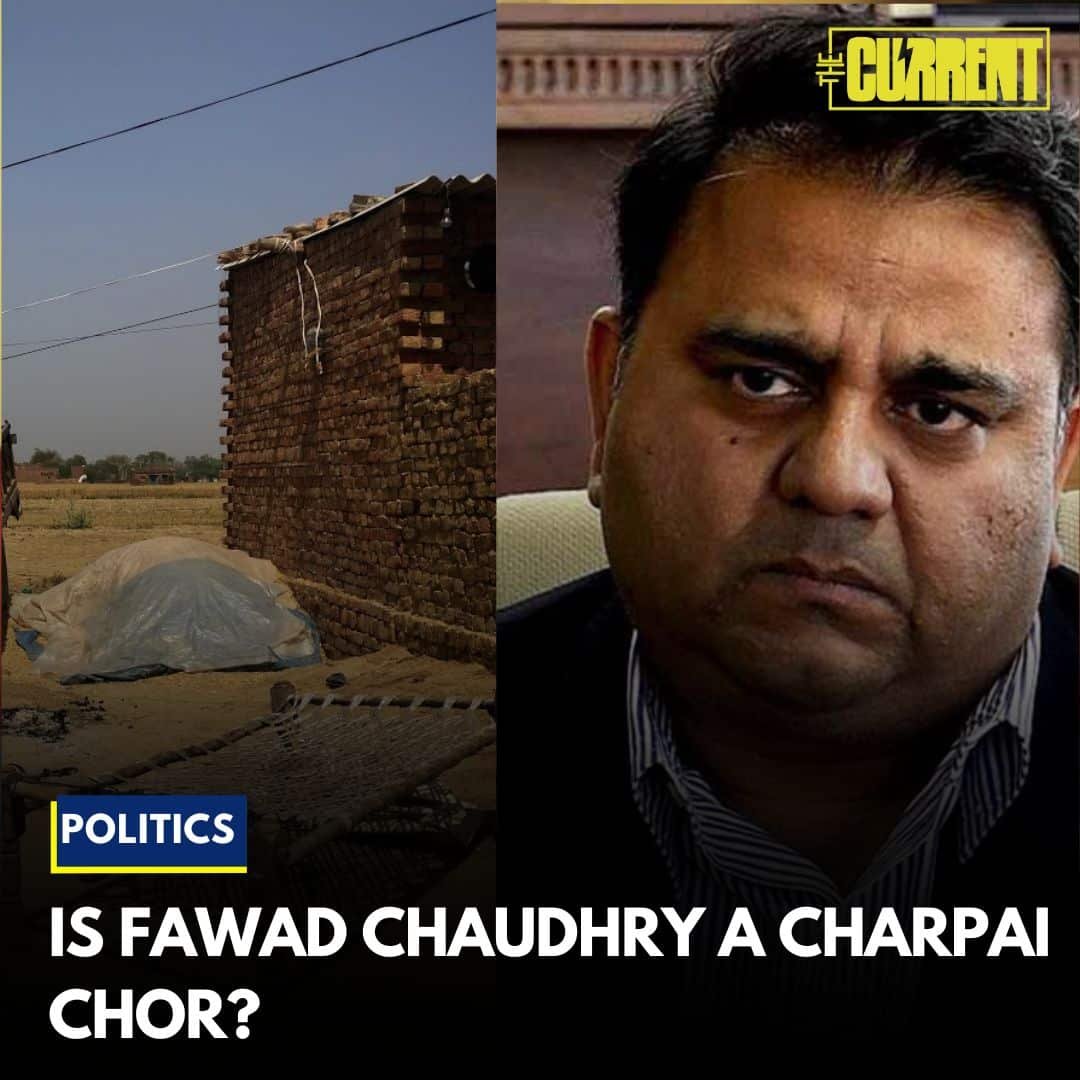
    Is Fawad Chaudhry a charpai chor?

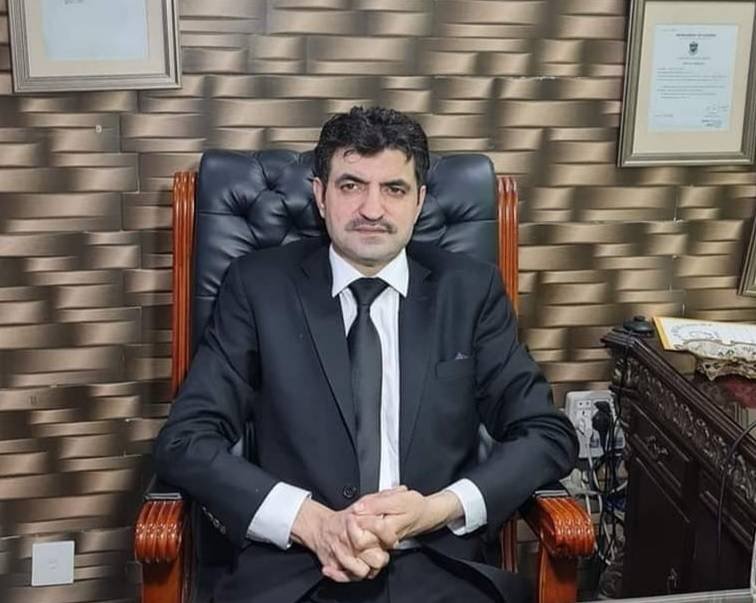
    Chaudhry Nauman Asif, a resident of Pind Dadan Khan in District Jhelum, has accused former federal minister Fawad Chaudhry of stealing six sacks of urea fertilizer and six sacks of DAP fertilizer from his house.

    A First Information Report (FIR) registered on November 3, 2023 says.

    The complainant claimed that Fawad Chaudhry stole four ‘charpai’ [charpoy] from his house as well.

    During a telephonic conversation with The Current, Nauman was asked why he didn’t lodge an FIR immediately after the incident. “At that time, Pakistan Tehreek-e-Insaf (PTI) was in power, no one was ready to register an FIR against Fawad Chaudhry.”

    The complainant also accused the former federal minister of being involved in the murder of his brother.

    Fawad Chaudhry is currently in Adiala jail on a 14-day judicial remand in a fraud case.

  • Fawad Chaudhry arrested again from Islamabad

    Former Information Minister Fawad Chaudhry’s wife, Hiba Chaudhry, and brother, Faisal Chaudhry, have claimed on Saturday that he has been arrested from his home in Islamabad by police.

    In a tweet posted on X (formerly Twitter), Hiba wrote, “Fawad arrested and taken to unknown place.”

    Geo News has reported in its bulletin that Fawad was arrested from home in front of his children and his wife by police and other officials in plain clothes.

    Hiba Chaudhry told Geo News that she was not shown an arrest warrant by the police officials.

    Hiba Fawad also said in her tweet that “Islamabad police taken Fawad. I need the Case information in which he is nominated.”

    Fawad became one of the first famous names to leave Pakistan Tehreek-e-Insaf after the events of May 9, joining Istehkaam Pakistan Party (IPP), a joining political analysts consider a reluctant decision.

    This would make it the third arrest within the year for Fawad Chaudhry.

  • ‘Zia-ul-Haq ko Sadar Nahi Maanta’: Chief Justice of Pakistan

    ‘Zia-ul-Haq ko Sadar Nahi Maanta’: Chief Justice of Pakistan

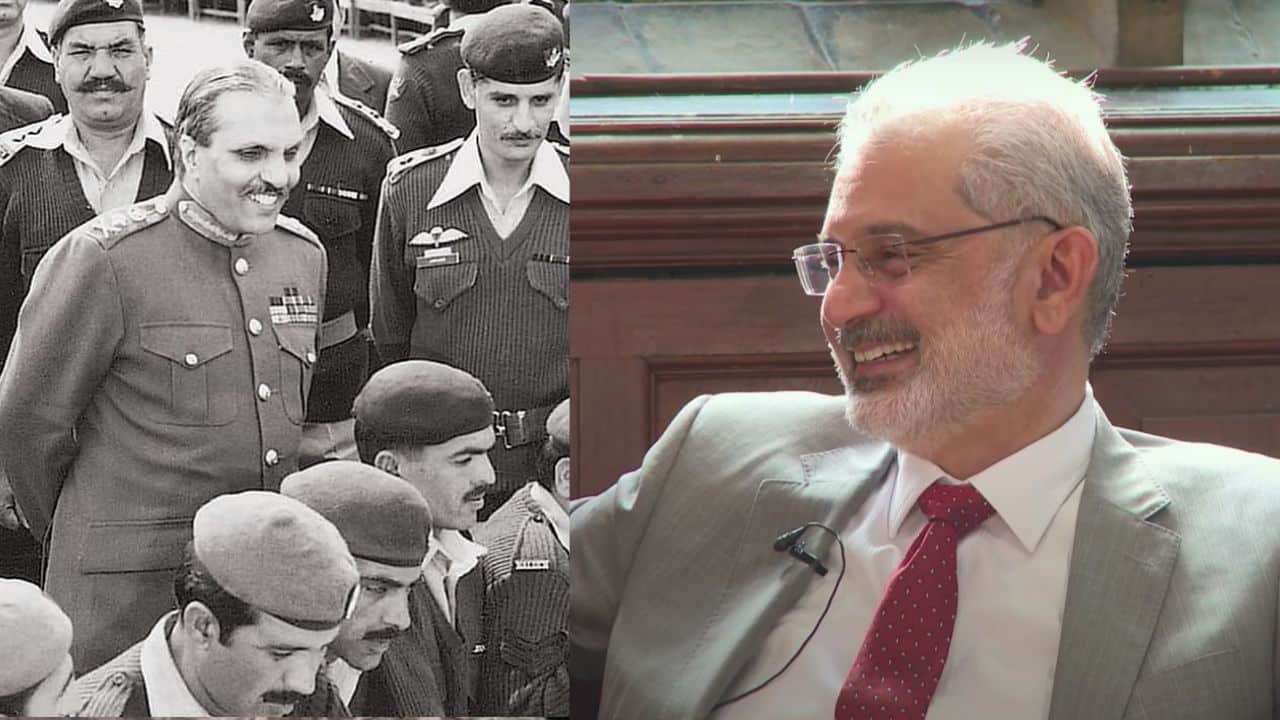
    Chief Justice of Pakistan, Justice Qazi Faez Isa gave an unexpected but strongly worded statement during the hearing of the Faizabad sit-in case, stating that he doesn’t recognize the late military dictator General Zia-ul-Haq as president, as per Neo News.

    During the hearing of the Faizabad sit-in case, Justice Faiz Isa, addressing Ijaz-ul-Haq’s lawyer, said that he does not consider Zia-ul-Haq the President of Pakistan.

    When the Attorney General revealed that Ijaz-ul-Haq’s lawyer had been asked to provide a written reply with an affidavit to withdraw the statement, the lawyer of countered the Attorney General’s statement, denying that he had been asked to retract the statement.

    Ijaz-ul-Haq’s lawyer informed the court that his client had merely stated that his name should be removed from the verdict, to which Chief Justice Justice Faiz Isa remarked that Ijaz-ul-Haq’s name was only mentioned in the report by intelligence agencies, and it was not included in the verdict.

    During the same conversation, when Chief Justice Justice Faiz Isa mentioned that Ijaz-ul-Haq is the son of former army chief Zia-ul-Haq, his lawyer replied that his father was also the President of Pakistan. In response, the Chief Justice stated, “I do not consider Zia-ul-Haq the President of Pakistan. No one can become the President by the force of arms. Do not call Zia the President again in this court.”

    The lawyer of Ijaz-ul-Haq, the son of former military ruler Zia-ul-Haq, asserted that it is documented in the constitution that Zia-ul-Haq was the president. Chief Justice Justice Faiz Isa responded by remarking that Zia-ul-Haq had written in the constitution that he was the president for five years.

    Earlier today, the Supreme Court of Pakistan issued summons for the chairman of the Pakistan Electronic Media Regulatory Authority (PEMRA) following allegations of “media coercion” during the 2017 Faizabad sit-in.

    The summon was initiated by a three-member bench of the apex court, led by Chief Justice of Pakistan (CJP) Qazi Faez Isa, and including Justice Aminuddin Khan, and Justice Athar Minallah.

    The hearing, part of a series of nine review petitions against the Supreme Court’s February 6, 2019 verdict on the Faizabad sit-in case, was marked by significant developments.

    Authored by Justice Isa years before he took oath as the chief justice of Pakistan (CJP), the searing judgement had instructed the defence ministry and the tri-services chiefs to penalise personnel under their command who were found to have violated their oath.

  • Faizabad sit-in: What is happening in court?

    The Supreme Court of Pakistan has issued summons for the chairman of the Pakistan Electronic Media Regulatory Authority (PEMRA) following allegations of “media coercion” during the 2017 Faizabad sit-in.

    The summon was initiated by a three-member bench of the apex court, led by Chief Justice of Pakistan (CJP) Qazi Faez Isa, and including Justice Aminuddin Khan, and Justice Athar Minallah.

    The hearing, part of a series of nine review petitions against the Supreme Court’s February 6, 2019 verdict on the Faizabad sit-in case, was marked by significant developments.

    Authored by Justice Isa years before he took oath as the chief justice of Pakistan (CJP), the searing judgement had instructed the defence ministry and the tri-services chiefs to penalise personnel under their command who were found to have violated their oath.

    Notably, the court addressed the allegations made by Justice Isa in a prior judgment, emphasizing the importance of upholding the Constitution and the rule of law.

    Former PEMRA chairman, Absar Alam, alleged that the then-Director General of Inter-Services Intelligence (ISI), General Faiz Hamid, and his subordinates exerted undue influence on media policies.

    In his written reply, Alam said, PEMRA officials were under pressure from “serving officers”, adding that he himself “received calls” from the then DG(C) Major General (retd) Hamid and or his subordinates complaining that their requests were not acceded to by him.

    “The Applicant-in-Person had been asked to: i) to take action against Najam Sethi a prominent senior journalist; and ii) to completely blackout Hussain Haqqani from TV Channels, however, both illegal/unlawful demands remained unmet,” read the affidavit, seen by Geo News.

    According to the ex-Pemra chairman, Gen (retd) Hamid and or his subordinates “controlled TV Channel policy through illegal/unlawful means by changing their numbers and moving them at the tail end, when they refused to follow instructions”.

    He further said that the situation became “untenable” in April 2017, adding that he addressed the matter in writing to then-prime minister Nawaz Sharif, then-chief justice Mian Saqib Nisar and then-Chief of Army Staff General (retd) Qamar Bajwa, to inform that due to grave threats by unknown persons to Pemra officials for not following instructions fear had paralysed the latter.

    Chief Justice Isa, expressing concern over the government’s handling of the matter, noted that the investigation committee formed by the government was inadequate.

    The fact-finding committee was constituted by the government, on Friday, to investigate the “role and directions” of all “concerned” officials in the management and handling of the sit-in in 2017.

    During the hearing today, Chief Justice Qazi Faez Isa said the apex court wanted to know who was behind the Faizabad sit-in.

    “We want to know who was the mastermind of the Faizabad sit-in,” he remarked, expressing annoyance over the decision not being implemented since its issuance on February 6, 2019.

    “Our job is to order, and your job is to implement,” he stressed, underlining the need for a comprehensive and transparent inquiry.

    In response to these developments, the Supreme Court rejected the government’s fact-finding committee, urging the Attorney-General for Pakistan, Mansoor Usman Awan, to swiftly form a new inquiry commission to ensure the implementation of the court’s verdict on the Faizabad sit-in case.

    The Faizabad sit-in, which occurred in 2017, disrupted daily life in Islamabad for 20 days, resulting in six casualties and numerous injuries.

    The sit-in was organized by the Tehreek-e-Labbaik Pakistan (TLP) to protest alleged modifications to the Khatm-i-Nabuwwat oath during the passage of the Elections Act 2017, later rectified by an act of Parliament.