Tag: Israel

  • Aid boat readied as Israeli attacks in Gaza rage before Ramadan

    Palestinian Territories – A boat laden with food for Palestinians in Gaza was “ready” to set sail from Cyprus, an NGO said Saturday, as Israeli military operations in Gaza raged.

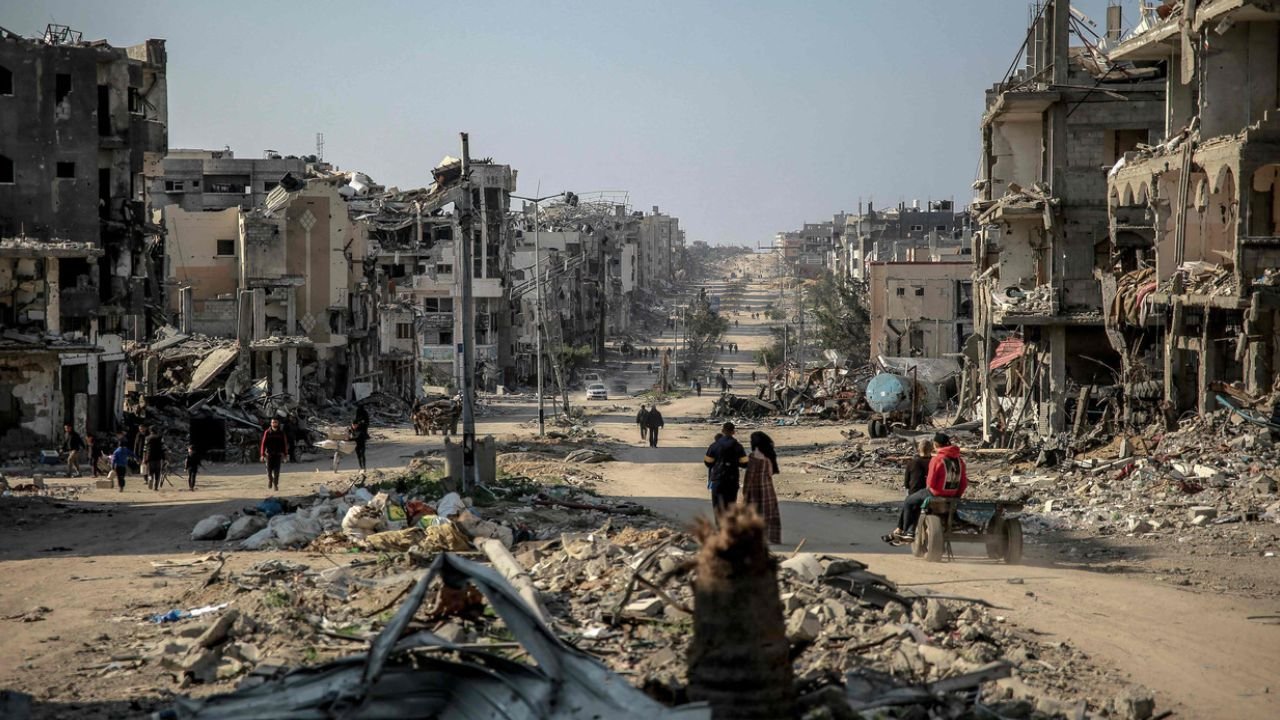
    The sea route aims to counter aid access restrictions, which humanitarians and foreign governments have blamed on Israel, more than five months into the genocide which has left Gaza’s 2.4 million people struggling to survive.

    Hopes were fading fast for a pause in the fighting before Ramadan, which could begin as early as Sunday depending on the lunar calendar, as Israel accused Hamas of seeking to “inflame” the region during the Muslim fasting month.

    The United Nations has repeatedly warned of looming famine, particularly in north Gaza where no overland border crossings are open.

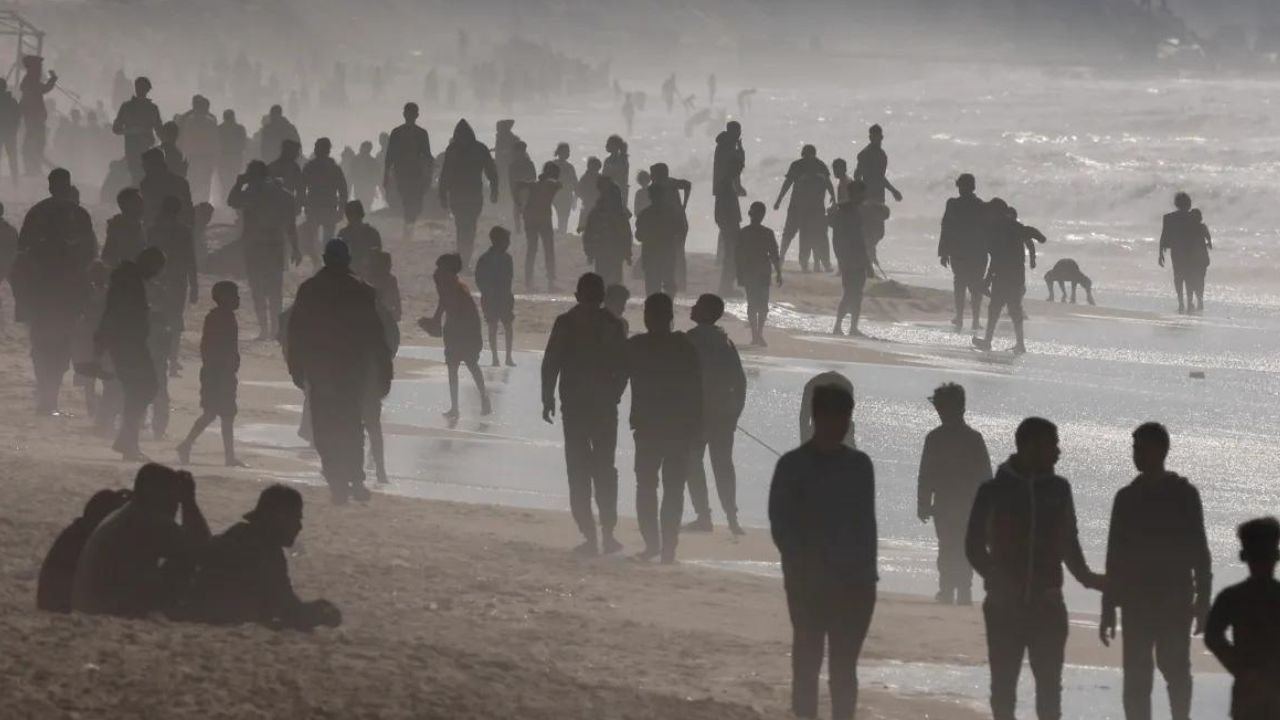
    In Rafah, in Gaza’s far south, “we can barely get water,” said displaced Palestinian woman Nasreen Abu Yussef.

    Roughly 1.5 million Palestinians have sought refuge in the city, where Atallah al-Satel said he wanted an end to the genocide.

    “We are just exhausted citizens,” said Satel, who had fled to Rafah from Khan Yunis.

    Spanish charity Open Arms said its boat, which docked three weeks ago in Cyprus’s Larnaca port, was “ready” to embark but awaits final authorisation.

    It would be the first shipment along a maritime corridor from Cyprus — the closest European Union country to Gaza — that the EU Commission hopes will open on Sunday.

    Open Arms spokeswoman Laura Lanuza told AFP that Israeli authorities were inspecting the cargo of “200 tonnes of basic foodstuffs, rice and flour, cans of tuna”.

    US charity World Central Kitchen, which has partnered with Open Arms, has teams in the besieged Gaza Strip who were “constructing a dock” to unload the shipment, Lanuza said.

    With ground access limited, countries have also turned to airdropping aid, although a parachute malfunction turned one delivery deadly on Friday.

    The health ministry in Gaza said three more children had died from malnutrition and dehydration, with the total number of such deaths now 23.

    ‘Only part of the solution’

    Another 82 people were killed in strikes over the previous day, the ministry said, bringing the number of deaths in Israel’s bombardment and ground offensive of Gaza to 30,960, mostly women and children.

    Israel’s campaign to destroy Hamas began after the movement’s October 7 attack on Israel resulted in about 1,160 deaths, mostly civilians, according to Israeli official figures.

    The UN’s World Food Programme has warned that the volume of aid that can be delivered by sea will do little if anything to stave off famine in Gaza.

    European Commission chief Ursula von der Leyen, in Larnaca on Friday, said a “pilot operation” would be launched in partnership with World Central Kitchen, supported by aid from the United Arab Emirates.

    A US effort for a “temporary pier” to receive aid off Gaza, which the Pentagon said would take up to 60 days to establish, builds upon the maritime corridor proposed by Cyprus, senior US officials said.

    Humanitarian workers and UN officials say easing the entry of trucks to Gaza would be more effective than aid airdrops or maritime shipments.

    The US military said it airdropped more than 41,000 meals into Gaza on Saturday, and Canada has said it too will join aerial aid delivery missions.

    But a steady flow of relief into Gaza was “only part of the solution”, said International Committee of the Red Cross chief Mirjana Spoljaric.

    The warring sides must do more to “safeguard civilian life and human dignity”, she said, decrying the “unacceptable” civilian death toll.

    ‘Tough’ truce talks

    After a week of talks with mediators in Cairo failed to produce a breakthrough, Hamas’s armed wing said it would not agree to a hostage-prisoner exchange unless Israeli forces withdraw.

    Israel has rejected such a demand.

    On Saturday, Prime Minister Benjamin Netanyahu’s office said Mossad spy agency chief David Barnea had met CIA director William Burns on Friday “as part of the ceaseless efforts to advance another hostage release deal”.

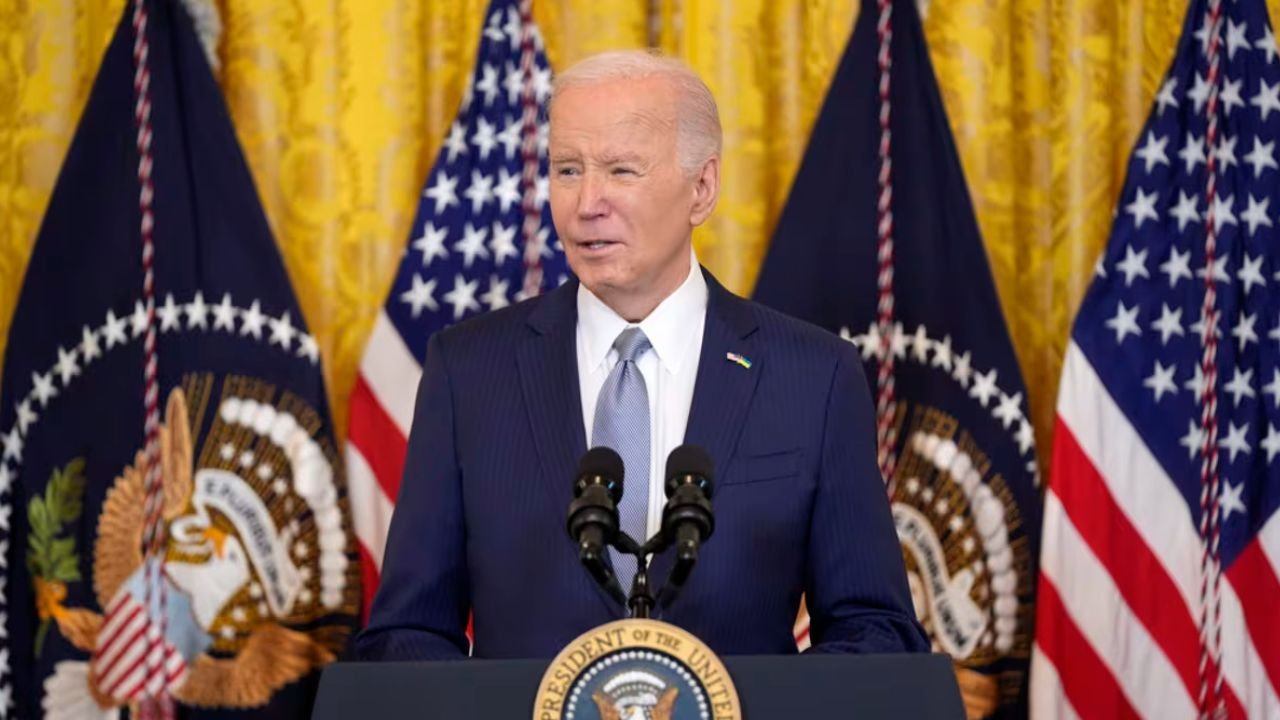
    US President Joe Biden acknowledged it would now be “tough” to secure a new truce deal in time for Ramadan.

    Saturday’s Israeli statement accused Hamas of “entrenching its positions like someone who is not interested in a deal and is striving to inflame the region during Ramadan”.

    Israeli military spokesman Daniel Hagari said Israel was preparing for “all possible operational scenarios” during the Muslim holy month.

    On the ground in southern Gaza, the Israeli army said fighting persisted in the area of Khan Yunis and Hamas authorities reported more than 30 air strikes overnight.

    Hamas chief Ismail Haniyeh called for the speedy distribution of aid to Gazans and for the full opening of border crossings “to end the siege of our people”.

    The war’s effects have been felt across the region, including off Yemen where Iran-backed Huthi rebels, who say they are acting in solidarity with Gazans, have repeatedly targeted ships plying the vital Red Sea trade route.

    US and allied forces shot down 28 one-way attack drones fired towards the Red Sea and Gulf of Aden on Saturday, the US military said, after one of the largest such rebel strikes.

    bur-srm/kir/ami

    © Agence France-Presse
  • Gaza Government Says Israel Returned 47 Exhumed Bodies

    Gaza Government Says Israel Returned 47 Exhumed Bodies

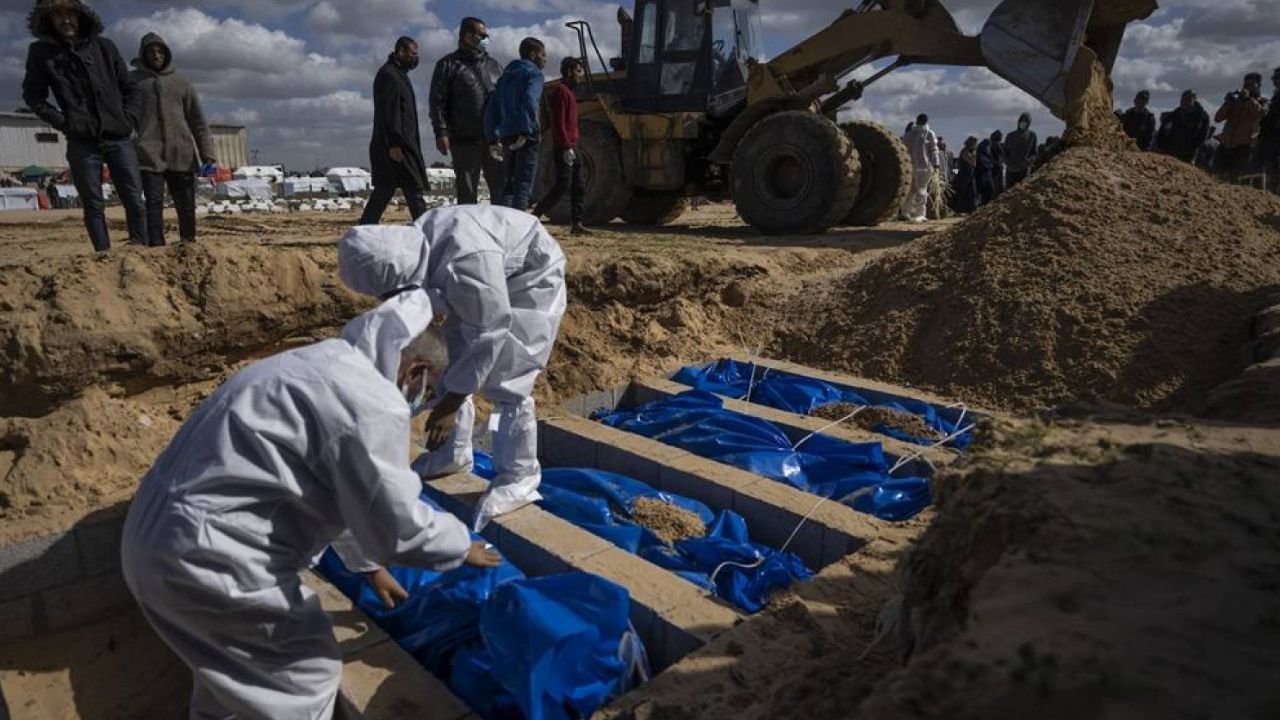
    Gaza’s government media office said Thursday that Israel had returned dozens of bodies that had been exhumed from graves in the besieged territory in recent weeks.

    Israeli forces have on several occasions taken bodies from Gaza to Israel for examinations as they look for hostages seized during Hamas’s October 7 attack.

    AFP journalists have previously witnessed the reburial of bodies which Gaza officials said had been exhumed by Israeli forces in November, December and January.

    The 47 new bodies sent back by Israel on Thursday “have been transferred to Al-Najjar Hospital” in Rafah, in southern Gaza, the besieged territory’s crossings and borders authority said in a statement.

    A separate statement from the government media office said they would be “buried in a recently established mass grave” near Rafah.

    “The bodies were seized and transferred to Israel under the pretext of examination and verification” to ensure they were not those of hostages held in Gaza, the government statement said.

    Since the start of the war, Israeli officials have exhumed “hundreds” of bodies from graves at hospitals in the Gaza Strip, it said.

    The Israeli army told AFP it was looking into reports about the latest group of returned bodies.

    Hamas took around 250 Israeli and foreign hostages during the October 7 attack, dozens of whom were released during a week-long truce in November. Israel believes 99 of them remain alive in Gaza and that 31 have died.

    The attack resulted in the deaths of around 1,160 people, mostly civilians, according to an AFP tally of official figures.

    Israel’s genocide in Gaza after October 7 has resulted in the deaths of at least 30,800 people in Gaza, the majority of them women and children, according to the territory’s health ministry.

    Prime Minister Benjamin Netanyahu’s government is under immense domestic pressure to secure the return of hostages as part of any new truce deal with Hamas.

    That pressure intensified after soldiers killed three hostages in December, mistakenly perceiving them as a threat.

  • Tensions in Israel war cabinet as genocide in Gaza rages on

    Tensions in Israel war cabinet as genocide in Gaza rages on

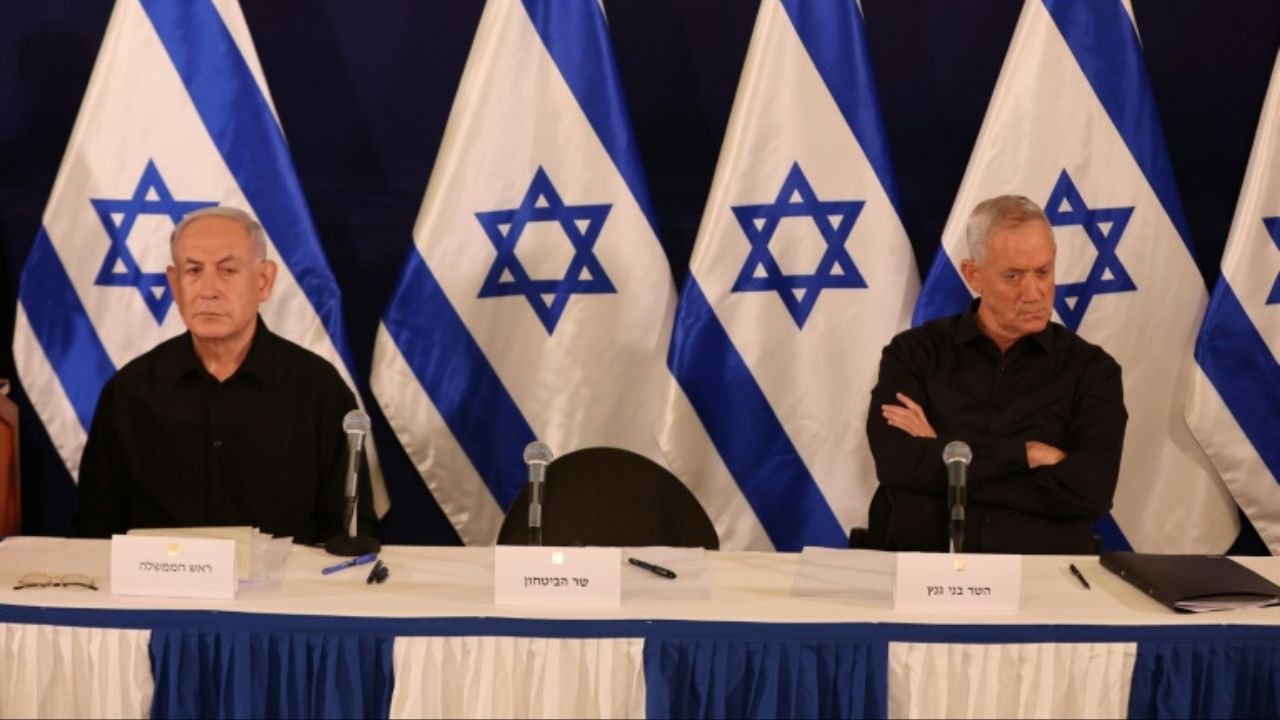
    Jerusalem (AFP) – Israel’s war cabinet, seen as a symbol of national unity in the assault on Gaza, has been shaken by political rivalry between Prime Minister Benjamin Netanyahu and centrist Benny Gantz, analysts say.

    A former military chief and ex-defence minister, Gantz visited Washington Monday before heading to London on Wednesday for high-level talks in a trip which was not authorised by Netanyahu.

    It served to highlight the deep divisions between the two men as international pressure mounts on Israel over the growing humanitarian crisis in the Gaza Strip, with the genocide entering its sixth month.

    Gantz’s visit to the United States — Israel’s staunchest ally — shows that “his level of trust in Netanyahu is very low,” said Yohanan Plesner, president of the Israel Democracy Institute think tank.

    It demonstrates he wanted to present an alternative view to Washington, he added.

    Gantz, who left the political opposition to join the war cabinet after Hamas’s October 7 attacks in southern Israel, has been at odds with Netanyahu on how to win the release of hostages and draw up an exit strategy from the conflict.

    But his trip to Washington has raised attention in Israel, and drew strong criticism from ministers of Netanyahu’s right-wing party Likud.

    “It looks like some kind of subversion,” said Transport Minister Miri Regev, adding Gantz is “working behind the prime minister’s back.”

    Dudi Amsalem, Israel’s regional cooperation minister and Netanyahu ally, said that Gantz had joined the wartime government “to create unity in an emergency, not to be a Trojan horse”.

    ‘Hate each other’

    “Tensions were always there,” between these “two people who hate each other,” said Reuven Hazan, a political science professor at Jerusalem’s Hebrew University.

    Five members make up the war cabinet, with Netanyahu, Gantz and Defence Minister Yoav Gallant seen as the main players.

    Hazan said Gantz travelled to Washington and London in a bid to demonstrate that he has the right profile to be a potential future prime minister.

    He met with US Vice President Kamala Harris a day after she delivered some of the most stinging US criticism of Israel since the war began calling for an “immediate ceasefire”.

    She also voiced the US administration’s concerns over the humanitarian crisis in Gaza, and “urged Israel to take additional measures” to increase the flow of aid.

    Israel has vowed to eliminate Hamas after its October 7 attack.

    The withering Israeli bombardment of Gaza has left more than 30,700 people dead in five months of war, and caused widespread destruction. UN agencies have also warned of the growing threat of famine as aid has struggled to reach those in need in Gaza.

    US President Joe Biden and Netanyahu are in an “open conflict” as the White House presses the Israeli leader not to “continue with a massive civilian casualties in Gaza” and “without knowing what to do the day after” the war, said Hazan.

    Gantz ‘comfortable counterpart’

    “Gantz is not where Netanyahu is, he is closer to the American position” on the war’s aftermath, said Hazan.

    He’s a “more comfortable counterpart” for Washington, “is more open to dialogue with moderate partners in the region” and over the role that the Palestinian Authority could play in Gaza after the war, Plesner added.

    Last week Gantz applauded Gallant’s proposal to reform military service in order to include ultra-Orthodox Jews, who are currently exempted for religious reasons.

    But the announcement shook Israeli politics to its core and was perceived in some Israeli media as a challenge from Gallant to Netanyahu, with both belonging to the same party.

    The proposal was a political bombshell and forces the prime minister into a tight corner, as the two main parties representing ultra-Orthodox Jews could topple his precarious coalition at any moment.

    Netanyahu is working on “avoiding an early election” that would benefit Gantz at any cost, said Plesner.

    Recent polls suggest that if there is an election, Gantz’s party will win the largest number of seats.

    “If there is one issue that might get out of hand and lead to a collapse of the coalition (it) is the issue of recruitment of ultra-Orthodox”, Plesner said.

    Gantz has to time his exit from the government in a way that makes Israelis feel he is “looking out for Israel’s interests” and create a perception that “Netanyahu is only looking at his personal interests,” said Hazan.

  • Yemen faces ‘environmental disaster’ as sunken ship threatens Red Sea

    Yemen faces ‘environmental disaster’ as sunken ship threatens Red Sea

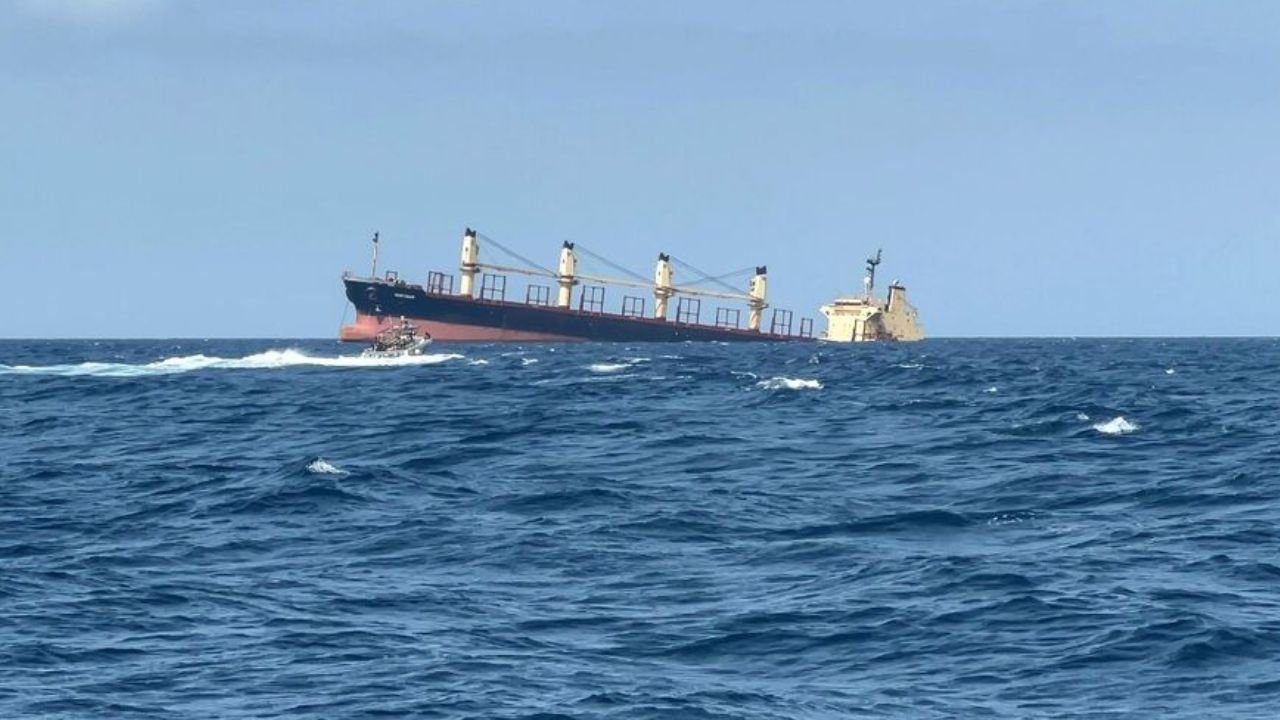
    The sinking of a bulk carrier off Yemen after a Houthi missile attack poses grave environmental risks as thousands of tonnes of fertilizer threaten to spill into the Red Sea, officials and experts warn.

    Leaking fuel and the chemical pollutant could harm marine life, including coral reefs, and impact coastal communities that rely on fishing for their livelihoods, they said.

    The Belize-flagged, Lebanese-operated Rubymar sank on Saturday with 21,000 metric tons of ammonium phosphate sulfate fertilizer on board, according to U.S. Central Command (CENTCOM).

    It had been taking in water since a Houthi missile strike on Feb. 18 damaged its hull, marking the most significant impact on a commercial ship since the rebels started targeting vessels in November.

    After already leaving a slick from leaking fuel while it was still afloat, the Rubymar now poses a new set of environmental threats underwater.

    Abdulsalam al-Jaabi of the Yemeni government’s environmental protection agency warned of “double pollution” that could impact 78,000 fishermen and their families — up to half a million people.

    “The first pollution is oil pollution resulting from the large amount of fuel oil on board,” he said, estimating the quantity to be over 200 metric tons.

    The second risk is posed by the fertilizer, which is highly soluble and could harm “fish and living organisms such as coral reefs and seaweed” if released into the sea, Jaabi added.

    The overall contamination could incur “significant economic costs,” especially on coastal communities that depend on fishing for survival, the official warned.

    Yemen’s Houthi rebels seized the capital Sanaa in 2014, pushing the internationally recognized government south to Aden and prompting Saudi Arabia to lead a military coalition to help prop it up the following year.

    A cease-fire since April 2022 has largely held.

    The Rubymar is the first ship to sink since the Houthis started their Red Sea campaign that they say is in solidarity with Palestinians in the Gaza Strip amid Israeli genocide.

    Plans to tow the vessel failed after port authorities in Aden, Djibouti and Saudi Arabia refused to receive the ship, according to Roy Khoury, the chief executive of Blue Fleet Group, the ship’s Lebanese operator.

    The Yemeni government’s transport minister, Abdulsalam Humaid, said Aden’s “refusal comes out of fear of an environmental disaster.”

    Djibouti also refused the ship over “environmental risks,” said an official close to the country’s presidency.

    Saudi authorities were not immediately available for comment.

    “Without immediate action, this situation could escalate into a major environmental crisis,” warned Julien Jreissati, Middle East and North Africa program director at Greenpeace.

    “The sinking of the vessel could further breach the hull, allowing water to contact with the thousands of tonnes of fertilizer,” he added.

    This would “disrupt the balance of the marine ecosystems, triggering cascading effects throughout the food web,” Jreissati said.

    U.N. Special Envoy Hans Grundberg said five experts from the United Nations Environment Programme were due in Yemen this week to conduct an assessment in coordination with the Yemeni environment ministry.

    George Wikoff, the head of the U.S. Navy’s Bahrain-based Fifth Fleet, warned that the “tonnes of chemicals carried on the sinking vessel Rubymar presents environmental risk to the Red Sea in the form of algae blooms and damaged coral.”

    Speaking during a conference in Doha on Tuesday, Wikoff said the ship also poses a threat to Red Sea navigation as it “presents a subsurface impact risk” to other ships transiting the critical waterway that normally carries around 12% of global trade.

    It remains unclear who is ultimately responsible for the Rubymar, which was sailing from the United Arab Emirates to Bulgaria.

    CENTCOM and maritime security firm Ambrey said the vessel was registered in Britain but its Lebanese operator said the ship was registered in the Marshall Islands.

    Yemeni official Faisal al-Thalabi, a member of a crisis cell tasked with dealing with the Rubymar, said Yemen has been in contact with both the owner and operator but noted that the outreach “made no difference.”

    The owner “is part of the problem … as he did not respond to official messages issued from Yemen,” Thalabi said, without disclosing the owner’s identity.

    To contain a potential environmental crisis, Yemeni authorities will dispatch teams to collect water samples and survey beaches for pollution, Thalabi said.

    Water sources and seawater desalination plants in coastal communities may also be affected, he cautioned.

    “We have special containment booms and we are ready to place them in environmentally sensitive areas such as damaged islands” if they are contaminated, he said.

    The “worst-case scenario is contamination,” Thalabi said.

  • Israel says to allow worshippers access to Al-Aqsa in Ramzan as in ‘previous years’

    Israel says to allow worshippers access to Al-Aqsa in Ramzan as in ‘previous years’

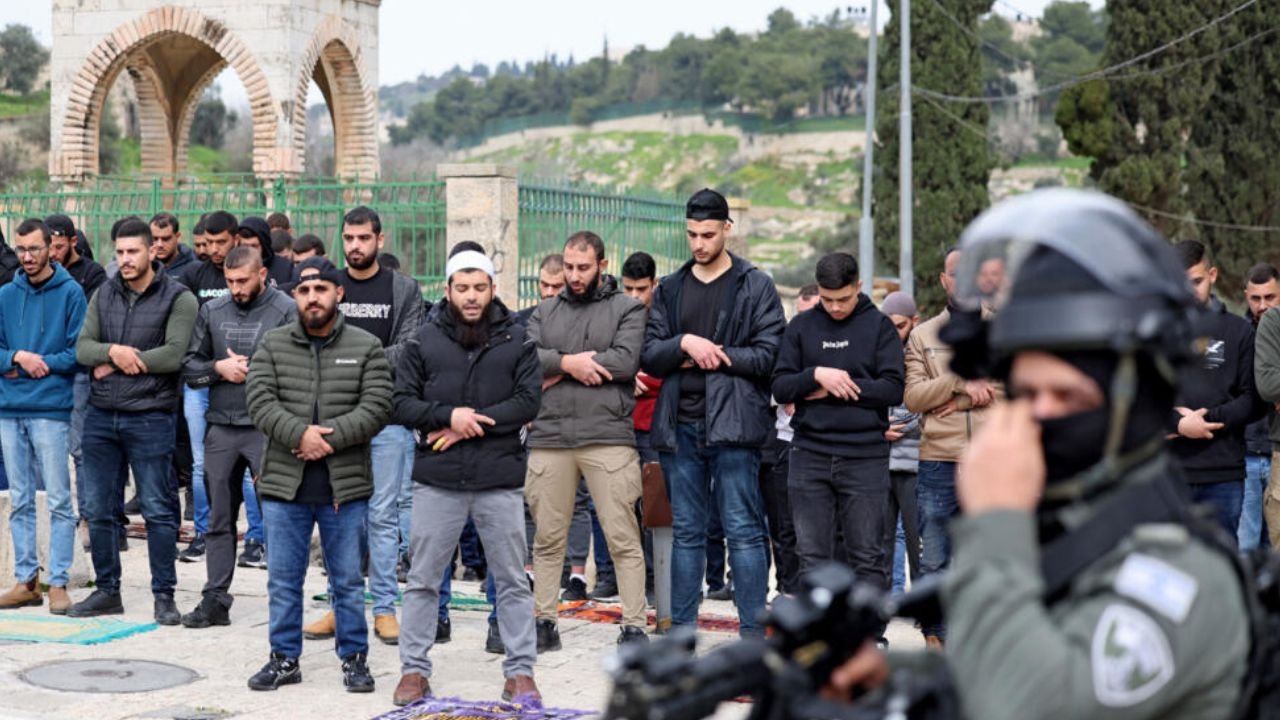
    Israel will allow as many Muslim worshippers to access Al-Aqsa mosque in Jerusalem during the first week of Ramzan as in previous years, the prime minister’s office said Tuesday.

    “In the first week of Ramzan, worshippers will be allowed to enter the Temple Mount, in similar numbers to those in previous years,” the statement said, using the Jewish term for the site.

    “Every week there will be a situation assessment in terms of security and safety and a decision will be made accordingly,” it added.

    Every year, tens of thousands of Muslim worshippers perform Ramzan prayers at the Al-Aqsa mosque.

    Ramzan comes this year as Israel wages a genocide in the Gaza Strip in a disproportionate response to Hamas in Israel on October 7.

    Israel has been assessing how to address worship in Jerusalem during Ramzan, the Islamic fasting month due to start on March 10 or 11, depending on the lunar calendar.

    Israel’s far-right National Security Minister Itamar Ben Gvir had recently said that Palestinian residents of the West Bank “should not be allowed” entry to Jerusalem to pray during Ramzan.

    “We cannot take risks,” he said, adding: “We cannot have women and children hostage in Gaza and allow celebrations for Hamas on the Temple Mount.”

    Ben Gvir leads a hard-right party advocating Jewish control of the compound.

    Days later, the United States called on Israel to allow Muslims to worship at Al-Aqsa.

    “It’s not just a matter of granting people religious freedom that they deserve… it’s also a matter that directly is important to Israel’s security,” State Department spokesman Matthew Miller said.

    “It is not in Israel’s security interest to inflame tensions in the West Bank or in the broader region.”

    Hamas has called for a mass movement on Al-Aqsa for the start of Ramzan.

    “Ramzan is sacred to Muslims; its sanctity will be upheld this year, as it is every year,” the Israeli government statement said after Prime Minister Benjamin Netanyahu held a meeting of all security agencies on Tuesday.

  • Israel broadly agrees Gaza truce, US official says, ahead of talks

    Palestinian Territories – Israel has “more or less accepted” a proposal for a ceasefire in its attacks in the Gaza Strip, a US official said Saturday as Palestinian negotiators were expected in Cairo.

    Mediators have been scrambling to lock in a truce before Ramadan, the Muslim fasting month which begins on March 10 or 11, eyeing an end to the almost five-month conflict that has ravaged Gaza.

    In a sign of the dire humanitarian conditions as violence rages on, the besieged territory’s health ministry reported more than a dozen child malnutrition deaths in recent days.

    The US official told reporters on condition of anonymity that “there’s a framework deal” for a ceasefire which “the Israelis have more or less accepted”.

    “Right now, the ball is in the camp of Hamas,” the official said.

    A source close to Hamas told AFP a delegation from the group was headed from Qatar to Egypt on Saturday.

    Israel has yet to confirm that it has accepted the truce plan.

    Speaking on condition of anonymity, the source said that Hamas would deliver its “official answer” to the plan, which resulted from talks with Israeli negotiators in Paris late last month.

    The mediators “will resume negotiations for a Gaza truce in Cairo on Sunday,” Egypt’s AlQahera News reported.

    Earlier the United States, which provides ally Israel with billions of dollars in military aid, said it began airdropping aid into war-ravaged Gaza.

    The start of the US relief operation came a day after President Joe Biden announced the move and spoke of the “need to do more” to alleviate the dire humanitarian crisis.

    But parachuting aid cannot replace “the fundamental need to move assistance through as many land crossings as possible”, the US official said.

    ‘Unjustifiable’ shooting

    Gaza has faced dwindling deliveries of relief supplies across its land borders, which aid groups blame at least in part on Israeli restrictions.

    US Central Command, in a post on social media platform X, said the air operation was conducted jointly with Jordan and saw planes drop “over 38,000 meals along the coastline of Gaza allowing for civilian access to the critical aid”.

    Several Arab and European governments have carried out air drops over Gaza since November but Tuesday’s operation was the first involving the United States.

    At least 13 children have died from “malnutrition and dehydration”, the Gaza health ministry said Saturday, two days after a desperate rush for aid from a convoy of trucks in Gaza City ended in the deaths of dozens of Palestinians.

    The health ministry said Israeli forces shot civilians but the Israeli army insisted most died in a stampede or crush.

    A United Nations team that visited Gaza City’s Al-Shifa Hospital reported seeing “a large number” of gunshot wounds among Palestinians in the aftermath of the aid truck storming.

    Hossam Abu Safiya, director of the city’s Kamal Adwan Hospital, said all the casualties it admitted were hit by “bullets and shrapnel from occupation forces”.

    The European Union’s foreign policy chief Josep Borrell joined calls for an “impartial international investigation” into the “tragic event” early Thursday.

    The shooting “against civilians trying to access foodstuff is unjustifiable”, he said.

    The health ministry said 116 people were killed and more than 750 wounded in the chaotic scenes, which drew widespread international condemnation.

    The aid convoy deaths helped push the number of Palestinian war dead in Gaza to 30,320, mostly women and children, according to Gaza’s health ministry.

    ‘Destruction is everywhere’

    Jens Laerke, spokesman for the UN humanitarian office OCHA, said on Friday that “a famine is almost inevitable”.

    Laerke cited the near-total closure of commercial food imports, the “trickle of trucks” coming in with food aid, and the “massive access constraints” to moving around inside Gaza.

    The International Rescue Committee said the very fact airdrops were “being considered is testament to the serious access challenges”.

    The group said parachuting aid mostly distracts “time and effort from proven solutions to help at scale”.

    AFPTV images showed people running and pedalling fast on bicycles past bomb-damaged buildings on a rutted dirt road to reach aid floating down to Gaza City.

    Hisham Abu Eid, 28, of Gaza City’s Zeitun area, said he got two bags of flour from an aid distribution and gave one to his neighbours.

    “Aid that is getting into Gaza is rare and not enough for even a small number of people. Famine is killing people,” Abu Eid said.

    As mediators seek a deal that may include more aid into Gaza and the release of hostages, Israeli Prime Minister Benjamin Netanyahu has come under increasing domestic pressure over the fate of the remaining captives.

    Israelis protesters reached Jerusalem on Saturday, capping a four-day march from the Gaza border to pressure the government to secure the hostages’ release.

    The US official said a six-week ceasefire was on the table, “starting today if Hamas agrees to release the defined category of vulnerable hostages… the sick, the wounded, elderly and women”.

    In Rafah, where hundreds of thousands of Gazans displaced by the war have sought refuge, Israeli bombardment that hit a makeshift camp killed at least 11 people, the Gaza health ministry said.

    The strike near a hospital also left “about 50 injured, including children”, it added.

    The Israeli military said it was looking into the incident.

    An AFP journalist saw wounded people being rushed on stretchers to another Rafah hospital.

    “Destruction is everywhere and there are many martyrs,” said resident Belal Abu Jekhleh.

    burs-ami/kir

    © Agence France-Presse

  • Israel forces kill more than 110 civilians rushing for food aid

    Israel forces kill more than 110 civilians rushing for food aid

    Israeli forces in Gaza opened fire on Palestinians scrambling for food aid in a chaotic melee on Thursday that the health ministry said killed more than 100 people.

    The Israeli military said a “stampede” occurred when thousands of desperate Gazans surrounded a convoy of 38 aid trucks, leading to dozens of deaths and injuries, including some who were run over by the lorries.

    An Israeli source acknowledged troops had opened fire on the crowd, believing it “posed a threat”.

    Gaza’s health ministry condemned what it called a “massacre” in Gaza City in which 112 people were killed and more than 750 others wounded.

    Türkiye accused Israel of committing “another crime against humanity” and condemning Gazans to “famine” as civilians scavenge for dwindling supplies of food.

    “The fact that Israel… this time targets innocent civilians in a queue for humanitarian aid, is evidence that (Israel) aims consciously and collectively to destroy the Palestinian people”, the Turkish foreign ministry  said in a statement.

    “We therefore call on all those with influence over the Israeli government to stop the ongoing violence in Gaza.”

    The incident adds to a Palestinian death toll from the war that the ministry said had topped 30,000, and dampens hopes a truce deal between Israel and Hamas militants could be just days away.

    There were conflicting reports on what exactly unfolded in the hours before dawn.

    A witness in Gaza City, declining to be named for safety reasons, said the violence began when thousands of people rushed towards aid trucks at the city’s western Nabulsi roundabout, with soldiers firing at the crowd “as people came too close” to tanks.

    Israeli army spokesman Daniel Hagari said the military had fired “a few warning shots” to try to disperse a crowd that had “ambushed” the aid trucks.

    When the crowd got too big, he said the convoy tried to retreat and “the unfortunate incident resulted in dozens of Gazans killed and injured”.

    Aerial images released by the Israeli army showed what it said were scores of people surrounding aid trucks in Gaza City.

    Ali Awad Ashqir, who said he had gone to get some food for his starving family, told AFP he had been waiting for two hours when trucks began to arrive.

    “The moment they arrived, the occupation army fired artillery shells and guns,” he said.

    Hagari later denied Israeli forces carried out any shelling or strikes at the time.

     ‘Another day from hell’ 

    U.S. President Joe Biden said Washington was checking “two competing versions” of the incident, while a State Department spokesman said the United States had been in touch with Israel and was “pressing for answers” on what happened.

    The incident would complicate efforts to broker a truce, Biden said, later admitting that any deal was unlikely to happen by Monday — the timeline that he had predicted earlier this week.

    The U.S. president spoke with Qatari and Egyptian leaders in separate phone calls, the White House said, saying he discussed both the ceasefire and the “tragic and alarming” aid incident.

    The U.N. Security Council held a closed-door emergency meeting on the incident.

    The U.S. deputy ambassador to the U.N. Robert Wood condemned the incident before entering the meeting, calling it a “tragic day”.

    Saudi Arabia strongly condemned what it called the “targeting” of unarmed civilians, while Kuwait and the UAE also issued condemnations.

    Qatar warned that Israel’s “disregard for Palestinian blood… (will) pave the way for an expanding cycle of violence”.

    French President Emmanuel Macron expressed his “strongest condemnation”, while Spain’s foreign minister described the events as “unacceptable”.

    European Union foreign affairs chief Josep Borrell also denounced the “carnage”.

    Looting of aid trucks has previously occurred in northern Gaza, where desperate residents have taken to eating animal fodder and even leaves to stave off starvation.

    The chief of the United Nations agency for Palestinian refugees, UNRWA, said that no U.N. agency had been involved in Thursday’s aid delivery, and called the incident “another day from hell”.

  • Death toll in Gaza exceeds 30,000 as Israeli attacks continue and famine looms

    Death toll in Gaza exceeds 30,000 as Israeli attacks continue and famine looms

    Palestinian Territories – The health ministry of Gaza said Thursday more than 30,000 Palestinians have been killed since October 7 as Israel intensified its attacks on the besieged strip.

    While mediators say a truce deal between Israel and Hamas could be just days away, aid agencies have sounded the alarm of a looming famine in Gaza’s north.

    Children have died “due to malnutrition, dehydration and widespread famine” at Gaza City’s Al-Shifa hospital, said the health ministry, whose spokesman Ashraf al-Qudra has called for “immediate action” from international organisations to prevent more of these deaths.

    Citing the deteriorating conditions in Gaza, USAID head Samantha Power said Israel needed to open more crossings so that “vitally needed humanitarian assistance can be dramatically surged”.

    “This is a matter of life and death,” Power said in a video posted on social media platform X.

    The latest overall toll for Palestinians killed in the war came after at least 79 people died overnight across the war-torn Gaza Strip, the health ministry said Thursday.

    Mediators from Egypt, Qatar and the United States have been seeking a six-week pause.

    Negotiators are hoping a truce can begin by the start of Ramadan, the holy Muslim month that kicks off March 10 or 11, depending on the lunar calendar.

    The proposals reportedly include the release of some Israeli hostages held in Gaza in exchange for several hundred Palestinian detainees held by Israel.

    Short of the complete withdrawal Hamas has called for, a source from the group said the deal might see Israeli forces leave “cities and populated areas”, allowing the return of some displaced Palestinians and humanitarian relief.

    US President Joe Biden is “pushing all of us to try to get this agreement over the finish line”, said his secretary of state, Antony Blinken.

    Famine ‘imminent’

    The crucial southern Gaza city of Rafah is the main entry point for aid crossing the border from neighbouring Egypt.

    But the World Food Programme said no humanitarian group had been able to deliver aid to the north for more than a month, accusing Israel of blocking access.

    Neighbouring Jordan has coordinated efforts to air-drop supplies over southern Gaza.

    “If nothing changes, a famine is imminent in northern Gaza,” the World Food Programme’s deputy executive director Carl Skau said.

    Israeli officials have denied blocking supplies, and the army on Wednesday said “50 trucks carrying humanitarian aid” had made it to northern Gaza in recent days.

    Israel’s retaliatory military campaign in Gaza has left hundreds of thousands displaced, with nearly 1.5 million people now packed in Rafah.

    In a sign of growing desperation among Gazans over living conditions, a rare protest was held Wednesday by residents over the soaring prices of commodities.

    “Everyone is suffering inside these tents,” said Amal Zaghbar, who was displaced and sheltering in a makeshift camp.

    “We’re dying slowly.”

    Israel has repeatedly threatened a ground offensive on Rafah, with Prime Minister Benjamin Netanyahu saying a truce would only delay it, as such an operation was needed for “total victory” over Hamas.

    Egypt — which borders Rafah — says an assault on the overcrowded city would have “catastrophic repercussions”.

  • Israel minister says Arab trade ties unphased by Gaza war

    Israel minister says Arab trade ties unphased by Gaza war

    Abu Dhabi, United Arab Emirates – Israel’s economy minister on Tuesday said trade relations with Arab states had not been affected by the Gaza war, the cost of which he added his country was able to bear.

    “There is no change at all” in trade relations, Nir Barkat told journalists on the sidelines of the World Trade Organization’s 13th ministerial meeting in Abu Dhabi.

    “Things are very stable… I think the leadership understands we have the same goal, which is to collaborate in a peaceful way.”

    When asked about Israel’s economic losses due to the war, Barkat said it could add “anywhere between 150 to 200 billion shekels ($42-55 billion)” to the country’s national debt.

    “That’s not something Israel cannot bear mid- to long-term,” he said.

    In January, Israel’s cabinet approved an additional 55 billion shekels ($15 billion) to meet the cost of the war, while the mobilisation of reservists and the displacement of communities on the borders with Gaza and Lebanon have disrupted the economy.

    The war began when the Palestinian Islamist group Hamas launched an unprecedented attack on Israel on October 7 that resulted in the deaths of about 1,160 people, mostly civilians, according to an AFP tally based on official figures.

    Israel has vowed to destroy Hamas and responded with a relentless offensive in Gaza. ccording to health ministry, at least 29,878 people, mostly women and children, have been killed.

    Confronted with the conflict, Arab countries that have normalised relations with Israel in recent years have been forced to balance diplomacy with fiercly pro-Palestinian Arab public opinion.

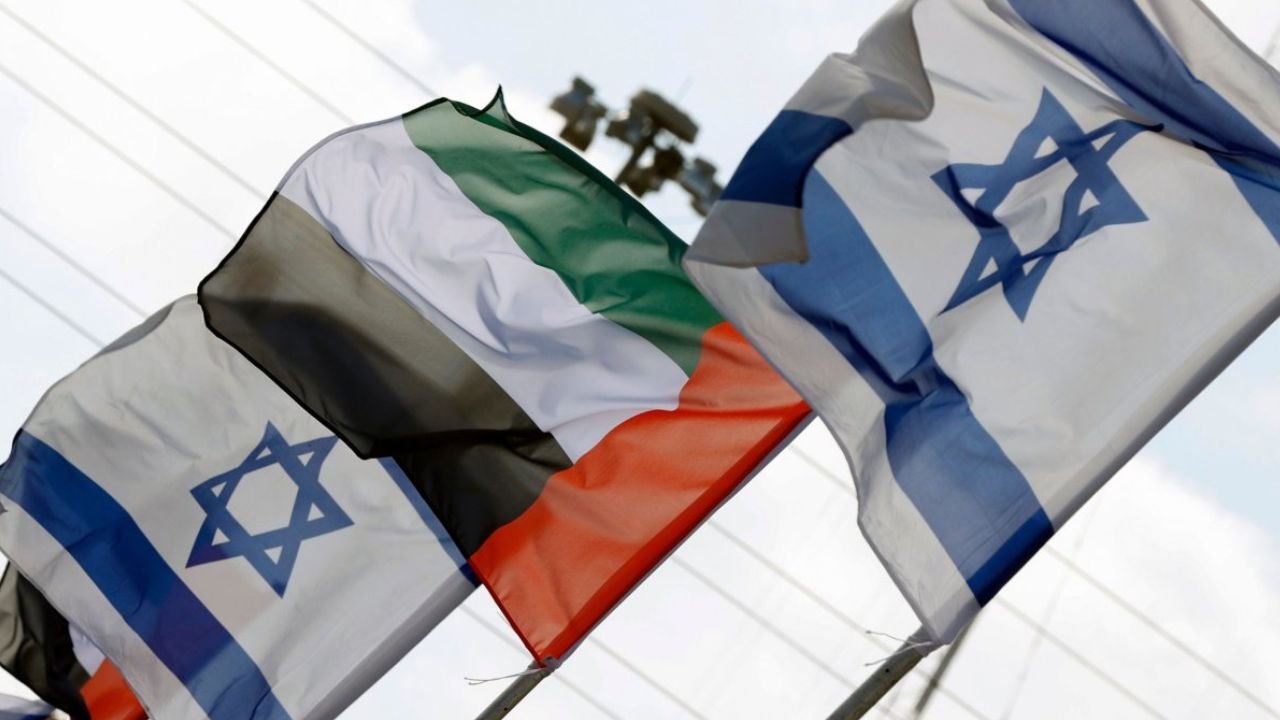
    They include the United Arab Emirates, which normalised ties with Israel in 2020 as part of the US-brokered Abraham Accords.

    Barkat said the Gaza war could help Israel boost sales of military technology, noting there is “high interest” from many countries, without specifying if Arab states were among them.

    “Especially after this war we are probably going to be leading many, many initiatives… of how next-generation warfare is going to look like,” he said.

    “Anybody that thinks they are threatened by regimes of Iran then they would have to tap us to better understand what we have learnt and what the solutions and security challenges are,” he added.

    “We are way ahead of everyone.”

    apo-ho/dcp/dv

    © Agence France-Presse

  • Biden hopes for ceasefire in Gaza by next week, lasting through Ramadan

    Biden hopes for ceasefire in Gaza by next week, lasting through Ramadan

    US President Joe Biden said Monday he hoped a ceasefire in Gaza could start by the beginning of next week, adding that Israel was ready to halt operations during the Muslim month of Ramadan as part of any deal.

    Amid a spiraling humanitarian crisis in the Palestinian territory, representatives from Egypt, Qatar, the United States, France and others have acted as go-betweens for Israel and Hamas, seeking a halt to the fighting and the release of Israeli hostages held in Gaza.

    Asked during an election campaign trip to New York when such an agreement might start, Biden replied: “I hope by the end of the weekend.”

    “My national security advisor tells me that we’re close, we’re close, we’re not done yet. My hope is by next Monday we’ll have a ceasefire,” Biden told reporters.

    Biden, 81, gave more details of what a deal could look like when he spoke on the issue in an interview with late-night US television show host Seth Meyers.

    “There is a path forward, with difficulty,” he told Meyers when asked about how to end the conflict.

    Mediators have been hoping to get a deal in place before the start of the Muslim holy month of Ramadan in about two weeks.

    “Ramadan’s coming up and there’s been an agreement by the Israelis that they would not engage in activities during Ramadan as well, in order to give us time to get all the hostages out,” Biden said.

    Biden has previously spoken of a six-week ceasefire.

    ‘Temporary ceasefire’

    The US president said such a deal “gives us time to begin to move in directions that a lot of Arab countries are prepared to move” in terms of normalizing relations with Israel.

    “I think that if we get that temporary ceasefire, we’re going to be able to move in a direction where we can change the dynamic,” he said.

    Biden has firmly supported Israel despite the soaring death toll in its offensive in Gaza following the Hamas attacks on Israel on October 7.

    But he has been increasing pressure on Israeli Prime Minister Benjamin Netanyahu to limit civilian casualties, particularly in Israel’s planned offensive in Rafah.

    Israel had “made a commitment” to evacuate significant parts of Rafah before they “go and take out the remainder of Hamas,” Biden added.

    But overall Biden warned that the “only way Israel ultimately survives” was to reach a deal that gives “peace and security for Israelis and Palestinians.”

    Amid mounting tensions with Netanyahu, Biden told Meyers that if Israel continued with its “incredibly conservative government they have… they’re going to lose support from around the world.”

    Biden’s comments come after his National Security Advisor Jake Sullivan said Sunday that representatives from several parties — although not Gaza’s rulers Hamas — met in Paris over the weekend and reached an understanding about the “basic contours” of a temporary ceasefire.

    Israel’s military campaign has killed at least 29,782 people in Gaza since October 7, mostly women and children, according to the ministry.

    dk/ssy

    © Agence France-Presse