Tag: Israel

  • Gaza’s embattled main hospital buries patients in ‘mass grave’

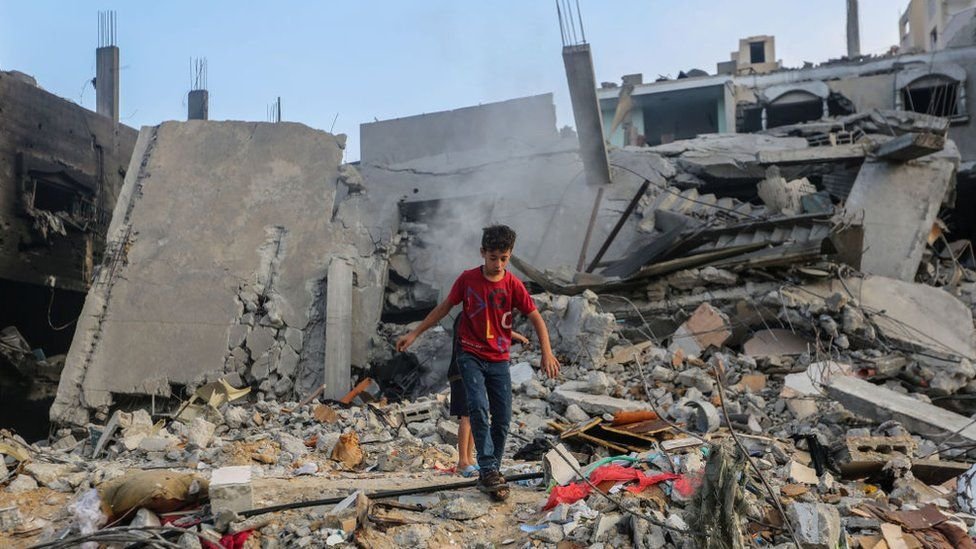
    Gaza’s main hospital has been forced to bury dozens of dead patients in a mass grave, its director said Tuesday, while thousands of Palestinians were trapped inside by fierce combat.

    Israeli forces were at the gates of the sprawling Al-Shifa hospital they say sits atop an underground Hamas command base, but the militants deny the charge while doctors say patients and people seeking shelter were stranded in horrific conditions.

    “There are bodies littered in the hospital complex and there is no longer electricity at the morgues,” said Al-Shifa hospital director Mohammad Abu Salmiya, adding that 179 bodies had been interred so far.

    “We were forced to bury them in a mass grave,” he said, adding that seven babies and 29 intensive care patients were among those who had died after fuel for the hospital’s generator ran out.

    A witness said the stench of decomposing bodies was everywhere in the Gaza City facility as bombardment and gunfire echoed constantly in the area.

    The United Nations estimates that at least 2,300 people — patients, staff and displaced civilians — are inside and may be unable to escape because of fierce fighting from the facility where supplies are nearly exhausted.

    Israel says it is not targeting the hospital, but has vowed to destroy Hamas in response to the attacks of October 7, which killed an estimated 1,200 people, mostly civilians, and saw 240 hostages being taken to Gaza.

    The health ministry in Hamas-run Gaza says Israel’s relentless assault has killed 11,320 people, also mostly civilians, including thousands of children.

    Israel’s military says 47 of its troops have been killed in Gaza.

    Al-Shifa’s fate has become a major focus of the more than five week war that has stirred international criticism of the suffering and death inflicted on civilians in the besieged territory.

    Israel’s Foreign Minister Eli Cohen acknowledged in a statement shared by his spokesman Monday that his nation has “two or three weeks until international pressure really steps up”. 

    ‘Completely soaked’

    The situation in Gaza’s other hospitals is also dire, with the UN saying 22 of 36 are not functional due to lack of generator fuel, damage and combat.

    “The 14 hospitals remaining open have barely enough supplies to sustain critical and life-saving surgeries and provide inpatient care, including intensive care,” said the World Health Organization in the Palestinian Territories.

    But the humanitarian crisis in the territory also includes the hundreds of thousands of people who have fled south at Israel’s urging to get away from the most intense fighting.

    On Tuesday displaced Palestinians in the south woke up to yet another scourge: rain, soaking their meagre belongings and threatening to bring waterborne diseases to their places of shelter.

    “We are completely soaked, all of our clothes are soaked, our mattresses, our blankets too, even a dog could not live like this,” said Ayman al-Jueidi, who has set himself up in the courtyard of a UN school in Rafah at the southern extremity of the Gaza Strip.

    Even escaping the fighting is dangerous and wounded Palestinians told AFP how they were hit by a strike on their way south.

    “I walked around three to four kilometres (around two miles) while I was bleeding,” said Hasan Baker, whose head and left hand were bandaged. “There was no possibility for any ambulance to enter the area.”

    Hostage talks

    Israeli leaders have so far insisted there will be no ceasefire until hostages are released, but Qatar is mediating talks on a possible deal to free captives.

    Abu Obeida, a spokesman for Hamas’s military wing, said Monday that Israel asked for the release of 100 hostages while the militants want 200 Palestinian children and 75 women freed from Israeli prisons.

    “We informed the mediators we could release the hostages if we obtained five days of truce… and passage of aid to all of our people throughout the Gaza Strip, but the enemy is procrastinating,” Abu Obeida said in an audio statement.

    Qatari foreign ministry spokesman Majed bin Mohammed Al-Ansari told a news conference in Doha that the “deteriorating” situation in Gaza was hampering mediation efforts.  

    “We believe that there is no other chance for both sides other than for this mediation to take place,” he said. 

    Relatives of hostages set out Tuesday on a five-day protest march to Prime Minister Benjamin Netanyahu’s office to demand “the immediate release of all the hostages”, the Hostages and Missing Families Forum said.

    Netanyahu responded in a statement that the government was “working relentlessly for the release of the hostages, including using increased pressure since the start of the ground incursion”.  

    As security officials and diplomats continued negotiations, Hamas’s military wing issued a video of captive Israeli soldier Noa Marciano.

    The Israeli army on Tuesday confirmed she was dead.

    Abu Obeida claimed Marciano was killed in an Israeli strike. The Israeli army did not say how she died.

    West Bank violence

    The Israeli army said it had captured Gaza’s parliament, the government building, the police headquarters and other government institutions run by Hamas in Gaza City, as its forces deepened their offensive in the Palestinian territory.

    The army also showed images of a discarded baby bottle, makeshift toilet and bullet-scarred motorbike as evidence Hamas held hostages in the basement of Al-Rantisi children’s hospital in Gaza City.

    AFP was not able to independently confirm the allegation.

    The video narrated by army spokesman Daniel Hagari also shows neatly arranged assault rifles, grenades and what he said were “vests with explosives”.

    The Hamas health ministry described the Israeli video as “poor staging” with “not a single piece of evidence” backing the Israeli army claims.

    The war in Gaza has also spurred violence on other fronts.

    In the occupied West Bank, eight Palestinians were killed in clashes with Israeli troops, seven during an army raid on the northern city of Tulkarem and one near the southern city of Hebron, the Palestinian health ministry said on Tuesday.

    At least 180 Palestinians and three Israelis have been killed across the West Bank since October 7, according to officials on both sides.

    The Israeli police said they were investigating “several cases” of alleged sexual violence against women by Hamas militants in the attack that triggered the conflict.

    Since the attacks, police have been gathering evidence about allegations of sexual violence from witnesses, surveillance footage and the interrogations of Palestinian militants arrested in the aftermath. 

    Police had “multiple witnesses” but no “living victims”, investigator David Katz said without giving the precise number of cases.
  • Deadly attacks, decomposing bodies, lack of services: What we know about day 39

    Deadly weapons used against Gaza

    The Euro-Med Human Rights Monitor has revealed that Israel has dropped more than 25,000 tonnes of explosives on the Gaza Strip since October 7, equivalent to two nuclear bombs.

    In comparison, the United States dropped the Little Boy nuclear bomb on Hiroshima during World War II, yielding 15,000 tonnes of high explosives and wrecking everything within a 1.6km (1-mile) radius.

    Plan to bury decomposing bodies in Al Shifa compound

    Reuters reported that a doctor Ahmed Al Mokhallalati and Gaza health ministry spokesman Ashraf Al-Qudra have claimed in separate telephone interviews that more than 100 dead bodies are presently unburied and have begun to decompose, “creating an acute sanitary crisis”.

    “We are planning to bury them today in a mass grave inside the Al Shifa medical complex. It is going to be very dangerous as we don’t have any cover or protection from the ICRC (International Committee of the Red Cross), but we have no other options, the corpses of the martyrs began to decompose,” said Qidra. “The men are digging right now as we speak.”

    Qidra claims the number of bodies accumulated at Al Shifa at about 100 whereas Mokhallalati said it was about 120.

    More than half of Gaza hospitals non operational

    According to the World Health Organization, 22 of 36 hospitals in Gaza are out of service “due to lack of fuel, damage, attacks and insecurity”.

    While calling for an immediate ceasefire, the UN’s health agency also warned that the remaining 14 hospitals “have barely enough supplies to sustain critical and life saving surgeries and provide inpatient care, including intensive care”.

    Water supplies on hold due to lack of fuel

    The United Nations reported that infrastructure for the operation of water and waste management in southern Gaza is no longer functioning.

    “Due to lack of fuel, public sewage pumping stations, 60 water wells in the south, the two main desalination plants in Rafah and the Middle Area, the two main sewage pumps in the south, and the Rafah wastewater treatment plant have all ceased operations,” the United Nations Office for the Coordination of Humanitarian Affairs (OCHA) stated, citing the organisation’s Palestinian relief agency UNRWA.

    “Coupled with the shutdown of municipal sanitation work, this is posing a serious threat to public health, increasing the risk of water contamination and the outbreak of diseases.”

    At least 42 journalists killed since October 7

    The Committee to Protect Journalists (CPJ) has revealed that at least 42 journalists and media workers have been killed since October 7 as Israel intensified its attacks, stating that the period was the most deadly for journalists since the CPJ’s data collection began in 1992.

    Credits: Al Jazeera

  • Al-Shifa staff unable to bury 100 decomposing bodies: What we know about day 38

    There are presently around 650 patients, 500 healthcare workers, and an estimated 2,500 displaced people inside al-Shifa Hospital, reports Mohammed Zaqout, director of hospitals in Gaza.

    Al-Shifa staff unable to bury 100 decomposing bodies

    Wafa news agency has reported that according to Gaza’s Minister of Health Mai al-Kaila, the staff of Al-Shifa Hospital are not able to bury the remains of at least 100 people who were killed in recent days as Israel continued its attacks in Gaza.

    hospital workers also have to deal with increasing medical waste accumulation inside the hospital compound. Now, Al-Shifa Hospital is not allowing in new patients, “even as it continues to deal with thousands of refugees who are also taking shelter there”, reports Al Jazeera.

    It has also been revealed that Israeli snipers have been firing at anyone near the hospital.

    At least 32 al-Shifa patients dead

    Over the past three days, at least 32 hospital patients in al-Shifa Hospital have died, claims Palestinian Health Ministry spokesperson Ashraf Al Qidra.

    Among the dead are three premature babies whose incubators were shut off after fuel stocks finished. 

    After the hospital ran out of fuel on Saturday, operations were also suspended.

    Credits: Al Jazeera

  • New survey: Large number of Pakistanis boycotting pro-Israel brands

    New survey: Large number of Pakistanis boycotting pro-Israel brands

    People across the world have been calling for a boycott of brands and companies affiliated with Israel as the onslaught on Gaza continues.

    The purpose of boycotting the Israel-affiliated brands is to economically hurt its government that is committing what many experts have now termed a genocide.

    Pulse Consultant conducted a survey to deduce the response of Pakistanis towards the boycott — to judge how many are willing to stop buying such products.

    Titled the ‘Consumer Sentiments Sway Towards Boycott’, the survey revealed that eight out of 10 respondents (83%) in the top 12 cities of Pakistan “agreed with the appeal of boycotting brands of those companies who are allegedly supporting the occupied army”.

    Amongst those who agreed to boycott, 79% claimed that they did it. Additionally, the females (85%) ratio is higher than males (78%).

    The survey is based on more than 1200 respondents, both genders, with age groups of 16-55+.

    The interviews were conducted through Computer Assisted Telephonic facility, from November 5th to 11th.

  • Three Arab countries refuse to cut off economic ties with Israel

    Three Arab countries refuse to cut off economic ties with Israel

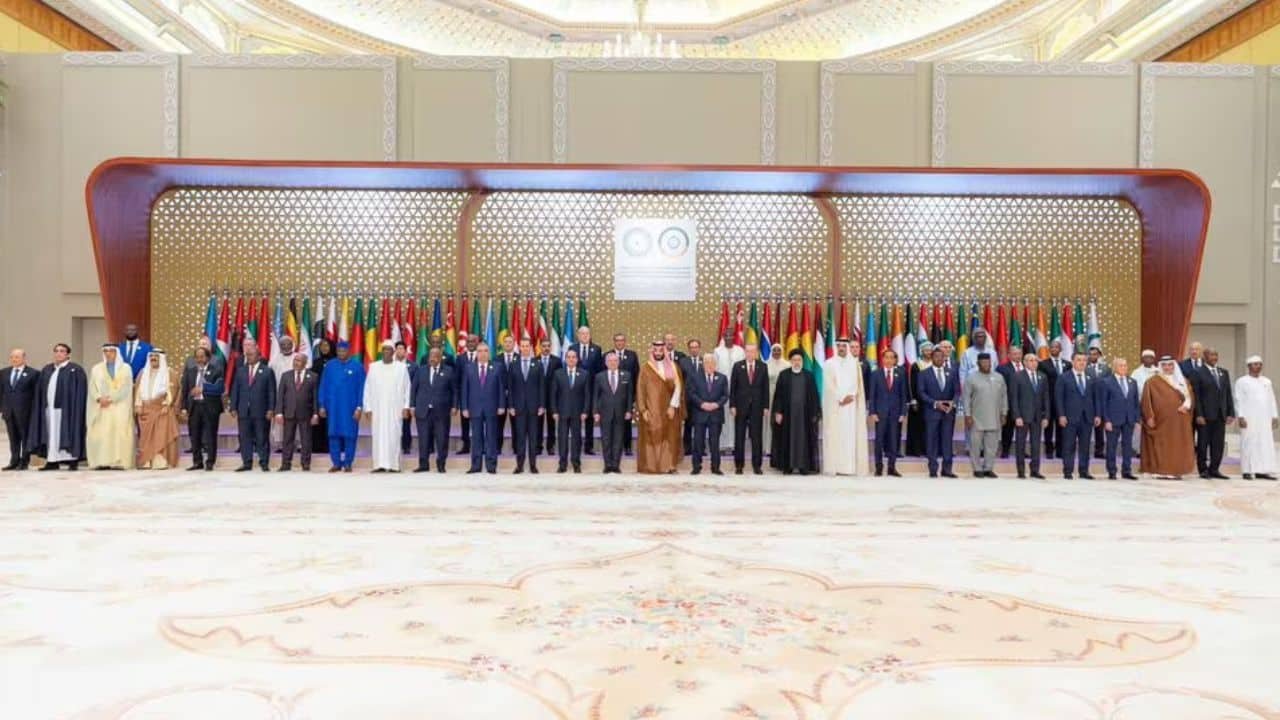
    Saudi Arabia hosted an Arab-Islamic summit on Saturday, calling to end Israeli attacks on Gaza and rejecting the justification of Israel’s actions against Palestinians as self-defence.

    The summit also asserted that Israel end the siege of Gaza and allow humanitarian aid into the enclave, ceasing arms exports to Israel.

    It further insisted that the United Nations Security Council adopt “a decisive and binding resolution” to halt Israel’s “aggression” and demanded that the International Criminal Court probe “war crimes and crimes against humanity that Israel is committing” in the Palestinian territories.

    Crown Prince Mohammed bin Salman stated that Saudi Arabia “confirms that it holds the occupation (Israeli) authorities responsible for the crimes committed against the Palestinian people.”

    “We are certain that the only way to guarantee security, peace and stability in the region is to end the occupation, siege and the settlements,” he added.

    A number of countries, including Algeria and Lebanon, suggested that the attacks on Gaza be responded by disruption of oil supply to Israel and its allies in addition to cutting off economic and diplomatic ties that some Arab League nations have with Israel.

    However, at least three countries rejected the proposal, according to the diplomats who spoke on condition of anonymity, reports Dawn.

    These countries included the United Arab Emirates and Bahrain, both of whom normalised ties with Israel in 2020.

    Syrian President Bashar al-Assad remarked that without any stern measures against Israel, the summit would not be effective.

    “If we do not have real tools for pressure, then any step we take or speech we give will have no meaning,” said Assad, who rejoined the Arab fold this year after a long conflict over civil war in his country.

  • France’s Macron calls for ceasefire

    France’s Macron calls for ceasefire

    French President Emmanuel Macron has become the first Western leader to call on Israel to cease attacks on Gaza and killing civilians.

    In an interview with the BBC, Macron said, “These babies, these ladies, these old people are bombed and killed,” he said. “So there is no reason for that,” he added. “So we do urge Israel to stop,” he added

    He stressed that France “clearly condemns” the “terrorist” actions of Hamas and recognises Israel’s right to protect itself, however, “we do urge them to stop this bombing” in Gaza.

    “I hope they will,” the French president said when asked if he wanted other leaders – including in the United States and Britain – to join his calls for a ceasefire.

    Israeli Prime Minister Benjamin Netanyahu responded to Macron’s comments with a swift rebuke, asserting that world leaders should condemn Hamas, not Israel.

    “These crimes that Hamas [is] committing today in Gaza will be committed tomorrow in Paris, New York and anywhere in the world,” Netanyahu said.

    Referring to the humanitarian conference on Gaza held in Paris, Macron said that all governments and agencies present at that summit had a clear conclusion that, “there is no other solution than first a humanitarian pause, going to a ceasefire to protect all civilians having nothing to do with terrorists”.

    Macron also remarked that “De facto – today, civilians are bombed – de facto. These babies, these ladies, these old people are bombed and killed. So there is no reason for that and no legitimacy. So we do urge Israel to stop,” he said.

  • More than 50 per cent of housing units damaged: What we know about day 35

    More than 50 per cent of housing units damaged: What we know about day 35

    Tens of thousands flee northern Gaza on Thursday

    The UN’s humanitarian office’s (OCHA) reported that more than 50,000 people fled Northern Gaza towards the south whereas in the north, hundreds of thousands are struggling to survive with minimal amounts of water and food.

    The UN agency for Palestinian refugees (UNRWA) has opened two shelters and is now hosting 582,000 displaced Palestinians in 92 facilities in the south amidst overcrowdedness.

    Israel does not ‘seek to govern Gaza’

    Israeli Prime Minister Benjamin Netanyahu gave an interview to Fox News in which he said that the Israeli army will proceed with its offensive in Gaza until Hamas is “eradicated”.

    “Nothing will stop that,” he added.

    He also asserted that there will be no ceasefire unless the hostages held in Gaza are freed. Instead, he announced four-hour “pauses” in fighting in Gaza.

    “The fighting continues against the Hamas enemy,” he said. “But in specific locations, for a given period of a few hours here, a few hours there, we want to facilitate the safe passage of civilians away from the zone of fighting.”

    Human rights groups, however, have asserted that the “pauses” are not enough, and that an immediate ceasefire for humanitarian aid is the need of the hour.

    243 more Palestinians killed in Gaza in 24-hour period

    The UN humanitarian affairs office reported that two Israeli soldiers were killed in Gaza between Wednesday and Thursday afternoon in addition to 243 Palestinians.

    More than 50 per cent of housing units wrecked

    The media office of Gaza has revealed that Israeli attacks have led to the destruction of more than 50 per cent of housing units across Gaza — around 40,000 housing units.

    Moreover, about 32,000 tons of explosives have dropped since October 7.

    Al Jazeera reports that according to the government media, the “estimated preliminary losses in the housing sector and infrastructure” are approximately $2bn each.

    War’s effect on Palestinian economy

    The UN Development Program has released a report revealing that as a month has passed since Israel began its attacks on Gaza, Palestinian gross domestic product (GDP) was expected to have declined by about 4.2 percent in contrast to pre-war estimates for 2023 — a loss of about $857m.

    It has been estimated that if the war continues for another month, the loss would increase to 8.4 percent of GDP, or $1.7bn whereas in third month it would rise to 12.2 per cent of GDP, or $2.5bn.

    Additionally, around 390,000 jobs have been lost — 182,000 in Gaza and 208,000 in the occupied West Bank.

    Poverty is also expected to rise 20-45 percent, depending on the duration of the war.

    Credits: Al Jazeera

  • Why the mass killings and exodus of Gazans from the North to the South is being called the second Nakba

    On Wednesday, Motaz Azaiza, one of the journalists sharing details of Israeli atrocities in Gaza, shared a picture of Gazans walking on a highway in a long line. “People evacuating the city to the south of the strip. It’s literally a new Nakba.”

    Nakba is the most momentous event in all of Palestinian history, especially the history of the last century with Israelis. It literally means “catastrophe” and refers to the ethnic cleansing of Palestinians by the Israelis in 1948. It has been 75 years now that zionist forces took 78 percent of the historic land of Palestine and killed about 15,000 Palestinians in a series of 70 massacres. 7,50,000 Palestinians out of 1.9 million were made refugees in their own land as Israel established a Jewish majority state, fulfilling their Zionist motives.

    The official commemoration of this expulsion and ethnic cleansing by Palestinians around the world was done on May 15, 1948, but the facts reveal more than half of the displacement was already done by then.

    Since then, there have been many Arab-Israeli wars and many attempts to displace Palestinians. Israel, originally given 55 percent of the land by the UN, now owns 85 percent of it. However, it openly wishes to have control over all of it. In his address to the UN in September, Benjamin Netanyahu displayed two maps that showed the occupied West Bank, East Jerusalem, and the Gaza Strip as part of Israel. The repeated calls to move to the South after October 7, is actually more than revenge.

    In one of the videos posted by Motaz, it can be seen that tens of thousands of Palestinians are moving to the South- in front of the Israeli army- raising their hands to show that they are unarmed. In a number of incidents, these caravans have been bombed too.

    This has been confirmed as the Israeli government claims that some 50,000 people have fled Northern Gaza to the South.

    On the other hand, there are hundreds of thousands of people who are not obeying these orders because they believe there is no place safe from Israel’s bombings and that they would rather die at home.

    Palestinian journalist Ahmed Abu Artema in his message to The News International has already called for the world to take action as he firmly thinks “This is the second Nakba”.

  • Saudi Arabia will not use oil as a weapon to achieve ceasefire in Gaza

    Saudi Arabia will not use oil as a weapon to achieve ceasefire in Gaza

    Right before the October 7 attacks by Hamas on Israel followed by Israel’s declaration of war against the Palestinians resulting in a death toll of 10,5000+, Saudi Arabia and Israel were steering towards the establishment of ties despite their conflict of views over the Palestine issue.

    Saudi Crown Prince Mohammad bin Salman (MbS) reportedly asked the US for “security guarantees and access to civilian nuclear technology and advanced weapons in exchange for a deal.”

    Moreover, Saudi diplomats asserted that Israel must concur with the establishment of a Palestinian state as defined in the 2002 Saudi Peace Initiative. And while this particular demand was rejected by Israeli Prime Minister Benjamin Netanyahu and Jewish ministers in his government, a deal was almost at hand between the two countries.

    However, after October 7, people in support of Palestine across the world, particularly the Muslim world, have demanded from Saudi Arabia to take a stand against the atrocities committed by Israel on Palestinian soil — to use their power to put an end to the attacks.

    However, their concerns seem to have fallen on deaf ears.

    The Saudi Minister of Investment, Khalid bin Abdulaziz al-Falih, has remarked that the Kingdom is still willing to consider normalising relations with Israel, depending on a peaceful solution to the Palestinian issue.

    During a discussion session at the Bloomberg New Economy Forum held in Singapore, Falih responded to a question in regard to normalisation of ties between the two countries: “This matter was on the table, and it is still on the table, and it is clear that the recent withdrawal (from the talks) explains why Saudi Arabia is so determined to make a solution to the Palestinian conflict part of broader normalisation in [West Asia].”

    When asked if Saudi Arabia would use economic devices like oil to push for a ceasefire in the Gaza Strip, he reportedly laughed and replied: “This is not on the table today. Saudi Arabia is trying to achieve peace through talks that seek peace.”

    Falih also offered details of the three summits that Saudi Arabia is expected to host in the coming days which will be attended by Arab, African and Islamic countries, an effort to promote a “peaceful solution to the Israeli-Palestinian conflict”.

    In 1973, Saudi Arabia imposed an oil embargo on the United States and other countries for their support of Israel in the Yom Kippur War against Egypt and Syria.

  • G7 backs ‘humanitarian pauses’ in Gaza, reaffirms Ukraine support

    G7 foreign ministers said Wednesday that they supported “humanitarian pauses and corridors” in the Hamas-Israel war but refrained from calling for a ceasefire.

    The group also said after talks in Japan that their support for Ukraine in its war with Russia “will never waver” while calling on China not to support Moscow in the conflict.

    “We stress the need for urgent action to address the deteriorating humanitarian crisis in Gaza… We support humanitarian pauses and corridors to facilitate urgently needed assistance, civilian movement, and the release of hostages,” a joint statement said.

    The ministers also “emphasize Israel’s right to defend itself and its people in accordance with international law as it seeks to prevent a recurrence” of the Hamas attacks on Israel on October 7.

    It added: “We call on Iran to refrain from providing support for Hamas and taking further actions that destabilize the Middle East, including support for Lebanese Hezbollah and other non-state actors, and to use its influence with those groups to de-escalate regional tensions.”

    ‘Overall security’

    The Israeli military has relentlessly bombarded Gaza since October 7, when Hamas militants launched an attack that left 1,400 dead in Israel, most of them civilians, according to Israeli authorities.

    The Hamas-run health ministry says the death toll in Gaza has surpassed 10,300 people.

    Israeli Prime Minister Benjamin Netanyahu said Monday there would be no fuel delivered to Gaza and no ceasefire unless more than 240 hostages seized by Hamas were freed.

    He also said Israel would assume “overall security” in Gaza after the war ended, while allowing for possible “tactical pauses” before then to free captives and deliver aid to the besieged territory.

    However, Washington said Tuesday it opposed a new long-term occupation of Gaza by Israel.