Tag: Israel

  • Singapore makes Israeli embassy delete ‘insensitive’ Palestinian post

    Singapore makes Israeli embassy delete ‘insensitive’ Palestinian post

    Singapore made the Israeli embassy in the city-state take down an “insensitive” social media post about the Palestinians over the weekend after warning it could inflame tensions, the interior minister said Monday.

    The Israeli genocide in Gaza and deepening humanitarian crisis in the besieged strip since October 7 have divided opinion across the world.

    The post reportedly said Israel was mentioned 43 times in the Koran but Palestine — the name Palestinians give to what they hope will become their independent, sovereign state — was not, according to local media.

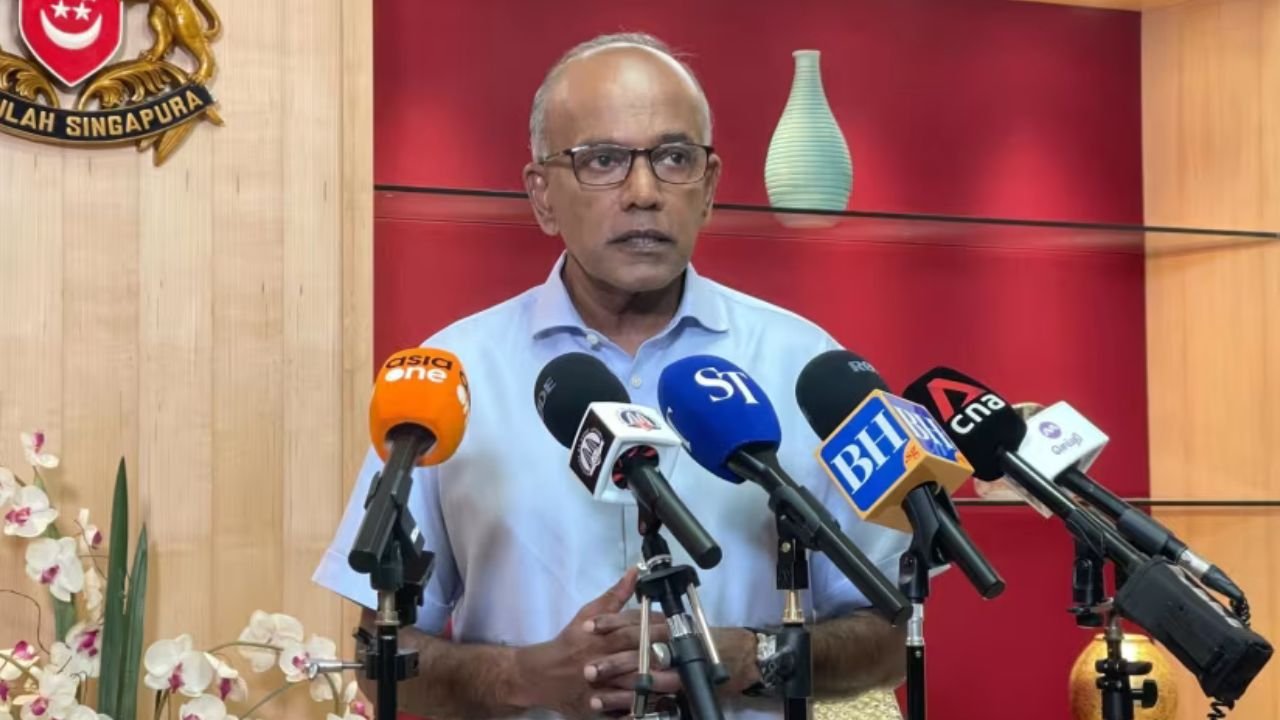
    Minister for Home Affairs K. Shanmugam said he asked Singapore’s foreign ministry to tell the Israeli embassy to remove the post made on Sunday after learning about it, which the mission immediately did.

    “That post on the Israeli embassy social media page is completely unacceptable. I was very upset when I was told about it,” Shanmugam told reporters, according to a transcript.

    “It is insensitive and inappropriate. It carries the risk of undermining our safety, security and harmony in Singapore.”

    Shanmugam said the post had been taken down.

    “Posts like these can… inflame tensions, and can put the Jewish community here at risk. The anger from the post can potentially spill over into the physical realm,” he added.

    The Israeli embassy was not immediately available for comment.

    Singapore has condemned the Hamas attacks on Israel but has also said that Israel’s military response “has now gone too far”.

    The health ministry in the Gaza Strip on Sunday put the total death toll in the territory at 32,226, most of them women and children.
  • Gaza cancer patients fear Israel move to force them back ‘to hell’

    Gaza cancer patients fear Israel move to force them back ‘to hell’

    JERUSALEM: In a small hotel near the Augusta Victoria Hospital in Israeli-annexed East Jerusalem, where she received radiation therapy for breast cancer, Palestinian Rim Abu Obeida waits anxiously.

    She is among a group of Palestinian patients living in limbo while a top Israeli court weighs whether they can be sent back to war-torn Gaza now that their treatment is completed.

    Like dozens of Gazans before Israel began its intensive military operations after October 7, she was granted permission to leave the territory for care because hospitals in the Gaza Strip did not have the necessary equipment.

    “This week, we were suddenly told we had to return to Gaza. This is sending us to hell, to death!” Abu Obeida said.

    If she is forced to leave, she will not have much to return to — her house in southern Gaza’s Khan Younis has been destroyed in Israeli’s offensive.

    The roughly 20 patients from Gaza, most of them battling cancer, have been receiving treatment in Tel Aviv and East Jerusalem for the past six months.

    COGAT, the Israeli Defense Ministry body that governs civilian affairs in the occupied Palestinian territories, said this week that because the patients “don’t need any continued medical treatment, they are being returned to the Gaza Strip.”

    But at the last minute, the Israeli Supreme Court, responding to a petition by the NGO Physicians for Human Rights, suspended COGAT’s order.

    The court is expected to rule on the case, though the timeline is unclear. The government has until April 21 to file its arguments.

    In the next room, along with Abu Obeida, Manal Abu Shaaban was busy stashing food into her bags.

    “I have rice, sugar, everything they are deprived of there. I hope they won’t stop me from bringing them in,” she said.
    Abu Shaaban, a breast cancer patient like Abu Obeida, said she was not opposed to returning.

    Still, she knew the security situation meant she would be unable to reach her home in Gaza City, in the besieged territory’s north.

    “I want to go back. But to my home, in my house! Not in Rafah, in the south, where they want us to go, I don’t know anyone there,” she said.

    Large swaths of the north have been flattened by Israeli bombardment, and a UN-backed assessment said the area faces famine by May unless substantially more aid reaches it.

    Meanwhile, in Gaza’s south, up to 1.5 million displaced Palestinians are crammed into Rafah and live under the threat of a full-scale Israeli ground offensive.

    Asked about the fate of the patients who face being returned to Gaza, Augusta Victoria Hospital director Fadi Mizyed paused for a few seconds.

    “I don’t know. They will go back in a war zone, they will be at risk, they will be living in catastrophic conditions,” he said.

    “The situation in Gaza is beyond description, with no guaranteed healthcare services that can do what is needed for any cancer patients.”

    “We said we don’t think it’s the right thing to do but at the end of the day it’s not our call,” he added.

  • Hamas welcomes China, Russia veto of US-backed Gaza resolution

    Hamas has reportedly shown “appreciation” as Russia and China vetoed a US-led draft resolution on a Gaza ‘ceasefire’ at the UN Security Council on Friday.

    The United States proposed a resolution endorsing “the urgent need for an immediate and enduring ceasefire” and, notably, condemning the October 7 attack carried out by Hamas for the first time.

    “We express our appreciation for the position of Russia, China and Algeria who rejected the biased American resolution of aggression against our people,” the Hamas said in a statement.

    They added that the draft consists of “misleading wording that is complicit” with Israel and “grants it cover and legitimacy to commit a genocidal war against the Palestinian people in the Gaza Strip.”

    On the other hand, prior to the vote, Russia’s ambassador to the UN, Vassily Nebenzia, urged members against endorsing the resolution, deeming it as “excessively politicized” and implying it endorsed Israeli military operations in Rafah, Gaza, where more than half of its 2.3 million residents sought shelter in camps to escape the Israeli offensive in the northern regions.

    Nebenzia asserted that several non-permanent Security Council members had crafted an alternative resolution, which he portrayed as a fair proposal, calling on all members to support it.

  • US Secretary of State hints at normalisation of Saudi-Israel ties while Kingdom stresses on establishment of Palestine

    US Secretary of State hints at normalisation of Saudi-Israel ties while Kingdom stresses on establishment of Palestine

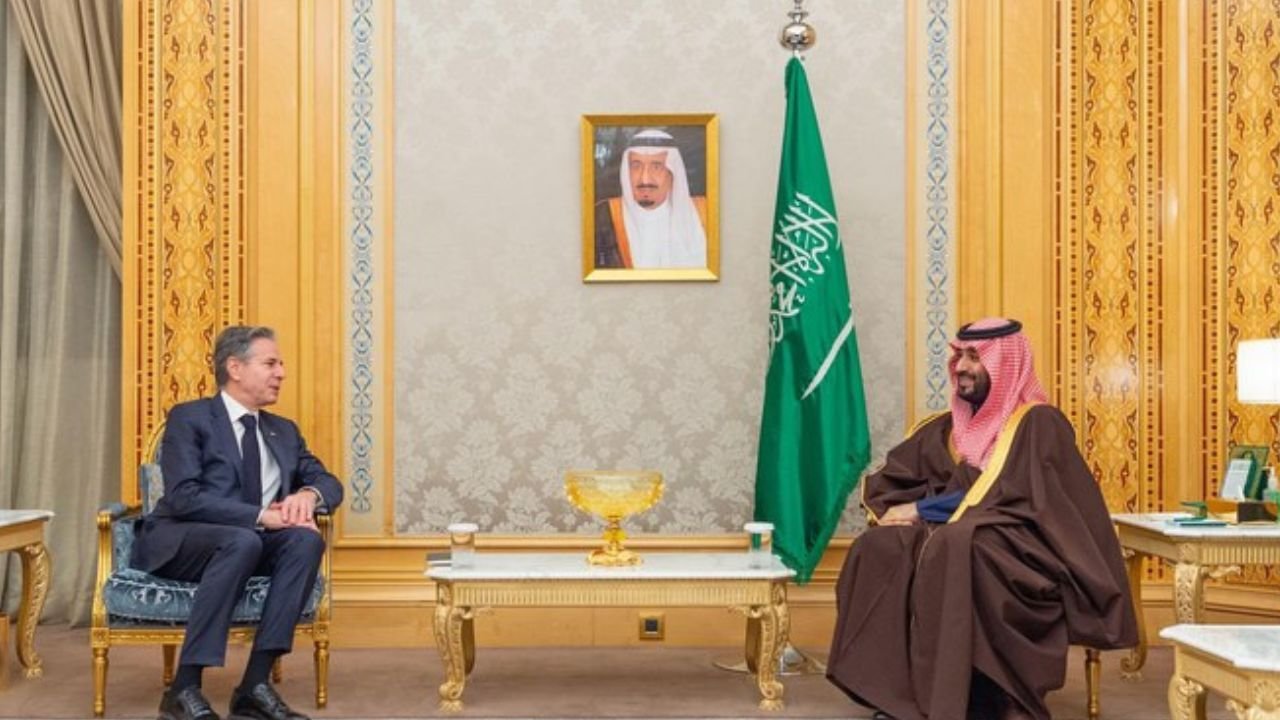
    U.S. Secretary of State Antony Blinken has claimed on Thursday that the United States and Saudi Arabia have made “good progress” in talks on normalising ties between the kingdom and Israel. However, he did not provide a timeline for concluding the deal.

    “I believe we can reach an agreement, which would present a historic opportunity for the two nations, but also for the region as a whole,” Blinken said at a joint press conference with Egyptian Foreign Minister Sameh Shoukry in Cairo.

    Talks on normalisation had been put on ice after Oct 7 but conversations have resumed in recent months.

    While trying for a ceasefire in the Gaza war, the Biden administration has been working to secure a normalisation deal as well. However, Saudi Arabia and other Arab countries want the creation of a Palestinian state to be part of any such deal with Israel.

    Saudi Arabia is also looking to sign a mutual defence pact with Washington and get U.S. support for its civil nuclear program. Blinken discussed the topics on Wednesday with Saudi Crown Prince Mohammed bin Salman in Jeddah during an official visit.

    “We had a very good discussion about the work that we’ve been doing for many months now on normalisation, and that work is moving forward. We’re continuing to make good progress,” Blinken said but added that he could not offer a timeframe.

    Earlier a senior State Department official said Washington and Riyadh were down to a handful of bilateral issues and there was political will to address those gaps.

    A pact giving the world’s biggest oil exporter U.S. military protection in exchange for normalisation would reshape the Middle East by uniting two long-time foes and binding Riyadh to Washington at a time when China is making inroads in the region.

    For such a deal to advance, Israel needs to agree to a pathway for creation of an independent Palestinian state, a prospect that Israeli Prime Minister Benjamin Netanyahu has repeatedly rejected.

    Washington sees any normalisation deal woven into post-war planning that would include Arab countries providing security guarantees for Israel in return for the creation of a Palestinian state under a reformed Palestinian Authority.

    Blinken did not elaborate how Washington would overcome Netanyahu’s objections to creation of a Palestinian state, but said the ongoing violence benefited Iran.

    “The perpetuation of this cycle only benefits Iran and the proxies that are working for it. So I think as that choice is clear, people will begin to really think about it and make decisions,” Blinken said.

    Until Oct 7, both Israeli and Saudi leaders had been saying they were moving steadily toward a deal that could have reshaped the Middle East.

    Five months of war in the densely populated Gaza enclave have triggered starvation and food shortages.

    The head of the World Health Organization said only opening more border crossings for trucks carrying aid could prevent famine in Gaza.

  • Gaza ceasefire deal close, says Blinken

    Gaza ceasefire deal close, says Blinken

    US Secretary of State Antony Blinken has announced that the parties involved in the Israel assault on Gaza are close to reaching an agreement on a ceasefire in the besieged strip.

    In remarks given to Arab media outlets, Blinken emphasised the importance of putting a stop to the dire situation to pave the way for a better future for Gaza.

    Addressing Israel’s current offensive, Blinken stated that the US opposes Tel Aviv’s intention to carry out a large-scale ground assault on Rafah.

  • Israeli military wants evacuation of Al-Shifa Hospital in Gaza

    Israeli military wants evacuation of Al-Shifa Hospital in Gaza

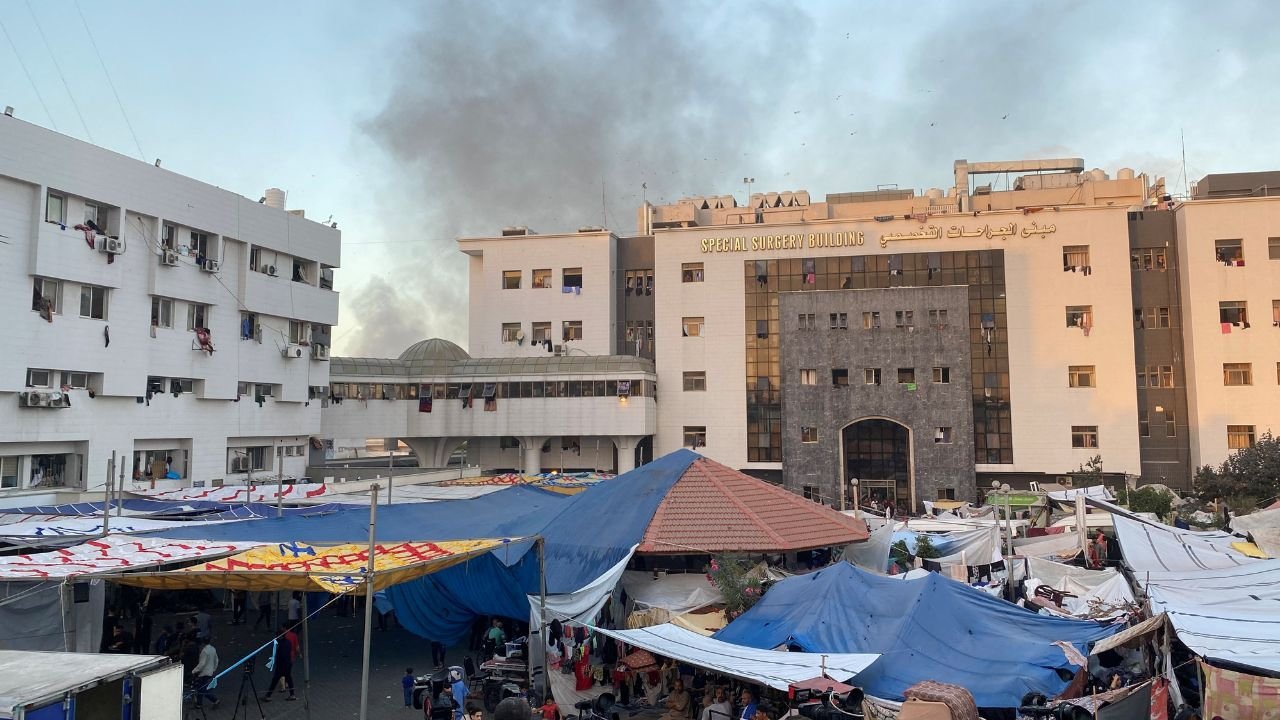
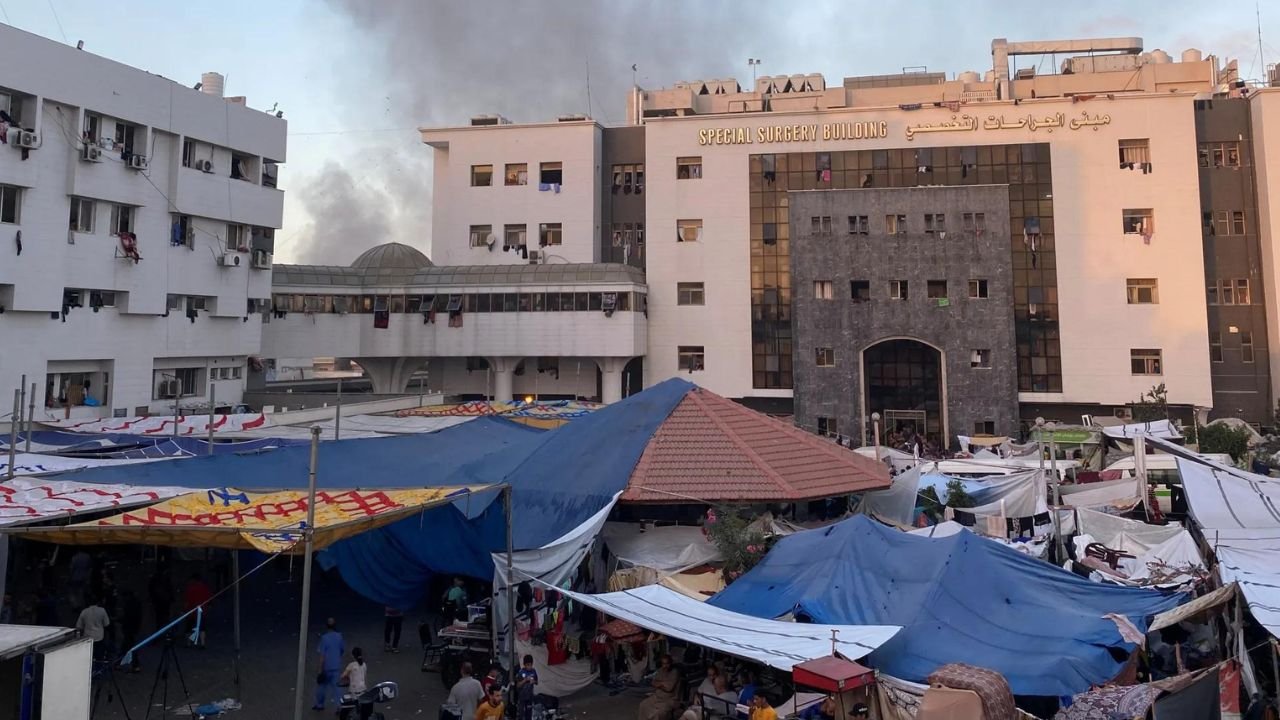
    Al Jazeera has reported that according to Hani Mahmoud, their colleague reporting from Gaza, the Israeli army has given a notice to forcefully displaced people to immediately leave Al-Shifa Medical Complex or the premises will be bombed.

    Mahmoud suggests that based on past bombing patterns, the entire hospital complex is at risk of destruction at the hands of the Israeli army.

    Al Jazeera also reports that as per local Palestinian media reports that a building used for specialised care within al-Shifa Hospital has been destroyed by the Israeli military.

    The military justified the raid on Monday by claiming according to intelligence, Hamas fighters were using the hospital complex for shelter. During the raid, approximately 90 Palestinians were killed, 300 suspects were interrogated, and over 160 were detained.

    Israel is continuing with its policies of destroying all infrastructure in Gaza, including health institutions, to force the strip to become completely uninhabitable.

  • Canada FM confirms halting arms shipments to Israel

    Canada FM confirms halting arms shipments to Israel

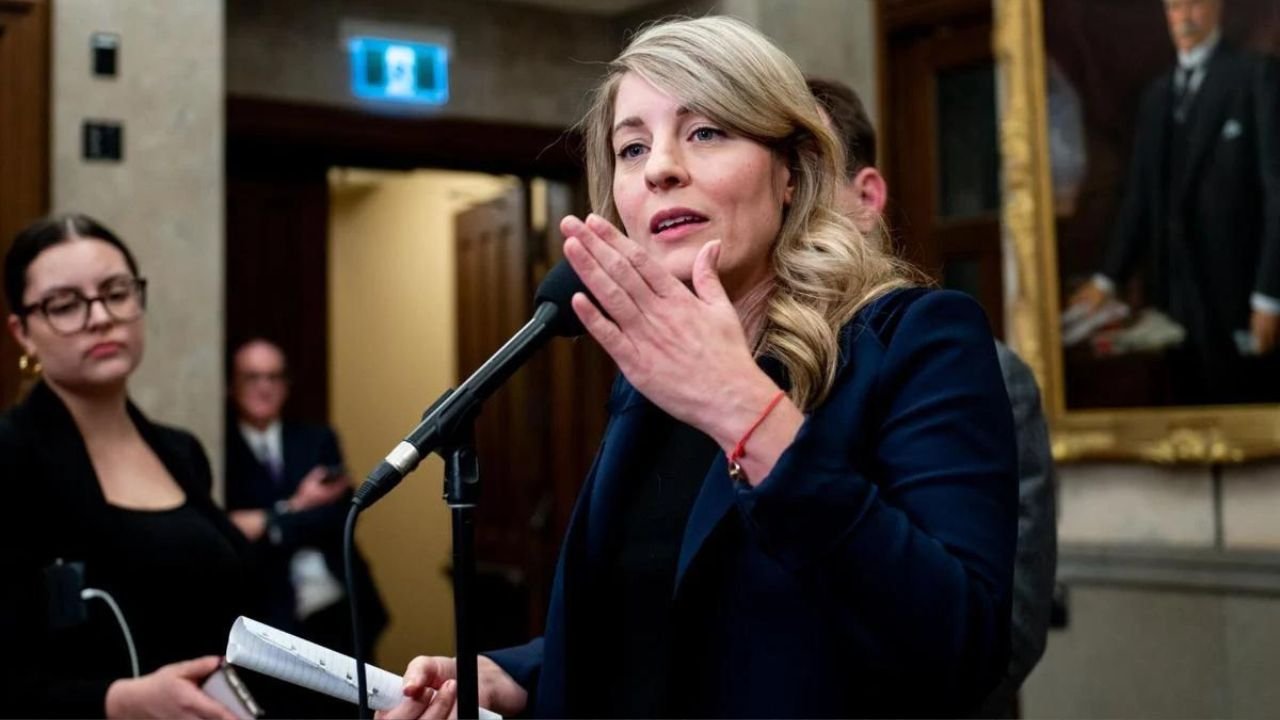
    OTTAWA: Canada will halt all arms shipments to Israel, Foreign Minister Melanie Joly’s office confirmed Wednesday, a decision that has drawn the ire of Israeli leaders facing growing international scrutiny over the war in the Gaza Strip.

    The besieged Palestinian territory is facing a mounting humanitarian crisis, and months of war have pushed hundreds of thousands of Gazans to the brink of famine.

    Canada, a key ally of the United States, which provides Israel with billions of dollars a year in military aid, had already reduced its shipments to Israel to only include non-lethal equipment, such as radios, following the October 7 Hamas attack.

    “Since January 8th, the government has not approved new arms export permits to Israel and this will continue until we can ensure full compliance with our export regime,” said a statement from Joly’s office.

    “There are no open permits for exports of lethal goods to Israel,” it added.

    Export permits approved prior to January 8, however, would “remain in effect,” Joly’s office said, explaining that canceling them risked “important implications for both Canada and its allies,” including NATO and the Five Eyes intelligence alliance.

    A senior Canadian official had on Tuesday told AFP that “the situation on the ground makes it so that we can’t” export any equipment that could have a potential military use.

    Israel slammed the decision, with foreign minister Israel Katz saying it “undermines Israel’s right to self-defense against Hamas terrorists.”

    “History will judge Canada’s current action harshly,” he said in a post on social media platform X.

    US Senator Bernie Sanders welcomed the move, saying in his own post on social media: “Given the humanitarian catastrophe in Gaza, including widespread and growing starvation, the US should not provide another nickel for (Prime Minister Benjamin) Netanyahu’s war machine.”

    The issue of arms deliveries to Israel has triggered legal proceedings in several countries around the world.

    In Canada, a coalition of lawyers and citizens of Palestinian origin filed a complaint against the government in early March to suspend arms exports to Israel, accusing Ottawa of violating both international and domestic law.

    Israel has historically been a top receiver of Canadian arms exports, with Can$21 million worth of military materiel exported to Israel in 2022, according to government data, following Can$26 million in shipments in 2021.

    That places Israel among the top 10 recipients of Canadian arms exports.

    Israel offensive in Gaza has killed at least 31,923 people, most of them women and children, according to Gaza’s health ministry.

    While affirming Israel’s right to defend itself, Canadian Prime Minister Justin Trudeau has taken an increasingly critical stance toward Israel as civilian deaths have mounted in Gaza.

    On Monday, the Canadian Parliament passed a nonbinding resolution calling for the international community to work toward a two-state solution between Israel and the Palestinians.

  • Gaza world’s biggest ‘open-air graveyard’: EU’s Borrell

    Gaza world’s biggest ‘open-air graveyard’: EU’s Borrell

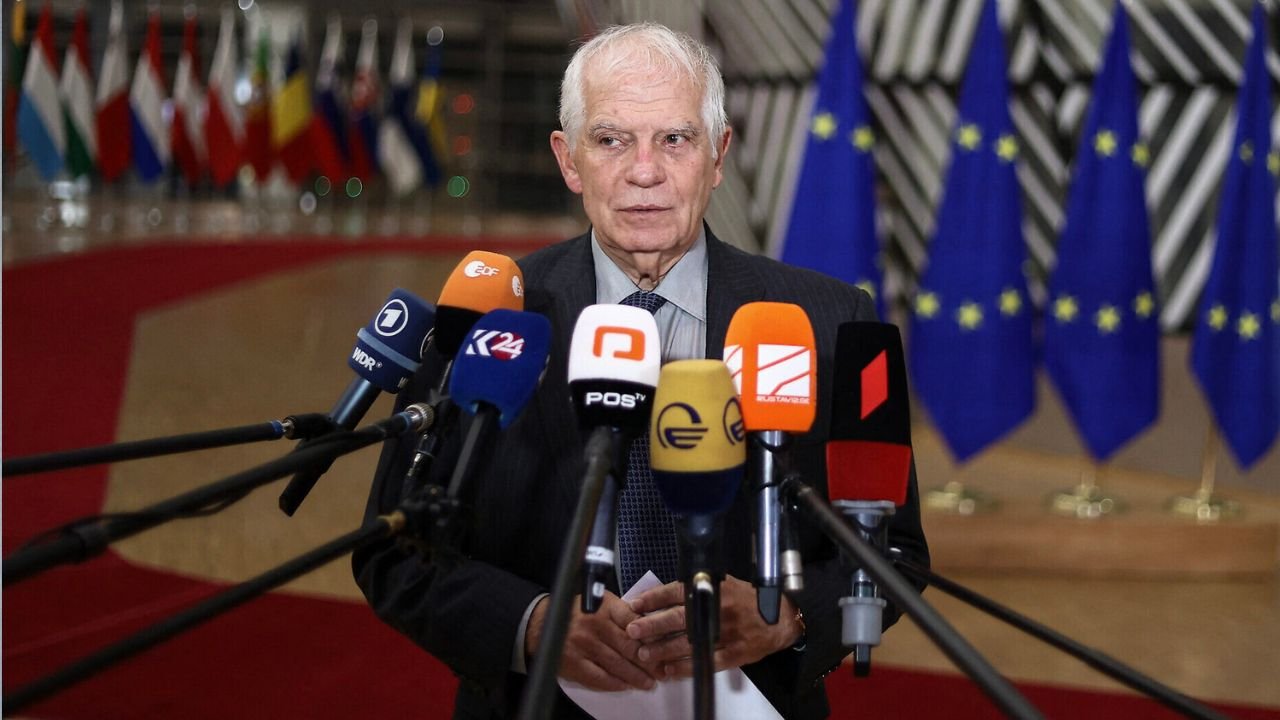
    EU foreign policy chief Josep Borrell said Monday that Israel’s military campaign in Gaza had turned the territory into the world’s biggest “open-air graveyard”.

    “Gaza was before the war the greatest open-air prison. Today it’s the greatest open-air graveyard,” Borrell said at a meeting of EU ministers in Brussels.

    “It’s a graveyard for tens of thousands of people and also a graveyard for many of the most important principles of humanitarian law.”

    Borrell on Monday also reiterated his accusation that Israel was using famine as a “weapon of war” by not allowing aid trucks into Gaza.

    “Israel is provoking famine,” he told a humanitarian conference.

    The Islamist militants also seized about 250 hostages, of whom Israel believes 130 remain in Gaza, including 33 who are presumed dead.

    Israel has carried out a relentless bombing campaign and ground offensive that Gaza’s health ministry says has killed at least 31,726 people, most of them women and children.
    The 27-nation EU has struggled to come up with a united response to the war in Gaza as some members firmly back Israel and others are more pro-Palestinian.

    EU ministers were set to discuss a proposal by Ireland and Spain to suspend a cooperation agreement with Israel, but that move was unlikely to get the support of all 27 countries.

    The bloc was however expected to agree on sanctions both against Hamas for sexual violence on October 7 and against violent Israeli settlers in the West Bank for attacking Palestinians.

    Britain and the United States have already imposed sanctions targeting a small number of “extremist” settlers.

  • Israeli military tells Gazans to evacuate Al-Shifa hospital

    Israeli military tells Gazans to evacuate Al-Shifa hospital

    Palestinian Territories

    Israel’s military on Monday called on Gazans to evacuate the area in and around the territory’s largest hospital as battles raged at the complex crowded with patients and displaced people.

    “In order to maintain your security, you must immediately evacuate the area,” army spokesman Avichay Adraee said on social media platform X, instructing “all those present” to head west and then south to a “humanitarian area”.

    ha-rcb/jm/fz

    © Agence France-Presse

  • ‘Bloody’ Ramzan Friday as Gaza strike kills 36 relatives

    ‘Bloody’ Ramzan Friday as Gaza strike kills 36 relatives

    Palestinian Territories: Displaced by Israeli bombardment, the Tabatibi family gathered in central Gaza to eat together during the first Friday night of Ramzan, a scene that soon turned into a bloodbath.

    An air strike hit the building where they were staying as women prepared the pre-fasting meal, killing 36 members of the family, survivors told AFP on Saturday.

    The health ministry in Gaza, which provided the same death toll, blamed Israel for the strike in Nuseirat, while the Israeli military said it was looking into the incident.

    “This is my mother, this is my father, this is my aunt, and these are my brothers,” 19-year-old Mohammed Al-Tabatibi, whose left hand was injured in the strike, said through tears at the Al-Aqsa Martyrs Hospital in nearby Deir Al-Balah.

    “They bombed the house while we were in it. My mother and my aunt were preparing the suhoor food. They were all martyred.”

    He spoke as bodies were spread out in the hospital courtyard, then stacked on a truck to be driven to a cemetery.

    Because there were not enough body bags, some of the dead — including at least two children — were wrapped in white cloth stained with blood, AFPTV footage showed.

    The first Friday of Ramzan, the Muslim fasting month which began on Monday, passed peacefully in Israeli-annexed east Jerusalem, despite concerns about tensions at the sacred Al-Aqsa Mosque compound.

    But it was a different story in Gaza.

    The strike in Nuseirat was one of 60 “deadly air strikes” reported overnight by the press office of the government, from Gaza City in the north to Rafah in the south.

    “This is a bloody night, a very bloody night,” said Salama Maarouf of the media office.

    Israel’s retaliatory military campaign has killed at least 31,553 people in Gaza since October 7, mostly women and children, according to the health ministry.

    In Rafah, where the majority of Gaza’s 2.4 million people have sought refuge, more bloodshed is feared after Israeli Prime Minister Benjamin Netanyahu’s office said on Friday he had approved plans for a military operation there.

    Yet even before any such operation begins, air strikes continue, including one early Saturday that witnesses said killed Issa Duhair, the muezzin of a mosque, along with his two sons.

    Mahmoud Duhair, a 41-year-old relative who lives nearby, described the muezzin as “a good man” who, as usual, dutifully performed the call to prayer before dawn on Saturday, then went to eat with his family “when his house was struck.”

    Back in Nuseirat, in central Gaza, Yussef Tabatibi said the true toll of the strike that killed 36 members of his family could rise.

    “Some of the martyrs we are unable to retrieve. We lack equipment, bulldozers, machinery, or anything else, ” he told AFP, his hands and sweatshirt covered with dust from trying to clear rubble.

    “We retrieve them only with our hands. We brought shovels and hammers, but to no avail. Look at the extent of the destruction.”