Tag: Israel's War on Gaza

  • Netanyahu appreciates Muslim IDF soldier for killing ‘terrorists’ on October 7

    Netanyahu appreciates Muslim IDF soldier for killing ‘terrorists’ on October 7

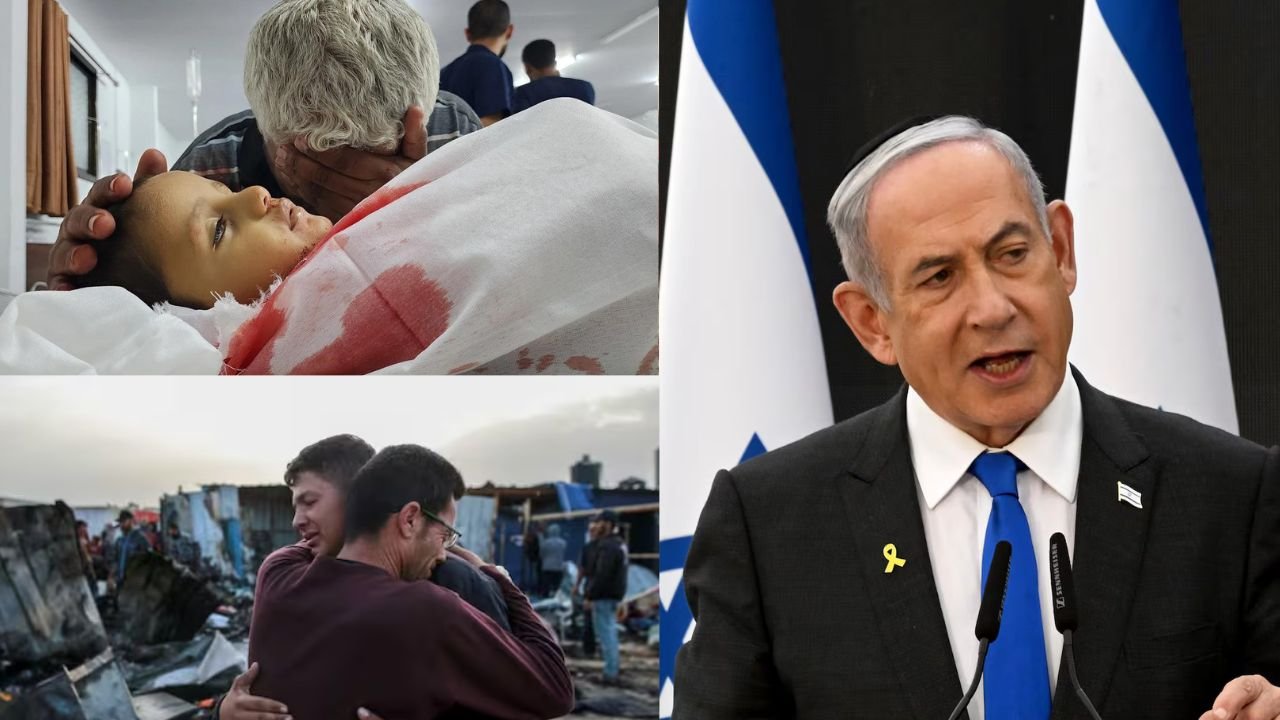
    Israeli Prime Minister Benjamin Netanyahu has recently addressed the US Congress, and during his speech, he mentioned some Israeli soldiers who participated in the assault of Gazans after the October 7 events.

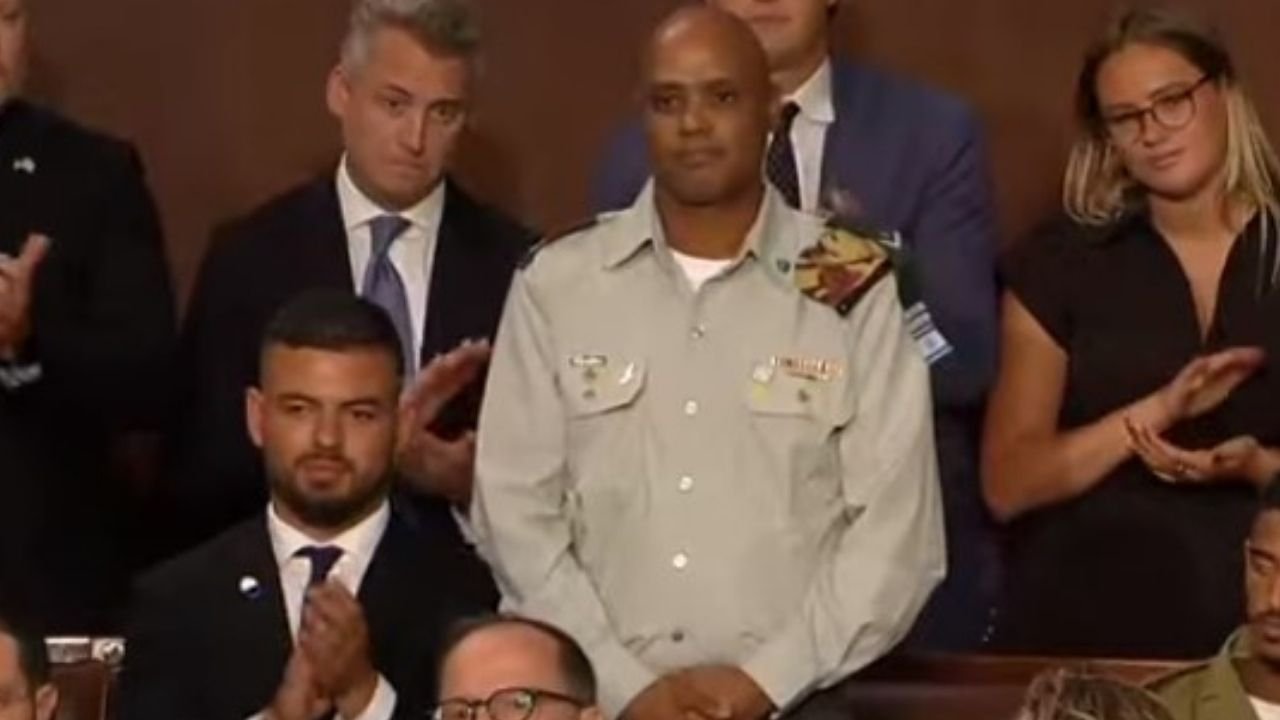
    Israeli Prime Minister Benjamin Netanyahu said during a speech to the US Congress, “Another Israeli is with us here today…this is Master Sergeant Ashraf al Bahiri. Ashraf is a Bedouin soldier from the Israeli-Muslim community of Rahat. On October 7th, Ashraf too killed many terrorists. First, he defended his comrades in the military base, and he then rushed to defend the neighbouring communities, including the devastated community of Kibbutz Be’eri.” Ashraf is of Ethiopian descent.

    Netanyahu continued to say, “Like Ashraf, the Muslim soldiers of the IDF fought alongside their Jewish, Druze, Christian and other comrades in arms with tremendous bravery.”

    More than 39,000 people in Gaza have been killed by Israeli forces over the last 10 months of genocide.

  • Iran warns Israel of ‘obliterating’ war if Lebanon attacked

    Iran warns Israel of ‘obliterating’ war if Lebanon attacked

    Iran on Saturday warned that “all Resistance Fronts”, a grouping of Iran and its regional allies, would confront Israel if it attacks Lebanon.

    The comment from Iran’s mission to New York comes with fears of a wider regional war involving Israel and Lebanon’s Hezbollah movement. The two sides have engaged in near-daily exchanges of fire since the genocide in Gaza began.

    Such exchanges have escalated this month, alongside bellicose rhetoric from both sides. Israel’s military said plans for a Lebanon offensive had been “approved and validated”, prompting Hezbollah to respond that none of Israel would be spared in a full-blown conflict.

    In a post on social media platform X, the Iranian mission said it “deems as psychological warfare the Zionist regime’s propaganda about intending to attack Lebanon”.

    But, it added, “should it embark on full-scale military aggression, an obliterating war will ensue. All options, incl. the full involvement of all Resistance Fronts, are on the table.”

    Alongside Hezbollah’s attacks on northern Israel, Houthi rebels in Yemen have repeatedly struck commercial ships in the Red Sea area in what they say are acts of solidarity with the Palestinians.

    The Islamic Republic of Iran has not recognised Israel since the 1979 revolution that toppled Iran’s United States-backed Shah.

    Fears of regional war also soared in April, after an air strike that levelled Iran’s consulate in Damascus and killed seven Revolutionary Guards, two of them generals.

    Iran hit back with an unprecedented drone and missile attack on Israel on April 13-14.

    Iran’s state media later reported explosions in the central province of Isfahan as US media quoted American officials saying Israel had carried out retaliatory strikes on its arch-rival.

    Tehran downplayed the reported Israeli raid.

  • German citizenship now requires applicants to declare Israel’s right to exist

    German citizenship now requires applicants to declare Israel’s right to exist

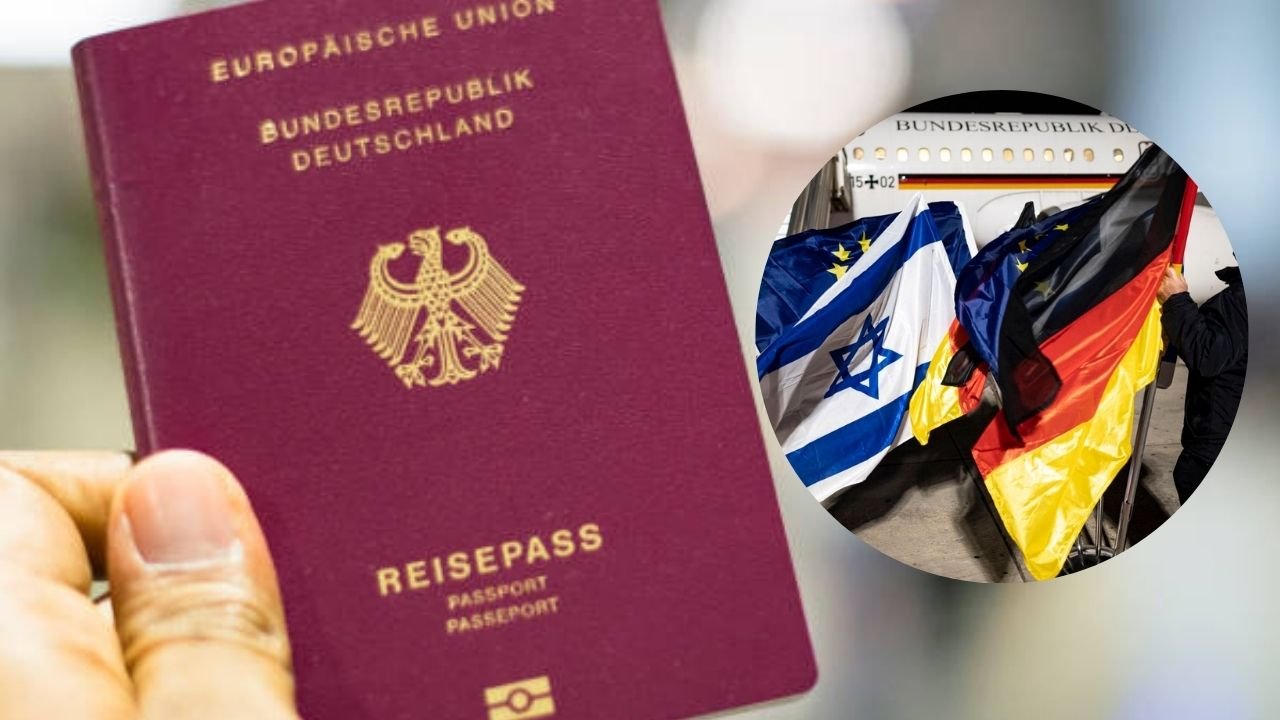
    A new German citizenship law has been enacted, requiring those seeking citizenship to acknowledge that Israel has a “Right to Exist.”

    German Interior Minister Nancy Faeser said on Wednesday, “Anyone who shares our values and makes an effort can now get a German passport more quickly and no longer has to give up part of their identity by giving up their old nationality. But we have also made it just as clear: anyone who does not share our values cannot get a German passport.”

    She confirmed that new questions on the topics of anti-Semitism, the right to the existence of an Israeli state and Jewish life in Germany have been added to the citizenship test.

    German Chancellor Olaf Schulz made dual citizenship a key point of his election campaign and promised to reduce the time it takes for new citizens to obtain a German passport to five years in his election campaign of 2021.

    The first generation of immigrants was not allowed to have dual citizenship. However, rising anti-Semitism, increasingly divisive debates about Israel’s genocide in Gaza, and the popularity of anti-immigrant, far-right politics led to a revision of the citizenship law.

    In December last year, the East German state of Saxony-Anhalt made it mandatory for those who want to become German citizens to recognise Israel’s right to exist.

  • Israel pounds Gaza after Biden outlines ceasefire plan

    Israel pounds Gaza after Biden outlines ceasefire plan

    Israeli forces hammered Rafah in southern Gaza with tanks and artillery on Saturday, hours after US President Joe Biden said Israel was offering a new roadmap towards a full ceasefire.

    Shortly after Biden’s announcement, Israeli Prime Minister Benjamin Netanyahu insisted his country would still pursue the war until it had reached all its aims.

    He reiterated that position on Saturday, saying that “Israel’s conditions for ending the war have not changed: the destruction of Hamas’s military and governing capabilities, the freeing of all hostages and ensuring that Gaza no longer poses a threat to Israel”.

    A permanent ceasefire without those conditions being met was “a non-starter”, he said.

    Hamas, meanwhile, said it “views positively” the plan laid out by Biden.

    In his first major address outlining a possible end to the conflict, the US president said Israel’s three-stage offer would begin with a six-week phase that would see Israeli forces withdraw from all populated areas of Gaza.

    It would also see the “release of a number of hostages, including women, the elderly, the wounded, in exchange for (the) release of hundreds of Palestinian prisoners”.

    Israel and the Palestinians would then negotiate during those six weeks for a lasting ceasefire — but the truce would continue while the talks remained underway, Biden said.

    The US leader urged Hamas to accept the Israeli offer. “It’s time for this war to end, for the day after to begin,” he said, in comments echoed by British Foreign Secretary David Cameron.

    Israel insists on war aims

    US Secretary of State Antony Blinken called his counterparts from Jordan, Saudi Arabia and Turkey on Friday to press the deal.

    UN chief Antonio Guterres “strongly hopes” the latest development “will lead to an agreement by the parties for lasting peace”, his spokesman Stephane Dujarric said.

    German Foreign Minister Annalena Baerbock said the Israeli offer “provides a glimpse of hope and a possible path out of the war’s deadlock”, while EU chief Ursula von der Leyen welcomed a “balanced and realistic” approach to end the bloodshed.

    Saudi Arabia stressed its “support for all efforts aimed at an immediate ceasefire” and the withdrawal of Israeli troops. 

    Indonesia, meanwhile, said it was ready to send “significant peacekeeping forces” as well as medical personnel to Gaza if a ceasefire is agreed.

    But Netanyahu took issue with Biden’s presentation of what was on the table, insisting on Friday the transition from one stage to the next in the proposed roadmap was “conditional” and crafted to allow Israel to maintain its war aims.

    “The prime minister authorised the negotiating team to present an outline for achieving (the return of hostages), while insisting that the war will not end until all of its goals are achieved,” Netanyahu’s office said.

    “The exact outline proposed by Israel, including the conditional transition from stage to stage, allows Israel to maintain these principles.”

    Israel has repeatedly vowed to destroy Hamas since the Palestinian militant group attacked southern Israel on October 7.

    Rafah Massacre

    Israel sent tanks and troops into Rafah in early May, ignoring concerns over the safety of displaced Palestinian civilians sheltering in the city on the Egyptian border.

    On Saturday, residents reported tank fire in the Tal al-Sultan neighbourhood in west Rafah, while witnesses in the east and centre of Rafah described intense artillery shelling.

    “From the early hours of the night until this morning, the aerial and artillery bombardment has not stopped for a single moment”, a resident from west Rafah told AFP on condition of anonymity.

    “There are a number of occupation (Israeli) snipers in high-rise buildings overseeing all areas of Tal al-Sultan… making the situation very dangerous”, the resident added.

    There was also shelling and gunfire from the Israeli army in Gaza City, in the north of the Palestinian territory, according to an AFP reporter.

    Before the Rafah offensive began, the United Nations said up to 1.4 million people were sheltering in the city.

    Since then, one million have fled the area, the UN agency for Palestinian refugees, UNRWA, has said.

    The Israeli seizure of the Rafah crossing has further slowed sporadic deliveries of aid for Gaza’s 2.4 million people and effectively shuttered the territory’s main exit point.

    ‘Everything is ashes’

    Israel said last week that aid deliveries had been stepped up.

    But Blinken acknowledged on Friday that the humanitarian situation was “dire” despite US efforts to bring in more assistance.

    The World Food Programme said daily life had become “apocalyptic” in parts of southern Gaza since Israel began its assault on Rafah in early May.

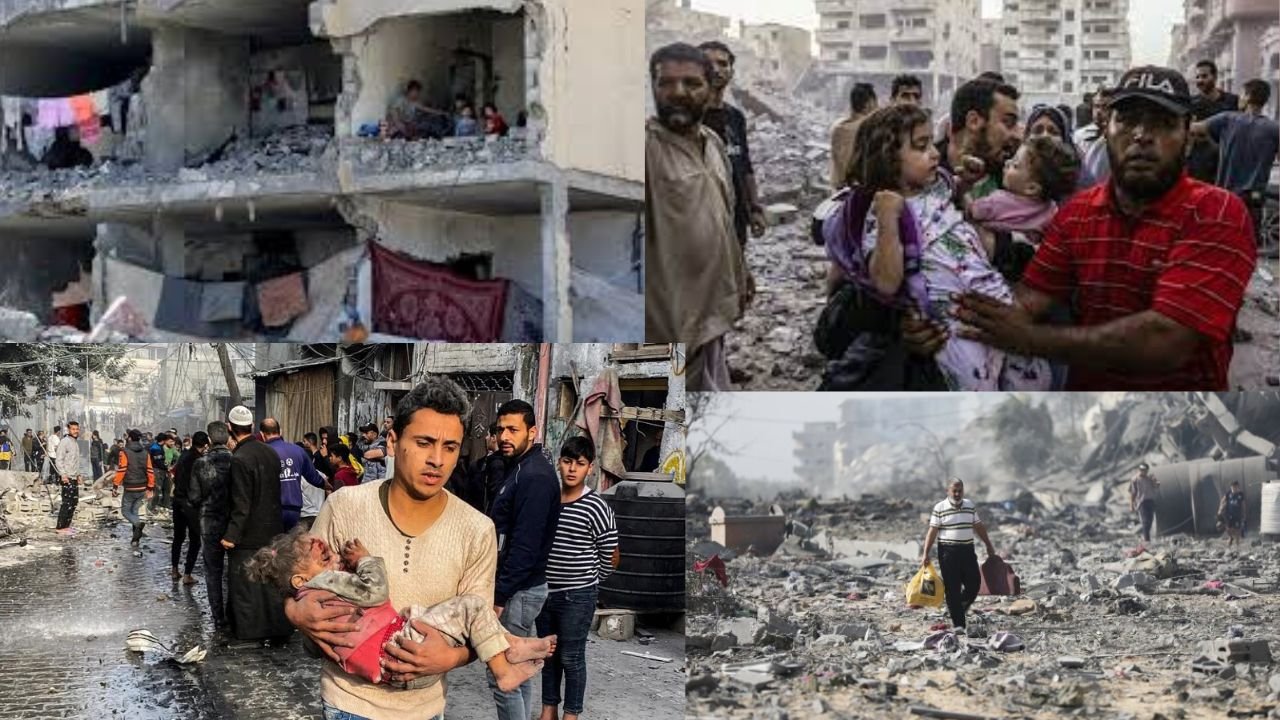
    The genocide in Gaza has killed at least 36,379 people in Gaza, mostly civilians, according to the Hamas-run territory’s health ministry.

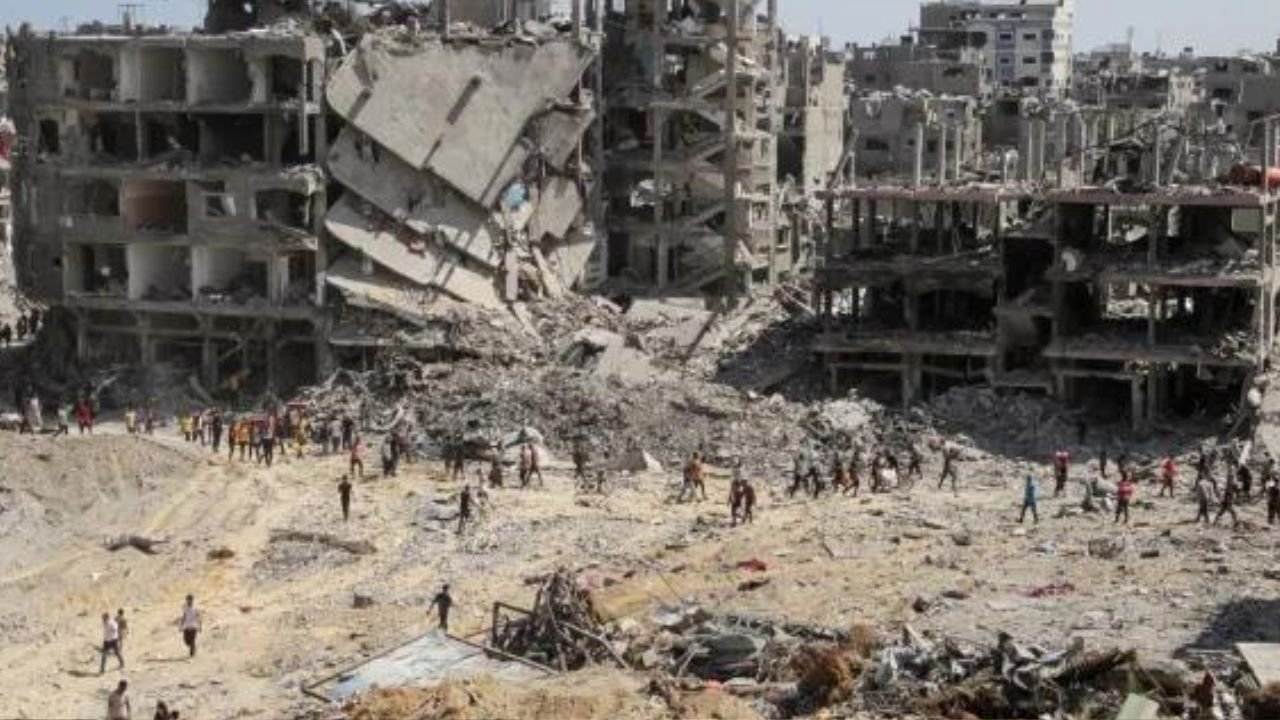
    In northern Gaza, witnesses said that after carrying out a three-week operation in the town of Jabalia and its neighbouring refugee camp, troops had ordered residents of nearby Beit Hanun to evacuate ahead of an imminent assault.

    The Israeli army said troops “completed their mission in eastern Jabalia and began preparation for continued operations in the Gaza Strip”.

    Jabalia shopkeeper Belal al-Kahlot said there was nothing left of his store after the Israeli operation. “Everything is ashes.”

    The Israeli military announced the deaths of two soldiers in Gaza, taking to 294 the number of Israeli troops killed since the start of ground operations in late October.

  • Israel PM Netanyahu says Rafah strike a ‘tragic accident’

    Israel PM Netanyahu says Rafah strike a ‘tragic accident’

    Israeli Prime Minister Benjamin Netanyahu said on Monday that a deadly strike that hit a displacement camp in Gaza’s Rafah was a “tragic accident” that his government was investigating.

    “In Rafah, we evacuated a million uninvolved residents and, despite our best efforts, a tragic accident happened yesterday,” Netanyahu told parliament.

    He added that “we are investigating the case and will draw the conclusions” after Gaza’s health ministry reported 45 dead as the strike late Sunday sparked a fire that tore through a tent city for displaced Gazans.

    The ministry in the Gaza Strip also said that 249 people were wounded.

    Israel faced a wave of international condemnation on Monday over the Rafah strike, including from across the region as well from the European Union, France, and the United Nations.

    The Israeli military said it had launched a probe into the strike which it said was carried out based on “precise intelligence information” about two Hamas militants who it said were killed.

    It also said “the strike did not occur in the humanitarian area in Al-Mawasi, to which the IDF (army) has encouraged civilians to evacuate” since the ground operation began in Rafah.

    Netanyahu struck a defiant tone in his Knesset address while being heckled by relatives of hostages held in Gaza, and vowed to keep up the battle to destroy Hamas.

    “There is no substitute for absolute victory” in Gaza, he told the chamber.

    Netanyahu denounced pressure, both internal and external, that he said his government has faced since the war in Gaza began.

    “They pressured us then,” said Netanyahu, before listing calls to refrain from military operations which Israel carried out anyway.

    “Don’t enter Gaza. We entered! Do not enter Shifa! We entered! Do not enter Khan Yunis! We entered! Do not enter Rafah! We entered!” he said.

    “I don’t give up and I won’t give up! I stand up to pressures from home and abroad.”

    Israel’s genocide in Gaza has caused the death of 36,050 Palestinians.

    © Agence France-Presse

  • Israel official says ‘intention’ to renew Gaza talks ‘this week’

    Israel official says ‘intention’ to renew Gaza talks ‘this week’

    An Israeli official said Saturday the government had an “intention” to renew “this week” talks aimed at reaching a hostage release deal in Gaza, after a meeting in Paris between US and Israeli officials.

    “There is an intention to renew the talks this week and there is an agreement,” the official told AFP on condition of anonymity.

    The Israeli official did not elaborate on the agreement, but Israeli media reported that Mossad chief David Barnea had agreed during meetings in Paris with mediators CIA Director Bill Burns and Qatari Prime Minister Mohammed bin Abdulrahman Al-Thani on a new framework for the stalled negotiations.

    Top US diplomat Antony Blinken also spoke with Israeli war cabinet minister Benny Gantz about new efforts to achieve a ceasefire and reopen the Rafah border crossing, Washington said.

    Talks aimed at reaching a hostage release and truce deal in the Gaza Strip ground to a halt this month after Israel launched a military operation in the territory’s far-southern city of Rafah.

    The current war in Gaza has caused the deaths of more than 1,170 people, mostly civilians, according to an AFP tally based on Israeli official figures.

    Meanwhile, Israel has carried out a massacre of 35,903 people in Gaza, mostly women and children, according to data from Gaza’s health ministry.

  • Bahrain calls for peace conference at Gaza-focused Arab League

    Bahrain calls for peace conference at Gaza-focused Arab League

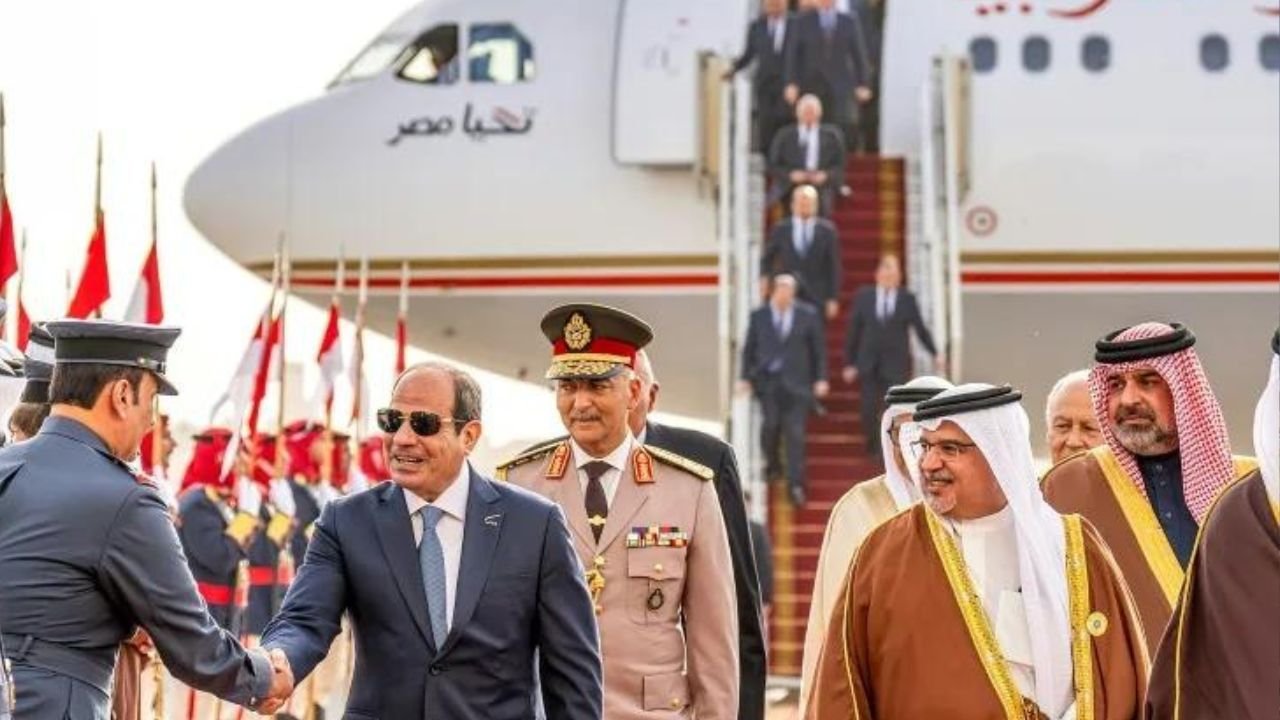
    Host Bahrain called for a Middle East peace conference Thursday at the start of an Arab League summit dominated by Israel’s war on Gaza, which has been raging in the Gaza Strip without a ceasefire in sight.

    King Hamad bin Isa Al Khalifa was addressing fellow heads of state and government at the 22-strong grouping in the capital Manama, more than seven months into a conflict that has convulsed the region.

    “(We) call for an international conference for peace in the Middle East, in addition to supporting full recognition of the State of Palestine and accepting its membership in the United Nations,” said the king.

    It is the first time the bloc has come together since an extraordinary summit in Riyadh, the capital of neighbouring Saudi Arabia, in November that also involved leaders from the 57-member Organisation of Islamic Cooperation, based in the Saudi city of Jeddah.

    At that meeting, leaders condemned Israeli forces’ “barbaric” actions in Gaza but declined to approve punitive economic and political steps against the country, despite growing anger in the region and widespread support for the Palestinian cause.

    That could change this time around as backing builds globally for a two-state solution long advocated by Arab countries, said Kuwaiti analyst Zafer al-Ajmi.

    Western public opinion has become “more inclined to support the Palestinians and lift the injustice inflicted on them” since Israel’s creation more than 70 years ago, Ajmi said.

    Meanwhile, Israel has failed to achieve its war objectives including destroying Hamas and is now mired in fighting, he said.

    Change of ‘tone’

    Israeli Prime Minister Benjamin Netanyahu on Wednesday said nearly 500,000 people had been evacuated from the southern Gaza city of Rafah, where he is insisting on going after remaining Hamas despite objections from US President Joe Biden.

    He also disputed claims that Israeli operations there would trigger a “humanitarian catastrophe”, though much of the international community remains squarely opposed to a Rafah invasion.

    Against that backdrop, and with mediator Qatar describing talks on a truce and hostage release deal as close to a stalemate, “the tone of Arab countries has changed”, Ajmi said, raising the possibility that the final declaration out of Thursday’s summit could include “binding” measures.

    The message would be especially strong coming from a summit held in Bahrain, one of two Gulf countries along with the United Arab Emirates to normalise ties with Israel in 2020 under the US-brokered Abraham Accords.

    Beyond the Israel-Hamas war, Arab leaders are also expected to discuss conflicts in Sudan, Libya, Yemen and Syria, whose President Bashar al-Assad is due to attend after returning to the Arab fold last year.

    Attacks by Yemen’s Huthis on Red Sea shipping, which the rebels say are intended as a show of solidarity with Palestinians, could also be on the agenda, said Bahraini analyst and journalist Mahmeed al-Mahmeed.

    Bahrain joined a maritime coalition organised by Washington to counter those attacks.

    “These vital sea lanes are not only important for countries in the region, but also for the global economy,” Mahmeed said.

  • Famous Italian chef Rubio attacked by Zionists for supporting Palestine

    Famous Italian chef Rubio attacked by Zionists for supporting Palestine

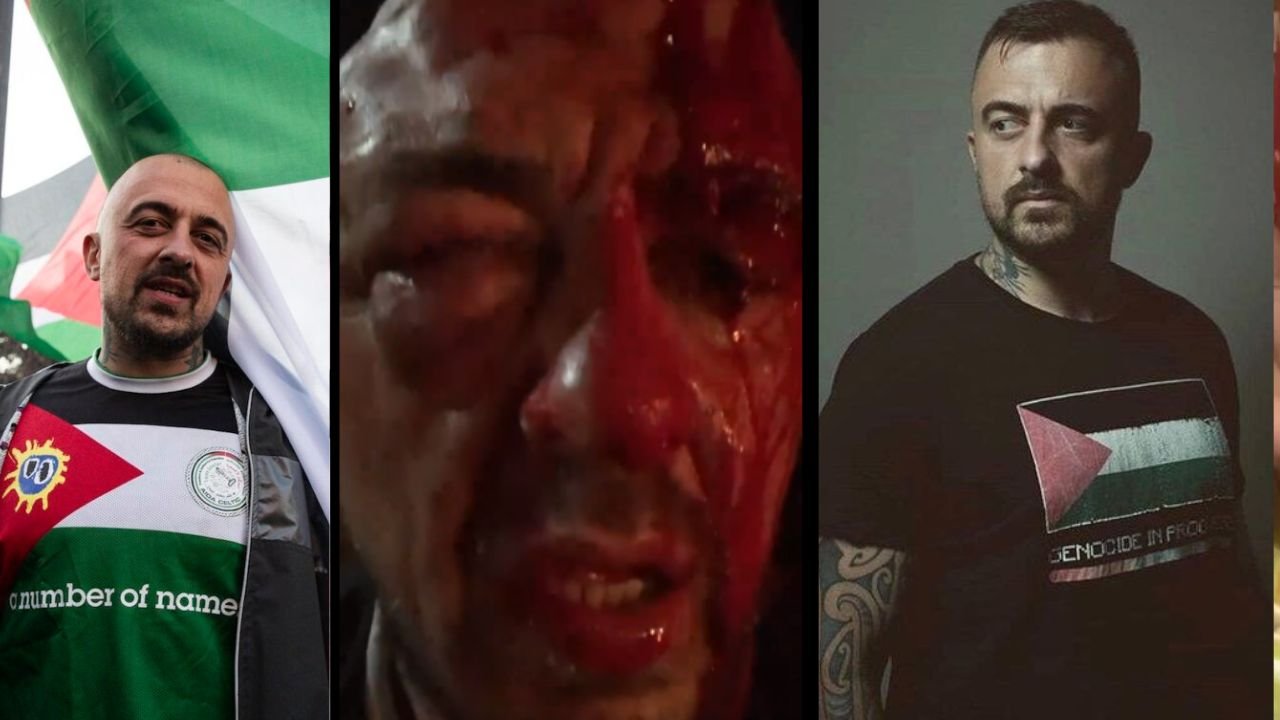
    Italian Chef Gabriele Rubini was attacked by Zionist supporters of Israel outside his home after he publicly expressed support for Palestine.

    He posted a video of himself, face drenched in blood, explaining how he was attacked just outside his home. The caption of the video said, “Terrorists. They waited for me outside my house, six of them, and cut the gate wires to massacre me.”

    A large group of his followers extended their heartfelt wishes to him and showed solidarity with him in a march. He thanked them by writing, “Thanks girls, thanks guys. We smile in the face of terrorists and continue straight until the liberation of Palestine”.

    The Chef later posted a selfie with a swollen eye and making a victory sign. The post said, “Thank you all for the support”. It went on to explain, “In the end, stitches on my head where they gave me the hammer, cuts and abrasions where they hit me with bricks, fracture of the facial orbit where the 60 targeted punches ended up.” He pledged to not stop talking about the oppression faced by Gazans, “And we start again”, he asserted, “A hug to the Jewish community.”

  • South Africa to arrest citizens fighting alongside Israeli forces in Gaza

    South Africa to arrest citizens fighting alongside Israeli forces in Gaza

    South Africa’s foreign minister Naledi Pandor has said that citizens who are fighting in the Israeli armed forces or alongside them in Gaza will be arrested when they return home.

    Naledi, part of South Africa’s governing African National Congress party, passed the policy statement earlier this week at a Palestinian event. “I have already issued a statement alerting those who are South African and are fighting alongside or in the Israeli Defense Forces: We are ready. When you come home, we are going to arrest you,” Pandor said, to rapturous applause from the audience.

    The minister asked people to protest outside the embassies of what she called the “five primary supporters” of Israel and its military action in Gaza. She didn’t name them but almost certainly was referring to the United States, the U.K., and Germany among others.

    Those with dual South African-Israeli citizenship could be stripped of their South African citizenship, she said further.

    Pandor’s comments represent an apparent hardening of the government’s stance.

    It’s not clear how many South African citizens have fought for Israel during the current war in Gaza. South Africa has a significant Jewish population of around 70,000 people, as reported by the Associated Press.

    The South African government is a vocal supporter of the Palestinian people and a critic of Israel. Back in December, the foreign ministry had said that the South African government was concerned that some of its citizens or permanent residents had joined the IDF to fight in Gaza and warned that they could face prosecution if they hadn’t been granted permission to do so under South Africa’s arms control laws.

    Pandor asked audience members at the Palestinian solidary event this week to make posters with the words “Stop Genocide” and protest outside the embassies of what she called the “five primary supporters” of Israel.

    “Don’t only come to this dinner. Be visible in the support of the people of Palestine,” she said.

    The recent statement by the minister is a proof that the Government may deal with these citizens iron-handedly for going against the state’s policy.

    Read more: All you need to know about South Africa’s genocide case against Israel at ICJ