Tag: IT SECTOR

  • Govt announces establishment of 10 new software technology parks

    Govt announces establishment of 10 new software technology parks

    The government has announced the establishment of 10 new Software Technology Parks across the country by next year.

    This announcement was made during a briefing by the Ministry of Information Technology to a high-level meeting chaired by Prime Minister (PM) Shehbaz Sharif in Islamabad.

    In addition to the new technology parks, the meeting highlighted plans to set up 100 new e-employment centers nationwide by next year. These initiatives are part of the government’s broader strategy to boost the IT sector and create more job opportunities.

    The project for the Islamabad IT Park, which is being developed in cooperation with South Korea, is expected to be completed next year. This state-of-the-art facility will offer a range of amenities, including spaces for startups, incubation centers, banks, restaurants, and other essential services.

    Moreover, South Korea is also collaborating on an information technology park project near Jinnah International Airport in Karachi, scheduled for completion by 2027. These projects are part of an ongoing effort to expand the country’s IT infrastructure, which already includes 43 software technology parks established in 29 cities.

  • Here’s when PayPal and Stripe payment services will be available in Pakistan

    Here’s when PayPal and Stripe payment services will be available in Pakistan

    Dr Umar Saif, Pakistan’s interim Federal Minister for IT and Telecommunications, shared noteworthy developments on Wednesday regarding the imminent availability of PayPal and Stripe payment gateways within the country. Addressing the flourishing freelancing community, he drew attention to the current scarcity of financial tools to facilitate payments within this sector. 

    During these discussions with major industry players, including PayPal, Stripe, and Wise, a compelling case for Pakistan was presented, despite reservations, including those arising from the Financial Action Task Force (FATF). 

    Dr Saif expressed optimism, foreseeing promising updates on PayPal and Stripe services in the coming four to six weeks, heralding positive implications for the freelancer community. 

    Highlighting the substantial size and potential of Pakistan’s IT freelancing workforce, the country ranks as the world’s second-largest online workforce, boasting approximately 1.5 million active IT freelancers. Nonetheless, the sector’s growth has been stymied by infrastructure limitations. 

    To address these challenges, the E-Rozgar programme is set to offer interest-free loans to the private sector, with plans for establishing co-working spaces capable of accommodating 500,000 individuals. Dr Saif also revealed a collaborative initiative with the Higher Education Commission (HEC) to introduce standardised testing for IT graduates. 

    The significance of Pakistan’s IT sector cannot be understated, with around 19,000 companies contributing substantially to both employment and the national economy, boasting official exports worth $2.5 billion. 

    Another pertinent issue discussed by Dr Saif is the reluctance of some IT companies to maintain foreign exchange reserves and revenues abroad due to constraints on repatriating US dollars. Despite conservative estimates placing Pakistan’s IT exports at $4–4.5 billion, the reality is obscured by restrictions on US-dollar spending. 

    Fueled by cooperative efforts between the IT ministry and P@SHA, a positive development has emerged. IT companies can now retain 50 per cent of their revenue in US dollar accounts and receive corporate debit cards from banks, facilitating international payments without hindrance. 

    In addition, the State Bank of Pakistan (SBP) has played a crucial role in assisting IT exporters. The SBP recently increased the permissible retention limit for IT exporters, allowing them to hold 50 per cent of their export proceeds in Exporters’ Specialised Foreign Currency Accounts (ESFCAs) with the aim of bolstering IT and IT-enabled services exports. 

  • Huawei aims to boost Pakistan’s IT ecosystem: CEO and PM Kakar hold key talks

    Huawei aims to boost Pakistan’s IT ecosystem: CEO and PM Kakar hold key talks

    A delegation from Huawei Pakistan, under the leadership of its Chief Executive Officer (CEO), Ethan Sun, held a formal meeting with caretaker Prime Minister (PM) Anwaar ul Haq Kakar, wherein they engaged in discussions concerning potential investment opportunities in Pakistan. 

    During this high-level encounter, CEO Sun articulated the company’s keen interest in making investments in Pakistan’s Information Technology (IT) sector, a proposition that garnered appreciative acknowledgment from the PM. 

    Furthermore, the Huawei delegation provided comprehensive insights into their ongoing initiatives aimed at cultivating and elevating the IT ecosystem within Pakistan. 

    Of notable mention is Huawei’s establishment of approximately 100 IT centers within various universities across Pakistan, as officially documented.

    The PM, recognising the significance of Huawei’s endeavors, lauded the company’s commitment to advancing the field of IT in Pakistan.

    He expressed optimism regarding potential collaborations between Huawei and the government for the purpose of equipping the youth and women, particularly those residing in remote regions, with valuable skills in the domain of IT.

    According to Brecorder, PM Kakar extended a cordial invitation to Huawei, encouraging the company to consider establishing manufacturing facilities for mobile handsets within the borders of Pakistan.

  • Budget 2023-24: Finance Minister announces tax relief measures for IT sector and freelancers

    Budget 2023-24: Finance Minister announces tax relief measures for IT sector and freelancers

    In a recent announcement, the federal government has unveiled a series of measures aimed at fostering growth and investment in the freelancing and information technology (IT) sectors. The government has decided to implement a reduction in tax rates for investments in the IT sector, provide tax breaks to freelancers, and establish a favorable environment for investment by normalizing duty-free equipment provisions.

    During the budget presentation for the fiscal year 2023-24, Finance Minister Ishaq Dar highlighted the importance of the IT sector and its immense talent pool within the country. To support the growth of IT exports, the government plans to extend the current 0.25 per cent discounted income tax rate for the next three years.

    Recognizing the significance of banks in facilitating investment in the IT sector, the finance minister proposed a reduced tax rate of 20 per cent for banks involved in lending to this sector. This reduction aims to alleviate the burden on banks, as the existing tax rate for investments stands at 39 per cent.

    Additionally, the government has recommended providing Duty-Free Equipment privileges to incentivize investment in the IT sector. Moreover, the minister has suggested granting the industry the status of Small and Medium Enterprises (SMEs), enabling individuals to avail themselves of special and exclusive discounted income tax rates applicable to this sector.

    In a move to streamline processes for IT and IT-related services exporters, Minister Dar proposed the issuance of Automated Exemption Certificates to non-residents within 30 days. Furthermore, the government plans to reduce the Goods and Services Tax (GST) from 15 per cent to 5 per cent specifically for IT and ITeS services in the Islamabad Capital Territory (ICT).

    To support the freelancing community, Minister Dar recommended exempting individuals from the obligation of filing a sales tax return in order to benefit from the concessional rate of 0.25 per cent. Emphasizing the vital contribution of freelancers to the country’s foreign exchange earnings, the minister suggested that those whose IT and IT-enabled services exports were less than $24,000 in the previous fiscal year should be exempted from sales tax registration and allowed to file a simplified single-page income tax return.

    These measures underscore the government’s commitment to fostering a conducive business environment and encouraging investment in the freelancing and IT sectors, thereby facilitating economic growth and job creation.

  • IT minister denies involvement in internet suspension resulting in billion-rupee losses

    IT minister denies involvement in internet suspension resulting in billion-rupee losses

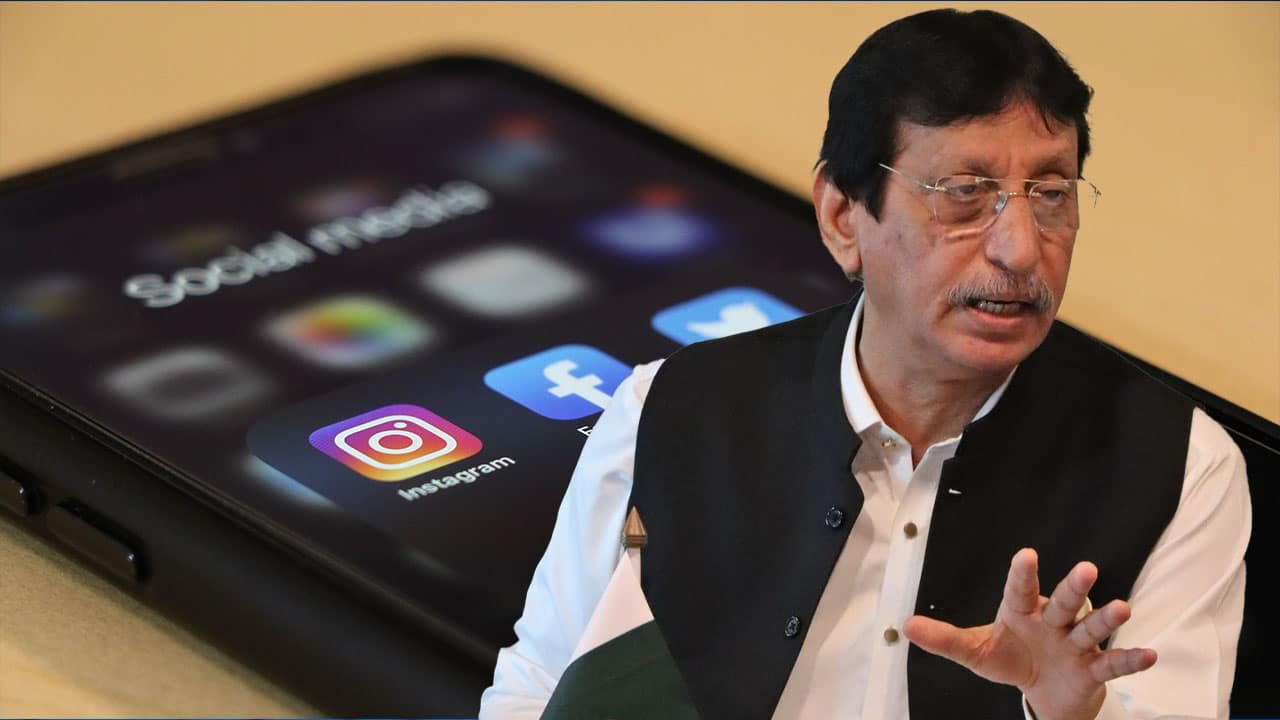
    Following the internet blackout in Pakistan, Federal Minister for Information Technology and Telecommunication Syed Amin-ul-Haque distanced his ministry from the blockage, stating that they were not taken into confidence.

    According to Geo, Haque revealed that mobile internet services were suspended without the Ministry of IT’s consultation. Since 2017, the Pakistan Telecommunication Authority (PTA) has not been under the Ministry of IT, and the PTA has been operating independently.

    The minister explained that blocking social media websites or the internet was not the solution to any issue, and he urged people to be open-minded rather than resorting to using a VPN to access blocked sites.

    Haque suggested that instead of completely blocking the internet, it could be blocked in specific areas. He emphasized that the IT sector suffered losses of billions of rupees due to internet blockages.

    The suspension of mobile broadband and restricted access to Twitter, Facebook, and YouTube occurred after violent protests arose in response to the Rangers personnel arresting Pakistan Tehreek-e-Insaf (PTI) Chairman Imran Khan from the Islamabad High Court. At least ten people died, and dozens sustained injuries during the days-long protests.

    After almost a seven-day suspension, the government restored access to social media platforms such as Twitter, YouTube, and Facebook. The suspension was recommended by the interior ministry and is the longest continuous shutdown in a country that often suspends communication as a tool to quell unrest. Telecom operators suffered an approximate revenue loss of Rs820 million, which was a significant blow to the sector as the economy remained in a fragile state.

    Additionally, the government blocked major social media platforms, including Twitter and Facebook, while YouTube services were slower to control the spread of disinformation.

  • Pakistan to receive $2 billion deposit from Saudi Arabia in State Bank within next few days

    Pakistan to receive $2 billion deposit from Saudi Arabia in State Bank within next few days

    Muhammad Jawad Sohrab Malik, the Special Assistant to the Prime Minister, had a meeting with Nawaf bin Said Al-Malki, the Ambassador of the Kingdom of Saudi Arabia to Pakistan, in Islamabad. The objective of the meeting was to discuss the ways to enhance bilateral collaboration between the two countries.

    During the meeting, Jawad expressed gratitude for Saudi Arabia’s consistent support for Pakistan. He thanked the ambassador for confirming that the $2 billion pledged by the Kingdom would be deposited within the next seven working days in the SBP account. Both parties showed a commitment to strengthening bilateral ties between Pakistan and Saudi Arabia.

    The SAPM highlighted the significance of Saudi Arabia’s assistance and stated that the $2 billion loan would help Pakistan overcome the current financial crisis. He further explained that this would pave the way for securing similar assurances not only from the IMF but also from other friendly countries such as the United Arab Emirates, Qatar, and others, which would lead to the much-awaited staff-level agreement (SLA) with the IMF and unlock multilateral disbursements.

    Nawaf bin Said Al-Malki emphasized the Kingdom’s commitment to building long-term, sustainable investment transactions between Saudi Arabia and Pakistan. He reiterated Saudi Crown Prince Mohammed bin Salman’s pledge to increase Saudi Arabian investments in Pakistan’s energy and IT sectors to $10 billion within the next few years.

    The Saudi envoy expressed keen interest on behalf of the Saudi government in recruiting more manpower from Pakistan during the current and next year for various sectors of the kingdom. He stated that the Saudi labor market is continuing to expand, mainly due to the launch of several mega projects under Saudi Vision 2030.

    While highlighting the diverse business landscape in Pakistan, the SAPM expressed that Pakistan has a lot to offer in both the goods and services sectors. He commended the Kingdom’s commitment to providing enhanced employment opportunities for the Pakistani workforce in its future development ventures, as well as the valuable contributions of Saudi FDI in boosting the country’s economic outlook.

    During the meeting, both dignitaries engaged in fruitful discussions on the further strengthening of bilateral business relations, recruitment of more workforce from Pakistan, and enhancing FDI in potential sectors of the economy. Both the Saudi Ambassador and SAPM Jawad Sohrab Malik expressed confidence that their discussions would pave the way for a new era of deeper and more meaningful collaboration between Pakistan and Saudi Arabia.

  • Pakistan is the next IT powerhouse, says JICA

    Pakistan is the next IT powerhouse, says JICA

    Japan International Cooperation Agency (JICA) has said that Pakistan is the “powerhouse of the Information and Communication Technology (ICT) sector” as the country tech exports climbed six times in one decade.

    In JICA’s official statement, digital Pakistan policy 2018 is the key driving factor behind the success of the IT sector in Pakistan. Besides, six-time growth is the highest growth rate in entire South Asia.

    The fundamental reason behind the IT growth is the competitiveness and the presence of a large number of freelancers that are willing to give quality services at affordable rates.

    The report published by JICA was a year-long researched based study that was conducted in collaboration with Pakistan Embassy Tokyo.

    The publication has also placed Pakistan as a new partner for Japanese IT companies. The report gives an overview of the ICT industry in Pakistan, its performance in IT exports, the support structure provided by the Pakistani government, a pool of skilled and young human resource and achievements of a growth-led ecosystem equally owned by public and private sectors.

    This study includes an “IT skills survey 2021”, which found that Pakistani ICT engineers are highly skilled in programming, software development, data processing and analysis, infrastructure architecture and cloud engineering.

    The report also includes feedback on Pakistani ICT engineers already working in Japan who consider Pakistan an untapped market for Japanese IT companies, encouraging them to know more about Pakistan and its collective potential in ICT.

    Ambassador of Pakistan to Japan Imtiaz Ahmad welcomed the project team in March 2020, offering them complete support of the Mission while thanking JICA for its continued support in export and development sectors in Pakistan.

    In the past, the same team of experts from JICA has rolled out various projects for human resource development; value addition in textiles; technical training and water and sanitation infrastructure in Pakistan.