Tag: Jacobabad

  • Polio worker gives harrowing testimony of being raped on duty

    Polio worker gives harrowing testimony of being raped on duty

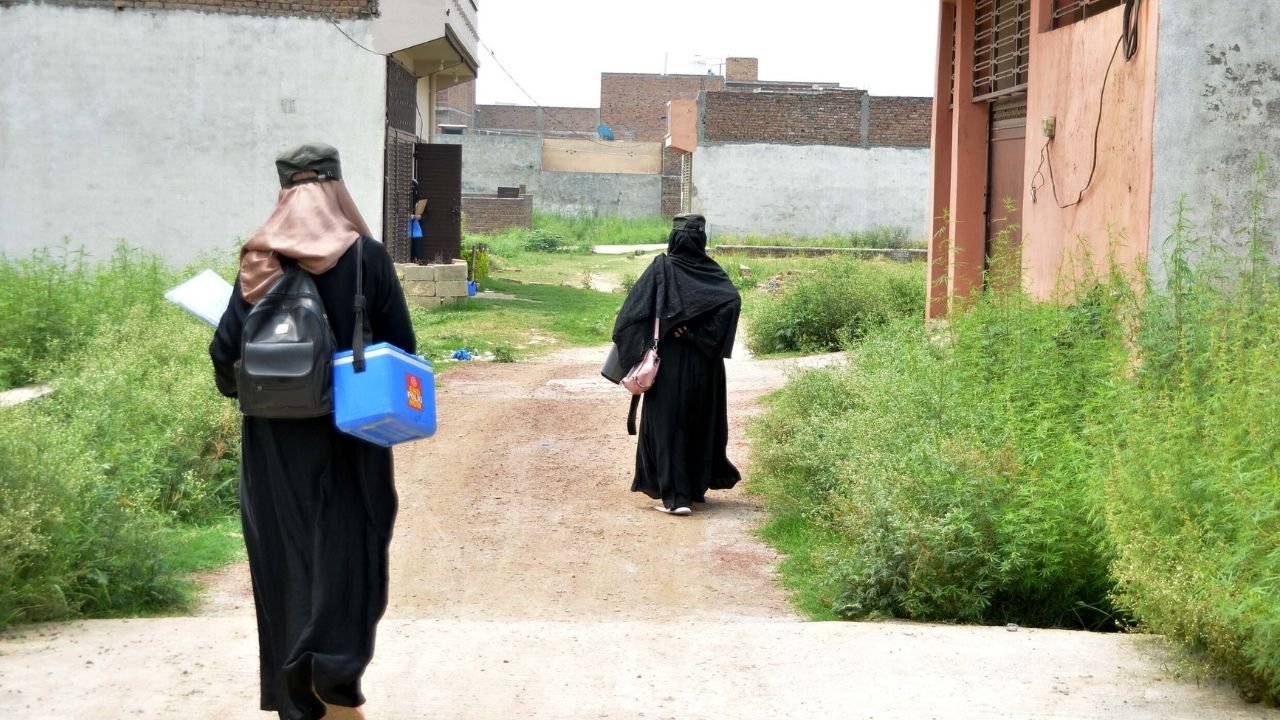
    A polio worker testified before a Jacobabad court on Friday that she was raped while on duty, after medical reports suggested that the crime potentially did take place.

    Jacobabad Deputy Commissioner Zahoor Murri also confirmed that the polio worker was allegedly raped on Wednesday in a nearby village. The DC added that police arrived at the scene of the incident and transferred the victim to a hospital under tight security, where a medicolegal examination was conducted.

    A day after the incident, the victim told the media that she was robbed of her phone and valuables. At the same time, she dismissed allegations of sexual assault.

    She asserted that when she was returning home after administering polio drops to children at the last house on her list when a man robbed her of her mobile phone and money at gunpoint and escaped. “I was so traumatised and my heart was beating so fast that my team leader immediately took me to Jacobabad Institute of Medical Science,” she had said.

    However, on Friday, Jacobabad District and Sessions Judge Syed Sharafuddin Shah presided over a hearing where the victim retracted her old statement and testified that she was sexually assaulted at gunpoint three days ago while she was on duty in the village.

    She also appealed to the judge to allow her to go to her parents’ home, whereupon the court ordered the police to escort her there.

    A District Health Officer report submitted in the court also suggested that the polio worker “might have been sexually assaulted”.

    On the other hand, the court rejected the police report submitted by the local police, observing that it was incomplete. The judge ordered the police to submit a complete report by the next hearing on September 23.

    The court ordered the police to submit a “transparent” report “on [the] basis of ocular and medical evidence”.

    Additionally, the DHO was ordered to submit five years’ worth of records for the polio worker before the court adjourned until the next hearing on September 23.

    After the hearing, the victim’s lawyers held a press conference where they alleged that the police wanted to “spoil the case as they had submitted an incomplete report before the court”.

    The lawyers also alleged that the polio worker had been pressured to give a different statement while in police custody, adding that influential people wanted to protect the suspect as he belonged to the powerful Jakhrani clan.

    On the other hand, local police stated that they ensured the safety of the victim and confirmed that the polio worker was assaulted but she could not give a statement as she was traumatized by the incident.

  • Rain on its way to Karachi

    Rain on its way to Karachi

    The Meteorological Department has shared that strong monsoon winds will likely enter Sindh on the night of July 28.

    From July 28 to July 30, rain with thunder is expected in various cities of Sindh, Tharparkar, Umarkot, Badin, Sajawal and other places of Sindh.

    There is a possibility of rain in Karachi, Sukkur, Larkana, Jacobabad and other places from July 29 to 30, while the temperature may increase in Karachi on Sunday and Monday, likely to reach 34 to 36 degrees celsius.

    As per the predictions of weather department, it will be partly cloudy and humid in Karachi on Sunday while there is a possibility of drizzle and light rain in the city tomorrow evening or night.

    From Monday to Tuesday, Karachi will experience thunder and heavy rain in some pockets.

    Today the city is expected to remain cloudy, reports Geo.

    In the last 24 hours, the city’s minimum temperature was recorded at 29.4 degrees Celsius, while the maximum temperature is expected to be between 33 and 35 degrees Celsius.

    Humidity in the air is 82 percent and the sea breeze is blowing at a speed of 11 km per hour.

  • Prolonged load shedding continues across country in extreme heat

    Prolonged load shedding continues across country in extreme heat

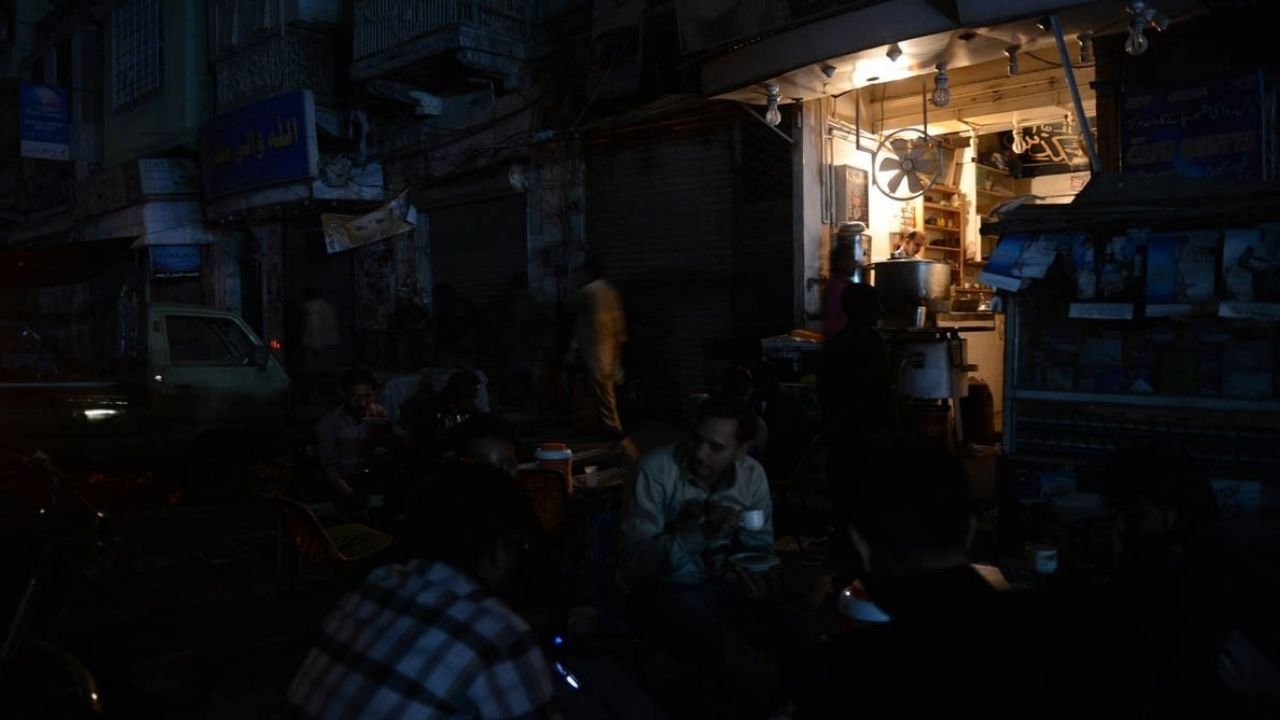
    With record breaking temperatures, hours of load shedding of electricity have caused inconvenience for people in a number of cities across Pakistan.

    In many areas of Hyderabad, the duration of load shedding has reached up to 12 hours.

    Spokesperson of HESCO said that load shedding is happening on the basis of line losses. He also claims that load shedding is not interrupting examination hours.

    Meanwhile, urban areas of Sukkur are experiencing six to eight hours of load shedding while Jacobabad, Shikarpur and Kashmore undergoing 12 to 14 hours.

    Thatta city and its surroundings are subjected to 14 to 16 hours load shedding, six hours in Kamalia city, and eight hours in rural areas.

    Wahari stands at four to six hours of load shedding while 10 hours in rural areas.

    More than 10 hours of load shedding is taking place in Mingora city, more than 16 hours in suburban areas, while Bannu is experiencing 18 to 20 hours of load shedding.

    Citizens say that business activities and life are being affected due to load shedding.

  • 2 underaged girls married off by jigra as tribal fine in Jacobabad

    A jirga in Thull, Jacobabad decided to marry off two minor girls as punishment for their parents’ elopment. According to Aaj News, both the girls are seven years old.

    The jirga had decided on the case of Hajira Mangi, a 30-years-old widow and mother, had eloped with a man, Dadu Mangi, who was also married and had daughters. They were accused of committing karo kari.

    In order to appease Hajira’s family who said that she had gotten married without their permission, village head Zukfiqar Khan Sarqi was asked to step in and resolve the issue. It was decided that both Hajira’s and Dadu’s daughters from their previous marriages would be wedded off to Hajira’s brothers. Furthermore, the couple were ordered to pay Rs 200,000 as a fine. They paid Rs 50,000 and promised to pay the rest in installments.

    According to Aaj News, although jirgas were banned by the Supreme Court in 2019, there has not been a police case filed against the village head or the family for this forced marriage.

  • ‘Humans can’t live there,’ Jacobabad heat intolerant for human body

    ‘Humans can’t live there,’ Jacobabad heat intolerant for human body

    Jacobabad, the city with 200,000 citizens in the Sindh province has long been known for its severe heat but recent research has conferred an unwelcome scientific distinction.

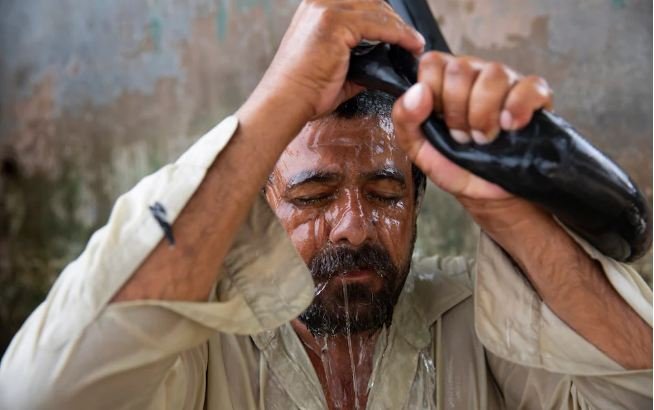
    The mixture of heat and humidity in the city has made it one of the hottest places on earth. The temperature there is hotter than the human body can handle.

    The city’s temperature rises to 52 degrees Celsius forcing its residents to remain inside their homes. Few have air conditioners in their homes and loadshedding in the city worsens the situation. The hospital fills with heatstroke cases from those whose livelihoods demands them to step out.

    Speaking to the telegraph, a resident, Zamir Alam said, “When it gets that hot, you can’t even stay on your feet.”

    “It’s a very, very difficult time when it goes beyond 50°C. People do not come out of their houses and the streets are deserted,” Abdul Baqi, a shopkeeper, added.

    Mr. Matthews, who is a lecturer in climate science at Loughborough University with his colleagues analysed global weather station data last year and found that Jacobabad and Ras al Khaimah, northeast of Dubai in the United Arab Emirates, have both temporarily crossed the deadly threshold. The milestone had been surpassed decades ahead of predictions from climate change models.

    The researchers inspected what are called wet bulb temperatures. These are taken from a thermometer covered in a water-soaked cloth so they take into account both heat and humidity.  Wet-bulb thermometer readings are significantly lower than the more familiar dry bulb readings, which do not take humidity into account.

    Researchers say that at a wet-bulb (thermometer covered in a water-soaked cloth) reading of 35 degrees Celsius, the body can no longer cool itself by sweating and such a temperature can be fatal in a few hours, even to the fittest people. 

    Read More: How to beat the heat without AC

    According to reports, Jacobabad crossed the 35 degrees Celsius wet-bulb threshold in July 1987, then again in June 2005, June 2010 and July 2012. Each time the boundary may have been breached for only a few hours, but a three-day average maximum temperature has been recorded hovering around 34°C in June 2010, June 2001 and July 2012. The dry bulb temperature is often over 50 degrees Celcius in the summer.

    As temperatures rise and rainfall patterns shift, difficulties with farming, irrigation, disease and labour are predicted by 2050 to badly hit people’s quality of living in parts of India, Pakistan and Bangladesh.