Tag: Jammu and Kashmir

  • ‘Pakistan has credible evidence regarding Indian Agents orchestrating extra-territorial assassinations’, Foreign Secretary Syrus Qazi

    ‘Pakistan has credible evidence regarding Indian Agents orchestrating extra-territorial assassinations’, Foreign Secretary Syrus Qazi

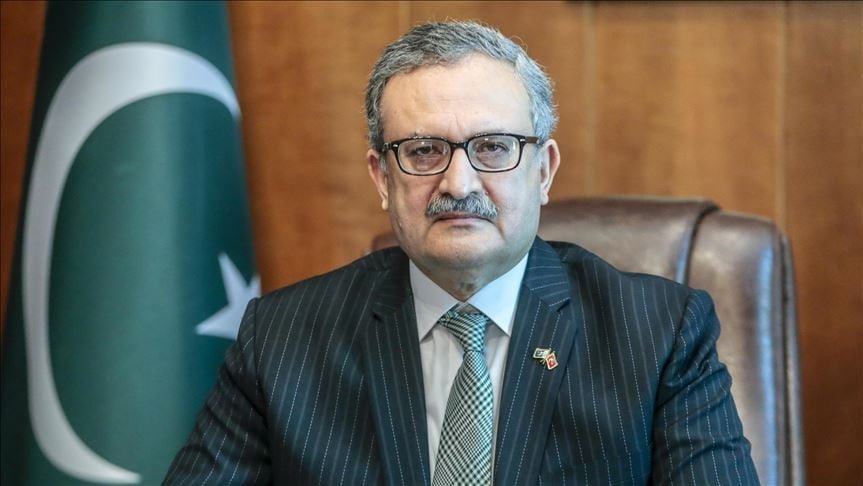
    In a press conference held on Thursday, Pakistan’s Foreign Secretary Syrus Qazi revealed what he termed as “credible evidence” linking Indian agents to the orchestrated killings of two Pakistani citizens on Pakistani soil.

    Qazi characterized the alleged actions as part of a “sophisticated and sinister” Indian campaign involving extra-territorial and extra-judicial assassinations.

    “These are killings-for-hire cases involving a sophisticated international set-up spread over multiple jurisdictions,” Qazi told reporters during a press conference in Islamabad.

    The strained relations between Pakistan and India, exacerbated by historical tensions and border disputes, took a hit with the arrest of spy Kulbushan Yadav in 2016 and the 2019 revocation of the special status of Indian Illegally Occupied Jammu and Kashmir (IIOJK). The move led to a freeze in diplomacy and trade between the two neighboring nations.

    Qazi’s statements come months after both Canada and the United States separately accused Indian agents of involvement in assassination attempts on their soil. While India rejected Ottawa’s allegations, it initiated an investigation into Washington’s claims.

    Providing details of the alleged Indian campaign, Qazi claimed that Indian agents utilized technology and safe havens on foreign soil to carry out assassinations in Pakistan.

    “They recruited, financed, and supported criminals, terrorists, and unsuspecting civilians to play defined roles in these assassinations,” he added.
    The foreign secretary blasted Indian media and social media accounts for their quick claims and glorification of the said killings as “successful retribution against ‘enemies’ of India” and projecting their capacity to carry out these illegal acts.
    “Potential assassins were recruited, using social media, talent spotters, and fake Da’esh accounts,” Qazi said.

    The Foreign Secretary criticized Indian media and social media accounts for glorifying the killings and projecting them as successful retribution against perceived enemies.

    He alleged that potential assassins were recruited through social media, talent spotters, and fake Da’esh accounts.

    Qazi focused on two specific cases during the press conference: the assassinations of Shahid Latif and Muhammad Riaz.

    Assassination of Shahid Latif
    Qazi said that on October 11, 2023, a group of criminals assassinated Latif outside a mosque in the city of Sialkot.
    A detailed investigation revealed that an Indian agent, Yogesh Kumar, based in a third country orchestrated the assassination through criminals and terrorists, he added.
    Going deeper into the details of the killing, the foreign secretary revealed that Kumar recruited Muhammad Umair, a labourer in that third country to act as a contact with local criminals in Pakistan to trace and assassinate Latif.
    The recruited local criminals were able to locate and trace Latif, however, the killers-for-hire were unable to carry out the execution, Qazi added.
    “After some failed attempts, Muhammad Umair was personally sent to Pakistan to carry out the assassination. Muhammad Umair organised a team of five target killers which after the first failed attempt on 9 October 2023, succeeded in assassinating Shahid Latif on 11 October 2023.”
    The foreign secretary further stated that the law enforcement authorities apprehended the target killers, including Umair, based on confessional statements and technical evidence, thwarting their bid to flee Pakistan on October 12, 2023.
    Qazi said that all those involved in reconnaissance and killing have been apprehended and are being tried in a court of law.
    He added that the FO also had evidence of transactions made in the process linking the entire chain to Indian agent Yogesh Kumar.
    Assassination of Muhammad Riaz
    Sharing the details of the second extra-territorial killing, Qazi said that another Indian agent was involved in killing of Pakistani national Muhammad Riaz. As per the foreign secretary, Riaz was assassinated in a mosque in Rawalakot during Fajr prayer on September 8, 2023.
    He said that the law enforcement agencies tracked and apprehended the killer, Muhammad Abdullah Ali, on September 15, 2023, while boarding a flight at Jinnah International Airport, Karachi.
    “Interrogation revealed that Muhammad Abdullah Ali was recruited and guided by Indian agents Ashok Kumar Anand and Yogesh Kumar. Indian agents utilised social media app Telegram to recruit Muhammad Abdullah Ali, who was asked to locate Muhammad Riaz,” Qazi revealed.
    He further stated that Ali received payments through the middlemen based in a third country, and he was also provided with weapons and ammunition.
    “After a failed attempt on September 7, 2023, Muhammad Abdullah Ali succeeded in killing Muhammad Riaz on September 8, 2023,” he added.
    Later, the law enforcement authorities apprehended the killer, his supporters and facilitators from various cities of Pakistan, and the case is being tried in a court of law.
    Qazi said that the investigators quickly identified the facilitators inside the country and in the third countries on the basis of confessional statements of Ali and technical evidence.
    “We have documentary, financial and forensic evidence of the involvement of the two Indian agents, who masterminded these assassinations. We are releasing the passport details of Yogesh Kumar and Ashok Kumar,” he added.
    per the foreign secretary, Pakistan had reached out to the governments of the relevant third countries in this regard.

    The Foreign Secretary asserted that Pakistan had evidence linking the entire chain of events to the Indian agents and called for international accountability for India’s “blatant violation of international law.”

    He emphasized that such actions not only violated Pakistan’s sovereignty but also breached the UN Charter.

    Concluding his remarks, Qazi demanded justice for the victims, their facilitators, and financiers involved in the alleged assassinations, reaffirming Pakistan’s commitment to protecting its people and securing its sovereignty.

    The accused Indian agents’ passport details were also disclosed, and Pakistan reportedly reached out to the relevant third countries regarding the matter.
  • Indian Supreme Court validates the revocation of Article-370

    Indian Supreme Court validates the revocation of Article-370

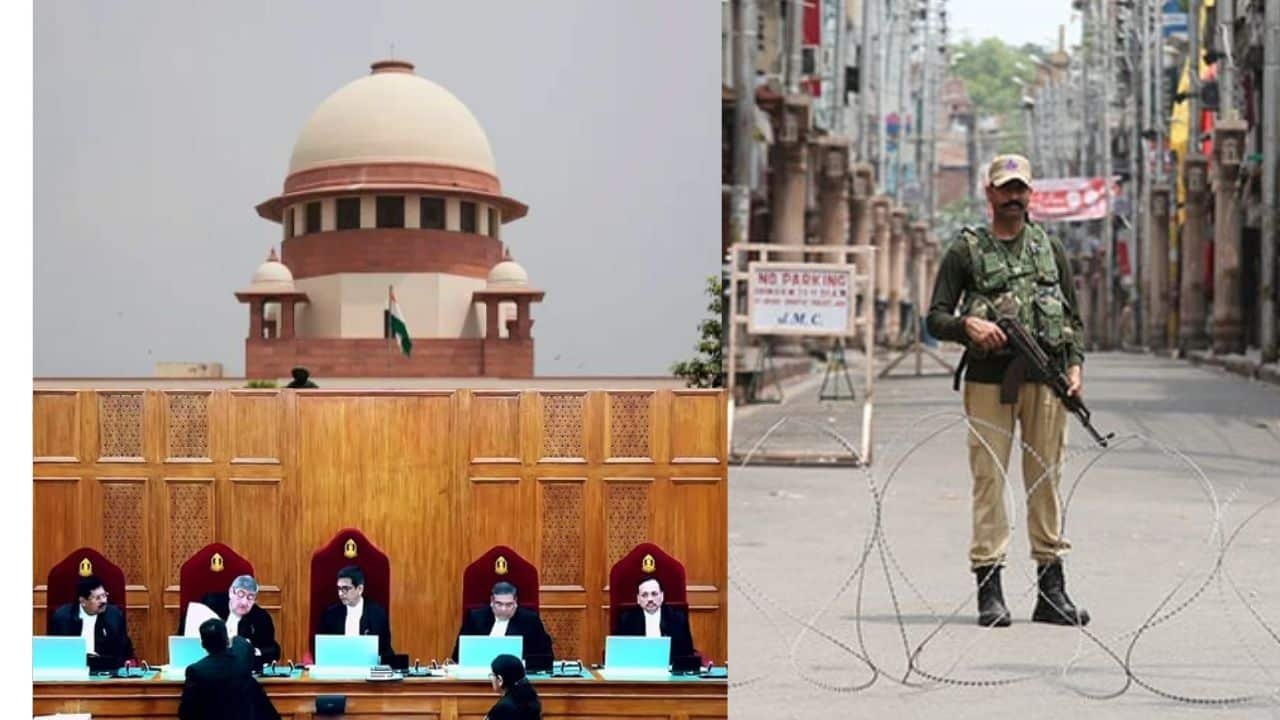
    A five-judge constitution bench, presided by Chief Justice of India DY Chandrachud, has given its verdict on the Union government’s 2019 move to amend Article 370 of the constitution, the abrogation of which ended the special status of Jammu and Kashmir.

    The decision was reserved earlier on September 5 this year, after 16 days of hearings.

    The unanimous verdict by the panel of five judges came in response to more than a dozen petitions challenging the revocation and a subsequent decision to split the region into two federally administered territories, the central government, on the other hand, had defended its action, asserting there was no “constitutional fraud” in nullifying the provision.

    Chief Justice said that Jammu and Kashmir held no internal sovereignty after accession to India. The court maintains that the president has the right to abrogate any of the articles in the Constitution. The same was carried out on August 5 2019.

    The order also declared that the reorganisation of the erstwhile state into Union Territories in 2019 was a temporary move, it directed the Centre for the restoration of statehood and for Legislative Assembly elections to be held.

    However, Justice Kaul recommended in his opinion that a Truth and Reconciliation Commission should be set up in Jammu and Kashmir, for the acknowledgement of acts of rights violations in the region.

    The revocation was one of Mr Modi’s poll promises in 2019 and the court’s decision comes months before he seeks a third term. Local politicians in the region have expressed disappointment over the order.

    Former Chief Minister Omar Abdullah posted on X (formerly Twitter) that he was “disappointed but not disheartened”. An hour later, he also posted Faiz Ahmed Faiz poem, “Dil na umeed to nahi, na kaam he to hai”.

    Meanwhile, Narendra Modi, Prime Minister of India wrote this decision is “a resounding declaration of hope, progress and unity”.

    Amit Shah, a major proponent of Hindutva supremacy and Indian Home Minister, criticised India’s first Prime Minister, Jawaharlal Nehru, on the Kashmir issue, saying in Parliament, “I say this with full responsibility that Kashmir suffered due to two blunders by Nehru. First, the ceasefire (with Pakistan) was announced when our forces were winning…before winning the whole of Kashmir. The second blunder was to take the Kashmir issue to the United Nations.”

    Today he posted on Twitter that because of this decision “separatism and stone pelting are now things of the past.”

    Asaduddin Owaisi says, ” We are disappointed by this verdict.”

    “Pakistan categorically rejects the judgement announced by the Supreme Court of India on the status of Indian Illegally Occupied Jammu and Kashmir (IIOJK),” states the statement released by the Ministry of Foreign Affairs in Pakistan.

    Caretaker Foreign Minister of Pakistan Jalil Abbas Jilani posted on Twitter that “The judicial endorsement by the Indian Supreme Court has no legal value.”

  • India seeks death penalty for Kashmir separatist Yasin Malik

    India seeks death penalty for Kashmir separatist Yasin Malik

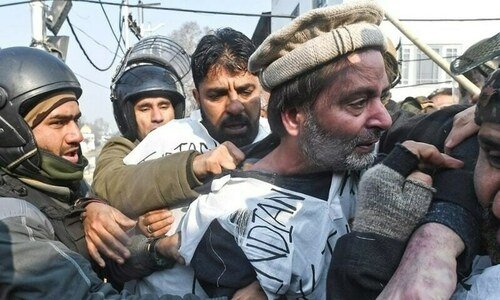
    India’s National Investigation Agency (NIA) has moved Delhi High Court, seeking the death penalty for Jammu Kashmir Liberation (JKL) Front chief Chief Yasin Malik.

    The hearing is due on Monday.

    Following the news, Yasin’s wife Mushaal, said in a tweet, “Modi wants to hang my husband but I’m afraid Modi’s actually hanging his entire political career down the drain. Don’t think this Will ever silence us”.

    Yasin was arrested in 2018, months before New Delhi cancelled the held state’s special status of Kashmir on August 5, 2019.

    Last year, Malik pleaded guilty for funding the separatist movement. He was then sentenced to life imprisonment and is currently serving time in jail.

  • ‘Strengthen and stabilise the Taliban govt, incentivise them’: PM Khan at UNGA

    ‘Strengthen and stabilise the Taliban govt, incentivise them’: PM Khan at UNGA

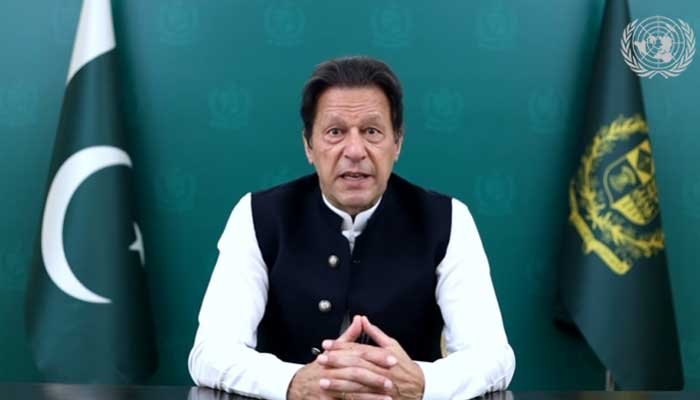
    Prime Minister Imran Khan delivered his address to the 76th session of the United Nations General Assembly (UNGA) earlier today. He said, “There is only one way to go. We must strengthen and stabilise the current government, for the sake of the people of Afghanistan.”

    “Right now the whole international community should think what is the way ahead. There are two paths that we can take. If we neglect Afghanistan right now, according to the UN half the people of Afghanistan are already vulnerable, and by next year almost 90 per cent of the people in Afghanistan will go below the poverty line.”

    “If the world community incentivises them, and encourages them to walk this talk, it will be a win-win situation for everyone. Because these are the four conditions that the US-Taliban dialogue in Doha was all about,” PM Imran Khan said.

    “You cannot waste time. Help is needed there. Humanitarian assistance has to be given there immediately. The Secretary-General of the United Nations has taken bold steps. I urge you to mobilise the international community, and move in this direction,” he said.

    ON ISLAMAPHOBIA

    The premier also discussed Islamophobia and said that the UN Global Counter-Terrorism Strategy has recognised as an emerging threat, as it increases the tendency of right-wing, xenophobic, and violent nationalists, extremists, and terrorist groups to target Muslims.

    “We hope the Secretary-General’s report will focus on these new threats of terrorism posed by Islamophobes and right-wing extremists,” the prime minister said.

    “I call on the Secretary-General to convene a global dialogue on countering the rise of Islamophobia. Our parallel efforts, at the same time, should be to promote interfaith harmony, and they should continue,” he added.

    The prime minister went on to underscore how New Delhi has also embarked “on what it ominously calls the ‘final solution’ for the Jammu and Kashmir dispute”.

    “Indian actions violate the resolutions of the UN Security Council on Jammu and Kashmir. The resolutions clearly prescribe that the ‘final disposition’ of the disputed territory should be decided by its people, through a free and impartial plebiscite held under the UN auspices,” the premier added.

    PM Imran Khan stated for the record that last February, both countries reaffirmed the 2003 ceasefire understanding along the Line of Control.

    “The hope was that it would lead to a rethink of the strategy in New Delhi. Sadly, the BJP government has intensified repression in Kashmir and continues to vitiate the environment by these barbaric acts,” the premier said.

    He said the onus remains on India to create a conducive environment for meaningful and result-oriented engagement with Pakistan.

    ON KASHMIR

    PM Imran Khan highlighted the forcible snatching of the mortal remains of the great Kashmiri leader, Syed Ali Shah Geelani, from his family, denying him a proper Islamic funeral and burial, in accordance with his wishes and Muslim traditions, as the most recent example of Indian barbarity.

    “Devoid of any legal or moral sanction, this action was even against the basic norms of human decency,” he said, adding: “I call on this General Assembly to demand that Syed Geelani’s mortal remains be allowed to be buried in the Cemetery of Martyrs with the appropriate Islamic rites.”

    The prime minister also warned of another conflict between Pakistan in India, which he said is essential to prevent. “India’s military build-up, development of advanced nuclear weapons, and acquisition of destabilising conventional capabilities can erode mutual deterrence between the two countries,” he said.

    ON CLIMATE CHANGE

    Turning his focus to climate change, he termed it one of the “primary existential threats” that the world faces today.

    ON COVID-19

    “The world is facing the triple challenge of Covid-19, the accompanying economic crisis and the threats posed by climate change.”