Tag: Japan

  • Japan introduces armpit sweat-infused rice balls

    Japan introduces armpit sweat-infused rice balls

    Sweat-infused rice balls, shaped in the armpits of young pretty girls is a surprising culinary hit in Japan.

    The rice ball snack, locally known as onigiri, is a traditional food item in Japan. The recipe has been given a culinary twist which is making waves locally and said to fetch prices as high as ten times those of regular Onigiri in certain restaurants.

    According to the South China Morning Post (SCMP), young women use their armpits to shape the balls in this new bizarre twist to the onigiri. Strict measures are taken to ensure hygiene and safety in the process. Before commencing, all ingredients and body parts that will come into contact with the food undergo thorough disinfection. The chefs then partake in physical activity to induce sweating, using their armpits instead of their hands to shape the rice balls.

    Review of the taste

    As per SCMP, a diner who tried the new version expressed that it is not different or does not have a distinctive flavour from the usual taste of rice balls.

  • Japan town begins blocking Mt Fuji view from ‘bad-mannered’ tourists

    Japan town begins blocking Mt Fuji view from ‘bad-mannered’ tourists

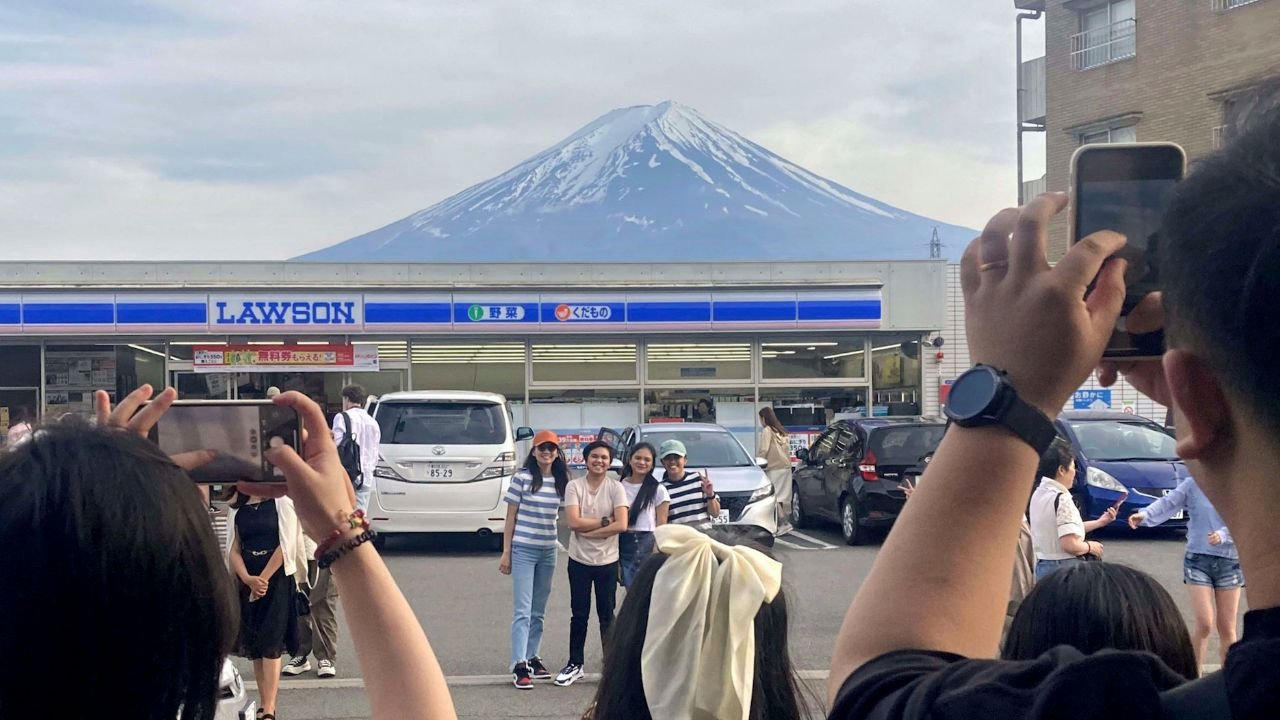
    Fujikawaguchiko (Japan) (AFP) – Work has begun in a small Japanese town to erect a barrier blocking views of the country’s most famous sight, Mount Fuji, after locals complained of bad behaviour by photo-hungry tourists.

    Fujikawaguchiko town began building panels of mesh netting at a spot where unending flows of mostly foreign tourists visit daily to take photos of the majestic mountain sitting behind a Lawson convenience store.

    Photos taken from a narrow stretch of pavement across a busy road from the Lawson store — which are ubiquitous in Japan — are widely shared online.

    Local officials and residents say while the town welcomes visitors, they need to stop tourists from continuously crossing the street, ignoring red lights, littering, trespassing, illegally parking and smoking outside of designated areas.

    “It became not uncommon for people to yell at us when we asked them to move their cars, and for them to throw their lit cigarettes (on the ground),” a dentist’s office located across the street from the Lawson shop said in a statement.

    By the middle of this month, the town plans to complete the barrier, which will stand 2.5 metres (8 feet) high and stretch more than 20 metres long to block the view of the mountain, with hopes that it will discourage tourists from loitering there.

    The town’s move has prompted national and international headlines, as Japan experiences growing problems of overtourism, particularly at popular sites like the narrow private alleys of Kyoto, and even trails on Mount Fuji itself, where tourists love to photograph themselves and post on social media.

    The Fujikawaguchiko town hall has been inundated with telephone calls from Japanese people, many of them non-local residents, who have criticised the move to block the view.

    “It is not that we do not want people to see Mount Fuji. The issue is that there are so many people who are not able to observe basic rules,” a town official told AFP.

    ‘Basic manners’

    Having the net barrier is unfortunate but perhaps necessary, area residents say.

    “We welcome foreigners for the revitalisation of the community, but there are so many violations of basic manners, like crossing the road, dumping garbage and trespassing into people’s properties,” a 60-year-old resident told AFP.

    “After all, they are here for Mount Fuji, so having that barrier is very unfortunate,” said the woman, who identified herself as Watanabe.

    “There might have been other ways to deal with it, but for now I feel it cannot be helped,” she said.

    Some tourists expressed understanding and voiced hopes that the town would create a designated photo spot.

    But others speculated that the barrier may only make matters worse.

    “Stop people? I don’t think so because when there is a will there is a way. People will just be on the left side of it or right side of it,” said 29-year-old Australian tourist Trinity Robinson.

    “There definitely will be a way to still get the shot. It will just be more dangerous, really.”

    As a possible solution, a 37-year-old local man, who gave his name as Ama, called on visitors to check out other scenic locations in the area.

    “Mount Fuji from here (near the Lawson shop) is fantastic. But there are so many other places around here where you can visit and see beautiful views,” he said.

  • He hippo in Japan zoo turns out to be a she

    He hippo in Japan zoo turns out to be a she

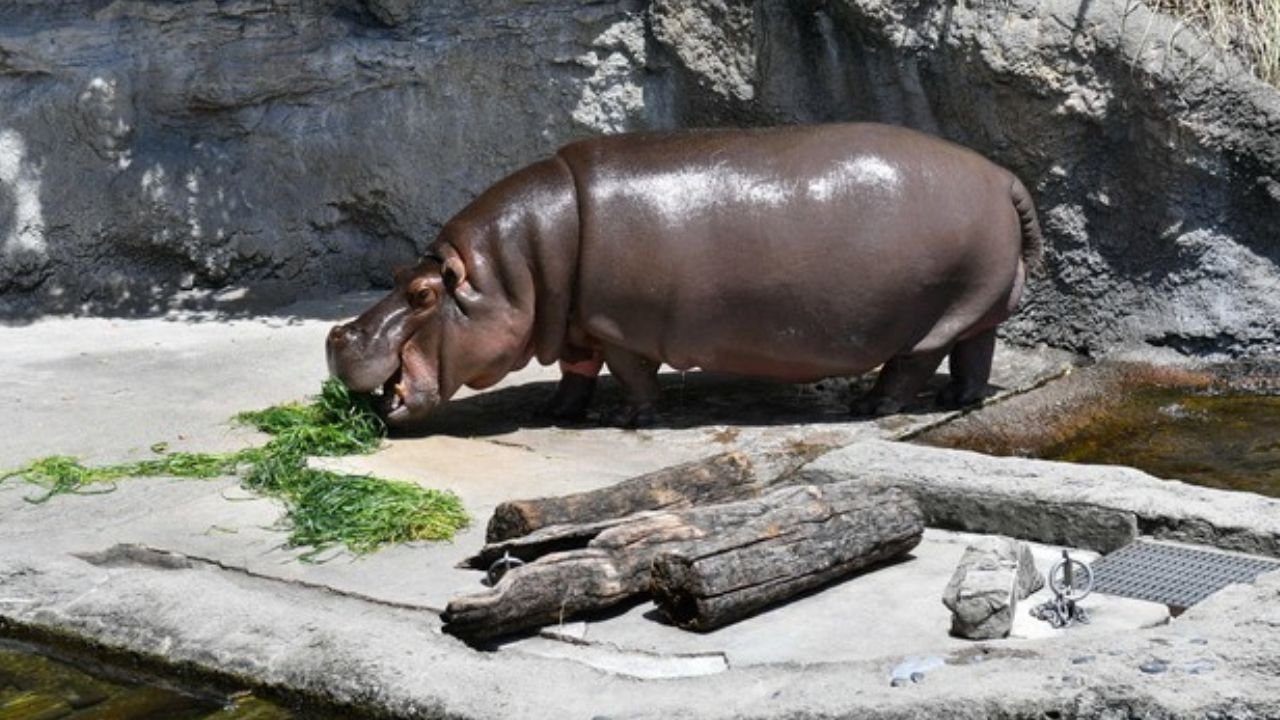
    Tokyo (AFP) – Betrayed by its DNA and unmanly toilet habits, a hippopotamus in Japan thought for seven years to be a he is in fact a she, the zoo where the wallowing giant lives said Tuesday.

    The 12-year-old came to Osaka Tennoji Zoo in 2017 from the Africam Safari animal park in Mexico, where officials attested on customs documents that the then five-year-old was male.

    But zookeepers long scratched their heads, a spokeswoman told AFP.

    In particular, Gen-chan did not display the typical male hippo behaviour of splattering faeces around while defecating — with a propeller-like tail motion — in order to mark territory.

    Nor did it make courtship calls to females and zookeepers were unable to visually identify any male genitalia, a dangerous task in such a large and potentially aggressive beast.

    “Therefore, we requested a DNA test at an external institution, and the result showed it was female,” the zoo said in a statement posted last week.

    “We will keep doing our best to provide comfortable environment to Gen-chan, so everyone, please come and see,” it said.

  • Notorious Japanese fugitive dies after 50 years on the run: media

    Notorious Japanese fugitive dies after 50 years on the run: media

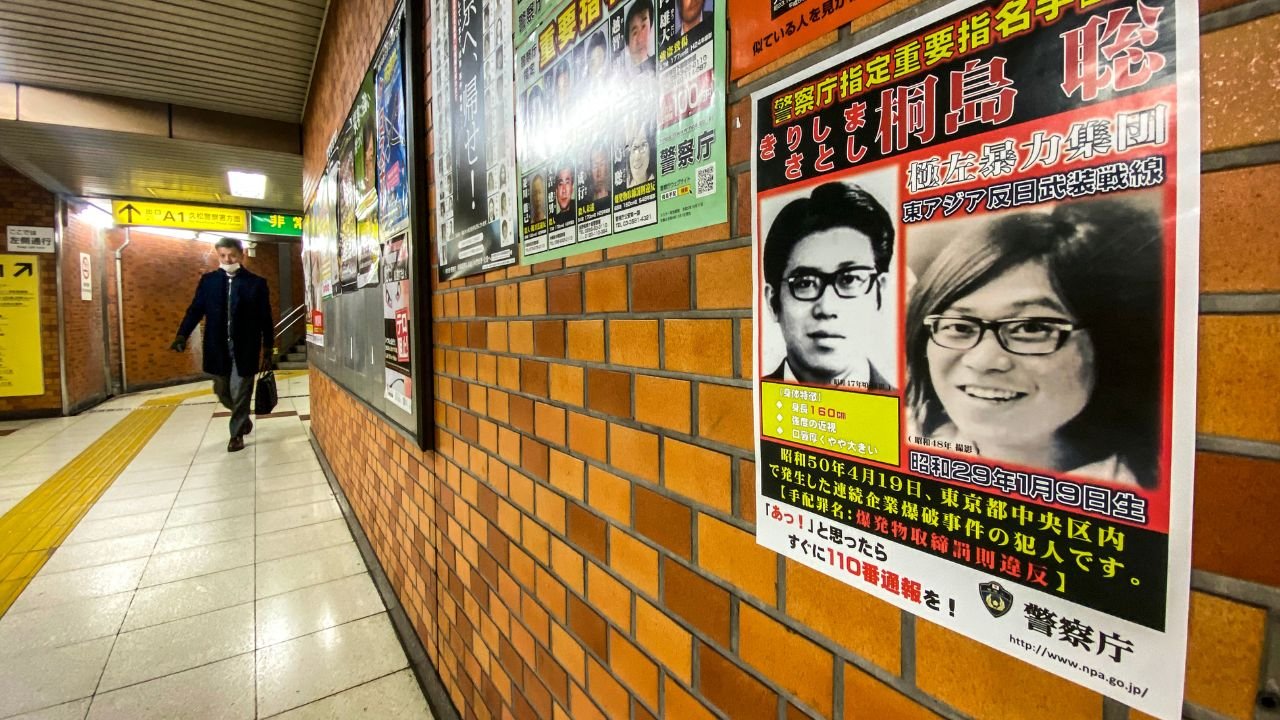
    Tokyo, Japan – Long hair, youthful smile, thick glasses slightly askew: for decades, the black-and-white photo of one of Japan’s most wanted fugitives has been a ubiquitous sight at police stations nationwide.

    But after nearly 50 years Satoshi Kirishima — wanted over deadly bombings by leftist extremists in the 1970s — reportedly died Monday, days after local media said he had finally been caught.

    Last week, the 70-year-old revealed his identity after he admitted himself to hospital under a false name for cancer treatment, according to Japanese media.

    The reports were a sensation in Japan, where his young face is so widely recognised that it has inspired viral Halloween costumes.

    But police were still scrambling to conduct DNA tests when the man believed to be Kirishima passed away on Monday morning.

    “Investigators looked into and eliminated past tips, but there is a very high possibility that this individual is actually Kirishima,” a police source told the Asahi newspaper.

    Plain sight

    Details are emerging of how Kirishima may have been hiding in plain sight for decades.

    Born in Hiroshima in January 1954, Kirishima attended university in Tokyo, where he was attracted by radical far-left politics.

    He joined the East Asia Anti-Japan Armed Front, one of several militant groups active in the era along with the once-feared Japanese Red Army or the Baader–Meinhof Group in West Germany.

    The revolutionary Armed Front carried out bombings at Japanese companies, including one at Mitsubishi Heavy Industries that killed eight people.

    It operated in three cells, with fanciful names: “Wolf”, “Fangs of the Earth” and “Scorpion” — Kirishima’s outfit.

    Under the radar

    Alongside physical descriptors on Kirishima’s wanted posters — 160 cm tall (5 ft 3), full lips, very short-sighted — is a summary of his crime.

    In April 1975, the young radical allegedly helped set up a bomb that blasted away parts of a building in Tokyo’s upscale Ginza district. No one was killed.

    He has been on the run ever since.

    TV Asahi and other outlets said he had lived a double life for years, working at a building contractor in the city of Fujisawa in Kanagawa region, under the alias Hiroshi Uchida.

    He was paid in cash and went under the radar with no health insurance or driving licence, the reports said.

    At the nondescript office where the man reportedly worked, someone who knew him told TV Asahi that the suspect had “lost a lot of weight” compared to the wanted photo.

    The man believed to be Kirishima began to receive treatment for stomach cancer under his own expense, the reports said.

    It was at a hospital in the city of Kamakura that he finally confessed that he was 70-year-old Kirishima, they added.

    Walking free

    Nine other members of the East Asia Anti-Japan Armed Front were arrested, the Asahi newspaper said.

    But two 75-year-olds are still on the run after being released in 1977 as part of a deal by the Japanese Red Army, which had hijacked a Japan Airlines plane in Bangladesh.

    Fusako Shigenobu, the female founder of the Japanese Red Army, walked free from prison in 2022 after completing a 20-year sentence for a 1974 embassy siege.

    Shigenobu’s group carried out armed attacks in support of the Palestinian cause during the 1970s and 80s, including a mass shooting at Tel Aviv airport in 1972 that killed 24 people.

    Kirishima though escaped justice, or so it seems.

    “I want to meet my death with my real name,” he told staff at the hospital, according to NHK.

    bur-kaf/stu/ser

    © Agence France-Presse

  • Japan’s moon lander back to life after ’20 minutes of terror’

    Japan’s moon lander back to life after ’20 minutes of terror’

    Japan’s Moon lander has come back to life, the space agency said Monday, enabling the craft to proceed with its mission of investigating the lunar surface despite its rocky start.

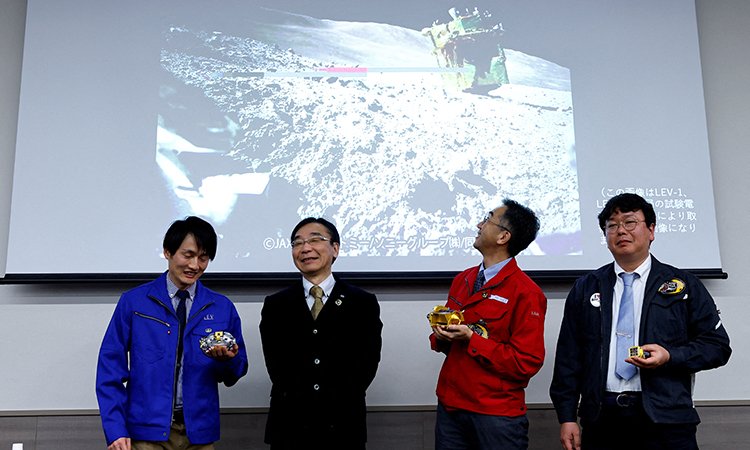
    Officials from the Japan Aerospace Exploration Agency (JAXA), smile in front of a screen showing an image taken by LEV-2 on the moon, after their press conference on SLIM’s moon landing mission, in Tokyo, Japan. Reuters

    The surprise announcement was a boost to Japan’s space programme, nine days after the Smart Lander for Investigating Moon (SLIM) touched down at a wonky angle that left its solar panels facing the wrong way.

    “Last evening we succeeded in establishing communication with SLIM, and resumed operations!” JAXA said on social media platform X, posting a grainy image of a lunar rock known as a “toy poodle”.

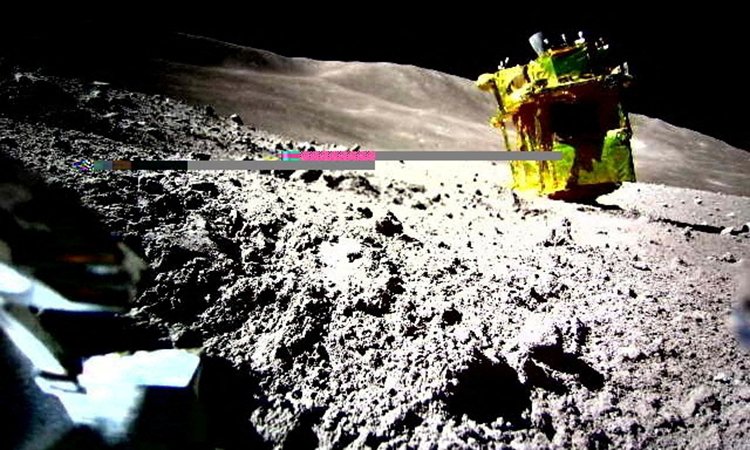
    The Smart Lander for Investigating Moon (SLIM) is seen in this handout image. Reuters

    “We immediately started scientific observations with MBC, and have successfully obtained first light for 10-band observation,” it said, referring to the lander’s multiband spectroscopic camera.

    Terrifying minutes

    SLIM’s January 20 touchdown made Japan only the fifth nation to achieve a “soft landing” on the Moon after the United States, the Soviet Union, China and India.

    But on its descent, dubbed the “20 minutes of terror”, the craft suffered engine problems and ended up at a skewed angle, images released by JAXA showed.

    This meant the solar panels were facing west instead of up, and it was uncertain if they would still get enough sunlight to function.

    Last week JAXA said it had switched the elevator-sized SLIM off with 12 per cent power remaining, hoping that the craft would wake up this week.

    A JAXA spokesman told the media on Monday that the SLIM operation resumed “presumably because power generation resumed in its solar battery as it received sunlight”.

    “We will prioritise what we can do now — observing and collecting information — rather than adjusting SLIM’s position since adjusting the position could lead to a worse situation,” he said.

    “The daytime (where SLIM is on the Moon) will last until around the end of January and it will be at night from around February,” he said.

  • Pakistani passport once again least powerful

    Pakistani passport once again least powerful

    Henley & Partners‘ Passport Index has published a list portraying the world’s travel access hierarchy.

    Top on the list of countries that encourage travelling are France, Germany, Italy, Japan, Singapore, and Spain, whose citizens can visit an astounding 194 destinations without requiring arduous visa procedures. This group of countries offer passport-to-plane experience, setting the bar high for unmatched worldwide mobility.

    With access to 193 locations, Finland, South Korea, and Sweden share second place. Many visa-free or visa-on-arrival options are available to their well-travelled inhabitants, providing access to a variety of cultures and environments.

    Austria, Denmark, Ireland, and the Netherlands take third place with access to 192 destinations. These nations serve as entry points to a wide range of travel opportunities.

    The long list goes on, honouring countries that place a high priority on global connection. Among the notable entries are the United States, Canada, Greece, Switzerland, and New Zealand, all of which provide their inhabitants with an abundance of travel options.

    On the other hand, the Passport Index identifies states with more limited travel options. Afghanistan, Syria, Iraq, and Pakistan are among the least accessible, offering their passport holders entry to just 34 countries that require no visa or one upon arrival.

    The London-based company, which offers residency and citizenship consultancy services, teamed together with the International Air Transport Association to create a unique ranking that takes into account passport holders’ access to countries without a visa or with one upon arrival.

  • Japan To Allow Male Prisoners To Use Same Skin-care Items As Women

    Japan To Allow Male Prisoners To Use Same Skin-care Items As Women

    Japan’s justice ministry next month will allow male prisoners to have face lotion and hair conditioner, which women inmates may already use, in light of changing gender norms, an official said Wednesday.

    Under previous rules, the in-prison purchase and gift acceptance of the toiletry items were allowed only for female inmates, based on the notion that those items tend to be used by women.

    But the ministry notified prisons nationwide this month that men will be able to obtain those products too under revised rules, a justice ministry official told AFP.

    “It is our view that steps are increasingly being taken in Japanese society towards eliminating unreasonable gender gaps”, the official said, speaking on condition of anonymity.

    “We felt it is necessary to treat prison inmates in a way that would better reflect the changing landscapes of outside society”, the official added.

    The new rules will take effect beginning next month, he said.

    Still, some items will remain off-limits to men, including hair bands and women’s sanitary products, the ministry said, adding shampoo and handkerchiefs have long been accessible regardless of gender.

  • Japan Literary Laureate Unashamed About Using ChatGPT

    Japan Literary Laureate Unashamed About Using ChatGPT

    The winner of Japan’s most prestigious literary award has acknowledged that about “five percent” of her futuristic novel was penned by ChatGPT, saying generative AI had helped unlock her potential.

    Since the 2022 launch of ChatGPT, an easy-to-use AI chatbot that can deliver an essay upon request within seconds, there have been growing worries about the impact on a range of sectors – books included.

    Lauded by a judge for being “almost flawless” and “universally enjoyable”, Rie Kudan’s latest novel, “Tokyo-to Dojo-to” (“Sympathy Tower Tokyo”), bagged the biannual Akutagawa Prize on Wednesday.

    Set in a futuristic Tokyo, the book revolves around a high-rise prison tower and its architect’s intolerance of criminals, with AI a recurring theme.

    The 33-year-old author openly admitted that AI heavily influenced her writing process as well.

    “I made active use of generative AI like ChatGPT in writing this book,” she told a ceremony following the winner’s announcement.

    “I would say about five percent of the book quoted verbatim the sentences generated by AI.”

    Outside of her creative activity, Kudan said she frequently toys with AI, confiding her innermost thoughts that “I can never talk to anyone else about”.

    ChatGPT’s responses sometimes inspired dialogue in the novel, she added.

    Going forward, she said she wants to keep “good relationships” with AI and “unleash my creativity” in co-existence with it.

    When contacted by AFP, the Society for the Promotion of Japanese Literature, the Akutagawa award’s organiser, declined to comment.

    On social media, opinions were divided on Kudan’s unorthodox approach to writing, with sceptics calling it morally questionable and potentially undeserving of the prize.

    “So she wrote the book by deftly using AI … Is that talented or not? I don’t know,” one wrote on X, formerly known as Twitter.

    But others celebrated her resourcefulness and the effort she put into experimenting with various prompts.

    “So this is how the Akutagawa laureate uses ChatGPT — not to slack off but to ‘unleash creativity’”, another social media user wrote.

    Titles that list ChatGPT as a co-author have been offered for sale through Amazon’s e-book self-publishing unit, although critics say the works are of poor quality.

    British author Salman Rushdie told a press conference at the Frankfurt Book Fair in October that recently someone asked an AI writing tool to produce 300 words in his style.

    “And what came out was pure garbage,” said the “Midnight’s Children” writer, to laughter from the audience.

    The technology also throws up a host of potential legal problems.

    Last year, John Grisham, Jodi Picoult and “Game of Thrones” author George RR Martin were among several writers who filed a class-action lawsuit against ChatGPT creator OpenAI over alleged copyright violation.

    Along with the Authors Guild, they accused the California-based company of using their books “without permission” to train ChatGPT’s large language models, algorithms capable of producing human-sounding text responses based on simple queries, according to the lawsuit.

  • Death Toll From Japan Quake Rises Above 200

    Death Toll From Japan Quake Rises Above 200

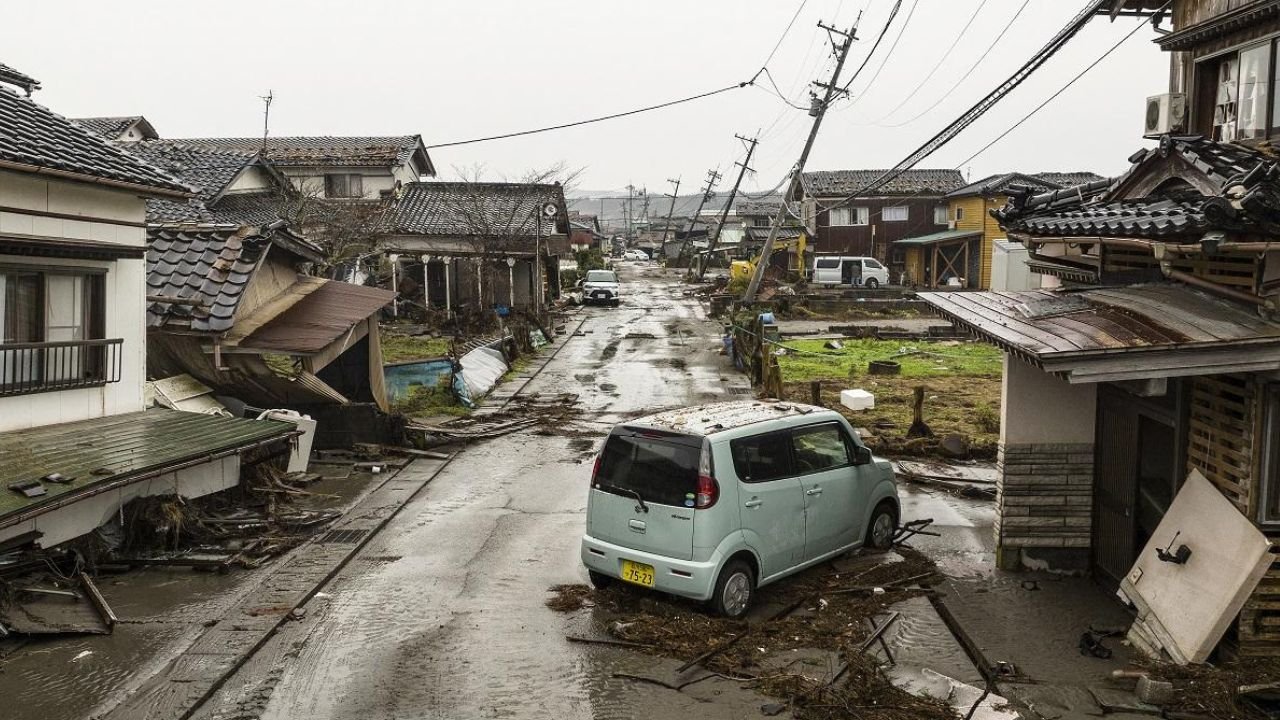
    The death toll from the powerful earthquake that flattened parts of central Japan on January 1 passed 200 on Tuesday, with just over 100 still unaccounted for, authorities said.

    The 7.5 magnitude quake destroyed and toppled buildings, caused fires and knocked out infrastructure on the Noto Peninsula on Japan’s main island Honshu just as families were celebrating New Year’s Day.

    Eight days later thousands of rescuers were battling blocked roads and poor weather to clear the wreckage as well as reach almost 3,500 people still stuck in isolated communities.

    Ishikawa regional authorities released figures on Tuesday showing that 202 people were confirmed dead, up from 180 earlier in the day, with 102 unaccounted for, down from 120.

    On Monday, authorities had more than tripled the number of missing to 323 after central databases were updated, with most of the rise related to badly hit Wajima.

    But since then “many families let us know that they were able to confirm safety of the persons (on the list)”, Ishikawa official Hayato Yachi told AFP.

    With heavy snow in places complicating relief efforts, as of Monday almost 30,000 people were living in around 400 government shelters, some of which were packed and struggling to provide adequate food, water and heating.

    Almost 60,000 households were without running water and 15,600 had no electricity supply.

    Road conditions have been worsened by days of rain that have contributed to an estimated 1,000 landslides.

    At a daily disaster-relief government meeting on Tuesday, Prime Minister Fumio Kishida instructed ministers to “make efforts of resolving the state of isolation (of communities) and continue tenacious rescue activities”.

    Kishida also urged secondary evacuations to other regions outside the quake-hit area, top government spokesman Yoshimasa Hayashi told reporters.

    In Ishikawa prefecture’s city of Suzu, a woman in her 90s managed to survive five days under the wreckage of a collapsed house before being saved on Saturday.

    “Hang in there!” rescuers were heard calling to the woman, in police footage from the rainy scene published by local media.

    Not all were so lucky, with Naoyuki Teramoto, 52, inconsolable on Monday after three of his four children’s bodies were discovered in the town of Anamizu.

    “We were talking of plans to go to Izu,” a famous hot spring resort, after his daughter passed her high school entrance exam, he told broadcaster NTV.

    Japan experiences hundreds of earthquakes every year, though most cause no damage because of strict building codes in place for more than four decades.

    But many structures are older, especially in rapidly ageing communities in rural areas like Noto.

    The country is haunted by the monster quake of 2011 that triggered a tsunami, left around 18,500 people dead or missing, and caused a nuclear catastrophe at the Fukushima plant.

  • Japan quake death toll rises to 92, missing 242

    Japan quake death toll rises to 92, missing 242

    Anamizu (Japan) (AFP) – The death toll from a devastating earthquake in central Japan rose to 92 on Friday, regional authorities said, with the number of missing jumping to 242.

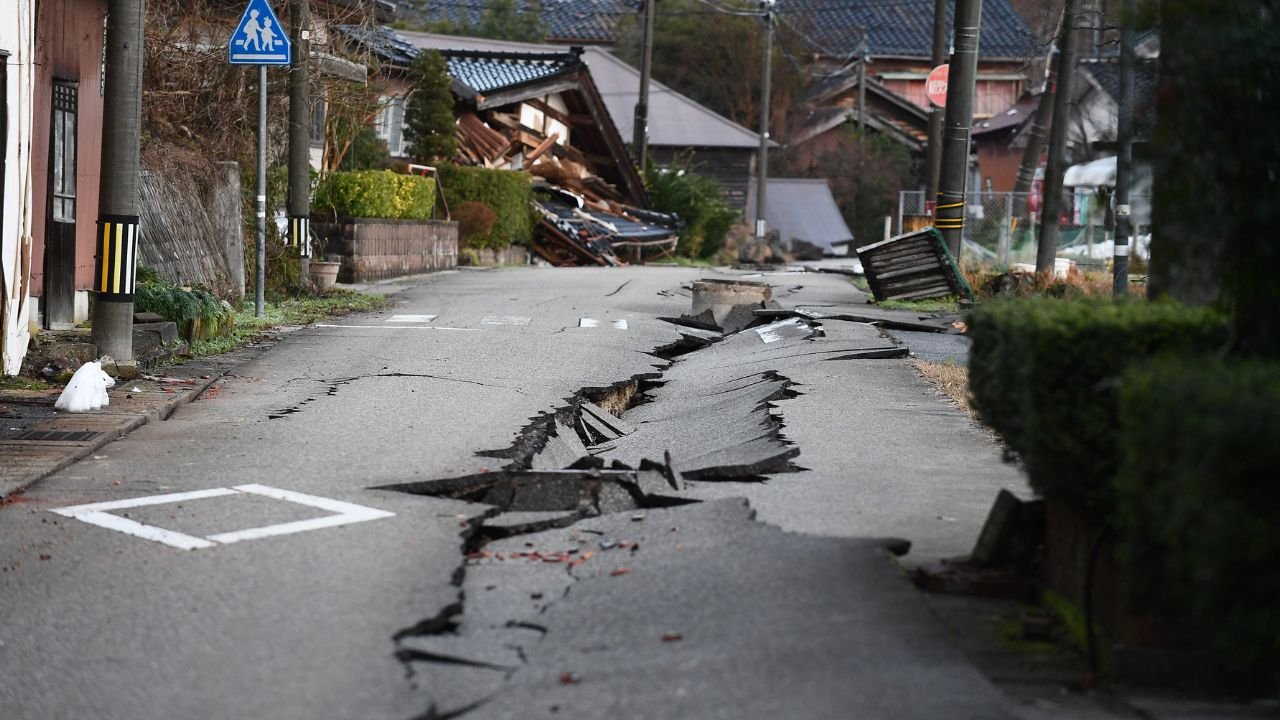
    Two elderly women were pulled from the rubble, but hopes of finding other survivors faded as thousands of rescuers raced against the clock four days after the 7.5-magnitude quake on New Year’s Day.

    Thousands of rescuers from all over Japan have been battling aftershocks and roads littered with gaping holes and blocked by frequent landslides in the Ishikawa region to reach hundreds of people in stranded communities.

    On Thursday afternoon, 72 hours after the quake, the two older women were miraculously pulled alive from the remains of their homes in Wajima, one of them thanks to a sniffer dog called Jennifer.

    The port city of Wajima on the Noto Peninsula was one of the worst hit, with a pungent smell of soot still in the air and faint columns of smoke visible from a huge fire that destroyed hundreds of structures on the first day.

    “I was relaxing on New Year’s Day when the quake happened. My relatives were all there and we were having fun,” Hiroyuki Hamatani, 53, told AFP amid the burnt-out cars, wrecked buildings and fallen telegraph poles.

    “The house itself is standing but it’s far from livable now… I don’t have the space in my mind to think about the future,” he told AFP.

    Grief

    The powerful main tremor, followed by hundreds of aftershocks, injured at least 330 people, local authorities said.

    Around 30,000 households were without electricity in the Ishikawa region, and 89,800 homes there and in two neighbouring regions had no water.

    Hundreds of people were in government shelters.

    The Suzu area was also devastated, with fishing boats sunk or lifted like toys onto the shore by tsunami waves that also reportedly swept one person away.

    Noriaki Yachi, 79, fought back tears after his wife was pulled from the rubble there and confirmed dead, the Asahi Shimbun daily reported.

    “My life with her was a happy one,” Yachi said.

    Earthquakes have hit the Noto region with intensifying strength and frequency over the past five years.

    The country is haunted by a massive 9.0-magnitude undersea quake in 2011, which triggered a tsunami that left around 18,500 people dead or missing.

    It also swamped the Fukushima atomic plant, causing one of the worst nuclear disasters in history