The renowned fast food chain McDonald’s has opened an automated outlet in Texas, which is a first of its kind. The restaurant allows customers to order food without requiring a kiosk or a smartphone app.
Without any human interaction, customers will get their orders on the conveyor belt. The restaurant lacks any seating or set-ups for eating inside since it is meant to be a “grab and go” outlet.
This unique McDonald’s is smaller than other McDonald’s, and the restaurant’s primary objectives are to improve accuracy and order speed. Instead of waiting and ordering at the restaurant, guests can place their orders before they arrive.
The business claimed to be creating fresh approaches to provide clients with faster, more effective service.
Although there are still people working in the restaurant to prepare the food, the new approach only eliminates client interaction. According to the restaurant’s franchisor, Keith Vanecek, the new strategy enables the restaurant team to focus more on order speed, enhancing the effectiveness and enjoyment of both the customer and employee experiences.
The food chain has, however, come under heavy fire for automating the process since it would harm people’s jobs. At $7.25 per hour, Texas’ minimum wage is one of the lowest in the country. Additionally, reducing employment in such a situation scares those who are already wary of automation and robots taking jobs away from people.
Many individuals opposed the plan and posted their opinions and personal experiences on social media.
This McDonalds is “fully automated” in the same way an automat or dumb waiter is fully automated: they’re designed to hide the (poorly paid) human labor and make it look like your food appears out of nowhere. https://t.co/C82KkkMTVV
Please, unless people boycott this, expect your livelihoods to be made redundant in the future. Supporting this is supporting the future demise of JOBS FOR HUMANS.
A Twitter user said that it would result in the elimination of jobs for restaurant employees. Another user said that after speaking with Google and Siri, he now needs to communicate with yet another robot.
While McDonald’s believes that the strategy will improve the consumer experience.
The Pakistan Institute of Development Economics (PIDE) found that 62 per cent of the male population of Pakistan aged between 15 to 24 years wants to leave the country. The survey reveals that slightly more people in urban Pakistan (40 per cent) than in rural Pakistan (36 per cent) desire to leave the country.
The question we need to ask is: why do these young men have a desperate urge to leave Pakistan?
The thing which is most striking in this scenario is that they are young boys and have a full life ahead of them. Yet the need to leave? The only thing that might make sense is that these young individuals want a better lifestyle and for that they need better opportunities. They want a better chance at life itself. Unfortunately in Pakistan, there are hardly any opportunities available for our younger generation. With a struggling economy, these educated youngsters with college and university degrees are unable to either find jobs in the first place and if they do, those jobs hardly pay well. With rising inflation, it is already difficult to make ends meet for most people but with no jobs in the market, the younger generation’s disillusionment and disappointment with the country is understandable.
Life in Pakistan is a struggle for everyone now. People want to leave the country to carve out a better financial future for their families. They choose to be away from family, leave their comfort and not live in their own homeland just to ensure that their next generation’s future is secure.
Pakistan takes pride in its men and women. Yet there is so little the governments have done to improve the quality and standard of the people’s lives. How hard will it be to provide a place filled with opportunity, a strong education system and a strong economy. Is the youth asking too much for survival? Or is it just the bare minimum? From what we see, it’s the bare minimum. Our governments and leaders have an obligation towards the youth. To provide and nurture them. To give them the belief that their motherland holds them near and dear, so that they can grow and become successful in life.
Despite trying, we are failing the youth. Maybe the problem lies somewhere else. The younger generation deserves leaders who are genuinely willing to invest in their people. We hope the future is better for the young men and women. May they always choose their country above anything else in life. May Pakistan not let the dreams of the young shatter.
Due to the widespread shortage of poultry feed, poultry farmers and traders are worried that the supply of chicken and eggs may run out in a month.
At an urgent press conference held at the Karachi Press Club, Chaudhry Ashraf, the central chairman of the Pakistan Poultry Association, former chairman Ghulam Khaliq, Sindh-Balochistan zone chairman Saleem Baloch, and others expressed their grave concerns regarding the non-clearance of soybean shipments that had been stopped at Karachi Port.
According toExpress Tribune, soybean and canola appear to be the two main ingredients in poultry feed, according to poultry owners. More than six lakh tonnes of soybeans that have not been authorised for export are currently at the port.
Additionally, in conjunction with the purchase of soybeans, poultry owners have paid importers more than $44 million. In order to restart the feed supply to the nation’s poultry sector, the ministry of food security and other ministries should right away resolve their conflict with soybean importers and issue orders for the clearance of soybeans at the port.
Presently, poultry owners in Pakistan generate 3.5 million eggs each day from 3.8 million chickens. If the problem of feed supply for the poultry industry is not immediately addressed, there is a potential that the supply of chicken and eggs may stop within a month.
More than 50 per cent of the poultry business is currently closed. If this sector is entirely shut down, which would result in the loss of nearly 2.5 million jobs, there will be a greater risk of food insecurity in the country.
Due to an upsurge in complaints about teachers’ absences, Khyber Pakhtunkhwa (KP) has deployed artificial intelligence (AI)-based video systems in schools to monitor students’ and teachers’ live attendance.
According to Zarif-ul-Mani, MD of the Elementary Schools Education Foundation (ESEF), the AI-based attendance system in the foundation schools would uphold the standard of instruction and improve student performance.
He also described how the School Management Information System (SMIS) works to guarantee quality, accountability, and a simple transfer of scholarship cash to partners.
He also commended the ESEF’s e-governance division for reviving this project, which had been mismanaged in the past.
Additionally, the project would reduce dropout rates while guaranteeing that professors are present and that classes start on schedule.
Prior to that, the government of Sindh made the decision to take strong action against teachers who were getting their wages while staying at home and neglecting their jobs.
The provincial education agency reportedly stopped more than 2,000 “ghost teachers” being paid across the province.
According to Express Tribune, Akbar Laghari, the education secretary for Sindh, said in a statement on the choice that they have filed a letter to the AG for Sindh asking him to cease paying the wages of 2,019 ghost teachers.
He added that the department would fire the “ghost teachers” and would do everything it took to ensure that teachers showed up for work.
Owing to a fast-changing job market and increased competition for qualified professionals, it is getting harder to find and keep the best talent in the IT sector.
Organizations look for individuals with renowned credentials that confirm their expertise and capacity as the skills gap threatens to negatively affect enterprises in crucial fields like cloud computing, data science, and cybersecurity.
Since they have obtained credentials regarded as reliable affirmations of their abilities, these qualified professionals typically have more clout in the market.
The certifications below are among those with the highest salaries recorded in the IT sector for professionals.
AWS Certified Solutions Architect Professional
In this position, you design, implement and maintain sophisticated Amazon Web Services cloud architecture. AWS advises two or more years of practical experience with a scripting language, as well as proficiency with Windows, Linux, and numerous AWS services, for you to earn this kind of certification.
Certified Information Security Manager
You manage, plan, and evaluate an organization’s information security in this position. A particular level of proficiency in information security governance, information security risk management, information security programme, and incident management is required for certification. You must have at least five years of professional experience in a number of distinct fields before you can sit for the exam.
Google Cloud Professional Cloud Architect
You must be able to oversee the deployment of Google Cloud services, as well as establish the infrastructure and enhance procedures, in order to earn this sort of credential. Additionally, candidates for this certification should have at least three years of professional experience, including at least one year of solution design and management in Google Cloud.
Certified Information Systems Security Professional
This certification is comparable to receiving a master’s degree in IT security because it evaluates your capacity to plan, carry out, and oversee a cybersecurity initiative. In order to do so, you must have at least five years of relevant work experience in two or more of the CISSP domains, such as security and risk management, security architecture and engineering, identity and access management, security assessment and testing, and software development security.
AWS Certified Solutions Architect Associate
This certification is intended for cloud architects with experience creating fault-tolerant and cost-effective systems on AWS and serves as a prerequisite for the AWS Certified Solutions Architect Professional badge. Deep coding expertise isn’t required, however candidates should be comfortable with the AWS Well-Architected Framework and at least the fundamentals of programming.
Many Pakistanis prefer working for the government over the private sector since a government job not only offers job stability but also other incentives that encourage people to work for the government.
People from middle-class households typically favour working in the government. We have addressed the benefits that favour government jobs for career advancement because there are some benefits that the private sector does not provide.
Here are some advantages of government jobs:
Working hours
The benefit of choosing government employment over the private sector is the flexible work schedule. In contrast to positions in the private sector, when employees are occasionally required to work a little bit extra, occupations in the public sector have set working hours. However, in some government agencies, working overtime is required without compensation.
Job security
The biggest benefit of working for the government is job stability. And there is no job security in the private sector. In contrast, there is very little chance that any government official will lose his or her job.
Employees in the private sector are displaced like houseflies because this perk is only available to those working in government sectors.
Promotions
Another crucial element in the public sector is the promotional benefit. Promotion in government positions is always contingent on how well and how long you work. However, this can occasionally be both a benefit and a drawback because someone who is above average may not be able to develop as quickly as his typical counterparts.
Benefits and perks
Next in the government sector are the perks and rewards. As a result, the government sector offers a wide range of benefits, including pension plans, retirement benefits, health care, housing loans, and childcare, among others. However, several significant private sector enterprises do provide such advantages.
In the government sector, however, retirement becomes crucial since it guarantees the longevity of a person’s career.
The government sector, as we’ve seen above, has set working hours. Therefore, these hours will result in reduced work-related stress. The best time frame to finish the work on time and in the best way is offered by government jobs, which is not available in the private sector.
Respect
Along with all these advantages, working for the government increases respect. Everyone will treat you with respect if you work for the government because of your authority and position.
Salary increments
The other best perk of working for the government is, of course, wage increases. As a result, your compensation will rise without regard to how well you perform. So this is fantastic if you are an average performer.
These multiple advantages provided by government employment may provide you a competitive advantage over the private sector. A government career is the ideal option, though, if you are considering doing something exceptional in the future and need job fulfilment.
Where to apply?
There are currently hundreds of job vacancies on the websites below:
These websites allow interested applicants to submit applications for several Pakistani government job positions. Numerous openings, from entry-level to senior-level ones, are listed on these websites.
Applying for posts in the following categories is possible: BPS-01, BPS-04, BPS-05, BPS-09, BPS-11, BPS-14, BPS-15, EVP/SEVP, G-1, G-2, G-3, G-4, Grade-10, Grade-11, Grade-12, MP-I, MS-VIII, PPS-10 and PPS-12.
People who live in Punjab can apply for the most recent positions that the Punjab Government has posted, including those in the departments of planning and development, energy, and health care, by visiting Punjab Jobs Online.
A number of ‘once dedicated’ corporate workers are taking matters into their own hands and taking more control over their professional future. They are switching to freelancing, either by reskilling and going in a completely other direction, or by performing the same tasks for numerous clients as they did for a single company previously.
For those who don’t know, the internet economy is expanding quickly and in 2020 it produced 17 million jobs in the US alone. The consumer takeaway Whether you use the internet for a side business or a full-time career, you can do pretty much anything online, including earning good money.
According to Forbes, every month since the spring of 2021, four million American employees have left their jobs.
Here are 10 high in-demand skills that can help you earn well online:
Web Development
Web development is one of the best skills to master to earn money online because it is in high demand and there are numerous methods to capitalise on your expertise. It can be learned through online classes, boot camps, or even independent study. And if you’re excellent at it, you might be able to make a lot of money; hourly fees for web developers working as freelancers range from $10 to $80.
Graphic Designing
Learning Adobe Illustrator is a terrific approach to start working online and making money. This is helpful because almost everyone who manages a website, creates their own website, or engages in online activities like advertising, creating YouTube videos, etc. will eventually require some design work done. And learning this skill takes more than a few days. It does require some commitment, but it is easily accomplished.
It should be a no-brainer for you to choose to learn how to utilise Illustrator, Photoshop, and InDesign if you have the aptitude for design and illustration. Additionally, installing AdobeSuite on your PC is crucial.
Since people are more drawn to compelling pictures than to simple texts, graphic designers are always in demand.
Every business needs art of some kind, whether it’s for creating their corporate identity (logos, brands, etc.), selling their goods or services (websites, brochures, etc.), or connecting with customers (ads, promos, etc.).
Even without a college degree in fine arts or visual communications, you can succeed in this industry if you are creative, passionate, and competent at designing.
Photography
You can learn Photography for free by taking a variety of online courses and watching videos on YouTube. This will enable you to take photos that are more inventive, captivating, and distinctive. From street photography to images of food and animals, practically any form of photograph may be sold online. Alamy images typically sell for $75 each, although their prices can range from $17 to $416 depending on their intended usage.
Audio Editing for Podcasts
From a niche trend for tech-savvy individuals, podcasts have grown to become a mainstream phenomenon with a market value in the tens of millions of dollars. As a result of that money, many people have expressed a desire to launch their own podcasts; however, the majority of people lack the skills necessary to independently edit audio, which is where you come in.
You can improve another person’s audio so that their listeners won’t provide them negative feedback. There will always be a need for your services because podcast listeners routinely voice unhappiness with the sound quality.
Voice Modulation
One of the most lucrative skills to acquire to earn money online is voice modulation. The marketplaces for voice actors, narrators, and other professionals are those that still need to be explored. For the recording of audiobooks, narrative narration, videos, etc., voice actors are required. On internet job boards, there are many positions that specifically require this talent.
Social Media Marketing
Planning and overseeing a brand’s social media strategy across a variety of channels will be your role as a social media marketer, according to Jensen. Any company that doesn’t leverage social media’s power will lose out on brand-building opportunities as customers use social media platforms at an increasing rate. Social media marketing is growing in popularity as a result. If you are knowledgeable about the mechanics of how social media works, learning this skill could be a great idea.
Web Scraping and Data Entry
All you need for the job is a basic understanding of using Microsoft Office (Word, Excel, etc.) or its equivalent in Google Drive and other open sources, aside from diligence and attention to detail. Of course, you also need to know how to use the internet.
The straightforward procedure of web scraping entails conducting online research for clients and compiling the results on a worksheet. Many businesses compile data about their target markets, including contact information (phone numbers, email addresses, websites, Linkedin and other social media profiles, etc.). They can now send business proposals, even ones that are personalised, to the appropriate recipient.
For this skill to be mastered, no college degree is necessary. In reality, data encoding allows even high school dropouts to support themselves.
Creative writing
You can definitely earn a life writing if you have the talent for it. This is a talent that you begin developing in elementary school and just keep honing as you advance academically.
Therefore, by the time you earned your high school certificate, you ought to be able to write essays and other types of literary works without much difficulty.
After that, there are several ways to develop writing skills, like enrolling in classes, reading books and other materials, watching online tutorials, and, of course, writing. When you reach a particular level of expertise, you’ll find that there are many chances available to you online and even outside of the virtual environment.
Proofreading and Editing
Of course, having writing skills is required for this position. It’s similar to how you cannot adjust a swimmer’s strokes if you do not yourself know how to swim properly.
Simply identifying and fixing grammatical, typographical, and spelling mistakes in someone else’s writing is proofreading.
On the other hand, editing may entail rewriting sentences or even paragraphs to increase readability, eliminate repetitions, and improve the flow of ideas.
The two may not be identical, but they do kind of overlap. Thus, they might constantly expect you to perform both tasks when they hire you to do one or the other.
Vlogging
Consider vlogging if you have the gift of gab rather than the inclination to write or design.
Using video creation and editing software as well as online resources for free video and audio samples, you may make engaging YouTube content even if you lean more toward the introverted side of things.
Developing a sizable audience is the key to making your material interesting to sponsors and marketers. Alternatively, you might sell this skill to businesses that want for a popular internet video to advertise their products or services and raise brand recognition.
Even if you largely rely on freelance markets to identify and work with clients, you will still attract a lot of potential clients by being active on LinkedIn. Every month, set aside a few hours to update your profile with recent samples of your work, ask former clients for references and recommendations, establish new relationships, and reply to job advertisements for contract work.
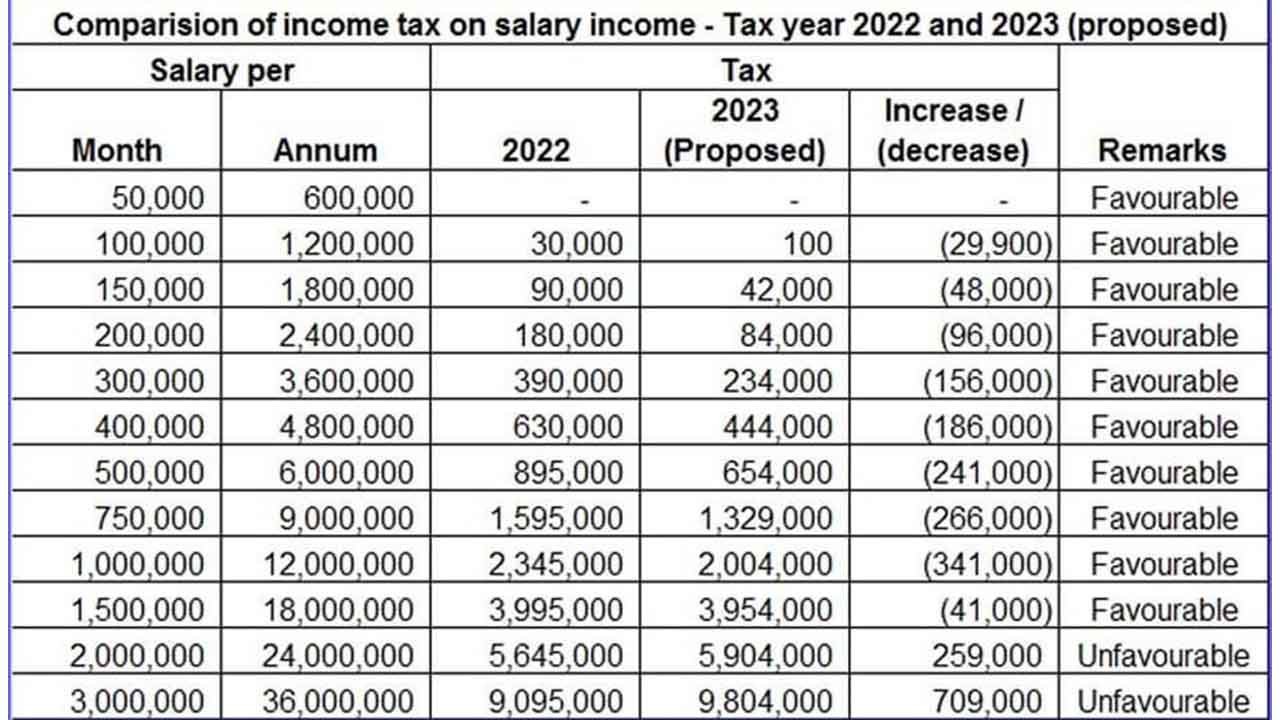
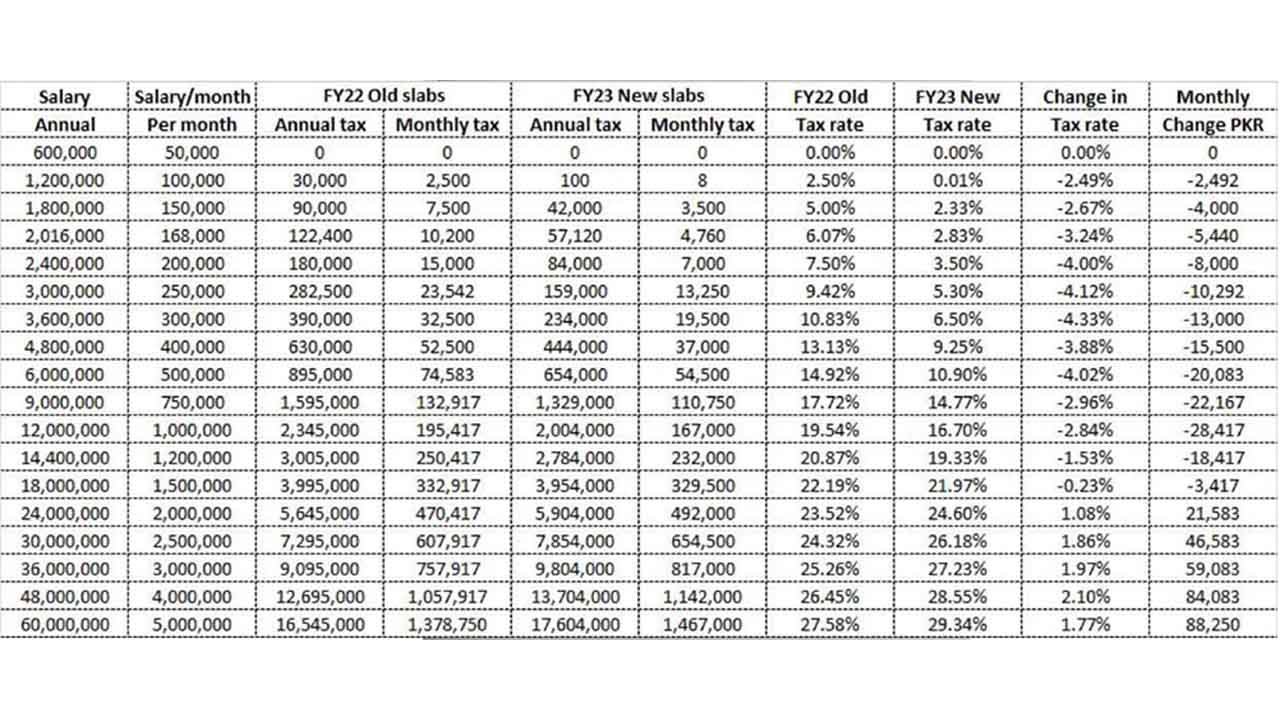
In the budget for fiscal year 2022-23, the government has exempted those earning up to Rs100,000 per month from paying income tax, up from Rs50,000 last year.
For the salaried income group, the latest budget is a mishmash as the government reduced tax rates and the number of slabs while eliminating available credit through the omission of deductible allowance for profit on debt and tax credit for investment in shares, health insurance, and pension funds.
Moreover, the government has released a revamped list of income tax brackets for salaried employees. There were previously 12 slabs, which have now been shrunk to seven.
Here are the new slabs:
For annual incomes less than Rs600,000 (below Rs50,000 per month)
For a yearly income of Rs600,000-Rs1.2 million (Rs50,000 to Rs100,00 per month).
For annual earnings of Rs1.2m-2.4m (Rs100,000 to Rs200,000 per month)
For annual earnings of Rs2.4m-3.6m (Rs200,000 to Rs300,000 per month)
For earnings of Rs3.6m-6m (Rs300,000 to Rs500,000 per month)
For annual earnings of Rs6m-12m (Rs500,000 to Rs10,00,000 per month)
For annual earnings of more than $12 million (more than $100,000 per month), income tax is not to be levied on people earning between 0 and Rs600,000 per year (where income from salary exceeds 75 per cent of taxable income). A nominal amount of Rs100 will be subtracted per year from those earning between Rs600,000 and Rs1.2 million.
Employees getting paid more than Rs1.2 million but less than Rs2.4 million per year will be levied 7 per cent of the amount that exceeds Rs1,200,000 in the third slab.
An employee getting paid Rs1,400,000 per year will be levied 7 per cent of Rs200,000 (Rs1,400,000 minus Rs1,200,000 since that is the amount exceeding Rs1,200,000).
As per the latest budget resolution, the government recommended an income tax rate of 20 per cent on small business earnings, 42 per cent on banking, and 29 per cent on related companies.
Pakistan’s Economic Survey 2021-22 reveals that the textile industry expanded by 3.2 per cent during July-March in fiscal year 2021-22, compared to 8 per cent in the same period last year, demonstrating a considerable setback in progress.
The poundage of the textile sector has declined from 20.9 to 18.16 per cent in QIM 2015-16, but it remains the highest among all LSM sectors, according to Brecorder.
Woolen segment production grew the most, with a 38.9 per cent increase in blankets, a 27.9 per cent increase in woollen and carpet yarn, and a 19.1 per cent increase in woollen worsted cloth. Yarn and cloth production increased by 0.7 per cent and 0.3 per cent, respectively.
Congruent production units, invariant capacity and elevated cotton prices owing to demand and supply gap disruptions have moderated the growth momentum of the cotton sector, stated the Economic Survey 2021-22 document, unveiled by Finance Minister Miftah Ismail.
“Depreciation of PKR restrained the production of jute, as most of the raw material is imported from Bangladesh. However, surge in imports of textile machinery, rising demand for concessionary financing from textile firms and high exports of this sector showing a sizable improvement in the textile sector,” it added.
With a weight of 6.08 in the LSM, wearing garments has been detached from the textile sector. It grew by 34 per cent compared to 35.6 per cent compression.
The sector has been growing traction both locally and internationally, with garment production increasing by 34 per cent during the time frame. Garment exports have also increased by 33.9 per cent in aspects of volume.
Textile is Pakistan’s most valuable manufacturing sector, with the widest production chain and intrinsic value addition ability at each point of the process, from cotton to ginning, spinning, fabric, dyeing and printing, made-ups and garments.
This sector accounts for well almost one-fourth of industrial value addition and employs approximately 40 per cent of the industrial workforce. Textile products have maintained an average share of about 61.24 per cent in national exports, excluding seasonal volatility.
In the meantime, knitwear exports decreased by 4.8 per cent in quantity while increasing by 34.1 per cent in value during the period under review. Towel exports totaled $819.6 million, up from $692.1 million, representing an increase of 18.4 per cent in value and 5.1 per cent in quantity.
The ready-made garment industry has surfaced as a crucial small-scale industry in Pakistan, and it is a good source of providing employment opportunities to many people with a very low capital investment. Exports increased by 33.9 per cent in quantity and 26.2 per cent in value from 27.8 million dozen to 37.3 million dozen worth $2.8 billion, up from $2.27 billion in the same period last year.
Meanwhile, Pakistan exported synthetic textile fabrics worth $343.59 million in comparison to $269.20 million in the same period last year, representing a 27.6 per cent increase. In terms of volume, synthetic textile exports fell by 33.6 per cent.
The ceremony was also attended by Ahsan Iqbal, Minister of Planning, Development, and Special Initiatives, Khurram Dastgir, Federal Minister of Power, and Aisha Ghaus Pasha, Minister of State for Finance and Revenue.
Furthermore, the survey underscored the key features of the government’s policies aimed at restoring macroeconomic stability and putting the economy on a growth path. Addressing the launch event, Miftah Ismail stated that the government has avoided a default due to the difficult decisions made by the current administration. He said that the country is now on the path of stability.
Airlift Technologies, a national grocery delivery service, has laid off 31 per cent of its workforce.
The company posted a statement on its official LinkedIn account confirming the layoff of its workforce; “In the light of the significant downturn in global capital markets, Airlift is undertaking a strategic realignment to reduce the surface area of operations and to increase focus in key areas that drive sustainability and profitability.”
“The decision to part ways with talented teammates has been incredibly challenging for the company. For impacted teammates, Airlift stands committed to providing financial and placement support to help find new roles,” the statement read.
Quick commerce startup Airlift closes down all cities apart from Karachi, Lahore and Islamabad, lays off 31% staff. pic.twitter.com/hSM8Cz3kYE
Usman Gul, the 33-year-old co-founder, and CEO commented on the company’s decision to permanently shut down, saying, “I think if the lens of change is ‘Did Airlift offer great returns to investors?’ then yes, regrettably, it was unsuccessful. If you’re talking about bringing Pakistan into a new reality or altering the entire ecology, then by that yardstick of success, we’ve come a long way,” Gul told Rest of World.
“In many ways, Airlift raised the bar of ambition for Pakistani startups in a big way. Our teams at Airlift redefined the standard of execution, strategy, building a world-class culture, developing a cutting-edge product, raising sizable fundraising rounds,” Gul continued.
What is the point of raising the greatest series B in the nation if the business fails 11 months later? Gul believed that these were improper inquiries when questioned about the $85 million that Airlift blew through in less than one year. He said that the appropriate questions to ask were: “What enabled Airlift to raise $100 million-plus in three years? That’s never happened in Pakistan before. What did this team do differently?”
Airlift was started in 2019 by Usman Gul, Ahmed Ayub, Awaab Khaakwany, Meher Farrukh, Muhammad Owais, and Zohaib Ali as a mass-transit option that connected consumers with buses at reduced costs. Due to the pandemic, Airlift’s transportation operations were halted in March 2020. During the covid pandemic, the company then pivoted its business plan and launched Airlift Express, a grocery delivery service with $10 million in investment. Airlift, last year in August, secured a mega-round of funding of $85 million dollars.
A former Airlift employee described the layoff as “shocking, unexpected, and heartbreaking.”
WHAT FINANCIAL EXPERTS THINK HAPPENED AT AIRLIFT
Ariba Shahid, Financial Journalist at Profit Magazine and DealStreetAsia, while talking to The Current about the layoffs at Airlift, said, “While downsizing is sad considering people lose their livelihoods, sometimes young startups need to scale back operations, recalibrate and start differently or fresh,” adding “In order to do so, they sometimes downsize. There is nothing wrong in doing so. I don’t think any business downsizes unless it’s absolutely necessary.”
Taking about the reason behind the layoffs Ariba added, “There are a number of ways to look at it. One likelihood is that Airlift’s funding was contingent on it attaining milestones. So maybe, they did not get the entire $85 million.”
“The other scenario is that they burned through approximately $10 million a month in customer acquisition costs and expansion. It is difficult for consumers to change their consumption pattern and move onto quick commerce. It also costs a lot to expand and grow, especially internationally, like Airlift did in South Africa. The macroeconomic environment with rising inflation and diminishing purchasing power makes it even more difficult.”
“Airlift was one of the bigger names in the ecosystem. The same way Airlift was used as an example while raising funds, it may be seen as a warning sign. However, the global liquidity crunch plays a bigger role at this point in time, in addition to Pakistan’s weakening macroeconomic sentiments.”
“There is no right or wrong way to run a startup at this point because the ecosystem is very nascent. There are no examples locally to follow. However in order to succeed startups need to ensure they are clean, transparent, do not fudge numbers, accept realistic valuations, stop obsessing over large rounds, and know when to stop blitz-scaling,” she added, talking about Pakistani startups.
While answering a question about the situation of Pakistan’s job market Ariba said, “Too soon to say that but yes, one can expect more layoffs across industries considering working capital will be more expensive, political instability, low investment inflows.”
Aitlift’s Lahore office
Dr Aqdas Afzal, Program Director and Assistant Professor of Economics, Habib University while talking to The Current about the possible reason behind the layoffs said, “The reason is not related to the Pakistani market, there is an economic downturn in the entire world. The inflation in UK and US is highest in last 40 years.”
He continued by adding that, “the main input of Airlift’s delivery is fuel and as considering the fuel inflation, they have withdrawn their services from those markets and cities from where they don’t get much sales and find it difficult to drive “sustainability and profitability.”
“I don’t think Pakistani startups are doing anything wrong, as we have seen they have been able to get get a lot of seed money.”
He further said, “In the coming days you will see a lot more startups booming in Pakistan.”
“The government needs to provide reliable, fast speed and affordable internet, because it is slowly becoming the weakest link for Pakistani startups.”
“I don’t think that Pakistan’s job market is collapsing,” said Afzal while answering a question about Pakistan’s job market.
He added, “We are in low value-added end of the spectrum in terms of freelancing skills and we should see if our educational institutions are teaching the level of coding that freelancers around the world are doing.”
Aitlift’s Lahore office
WHAT LAID-OFF EMPLOYEES HAVE TO SAY
Airlift released a database of the names of113 staffers who were abruptly terminated from their positions and were then ‘open to work.’ The employees listed in the database served in various departments of the cash-strapped venture, including operations, human resources, customer service, rider support specialists, and several software engineers, that were based in Pakistani cities including Karachi, Lahore, Islamabad, Gujranwala, Faisalabad, Hyderabad, and Peshawar, with the remainder in South Africa.
“The layoff news shocked the entire workforce as we had no idea the company would announce a massive layoff along with closing key warehouses in different cities,” an employee at Airlift Head Office Lahore, told The Current, “I was aware that the stock market was collapsing dramatically, with some well-known corporations laying off a large number of staff, but I had no idea that the capital market’s volatility would have such an immediate impact on Airlift.”
According to another insider, the company was unable to generate sufficient profit to entice international investors, which is why layoffs had to be done.
Khan revealed that he is looking for work and has undergone three job interviews so far. “After the news of the Airlift went viral on social media, I was approached by a couple of companies and individuals, although I have yet to receive job confirmation,” he claimed.
“I have had a wonderful time at the Airlift. The management took good care of the overall staff. The payouts were never delayed,” Husnain Raza, who was employed as a Rider Operations Specialist at Airlift barely a year ago, told The Current. “The company had to take this horrendous step or it could’ve been dissolved.”
Ex-Operations Lead at Airlift Faisalabad, stated that he is not concerned since the company has offered to compensate the employees who were laid off without notice with 1-2 months of salary. “I assume I’ll find another job until then,” he asserted.
The Current has reached out to the founders of Airlift for a comment on why the layoffs took place and about the future of the company. We are still waiting for a comment and until we get one, here is the statement issued by the company on the dismissal of their staff.
GLOBAL IMPACTOF THE ECONOMIC DOWNTURN
The impact of the global economy is not just being seen at Airlift or in Pakistan.
Cutbacks, contract terminations, and layoffs have impacted at least 5,600 startup employees since the beginning of 2022 at a number of unicorns, global tech companies in India, and growth-stage startups.
Startups like Unacademy, Furlenco, and many others have cut back and downsized in order to improve profitability. Better.com, a mortgage technology company based in the United States, has also asked employees to sign voluntary separation agreements. These layoffs occurred at Better.com’s India operations, where another 920 employees were let go earlier this month, following a total of over 3,000 laid off by April.
Unacademy, the edtech unicorn, laid off over 1,000 employees and shut down its online education platform, PrepLadder, in April 2022. More than 800 employees at BYJU’s-owned WhiteHat Jr were told to resign because they refused to work from the office.
Furthermore, Cars24, a marketplace, laid off workers in order to cut costs and move toward automation. In this downsizing, the unicorn may lay off up to 600 employees soon.
Alongside startups, some big names, such as Netflix, have cut staff this year, with some blaming the COVID-19 pandemic and others faulting ‘overhiring’ during periods of speedy growth. In 2022, Robinhood, Glossier, and Better are just a few of the technology firms that have significantly reduced their staff numbers.
The capital markets have taken a beating in 2022, and this has filtered down to the private sector. Fears about inflation, rising interest rates, and geopolitical issues have all contributed to a volatile financial market.
Startups, particularly those that profited from a pandemic growth that is now slowing, are beginning to feel the strain as well. Valuations have begun to fall, especially at the later phase, and entrepreneurs say it is far more challenging to raise new funding in such a situation.
A multitude of companies that experienced pandemic-related surges are experiencing a correction as a result of a variety of factors, including rising inflation, economic distress, war, and shifting consumer taste buds. Companies such as Meta and Twitter have publicly announced hiring freezes, and Snap confirmed this week that it is slowing hiring as revenue targets are missed.
If a company is bleeding money, it will most likely begin to lay off employees, preserving only those who are required to work to retain the business’s level of operations. If the company dissolves, the remaining workers may be laid off as well.
Among the most likely causes for layoffs is that the company is trying to cut costs in some way. This could be because the company needs to pay off debts, fewer sales or the company no longer has the financial backing of investors like Airlift.
As technological advancements and automation grow common in businesses, employers sometimes lay off employees in order to cut costs and reduce position redundancy. Moreover, if the employee satisfies certain requirements and is prepared to make the change, the organisation may commit to finding another role for them and transferring them to the position.