Tag: Joe Biden

  • What would happen if Trump cries ‘dhandli’?

    What would happen if Trump cries ‘dhandli’?

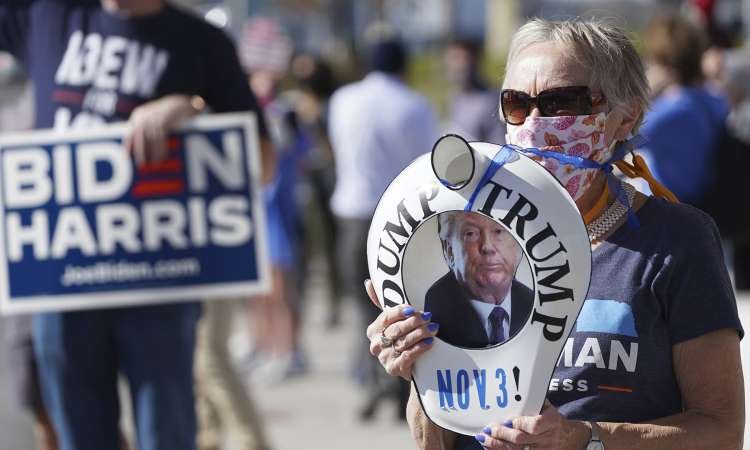
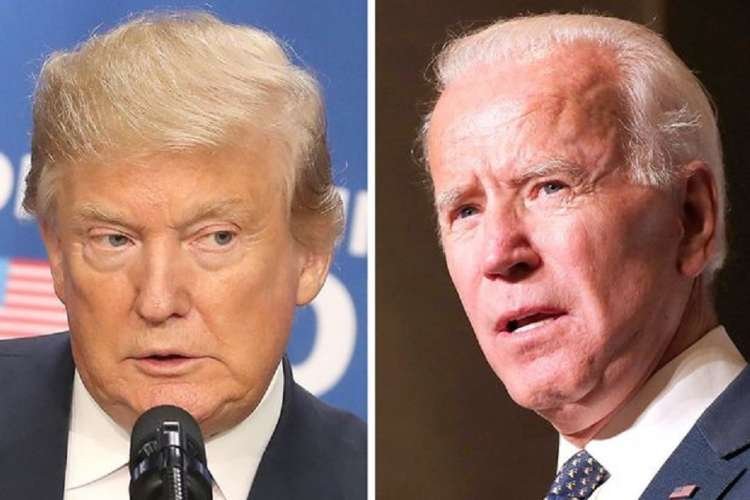
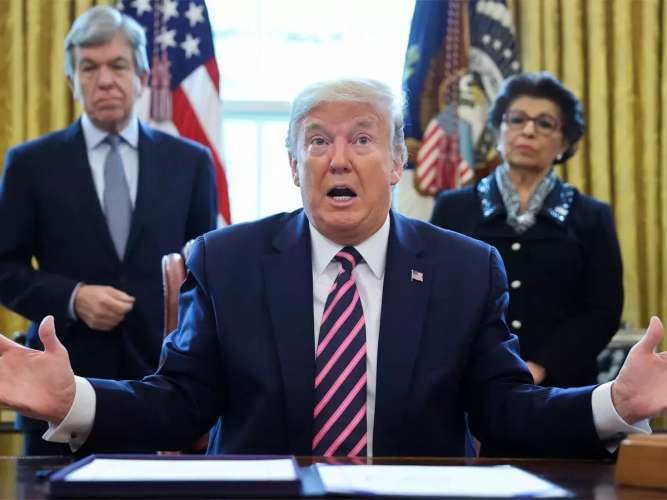
    While Democratic challenger Joe Biden on Thursday seems to have quite a lead against United States (US) President Donald Trump in the race for the key to the White House, the latter, despite incomplete results from several battleground states, proclaimed victory on Wednesday.

    The premature move in spite of incomplete results from the said states, that could determine the outcome of the presidential election, confirmed worries Democrats had voiced for weeks that Trump would seek to dispute the election results, forcing Americans to consider an extraordinary scenario in which Trump refuses to concede his loss.

    The said move could set off any number of legal and political dramas in which the presidency could be determined by some combination of the courts, state politicians and Congress.

    Here are the various ways the election can be contested…

    LAWSUITS:

    Early voting data shows Democrats are voting by mail in far greater numbers than Republicans. In states such as Pennsylvania and Wisconsin that do not count mail-in ballots until Election Day, initial results appeared to favour Trump because they were slower to count mailed ballots.

    Democrats had expressed concern that Trump would, as he did on Wednesday, declare victory before those ballots could be fully tallied.

    A close election could result in litigation over voting and ballot-counting procedures in battleground states. Cases filed in individual states could eventually reach the US Supreme Court, as Florida’s election did in 2000, when Republican George W Bush prevailed over Democrat Al Gore by just 537 votes in Florida after the high court halted a recount.

    Trump appointed Amy Coney Barrett as Supreme Court justice just days before the election, creating a 6-3 conservative majority that could favour the president if the courts weigh in on a contested election.

    ELECTORAL COLLEGE:

    The US president is not elected by a majority of the popular vote. Under the constitution, the candidate who wins the majority of 538 electors (270 votes) known as the Electoral College, becomes the next president. In 2016, Trump lost the national popular vote to Democrat Hillary Clinton but secured 304 electoral votes to her 227.

    The candidate who wins each state’s popular vote typically earns that state’s electors. This year, the electors will meet on December 14 to cast votes. Both chambers of Congress will meet on January 6 to count the votes and name the winner.

    Normally, governors certify the results in their respective states and share the information with Congress.

    But some academics have outlined a scenario in which the governor and the legislature in a closely contested state submit two different election results. Battleground states of Pennsylvania, Michigan, Wisconsin and North Carolina all have Democratic governors and Republican-controlled legislatures.

    According to legal experts, it is unclear in this scenario whether Congress should accept the governor’s electoral slate or not count the state’s electoral votes at all.

    While most experts view the scenario as unlikely, there is historical precedent. The Republican-controlled Florida legislature considered submitting its own electors in 2000 before the Supreme Court ended the contest between Bush and Gore. In 1876, three states appointed “duelling electors,” prompting Congress to pass the Electoral Count Act (ECA) in 1887.

    Under the act, each chamber of Congress would separately decide which slate of “duelling electors” to accept. As of now, Republicans hold the Senate while Democrats control the House of Representatives, but the electoral count is conducted by the new Congress, which will be sworn in on January 3.

    If the two chambers disagree, it’s not entirely clear what would happen.

    The act says that the electors approved by each state’s “executive” should prevail. Many scholars interpret that as a state’s governor, but others reject that argument. The law has never been tested or interpreted by the courts.

    Another unlikely possibility is that Trump’s Vice President Mike Pence, in his role as Senate president, could try to throw out a state’s disputed electoral votes entirely if the two chambers cannot agree, according to Foley’s analysis.

    In that case, the ECA does not make clear whether a candidate would still need 270 votes or could prevail with a majority of the remaining electoral votes — for example, 260 of the 518 votes that would be left if Pennsylvania’s electors were invalidated.

    The parties could ask the Supreme Court to resolve any congressional stalemate, but it’s not certain the court would be willing to adjudicate how Congress should count electoral votes.

    ‘CONTINGENT ELECTION’:

    A determination that neither candidate has secured a majority of electoral votes would trigger a “contingent election” under the 12th Amendment of the Constitution. That means the House of Representatives chooses the next president, while the Senate selects the vice president.

    Each state delegation in the House gets a single vote. As of now, Republicans control 26 of the 50 state delegations, while Democrats have 22; one is split evenly and another has seven Democrats, six Republicans and a Libertarian.

    A contingent election also takes place in the event of a 269-269 tie after the election; there are several plausible paths to a deadlock in 2020.

    Any election dispute in Congress would play out ahead of a strict deadline — Jan 20, when the constitution mandates that the term of the current president ends.

    Under the Presidential Succession Act, if Congress still has not declared a presidential or vice presidential winner by then, the Speaker of the House would serve as acting president. Nancy Pelosi, a Democrat from California, is the current speaker.

    TRUMP LAYING GROUNDWORK:

    The president has suggested he may not accept the results of the 2020 election enough times to prompt alarm over whether he may actually be serious.

    Over the past six months, Trump has repeatedly refused to commit to a peaceful transition of power, when asked, and has claimed he will only lose if the election is rigged.

    Trump displayed the same non-commitment in 2016, but this year an expectation of delays in the result gives the president more scope to claim election results can’t be trusted, or even to claim victory before enough votes are counted.

    Back in July, Trump seemed to be laying the ground for potentially disputing the vote. In an interview with Chris Wallace on Fox News, largely remembered for Wallace confronting Trump with the “very hard” cognitive test, the president claimed to have taken — the test required the sitter to identify an elephant, an alligator and a snake — Wallace asked Trump if he would accept the election results.

    “I have to see,” Trump said. “Look – I have to see. No, I’m not going to just say yes. I’m not going to say no.”

    On other occasions he was happy to bring up the question himself.

    “The only way we’re going to lose this election is if the election is rigged,” Trump told the crowd at a rally in Oshkosh, Wisconsin, in August. “Remember that. That’s the only way we’re going to lose this election.”

    The president repeated the message in a rare White House news conference in September, and during the first presidential debate a week later.
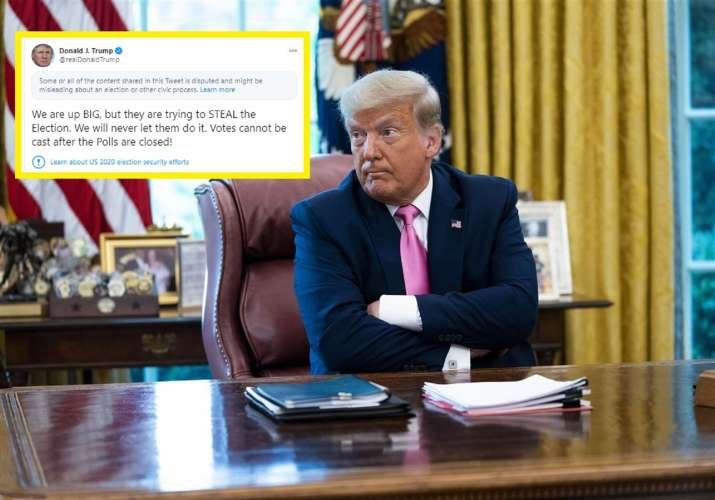
  • US Presidential Race 2020: Twitter flags Trump’s tweet claiming effort to ‘steal election’

    US Presidential Race 2020: Twitter flags Trump’s tweet claiming effort to ‘steal election’

    Twitter has flagged United States (US) President Donald Trump’s tweet alleging an effort to “steal the election” as a neck-and-neck contest continues between the incumbent president and Democratic challenger Joe Biden for the key to the White House.

    “We are up BIG, but they are trying to STEAL the election. We will never let them do it. Votes cannot be cast after the polls are closed!” Trump had tweeted.

    A warning hiding the tweet read, “Some or all of the content shared in this tweet is disputed and might be misleading about an election or other civic process.”

    It, however, can be viewed by clicking on Twitter’s statement being displayed on Trump’s feed.

    US ELECTION UPDATE:

    By the time this report was filed, Trump had the lead over Democratic rival Joe Biden in the vital battleground of Florida and other US swing states, but Biden pinned his White House hopes on Arizona and a “blue wall” of three Rust Belt states that could take days to count their votes.

    Biden’s hopes for a decisive early defeat of Trump faded as the president took solid leads in Florida, Georgia, Ohio and Texas. Fox News projected Trump would win Florida, a must-win state in his quest for 270 Electoral College votes.

    Biden, 77, was eyeing the so-called “blue wall” states of Michigan, Wisconsin and Pennsylvania that sent Trump, 74, to the White House in 2016 for possible breakthroughs, although vote counting could stretch for hours or days there.

    Trump held early leads in those three states, but much of that was built on Republican-heavy Election Day voting. The counting of Democratic-heavy mail-in ballots in all three states was expected to take hours or days. In Wisconsin and Pennsylvania and much of Michigan, mail-in ballots were not processed until Election Day.

    Winning those three states would be enough to give Biden an Electoral College victory. Fox News projected Biden would win Arizona, another state that voted for Trump in 2016, giving him more options to get to 270 Electoral College votes.

    Even without Pennsylvania, Biden wins in Arizona, Michigan and Wisconsin, as well as a congressional district in either Maine or Nebraska, which apportion their electoral votes by district, would put him in the White House, as long as he also holds onto the states that Trump lost in 2016.

  • Biden wins California, Trump wins Florida; race close in other battlegrounds

    Biden wins California, Trump wins Florida; race close in other battlegrounds

    US President Donald Trump has defeated Democratic rival Joe Biden in the vital battleground state of Florida on Tuesday, while other competitive swing states that will help decide the election, including North Carolina, remained up in the air.

    Florida was widely seen as a must-win state for Trump in his quest for the 270 Electoral College votes needed to win the presidency. Electoral College votes are assigned to each state, in part based on their population.

    Biden won California, Oregon and Washington state, while President Donald Trump won Idaho.

    California, Oregon and Washington are all liberal states, while Idaho is conservative.

    California has 55 electoral votes, the biggest haul of any state. It’s also the home of Biden’s running mate, Senator Kamala Harris. She served as the San Francisco district attorney and the state’s attorney general before winning election to the Senate in 2016.

    Biden still has multiple paths to the 270 electoral votes he needs without Florida despite having spent lots of time and money trying to flip the state that backed Trump in 2016.

    Early wins

    Soon after the polling time ended, AP reported that President Trump had won Kentucky, and Biden had carried Vermont.

    There were also some predictable victories for each candidate, with Trump taking Alabama, Mississippi and Oklahoma and Biden winning Massachusetts, his home state of Delaware and Virginia, a former battleground that has become a Democratic stronghold.

    Trump also took West Virginia, South Carolina, Tennessee, Arkansas, Indiana, Louisiana, Nebraska, Nebraska’s 3rd Congressional District, North Dakota, South Dakota and Wyoming.

    Meanwhile, Biden won Connecticut, Illinois, Maryland, Massachusetts, New Jersey, Rhode Island, New Mexico, New York, the District of Columbia and Colorado.

    Voters, many wearing masks and maintaining social distancing to guard against the spread of the coronavirus, experienced long lines in a few locales and short waits in many other places. There were no signs of disruptions or violence at polling sites, as some officials had feared.

    The winner — who may not be determined for days — will lead a nation strained by a pandemic that has killed more than 231,000 people and left millions more jobless, racial tensions and political polarisation that has only worsened during a vitriolic campaign.

    Control of the Senate is at stake, too: Democrats needed to net three seats if Biden captured the White House to gain control of all of Washington for the first time in a decade. The House was expected to remain under Democratic control.

    A new anti-scaling fence was erected around the White House, and in downtowns from New York to Denver to Minneapolis, workers boarded up businesses lest the vote lead to unrest.

    With the worst public health crisis in a century still fiercely present, the pandemic — and Trump’s handling of it — was the inescapable focus for 2020.

    For Trump, the election stood as a judgment on his four years in office, a term in which he bent Washington to his will, challenged faith in its institutions and changed how America was viewed across the globe.

    Rarely trying to unite a country divided along lines of race and class, he has often acted as an insurgent against the government he led while undermining the nation’s scientists, bureaucracy and media.

    At the White House on Tuesday night, more than 100 family members, friends, donors and staff were set to watch returns from the East Room.

    Trump was watching votes come in upstairs in the residence with a few close aides. Most top campaign officials were monitoring returns from a “war room” set up in the Eisenhower Executive Office Building.

    Biden spent the day last-minute campaigning in Scranton, Pennsylvania, where he was born, and in Philadelphia with a couple of local stops in Wilmington, Delaware, where he was spending Election Night.

    The president began his day on an upbeat note, predicting that he’d do even better than in 2016. But during a midday visit to his campaign headquarters, he spoke in a gravelly, subdued tone.

    “Winning is easy,” Trump told reporters. “Losing is never easy, not for me it’s not.”

    Trump left open the possibility of addressing the nation on Tuesday night, even if a winner hadn’t been determined. Biden was also scheduled to give a nighttime speech from Wilmington.

    “I’m superstitious about predicting what an outcome’s gonna be until it happens […] but I’m hopeful,” said Biden. “It’s just so uncertain […] you can’t think of an election in the recent past where so many states were up for grabs.”

    With the coronavirus now surging anew, voters ranked the pandemic and the economy as top concerns in the race between Trump and Biden, according to AP VoteCast, a national survey of the electorate.

    Voters were especially likely to call the public health crisis the nation’s most important issue, with the economy following close behind. Fewer named health care, racism, law enforcement, immigration or climate change

    The survey found that Trump’s leadership loomed large in voters’ decision-making. Nearly two-thirds of voters said their vote was about Trump — either for him or against him.

    The momentum from early voting carried into Election Day, as an energised electorate produced long lines at polling sites throughout the country.

    Voters braved worries of the coronavirus, threats of polling place intimidation and expectations of long lines caused by changes to voting systems, but appeared undeterred as turnout appeared it would easily surpass the 139 million ballots cast four years ago.

    A report said that the US is on course to see the highest voter turnout in more than a century.

    No major problems arose on Tuesday, outside the typical glitches of a presidential election: Some polling places opened late, robocalls provided false information to voters in Iowa and Michigan, and machines or software malfunctioned in some counties in the battleground states of Ohio, Pennsylvania, Georgia and Texas.

    The cybersecurity agency at the Department of Homeland Security said there were no outward signs by midday of any malicious activity.

    The record-setting early vote — and legal skirmishing over how it would be counted — drew unsupported allegations of fraud from Trump, who had repeatedly refused to guarantee he would honor the election’s result.

    Referendum on Trump

    Supporters of both candidates called the election a referendum on Trump and his tumultuous first term. No US president has lost a re-election bid since Republican George H.W. Bush in 1992.

    Among the most closely contested states that are expected to determine the outcome are Pennsylvania, Florida, Wisconsin, Michigan, North Carolina, Arizona and Georgia, with Democrats hoping that Biden may even threaten Trump in states that once seemed certain to go Republican such as Ohio, Iowa and Texas.

    Trump is seeking another term in office after a chaotic four years marked by the coronavirus crisis, an economy battered by pandemic shutdowns, an impeachment drama, inquiries into Russian election interference, US racial tensions and contentious immigration policies.

    Biden is looking to win the presidency on his third attempt after a five-decade political career including eight years as vice president under Trump’s predecessor, Barack Obama.

    Biden has promised a renewed effort to fight the public health crisis, fix the economy and bridge America’s political divide. The country this year was also shaken by months of protests against racism and police brutality.

  • It’s here: What to watch on Election Day in US

    It’s here: What to watch on Election Day in US

    The US Election Day is finally here.

    Or at least what is still called Election Day, since nearly 100 million Americans had already cast ballots by Tuesday. That’s the result of an election system that has been reshaped by the worst pandemic in a century, prompting many voters to take advantage of advance voting rather than head to polling places in person at a time when coronavirus cases are rising.

    Here’s what to watch as the final votes for US President Donald Trump and Democratic challenger Joe Biden are cast:

    What do Americans want from a president?

    Elections are always about where Americans want to steer the country. That’s especially true this year as the US confronts multiple crises and is choosing between two candidates with very different visions for the future.

    Trump has downplayed the coronavirus outbreak and panned governors — virtually all Democrats — who have imposed restrictions designed to prevent the spread of the disease. He has bucked public health guidelines by holding his signature campaign rallies featuring crowds of supporters — often unmasked — packed shoulder to shoulder.

    Biden has said he’d heed the advice of scientists. He’s pledged to work with state and local officials across the country to push mask mandates and has called on Congress to pass a sweeping response package.

    The candidates also hold distinctly different views on everything from climate change to taxes to racial injustice.

    Trump cast protests over systemic racism across the US this year as radical and has emphasised a “law and order” message to appeal to his largely white base. Biden acknowledges systemic racism, picked the first Black woman to appear on a major party’s presidential ticket and has positioned himself as a unifying figure.

    Whose turnout approach wins?

    The two parties took wildly different approaches to contacting voters amid the pandemic.

    Democrats stopped knocking on doors in the spring, going all-digital and phone. They resumed limited in-person contacts in September. Republicans continued traditional field work the entire campaign.

    The GOP can point to success in increasing their voter registration in battleground states. Democrats can point to their early voting success, including from notable slices of new voters. But only the final tally will vindicate one strategy or the other.

    Will voting be peaceful?

    Each major party can install official poll watchers at precincts. It’s the first time in decades Republicans could use the practice after the expiration of a court order limiting their activities. So it’s an open question how aggressive those official poll watchers will be in monitoring voters or even challenging eligibility.

    The bigger issue is likely to be unofficial “poll watchers” — especially self-declared militias. Voter intimidation is illegal, but Trump, in the Sept 29 presidential debate, notably refused to state plainly that he’d accept election results and instead said he is “urging my supporters to go into the polls and watch very carefully, because that’s what has to happen. I am urging them to do it.”

    In Michigan, where federal authorities recently arrested members of anti-government paramilitary groups in an alleged plot to kidnap Democratic Governor Gretchen Whitmer, the Democratic secretary of state tried to impose a ban on carrying firearms openly at a polling place. A Michigan judge struck down the order.

    Whiter the exurbs and smaller cities?

    Trump’s reelection depends on driving up his margins in rural areas and smaller towns and cities — those expansive swaths of red on the county-by-county results map from 2016.

    But acres don’t vote, people do, and Biden is casting a wide demographic and geographic net. His ideal coalition is anchored in metro areas, but he hopes to improve Democratic turnout among nonwhite voters and college-educated voters across the map.

    There are places where the competing strategies overlap: exurban counties — those communities on the edges of the large metropolitan footprints — and counties anchored by smaller stand-alone cities. Both campaigns will be closely watching places like Forsyth County, Georgia, where 2012 Republican nominee Mitt Romney won 80 per cent of the vote but Trump’s share dropped 10 points, and Montgomery County, Ohio, which flipped from Democrat Barack Obama to Trump.

    A 1968 redux? How about 1980?

    Trump spent considerable energy this year posturing as a “law and order” president, seeking to replicate 1968, when widespread unrest in the US benefited Republican Richard Nixon as he built his “silent majority”. But Nixon wasn’t the incumbent in 1968. In fact, the political atmosphere was so bad for President Lyndon Johnson that the Democrat didn’t seek reelection.

    Many Democrats and some Republicans are now pointing more at 1980, when Republican Ronald Reagan trounced President Jimmy Carter and the GOP flipped a whopping 12 Democratic Senate seats. Trump’s standing in the polls over 2020 has tracked only slightly above where Carter spent much of the 1980 election year, as he battled inflation, high unemployment and the Iran hostage crisis. But what appeared a tight race on paper as late as October turned into a rout. Even Democratic heavyweights like Indiana Senator Birch Bayh and South Dakota Senator George McGovern, once a presidential nominee, fell.

    It’s a more polarised era four decades later. But the lesson is that Trump would defy history to win reelection amid such a cascade of crises and voter dissatisfaction.

    When will the race be called?

    Absentee voting amid coronavirus has changed the vote-counting timeline, and there aren’t uniform practices for counting across the states. That makes it difficult to predict when certain key battlegrounds might be called.

    For example, Pennsylvania and Michigan — battlegrounds Trump won by less than 1 percentage point in 2016 — aren’t expected to have complete totals for days. Florida and North Carolina, meanwhile, began processing early ballots ahead of time, with officials there forecasting earlier unofficial returns. But those two states also could have razor-thin margins.

    Early returns, meanwhile, could show divergent results. Biden’s expected to lead comfortably among early voters, who tend to skew toward Democrats. Trump is likely to counter with a lead among Election Day voters. Depending on which counties report which batch of votes first, perennially close states could tempt eager partisans to reach conclusions that aren’t necessarily accurate.

  • Who will win the US presidential race?

    Who will win the US presidential race?

    Voters in the United States (US) will decide on November 3 whether Donald Trump remains in the White House for another four years.

    The Republican president is being challenged by Democratic Party nominee Joe Biden, who is best known as Barack Obama’s vice-president but has been in US politics since the 1970s.

    As election day approaches, polling companies will be trying to gauge the mood of the nation by asking voters which candidate they prefer.

    Biden is currently leading Trump in the national polls. The 10-poll average indicates that just over half of Americans intend to back Biden while Trump’s support trails this by around seven or eight points.

    BUT WHO WILL WIN?

    Trump triumphed in 2016 despite losing the popular vote, and pollsters misjudged the size of his support, so despite Biden’s lead, it is still difficult to predict who will win the keys to the White House.

    However, according to the latest polling averages, Biden’s lead over the incumbent is remaining solid despite a slight downfall in the wake of the US presidential debates and Trump’s diagnosis with coronavirus, The Telegraph reports.

    Who do you think will win the US presidential race?

    Donald Trump
    Joe Biden

    Biden’s polling average has remained above 50 per cent since October 4, and the Democratic nominee has consistently polled in the lead since the race began.

    If state polls are close to the final result, it suggests Biden is on course for gains in at least two swing states — Michigan and Wisconsin — and Arizona, which has been more likely to vote Republican in recent years.

    WHAT ELSE YOU NEED TO KNOW:

    In American politics, the term swing state refers to any state that could reasonably be won by either the Democratic or Republican presidential candidate by a swing in votes. These states are usually targeted by both major-party campaigns, especially in competitive elections.

    While Florida and Texas are too close to call — carrying 67 electoral college votes between them — Pennsylvania and its 20 votes for the presidency are leaning Democrat according to the latest polls.

    The electoral college is a process and not an actual place. To become president, what really counts is winning a majority of electoral votes. Each state has been allotted electoral votes based on the size of its population and whoever wins a particular state is expected to bag all the electoral votes allotted to that state.

    There are 538 electoral votes in total which means that a candidate needs to secure 270 to win.

    To put it simply, when the US public votes in the election, they are not voting for the president. Instead, they are voting for a group of people who will then choose the president and vice president.

    The word “college” here simply refers to a group of people with a shared task, BBC says. The electoral college meets every four years, a few weeks after election day, to carry out that task.

    Of the states that could go either way based on the latest polls, Iowa, Ohio, Pennsylvania and Florida all flipped to Donald Trump from the Democrats in the 2016 election, and his chances of retaining the presidency could rest on reclaiming victory here and holding on to Texas.

    Having voted Republican in every election since 2000, Texas is now a toss-up and could be pivotal to the final result.

  • VIDEO: Joe Biden says ‘InshaAllah’ to mock Trump during first presidential debate?

    VIDEO: Joe Biden says ‘InshaAllah’ to mock Trump during first presidential debate?

    Democratic presidential nominee Joe Biden cast doubt during Tuesday night’s debate on whether United States (US) President Donald Trump would ever release his tax returns. 

    “You’ll get to see it,” Trump said repeatedly as moderator Chris Wallace pressed him to commit to a firm timeline. Biden retorted, “When? InshaAllah?”

    While the Arabic language phrase literally means “God Willing,” it also has colloquial connotations of ambiguous commitment.

    As Muslims, especially Arabs, pointed out the phrase used by Biden, many wondered if they had mistaken something for InshaAllah.

    Until journalist Asma Khalid of US-based National Public Radio (NPR), who is covering the 2020 presidential campaign, confirmed it.

    Biden earlier released his personal income taxes, which show the former vice president and his wife Jill Biden paid about 30% of their $985,000 gross personal income.

    Trump has refused to voluntarily release his income taxes, which had been a presidential custom stretching back decades.

    READ MORE: ‘Will you shut up, man?’ and much more from Trump vs Biden presidential debate

    The New York Times reported Monday that Trump did not pay any federal income taxes in 10 of the last 15 years. It said the former businessman paid just $750 in federal income tax in 2016 and another $750 in 2017, the year he took office.

    Trump disputed the report during Tuesday night’s debate, saying he has “paid millions of dollars in taxes, millions of dollars of income tax.”

  • ‘Will you shut up, man?’ and much more from Trump vs Biden presidential debate

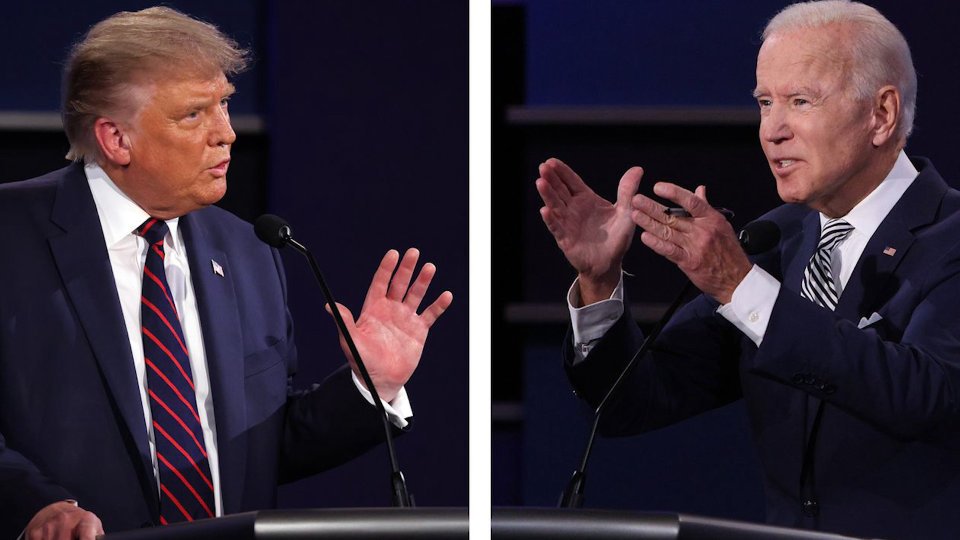
    From “will you shut up, man?” to “elections have consequences”, following are some of the quotes making news after Tuesday’s United States (US) 2020 presidential debate between Republican President Donald Trump and Democratic challenger Joe Biden.

    The polling is scheduled for November 3.

    SUPREME COURT NOMINATION:

    Trump, asked by moderator Chris Wallace about whether U.S. appeals court Judge Amy Coney Barrett should be nominated to the Supreme Court before the election: “We won the (2016) election. Elections have consequences.

    “We have the Senate and we have the White House and we have a phenomenal nominee respected by all.

    “ […] I think that she (Barrett) will be outstanding. She will be as good as anybody who has ever served on that court. We won the election and therefore we had the right to choose her.”

    Biden: “We should wait, we should wait and see what the outcome of this election is.”

    Trump: “As far as a say is concerned, the American people have already had their say. … I’m not elected for (just) 3-1/2 years.”

    Responded Biden: “He’s elected until the next election. […] The election’s already started.”

    HEALTHCARE:

    Biden, told by Trump he had adopted former Democratic presidential rival Bernie Sanders’ “socialised medicine” proposals, said of the president: “Everybody here knows he’s a liar. […] You picked the wrong guy on the wrong night at the wrong time.”

    “[…] Folks, do you have any idea what this clown’s doing? I tell you what, he is not for anybody needing healthcare.”

    After Trump explained his healthcare proposal, Biden said: “He has no plan for healthcare. … The fact is this man has no idea what he’s talking about.”

    DEALING WITH THE CORONAVIRUS PANDEMIC:

    Biden to Trump: “You should get out of your bunker and get out of the sand trap and … the golf course and go in the Oval Office and (put) together Democrats and Republicans, and fund what needs to be done now to save lives.”

    Trump to Biden: “You didn’t think we should’ve closed our country (to China) because you thought it was terrible.”

    “… We’ve done a great job. But I tell you, Joe, you could never have done the job we’ve done. You don’t have it in your blood.”

    Biden on Trump’s leadership on the pandemic: “He panicked or he looked at the stock market. … A lot of people died, and a lot more (are) going to die unless he gets a lot smarter a lot quicker.”

    Responded Trump: “There’s nothing smart about you, Joe.”

    RACE RELATIONS:

    Biden on Trump: “This is a president who has used everything as a dog whistle to try to generate racist hatred, racist division.”

    Trump to Biden, citing the then-senator’s support for the 1994 crime bill: “You’ve treated the Black community about as bad as anybody in this country.”

    Biden: “Yes, there’s a systemic injustice in this country in education and work and in law enforcement and the way in which it is enforced.”

    LAW ENFORCEMENT AND URBAN UNREST:

    Trump: “The top 10 cities and just about the top 40 cities are run by Democrats in many cases, radical left, and they’ve got you wrapped around their finger, Joe, to a point where you don’t want to say anything about law and order. And I’ll tell you what the people of this country want and demand law and order, and you’re afraid to even say it.”

    Biden said Trump had done nothing to calm the protests. “He just pours gasoline on the fire.”

    Responding to Trump attacking him on the suburbs, Biden said: “He wouldn’t know a suburb unless he took a wrong turn. I know suburbs.”

    WHITE SUPREMACISTS:

    Wallace: “Are you willing tonight to condemn white supremacists and militia groups and to say that they need to stand down and not add to the violence or the number of these cities as we saw in Kenosha, and as we’ve seen in Portland?”

    Trump: “I would say almost everything I see is from the left-wing, not from the right. … I’m willing to do anything. I want to see peace.”

    Wallace: “Then do it, sir.”

    Biden: “Do it, do it. Say it.”

    Trump: “You want to call them. What do you want to call them? Give me a name.”

    Biden, referring to a right-wing group: “Proud Boys.”

    Trump: “Proud Boys, stand back and stand by.”

    CLIMATE CHANGE AND THE ENVIRONMENT:

    Trump: “I believe that we have to do everything we can to have immaculate air, immaculate water, and do whatever else we can that’s good.”

    Biden: “The first thing I will do, I will rejoin the Paris Climate Accord.”

    ELECTION INTEGRITY:

    Biden encouraged mail-in voting by saying Trump does it, too. “He sits behind the Resolute Desk (in the White House) and sends his ballot to Florida.”

    Biden: “He cannot stop you from being able to determine the outcome of that election. … If I win, that will be accepted. If I lose, that will be accepted.

    “If we get the votes, he’s going to go. He can’t stay in power.”

    Trump: “Don’t tell me about a free transition. This is going to be a fraud like you’ve never seen. This is not going to end well.”

    Biden: “You will determine the outcome of this election. Vote, vote, vote. If you’re able to vote early in your state, vote early. If you’re able to vote in person, vote in person – whatever way is the best way for you. Because he cannot stop you from being able to determine the outcome of this election.”

    Asked by Wallace if he would urge his supporters to stay calm and pledge not to declare victory until the election is certified, Trump said: “I’m urging my supporters to go into the polls and watch very carefully.”

    Trump: “If I see tens of thousands of ballots being manipulated, I can’t go along with it. They cheat.”

    Biden: “The fact is I will accept it and he will too. You know why? Because once the winner is declared after all the ballots are counted, all the votes are counted. That’ll be the end of it.”

    INTERRUPTIONS:

    At one point when Trump was interrupting him, Biden said: “Will you shut up, man? This is so unpresidential.”

    Wallace to Trump: “I think the country would be better served if we allowed both people to speak with fewer interruptions. I’m appealing to you, sir, to do that.”

    Trump, referring to Biden, responded: “And him, too.”

    Wallace: “Well, frankly you’ve been doing more interrupting.”

    WATCH THE FULL DEBATE HERE: