Tag: journalism

  • Pulitzer Prize awarded to The New York Times raises questions about journalism standards

    Pulitzer Prize awarded to The New York Times raises questions about journalism standards

    Winners of the Pulitzer Prizes, arguably the biggest prize in journalism, for 2023 were announced on Monday.

    While these awards have been conferred since decades now, people have now questioned the credibility of the standard by which winners are selected.

    Among the award receipts is The New York Times.

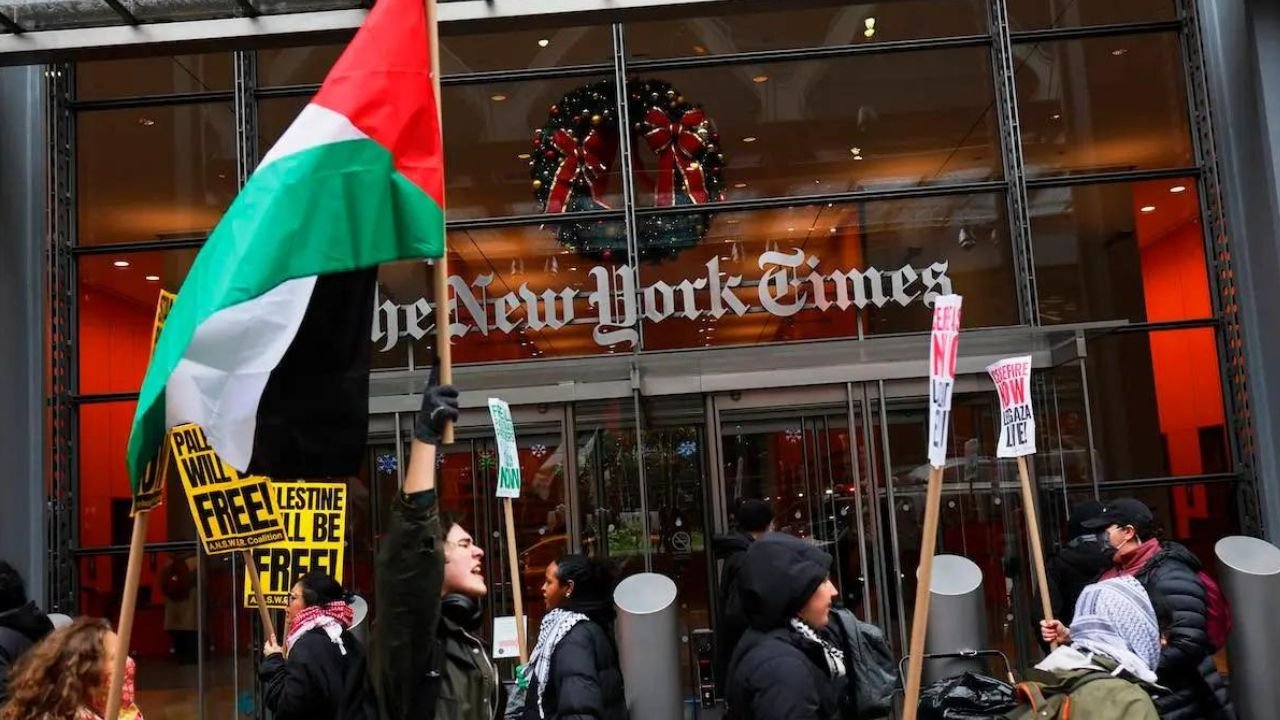
    It won for its “wide-ranging and revelatory coverage of Hamas’s lethal attack in southern Israel on Oct. 7,” as well as reporting on “the Israeli military’s sweeping, deadly response.”

    Critics of the award are saying that the past seven months has revealed the biased coverage of the platform, including the factually incorrect report claiming that Hamas members had raped Israelis on October 7 — an account which was later debunked.

    Reuters meanwhile won the award for breaking news photography for its “raw and urgent” coverage of the October 7 attack and Israeli response, while a special citation recognized “journalists and media workers covering the war in Gaza.”

    “This war has also claimed the lives of poets and writers,” the committee said. “As the Pulitzer Prizes honor categories of journalism, arts and letters, we mark the loss of invaluable records of the human experience.”

    Ironically, the award ceremony took place at Columbia University, amidst the backlash that resulted after the Uni called in police to clear out pro-Palestinian protesters. The police largely blocked media from the scene and allegedly threatened student journalists covering the events with arrest.

  • Al Jazeera to pursue legal action ‘until the end’ over Israel ban

    Al Jazeera to pursue legal action ‘until the end’ over Israel ban

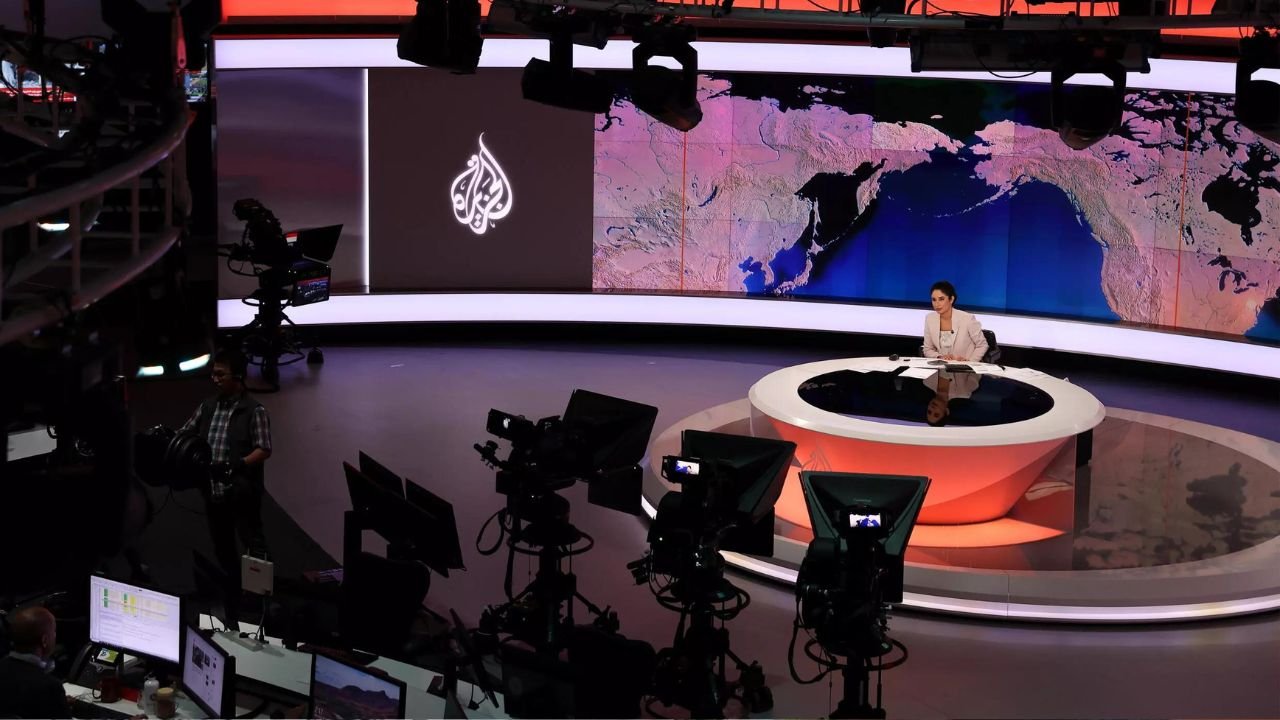
    Doha (AFP) – Al Jazeera will look to pursue all possible legal action “until the end” to challenge Israel’s ban on its operations there, the TV network’s news director told AFP in an interview.

    The Qatar-based station was taken off air in Israel after Prime Minister Benjamin Netanyahu’s government voted on Sunday to shut it down over its coverage of the Gaza war.

    Speaking on Monday, Al Jazeera English news director Salah Nagm said the network would “follow every legal path”, adding: “If there is a possibility of challenging that decision we are going to pursue it until the end.”

    Under a cabinet decision which Netanyahu said was “unanimous”, Al Jazeera’s Jerusalem offices were shuttered, its equipment confiscated and its team’s accreditations pulled.

    “The equipment which was confiscated, the loss that we suffered from stopping our broadcast, all of that is subject matter for legal action,” Nagm said.

    The Israeli government on Sunday said the order was initially valid for 45 days, with the possibility of an extension.

    Hours later, screens in Israel carrying Al Jazeera’s Arabic and English channels went blank, apart from a message in Hebrew saying they had “been suspended in Israel”.

    ‘An action from the 60s’

    The shutdown does not apply to the Israeli-occupied West Bank or Gaza Strip, from which Al Jazeera still broadcasts live on Israel’s war with Hamas.

    Al Jazeera immediately condemned Israel’s decision as “criminal”, saying on social media site X that it “violates the human right to access information”.

    But Najm downplayed the ban’s impact on Al Jazeera’s coverage of the war and on the public’s ability to access its content, even with its website now blocked in Israel.

    “It’s an action from the 60s rather than the 21st century to take such a decision of shutting down,” he said, explaining the channel could rely on other sources for information without “people on the ground”.

    “I know people that have VPN can see us online anytime,” the news director said referring to virtual private networks that establish protected internet connections and can allow users to access the internet as if they were in a different country.

    The decision came after Israel’s parliament last month voted to pass a new national security law granting senior ministers powers to ban broadcasts by foreign channels over threats to security.

    In his statement on Sunday, Netanyahu charged that “Al Jazeera correspondents have harmed the security of Israel and incited against IDF (Israeli military) soldiers”.

    ‘Arbitrary decision’

    But Nagm questioned which Al Jazeera broadcasts the Israeli government considered a security threat, calling the ban an “arbitrary decision”.

    Since the start of the Gaza war, Al Jazeera’s office in the Palestinian territory has been bombed and two of its correspondents killed.

    “Al Jazeera has lost a few people, their families have suffered so that’s really different from other conflicts in this sense,” Nagm said.

    Al Jazeera’s Gaza bureau chief Wael al-Dahdouh was wounded in an Israeli strike in December that killed the network’s cameraman.

    Dahdouh’s wife, two of their children and a grandson were killed in October in a bombardment of central Gaza’s Nuseirat refugee camp.

    And Dahdouh’s eldest son, an Al Jazeera staff journalist, was killed alongside another journalist in Rafah in January when an Israeli strike targeted the car they were travelling in.

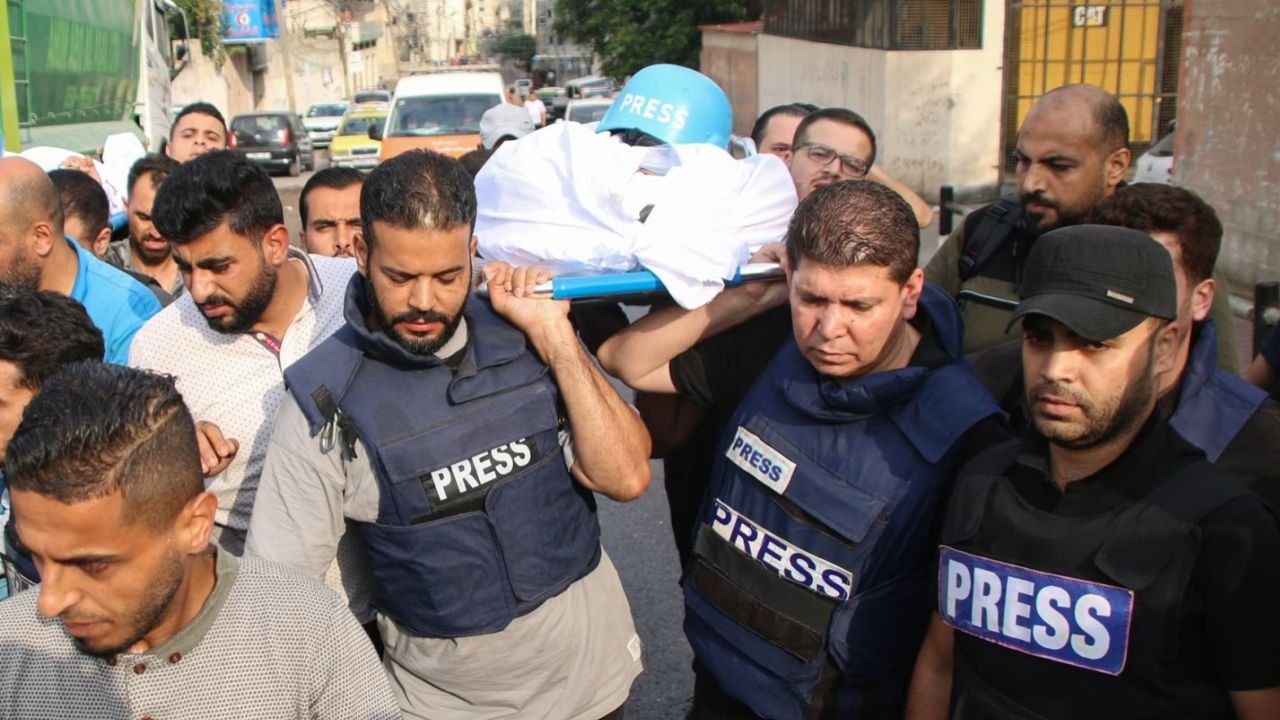
    At least 97 journalists and media workers have been killed since the war began, among them Palestinians, Israelis and Lebanese, according to the Committee to Protect Journalists.

    “That’s not something that we can just report politely,” Nagm said.

    “We have to be wary and careful and alert the people of the nature of the war that’s going on and how deadly it is for the people and also for us as a profession.”

  • 70% of environment journalists report attacks, threats, pressure: UN

    70% of environment journalists report attacks, threats, pressure: UN

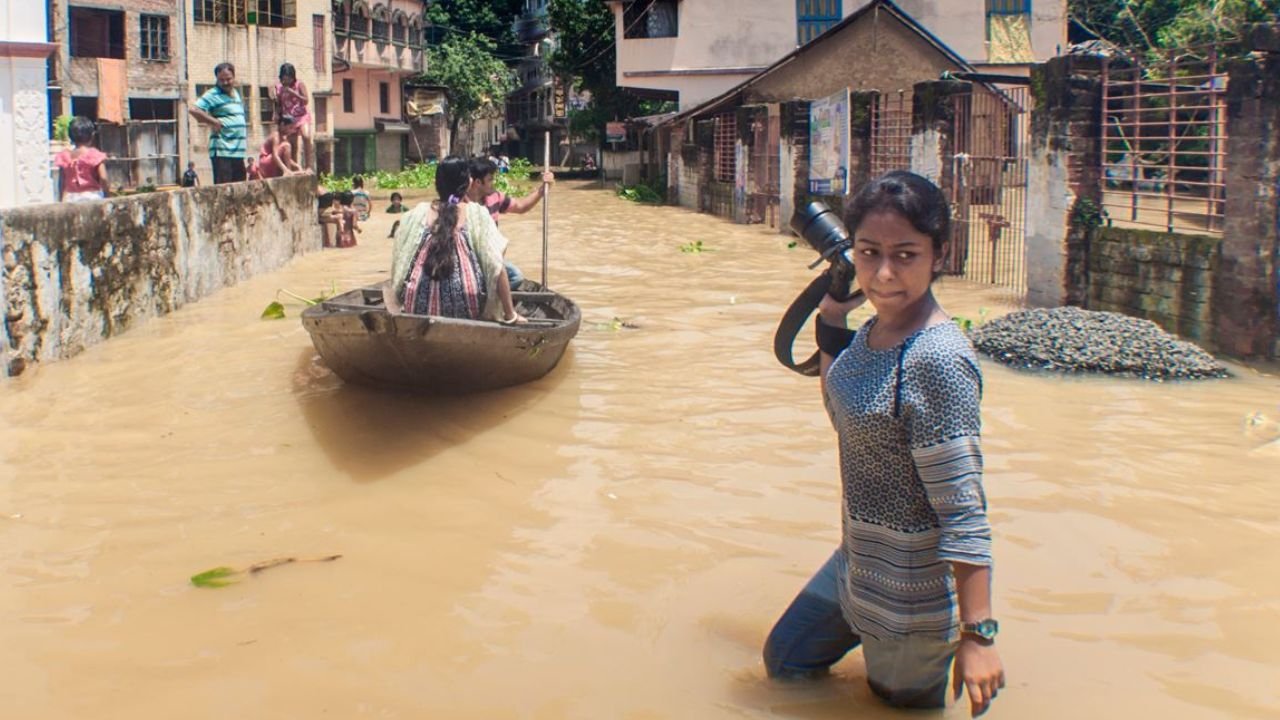
    Seventy percent of environmental journalists from 129 countries, polled in March, reported experiencing attacks, threats or pressure related to their job, UNESCO said Thursday.

    Of those, two in five subsequently experienced physical violence, it said in a report released on World Press Freedom Day. More than 900 reporters were questioned for the poll.

    The UN Educational, Scientific and Cultural Organization warned of an increase in violence against and intimidation of journalists reporting on the environment and climate.

    “Without reliable scientific information about the ongoing environmental crisis, we can never hope to overcome it,” UNESCO director general Audrey Azoulay said in a statement.

    “And yet the journalists we rely on to investigate this subject and ensure information is accessible face unacceptably high risks all over the world, and climate-related disinformation is running rampant on social media.”

    UNESCO said at least 749 journalists and news media outlets reporting on environmental issues were “targeted with murder, physical violence, detention and arrest, online harassment or legal attacks” between 2009 and 2023.

    More than 300 of those attacks occurred between 2019 and 2023 –- a 42 percent increase on the preceding five-year period.

    “The problem is global, with attacks taking place in 89 countries in all regions of the world,” the agency added.

    At least 44 environmental journalists have been killed for their work in the past 15 years, with convictions in only five cases, said the report.

    On top of hundreds of reported physical attacks, “a third of journalists surveyed said they had been censored,” it added.

    “Almost half (45 percent) said they self-censored when covering the environment due to fear of being attacked, having their sources exposed, or due to an awareness that their stories conflicted with the interests of concerned stakeholders.”

    At a press freedom conference in Chile this week, UNESCO will announce the launch of a grants program to provide legal and technical support to over 500 environmental journalists facing persecution, said the statement.

  • Paul Auster’s wife deplores reporting on US writer’s death

    Paul Auster’s wife deplores reporting on US writer’s death

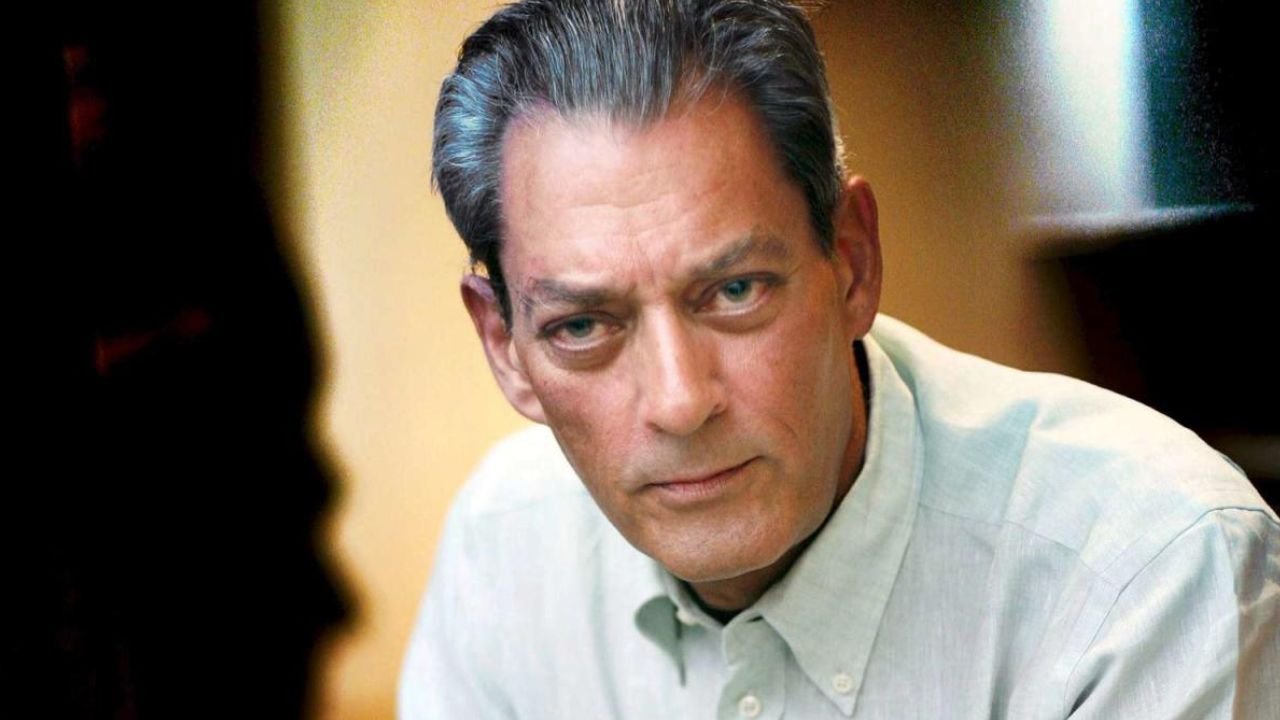
    New York (AFP) – The wife of US writer Paul Auster, who died due to lung cancer complications, said Thursday that her family was “robbed” of “dignity” after a friend quickly confirmed his death to media outlets.

    The New York Times, citing a friend of the couple, published a story of Auster’s passing hours after his death on Tuesday, with other outlets following suit with similar reports.

    “I was naive, but I had imagined that I would be the person to announce the death of my husband,” Siri Hustvedt, an esteemed novelist, wrote on Instagram.

    “He died with us, his family, around him on April 30, 2024 at 6:58 PM,” Hustvedt said.

    “Sometime later, I discovered that even before his body had been taken from our house, the news of his death was circulating on media and obituaries had been posted,” she added.

    Hustvedt revealed in March 2023 that Auster, whose works included “The New York Trilogy,” had been diagnosed with lung cancer.

    The New York Times — the first news outlet to announce Auster’s death — cited family friend and American journalist Jacki Lyden as its source, though Hustvedt did not refer to her or the newspaper directly.

    Hustvedt wrote on Instagram: “Not one of us was able to call or email the people dear to us before the shouting online began. We were robbed of that dignity.

    “I do not know the full story about how this happened, but I know this: It is wrong.”

    Hustvedt added: “Paul never left Cancerland. It turned out to be, in Kierkegaard’s words, the sickness unto death,” referencing the 19th-century Danish philosopher.

    He made his name with noirish, existentialist novels about lonely writers, outsiders and down-and-outers that were a huge hit in Europe particularly.

    The author gained cult status in the 1980s and 1990s with his “New York Trilogy” of metaphysical mysteries and his hip film “Smoke,” about the lost souls who frequent a Brooklyn tobacco shop.

  • International Press Freedom Day marked by increased arrests of Pakistani journalists

    International Press Freedom Day marked by increased arrests of Pakistani journalists

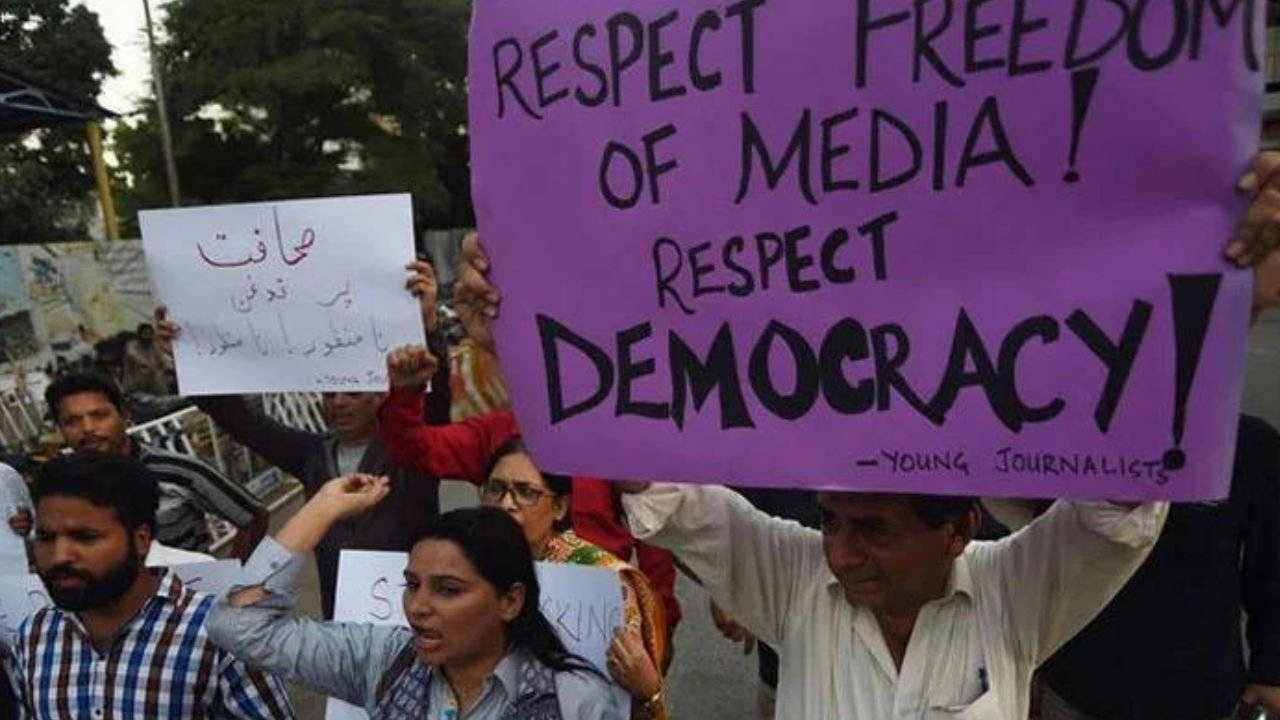
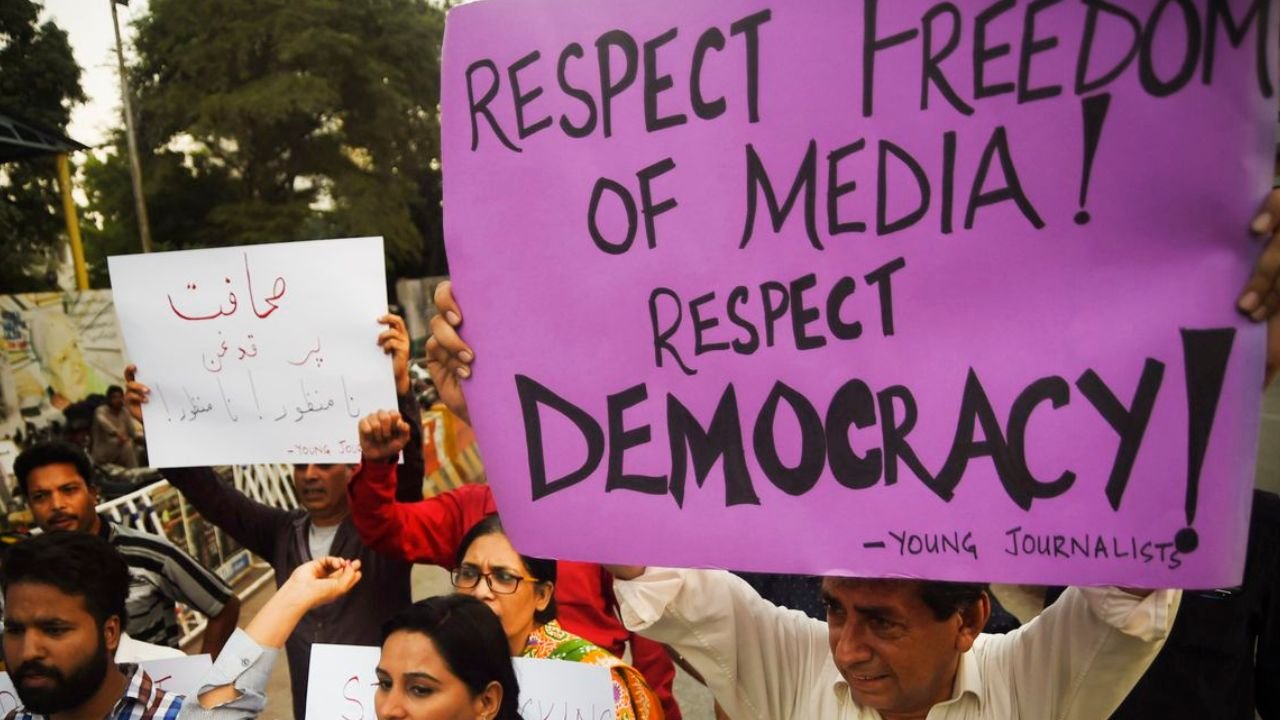
    May 3 is celebrated as International Press Freedom Day worldwide, however, Pakistan is considered one of the most dangerous countries in the world for journalism.

    In a report released by Freedom Network, it was revealed that four journalists were killed in the last one year while more than 104 cases were registered while more than 200 journalists were also issued notices in Pakistan.

    Geo’s Asif Bashir Chaudhary lays out that Pakistan is among the three countries in the world where cases are registered under the black law of PICA even for giving an opinion on an online forum, while in the rest of the world, action is taken under the laws of defamation.

  • UNESCO awards press prize to Palestinian journalists in Gaza

    UNESCO awards press prize to Palestinian journalists in Gaza

    UNESCO on Thursday awarded its world press freedom prize to all Palestinian journalists covering the Israeli genocide against the people in Gaza since October 8, 2023.

    “In these times of darkness and hopelessness, we wish to share a strong message of solidarity and recognition to those Palestinian journalists who are covering this crisis in such dramatic circumstances,” said Mauricio Weibel, chair of the international jury of media professionals.

    “As humanity, we have a huge debt to their courage and commitment to freedom of expression.”

    Audrey Azoulay, director general at the UN organisation for education, science and culture, said the prize paid “tribute to the courage of journalists facing difficult and dangerous circumstances”.

    According to the New York-based Committee to Protect Journalists (CPJ), at least 97 members of the press have been killed since the war broke out in October, 92 of whom were Palestinians.

  • Suspension of internet during general elections was restriction on freedom of expression: Report

    Suspension of internet during general elections was restriction on freedom of expression: Report

    In its latest annual report, the Freedom Network states that the shutdown of mobile networks and suspension of the internet during the February 8 general elections was a restriction on access to information and freedom of expression.

    The report further highlights that e-safety and personal data protection bills will pose a threat to Pakistan’s digital economy.

    If the bills are passed, it will oblige Google, Facebook, X and YouTube to provide Pakistani users’ data upon demand by Pakistani authorities, institutionalizing forced censorship.

    Moreover, according to the report, four journalists were killed in Pakistan in 12 months, whereas 104 incidents of harassment of journalists were reported, and more than 70 legal notices were sent to more than 200 journalists and bloggers.

  • Women journalists bear the brunt of cyberbullying

    Women journalists bear the brunt of cyberbullying

    Perugia (Italy) (AFP) – Women journalists face greater threats online in the course of their work, and the trend is increasing, one expert told an international conference in Italy this weekend.

    “There is significant potential for online violence to escalate to offline harm,” said Julie Posetti research director of the International Center for Journalists (ICFJ).

    “Women tend to face greater threats online,” she told delegates at the Perugia International Journalism Festival on Saturday. And, she added, “the kind of threats they face are increasing”.

    That toxic environment was being “facilitated by Big Tech companies”, she added, accusing them of “a failure to take responsibility”.

    In a joint UNESCO/ICFJ study in 2022, nearly three-quarters of women journalists interviewed said they had experienced online violence or abuse in connection with their work. They interviewed 900 journalists from 125 countries.

    Attacks online include insults, sexist and sexual comments, and physical threats, including death threats to journalists and their families, the conference heard.

    Increasingly sophisticated attacks include blocking accounts, hacking, publishing private photos and creating “deep fakes” — fake sexual images of people without their consent.

    Violent threats tend to increase when combined with discrimination linked to skin colour, religion or sexual orientation.

    Physical violence

    Posetti and two other researchers have built a guide and toolbox on the topic targeting journalists, together with the Organization for Cooperation and Security in Europe (OSCE).

    Filipino journalist Maria Ressa, the 2021 Nobel Peace Prize winner, was a victim of online abuse, as she explained in the ICFJ-UNESCO report.

    “I was a CNN war correspondent for two decades, but nothing in the field prepared me for the orchestrated, misogynistic attacks on me and our women-led news outlet, Rappler,” she said.

    BBC disinformation specialist Marianna Spring received an avalanche of abusive tweets last year, threatening to kidnap her or slit her throat.

    Much of the abuse followed her investigation into the takeover of social media network X, then known as Twitter.

    In some cases, online threats can translate into physical violence.

    A fifth of women surveyed said they had suffered attacks or insults in real life that were linked to online abuse.

    The consequences can be far-reaching, with some journalists potentially dissuaded from covering sensitive topics and some choosing to opt out of the industry altogether.

    Paris-based media rights campaigners Reporters Without Borders (RSF) has warned that this type of harassment forms a new threat to press freedom.

    Developing counter measures

    French journalist Nadia Daam told AFP that she received a flood of hateful messages in 2017 after a column that criticised an online forum.

    Since then, she has moved house twice and tends to stay away from social media, but says she still gets cyber-bullying messages and “doesn’t work the same anymore”.

    However, she thinks there is more awareness of the problem now, saying that she believes the wider industry “talks more about cyberharassment”, with more severe legal sentences.

    Freelancer Melina Huet covered the war in Ukraine as well as the Israel-Hamas conflict, and said she regularly gets online threats related to her coverage.

    “I received threats of beheading and rape on Instagram,” she said. “The perpetrators can easily re-create accounts, there is impunity.”

    Some media have put protocols in place to try and tackle cyberbullying.

    Jessica Ziegerer is an investigative journalist for the daily HD Sydsvenskan, and regularly receives hostile messages.

    “Before publishing a sensitive article, we have a meeting with security specialists and review all the aspects” both online and offline, she said.
  • Journalist investigating corruption killed in Colombia

    Journalist investigating corruption killed in Colombia

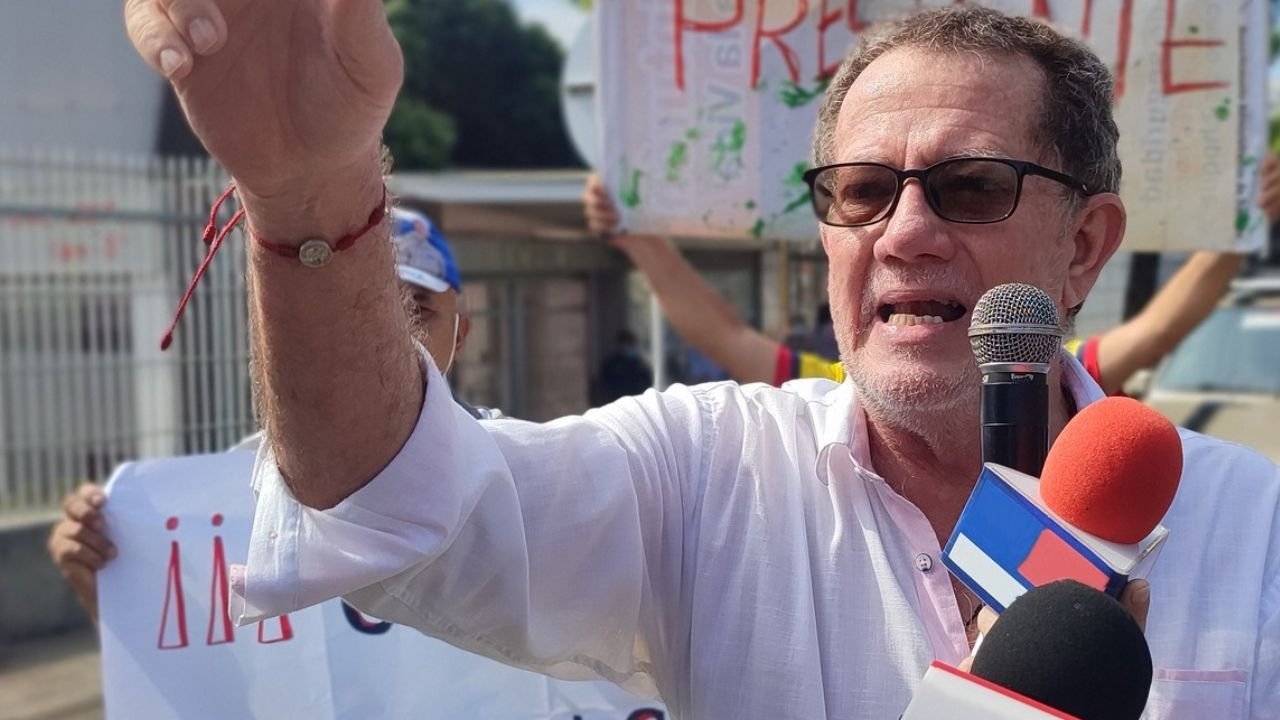
    Bogotá, Colombia – A Colombian journalist investigating corruption was killed over the weekend in a city near the border with Venezuela, officials said Monday.

    The reporter, 54-year-old Jaime Vasquez, was shot in Cucuta in front of about a dozen witnesses, according to security videos released by local media.

    Prosecutors say the gunman fled on a motorbike.

    President Gustavo Petro said on X he had ordered an investigation into the murder of Vasquez, who had published allegations of irregular contracts and abuses of power in the city administration and received threats as a result of his work, according to a friend.

    Colombia’s FLIP press freedom foundation condemned the killing and called for a “rapid and exhaustive” probe.

    Since 2006, 167 journalists have been killed in Colombia, according to FLIP. Last year, 163 reporters received threats.

    Another eight people were killed in and around Cucuta on the same weekend, police said, in a region where paramilitary fighters, guerrillas and local criminal gangs are known to operate.

    vd/jss/lv/mlr/dw

    © Agence France-Presse

  • ‘Judge who is affected by criticism on social media violates his oath’: Justice Athar Minallah

    ‘Judge who is affected by criticism on social media violates his oath’: Justice Athar Minallah

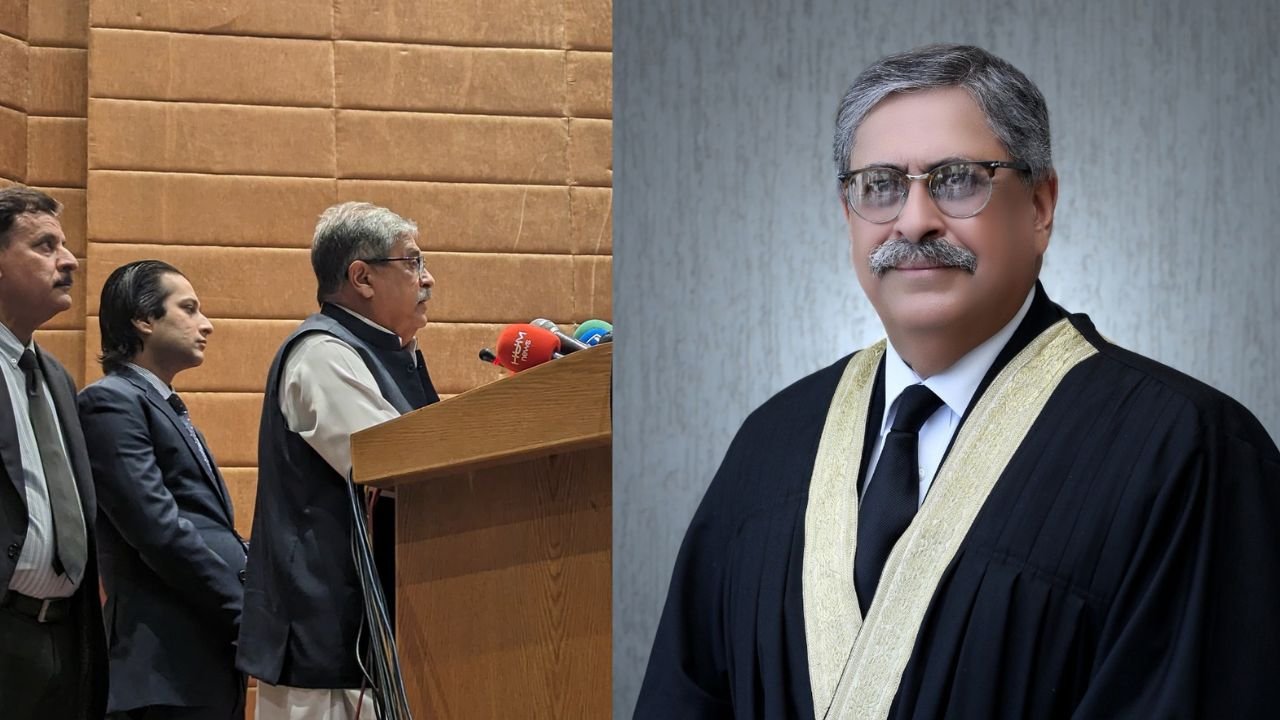
    Supreme Court Justice Athar Minallah, addressed a seminar on the significance of freedom of expression on Saturday, shedding light on its historical context and impact on Pakistan’s trajectory.

    The seminar, a part of the second law bridge workshop on superior court reporting, provided a platform for Justice Minallah to share his insights on the intersection of freedom of expression and judicial independence.

    Expressing his concern over the potential influence of social media on judicial decision-making, Justice Minallah asserted the importance of maintaining judicial independence, stating that any judge swayed by social media violates his/her oath and called upon fellow jurists to remain resolute in upholding justice despite external pressures.

    Addressing the delicate balance between constructive criticism and trust in the judiciary, Justice Minallah emphasized that critics should retain faith in the legal system, considering it a litmus test for its strength.

    He welcomed constructive criticism while underscoring the need to strike a balance in fostering trust in the judiciary.

    Reflecting on the challenges of freedom of speech in the country, the Chief Justice traced the roots of censorship to historical actions following Quaid-e-Azam Muhammad Ali Jinnah’s speech on August 11, 1947. He stressed the necessity of balancing freedom of expression with responsible reporting to navigate these challenges.

    Sharing a personal anecdote from his early days as a judge, Justice Minallah recounted a case involving a 16-year-old accused of displaying a banner against a senior apex court judge.

    He highlighted the importance of judiciously addressing such incidents and cautioned against making blanket judgments without thorough investigations.

    “When the matter of the 18th constitutional amendment was raised, many forces were against it. A reporter asked me, what will the Supreme Court do about the 18th Amendment. I replied ‘In my opinion, the SC should not interfere in the constitutional amendment’,” he said.

    The apex court judge said he had said he would resign if the 18th amendment was annulled and the next day news was published that “Athar Minallah has threatened the court”.

    Citing former Ugandan president and the modern world history’s most brutal dictator, Idi Amin, Justice Minallah said, “A society is ruined, if someone gags freedom of expression like Idi Amin.”