Tag: journalists

  • Fawad Chaudhry, Shireen Mazari condemn attack on journalist

    Federal Minister for Information and Broadcasting Fawad Chaudhry and Minister for Human Rights Shireen Mazari on Wednesday condemned the attack on journalist Asad Ali Toor, by unidentified men.

    As per the official account of the Ministry of Information and Broadcasting, SSP Islamabad has been directed to probe the attack and bring the perpetrators to justice.

    As per Asad Ali Toor’s video statement, three unidentified men broke into his apartment and tortured him. The three assailants can be seen leaving Toor’s apartment in the CCTV footage, reported BBC Urdu. Journalist Shahbaz Zahid also posted the CCTV footage on Twitter.

    Chairman Pakistan People’s Party (PPP) Bilawal Bhutto-Zardari also called for a full and transparent inquiry of the incident.

    Amnesty International has also urged authorities to take urgent steps for the safety of media workers in Pakistan.

    Journalists from around the country have condemned the attack and expressed solidarity with Toor.

    The federal cabinet in April approved the Protection of Journalists and Media Professionals Bill. Last year, journalist Matiullah Jan was abducted in Islamabad but was released after 12 hours while last month, senior journalist Absar Alam survived an assassination attempt in Islamabad. The Freedom Network’s annual state of press freedom report released in April 2021 highlighted a dramatic escalation in the climate of intimidation and harassment of journalists and the media in Pakistan.

  • Protection of Journalists Bill

    Protection of Journalists Bill

    The Pakistan Tehreek-i-Insaf (PTI ) and Pakistan People’s Party (PPP) have both prepared two bills for the protection of journalists in Pakistan.

    The federal cabinet in April approved two bills – the Protection of Journalists and Media Professionals Bill, and the Forced or Involuntary Disappearance (Criminal Law Amendment) Bill.

    Meanwhile, the bill for the protection of media persons was presented in the Sindh Assembly by the PPP government. The bill enables the provincial government to take effective steps to ensure that every journalist and media practitioner’s right to life, safety and security as provided under Article 9 of the Constitution are safeguarded.

    The Freedom Network’s annual state of press freedom report released in April 2021 highlighted a dramatic escalation in the climate of intimidation and harassment of journalists and the media in Pakistan.

  • Politicians, journalists mark #WorldPressFreedomDay

    World Press Freedom Day is observed every year on May 3 and this year’s theme is ‘Information as a Public Good’. To mark the day, politicians, journalists and other key figures have stepped forward to call for freedom of press and media.

    United Nations Secretary-General António Guterres was also among those who marked this day. In his message, Guterres urged all governments to do everything in their power to support a free, independent and diverse media.

    Politicians and journalists from Pakistan including Federal Minister for Information and Broadcasting Fawad Chaudhry and Special Assistant to Chief Minister Punjab on Information and culture Firdous Ashiq Awan also shared messages to mark the day and paid rich tributes to journalists.

  • VIDEO: Indians fall in love with Pakistani ‘journalists with spine’ over press conference boycott video

    VIDEO: Indians fall in love with Pakistani ‘journalists with spine’ over press conference boycott video

    Indians have fallen in love with Pakistani media persons, lauding them and calling them “journalists with spines” after a video of a group of the same boycotting a press conference went viral on social media.

    In the viral video, one of the journalists, namely Riaz Gondal, can be seen calling out government officials for making media persons wait for hours for the press conference. “We have been waiting for two hours. Corruption in Jhelum is rampant. All government officials are looting the people in the name of welfare,” he tells the officials upon their arrival.

    “But since you have wasted our time, we are boycotting your press conference,” Gondal adds as all journalists then remove their mics from the podium.

    Though the exact details are not yet available, a social media user claimed that journalists boycotted the deputy commissioner’s press conference.

    The video has been watched and shared over a million times, especially across the border — where media is time and again accused of being a lapdog of the government.

    Here’s how Indians showered praises on the professionals on this side of the border:

    “Backbone of Pakistani media,” wrote a user in Hindi.

    https://twitter.com/sd1733/status/1381792107988316163
  • Pakistan Television’s first female anchor Kanwal Naseer passes way

    Pakistan Television’s first female anchor Kanwal Naseer passes way

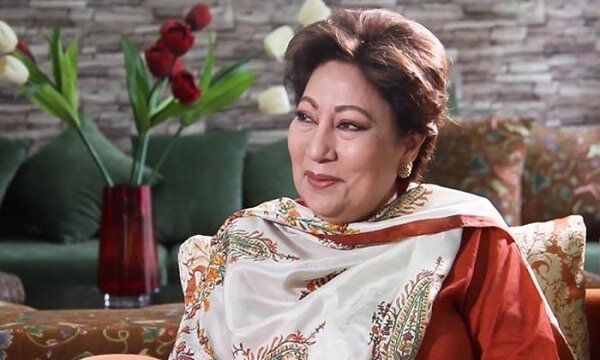
    Pakistan Television (PTV)’s first female anchor, newscaster and announcer Kanwal Naseer has passed away at the age of 73. The departed soul was hospitalised for the past couple of days, as reported by Radio Pakistan.

    Born in 1948 in Lahore, Naseer entered media at the young age of 17 and remained associated with PTV and Radio Pakistan for over five decades. Naseer made her first announcement at the PTV on November 26, 1964. 

    Naseer has been awarded the Pride of Performance and many other national awards in recognition of her services. She was the daughter of legendary actor Mohini Hameed.

    Meanwhile, several notable personalities including Fawad Chaudhry and Humayun Saeed expressed their condolences over her death on social media.

    https://twitter.com/RajaBasharatLAW/status/1375321768378916868
  • Dividing the divided

    “The ruling party’s most recent act of issuing a list of news media talk-show anchors, dubbing them pro-corruption, drives a deeper wedge into a polarised nation.”

    It is no secret that the truth of national integration of the Islamic Republic of Pakistan is not just bitter but severely inconvenient. The fine line that separates diversity and differences among this nation has blurred so many times that it has almost permanently been reduced to a smudge. From the barracks to the parliament, sermons and edicts from atop the mosque minarets, political jargons from atop the containers and trucks, to the unending layers of multiple identities — divisions are the Achilles’ heel of this society.

    Issuing a list of journalists, dubbing them against the interests of the state, vilifying them publicly was like shooting a nuke at this Achilles heel. Driving a wedge at the very source of information of the nation, the media, is creating the deepest division imaginable so far. In the history of deleted tweets in this country, these two might have very long lasting effects.

    A ruling political party being unaware of this landmine or apathetic to the consequences of triggering it can potentially prove to be catastrophic.

    73 years of age, sick, weak and drained it stood on shaky feet, running out of natural body resources, vitals dimming, surviving on one shot of steroids after another, scars of surgical interventions spread across the map of its skin and a plethora of side-effects from past treatments racking its existence. It had almost forgotten the number of doctors that had taken a shot at it, sometimes even without its total consent. Almost every one of those taxing prognosis left it more vulnerable and feeble. All of them focused on treating the symptoms and not the disease, worsening the illness.

    It was almost as if they knew, but never disclosed that it was plagued by the uncanny Autoimmune Disease – an ailment in which the organs of its own body were at constant war with each other. It was almost as if they were intentionally not treating the disease because ending its ailment would end years of profiteering from its misery, and yet they all claimed they did everything to serve its interest. Or maybe decades of varying drugs had blurred its ability to separate those who sought to save it from those who added to its agony.

    The story of Pakistan is difficult to pen down because it is hard to indisputably identify the heroes and the villains. Pakistanis to this day are even conflicted over autocratic dictatorships being good or bad. This is a country where coups were celebrated, even if by a significant minority. Its very inception on the basis of a presumed uniformity of a religion so deeply divided across sectarian lines was unsteady. The ethnic, cultural, political and ideological differences at its core, though dormant at the time, were highly flammable. While these divisions stayed buried under the unanimous rejected of Hindu subjugation, the fault lines under the surface started growing into visible cracks once liberated from the common enemy. This is why, ever since, the integration and unity of this nation has always been a function of hatred, fear and anger against a common enemy, rather than collective growth, pride and prosperity.

    However, in times when an aggravated threat of a common enemy does not exist, Pakistan’s autoimmune disease starts tearing her apart and eating the core of the country hollow. For all these reasons, and more, the worst thing that can happen to this already fragmented and disunited country is fuelling more divisions.

    From its campaign leading to the 2018 elections, PTI and its patron in chief Imran Khan has been extremely careless, if not intentionally exploitative, of this ability of the Pakistani polity. He went further than the usual practice of demonising and defiling his political rivals and berated their voters and supporters as dumb donkeys following their leaders mindlessly like zombies. At his massive public meetings he openly vilified news organisations that disagreed with him. The rants inadvertently led to mob attacks on news media offices and at times on journalists.

    The ruling party’s most recent act of issuing a list of news media talk-show anchors, dubbing them pro-corruption, incites targeted and aggravated hatred against these journalists. But more importantly still, it drives a deeper wedge into a polarised nation. It impacts not just PTI supporters but the supporters of its political rivals as well. With the history of Pakistan and its behavior in view, this action will have consequences far more long-lasting than being perceived.

    This list discourages openness to differing views and perspectives. It freezes the ability to question and challenge one’s hardened positions and clan-vote mentality. It encourages the dangerous practice of sticking to narratives that only feed people’s confirmation biases. It magnifies and glorifies selective perception. But more than anything else, it breeds generations of an ill-informed polity, with an ‘us-versus-them’ mindset for its own countrymen, incapacitated to vote a credible person into power, adding to the long list of bad doctors that would worsen this ailing country’s autoimmune disease and feed off its ailing semi-conscious body.
  • Late poet Fahmida Riaz’s daughter declines presidential award to protest treatment of journalists, writers

    Late poet Fahmida Riaz’s daughter declines presidential award to protest treatment of journalists, writers

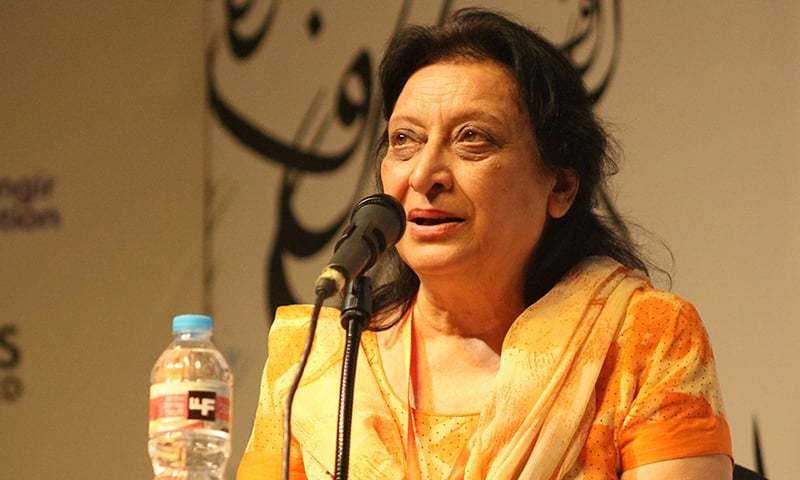
    Renowned poet Fahmida Riaz’s daughter, in protest against the alleged abduction and torture of journalists and writers by the state, has declined the presidential award that the government had announced for her late mother.

    This is the second national award that has been turned down this year as earlier, Saeen Taj Joyo, the father of missing Sindhi teacher and activist Sarang Joyo, had also declined the President’s Pride of Performance (Nisan-e-Pakistan) award on account of the disappearance of his son.

    Sarang Joyo was recently traced and claimed to have been tortured in captivity.

    In a social media post, Fahmida Riaz’s daughter Veerta Ali Ujan said that accepting an award from the Imran Khan government on her mother’s behalf would be an insult to her struggle for justice and equality. “Harassers [are] being awarded. Karachi left to rot in sewage.”

    She said had her mother been alive today, she would have also refused to accept the award from the government.

    Born in Meerut in pre-partition India in 1946, Fahmida Riaz was among the leading Urdu poets.

    She was also an unrelenting social critic and had been active in several human rights movements. She was among the writers, who had campaigned against former military ruler General Ziaul Haq’s regime and the execution of former prime minister (PM) Zulfikar Ali Bhutto.

    She had to suffer the wrath of authorities and also spent a period of self-exile in India.

    She died on November 21, 2018, at the age of 72.

  • Targeting women

    Targeting women

    A large group of Pakistani women in media have released a joint statement about organised trolling, abuse and harassment they face online. The statement says, “Vicious attacks through social media are being directed at women journalists and commentators in Pakistan, making it incredibly difficult for them to carry out their professional duties.”

    The statement further says that online attacks are instigated by government officials and then amplified by a large number of Twitter accounts, which declare their affiliation to the ruling party.

    They asked the government to restrain its members from repeatedly targeting women in the media, send out a clear message to all party members, supporters and followers, to desist from launching these attacks, whether directly or indirectly and, hold all such individuals within the government accountable and take action against them. #AttacksWontSilenceUs, the hashtag used by the women who released the statement, trended at No 1 on Twitter.

    Targeting women in media is easy as there are only about five percent of women who are journalists in Pakistan. They not only face vile abuse related to their gender, but they also face a barrage of allegations that they take ‘lifafa’ or are paid by Opposition parties. These bullying tactics are used to either silence them and/or discredit them. Last year, a report titled ‘Hostile Bytes – a study of online violence against women journalists’ by Media Matters for Democracy (MMfD) said that 95 percent of women journalists feel online violence has an impact on their professional choices, while 77 percent self-censor as a way to counter online violence. In the recent statement by women media practitioners, self-censorship was identified as a problem as well as hacking attempts of their social media accounts. The mental toll it must take on those who are at the receiving end of this constant abuse is another factor that leads to self-censorship.

    Targeting women is a worldwide phenomenon. In neighbouring India, the trend is quite similar. Amnesty International published a report earlier this year, which said that women politicians in India face a shocking scale of abuse on Twitter. “Women are targeted with abuse online not just for their opinions – but also for various identities, such as gender, religion, caste, and marital status.” It has also been seen how women journalists who do not toe the official government line in India are viciously trolled by the ‘Modi Bhakts’ on social media platforms, especially Twitter.

    The National Assembly’s Human Rights Committee has invited women media practitioners who released the statement to come and highlight their issues in a meeting on Tuesday. Federal Minister for Human Rights Shireen Mazari also lent her support to the women media practitioners in her tweets. It is important that these issues are raised at the right platforms so that Pakistani online spaces can be safe for women from all spheres of life. A civil discourse is the need of the hour instead of online abuse. We hope that those who are behind such campaigns can actually get past their political differences and ensure that online spaces are used for meaningful discourse instead of bullying.

  • VIDEO: Tariq Jamil apologises for calling journalists ‘liars’, doesn’t break silence on his ‘misogynist’ remarks

    Prominent preacher Maulana Tariq Jamil’s statements from Prime Minister (PM) Imran Khan’s Ehsaas Telethon to raise money for the government’s coronavirus relief fund on Thursday have received mixed reactions, which were followed by the religious scholar also apologising as he drew the ire of several netizens, including senior journalists and rights activists, who called him out for “targetting women” and calling media personalities “liars”.

    “I apologise if someone has misconstrued my words. It was not a sweeping statement and I was referring to certain journalists when I said they lie,” Jamil said while appearing on a private media outlet’s show hosted senior journalist Javed Chaudhry, who was seen making the religious scholar realise that his words had not been very well-received by many.

    WATCH VIDEO:

    https://www.youtube.com/watch?v=IE6KhNlpK7A

    Earlier, he was also called out by senior journalist and analyst Hamid Mir and his colleague Murtaza Ali Shah.

    Mir also asked Jamil to name the media owner he had alluded to in his prayer at the live telethon.

    WHAT DID MAULANA SAY?

    Other than speaking against “certain journalists”, Maulana had on Thursday also blamed “immodest women” for causing the coronavirus pandemic in Pakistan.

    According to reports, he advised people to abstain from vices like indecency, lying, fraud and illegal means of earning a livelihood, adding that pre-Islamic nations were annihilated because they transgressed the limits set by God.

    He went on to call some women “behaiya [immodest]” and talked about the indecency and mixing up of genders and leading the youth astray. In one particular sentence, he expressed remorse over women dancing. He, however, did not clarify his stance further.

    He then concluded the transmission with a special prayer asking God to end the pandemic coronavirus and save entire humanity.

    Here’s what Twitterati had to say:

    The Human Rights Commission of Pakistan (HRCP) has also condemned Jamil’s remarks.

    Meanwhile, “#TariqJamil” continues to trend on Twitter in Pakistan.

  • LEAKED VIDEO: ‘You did a great job by slapping Mubasher Lucman,’ KP CM tells Fawad Chaudhry

    LEAKED VIDEO: ‘You did a great job by slapping Mubasher Lucman,’ KP CM tells Fawad Chaudhry

    A “leaked” video over the internet on Thursday showed Khyber Pakhtunkhwa (KP) Chief Minister (CM) Mahmood Khan appreciating Federal Minister for Science & Technology Fawad Chaudhry for slapping journalist Mubasher Lucman in January this year.

    “You did a great job by slapping Mubasher Lucman,” the KP CM can be heard as saying in the video.

    WATCH VIDEO:

    Fawad had on January 5 slapped anchorperson Lucman at the valima ceremony of Mohsin Leghari’s son.

    Several leaders of Pakistan Tehreek-e-Insaf (PTI), including Jehangir Tareen, were present at the time of scuffle between the two. Reacting to the incident, Fawad in a Twitter message had criticised Lucman, saying that the anchorperson could not be considered a journalist.

    The scuffle had come in response to Lucman’s allegations against Fawad regarding TikTok star Hareem Shah.

    Geo News bureau chief for Lahore, Raees Ansari, had revealed that Tareen and Fawad were talking about the allegations that Lucman had levelled on the minister during a TV show, salaciously linking the federal minister to Shah, who had then made headlines after accusing government officials, including lawmakers, of sending her indecent pictures.

    It was at that moment that Lucman arrived at the event, triggering a war of words between him and Fawad over the issue. The federal minister reportedly protested against the claims, later slapping and shoving the anchor. The altercation stopped when people intervened and broke up the fight.

    Soon after, both Fawad and Lucman had left the event.