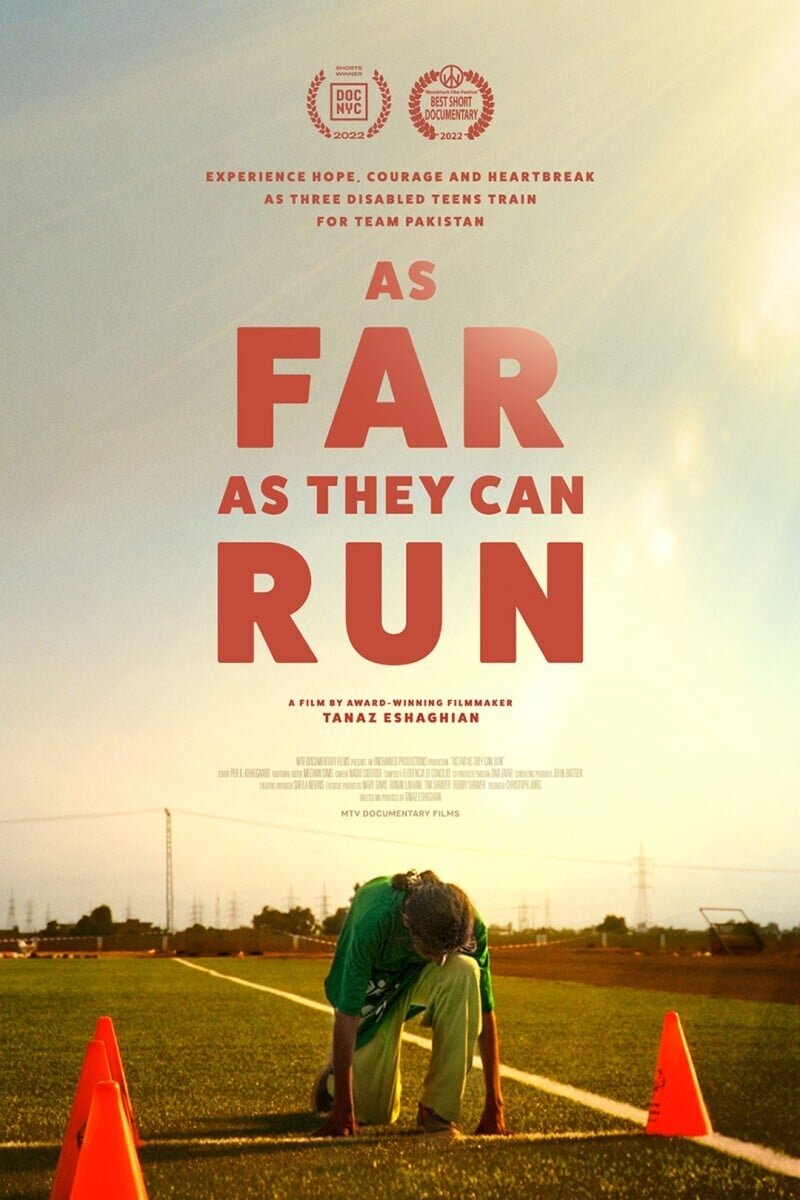
Capping what has been a productive year for Pakistani entertainment, local documentary “As Far As They Can Run” has been shortlisted for the Oscars.
This brings the tally of Pakistani films receiving international acclaim and getting a nomination at the Oscars to two.
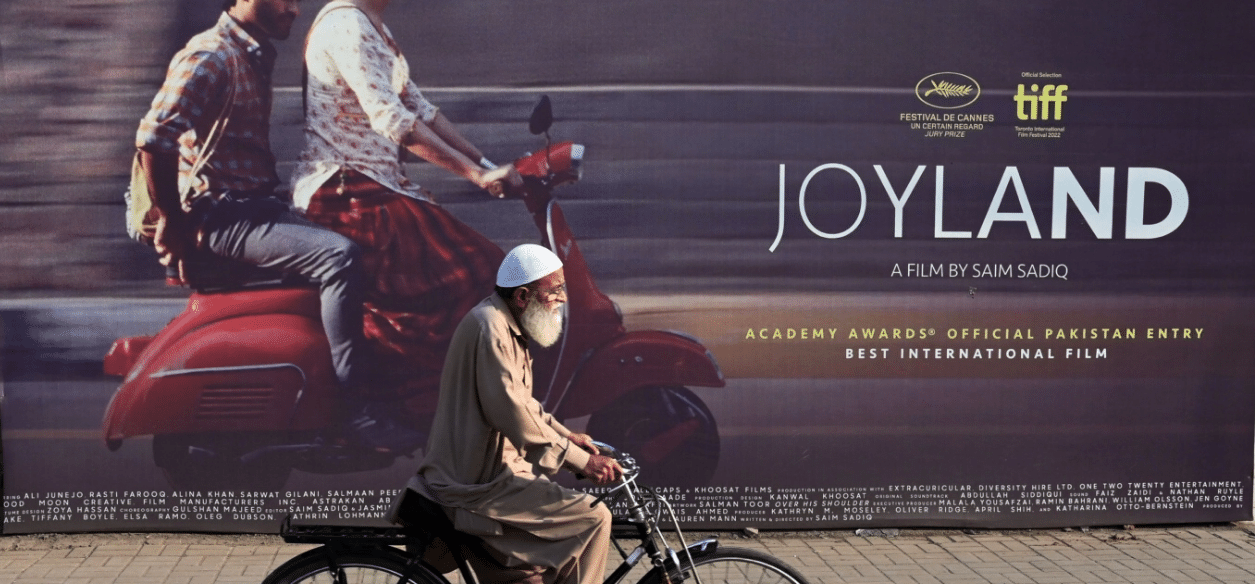
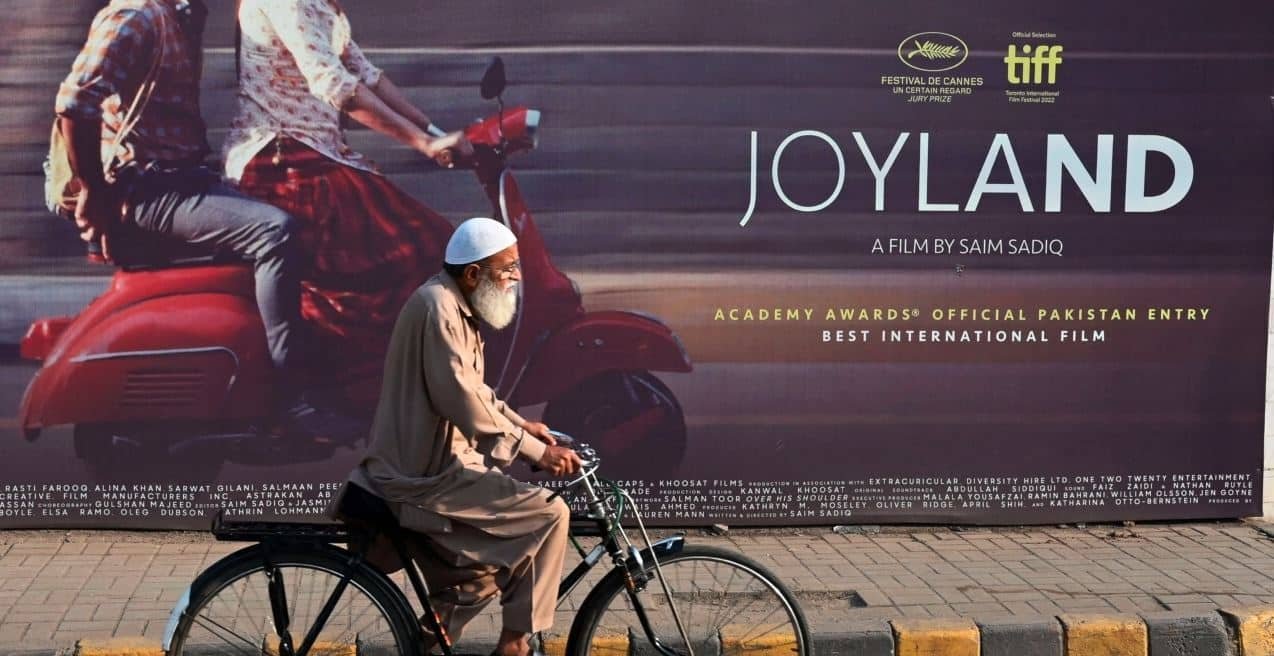
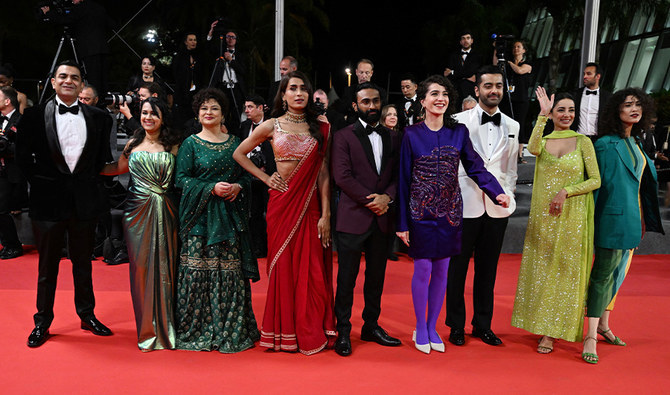
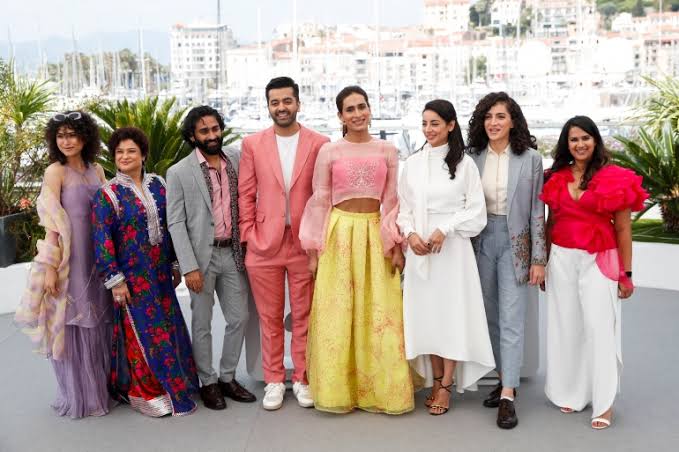
The team behind Joyland made the country proud by garnering critical acclaim at the Cannes Film Festival and other prestigious venues, and then getting shortlisted for an Oscar nomination. And now the Pakistani documentary ‘As Far As They Can Run’ too is up for the prestigious award in the ‘Documentary Short Film’ category. It explores the lives of three differently-abled adults who join a running program in Pakistan, hoping that they might change perspectives of differently-abled people in their hometown.
The last time a Pakistani filmmaker had won an Oscar was in 2016 by Sharmeen Obaid-Chinoy for her film “A Girl in the River: The Price of Forgiveness” which explores the custom of honor killings in Pakistan. Filmmaker and Producer behind the documentary Ziad Zafar shared the news from his Twitter account, where he said that he was thrilled to be part of this film and asked his followers to send him good luck. Fans can watch the documentary on Paramount Plus.
This has been an amazing year for the Pakistani entertainment industry. With the Ali Sethi and Shae Gill song Pasoori topping charts worldwide, our singer Arooj Arif winning a Grammy, and now the film Joyland has been shortlisted for the Oscars.
This is the first time a Pakistani film has been officially recognized for the category Best International Feature Film at the Oscars.
The official page for the movie uploaded a clip where activist and executive producer of the movie Malala Yousafzai was on the phone congratulating director and writer Saim Sadiq and also extending her well wishes to the rest of the team.
Other Pakistani-British actors like Riz Ahmed also sent their congratulations to the team behind the film, as he posted this screenshot of an article by Deadline this morning.
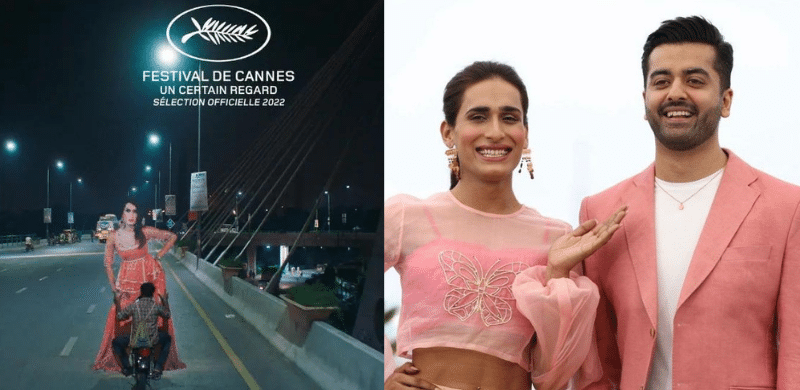
Joyland had began generating excitement among Pakistani audiences when it received the Jury Prize in the Uncertain Regard Awards Category at the Cannes Film Festival. It also received a 10 minute standing ovation at its debut.
Standing ovation for debuts can be so damn overwhelming … #joyland is a tender heartbreaker of a film … Reminding me of our own #Masaan back in 2015 … pic.twitter.com/LT1ILJzspo
On Alina Khan’s birthday, director and writer of ‘Joyland’ Saim Sadiq took to Instagram to appreciate the actor’s talent and creative spirit by sharing how the two had bonded together before shooting a scene in Joyland where the audience meets Biba for the first time.
You can read the full post below:
A day before the shoot for Darling, Alina disappeared for hours. @sanajafri14 and I texted her to bring this particular pair of shoes with her that she had to wear for her first scene. The first scene this magnificently talented girl would ever shoot in her life. But Alina just wouldn’t answer anyone’s call.
No one could trace her until 12 am at night when she finally called me from an unknown number. I could tell that she was trembling when she said she was stuck in “a situation” and just ran away from it and now needs a place to stay the night. I told her to come over.
She finally arrived at 2 am. She had bruises on her neck from the assault that she had managed to run away from. Yet, all she cared about was that she makes it to set on time and not lose this opportunity. And in that escape, she lost her phone and handbag. All she managed to bring with her were the shoes and she kept assuring herself and me that everything was still fine because she had her shoes for her first scene. I gave her an ointment, she slept in my sister’s room and the next morning we started the shoot, cracking jokes and being chill as if nothing had happened.
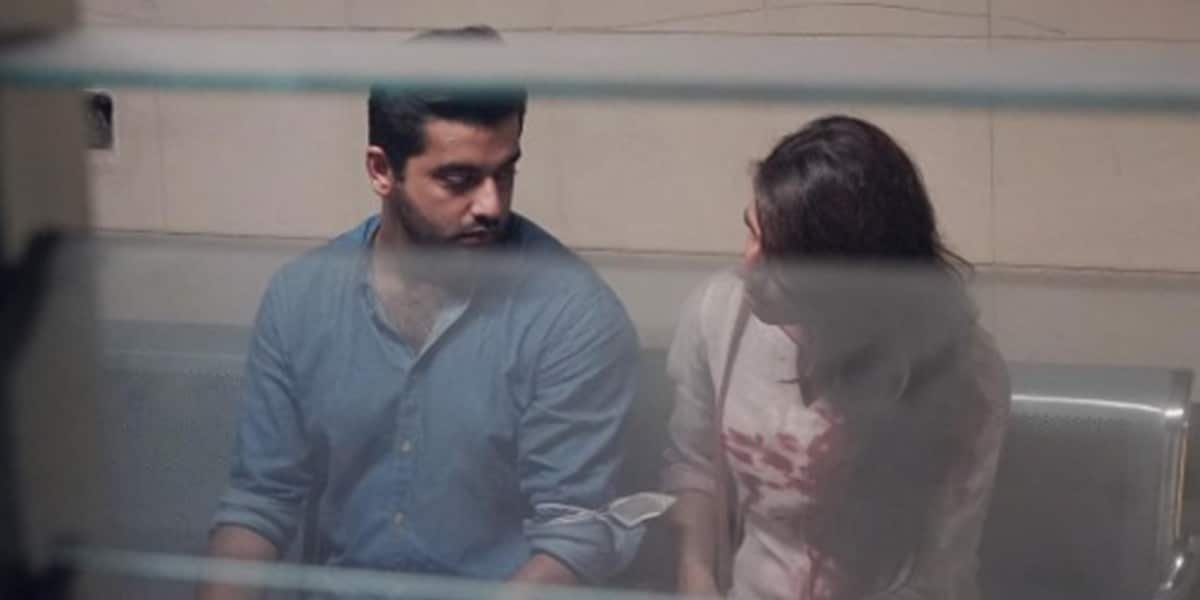
Years later, we shot for her introductory scene as Biba in Joyland and had the most cathartic experience of our lives. Both of us found a quiet room to discuss what we normally only joke about: the casualness with which we have to process the violence around us. We both cried and got the tears out of our systems because we didn’t want Biba to cry in the scene. She was going to show up with the blood on her shirt and there was going to be no explanation to where it came from. Because the everyday violence around us never ever makes sense. We hugged and cried again after packup because we knew… this was our scene.
It’s hard for me to think of a person who is more unaware of their inspirational status in other people’s lives than Alina! You are a true heroine of our times! Happy Birthday, @onlyalinakhan ! Thank you for your talent, your spirit, and your magical artistry!
In response to a petition challenging a ban on the screening of the movie Joyland in the province, the Lahore High Court on Wednesday sent notices to the Punjab government and the film censor board.
The petition was filed by the Distribution Club (Pvt.) Limited and film’s co-producer Sana Zahra while advocate Usama Khawar is representing the petition.
Khawar claimed that both the national and provincial film censor boards had initially given the movie the go-ahead for nationwide release in Pakistan in August 2022.
He said that the challenged prohibition order was a prime example of a non-speaking order because the respondent provincial government did not apply any thought or reasoning to it, and no justifications were given.
Justice Muzamil Akhtar Shabbir heard the arguments made by the attorney before sending notifications to the respondent requesting that they submit their responses by December 13.
The Sindh High Court has dismissed a plea requesting ban on the movie Joyland, Naeem Sahoutara reports for Dawn.
The petitioner requested a ban on the movie, stating that the movie depicts a relationship between a married man and a transgender woman, and that the plot is against the Constitution and Islamic principles.
The bench was headed by Chief Justice Ahmed Ali M Shaikh.
“In our view, where a cinematic work has passed through the censors, who have examined its content and cleared it for release with an appropriate certification, an individual cannot be allowed to trump that decision through a court proceeding based on his conception of morality. Indeed, it is not the function of the Court under Article 199 to make a moral judgment so as to curtail the freedom of speech and expression of a filmmaker, as safeguarded under Article 19 of the Constitution,” stated the detailed order passed by a division bench.
“On the contrary, the default position of the Court under Article 199 ought to be that of fully safeguarding the fundamental right by giving as expensive an interpretation to Article 19 as possible, and in that event of a restriction being imposed by the Board or any other authority that may be competent in that regard, testing the reasonableness of that restriction stringently, so as to ensure that the same is “reasonable” in the strictest conceivable sense.”
“Looking to the matter at hand, we are confident that Islam, being the great global religion that it is, is strong enough to withstand a cinematic work portraying a purely fictional account of a relationship humanizing a transgender character, and are equally sanguine that our society is not so weak as to crumble as a consequence,” the order stated.
Under pressure from conservatives, the federal government banned Saim Sadiq’s Joyland a few days before its countrywide release. After severe backlash on social media and mainstream media, the federal government finally reconsidered its decision and lifted the ban on Joyland. Less than 24 hours after the federal government decided to lift the ban, the Punjab government of issued a notice to the film’s producer, Sarmad Khoosat, saying that they cannot exhibit the film in the jurisdiction of Punjab province. Joyland is the country’s official entry for the Oscars, paving the way for Pakistan to make a name at the Academy Awards, with a bright chance to bring the Oscar home.
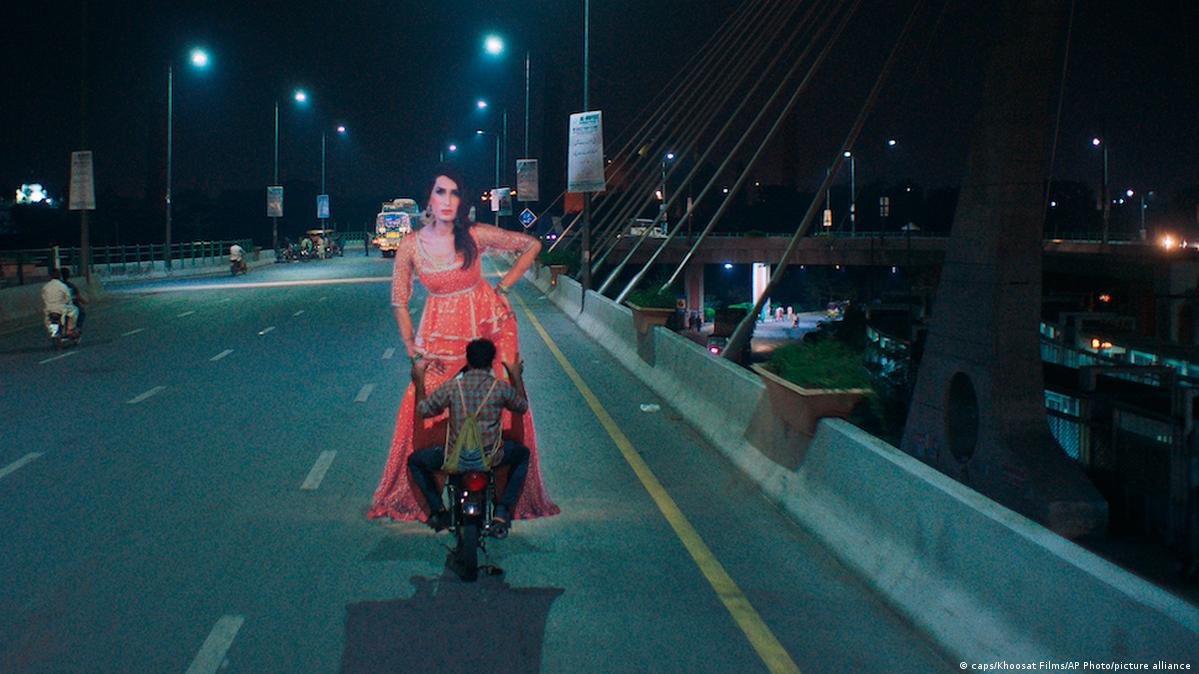
So how did a film promising to spread joy, receiving a 10-minute standing ovation from the august audience at the prestigious Cannes Film Festival, ended up getting banned in its own country and the very province it was filmed in, Punjab. Set in the eastern city of Lahore, Joyland tackles issues of gender and sexuality – taboo topics in Pakistan – through the story of a married man who falls in love with a transgender dancer, played by transgender actress Alina Khan. From what we understand, the story is about love, acceptance and tackling issues in relevance to gender. So the problem is basically because of the love between a transgender and a man in the movie.
Any marginalised community in a country goes through struggles and challenges of its own. From their right to live to their right to freedom, their existence revolves around many obstacles. Pakistan is no different. The transgender community in Pakistan is a marginalised community that on a daily basis is ridiculed, harassed, abused, and given life threats. And this has been a pattern for many years. So the treatment with “Joyland” has been no different.
The question is: what are we scared of? Does the representation of a marginlised community make us weak as a nation or does it make us stronger? How is upholding the ban in the wake of no real logic correct? How is Joyland a threat to the country’s cultural and social fabric? Pakistani cinema was in need of a moment like Joyland, until the bans which took away the joy from the land where transgenders are only laughed at, mocked, abused and not to forget, killed. It is acceptable to show transgenders being made fun of, but once they are shown as normal persons, living normal lives, it somehow becomes problematic and against social values. Isn’t it hypocritical of us? Joyland was one way people could understand and learn the pain and troubles the trans community goes through. But systems in Pakistan work and behave differently for the ones who are ‘different’. So here we are banning a film on a transgender and barring them an existence in fiction. Now imagine their existence in the real world. What is peculiarly interesting about the public outcry for the ban on “Joyland” is from people who are up in arms against a movie they haven’t seen.
We as a nation want to see the cinema and film industry thrive — but look at what we do to people who are the reason that art, film and Pakistan can flourish. We are habitual haters of a thriving society. We just hope that Punjab, which has significantly become a “joyless land” learns from the provinces next to it, remembers to laugh, be okay to experiment and above all, becomes a joyland.
The government of Pakistan banned Saim Sadiq’s Oscar contender “Joyland” for containing “highly objectionable” material, earlier this month.
An order dated Nov. 11 from Pakistan’s Ministry of Information and Broadcasting says that the country’s censor board had granted a censor certificate to the film on Aug. 17. But it has since reversed the decision.
“Written complaints were received that the film contains highly objectionable material which do not conform with the social values and moral standards of our society and is clearly repugnant to the norms of ‘decency and morality’ as laid down in Section 9 of the Motion Picture Ordinance, 1979,” the order states. “Now, therefore, in exercise of the powers conferred by Section 9(2) (a) of the said Ordinance and after conducting a comprehensive inquiry, the Federal Government declares the feature film titled ‘Joyland’ as an uncertified film for the whole of Pakistan in the cinemas which fall under the jurisdiction of CBFC with immediate effect.”
Head of Prime Minister of Pakistan’s Strategic Reforms, Salman Sufi publicly requested the current federal minister of Information & Broadcasting Marriyum Aurangzeb to review the ban and meet the film’s team.
PM @CMShehbaz has constituted a high level committee to assess #Joyland and review its ban.
The committee will assess the complaints as well as merits to decide on its release in Pakistan.
— Salman Sufi (Get New Covid Booster Today) (@SalmanSufi7) November 14, 2022
Sufi later revealed that Prime Minister Shehbaz Sharif has constituted a committee to assess Joyland and review its ban.
Latest Update (Ban Reversed)
The globally acclaimed and multiple award-winning Pakistani film Joyland has been given green signal by the censor board of Pakistan after reviewing it on the Prime Minister’s directions.
The full board has allowed the local screening of Joyland after deleting some parts. The film was initially set to have a commercial release in Pakistan on November 18.
PM Shehbaz Sharif formed a cabinet committee to look into the matter after some schools of thought had objected to the movie.
Release Stopped By Punjab Government
Following yesterday’s clearance by the censor board, Joyland’s theatrical release has once again been halted, this time by the government of Punjab.
The Government of Punjab has retracted its No Objection Certificate (NOC) issued to the movie Joyland. The notification issued by Information and Culture Department reads that Punjab government, in the wake of complaints, has decided to ‘recall’ the movie by “exercising powers conferred under Section-9 (1 and 2) Motion Pictures Ordinance, 1979.” “You are therefore directed not to exhibit above titled film in the jurisdiction of Punjab province till further orders of the Govt,” reads the notification.
Reactions On The Ban
Saim and his team members raised their voices against the ban imposed by the government. Terming the ban a “grave injustice,” Sadiq, in an Instagram post, says that the ban is “absolutely unconstitutional and illegal” and has urged the country’s Ministry of Information and Broadcasting to review the decision.
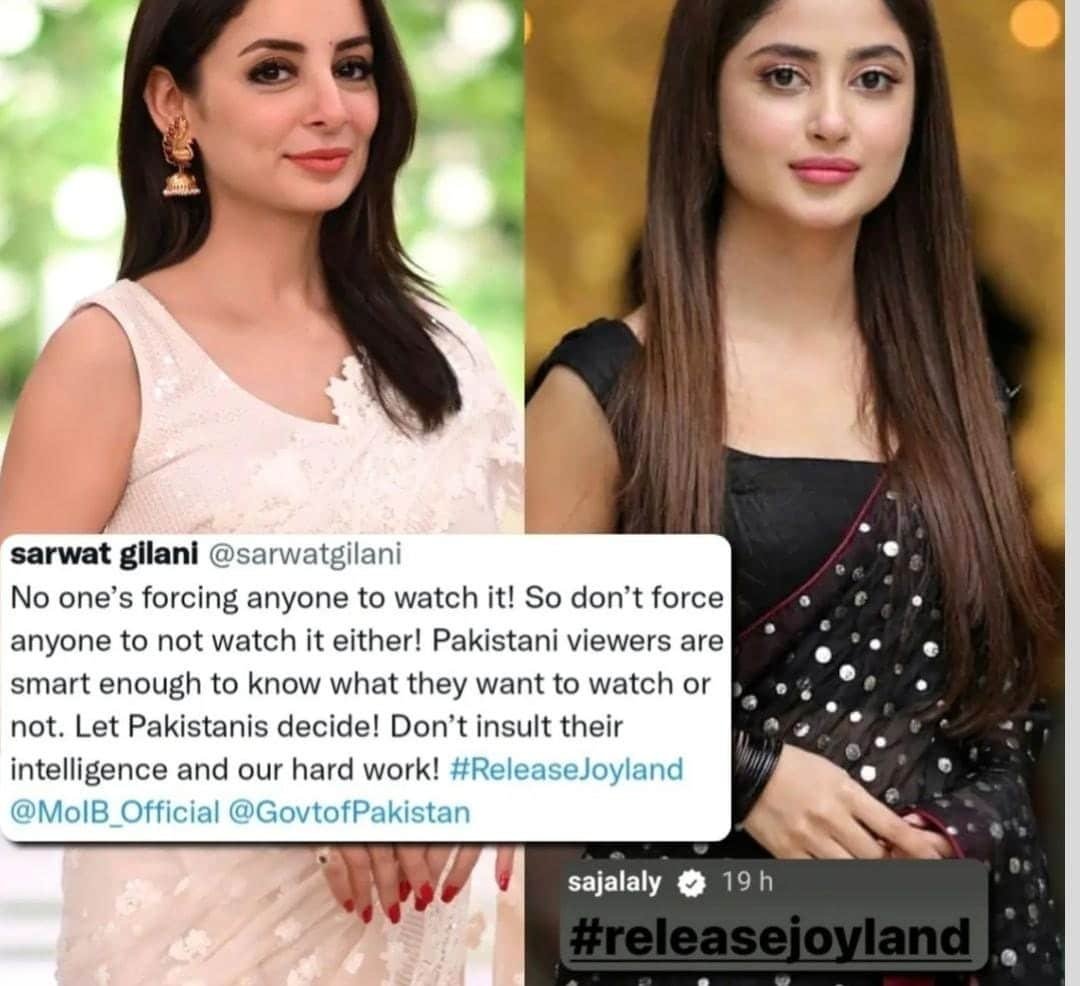
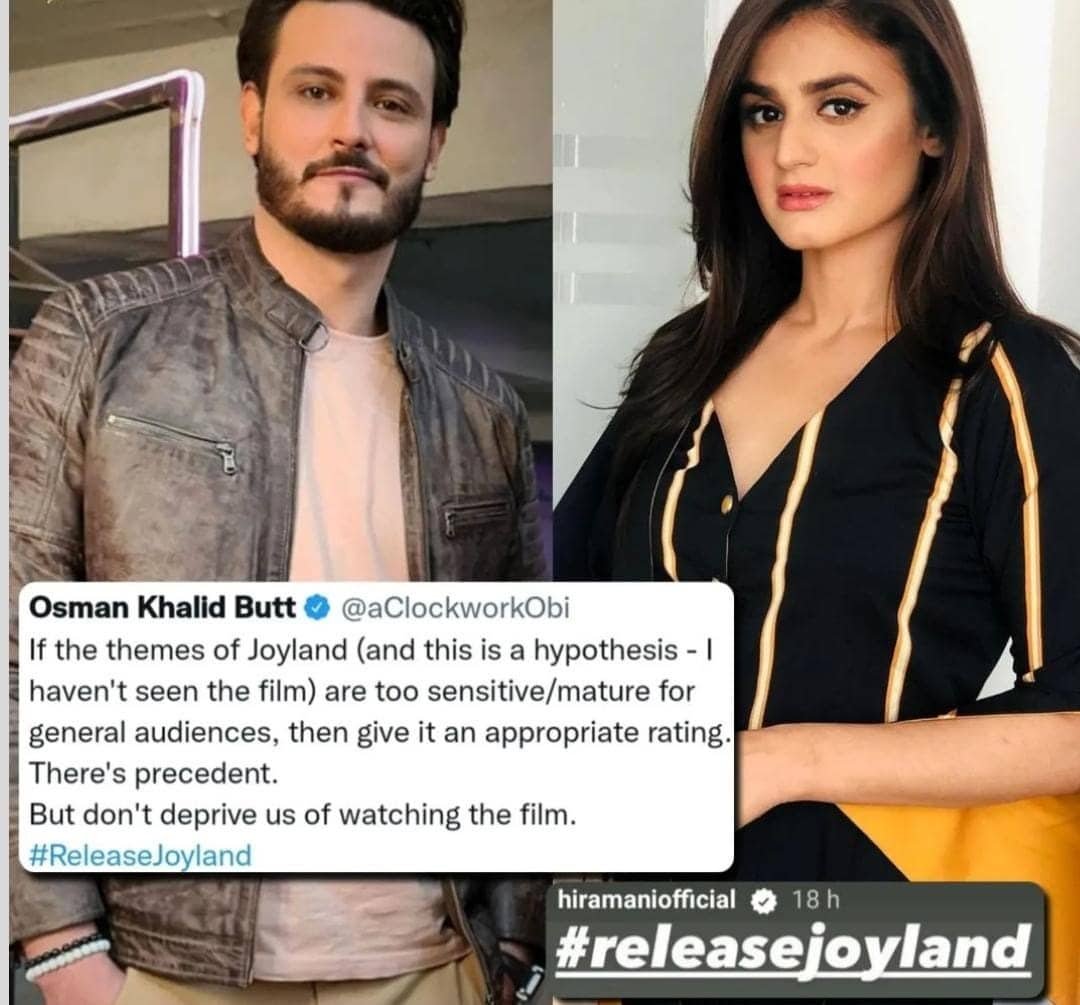
Apart from the film’s team, A-list celebrities and media personalities also reacted to the news and expressed their support for the film.
#ReleaseJoyland ! There is no reason not to. Be proud of the work that our artists create not afraid! Give your own people the respect they get in foreign lands. Support us, stand by us and we as Pakistani artists will make this country proud! https://t.co/6jQizg0Xbx
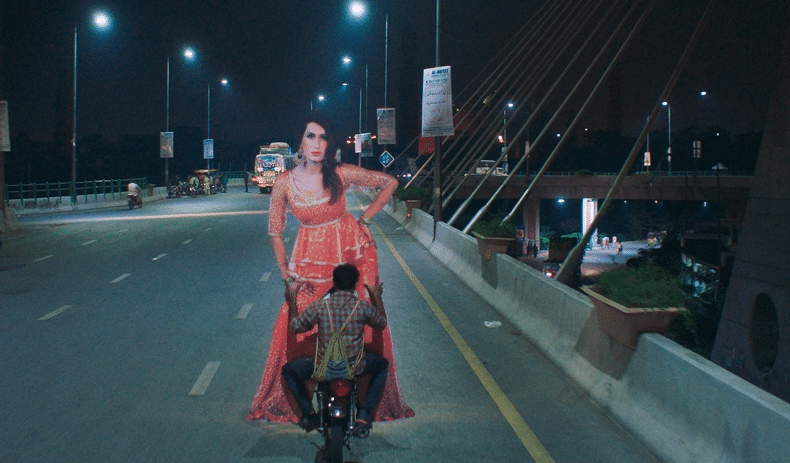
Set in Lahore, the film revolves around Haider, the youngest son of the middle-class, patriarchal Rana family. As the Ranas yearn for the birth of a baby boy, Haider secretly joins an erotic dance theater and finds himself falling for a fiercely ambitious trans starlet. Their love story illuminates the secrets and desires of the entire Rana family.
The film debuted at the Un Certain Regard strand at Cannes earlier this year, where it won the jury prize. Nobel laureate Malala Yousafzai later joined the project as an executive producer. It is Pakistan’s entry in the Oscars’ international feature category.
Recently it also won the Asia Pacific Screen Awards’ young cinema award, given in partnership with critics’ association NETPAC and the Griffith Film School.
After hearing of the ban, APSA said in a written statement: “ ‘Joyland’ represents a significant new cinematic talent in Saim Sadiq from Pakistan, who has crafted a moving and entertaining drama about family in his debut feature film. The Young Cinema Award Jury commends Saim Sadiq for his brave and joyous celebration of community diversity and the universality of love.”
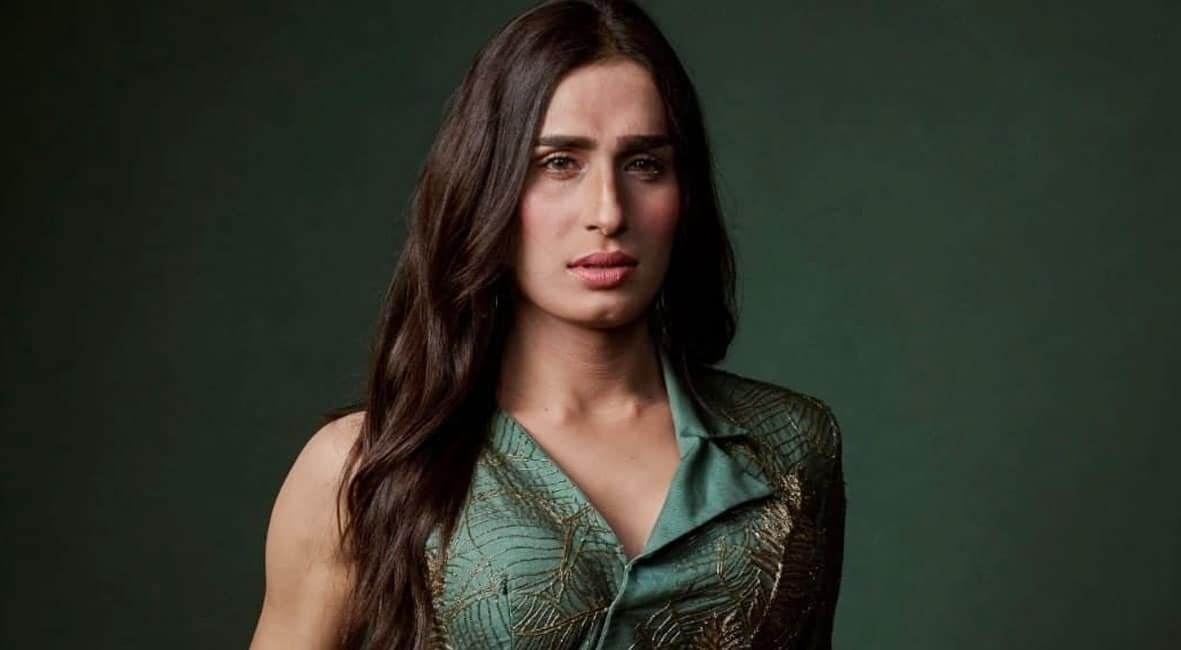
Alina Khan, the transgender star of the award-winning film Joyland recently chatted with The Guardian over her journey as a transgender and the ban on the movie in Pakistan.
Khan said she was rejected by her family when she came out as trans. “My family did not accept me, but neither did society.” She was told she embarrassed relatives, and her mother was constantly angry with her. “She would tell me not to make exaggerated hand gestures like a woman while talking, to sit like a boy and not be in the company of girls,” said Khan. Her siblings called her khusra – a derogatory term, which was originally used to refer to eunuchs but is also a slur against trans people. But as Khan said: “I had never met a transgender [person] in my life so did not know what they were like.”
After she received global appreciation for her work, Khan’s family welcomed her with warmth. “They accepted me finally. They realised that I was not earning by begging or doing sex work,” she said.
Joyland has been hailed on the festival circuit. It was the first Pakistani film to be selected as an official entry at Cannes in May, winning two festival awards and receiving a standing ovation in a packed Salle Debussy theatre.
“Tears were trickling down my face while I continued smiling. I don’t know whether the tears were of joy, were for all the hard work that I put in, or for my struggles since I was a child and that continue,” said Khan, who made her screen debut in the short film Darling in 2019. “For the first time in my life, I felt my talent preceded my gender, I was given so much respect.”
The Saim Sadiq directorial was banned last week by the Pakistani government. Canceling the film’s license, which puts its Oscars’ contention in doubt, the Ministry of Information and Broadcasting, announced: “Written complaints were received that the film contains highly objectionable material which do not conform with the social values and moral standards of our society and is clearly repugnant to the norms of ‘decency and morality’ as laid down in Section 9 of the Motion Picture Ordinance, 1979”.
Alina expressed her disappointment with the film’s ban in Pakistan, “I’ve been very sad. There’s nothing against Islam and I don’t understand how Islam can get endangered by mere films.”
The 24-year-old added: “The Pakistani trans community was also very upset.”
Set in Lahore, the film tells the story of Haider, a married man who joins a dance troupe and falls in love with the lead transgender dancer, Biba, played by Khan.
Khan told the Guardian she adores Biba.
A poster for Joyland, designed by the Pakistani artist Salman Toor. Photograph: Courtesy of Alina Khan
“She’s a badass, strong-willed, fiercely independent, dominating, outspoken woman, everything that I am not; I loved the role I played,” said Khan. When she was offered the role, she was relieved not to play an “oppressed” character “which is the life for most transgenders in Pakistan”.
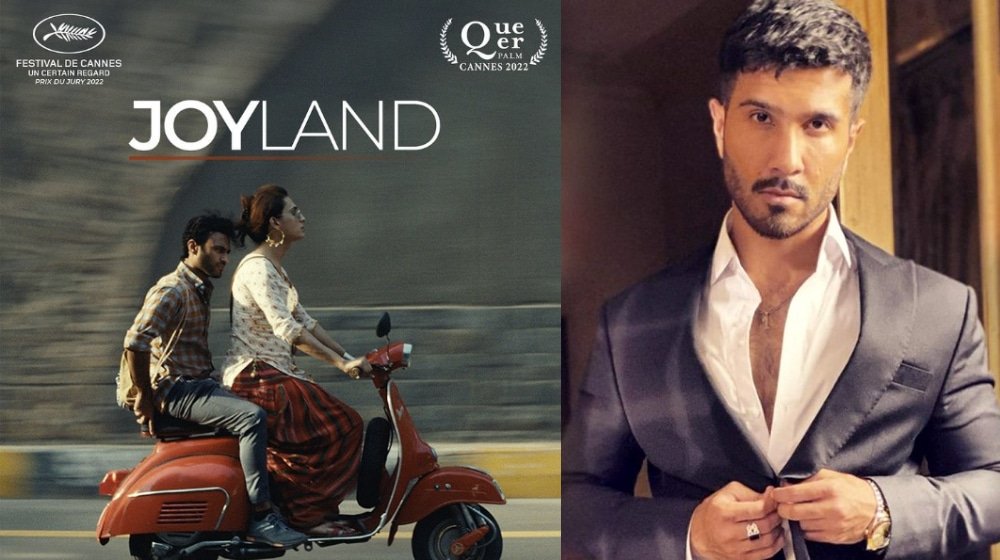
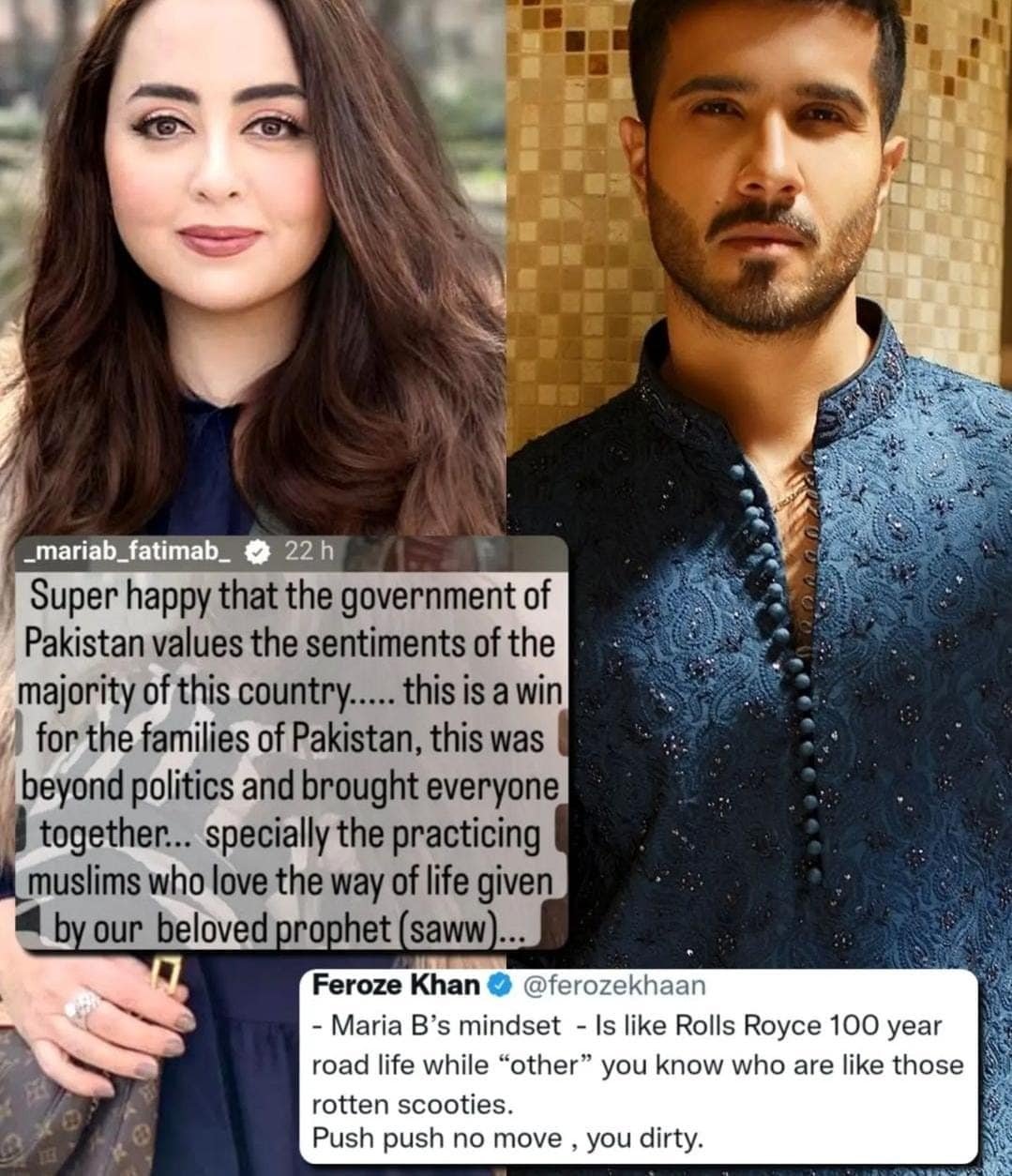
Actor Feroze Khan has supported designer Maria B’s stance on the ban of the feature film Joyland. He compared her mindset to a Rolls Royce with a 100-year road life. The Khaani star dissed several celebrities who are supporting the film and termed them as “rotten scooties”.
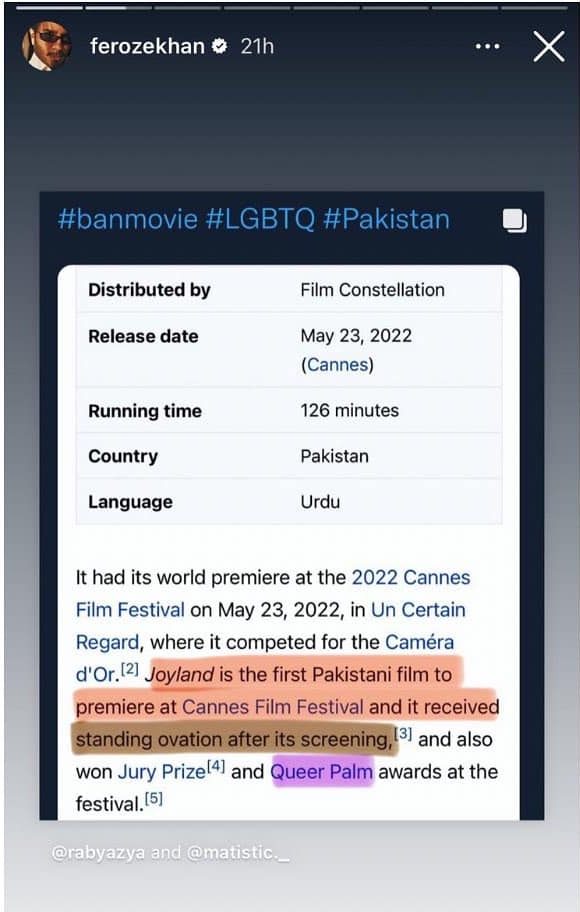
Khan tweeted, “Maria B’s mindset – Is like Rolls Royce 100-year road life while “other” you know who are like those rotten scooties. Push push no move, you dirty.” He also asked for the film’s ban earlier in an Instagram story.
An order dated Nov. 11 from Pakistan’s Ministry of Information and Broadcasting says that the country’s censor board had granted a censor certificate to the film on Aug. 17. But it has since reversed the decision.
“Written complaints were received that the film contains highly objectionable material which does not conform with the social values and moral standards of our society and is clearly repugnant to the norms of ‘decency and morality as laid down in Section 9 of the Motion Picture Ordinance, 1979,” the order states. “Now, therefore, in the exercise of the powers conferred by Section 9(2) (a) of the said Ordinance and after conducting a comprehensive inquiry, the Federal Government declares the feature film titled ‘Joyland’ as an uncertified film for the whole of Pakistan in the cinemas which fall under the jurisdiction of CBFC with immediate effect.”
“Joyland” was due to release in Pakistan on Nov. 18.
Saim and his team members are raising their voices against the ban imposed by the government. Terming the ban a “grave injustice,” Sadiq, in an Instagram post, says that the ban is “absolutely unconstitutional and illegal” and has urged the country’s Ministry of Information and Broadcasting to review the decision.
Apart from the movie’s team, several A-list celebrities condemned the ban and extended support to the team.
#ReleaseJoyland ! There is no reason not to. Be proud of the work that our artists create not afraid! Give your own people the respect they get in foreign lands. Support us, stand by us and we as Pakistani artists will make this country proud! https://t.co/6jQizg0Xbx
The government of Pakistan has stopped the release of Saim Sadiq’s Oscar contender “Joyland” for containing “highly objectionable” material. An order dated Nov. 11 from Pakistan’s Ministry of Information and Broadcasting says that the country’s censor board had granted a censor certificate to the film on Aug. 17. But it has since reversed the decision.
“Written complaints were received that the film contains highly objectionable material which do not conform with the social values and moral standards of our society and is clearly repugnant to the norms of ‘decency and morality’ as laid down in Section 9 of the Motion Picture Ordinance, 1979,” the order states. “Now, therefore, in exercise of the powers conferred by Section 9(2) (a) of the said Ordinance and after conducting a comprehensive inquiry, the Federal Government declares the feature film titled ‘Joyland’ as an uncertified film for the whole of Pakistan in the cinemas which fall under the jurisdiction of CBFC with immediate effect.” The ban has caused outrage on social media with citizens denouncing the decision.
Actor Nadia Jamil has shared things we can do to put pressure on the government to help Joyland:
Use the hashtag #releasejoyland on Twitter every time you tweet about the film.
Tag the following accounts on Twitter every time you post: @MoIB_official (ministry of information and broadcasting) @marriyum_A (Marriyum Aurangzeb)
Call Ministry of Information and Broadcasting and demand that they stand up to pressure from people looking to malign the film. 051 9103557 9211800 9213649.