Tag: judge

  • Archenemies? Fakhar Durrani reveals why former judge Ijazul Ahsan disliked the Sharifs

    Archenemies? Fakhar Durrani reveals why former judge Ijazul Ahsan disliked the Sharifs

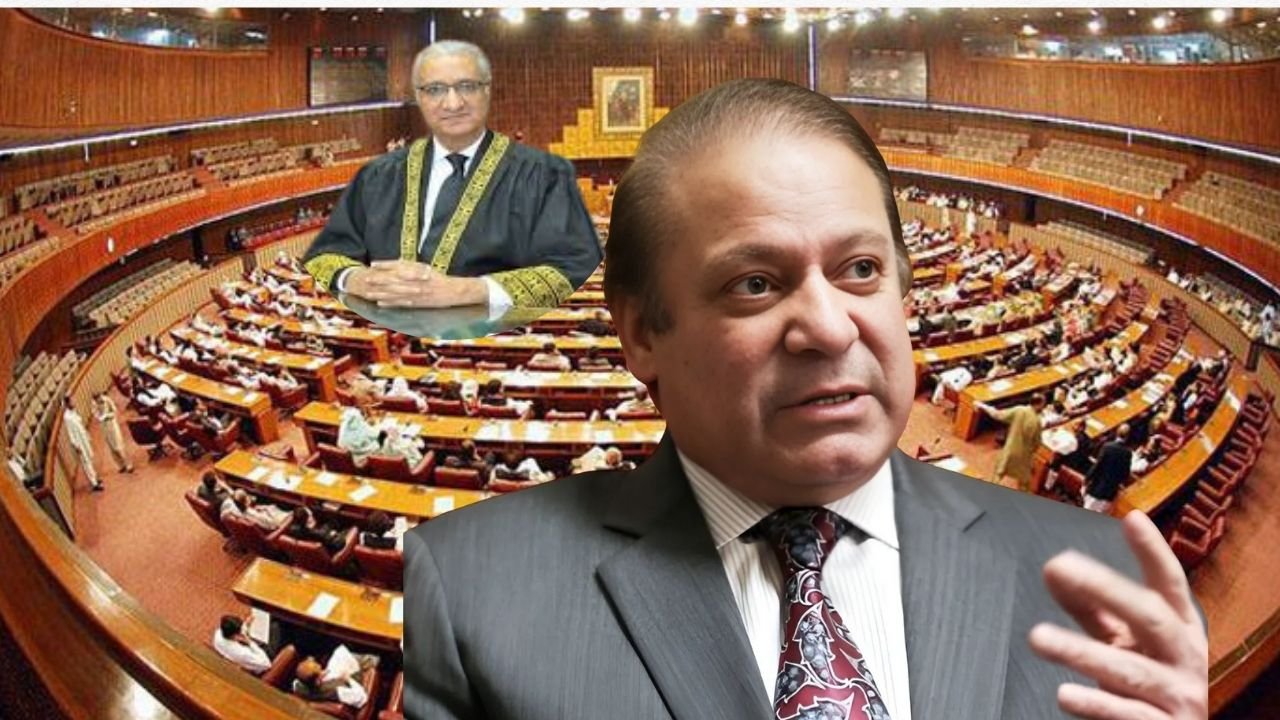
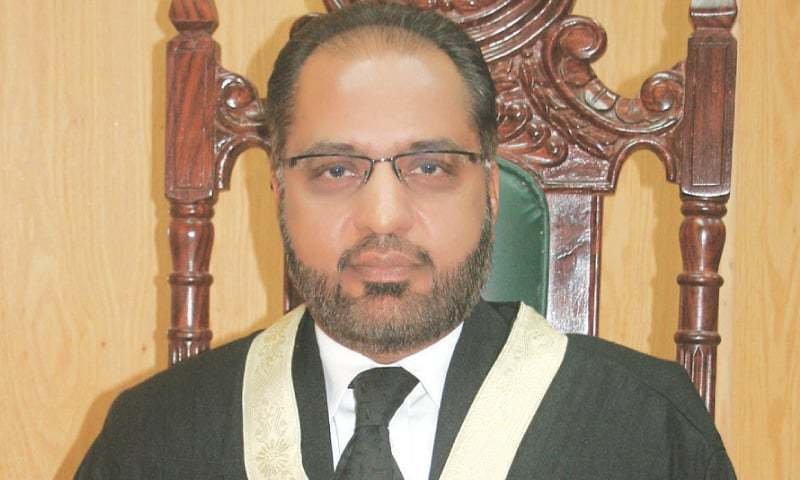
    The News’ Fakhar Durrani has published a detailed investigative report which points out the reasons behind former Justice of the Supreme Court Ijazul Ahsan’s alleged bias against the Sharif family.

    According to The News report, there were reportedly two quite old incidents that may have fueled the judge’s prejudice against the Sharifs, which reflected in his judgements against the family.

    One incident was nearly 25 years old when the judge’s brother, Major (R) Izaharul Ahsan, was a highly-paid employee as the head of marketing at Ittefaq Foundry in Lahore. In the late 1990’s, Hussain Nawaz, the elder son of Nawaz Sharif, took charge of Ittefaq Foundry. He reviewed the performance of the senior management team, including Izhar ul Ahsan.

    It was reported that Hussain Nawaz was unsatisfied with Izharul Ahsan’s performance, which was below average, and this led to his immediate removal.

    In 2013-14, Izhar ul Ahsan visited the Sharif family’s steel mill in Saudi Arabia, bringing along some businessmen. However, he entered Hussain Nawaz’s office without prior notice or an appointment at which Hussain took offence. This incident added fuel to the fire between the Ahsans and the Sharifs.

    Durrani reported that the second incident was rather more interesting and recent as the former judge is a neighbour of the Sharifs in Model Town, Lahore. Since 2008, while the Sharifs held power in Punjab, subsequent security protocols remained high. Logically, it created hindrances for other home owners – one of whom was the then Lahore High Court judge.

    After the Sharif family lost power in 2018, Justice (R) Ijazul Ahsan ordered the removal of all security barriers around their home. To send a message, he installed the same barriers at his own residence, where they stayed until Imran Khan was in power. This move reflected his ongoing grudge against the Sharif family.

    Durrani wrote that according to his sources, the security issues and the firing of Justice Ijazul Ahsan’s brother from a lucrative position fueled his resentment towards the Sharif family, which was clear in his comments and rulings against them.

    Those who orchestrated the Sharifs’ removal in 2017 recognised his personal grievances, which is why they ensured his inclusion in the Panama case bench, wrote the reporter.

    After the Panama case, the judge was also appointed as the monitoring judge to oversee the Sharif family’s trial in the Accountability Court. Sources say his anger towards the Sharifs was evident in his actions, as he frequently summoned NAB officials working on the case. He guided them on how to file references and what evidence to present against the Sharifs.
  • Rana Sanaullah says Imran Khan sentences won’t sustain

    Rana Sanaullah says Imran Khan sentences won’t sustain

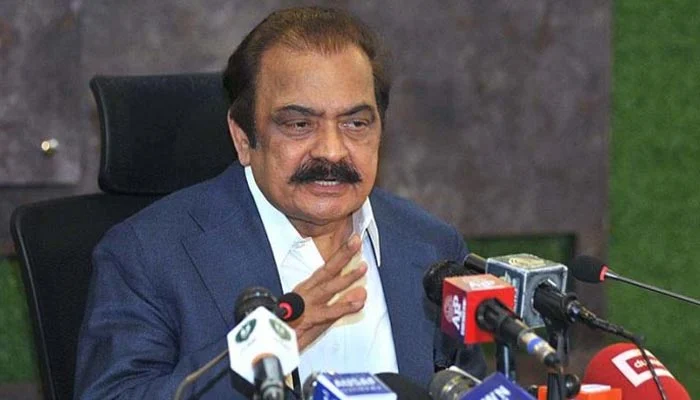
    Pakistan Muslim League-Nawaz (PML-N) leader Rana Sanaullah has said that the convictions against Pakistan Tehreek-e-Insaf (PTI) founder Imran Khan before the elections damaged the ruling party PML-N.

    He stated that either of the sentences awarded to Khan would not “sustain” before an honest judge.

    “The cases in which the PTI founder was sentenced significantly damaged us [PML-N] in the elections due to the victim card used by the PTI. The manner in which the case proceedings were held and the sentences were awarded, they would not sustain before a judge who upholds principles of justice,” Sanaullah said while speaking to Kamran Shahid on Dunya News.

    Sanaullah even said that either the judge would remand back the case or could even exonerate Mr Khan and further said that his party would have no objection if he got a bail.

    Former interior minister Sanaullah was also of the opinion that PTI took advantage of its victim card and also pushed the country into a crisis – which PML-N government now has to look after.

  • SC declares dismissal of former IHC judge Shaukat Aziz Siddiqui unlawful.

    SC declares dismissal of former IHC judge Shaukat Aziz Siddiqui unlawful.

    The Supreme Court on Friday ruled the dismissal of former Islamabad High Court (IHC) senior judge Shaukat Aziz Siddiqui as illegal, issuing directions that he may now be considered a retired judge.

    The decision was announced by a five-member bench led by Chief Justice of Pakistan Qazi Faez Isa, Justice Aminuddin Khan, Justice Jamal Khan Mandokhail, Justice Hasan Azhar Rizvi, and Justice Irfan Saadat. The bench had reserved the verdict on Aziz’s plea in January this year.

    In his petition, the former judge challenged the decision of Supreme Judicial Council (SJC) removing him from office and an Oct 11, 2018 notification because of which he was dismissed for a controversial speech he had delivered at Rawalpindi Bar Association.

    In his speech, Aziz blamed the country’s premier spy agency ISI of illegally using their influence to manipulate the court proceedings and forming their choice of benches in cases related to indictment of former Prime Minister Nawaz Sharif and his daughter Maryam Nawaz.

    However, since the court noticed that since the former judge had attained the age of 62 years, he would not be able to resume his previous service as a judge. “Consequently, Justice Siddiqui shall be deemed to have retired as a judge of the IHC and he will be entitled to receive all the benefits and privileges due to a retired judge, by allowing these petitions in the above term,” it stated.

  • Judges in England and Wales allowed to use ChatGPT to write judgments

    Judges in England and Wales allowed to use ChatGPT to write judgments

    Judges in England and Wales have been allowed to use artificial intelligence (AI) tool, Chat GPT, to write judgments.

    The permission has been granted despite concerns that artificial intelligence could write references to cases that never happened.

    The Judicial Office has issued guidelines for the use of AI Chat GPT for thousands of judges in England and Wales, saying that artificial intelligence can help summarise long texts.

    Master of the Rolls Sir Geoffrey Voss has described artificial intelligence as a better, faster and cost-effective digital assistant for the justice system.

    Only earlier this year, two American lawyers were fined for citing fake cases created by ChatGPT.

  • PM Kakar nahi jantay kisko mil rahi hai muft bijli?

    PM Kakar nahi jantay kisko mil rahi hai muft bijli?

    Interim Prime Minister Anwaar ul Haq Kakar recently gave a statement that only Wapda’s employees, including retired ones, get free electricity and there is no such facility available for anyone else including judges. This statement is factually incorrect.

    Truth is that not only utility bills (including electricity bills) of the serving judges of the Supreme Court and High Courts are paid by the government, but the retired ones also get free electricity of up to 2000 units a month in case of an ex-SC judge and 800 units a month in case of a former high court judge, as per Ansar Abbasi’s report for Geo news.

    Not only this, the president and prime minister also enjoy free utilities including free electricity without any limits but in the case of the ex-president, he is provided 2000 units a month of electricity at the cost of taxpayers’ money.

    President’s Salary, Allowance and Privileges Act, 1975 as amended in 2018 says in Section 7 that the actual charges for electricity and gas consumption shall be paid in each year to the president. After retirement, the president also gets gas to the extent of monthly consumption of 10 HM3 and water, all paid by taxpayers.

    Chairman of National Accountability Bureau (NAB) also enjoys similar facilities as those of a Supreme Court judge, including free electricity. There is no confirmation of what the prime minister has claimed about services’ chiefs.

    In October 2020, Justice Faez Isa and his wife released income tax and asset details in which it was clearly written that post-retirement benefits of a Supreme Court judge include 2000 units of electricity, 25 HM of gas, water and 300 litres of petrol per month.

    High Court Judges (Leave, pension, privileges) order 1997 not only talks about the payment by government for provision of electricity gas and water but also says in Section 28 that a judge on retirement and after his death, the spouse shall be entitled to certain benefits including 800 units of electricity per month as well as 25 HM3 of gas per month.

    All those quasi-judicial public offices including the offices of NAB chairman, federal ombudsman etc where retired judges, or retired civil servants are appointed, the residence utility bills are also paid from the public funds.

    According to a NAB document, “i) Chairman NAB shall be entitled without payment of rent to the use of a residence provided by the Government throughout his term of office maintained at Government expenses with all utilities to be paid on actual basis by the Government. ii) In case of non-availability of Government accommodation or the Chairman chooses to reside in a private residence, the expenses on maintenance and all utilities as per actual, will be paid by the Government, in addition to house rent allowance.”

  • Justice Faez declines invitation to dinner hosted by Chief Justice Bandial

    In an effort to lessen animosity and differences between the superior judiciary, Chief Justice (CJ) Umar Ata Bandial on Monday hosted a dinner for his fellow senior Supreme Court (SC) judges.

    All of the judges of the apex court attended the event except for the next CJ of Pakistan, Justice Qazi Faez Isa.

    Justice Isa, a lawyer said, might have decided not to attend the dinner as the CJP has already reserved his decision on a government’s plea regarding withdrawal of its curative review petition against an apex court order dismissing a presidential reference against the said judge.

    Earlier, a retired chief justice also reportedly tried to resolve the issues between Bandial and Isa but all in vain.

    The SC is divided into two groups with eight judges on one side and seven on the other. Two positions in the Supreme Court have been lying vacant.

    It is pertinent to mention that questions related to the supreme power given to CJP Bandial were raised when he took up election suo moto case despite opposition by many senior judges including Justice Qazi Faez. Since then the rift in the court has been widely speculated upon.

  • Islamabad High Court saves Imran Khan from getting arrested

    Islamabad High Court saves Imran Khan from getting arrested

    Islamabad High Court (IHC) has stopped police from arresting Pakistan Tehreek-e-Insaf (PTI) Chairman Imran Khan.

    The court has said that Khan should be given a chance to present himself before the Islamabad sessions court which issued the non-bailable arrest warrants for Khan and directed the police to present him before them on March 18 (Saturday).

    Imran en route to LHC to offer assurance that he will go to Islamabad tomorrow

    Khan will also present himself before the Lahore High Court (LHC) on Friday afternoon (today) to assure the judge that he will appear before the Islamabad sessions court — which has issued non-bailable arrest warrants for him— tomorrow.

    It is pertinent to mention here that since Tuesday the Islamabad police and Rangers have been trying to arrest Imran failed to do so.

    The police arrived with Khan’s arrest warrant which was issued by a court in Islamabad on Monday, March 13, due to his continuous absence from the hearings of the Toshakhana case. The court had also directed police to present the ex-premier in court by March 18.

    A case was registered against Khan that he hadn’t disclosed gifts that he received and was supposed to deposit in Toshkahana before selling them. Despite the court’s numerous warnings, Khan didn’t appear before the judge.

  • ‘Mai maafi maangta hoon agar meri taraf se koyi line cross huvi hai’: Imran Khan

    ‘Mai maafi maangta hoon agar meri taraf se koyi line cross huvi hai’: Imran Khan

    Pakistan Tehreek-e-Insaf (PTI) Chairman Imran Khan has told the Islamabad High Court (IHC) that he apologizes if he crossed any line.

    Speaking to the court, Khan said, “Mai khaatoon judge se zaati taur pe maafi maangta hoon,” (I personally apologize to the female judge).

    “I assure the court that I will not do something like this in the future,” he added.

    Khan was attending proceedings of a contempt of court case today (Thursday), for his controversial remarks about Additional District and Sessions Judge Zeba Chaudhry during a rally in Islamabad on August 20. The former Prime Minister said that he will personally apologise to the the female judge.

    The IHC was expected to formally indict him today.

    Following this, the IHC CJ remarked that it would not be appropriate to conduct contempt proceedings. The court decided to not indict the PTI chief after he agreed to apologise to Judge Chaudhry and the hearing was subsequently adjourned.

    The court also directed the PTI chief to submit an affidavit.

    As he made his way inside the court along with party leaders Shah Mahmood Qureshi, Asad Umar and Shibli Faraz, Imran was surrounded by reporters asking questions. However, he chose to stay silent when asked whether or not he would tender an unconditional apology, answering only with a smile.

    On a lighter note, he remarked that he would become an “expert” due to the sheer number of cases registered against him.

    The IHC in a circular had stated that the proceedings of the case will start at 2:30pm, during which a larger bench of the IHC will frame the charges against Khan.

    “A 15-member legal team of Imran Khan, 15 law officers from the office of the attorney-general and advocate-general will be allowed to enter the courtroom,” read the circular.

    “Imran Khan’s response was unsatisfactory,” said IHC Chief Justice Athar Minallah, in the last hearing.

    Justice Minal­lah observed that Khan’s replies to the court’s show-cause notice appeared to be “Justifying contempt of the judiciary” and showed “No remorse or regret”.

  • ‘Can anyone disappear without the govt’s will?’ IHC questions state of enforced disappearances

    ‘Can anyone disappear without the govt’s will?’ IHC questions state of enforced disappearances

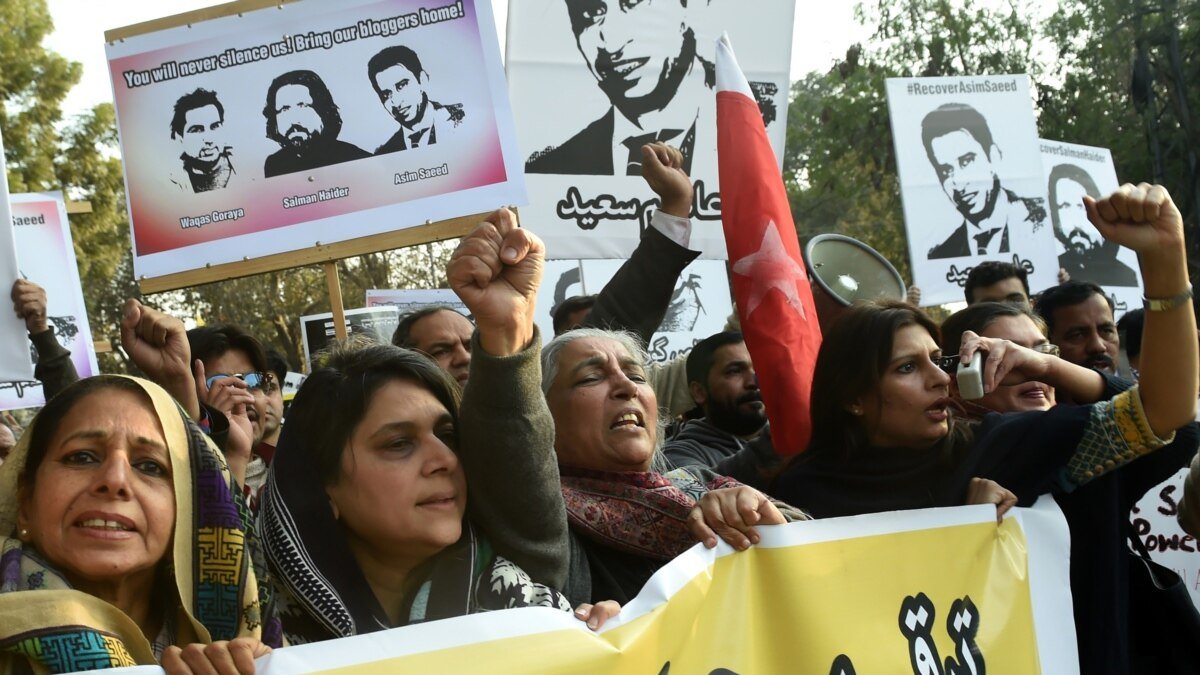
    During a case hearing of missing Lahore journalist, Mudassar Naro at Islamabad High Court (IHC), Chief Justice (CJ) Athar Minallah said that enforced disappearances are ‘treason’.

    He said that such disappearances are not acceptable in a country that follows the Constitution. In the hearing, the additional attorney-general and judicial assistant appeared before the court.

    “Can anyone be disappeared without federal and provincial governments will? No,” the judge said. The judge then said that sections of the Anti-Terrorism Act are applied in such cases.

    The CJ asked if the inability to recover Naro is the failure of state agencies. He added that both governments should have looked into this matter.

    According to Geo News, Mudassar Naro has been missing since August 20, 2018. The disappearance occurred when he went to the northern areas with his wife and child. His wife and child returned but Naro has been missing ever since.

    His activist wife Saddaf Chughtai passed away last year due to a sudden cardiac arrest, leaving behind their four-year-old son.

    The Pakistan Federal Union of Journalists (PFUJ) has shown serious concern over the situation. They have also called upon Prime Minister (PM) Imran Khan and Minister for Human Rights Shireen Mazari to look into the case. However, after almost four years since his disappearance, his recovery hasn’t been made yet.