Tag: Judicial Commission of Pakistan

  • Supreme Court uploads audio of JCP meeting on its website

    The Supreme Court of Pakistan (SCP) uploaded the audio of the Judicial Commission of Pakistan’s (JCP) meeting on its website.

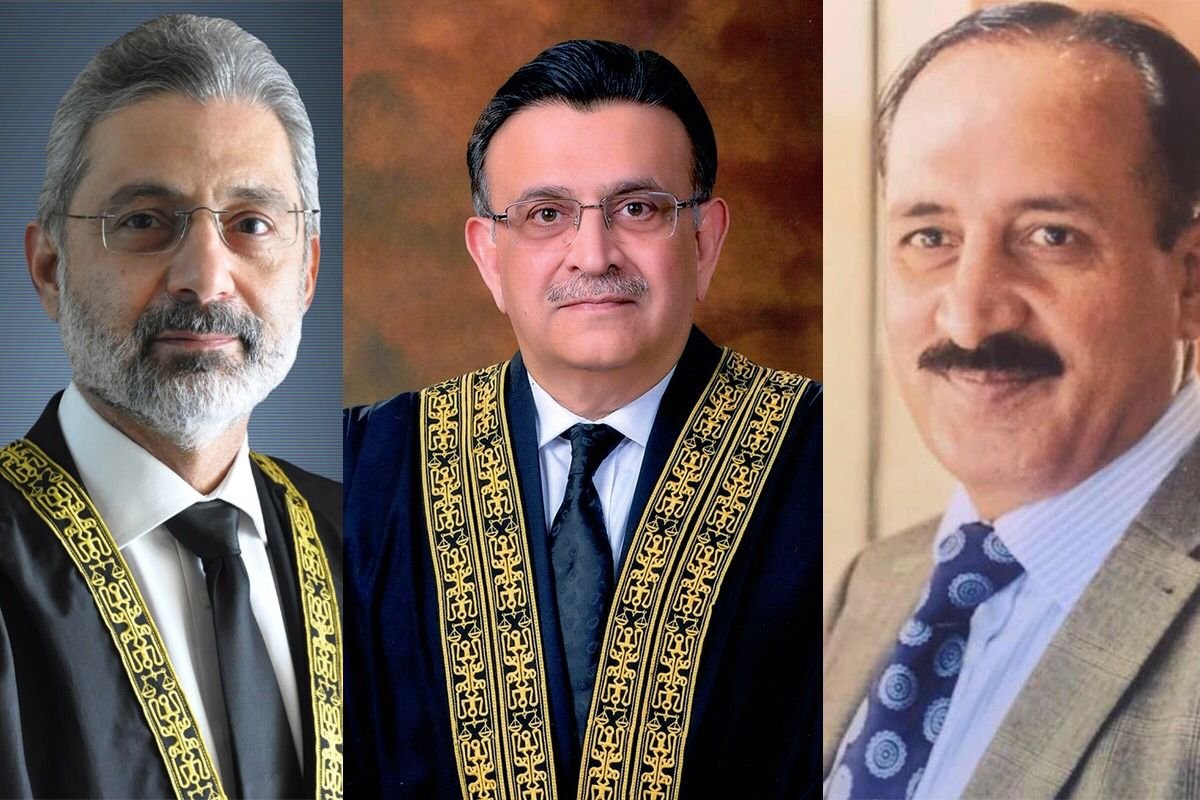
    The recording was of the letters issued by two JCP members — senior puisne SC judge Justice Qazi Faez Isa and Justice Sardar Tariq Masood — both of whom claimed the meeting had disapproved the nominations of judges, proposed by the Chief Justice of Pakistan, for elevation to the top court.

    Justice Sardar Tariq Masood, in a letter, highlighted the need for putting out factual and correct minutes of the meeting, in which details of observations and discussions of each member should be mentioned.

    “The correct minutes of the meeting, if made publically, will stop needless rumours,” Justice Masood wrote in his two-page letter.

    In a similar letter written to other JCP members, Justice Qazi Faez Isa also highlighted that the acting secretary, who had attended the meeting in the absence of the JCP secretary, should immediately release this decision to the media, which would also stem unnecessary speculation and misreporting, as the meeting was held behind closed doors.

    “In these exceptional circumstances the Hon’ble chairman JCP has been pleased to relax the restriction under Rule 5(4) of the JCP Rules, 2010 and has directed for the audio recording of the JCP proceedings of 28.07.2022 to be made available on the official website of the SCP,” said a statement issued by the apex court.

    The audio recording from time slot 1:29:45 to 1:38:08 contains the statement by Attorney General for Pakistan (AGP) Ashtar Ausaf that the matters under discussion should be deferred to frame appropriate rules. He did not assess or reject the merits of any of the high court judges proposed for appointment to the apex court. As a result, five members of the JCP supported the deferment of the meeting as reported in the press note of Thursday,” the fresh statement said.

    In the audio tape, the AGP can be heard saying “when we talk of seniority, ability, integrity, and temperament, we should also consider whether the appellate courts have appreciated their judgements or overturned them”.

    “While nominating judges we should also consider how much time they will have in the Supreme Court to decide matters,” he said, pointing out that if they had only three years, then it would not be enough.

    Justice Isa, who spoke in the end after the CJP, expressed surprise that while the two senior-most CJs of the high courts could sit in the Supreme Judicial Council (SJC), they were not fit to be elevated to the Supreme Court. “What an irony?” he remarked.

    “What does a CJ of the high court bring to this court? [He] brings experience as a CJ. What I have learnt as CJ, I would never have learned as a judge. It is altogether a different ball game,” he emphasised.

    “We all are equal and can nominate and all of us carry one vote to decide. This is not about winning or losing but a question of the future. You are bypassing chief justices,” said Justice Isa.

    “We will be short of five judges next month and we have 50,000 cases,” the CJP pointed out.
  • Regulate CJ’s powers to constitute benches, say lawyers

    Regulate CJ’s powers to constitute benches, say lawyers

    The legal fraternity on Wednesday demanded the regulation of the exercise of jurisdiction of the Supreme Court (SC), particularly ending the sole discretion of the chief justice of Pakistan (CJP) in the constitution of benches and fixing cases.

    The request was made in a joint meeting of the Supreme Court Bar Association (SCBA) and Pakistan Bar Council (PBC).

    The meeting emphasised its demand that the Judicial Commission of Pakistan (JCP) immediately amends its rules to allow nominations for judicial appointments to be initiated by any member of the Judicial Commission rather than the chief justice alone (which is even otherwise violative of Article 175-A of the Constitution) and, moreover, to frame fair, transparent and objective criteria and procedures to gauge the suitability of prospective appointees.

    Moreover, they demanded that Article 184(3) of the Constitution be amended in order to provide one right of appeal. They asked the federal government to immediately withdraw the curative review filed against Justice Qazi Faez Isa.

    SCBA President Ahsan Bhoon in a press conference said that the appointment of judges to the higher judiciary was not a matter of election, adding that the chief justice of Pakistan and members of the Judicial Commission should strictly adhere to the principle of seniority.

    Govt to withdraw review petition against Justice Qazi Faez Isa

    The federal cabinet on July 27 decided to withdraw the curat­ive review petitions filed against Justice Qazi Faez Isa.

    The cabinet meeting, chaired by Prime Minister (PM) Shehbaz Sharif, observed the action taken against Justice Isa by the Pakistan Thereek-e-Insaf (PTI) government was through “unfair use of authority”.

    An inquiry committee was constituted, which includes Minister for Kashmir Affairs Qamar Zaman Kaira, Minister for National Food Security Tariq Bashir Cheema and Minister for Education Rana Tanveer.

    The committee, after an assessment of the review petitions filed against Justice Isa, would present a report to the cabinet.

    Justice Faez Isa advised CJP not to bulldoze the due process of judges’ appointment

    Justice Qazi Faez Isa advised Chief Justice of Pakistan (CJP) Umar Ata Bandial not to bulldoze the “due process” for the appointment of more than one-third of the total number of judges in the apex court.

    In a letter written to the Judicial Commission of Pakistan (JCP), Justice Isa said that it was surprising that the JCP’s meeting had been convened to consider the appointment of five SC judges during summer vacations. It is pertinent to mention here that JCP is headed by CJP Bandial.

    “When availing of annual leave no meeting of the JCP was scheduled but as soon as I left Pakistan the CJP decided to hold two meetings of the JCP to consider appointments to the Sindh and Lahore High Courts, and now a third unscheduled meeting of the JCP is to be held during the summer vacations of the SC. The summer vacations of the SC were notified by the CJP himself, and then these were gazetted in the Official Gazette. If the CJP renders his own notification utterly meaningless then let him first withdraw it, instead of violating it,” wrote Justice Isa in his letter.

    “It suggests that the CJP does not want me to be physically present, which is illegal and unconstitutional.”

    Justice Isa said that the matter of appointing judges to the superior courts requires utmost care and due deliberation as it is a delicate matter.

    Addressing the CJP, the judge said: “Please do not ridicule the JCP and your nominees by contravening the Constitution. Restricting the JCP to consider only the CJ’s pre-selected nominees is inappropriate. The JCP deserves to be treated with respect and consideration by its chairman.”

    Justice Isa stressed the need that “all appointments must be made in accordance with the Constitution, on the basis of a predetermined and non-discriminatory criteria. And above all without any impression of favouritism. The Constitution does not grant the CJP any powers additional to those of the other members of the JCP; the CJP is only designated as the Chairman of the JCP.”

    JCP meeting underway to discuss CJP Bandial’s five nominees for elevation to SC

    JCP meeting is underway to discuss CJP Bandial’s five nominees for their elevation to Supreme Court. Justice Isa is attending the meeting from Spain and Attorney General for Pakistan Ashtar is participating from the USA.

  • ‘Chief Justice should not be deciding samosa or sugar prices’: Bilawal

    ‘Chief Justice should not be deciding samosa or sugar prices’: Bilawal

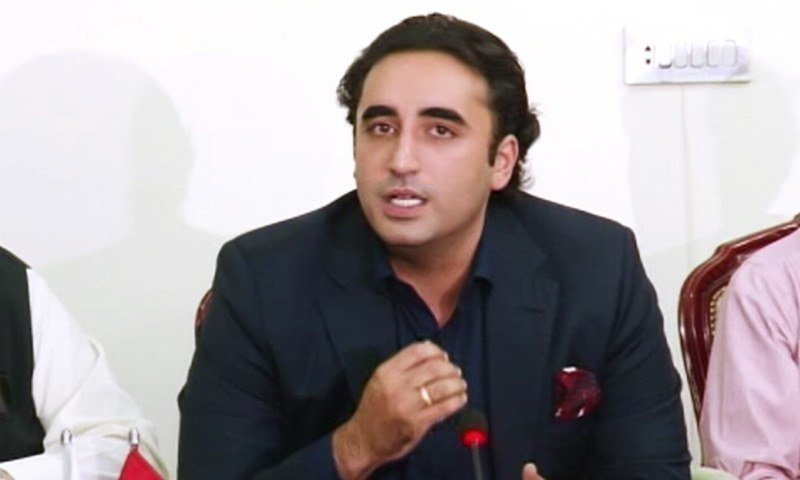
    Pakistan People’s Party (PPP) Chairman Bilawal Bhutto-Zardari, in an event organised by the Lahore High Court Bar Association, criticised the former Chief Justices of Pakistan (CJPs).

    Bilawal took a jibe at CJPs Mian Saqib Nisar and Gulzar Ahmed. He stated, “Some judges took it upon themselves to busy themselves, the courts and the legal community on deciding which building should be demolished and which should stay. The judiciary of Pakistan is a place for the battle of legal ideas, it is not a place for us to decide where or where not to build a dam.”

    In 2018, Justice Nisar had launched the initiative of collecting donations for the construction of the Diamer-Bhasha. Meanwhile, Justice Gulzar decided on several high-profile cases last year including the demolition of buildings in Karachi i.e. Nasla Tower and Tejori Heights.

    “CJP should be deciding constitutional issues instead of samosa or sugar prices”, said Bilawal. However, he made it clear that despite this, he had the utmost respect for the legal community and judges.

    He also called on the legal community to support his party’s planned anti-government long march on February 27.

    According to him, Pakistan needs a system of accountability that is fair and non-discriminatory instead of the present “witch hunt and persecution” of opponents and those who exposed the government’s failings.

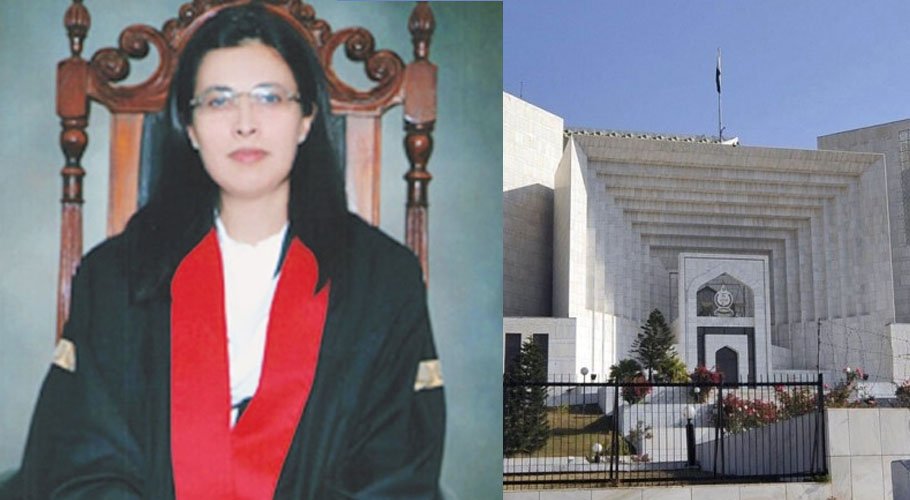
  • Justice Ayesha Malik confirmed for Supreme Court Judge, needs President’s formal approval

    Justice Ayesha Malik confirmed for Supreme Court Judge, needs President’s formal approval

    The Parliamentary Committee on Wednesday confirmed the nomination of Justice Ayesha Malik to the Supreme Court (SC).

    Justice Malik only requires the president’s formal assent to become the first woman to be elevated to the country’s top court.

    Justice Malik will remain a judge of the Supreme Court until March 2031 and may even have a chance to become the first woman to hold the post of chief justice.

    After a session on January 6, the Judicial Commission of Pakistan (JCP) recommended Justice Malik’s name by a majority of five votes to four.

    Chief Justice Gulzar Ahmed, senior judge Justice Umar Ata Bandial, former judge Sarmad Jalal Osmany, Law Minister Barrister Farogh Naseem, and Attorney General Khalid Jawed Khan had supported Justice Malik’s candidature, while Justice Qazi Faez Isa, Justice Maqbool Baqar, Justice Sardar Tariq Masood and Pakistan Bar Council representative Akhtar Hussain opposed the selection.

  • Pakistan judiciary’s missed moment

    September 9, 2021, could have been a historic day for Pakistan had Justice Ayesha Malik of the Lahore High Court (LHC) been elevated to the Supreme Court (SC). Unfortunately, the Judicial Commission of Pakistan (JCP) could not elevate the first woman judge to the country’s highest court due to an equal split in voting with four votes in her favour and four against her elevation. An elevation requires a majority vote by JCP members. Justice Qazi Faez Isa, who is also part of the JCP, could not attend the meeting as he was out of the country for his wife’s medical treatment. He could have voted in writing or through a video link.

    According to the Human Rights Watch (HRW), Pakistan is the only nation in South Asia to have never had a female Supreme Court judge. HRW also says that only about four percent of Pakistan’s High Court judges are women. “Of the 3,005 Pakistani judges in the lower and higher courts, only 519 – or 17 percent – are women.”

    It just shows how — like other professions in the country — the legal fraternity, too, suffers from gender imbalance and gender inequality. It is unfortunate that an institution that has to dispense justice to society is bereft of doing justice to the women in the legal fraternity. If a woman judge cannot make it to our top court, how are we to expect a just system for women who face extensive abuse in the country? When there is so much sexism in the country, so much misogyny all around us, a woman making it to our top court would have given us some confidence in our systems, in our institutions. It is a sad reflection of our society that when it comes to equal participation of women in courts, men get to decide their fate. Not one single member of the JCP is a woman. The decision-making for such high offices is left in the hands of a few men. 

    Some in the legal fraternity say that the process of judges’ appointments is problematic and should be more transparent instead of a pick and choose a principle that is being applied at the moment. We hope that the judiciary and bars and the legal fraternity will address these issues, resolve them and also make sure that women are equally represented in Bars as well as the judiciary. And we hope that Justice Ayesha Malik will be nominated again to the apex court. It is the 21st century and our judiciary should not be seen as a boy’s club. More power to Justice Ayesha Malik!