Tag: judiciary

  • President approves Practice and Procedure Amendments Ordinance

    President approves Practice and Procedure Amendments Ordinance

    President of Pakistan Asif Ali Zardari has signed the Practice and Procedure Amendment Ordinance after the federal cabinet approved the bill.

    According to the ordinance, in the absence of a committee member, the Chief Justice of Pakistan (CJP) will be able to nominate a judge as a committee member, The News has reported.

    The ordinance reads, “Each case and appeal will be recorded, and its transcript will be prepared, which will be available to the public, and each case will be heard on its turn; otherwise, reason will be given if the court hears case out of turn.”

    The ordinance also says that court benches will look into cases in light of fundamental human rights and public importance.

    The Pakistan Democratic Movement (PDM) had passed the Supreme Court Practice and Procedure Act 2023 in a bid to ensure transparent proceedings within the apex court and to safeguard the right to appeal.

    However, Supreme Court’s eight member bench, which was chaired by the then Chief Justice of Pakistan (CJP) Umar Ata Bandial, stayed the bill due to several petitions challenging it.

  • What’s the price tag on security, protocol for judges?

    What’s the price tag on security, protocol for judges?

    Journalist Absar Alam on his show Mere Sawal yesterday revealed the details of perks and privileges used by Pakistan’s judiciary, even though it is 130th out of 142 countries in the Rule of Law index by the World Justice Project (WJP).

    Absar stated that this week, a standing committee of the National Assembly revealed some details about the cars and security used by the judiciary.

    Before delving into the details, Absar recalled former CJP Saqib Nisar’s April 2018 order suspending the security of all VIPs, remarking, “Whoever is afraid of anything, they should leave the country.”

    Absar continued, “But now there are 34 security cars for judges, 409 security personnel in just Islamabad costing about 3 crores and 68 lacs each month”

    “6 cars and 79 security individuals for bureaucrats; likewise, there are 4 cars and 41 security people for ministers,” stated Absar.

    The journalist pointed out that the planned vacations taken by the judiciary of Pakistan are a colonial legacy when the British judiciary couldn’t bear the harsh weather of the Indian subcontinent. However, it still continues to this day by the honourable judiciary of Pakistan.

  • Justice Mansoor Ali Shah urges women to be part of judiciary

    Justice Mansoor Ali Shah urges women to be part of judiciary

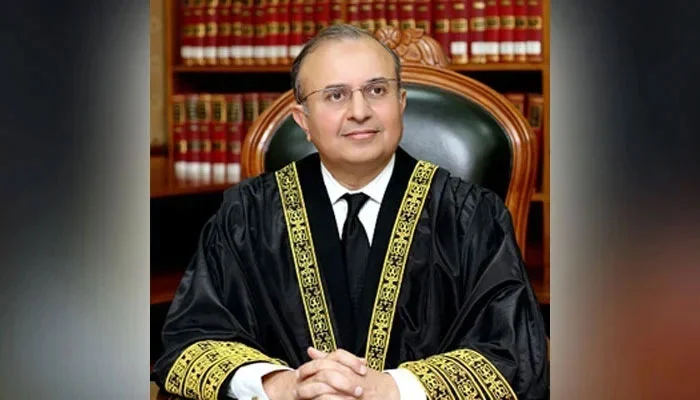
    Justice Mansoor Ali Shah of the Supreme Court of Pakistan has stressed the need for women’s participation in the country’s judiciary.  

    Justice Mansoor Ali Shah pointed out the gap between population demographics and the representation of women within the country’s judicial system.

    “Article 34 of our Constitution mandates full participation of women in all spheres of life,” said Justice Shah. He also said that 50 percent of the country’s population is women, but only 16 percent are connected with the judiciary.

  • Change culture of lying, accusations’, Maryam wants speedy trials in defamation cases

    Change culture of lying, accusations’, Maryam wants speedy trials in defamation cases

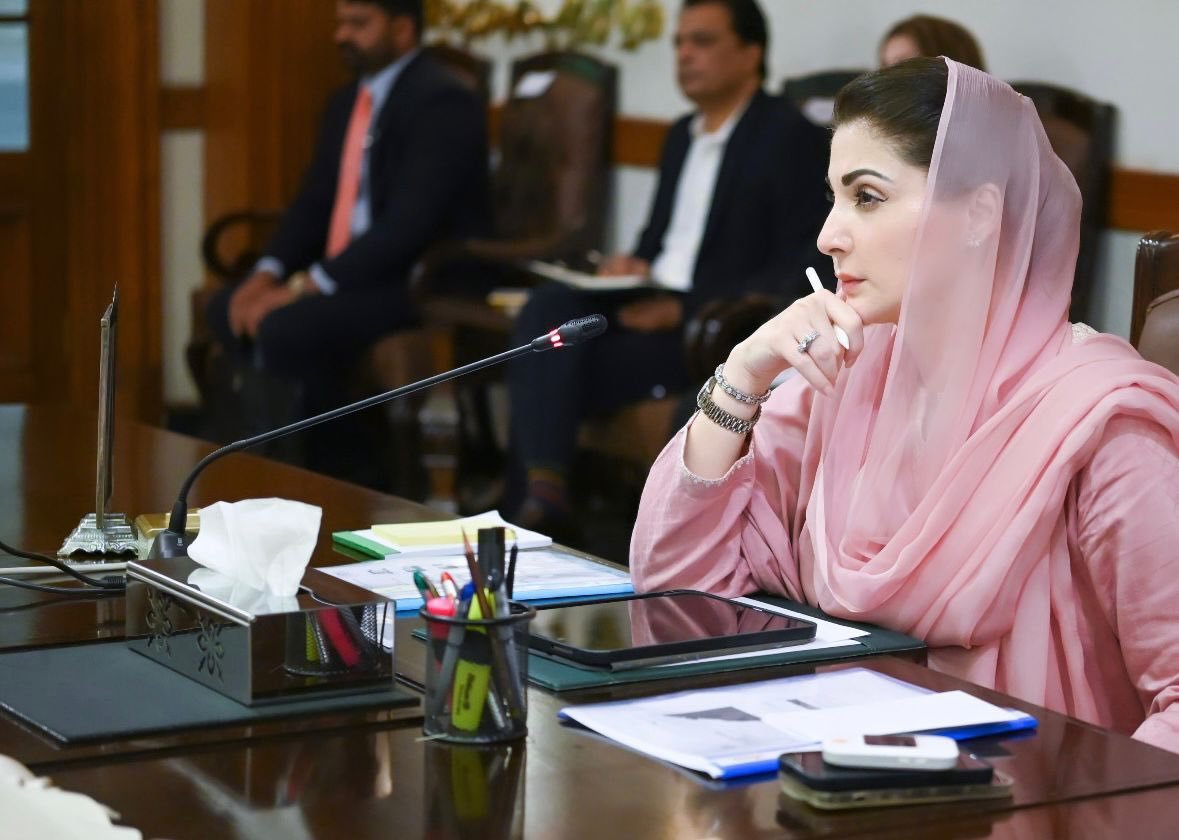
    The Chief Minister of Punjab, Maryam Nawaz presided over the fifth session of the provincial cabinet on April 3.

    The cabinet approved the creation of special speedy trial courts across the province aimed at the expedition of cases related to the physical and sexual assault of children.

    Furthermore, the cabinet was briefed on the proposed amendments to the defamation laws and the establishment of speedy trial courts in defamation cases as well.

    A bill is set to be presented in the Punjab Assembly which would aim to issue decree within ninety days and most importantly completion of trial within 180 days in defamation cases.

    “The culture of lying and accusation will have to be changed,” said Maryam Nawaz in the session.

    It was also observed that the notices in defamation cases could be given through major newspapers, social media, and courier services following the passage of the bill.

  • Rana Sanaullah says Imran Khan sentences won’t sustain

    Rana Sanaullah says Imran Khan sentences won’t sustain

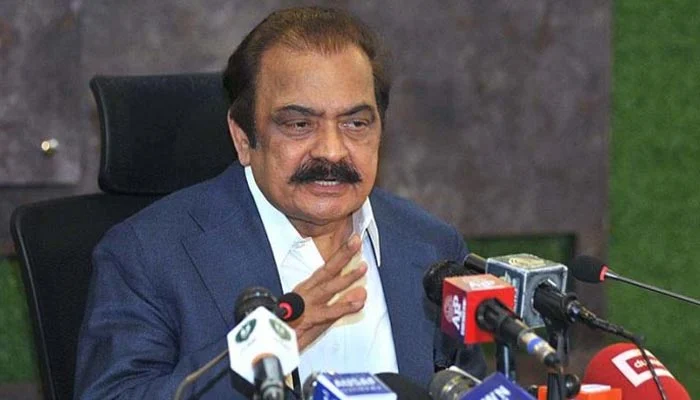
    Pakistan Muslim League-Nawaz (PML-N) leader Rana Sanaullah has said that the convictions against Pakistan Tehreek-e-Insaf (PTI) founder Imran Khan before the elections damaged the ruling party PML-N.

    He stated that either of the sentences awarded to Khan would not “sustain” before an honest judge.

    “The cases in which the PTI founder was sentenced significantly damaged us [PML-N] in the elections due to the victim card used by the PTI. The manner in which the case proceedings were held and the sentences were awarded, they would not sustain before a judge who upholds principles of justice,” Sanaullah said while speaking to Kamran Shahid on Dunya News.

    Sanaullah even said that either the judge would remand back the case or could even exonerate Mr Khan and further said that his party would have no objection if he got a bail.

    Former interior minister Sanaullah was also of the opinion that PTI took advantage of its victim card and also pushed the country into a crisis – which PML-N government now has to look after.

  • ‘Kisi ka koyi aur agenda hai…woh chief justice bun jayein’, CJ Isa says won’t allow attack on judiciary

    ‘Kisi ka koyi aur agenda hai…woh chief justice bun jayein’, CJ Isa says won’t allow attack on judiciary

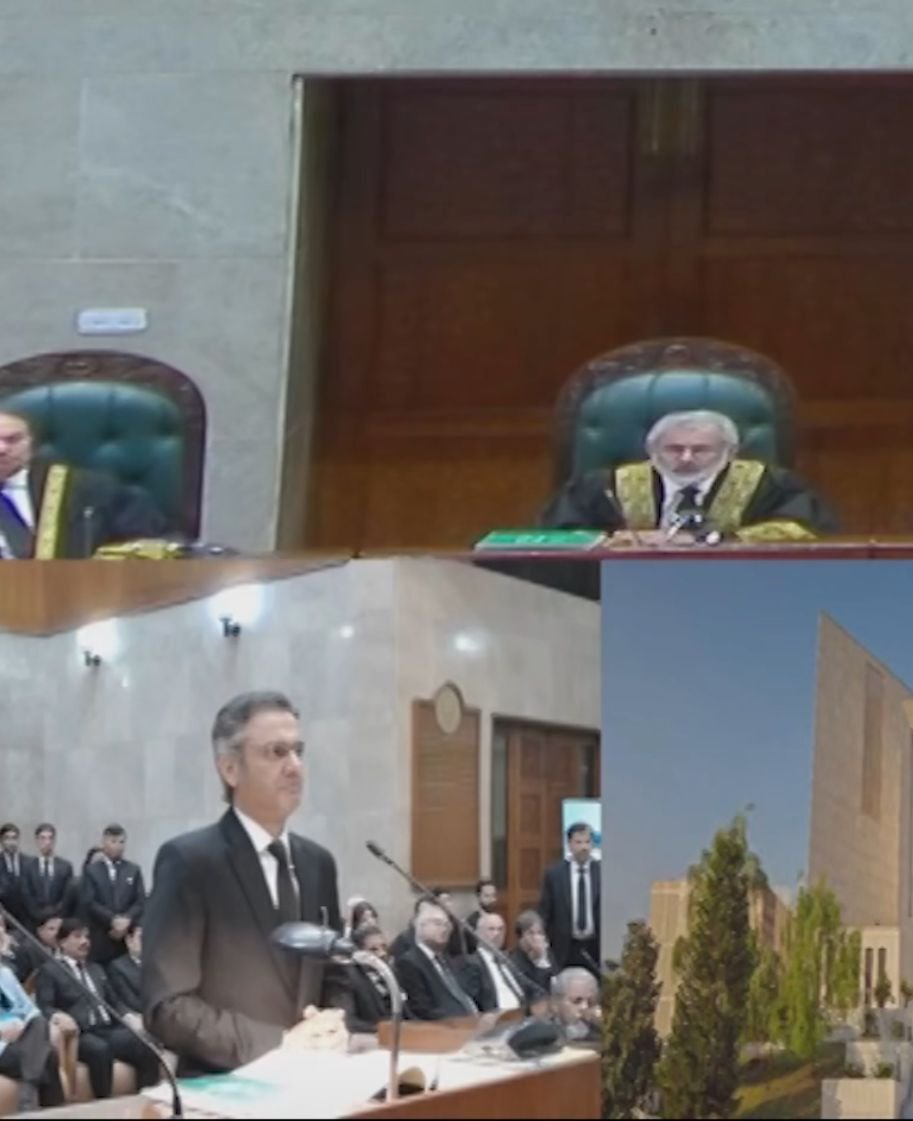
    Justice Qazi Faez Isa has said during the hearing of Supreme Court’s Suo moto notice taken on the Islamabad High Court judges’ letter that, “There is zero tolerance on the independence of judiciary.”

    The hearing is being conducted by a seven-member SC bench headed by Chief Justice Qazi Faez Isa and comprising six other judges — Justice Syed Mansoor Ali Shah, Justice Yahya Afridi, Justice Jamal Khan Mandokhel, Justice Athar Minallah, Justice Musarrat Hilali and Justice Naeem Akhtar Afghan.

    CJP Isa remarked, “Judges must be sure that they are not in danger.” He also emphasized that he could not exercise contempt power in any other court because “the court which is in contempt will exercise this power itself.”

    Importantly, the lawyers had demanded a full court in the suo moto case to which CJP raised an important point that where were these lawyers when not a single meeting of the full court was conducted in four years.

    The chief justice said: “My colleagues and I will stand before any attack on the independence of judiciary.”

  • Opposition parties unite to restore democracy

    Opposition parties unite to restore democracy

    Opposition parties Pakistan Tehreek-e-Insaf (PTI), Sunni Ittehad Council (SIC) Jamaat-e-Islami (JI), Pashtunkhwa Milli Awami Party (PkMAP) and a few other groups have joined hands to unite in upholding the supremacy of the Constitution and restoration of democracy in the country.

    The decision was taken in a meeting hosted by Majlis Wahdatul Muslimeen (MWM) where all parties in the capital city got together to protect the country’s Constitution and democracy from threats, their statement read.

    The meeting was attended by PTI Chairman Barrister Gohar Ali Khan, Omar Ayub, Asad Qaiser and Raoof Hasan; Pashtunkhwa Milli Awami Party’s Mahmood Khan Achakzai, Abdul Rahim Ziyaratwal, Sardar Shafiq Khan Tareen and Riaz Khan.

    Leaders of the opposition parties expressed deep grievances over the increasing involvement of establishment in politics. “The establishment’s unconstitutional political role and interference has created a terrible distance between the people and the state,” it was said.

    The meeting also underscored the significance of free and fair elections and the independence of judiciary. They categorically rejected the elections results that were changed.

  • Imran Khan alleges judges conveyed feeling of helplessness to him

    Imran Khan alleges judges conveyed feeling of helplessness to him

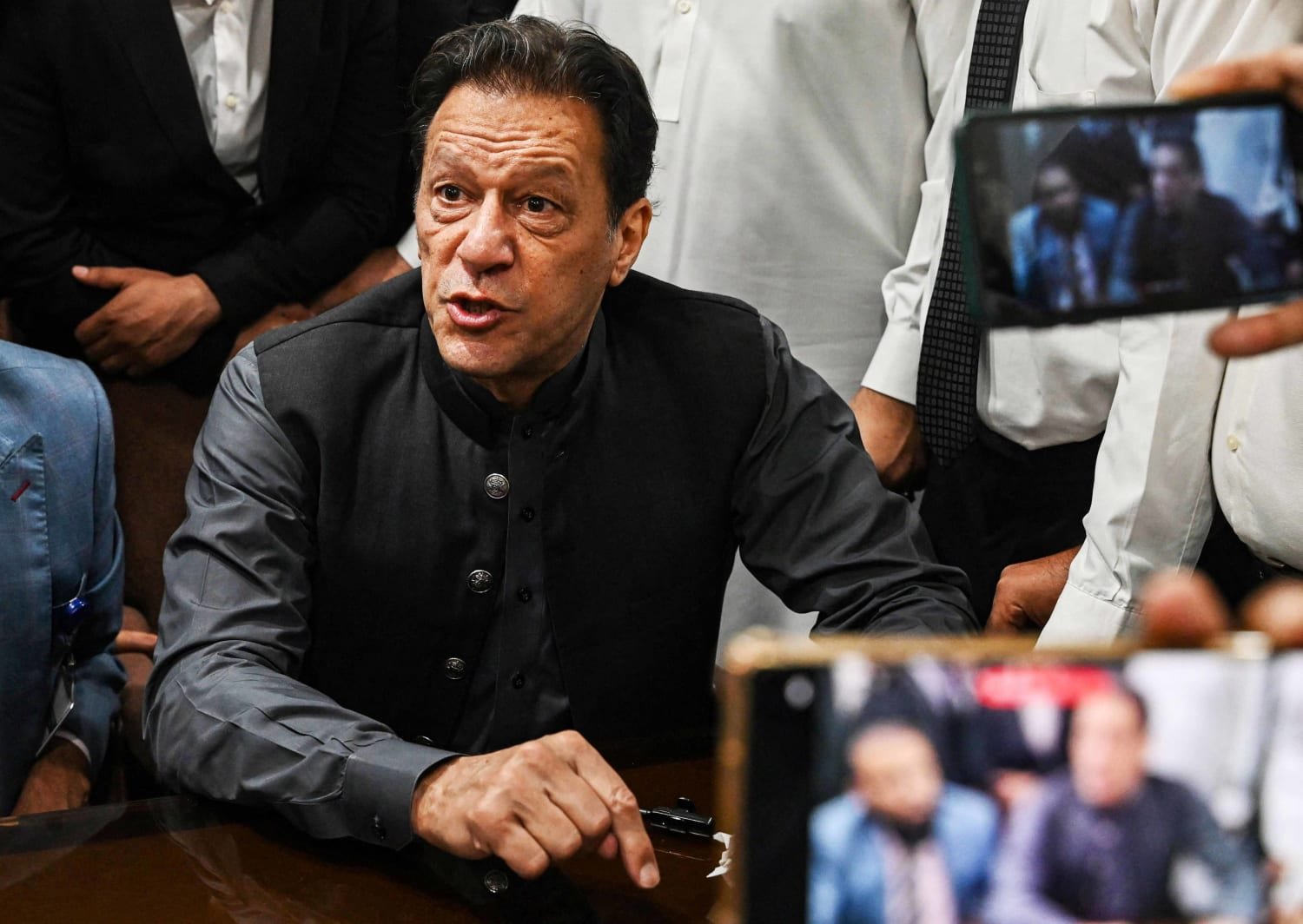
    During an interaction with journalists in Adiala Jail today, former Prime Minister Imran Khan lauded the Islamabad High Court (IHC) judges for exposing alleged interference in judicial matters and claiming judges would send him “messages of helplessness” in his cases.

    Khan’s statement came after the Supreme Court of Pakistan took a Suo Moto notice of the IHC Judges’ letter to the Supreme Judicial Council urging the body to probe the serious matter.

    A one-member inquiry commission was made by the federal cabinet however ex-CJP Tassaduq Hussain Jillani refused to head the said commission after he was chosen to lead it.

    Khan remarked, “I salute the judges for raising their voice and hope they will save the country.” He reiterated that everyone knew about the “regime change operation” in 2022 when he was ousted from the government through a no-confidence motion.

    The PTI founder gave his views about the Suo Moto notice by the SC and said, “It is a serious matter and should be heard by full court.” However, he remarked that a seven-member bench is better than the commission.

  • ‘Judge who is affected by criticism on social media violates his oath’: Justice Athar Minallah

    ‘Judge who is affected by criticism on social media violates his oath’: Justice Athar Minallah

    Supreme Court Justice Athar Minallah, addressed a seminar on the significance of freedom of expression on Saturday, shedding light on its historical context and impact on Pakistan’s trajectory.

    The seminar, a part of the second law bridge workshop on superior court reporting, provided a platform for Justice Minallah to share his insights on the intersection of freedom of expression and judicial independence.

    Expressing his concern over the potential influence of social media on judicial decision-making, Justice Minallah asserted the importance of maintaining judicial independence, stating that any judge swayed by social media violates his/her oath and called upon fellow jurists to remain resolute in upholding justice despite external pressures.

    Addressing the delicate balance between constructive criticism and trust in the judiciary, Justice Minallah emphasized that critics should retain faith in the legal system, considering it a litmus test for its strength.

    He welcomed constructive criticism while underscoring the need to strike a balance in fostering trust in the judiciary.

    Reflecting on the challenges of freedom of speech in the country, the Chief Justice traced the roots of censorship to historical actions following Quaid-e-Azam Muhammad Ali Jinnah’s speech on August 11, 1947. He stressed the necessity of balancing freedom of expression with responsible reporting to navigate these challenges.

    Sharing a personal anecdote from his early days as a judge, Justice Minallah recounted a case involving a 16-year-old accused of displaying a banner against a senior apex court judge.

    He highlighted the importance of judiciously addressing such incidents and cautioned against making blanket judgments without thorough investigations.

    “When the matter of the 18th constitutional amendment was raised, many forces were against it. A reporter asked me, what will the Supreme Court do about the 18th Amendment. I replied ‘In my opinion, the SC should not interfere in the constitutional amendment’,” he said.

    The apex court judge said he had said he would resign if the 18th amendment was annulled and the next day news was published that “Athar Minallah has threatened the court”.

    Citing former Ugandan president and the modern world history’s most brutal dictator, Idi Amin, Justice Minallah said, “A society is ruined, if someone gags freedom of expression like Idi Amin.”

  • Two judges in a row: Future Chief Justice, Justice Ijaz ul Ahsan resigns

    Two judges in a row: Future Chief Justice, Justice Ijaz ul Ahsan resigns

    The second-most senior judge of the Supreme Court, Justice Ijaz-ul-Ahsan has resigned after removing himself from the Supreme Judicial Council (SJC).

    Journalist Azaz Syed took to X (former Twitter) and wrote, “Breaking: A future Chief Justice, Justice Ejaz ul Ahsan also tenders his resignation. Now rostrum of future chief justices will also be changed. Ejaz ul Ahsan isb neither a judge now nor a future CJ.”

    The move comes after earlier this week, Justice Mazahar Naqvi also tendered his resignation. The resignation was allegedly triggered by an open meeting of the Supreme Judicial Council.

    Senior Journalist Matiullah Jan tweeted what he believes, is the reason for Justice Ijaz’s resignation.

    The council was held under the chairmanship of Chief Justice of Pakistan Qazi Faez Isa on a complaint against Justice Mazahar Naqvi, in which Justice Sardar Tariq, Chief Justice of Lahore High Court Justice Amir Bhatti, and Chief Justice of Balochistan High Court Naeem Akhtar Afghan participated. However, Justice Ijaz-ul-Ahsan did not attend the council meeting.

    In the meeting of the Supreme Judicial Council, no one appeared in the council on behalf of former judge Mazahar Naqvi, on which the Chief Justice questioned whether Justice Mazahar Naqvi’s lawyer Khawaja Haris, or his juniors were present.

    The Chief Justice spoke to the Attorney General that did you receive Justice Ijaz-ul-Ahsan’s resignation. The Chief Justice directed the Attorney General to read out the resignation, on which he read out the resignation of the former judge.

    The Chief Justice of Pakistan said that the article under which the resignation was given should be read, on which the Attorney General read out Article 179.

    The Chief Justice asked if the Council could act without Justice Ijaz or will it be the next senior judge. The attorney general said that the council must include a senior judge.

    Justice Qazi Faez said that Justice Ijaz-ul-Hasan has resigned from joining the council and the next senior judge is Justice Mansoor Ali Shah. It then has to be ascertained whether Justice Mansoor is available or not.

    The Chief Justice directed the Secretary of the Council to find out the availability of Justice Mansoor and said that if Justice Mansoor is available, then the Council will sit again.

    Under Clause three of Article 209 of the Constitution, if there is no judge in the Council, the next senior judge can be included.

    Later, Justice Mansoor Ali Shah joined the council in place of Justice Ijaz-Ul-Ahsan and the council stopped the council meeting until the availability of Justice Mansoor Ali Shah.