Tag: Justice Ayesha Malik

  • Justice Ayesha not elevated to the Supreme Court

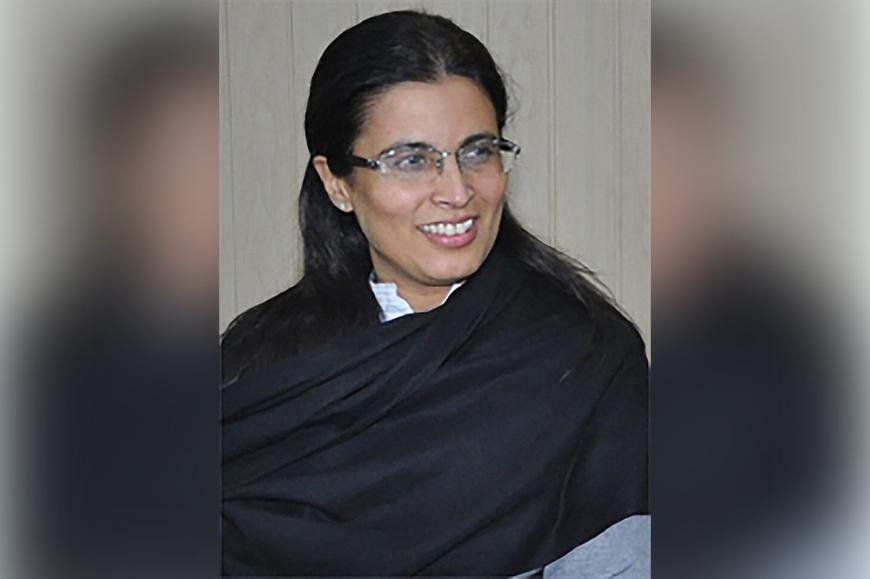
    The Judicial Commission of Pakistan (JCP) has not approved the nomination of Justice Ayesha Malik as a Supreme Court (SC) judge.

    “As a lawyer, I feel that the JCP needed to set a transparent criteria for appointment, failing which has resulted in what we have seen today. And I feel that the more unstructured this becomes, more transparency is lost within the judicial system,” lawyer Noor Ejaz told The Current.

    “As a woman, I am disappointed. Women in law have rarely been given high ranks without being under strict scrutiny. I hope Justice Ayesha serves as the CJ of the Lahore High Court and is elevated to the Supreme Court soon and I hope the JCP implements a structure so that other women can aspire towards higher office without fearing how discretion might treat them,” added Noor Ejaz

    “It is a dark day because first-time nominee of a woman judge’s elevation to the Supreme Court could not be approved,” senior journalist Hasnaat Malik told The Current.

    He also added that if Justice Ayesha is not elevated to the SC, then she will become Chief Justice of the Lahore High Court. “Justice Ayesha’s name can be initiated anytime for the SC,” said Hasnaat.

    Read more- In-depth analysis: Everything you need to know about Justice Ayesha Malik’s SC appointment

    Human Rights Watch (HRW) welcomed the nomination of Justice Ayesha Malik to the Supreme Court of Pakistan. However, lawyers across the country recorded their protest today.

    As per the Lahore High Court website, Justice Ayesha Malik completed her education from Paris and New York and did her Senior Cambridge from the Karachi Grammar School in Karachi. She did her A-Levels from the Francis Holland School for Girls in London. She assumed office in March 2012
  • HRW lauds Pakistan for its first woman Supreme Court justice

    HRW lauds Pakistan for its first woman Supreme Court justice

    Human Rights Watch (HRW) in its latest report welcomed the nomination of Justice Ayesha Malik to the Supreme Court of Pakistan.

    The appointment of a woman to the Supreme Court would be a significant step in reforming the gender inequity in Pakistan’s legal profession, says HRW.

    Chief Justice of Pakistan Gulzar Ahmed has nominated Justice Ayesha A. Malik for the elevation to the Supreme Court.

    Pakistan is the only nation in South Asia to have never had a female Supreme Court judge.

    As per the HRW report, “Only about four per cent of Pakistan’s High Court judges are women. Of the 3,005 Pakistani judges in the lower and higher courts, only 519 – or 17 per cent – are women.”

    While some women head district courts, none have yet been appointed to the Supreme Court.

    Pakistan has produced women lawyers of international renown such as Hina Jilani and the late Asma Jahangir, the Pakistan Bar Council – which regulates lawyers – has never had a woman member. Jahangir remains the only female lawyer to have been elected as president of the Supreme Court Bar Association.

    Pakistan’s constitution, consistent with international law, provides that all citizens are equal under the law and prohibits discrimination on the basis of sex. 

    Women having less representation in the legal profession is due to harmful societal attitudes, harassment in the workplace, and structural barriers such as the opaque appointment process for judges.

  • Justice Ayesha Malik makes history, first woman judge elevated to the Supreme Court

    Chief Justice of Pakistan Gulzar Ahmed has nominated Justice Ayesha A. Malik for the elevation to the Supreme Court, tweeted senior journalist Hasnaat Malik.

    Justice Ayesha will be the first woman judge in the history of Pakistan to be elevated to the Supreme Court.

    She will become the first woman Chief Justice of Pakistan after Justice Yahya’s retirement in January 2030.

    Justice Ayesha A. Malik is one of the only two women judges in the 40 esteemed judges of the Lahore High Court. According to Women in Law, a group working for equal opportunities for women lawyers in Pakistan, only 15 per cent of women judges are part of the Pakistani judiciary.

    Justice Ayesha Malik’s name came to fame after her landmark judgment against the ‘two-finger test’ or two-finger virginity test of sexual assault survivors.

    Justice Ayesha Malik, 54, received her early education from Karachi Grammar School and her LLM degree from Harvard Law School in the United States, after which she returned to Karachi to practice law.