Senior journalist Kamal Siddiqui has poked fun at the police for “having an anti-eggary unit to save our children” by making sure that “they do not eat too many eggs”.
“So in Pakistan, we have a special police unit that saves children from eating too many eggs,” he jokingly wrote while tweeting a picture of an anti-beggary unit mobile minus the ‘B’.
“Let’s save our children” could also be seen inscribed on the Sindh police vehicle.
CRACKDOWN ON BEGGARS IN SINDH:
In line with Sindh cabinet’s ban on child beggary and directions to the social welfare department to pick up children begging at traffic intersections and in streets and rehabilitate them at welfare centres, the aim of the anti-beggary unit is to tackle beggary, especially in the port city of Karachi.
According to the findings of a committee on the issue of beggary, there are enough laws available to deal with the issue such as Section 7 of the West Pakistan Vagrancy Ordinance 1958 that prohibits beggary.
A 2018 report of the committee said that beggars have also been seen with children who they use to create empathy in the givers’ eyes. This is a violation of Section 49 of Sindh Child Act 1955.
It pointed out that in 2011, the Sindh assembly had passed the Sindh Child Protection Authority Act 2011 which called for ensuring the rights of the children in need of special measures and to provide matters ancillary thereto.
Sindh Chief Minister (CM) Murad Ali Shah, in consultation with the cabinet, had earlier decided to ban beggary all across the province. He had also directed the Social Welfare Department to launch a special drive against child beggary.
He had directed the district administration and the police to help the Social Welfare Department in the drive and round up the child beggars and send them to Sweet Home and Street Children Centre, Korangi, where they would be rehabilitated.
“The curious case of this city is that it is administered by a mix of federal and provincial controlled landholding associations, cooperative housing societies, military-run cantonments, the navy, the railways and the industrial area authorities to name a few.”
A commercial port city with more than 20 million residents, Karachi has continued to suffer decades of civic mismanagement, gaps in urban planning and development given the lack of adequate governance, corrupt civic agencies and political parties vying for power. None of the myriad agencies that control resources and management in this city have honestly bettered the city and the lives of its people.
Take the tussle between the PPP and the MQM that has not only brutally destroyed the socioeconomic fabric of districts such as Lyari, a sprawling slum settlement turned into a hotbed of violence, guns and drugs when rival gangs were patronised by the city’s two political parties, but also resulted in turf wars affecting the running of civic institutions. The political bifurcation of jurisdictions within this city has, therefore, resulted in a complete breakdown of basic service provision over years – lack of clean drinking water, electricity, housing, security are just a few municipal services that should be under the local government system but this is not the case. Even an elected mayor has no jurisdiction over certain areas of this city. When a city’s history is rooted in ethnic and identity-based politics building urban infrastructure, providing municipal services, or even intervening in areas that are essentially administered by a particular political party is near to impossible.
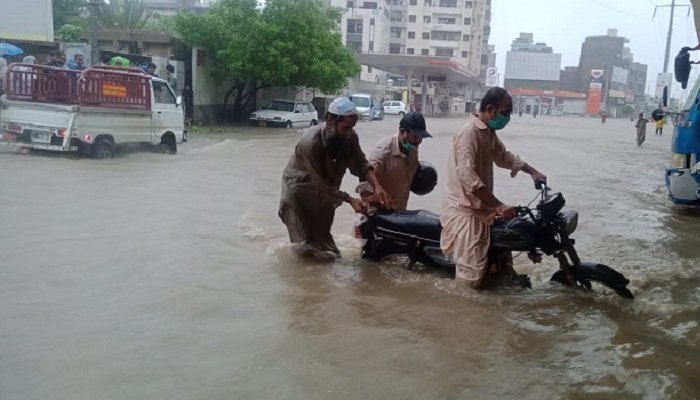
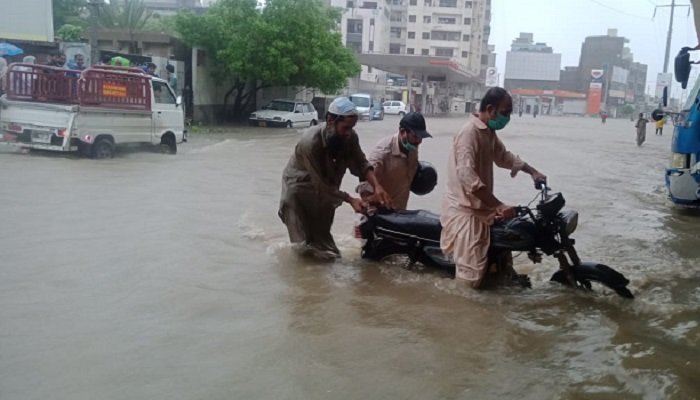
Last week, Karachi was submerged in 230mm of rainfall in less than 12 hours, the most ever recorded, according to the Pakistan Metrological Department, exposing again glaring gaps in urban development, especially in low-income and vulnerable communities. Wealthy residential areas were not spared where drainage channels were choked. One such densely populated urban settlement with poor access to water and sanitation, Lyari is located about 15 minutes from the city’s business hub at I.I. Chundhrigar Road where you’d find most of the banking sector is headquartered. Streets were inundated with rain and sewerage water for days and later cleared up by residents because no government assistance reached these communities. Similarly, homes, businesses and streets in the city’s old quarter of Kharadar – a symbol of pre-colonial history which becomes the centre for Muharram processions (near Mithadar where the Edhi main office is located and adjacent to Jodia Bazaar) – literally drowned in a mix of rain, putrid sewerage water and floating garbage, increasing the risk of diseases, such as dengue and malaria. Some commercial/residential areas remain flooded with no electricity almost a week after the downpour in this city; sewerage water has collected in empty plots according to residents in different areas of Karachi where gutters are broken.
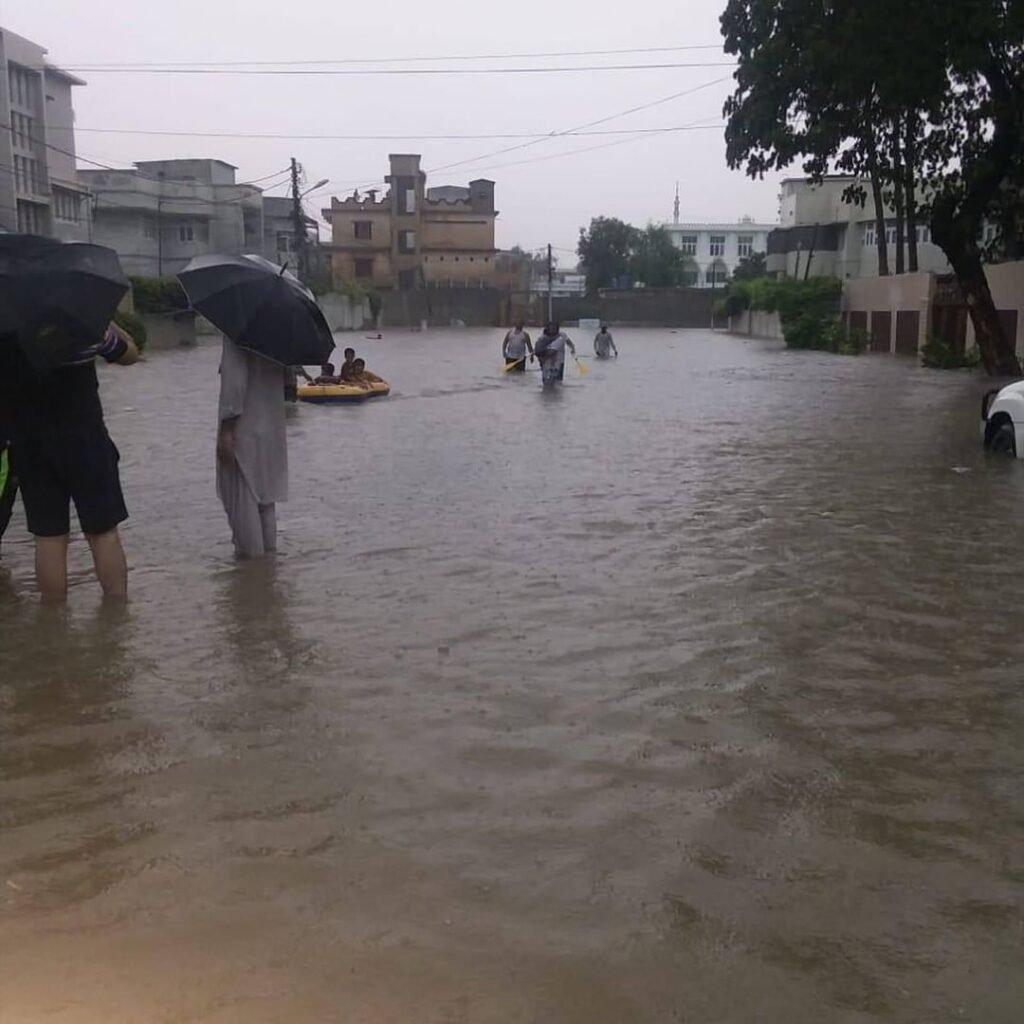
First let’s be clear here: vulnerable neighbourhoods with already inadequate urban and social infrastructure have long been neglected by the ruling political powers and whomsoever authority is in charge of a given district. Then, the urban poor in Karachi are like none other. I recently read on Twitter: ‘The Lebanese people are like kids who’ve had to raise themselves because the parents were never around to take care of them.’ Now apply that to Karachi and it makes sense. Migration from rural to urban, and from the north has meant living in overcrowded, unsafe environments with little access to education, health, or sanitation, and with the COVID-19 crisis having reduced livelihood opportunities even further because of mobility restriction and decreased economic activity, natural disasters have the potential to decimate lives and homes. So why no focused body that can fix Karachi? The curious case of this city is that it is administered by a mix of federal and provincial controlled landholding associations, cooperative housing societies, military-run cantonments, the navy, the railways and the industrial area authorities to name a few. Many question the absence of the relevant authorities responsible for civic provisions, such as drain clearing before the annual monsoons, sewerage repairs and garbage collection. In fact, it was army personnel, volunteer rescuers, and even volunteers from the Islamist group Tehreek-e-Labbaik who rescued and evacuated people from many inundated residential neighbourhoods — some using boats for rescuing residents living in the newly constructed Naya Nazimabad area while some families waded through waist-high water.
Floating cars and destroyed homes: an apocalyptic sight
Moreover, substandard construction in the city and informal settlements, built close to water draining channels or nullas, were perilously flooded or sunk during these rains given their poor physical infrastructure. This kind of urban flooding is to be expected as climate patterns change experts warn. And we have witnessed urban flooding in the past in Karachi. Warnings from the late Perveen Rahman, Orangi Pilot Project’s director, of the possibility of urban flooding if the mangrove plantation was removed on either side of Mai Kolachi because it served as a catchment area that could prevent flooding, were never heeded.
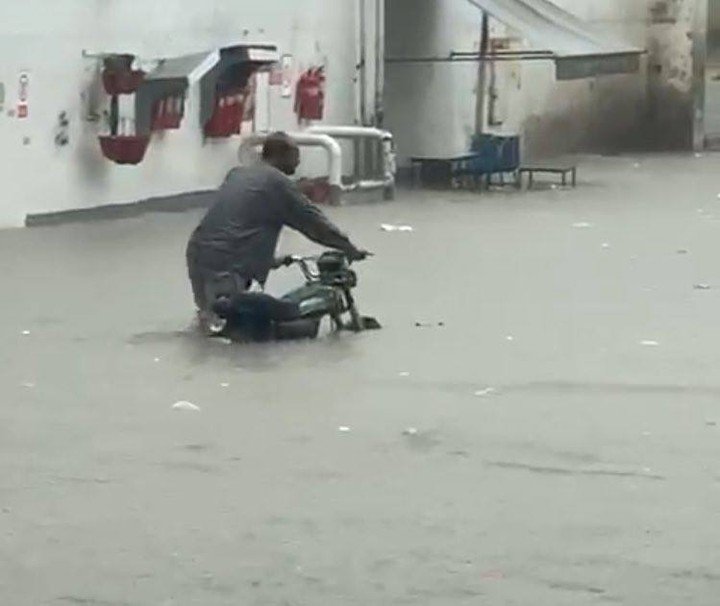
The human toll of the recent rain tragedy has left Karachi’s residents reeling with more anger than ever and rightly so. I use the term tragedy here because rain in Karachi is hardly romantic or calls for a relaxing cup of tea and pakoras – rather it’s become synonymous with loss of lives, homes and livelihoods that could have been avoided had the concerned authorities prioritised rain preparations by declogging stormwater drains beforehand or constructing drainage facilities where none exist. Hundreds of people were forced to take shelter in the homes of relatives while scores of cars and other vehicles caught in the torrential downpours either remained submerged in water, many seen floating away as the water began flowing akin to a river developing rough currents. Scenes captured and shared as photographs and videos on social media were as if this city had been hit by a passing meteor and destroyed with a vengeance. Main thoroughfares and all seven newly constructed underpasses were submerged under several feet of water; children and motorcyclists drowned in waterlogged underpasses; young men slipped into storm drains (nullahs); 21 bodies were pulled out of just one water channel near Korangi; cars were seen stranded or floating everywhere in the city; underpasses resembled swimming pools turned nasty, and electricity was cut in areas for over five days to save people from getting electrocuted because this city has a surplus supply of unnecessary wires dangling on electric poles or lying unattended on roads and pavements. All this while empty shipping containers placed to block streets during the ninth and tenth of Muharram were seen dangerously floating down Zaibunissa street in Saddar jostling calmly for space with cars and buses. In the case of a police van caught in moving water currents on the main Sharah-e-Faisal thoroughfare that leads to Jinnah International airport – images of which went viral on social media – around five policemen were rescued by passersby who threw a rope ladder at them. Where were the authorities, the rescue services other than volunteers such as Edhi and Chippa to help in this disastrous monsoon deluge is a question we need to ask the provincial/federal government.
And it was not just Karachi that witnessed the monsoon rains this year but images from the interior of Sindh are heartbreaking – entire villages have drowned, mud homes entirely washed away with families having lost their meagre belongings, hungry children huddled together under the open skies – and these are communities that persistently suffer from drought, malnutrition, lack of healthcare, unemployment. Again, why has this government neglected its most vulnerable people needing protection, shelter and food? According to the NDMA, troops using boats evacuated 300 people from the rain-hit district of Dadu in Sindh, while 1,245 people were evacuated from Karachi’s rain-hit areas last week, where residents lost their life’s savings when businesses were destroyed and homes flooded with sewerage water, especially where the city’s outdated drainage and waste systems were overwhelmed by an unprecedented spell of heavy rain. That is not to say urban flooding was unexpected. Although flood warnings were issued, it appears authorities in charge of overseeing the city’s basic services and infrastructure were at their usual lethargic best without formulating any kind of preemptive response.
When DHA drowned in sewerage water
This year’s monsoon rains did not distinguish between slum settlements and the wealthy Clifton and Defence Housing Authority (DHA) neighbourhood. Given DHA is a housing authority for the rich and famous, in the aftermath of these rains that didn’t appear so – the sprawling area that comprises DHA was inundated with water as aerial views shared on social media revealed not a dry patch. Originally founded in 1953 as Pakistan Defence Officers Housing Authority, Zia-ul-Haq passed a Presidential Order in 1980 to create DHA, a civic authority run by the powerful military controlling five per cent of urban land in this city. It is a private enterprise given a governing body run by chiefs of defence institutions, essentially administered by serving brigadiers under the direct command of corps commanders. It was decided then that DHA would have its own rules and essentially not adhere to the local government system that oversees the municipal provisions of the city. This Presidential Order divided the Karachi Cantonment – the southern side named Clifton Cantonment that was given DHA Phase 1. In other words, DHA and Cantonment Board Clifton (CBC) do not come under the mayor of the city who cannot control the drainage, water supplies and planning for this area.
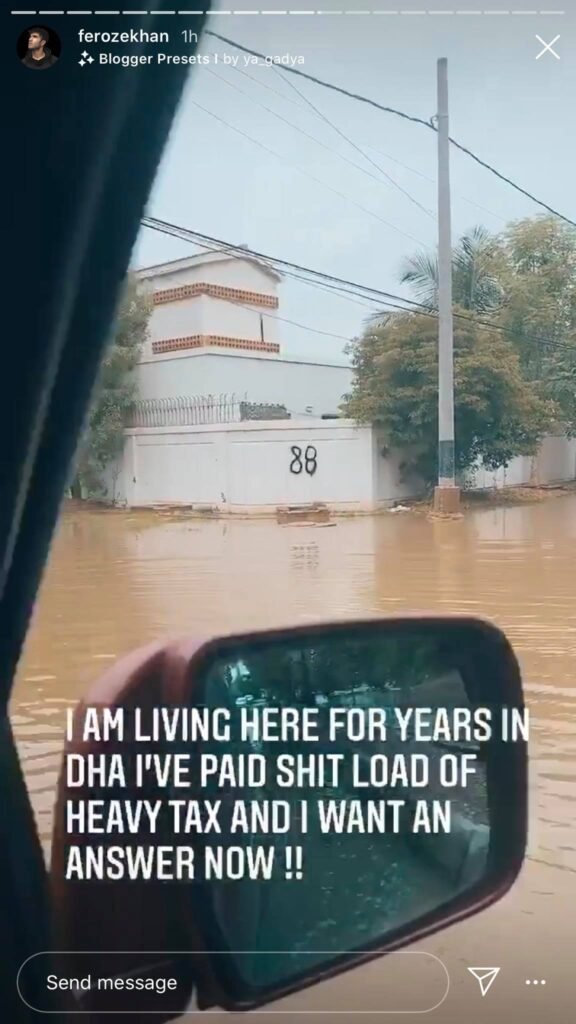
Residents from DHA, one of the largest landholding bodies in this city, were hard hit this year when scores of houses were flooded in the city’s posh district home to politicians, ministers, entrepreneurs and industrialists. No one from this authority emerged to apologise for the putrid mess that was open gutters and collected rainwater measuring over five feet in certain areas and no one attempted to provide assistance for those vulnerable residents trapped in their homes without electricity, food, water and medicine; some even at the risk of drowning. Many took to twitter cussing the electricity supplier, the Sindh government and the DHA authorities, as they witnessed green streets drowning mercilessly with such rainwater intensity that gated homes were left in utter disarray; heavy metal gates flung wide open with currents of the free-flowing water, expensive cars floating aimlessly or submerged and basements of homes flooded with expensive paintings and books destroyed in some homes. The urban middle-class deprived of basic amenities, clean water and electricity for years intermittently, say they watched this side of the Clifton bridge as they term the elite, drowning and waited for a reaction. The point being if you pay your taxes, water taxes included, and get nothing in return, because you’re compelled to buy your water, electricity and security, something has to give – and these rains meant no one was going to sit back and take the callousness suffered over years.
Residents mobilised over Facebook and protested outside the office of the CBC, DHA’s sister organisation, to register their anger at having paid taxes for years but not having received any services, such as solid waster management disposal – the city actually has no plan for waste disposal – or running water without having to purchase water tankers and pay a whopping Rs 7,000 for one tanker. Furthermore, the stormwater drains clogged with garbage in DHA and elsewhere in the city, have not been removed as a preemptive move before the summer rainfalls. Hundreds of residents protested outside the offices of the CBC demanding the authorities clear the water hours, and present their audit for the past five years. Despite a legitimate right to protest, the organisers are now faced with police charges for rioting — and for shaking the CBC head out of his lethargic stupor. Fed-up with the city administration, other protests happened, in the days to follow, including all Karachi residents irked by years of neglect. A friend who said she’d stopped the water from seeping into her dining room and flooding her house, calling the city a disaster zone, a death trap. I can’t worry unless something hits me in the face, she said. Or else I’d die of anxiety. And I forgot to mention if you have a generator, which most Karachiites at home and for their businesses would do, finding a petrol station at 4 am was a nightmare when you ran out of petrol or diesel.
In certain residential and commercial areas of this city, even as I write this, electricity is yet to return; roads are filled with water, and sewerage, despite the Sindh government’s representatives, including the chief minister rolling up their sleeves and supervising water drainage. Draining the water from main roads has largely been left to volunteers and the Sindh government (read Sen Murtaza Wahab’s twitter updates) when the concerned authorities were unable to move in swiftly and do their job. Businesses have been gutted; supplies worth hundreds of thousands lost all over this destitute city, but who is listening to these troubles? Who will work or represent the interests of this city and its people? All of Karachi deserves greater attention because it has suffered years of neglect and economic hardship despite generating maximum revenue. No city can function with multiple agencies and multiple service provision jurisdictions. According to a paper on landownership in Karachi authored by Arif Hasan, Noman Ahmed and others, this city is governed by 13 different land management authorities which resultantly means no consensus is achieved and there is no coordinating mechanism, because of clashing interests. Over the years this has translated into a lack of low-income housing, amenities and utilities.
Making Karachi liveable
So while it is critical for megacities like Karachi where urban sprawl has not been able to keep up with the growing population needs to focus resources on immediate management and response to natural disasters or an urban crisis, attention must be paid to how long-term measures can be implemented to build a more sustainable and liveable city. This approach is imperative after an intensely destructive monsoon season countrywide that has revealed how unprepared and clueless we are when it comes to managing disasters of this unprecedented scale – natural disasters intensifying over the years as unusual weather patterns emerge clearly warning of the impact of climate change (Karachi’s extreme heatwave in 2015 is yet another example) If climate change is not addressed adequately by this government, without a disaster management infrastructure and expertise to match, severe weather will cause loss of lives and livelihood. Mitigating the effects of climate change (on agriculture, for example) is imperative, especially in vulnerable areas, rural districts in Sindh, even KP and Balochistan, where the capacity to sustain climate change shocks is non-existent, and where disaster prevention is unaddressed.
Karachi’s woes require a serious reorganisation of administrative duties so whomsoever civic agency is responsible gets the job done without political and commercial interference (especially in the use of land to their own advantage) while keeping at the fore the impact of climate change (droughts, floods, rain intensity will adversely affect water and food security in the near future) Governance must no longer be compromised because of conflict between stakeholders at the expense of the people. Strengthening local bodies is critical. As a party, the PPP has never allowed for that because it becomes a political issue whereas the PML-N gets voted on its governance track record in Punjab, so it must keep to a standard when it comes to civic services.
As Karachi continues to suffer after record rains, residents of the city are taking to the streets and social media to express their anger and rage and are demanding accountability of those responsible for the mess.
Among those lashing out at the government and authorities are celebrities including Mehwish Hayat, Ayesha Omar, Aijaz Aslam, Sanam Jung, Sanam Saeed and Feroze Khan.
“My anger knows no bounds,” wrote Mehwish. “How can a modern city like Karachi not have the infrastructure to cope with rain in today’s age?”
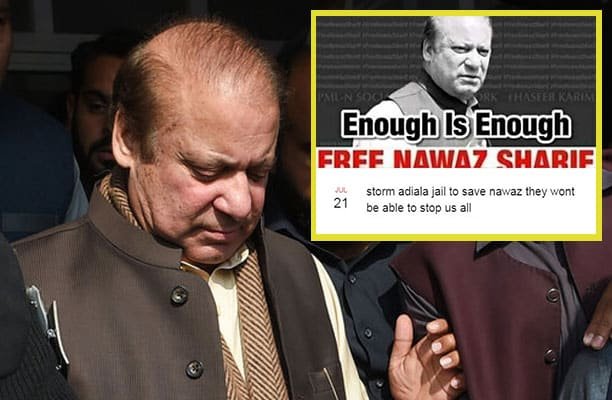
Demanding accountability, the actor added, “Enough is enough!”
My anger knows no abounds. How can a modern city like #Karachi not have the infrastructure to cope with rain in 2day’s age?Our suffering over the past few days proves that those responsible need to be held accountable!Heads have to roll or this’ll keep happening.Enough is enough!
“It’s time for accountability. It’s time to speak up. It’s time to take ownership. It’s time to demand our rights. Its time to heal. It’s time,” wrote Ayesha on Twitter.
It’s time for accountability. It’s time to speak up. It’s time to take ownership. It’s time to demand our rights. Its time to heal. It’s time.
Part 2/2. Every government had a chance.. Some more than others.. Yet every government seems to have let Karachi/Sindh down. pic.twitter.com/OID5uJsI7Q
Anoushey Ashraf, Mansha Pasha and Fahad Mirza also expressed their distress and disappointment and called out those in power for making false promises.
Not ONE resignation from the authorities in Karachi. You can’t shame the shameless. Every person who calls Karachi his home needs to attend the peaceful protests and demand better. #KarachiRains#KarachiSinks
Feroze Khan wanted to know where his tax money went.
Meanwhile, residents of Defence Housing Authority (DHA) on Monday gathered within the premises of Cantonment Board Clifton (CBC) to protest against the lack of monsoon infrastructure and the administration’s failure to provide them basic amenities.
“We wish to register our legitimate right to get the supply of basic amenities of potable water, stable electricity, effective discharge and flow of drains and sewerage, elimination of hanging electricity wires & data cables, fixing of broken poles, providing of security [as well as] repair and re-carpeting of broken roads,” read a statement by the residents of DHA Karachi ahead of Monday’s protest.
A second protest for later this week has also been announced by the aggrieved residents to take up their demands with DHA outside the Phase-I office on September 3 at 12:30 pm.
On the other hand, Prime Minister Imran Khan has announced that both the centre and Sindh will be working together to bring much-needed relief to the people of Karachi.
اجلاس میں وزیر برائے منصوبہ بندی اسد عمر، وزیر برائے بحری امور سید علی زیدی (ویڈیو لنک) گورنر سندھ عمران اسمعیل، چئیرمین این ڈی ایم اے لیفٹنٹ جنرل محمد افضل، متعلقہ وزارتوں کے سیکرٹری صاحبان و سینئر افسران شریک
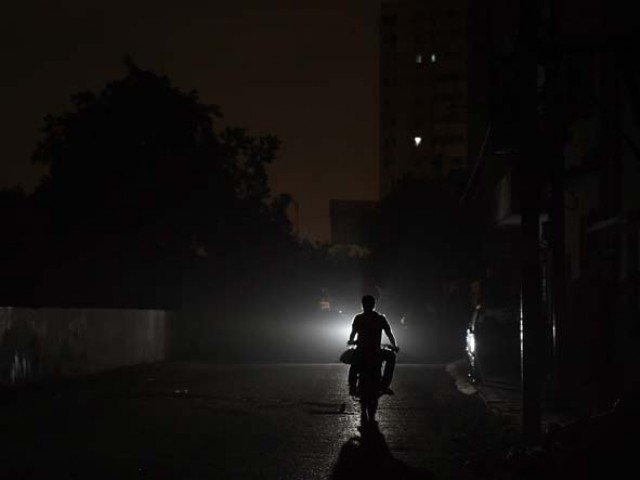
A city once known as the ‘city of lights’ has now been without electricity for almost three days and counting.
Karachi resembles a dump now with dilapidated roads, virtually no sewerage system, no government public transport, buildings on top of each other without following any safety laws, no emergency response system, nothing. Recent visuals on our television screens, social media and WhatsApp following the monsoon rains in Karachi are horrendous. Cars floating around, houses drowning in sewerage water and rainwater, people being electrocuted, no electricity, no food, no relief in sight. A wheelchair-bound woman drowned in her house due to the mismanagement of those in power, someone who had a heart attack could not reach the hospital in time due to flooding…each story is worse than the other. More than 80 people have so far lost their lives.
The ‘resilience’ of the people of Karachi has been taken for granted but Karachi has had enough!
The Pakistan People’s Party (PPP) has been in power in Sindh for the last 12 years. In those 12 years, we have not seen the provincial government take any responsibility whatsoever for the woes of the provincial capital. Blaming the Muttahida Qaumi Movement (MQM) because it ruled Karachi for almost a decade before the PPP government came to power can only be done so much. If the Opposition parties tell the ruling PTI to stop blaming past governments and focus on their own performance, then the same rule should apply in Sindh. The MQM may not have done as much as it should have back then but it is no excuse for a government that has been ruling the Sindh province for over a decade now.
It will also not paper over the fact that the local bodies system is so weak that no city government can be blamed for anything catastrophic. If the PPP wants to shift the blame, it should have had a fully empowered local bodies system in place. When a government does not want to devolve power and then not do anything itself, then who is to blame? Climate change may be another reality but it is not something that has come out of the blue. Where is the emergency relief system to work in times of natural disasters? If it were not for the Edhi foundation and Chhipa and other private organisations, the city of Karachi would have been an orphan city. Private citizens are helping each other out rather than the government. Where is the empathy of the rulers? Some of the tweets by provincial ministers are full of apathy towards the people of Karachi; clearing a few roads of rainwater do not make the problems of Karachi go away.
Now that a committee has been formed with all stakeholders to address the issues plaguing the largest city of Pakistan, it is hoped that regardless of their political affiliations, all stakeholders would work towards reaching a solution and not play politics at the cost of innocent lives. The people of Karachi have witnessed ethnic warfare, sectarian killings, mafias, crime and much worse. They deserve a break now. The Sindh government and all other stakeholders need to work together in order to bring some semblance of normalcy back to a city that is the heart of Pakistan.
The urban flooding in Karachi has shattered the city and many colonies and slums have been swept away by the rain leaving scores homeless with no basic necessities of life.
The Current has listed a few organisations that are working to help flood victims in the port city.
As this year’s spell of monsoon rains wreaks havoc in Karachi, flooded roads and houses, clogged drains and power outages have been disrupting Karachiites’ routine for the past few days.
Amid all this, the city’s residents found themselves in added misery as there is also hours-long power outages. Most of them have taken to Twitter to share the current situation of the city and express their outrage over the situation. K-electric has said that “power will be restored as soon as it is safe to do”.
Rains stopped af 9pmanx water drained by 10pm. @KElectricPk but our supply is remains off. Why,!? No reply to dm or tweets either. Why,? Why is @KElectricPk not restoring our supply and until when are we to wait, sleepless in the dark??
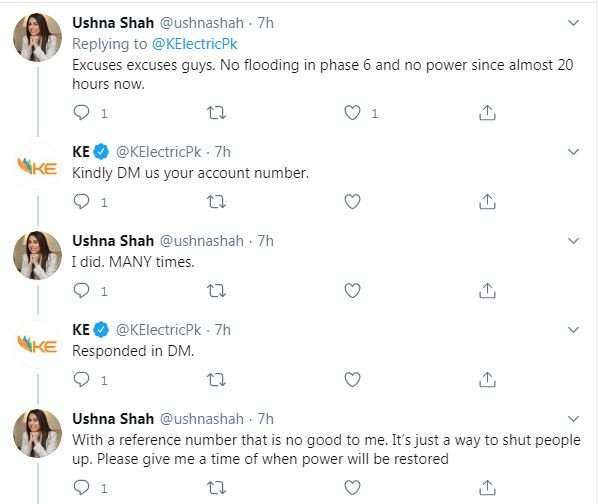
Actor Ushna Shah also tweeted: “Excuses excuses guys. No flooding in Phase 6 and no power since almost 20 hours now.” She added that DM (direct message) is also of no use.
Excuses excuses guys. No flooding in phase 6 and no power since almost 20 hours now.
It hasn’t even rained that much in PECHS block 2 compared to the other areas and there is no water stranded anywhere in the entire block 2 and 3 area still there is no light since 11am yesterday.
Later, K-Electric said that “several areas remain inaccessible due to high water level” and that “power will continue to remain closed until all standing water is cleared”.
While power has been restored where possible, KE teams are coordinating with relevant authorities to ensure swift power restoration to other locations. Power will continue to remain closed until all standing water is cleared. #SafetyFirst#HumAapHain (2/2)
With rains lashing Karachi, as many as 19 people died in various rain-related incidents in the port city on Thursday, taking the tally of deaths during the three-day monsoon spell in the city to 30.
Meteorological officials said downpours in August have shattered the 90-year-old record for the city. Some 484mm (19 inches) of rain has fallen this month so far, 130mm on Thursday alone, they said.
According to data released by the Met Office, Pakistan Air Force (PAF) Faisal Base recorded 130 millimetres of rain while Nazimabad has recorded 105.6mm since Thursday morning. Mausamiyat received 74.3mm of rain, while Saadi Town recorded 72mm. About 98.5mm of rain was recorded in PAF Masroor Base, Surjani received 73mm while Kemari recorded 82.5mm.
Many major arteries witnessed severe traffic jams. Power was suspended in several areas as a precautionary measure, a K-Electric spokesperson said. Karachi Commissioner Muhammad Suhail Rajput urged people not to leave their homes during the spell which, according to a Met Office prediction, is expected to continue for another two days.
Videos and photos making rounds on social media showed submerged cars and motorcycles and water entering houses and buildings, wreaking havoc in the provincial capital.
Given the devastation in Karachi, several celebrities and notable personalities including Feroze Khan, Shahid Afridi, Fatima Bhutto, Ayesha Omar, Samina Peerzada and Ali Safina have lashed out at the Sindh Government for being incompetent and “destroying” the city.
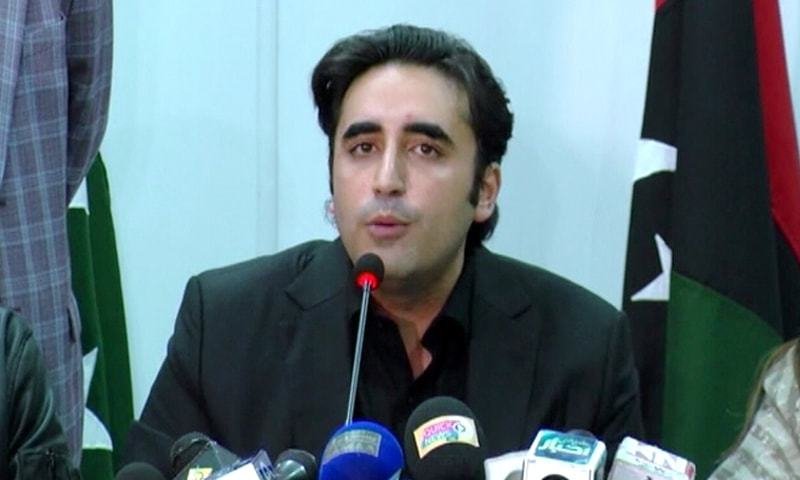
Feroze expressed his outrage by hitting out at PPP Chairman Bilawal Bhutto Zardari and demanding answers from him and his government.
– do you even know anything? What’s been up all these years in Sindh ? What’s your party been really doing handing out ajrak’s ?? Where did the tax go ? Zero infrastructure ?? My city and the people both are underwater Mr.Zardari. https://t.co/f4wlrn4zXS
When a Twitter user asked him to hold the PTI government accountable as well, Khan said that they “have literally just come in and I at least can’t expect them to over night work everything around”.
– they have literally just come in and I at least can’t expect them to over night work everything around and turn this place into Dubai ? PPP and MUSLIM LEAGUE (N) should be held responsible. https://t.co/AQqzu3fK4O
Former captain Shahid Afridi expressed his disappointment with the management and those in charge of the city.
“Who will save Karachi,” questioned the cricketer. It is pertinent to mention here that Afridi’s foundation Shahid Afridi Foundation has stepped up to help those affected by the flooding in the city.
کاش دنیا کے کسی میٹروپولیٹن سے ہی سیکھ لیں، مصنوعی جھیلیں بنا لیں۔ کیا یہ ہمارا قصور ہے کہ رہنے کے لئے اس شہر کا انتخاب کیا، یہاں ٹیکس دیتے ہیں لیکن بدلے میں انتظامیہ کون سی ذمہ داری پوری کرتی ہے؟ کراچی کو کچراچی بنانے والوں کے گریبان پر ہاتھ کون ڈالے گا؟ #WhoWillSaveKarachihttps://t.co/2VpaUozk97
With the videos I’m seeing, the stories I’m hearing, its a National Emergency situation. People are homeless, stuck on the streets, or being swept away. Are there relief packages being prepared? Is help coming? When? @MuradAliShahPPP#SindhGovt#KarachiSinks#KarachiRain
#Karachi had an estimated GDP of $164 billion approximately 25% of the national GDP. The metropolitan city, The financial hub of #Pakistan dose not deserve to be treated like this. Sorry #Karachi corrupt politicians and negligence has brought you down to this #FixKarachi
Please Karachi walo, issay bhoolna mat!! I’ve seen the city move on because they’ve gotten to see this too often and they’ve learnt to move on but not this time. #KarachiRains
Inn corrupt siasatdanoN key liye protest or march bhee ghareeb karta hei, inkey liye Ek doosray sey larayee hathaapayee bhe ghareeb karta hei aur jab inki corruption ki waja sey baarishoN ke paani ka sailaab aata hei toh doobta bhee sabsey pehle bechara ghareeb hey.#KarachiSinks
Not sure whether 2 laugh at our fate or cry: Karachi the metropolitan center of Pakistan still not equipped 2 store rainwater, water-shortages r part of daily life here & is still not equipped to drain monsoon rains which cause damage & claim lives every year. #KarachiSinks
An absolutely heartbreaking state of affairs! #Karachi needs immediate attention followed by urgent corrective action. The situation resulting from the absolute apathy of those in positions power must change. Enough of all the tall claims – time to walk the talk.
Meanwhile, other celebrities including Humayun Saeed, Wasim Akram, Shaniera Akram, Farhan Saeed, Ali Rehman Khan, Ali Zafar, Bilal Ashraf, Hira Mani and Maya Ali sent prayers for the city and those affected by the catastrophic rains.
Prayers for everyone’s safety and well-being. Please help anyone you can in whatever way possible in this extremely challenging situation. May Allah protect us all
Can’t believe the footage coming out of Karachi. Bypass’ filled with water, ship containers & cars floating down highways, back yards become pools & street turned into rivers: The city that has no water is now under water. My Prayers are with you Karachi
Dear All, it is extreme rain today, the Hub Dam has already overflow.Take special care, don’t take this rain as fun, Karachi is not capable to deal with it. Stay Indoors, Stay Safe, take care of all people around you ..ALLH pak sab ko apni amaan mey rakhay ameen
– I have been hearing nothing but absolutely gruesome accounts of people grappling with the Monsoon back home. Hope everyone is doing the best to keep safe, let this be the end of our trials and prayers for all! #StaySafeStayHome#KarachiNeedsAttention#KarachiRains
Seeing images & videos of my city drowning. So heartbreaking to see no one own Karachi. The city that gives so much, has lost when it needed us yet again. I pray for everybody in my city , please stay safe. Ya ALLAH Karachi ko iss mushkil waqt se bachayen, Aameen. #KarachiRains
As many as 19 people died in various rain-related incidents in the port city on Thursday, taking the tally of deaths during the three-day monsoon spell in the city to 30.
While blame games continue as authorities hesitate to take responsibility for the lack of monsoon infrastructure in the country’s largest city, the ruling Pakistan People’s Party (PPP) wants all stakeholders to contribute in ameliorating the situation instead of politicising a “pure natural disaster”.
As of yesterday Sindh had seen its worst monsoons in 90years. Today super monsoon torrential rains & floods continue unabated. Please keep all those in your thoughts who have already been working 24/7 to assist citizens during this record breaking unprecedented natural disaster.
Meteorological officials said downpours in August have shattered the 89-year-old record for the city. Some 484mm (19 inches) of rain has fallen this month so far, 130mm on Thursday alone, they said.
According to data released by the Met Office, Pakistan Air Force (PAF) Faisal Base recorded 130 millimetres of rain while Nazimabad has recorded 105.6mm since Thursday morning. Mausamiyat received 74.3mm of rain, while Saadi Town recorded 72mm. About 98.5mm of rain was recorded in PAF Masroor Base, Surjani received 73mm while Kemari recorded 82.5mm.
Many major arteries witnessed severe traffic jams. Power was suspended in several areas as a precautionary measure, a K-Electric spokesperson said.
Karachi Commissioner Muhammad Suhail Rajput urged people not to leave their homes during the spell which, according to a Met Office prediction, is expected to continue for another two days.
Videos and photos making rounds on social media showed submerged cars and motorcycles and water entering houses and buildings, wreaking havoc in the provincial capital.
PPP is running Sindh & thus Karachi for the past 12 years; Bilwal needs to focus to understand & resolve Karachi’s problems before saying a single word about any other issue – this is where test of his intelligence & leadership rests; Karachi can make him “National Leader” pic.twitter.com/x17U3hmQM2
Containers that were put for security purpose on MA Jinnah Road #Karachi for upcoming processions going for a swim. Uncontrollable and dangerous for cars, pedestrians already stuck on the roads. pic.twitter.com/zRkkaWpUVt
Scores of social media users, including Federal Minister Ali Zaidi, posted videos and pictures showing Defence Housing Authority flooded with rainwater after heavy showers pounded the city for hours.
“This is DHA KHI,” Zaidi wrote on Twitter, adding, “Bang in front of my house- which is now partly flooded- but many homes in the neighborhood are under 4 feet of water”.
This is DHA Phase 6 Karachi. What is happening in the low lying areas of KHI today is devastating yet once again. Testing times for Karachiites yet again! No doubt Allah tests those he loves the most.#KarachiRain#KarachiSinks#RainEmergencypic.twitter.com/MEBgRxWMCs
“May Allah have mercy on those who live in low lying areas of this city,” he said in another tweet.
“This is DHA Phase 6 Karachi. What is happening in the low-lying areas of KHI today is devastating yet once again. Testing times for Karachiites yet again! No doubt Allah tests those He loves the most,” he said in another tweet.
Sindh Governor Imran Ismail, in a tweet, said that Prime Minister (PM) Imran Khan is monitoring the situation that has arisen in Karachi due to the torrential rains.
Briefed PM @ImranKhanPTI over Sindh rain situation, Karachi needs special attention. This is unusual and abnormal rain situation which requires emergency response. PM is monitoring the situation and assured to take any action required.
“Briefed PM Imran Khan over Sindh rain situation, Karachi needs special attention. This is an unusual and abnormal rain situation which requires an emergency response. PM is monitoring the situation and assured to take any action required,” tweeted Ismail.
The premier himself has also tweeted over the disastrous situation in the port city.
Have directed Chairman NDMA to immediately not only rescue stranded ppl, but also provide emergency medical assistance, food & shelter to all those in need. I have also asked NDMA Chairman to ensure restoration of utilities on an emergency basis.
In a subsequent tweet, he said that a plan for a permanent solution to the problems facing the people of Karachi will also soon be announced.
RELIEF, RESCUE OPERATION CONTINUES:
In a statement, the military’s media wing Inter-Services Public Relations (ISPR) said that many areas were inundated and people stranded due to heavy rains in various parts of Sindh.
An Army Flood Emergency Control Centre has been established in Karachi for assisting flood victims while a medical camp has been set up at the district centre of Gulberg, Liaquatabad and New Karachi for providing necessary medical care, the Inter-Services Public Relations (ISPR) said.
It said the dewatering of more than 36 sites in Karachi had been completed while cooked meals covering 10,000 people had been distributed among flood victims in various areas.
The following telephone numbers can be contacted for immediate assistance by the army:
• 021-34491082
• 021-99247267
• 021-99207795
Meanwhile, army engineers completed the enhancement of the bund along M9 near the Northern Bypass to avoid flooding.
Army troops also filled a breach in the Malir River near Quaidabad, according to the ISPR. “Pakistan Army engineer boats are busy shifting people to safer places,” the statement said.
A relief and medical camp has also been established in Latifabad area of Hyderabad. Food was provided to the affected population while army engineers were busy in dewatering various areas, it added.
According to the ISPR, army troops “have been forwardly placed at Dadu for any eventuality and spillover at Nai Gaj Dam”.
The banks of Puran Nullah in tehsil Jhudo of Mirpurkhas district had been damaged due to heavy rains, as a result of which water entered the nearest five villages. However, the breach was plugged with the combined efforts of army troops and civil administration to stop the flow of water to these areas, the ISPR said.
The statement came a day after the army chief, General Qamar Javed Bajwa, directed Karachi crops to step up flood relief operations.
#COAS directed karachi Corps to step up flood relief operations to assist affected people due to recent rains in interior Sindh and #Karachi. “Troops must reach out to affected population in distress and extend all necessary care”, COAS.
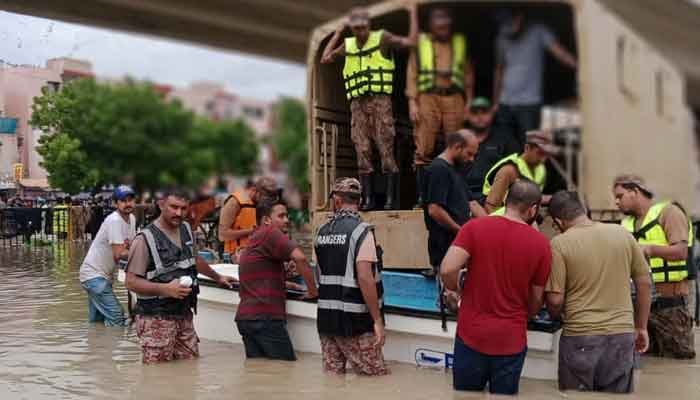
Meanwhile, the personnel of Pakistan Rangers Sindh continued the relief and rescue operation in the rain-affected areas of Karachi in a coordinated manner.
According to the Rangers spokesperson, the Rangers constituted separate teams for relief and rescue work to carry out the operation in a faster manner while reserve teams were also present in various areas to deal with any kind of emergency.
Rations were also being distributed in the areas where food supply is low with the help of philanthropists.
Rangers asked the people to contact Rangers helpline 1101, Rangers check post or WhatsApp number 0347-9001111 for immediate assistance regarding rescue or relief.
Pakistan Navy’s rescue and relief operation also continued in various parts of the city during heavy spell of rain.
Pakistan Navy Emergency Response and rescue teams evacuated stranded people to safer places and recovered bodies being washed away in flash flood, a Pakistan Navy press release said.
In assistance to civil administration, Pakistan Navy Emergency Response teams along with boats and requisite life-saving equipment were deployed in different areas of the city, including Diamond City Malir, Shah Faisal Town, Korangi Crossing, Sammo goth and Bahria Town Karachi.
During search and rescue operations, Pakistan Navy divers recovered two dead bodies from Shah Faisal Town and Korangi crossing areas while 55 individuals were evacuated from flooded areas of Malir and Korangi crossing. Besides, Rescue teams have also evacuated 20 families stranded in Sammo Goth and shifted them to safe place.
Pakistan Navy’s helicopter conducted aerial recce of Korangi crossing, Quaidabad (Malir nadi), and Goth Shafi Muhammad while aerial recce with the help of a quadcopter was also carried out in Saddar Town in support of relief operations to localise individuals requiring assistance. Additionally, ration bags and cooked meal was also dropped at various areas.
FLIGHT SCHEDULE DISRUPTED:
Meanwhile, the flight schedule was disrupted at Jinnah International Airport Karachi due to rough weather and heavy rainfall. The Civil Aviation Authority (CAA) announced the suspension of a number of its flights on Thursday due to torrential rains in the port city.
A Lahore-bound private airline flight-522 and Islamabad bound PK-368 flight have been delayed, said the CAA spokesperson.
Moreover, Karachi to Faisalabad flight PK-540 and Lahore-bound Pakistan International Airline (PIA) flight PK-304 have also been delayed.
NETWORK OUTAGES AMID POWER BREAKDOWN:
The national telecom regulator informed on Friday that cellular services in the city were not blocked and outages faced by users were due to the prolonged power breakdown.
Speaking to Geo, Pakistan Telecommunication Authority (PTA) spokesperson Khurram Mehran said, “Due to prolonged power failure in the city, many towers are out of service and their generators are shut because there’s no fuel to power them.”
Mehran said the blockages have nothing to do with Muharram security, as was being speculated in some circles.
The power utility, K-Electric, meanwhile claimed that its teams were working to the best of their ability to deal with the current circumstances and restore electricity with limited available resources.
Many KE vehicles got stuck in flooded roads and streets across the city. Also, our staff is working in long shifts because relievers were unable to make into service centers due to water logging. 2/3
“Many KE vehicles got stuck in flooded roads and streets across the city. Also, our staff is working in long shifts because relievers were unable to make it to service centers due to water logging,” the company said in a statement issued earlier today.
KE therefore warned that restoration work may take longer than expected time as the situation remains ‘difficult’.
HUB DAM FILLS TO MAXIMUM CAPACITY:
The water level in Hub Dam, which supplies water to Karachi and meets the water needs of several areas in Balochistan, crossed the 339-foot mark yesterday and filled to its maximum capacity for the first time in 13 years.
The water level in the dam had risen due to the recent spell of torrential rains in Karachi and Sindh and the dam has now begun to flow out from the spillways into the sea near Mubarak Village.
The WAPDA administration had earlier closed the Hub Dam to visitors in view of health hazards. However, residents of the settlements around the dam, residents of the Hub Dam Residential Colony, Karachi residents and others arrived in large numbers in the spillway area to witness the streams overflowing, which look much like waterfalls.
In the catchment area of Hub Dam, which stretches up to the mountain range of Balochistan, the water level has risen by more than 9 feet in three days.
Heavy rain pounded in Karachi for hours today (Thursday), flooding roads and underpasses and creating chaos in the port city.
According to the Met Office, Karachi experienced record torrential rains this year and Sindh Chief Minister Murad Ali Shah has declared an emergency across the province while roof-collapse, electrocution and drowning incidents make headlines. Power outages are also spelling misery for residents of the city.
Many people took to social media to show the current situation in the port city.
Following are some snippets that stood out from Urdu newspapers on August 27, 2020, which The Current takes no responsibility for.
‘PML-N Ko Pakistan Bananay Ki Sazaa’
It has been reported by Daily Jang that PML-N senior leader Ahsan Iqbal has said,“Muslim League Noon ko Pakistan bananay ki sazaa mil rahi hai… humein yaqeen hai Askari idaro ka hukoomat ki intaqami karwaiyo se koi taaluq nahi.”
‘PPP K Sindh Mein 12 Saal’
According to Daily Jang, MQM-P leader Khushbakht Shujaat has said, “Karachi ki abaadi aur raqba itna barra hai k isay alehda intazami unit banana hoga… Sindh hukoomat ne 12 saal se districts ko share nahi dia.
‘Nawaz Sharif Ki Siyasat Mein Wapsi’
It was reported by Daily Dunya that former attorney general Irfan Qadir has said, “Nawaz Sharif pr NAB ki janib se dabaao barhta jaa rha hai. NAB mein Maryam Nawaz ki paishi se zahir hota tha k shayad Nawaz Sharif siyasat mein active honay jaa rahay hain.”